
💡 Key Takeaways
- Do not treat Gangneung Station as a hub you must return to between every sight. Gangneung works better as four compact zones: central/Anmok, Gyeongpo-Chodang, northern Jumunjin and southern Jeongdongjin.
- The cheapest transport plan is not always the most efficient one. City buses save money, but a short taxi between nearby sights often saves a long wait, a transfer and several thousand unnecessary steps—especially for two to four travelers.
- Put the most crowd-sensitive stops at the edges of the day. Visit the BTS Bus Stop early, use ARTE Museum outside its busiest group-visit periods when possible, and avoid making Anmok Coffee Street a weekend-afternoon-only mission.
- Do not drag a suitcase around the coast. Base yourself in one area for most of the trip and use hotel storage or a verified station-to-hotel luggage service when your arrival/departure timing does not match check-in.
- Five days is long enough to keep a weather buffer. That is more valuable than forcing Sokcho, Daegwallyeong or another distant side trip into an already spread-out Gangneung itinerary.
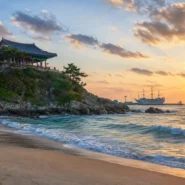
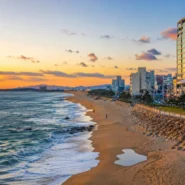
A good Gangneung 5-day itinerary looks deceptively easy on a map: a beach here, a coffee street there, a famous K-drama photo spot up north and Jeongdongjin down south. The problem is that first-time visitors often copy a “best places in Gangneung” list rather than a route. The result is repeated taxi rides across town, long waits for buses, luggage detours through Gangneung Station, and arriving at photogenic places at exactly the same time as everyone else.
This itinerary fixes that by prioritizing geography over hype. It still includes the classic first-trip sights—Jungang Market, Anmok Coffee Street, Ojukheon, Gyeongpo, ARTE Museum, Jumunjin, Haslla Art World and Jeongdongjin—but it groups them into days that actually make sense. I would rather have you enjoy seven good hours than spend eleven hours “covering” attractions while half the day disappears into transfers.
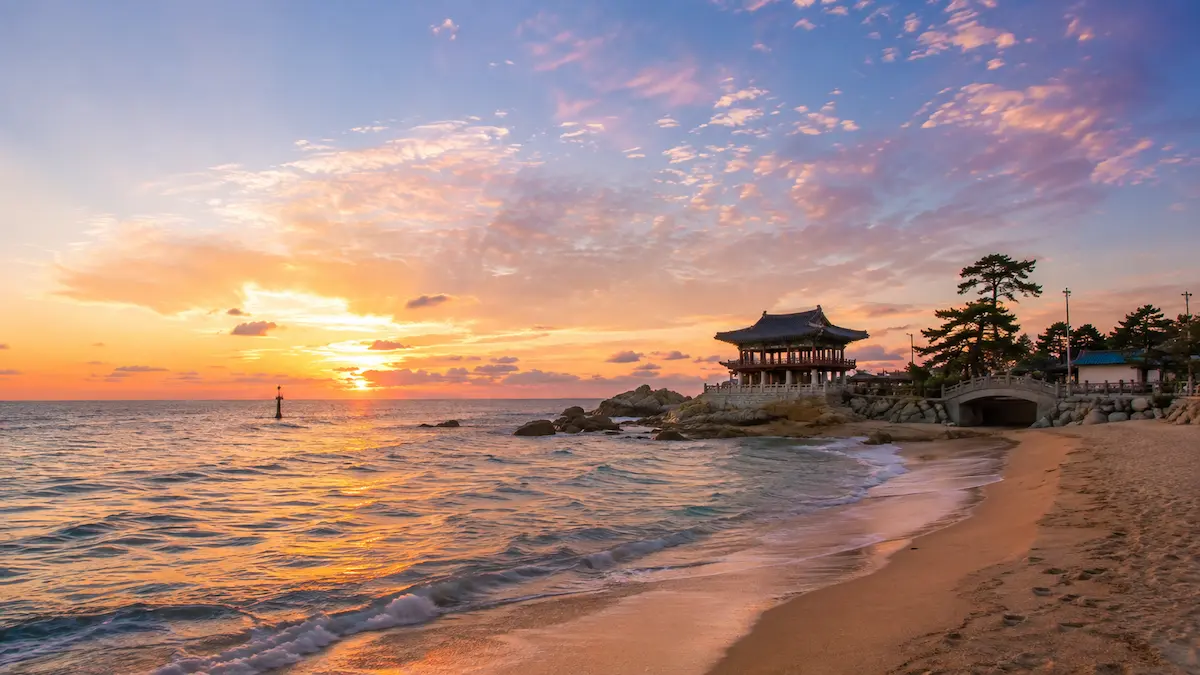
One expectation is worth correcting before you start: Gangneung faces Korea’s east coast. The famous ocean moment is sunrise, not a sunset dropping into the sea. Late afternoon at Anmok or Gyeongpo can still be lovely, but if your dream shot is the sun rising from the horizon, schedule that for Jeongdongjin or another east-facing beach at dawn.
The 1-Min Cheat Sheet
- Gangneung Jungang Market + Wolhwa Street
Best for: first meal, snack-hopping, rainy weather and an easy arrival day.
Suggested stay: 1.5–2 hours for the market, plus 30–45 minutes for Wolhwa Street if you still have energy.
Ticket/transport: no admission ticket. Walk from the central area or take a short taxi from the station/hotel. Shop opening times vary. - Anmok Beach + Gangneung Coffee Street
Best for: coffee lovers, low-effort sea views and a relaxed first evening.
Suggested stay: 2–2.5 hours including one café and a beach walk.
Ticket/transport: beach access is free; cafés are paid individually. Taxi is usually the simplest first-timer option from central Gangneung; bus is cheaper if the timing works. - Ojukheon House
Best for: Korean history, architecture and travelers who want cultural context beyond beaches.
Suggested stay: about 60–75 minutes.
Ticket/transport: on-site admission is inexpensive; official tourism information lists 09:00–18:00 with last admission at 17:00. A short taxi pairs it well with Seongyojang. - Seongyojang House
Best for: traditional architecture, gardens and travelers who prefer a slower heritage stop.
Suggested stay: 60–75 minutes.
Ticket/transport: paid admission on site; hours are seasonal, so recheck before visiting. Pair with Ojukheon rather than visiting from the beach on a separate day. - ARTE Museum Gangneung
Best for: families, teens, photographers and bad-weather insurance.
Suggested stay: 1.5–2 hours.
Ticket/transport: paid admission. Current official information lists 10:00–20:00 with last admission at 19:00. Online e-vouchers exist, but some require kiosk/box-office redemption rather than direct QR gate entry. - Gyeongpo Lake + Gyeongpo Beach
Best for: a classic Gangneung coastal afternoon without another paid attraction.
Suggested stay: 1.5–2 hours for a selective lake/beach walk; much longer if you insist on circling the lake.
Ticket/transport: free. Walk only the scenic segment you actually want; use a taxi for the longer cross-zone jump. - Jumunjin Pop-Culture Coast: BTS Bus Stop + “Goblin” Breakwater
Best for: BTS and K-drama fans, quick photo stops and a northern-coast day.
Suggested stay: 30–45 minutes per photo stop, plus 1–1.5 hours at Jumunjin Fish Market for lunch.
Ticket/transport: the outdoor photo spots are free. The BTS structure is a recreated photo installation, not a functioning bus stop. Use bus or taxi between the northern stops rather than assuming they are all comfortably walkable. - Jeongdongjin South-Coast Cluster: Beach + Railbike + Haslla Art World + Optional Badabuchae Trail
Best for: sunrise, coastal scenery, couples and travelers who can handle a fuller day.
Suggested stay: most of a day. Railbike needs a fixed departure slot; Haslla deserves roughly 2–2.5 hours; the coastal trail is optional and weather-dependent.
Ticket/transport: Jeongdongjin Beach is free; railbike should be reserved for a timed departure; Haslla is paid; the Badabuchae Trail may close for weather or safety. Use KORAIL when the timetable fits, then taxis for the scattered south-coast stops.
The Most Practical 5-Day Itinerary
Day 1: Arrival, Jungang Market & Anmok Without the Suitcase Drag
- Suggested start: around 11:00, or simply 60–90 minutes after your train arrives. Do not plan a hard-to-book attraction immediately after a long-distance train.
- Stop 1 — Gangneung Jungang Market (1.5–2 hours): make this lunch rather than a late-afternoon “snack stop.” The market is central, forgiving if your train is late and easy to shorten if you are tired. Try several small items instead of queuing forever for one viral stall just because social media told you it is mandatory.
- Stop 2 — Wolhwa Street (30–45 minutes): walk here after the market. It is an easy decompression stop and can be deleted with almost no regret if you arrived late.
- Transport to Anmok: take a taxi from the central area unless a bus is due soon. This is exactly the kind of short urban transfer where waiting for the “cheapest” option can cost more vacation time than it saves money.
- Stop 3 — Anmok Beach + Coffee Street (2–2.5 hours): choose one café with a view, then walk the beach. Do not café-hop simply to collect interiors; the extra waiting, ordering and seat-hunting can turn a relaxing coast stop into an expensive queue.
- Lunch/rest area: Jungang Market for the main meal; Anmok for coffee and a slower break. If the market is packed, eat just off the busiest central lanes and return for snacks afterward.
- What to skip if tired: Wolhwa Street first. Keep the market and one coastal stop.
- Rain plan: the market plus a longer café session at Anmok still works. Cut the beach walk if wind-driven rain makes the waterfront unpleasant.
- Evening area: stay at Anmok for coffee and sea air, or return to Gyo-dong/central Gangneung for dinner. Avoid crossing town again just to “check off” Gyeongpo at night—you have a dedicated Gyeongpo day.
- Why this beats the common influencer route: the usual mistake is arriving, checking in, returning to the station/market, then taking another ride to the coast. If your hotel is not on the way, leave luggage at the hotel, use station storage when practical, or prebook luggage delivery and go straight into the day.
Day 2: Ojukheon, Seongyojang, Chodang, ARTE Museum & Gyeongpo
- Suggested start: leave your hotel around 08:30 and aim to reach Ojukheon near its 09:00 opening.
- Stop 1 — Ojukheon (60–75 minutes): arriving early gives you a calmer heritage visit before the day feels busy. This is not a place where you need to manufacture a “skip-the-line strategy”; the better strategy is simply being there near opening.
- Transport to Seongyojang: take a short taxi. The two heritage sights belong together geographically, and spending half an hour waiting for a bus to save a small fare is poor time economics on a five-day trip.
- Stop 2 — Seongyojang House (60–75 minutes): keep it if you genuinely like hanok architecture and gardens. If historical houses start blending together for you, this is the easier of the two heritage stops to cut.
- Transport to Chodang: short taxi. Do not return to Gangneung Station between these attractions.
- Lunch — Chodang Tofu Village (60–90 minutes): this is the logical food break because it sits inside the same Gyeongpo/Chodang cluster. A relaxed lunch here is better than forcing a trendy café across town.
- Optional Stop — Heo Gyun & Heo Nanseolheon Memorial Park (30–45 minutes): add it only if your pace is comfortable. It is a pleasant cultural pause, not a must-see that should make you rush ARTE.
- Stop 3 — ARTE Museum Gangneung (1.5–2 hours): use mid- to late-afternoon for the immersive galleries. Group visits can make even weekdays busy, so an advance e-voucher can reduce purchase friction, but do not assume it guarantees a separate fast-entry lane.
- Stop 4 — Gyeongpo Lake + Beach (1.5–2 hours): finish outdoors when the light and temperature are kinder. Walk a selected section rather than automatically circling the entire lake. Save your legs for the next three days.
- Rain plan: make ARTE the anchor, extend lunch, and spend more time in the indoor components of the heritage sights. Cut the lake circuit and beach walk rather than forcing them in bad conditions.
- Evening area: Gyeongpo or Gangmun. This is the night to enjoy the beach zone because you are already there.
- Why this is more efficient: Ojukheon, Seongyojang, Chodang, ARTE and Gyeongpo form a natural north-central arc. Many viral itineraries split these across two or three days, creating repeated cross-town taxi rides for no real benefit.
Day 3: Jumunjin Early — BTS Bus Stop, Goblin Breakwater & Fish Market
- Suggested start: 07:30–08:00, especially on weekends, summer holidays or any day when you care about clean photos.
- Stop 1 — BTS Bus Stop at Hyangho Beach (30–45 minutes): go first because this attraction has a very simple bottleneck: everyone wants essentially the same photo angle. Earlier is better. Remember that the structure is a recreated photo spot, not a real working bus stop.
- Transport south toward Jumunjin: use a city bus if the next departure is convenient; otherwise take a taxi. Do not assume the famous BTS and Goblin locations are one tiny walkable cluster.
- Stop 2 — Jumunjin Breakwater / Goblin Photo Spot (30–45 minutes): treat it as a photo stop, not a half-day attraction. On windy or wet days, exposed breakwaters are exactly where you should be willing to change plans.
- Stop 3 — Jumunjin Fish Market (1–1.5 hours): make this your lunch zone. Browse first, compare what looks fresh and busy, and order based on your appetite rather than a social-media “must-eat” checklist.
- Optional Stop — beach or Sodol/Adeulbawi area (45–60 minutes): add only if the weather is good and your group still wants more coast. If you are not a BTS or K-drama fan, this optional scenery may be more rewarding than spending extra time recreating photos.
- Budget transport option: city buses can work if you are solo and patient. Build slack into the day rather than creating a minute-by-minute schedule around a bus network you do not know.
- Comfort option: for two to four people, a prebooked private/tourist taxi can make this northern-coast day noticeably easier because the stops are linear but spread out.
- Rain plan: keep the fish market and a coastal café; reduce the exposed breakwater/photo stops. Strong wind matters as much as rain on this coast.
- Evening area: return to central Gangneung or Gyo-dong for an easy dinner. Do not continue to Jeongdongjin—the entire next day is built around the south coast.
- Why this is more efficient: you travel north once, then work generally south through the Jumunjin area. The classic planning failure is combining Jumunjin with Jeongdongjin simply because both names appear under “Gangneung coast.” They are in opposite directions.
Day 4: Jeongdongjin Sunrise, Railbike, Haslla & the Optional Coastal Trail
- Suggested start: around 06:30–07:00 only if sunrise is a priority; otherwise around 08:00 is saner. Sunrise time changes by season, so check your exact date and arrive before the sun is due.
- Transport to Jeongdongjin: check the current KORAIL timetable first. A train from Gangneung to Jeongdongjin is attractive when the schedule fits because Jeongdongjin Beach is very close to the station. If the departure time is awkward for your plan, a taxi is the practical alternative.
- Stop 1 — Jeongdongjin Beach (45–60 minutes): use this for sunrise or a morning walk. Do not overschedule breakfast before a railbike slot; fixed departures are less forgiving than a beach.
- Stop 2 — Jeongdongjin Railbike (allow about 60–75 minutes including check-in): the operator runs a limited set of hourly departures, so this is one place where reserving the time matters more than chasing a small ticket discount.
- Brunch/lunch: eat in Jeongdongjin before leaving the station/beach zone. Once you start moving toward Haslla and the coastal trail, food choices become less convenient for a relaxed break.
- Transport to Haslla Art World: taxi. This is a classic “save your legs” transfer and not a place to prove that you can do everything by public transport.
- Stop 3 — Haslla Art World (2–2.5 hours): the indoor/outdoor mix, sea-facing architecture and photo installations make it more substantial than a quick Instagram stop. The catch is that some areas involve slopes and stairs, so pace yourself.
- Optional Stop 4 — Jeongdong-Simgok Badabuchae Trail (2–2.5 hours): add it only in good weather and only if you still want a real coastal walk. The official trail is about 2.86 km and can close for weather, military operations or safety/maintenance. Check status the same day. Do not plan to walk out and back just to save a taxi.
- What to skip if tired: the Badabuchae Trail first. If your group dislikes cycling or fixed schedules, skip railbike instead and enjoy a slower Jeongdongjin + Haslla day.
- Rain plan: make Haslla the main event; use a café or indoor attraction around Jeongdongjin. Railbike may be affected by conditions or simply become unpleasant, so check the operator. Do not force the Badabuchae Trail in rough weather.
- Evening area: stay in Jeongdongjin only if you deliberately booked a night there for dawn atmosphere. Otherwise return to your existing Gangneung base. One hotel change for one sunrise is usually more luggage work than it is worth.
- Why this is more efficient: Korea Tourism Organization itself presents Haslla, the railbike and the Badabuchae coastal trail as a logical south-coast grouping. Keeping them on one day prevents a second expensive ride back toward Jeongdongjin.
Day 5: Gangmun/Songjeong, Chodang Brunch & a Weather Buffer Before Departure
- Suggested start: 08:30. Day 5 is intentionally less ambitious.
- Stop 1 — Gangmun or Songjeong coast (60–90 minutes): choose one manageable promenade section, enjoy the pines and beach, and stop before the walk becomes a fitness challenge.
- Stop 2 — Chodang brunch or a central café (60–90 minutes): use the final morning for a proper sit-down meal rather than squeezing in one more distant attraction.
- Weather-buffer rule: if rain or wind ruined an outdoor stop on Day 2, 3 or 4, use this morning to recover the one thing you cared about most. Do not attempt to “make up” every missed item.
- Optional final stop — Jungang Market souvenirs (45–60 minutes): only if your train is later and the market is convenient to your luggage pickup. This is far smarter than carrying food purchases around all day.
- Transport: taxi between the coast and your luggage point if time is tight. Public bus is fine when you have a generous departure buffer.
- What to skip if tired: virtually everything after brunch. A calm departure is part of a good itinerary.
- Rain plan: use this as your indoor catch-up day—ARTE if you had to miss it earlier, a central café, market time or a slower museum visit. Avoid inventing a distant side trip just because the beach is wet.
- Evening area: if you are departing, none—go to the station early enough to retrieve luggage and board without stress. If you have a fifth night, choose Gangmun/Gyeongpo or Anmok rather than crossing the whole city again.
- Why this is more efficient: a buffer day protects the trip from east-coast weather and transport surprises. The common mistake is using Day 5 for Sokcho or Daegwallyeong, then discovering you have built a second destination into a Gangneung trip and must race back for your train.
Tourist Traps to Avoid & Itinerary Hacks
- Trap: “All the beaches are basically next to each other.” Gangneung’s coastline is long. Jumunjin is north; Jeongdongjin is south. Putting both into one day looks efficient only on a zoomed-out map. Hack: dedicate one north-coast day and one south-coast day.
- Trap: using Gangneung Station as a daily reset point. The station is useful for arrival, departure and some train connections, but there is no reason to return there between Ojukheon, Chodang and Gyeongpo. Hack: move attraction-to-attraction inside a zone.
- Trap: assuming Gangneung has a Seoul-style subway network. It does not. You will use KORAIL for intercity/selected rail legs, plus city buses and taxis locally. Hack: budget for several short taxi rides instead of designing a fantasy itinerary around nonexistent metro connections.
- Trap: overvaluing a free bus ride and undervaluing an hour. A bus can be the right choice, especially solo, but saving a few thousand won is not a win if you lose the only calm hour at a crowded photo spot. Hack: use bus for long, direct segments and taxi for awkward short hops or multi-person groups.
- Trap: visiting the BTS Bus Stop in the middle of the day and being surprised by a photo queue. There is essentially one iconic composition. Hack: go early and cap the stop at 30–45 minutes.
- Trap: treating the BTS Bus Stop as a transport stop. The well-known structure was recreated as a photo spot after the original shoot; it is not a normal bus stop. Hack: navigate to the attraction itself, not as if you are catching a bus there.
- Trap: weekend-afternoon Anmok café hopping. The most famous cafés can be busy when everyone wants the same window seats. Hack: choose one café based on the view/menu you actually want, then spend the rest of your time outdoors.
- Trap: circling all of Gyeongpo Lake because a map says it is “walkable.” Walkable and vacation-efficient are different. Hack: choose the lakeside stretch that fits your beach/ARTE route, then use a taxi for the next non-adjacent stop.
- Trap: believing an e-ticket automatically means “scan QR and skip every line.” Some Gangneung attraction vouchers still require redemption at a kiosk or ticket counter. Hack: read the voucher’s redemption instructions, not just the word “e-ticket.”
- Trap: buying ARTE Museum tickets at the last second online. A current KKday listing states that on-site verification cannot be completed within 60 minutes after purchase. Hack: buy at least an hour ahead; the previous day is easier.
- Trap: treating Haslla Art World as a 45-minute photo stop. It has indoor galleries, outdoor art and slopes. Hack: give it roughly two hours and wear shoes suitable for uneven/steep sections.
- Trap: putting Badabuchae Trail on a fixed non-negotiable schedule. Coastal conditions can close the route. Hack: check the official status the same day and make it the first thing you cut in poor weather.
- Trap: expecting an ocean sunset from an east-facing coast. You may get beautiful late-afternoon color, but the sun does not set into the East Sea. Hack: plan your “sun on the water” moment at sunrise, ideally Jeongdongjin.
- Trap: hotel-hopping for the sake of geography. Moving bags can erase the 20–30 minutes you hoped to save the next morning. Hack: use one main base and take targeted taxis.
- Trap: adding another city because five days “sounds long.” Gangneung’s sights are spread out and weather-sensitive. Hack: use Day 5 as a buffer. A flexible day is not wasted time; it is insurance against a ruined coastal day.
Save Your Legs! The Most Efficient Route
The logic of this itinerary is geographic zoning, not a maximum-attractions challenge. For Gangneung, think in five practical layers: central Gangneung + Anmok on arrival day, Ojukheon/Seongyojang + Chodang/Gyeongpo as one heritage-and-lake cluster, Jumunjin as the northern coast, Jeongdongjin + Haslla as the southern coast, then a buffer/final coast day. That structure keeps you moving in one general direction instead of bouncing north, south and back to the station.
What should you walk? Walk inside Jungang Market and Wolhwa Street; choose a reasonable stretch of Anmok, Gyeongpo, Gangmun or Songjeong; walk between close Chodang sights when weather and energy allow; and walk the Badabuchae Trail only when you intentionally want a hike. Do not convert “free transport” into a two-kilometer roadside march just because two map pins look close.
What should you ride? Korea does not use Japan’s JR/private-rail terminology, and Gangneung has no metro. Use KORAIL for Seoul–Gangneung and for Jeongdongjin only when the current train schedule fits. Use city buses when the route is direct and you are not racing a timed reservation. Use taxis for short cross-cluster links such as Ojukheon → Seongyojang, Seongyojang → Chodang, Jeongdongjin → Haslla, and between spread-out Jumunjin photo stops. For two to four travelers, splitting a short taxi can be a better value than losing 30–45 minutes to a transfer.
When are buses most annoying? The problem is less “one universally terrible bus line” than a mismatch between tourist pacing and local timetables: missed connections, standing-room rides during busy periods, coastal road traffic and waits that feel much longer when you are trying to reach a timed railbike. In peak summer, beach traffic around the most popular coastal zones can also slow road transport. Build schedule slack rather than assuming Google-style urban frequency.
Where should a first-timer stay? If your priority is transport balance and easy arrival/departure, a central/Gyo-dong base is practical. If evenings by the water matter more, Gyeongpo/Gangmun is more atmospheric, but accept that some north/south days begin with a taxi. I would not move hotels every night. One stable base usually saves more energy than shaving a few kilometers from one morning.
How do you avoid the luggage trap? On arrival, ask your hotel about early bag storage first. If that does not work and you will return to the station the same day, a station locker can be useful if a locker large enough for your bag is actually available—do not build your entire day around assumed locker capacity. If your hotel is across town and you want to start sightseeing immediately, a verified luggage forwarding service is cleaner. The currently listed ZIM CARRY service on KKday handles Gangneung Station ↔ accommodation transfers, with provider-specific cutoff times. On departure day, forwarding the bag to the station is especially useful if you want one last beach or lunch without dragging luggage.
The core rule: fewer backtracks beats more checkmarks. You are not trying to “win” Gangneung by visiting the greatest number of pins. You are trying to reach the places you care about while you still have enough energy to enjoy them.
Check Gangneung Station luggage delivery on KKday
Check a Gangneung private taxi tour on Klook
Ticket Tips & Skip-the-Line Hacks
Gangneung is not a destination where every attraction needs an app, QR code or expensive pass. In fact, trying to “prebook everything” creates its own problems. The smarter approach is to reserve only the parts where capacity, fixed departure times or meaningful online convenience actually matter.
Free and normally no reservation needed: Anmok Beach, Gyeongpo Beach/Lake, Gangmun/Songjeong coast, the BTS Bus Stop photo spot, Jumunjin Breakwater, Wolhwa Street and the public-market areas do not need sightseeing tickets. Coffee, food and private experiences are separate purchases.
Simple on-site admission is usually enough: Ojukheon and Seongyojang are straightforward heritage attractions with on-site admission. For a normal independent visit, I would not pay a third party merely for the phrase “skip the line.” Go near opening if you want a quieter experience.
ARTE Museum Gangneung — online ticket can be useful, but read the redemption rules: a current KKday product offers an e-voucher and same-day purchase, yet it also states that on-site verification/entry processing is not available within 60 minutes after purchase. The voucher may need to be redeemed at a box office or kiosk rather than scanned directly at the gallery gate. In other words: buying online can reduce payment friction, but it is not a guaranteed skip-the-line pass. Buy the day before if you want one less task on the trip.
Check ARTE Museum Gangneung tickets on KKday
Haslla Art World — online vouchers are genuinely useful if the price and redemption instructions suit you: both Klook and KKday currently list admission products. This is a sensible place to compare online pricing because it is a paid anchor attraction on Day 4. Still, check the voucher details on your travel date; a digital voucher does not always mean the same entrance procedure.
Check Haslla Art World tickets on Klook
Check Haslla Art World tickets on KKday
Jeongdongjin Railbike — reserve the time, not just the ticket: official tourism information lists a limited number of hourly departures during the day. A fixed slot affects the whole Day 4 route, so this is more important to reserve than a walk-in museum. Check the official operator for the current timetable and operating notices before your trip: Jeongdongjin Railbike official website.
KTX — book ahead when the date is important: KORAIL sells train tickets online, and popular weekend/summer services can sell out. If your international flight or hotel booking depends on a particular Seoul–Gangneung train, reserve it rather than gambling on the next departure. Official booking: KORAIL ticket reservation.
Badabuchae Trail — a reservation is less important than a same-day status check: the coast can close for weather, military operations or safety reasons. The correct “hack” is not buying something months early; it is checking conditions before you taxi to the trailhead.
What I would not buy automatically: a generic rail pass solely for a simple Seoul–Gangneung round trip. Compare the actual point-to-point KTX fares for your dates first. Passes make sense only when the rest of your Korea rail itinerary makes the math work.
Verification note: ticket rules, opening times and booking products in this article were checked against official tourism/operator information and current booking pages in August 2026. Operating hours, prices, redemption rules and weather closures can change, so recheck the official or booking page shortly before travel.
Affiliate disclosure: some booking links above and below are affiliate links. They do not change the price logic of this itinerary; I only include products that match a real friction point such as timed admission, luggage handling or a spread-out taxi day.
Tried & Tested: My Honest Review
📍 Stop 1: Gangneung Jungang Market & Wolhwa Street
Tags: #FoodFirst #RainFriendly #EasyArrivalDay #BudgetFlexible
My take: this is one of the smartest first stops because it is central, flexible and food-focused. It is not “hidden,” and the most social-media-famous stalls are not automatically the best use of your queue time. Browse before committing.
✅ What Other Travelers Say: travelers commonly like the variety and relatively casual prices, especially when sharing several snacks rather than sitting down for one large meal.
⚠️ The Catch (Things to Keep in Mind): individual shops keep their own hours, and a market that looks lively at lunch can feel different later in the evening. Parking/road congestion can be annoying, so visitors without a car often have the easier experience.
📍 Stop 2: Anmok Beach & Gangneung Coffee Street
Tags: #CoffeeView #LowEffortCoast #WeekendCrowds #NotAnOceanSunset
My take: Anmok earns its popularity because the concept is easy: sea, coffee, seats, no complicated sightseeing. What is overhyped is the idea that you need to visit multiple famous cafés. One good café plus a beach walk is enough.
✅ What Other Travelers Say: coffee lovers appreciate having many cafés concentrated along the waterfront, and the beach makes it easy to break up a long café stop with fresh air.
⚠️ The Catch (Things to Keep in Mind): popular window seats can become the real “attraction,” especially at busy weekend times. Gangneung faces east, so come for sunrise if you want the sun over the sea; late afternoon is for atmosphere, not a sunset sinking into the water.
📍 Stop 3: Ojukheon House
Tags: #KoreanHistory #EarlyStart #GoodValue #OneHourStop
My take: Ojukheon is worth keeping because it gives cultural context to a trip that could otherwise become five days of beaches and cafés. It is compact enough to be meaningful without swallowing half the day.
✅ What Other Travelers Say: visitors often note that the complex is larger and better maintained than they expected, with museum content adding context beyond the historic buildings themselves.
⚠️ The Catch (Things to Keep in Mind): if you have no interest in Korean history, you may enjoy the architecture but not need a long visit. Pairing Ojukheon with Seongyojang is efficient; visiting them on separate days is not.
📍 Stop 4: Seongyojang House
Tags: #HanokArchitecture #QuietGardens #HeritagePairing #SkippableIfRushed
My take: Seongyojang is more rewarding for travelers who enjoy details, gardens and traditional residential architecture than for visitors chasing iconic photo spots. It is a calm counterweight to the coast.
✅ What Other Travelers Say: reviewers often describe the grounds as peaceful and enjoy combining the visit with nearby Ojukheon.
⚠️ The Catch (Things to Keep in Mind): heritage fatigue is real. If Ojukheon already gave you enough history, you can skip Seongyojang and spend the saved hour at Chodang or Gyeongpo without “missing” the essence of Gangneung.
📍 Stop 5: ARTE Museum Gangneung
Tags: #ImmersiveArt #RainPlan #FamilyFriendly #E-VoucherNotAlwaysDirectEntry
My take: ARTE is one of the few Gangneung sights I actively like having in a five-day plan because it doubles as weather insurance. The visuals are polished, but the experience becomes less magical when you are shoulder-to-shoulder at every projection wall.
✅ What Other Travelers Say: current reviews frequently praise the immersive rooms as engaging for mixed-age groups, including teens and visitors who are not traditional museum people.
⚠️ The Catch (Things to Keep in Mind): group visits can make even a weekday feel busy. An online voucher is convenient, but current redemption instructions may still require a kiosk or counter. Do not advertise it to yourself as a guaranteed fast-pass.
📍 Stop 6: Gyeongpo Lake & Gyeongpo Beach
Tags: #ClassicGangneung #Free #SummerPeak #WalkSelectively
My take: Gyeongpo deserves its classic status, but it is also the place where first-time visitors most often underestimate scale. You do not need to complete a heroic lake circuit to say you experienced it.
✅ What Other Travelers Say: outside the busiest summer period, visitors often praise the spacious feel, clean coast and easy strolling. The lake-and-beach combination gives more variety than a beach-only stop.
⚠️ The Catch (Things to Keep in Mind): summer is peak season and road traffic/crowds rise accordingly. If you dislike resort-beach energy, come earlier in the day, later in the afternoon or outside the hottest holiday period.
📍 Stop 7: BTS Bus Stop & Jumunjin “Goblin” Coast
Tags: #BTS #KDrama #PhotoQueue #GoEarly
My take: these stops are fun when you know why you are there. For a BTS or drama fan, the emotional value can be much bigger than the physical attraction. For everyone else, they are photogenic pieces of coastline, not must-see monuments.
✅ What Other Travelers Say: fans enjoy recreating familiar album/drama imagery, and the open coast can be beautiful even when the pop-culture reference means little to you.
⚠️ The Catch (Things to Keep in Mind): photo queues can form because many visitors want the same pose. The BTS installation is not an operating bus stop, and the famous photo locations are spread along the northern coast rather than sitting side by side.
📍 Stop 8: Jeongdongjin Beach & Railbike
Tags: #Sunrise #TimedActivity #TrainFriendly #WeatherSensitive
My take: Jeongdongjin works because the station, sea and sunrise story are unusually close together. The railbike adds a structured activity, but I would not build the entire trip around it if your group hates fixed-time attractions.
✅ What Other Travelers Say: visitors like the novelty of arriving close to the coast by train and the strong sunrise identity of the area. The railbike is a simple, scenic activity rather than an adrenaline ride.
⚠️ The Catch (Things to Keep in Mind): sunrise requires a genuinely early start, and railbike departures are fixed. Weather can reduce the value of both. Reserve only after you are comfortable with the morning logistics.
📍 Stop 9: Haslla Art World
Tags: #SeaViewArt #PhotoSpots #SlopesAndStairs #WorthTwoHours
My take: Haslla is more interesting than its “Instagram museum” reputation suggests. The sea-facing setting and outdoor sculpture areas give it a sense of place that many photo museums lack.
✅ What Other Travelers Say: reviewers frequently mention the quirky installations, sea views and the amount to see; many visitors spend around two hours rather than rushing through.
⚠️ The Catch (Things to Keep in Mind): the most photogenic installations can develop mini-queues, and parts of the site involve hills, stairs or outdoor walking. Travelers with limited mobility should check accessibility details before buying.
Video note: the YouTube links above were selected from prominent, relevant public search results and were reachable when this article was checked. YouTube availability and embedding permissions can change after publication; recheck embeds during your normal WordPress QA.
Key FAQs
Is 5 days in Gangneung too long for a first-time visitor?
No—not if you use the fifth day as a slower coast day and weather buffer. Four packed days can cover the headline sights, but five days lets you separate Jumunjin from Jeongdongjin, avoid rushing Gyeongpo/Chodang, and recover one outdoor plan if rain or strong wind interferes.
Where should I stay in Gangneung for 5 days without a car?
For pure transport practicality, central Gangneung/Gyo-dong is a strong base because arrival, departure, markets and taxi access are straightforward. For better evening atmosphere, Gyeongpo/Gangmun is more scenic. Whichever you choose, one main base is usually better than moving hotels just to save a short taxi ride.
Can I do Gangneung’s main attractions by public transport, or do I need taxis?
You can visit many sights by bus and train, but a strict public-transport-only plan is slower because the coast is spread out and not served by a metro. Budget travelers can use buses for direct longer legs; first-time visitors who value time should mix buses with short taxis, especially around Ojukheon/Chodang, Jumunjin and Jeongdongjin/Haslla.
Final Verdict and Your Next Step
The best first-time Gangneung itinerary is not the one with the most pins. It is the one that respects the coastline. Keep central Gangneung and Anmok together, treat Gyeongpo/Chodang as one cluster, give Jumunjin its own north-coast day, give Jeongdongjin/Haslla their own south-coast day, and protect Day 5 as your flexibility card. That simple structure eliminates most of the backtracking that makes first trips feel more tiring than they should.
Before you go, reserve the things where advance planning actually changes your experience: KTX if you need a specific train, Jeongdongjin Railbike if the timed activity matters to you, and paid anchor attractions if an e-voucher gives you a useful price or redemption advantage. Do not buy “skip-the-line” language blindly, and do not assume every QR code goes straight to the gate.
Useful pre-trip booking links:
ARTE Museum Gangneung — KKday
Haslla Art World — Klook
Haslla Art World — KKday
Gangneung Station luggage delivery — KKday
Gangneung private taxi tour — Klook
If your budget is tight, spend money where it buys back time or removes friction: a well-timed taxi, one luggage transfer, or the reservation that prevents a sold-out train. Save money on the easy parts—free beaches, markets, walking clusters and sights that genuinely do not need advance booking. That is the difference between a cheap itinerary and a smart one.