
💡 Key Takeaways
- Allow THB1,000–1,600 per person daily for a careful budget stay, THB1,800–3,200 for a mid-range trip, or THB4,000–7,000 for more comfort, including accommodation under the sharing assumptions below.
- Choose your hotel around the places you will actually visit. A cheap room beyond the shared-transport corridors can cost more once you add several private rides.
- Keep airport transfers, water-park days, shopping and evening entertainment in separate spending pots. Those extras can overwhelm an otherwise sensible daily allowance.
A useful Pattaya travel budget starts with your hotel pin and your habits. Beach walks, simple Thai meals and shared rides can make a short stay affordable. A quieter resort, restaurant meals, repeated cross-town cars and a water-park outing create a very different bill. The danger is combining the cheapest version of every category into a total that does not resemble your holiday.
The ranges below are editorial planning allowances checked against transport and attraction information in October 2026, rather than guaranteed room or menu quotes. USD figures use US$1 ≈ THB33.5, rounded from the Bank of Thailand’s published 24 September 2026 buying and selling rates. This is a dated planning assumption; your card or cash exchange rate will differ. See the Bank of Thailand exchange-rate information.
The 1-Min Cheat Sheet
- Budget Traveler: THB1,000–1,600 daily, approximately US$30–48. Includes a dorm bed or your half of a modest THB800–1,300 double room, mostly local meals, shared transport, water and a small flexible allowance. It suits free beach time and selective paid sightseeing. A private room for one person can require more.
- Mid-Range Traveler: THB1,800–3,200 daily, approximately US$54–96. Includes half of a THB1,400–2,600 private room for two adults, a mixture of local and restaurant meals, some car rides and ordinary sightseeing. It leaves room for convenience without funding an expensive attraction every day.
- Comfortable Traveler: THB4,000–7,000 daily, approximately US$119–209. Includes half of a THB4,000–7,000 hotel room, more restaurant meals, private transport and a generous activity allowance. Premium sea-view suites, extensive spa treatments and substantial nightlife spending can push the total higher.
These are per-person figures including accommodation, based on two adults sharing a room except where a dorm is specified. They exclude flights, Bangkok or airport transfers, major shopping, expensive attraction days and substantial evening entertainment. Count hotel nights separately from spending days when calculating the trip total.
Three realistic daily spending plans
A THB1,250 budget day might mean THB500 for your bed, THB350 for meals and water, THB100 for local transport, THB100 for small purchases or sightseeing and THB200 left uncommitted. A THB2,400 mid-range day could allocate THB1,000 to your half of the room, THB650 to food, THB200 to transport, THB250 to activities and THB300 to flexibility. At THB5,500, a comfortable plan might divide into THB2,750 accommodation, THB1,300 food, THB600 cars, THB500 activities and THB350 spare.
These examples show the trade-offs, not a prediction of what you must spend. If dinner becomes the main event, reduce another optional category or increase the total. Repeatedly raiding tomorrow’s allowance is how a reasonable budget quietly stops working.
Top Budget Survival Tips
- Price the hotel and its journeys together. Central Pattaya near Beach Road or Second Road can be practical for a first visit focused on the bay. Jomtien suits a stay centered there; Wong Amat and parts of Pratumnak require closer attention to the last stretch. If a cheaper room saves THB250 but creates two extra THB150 car rides, the saving disappears. Check the actual entrance, slope and evening return route.
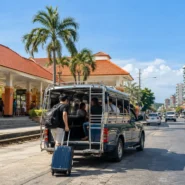
- Separate shared fares from private hire. A songthaew is a pickup with passenger benches. Joining a shared route and hiring the whole vehicle are different transactions. The Pattaya News reported an operator announcement of THB15–20 fares in April 2026; its report also noted uncertainty about permanence. Confirm the current fare and route locally. Do not apply an old THB10 video, or a city-loop fare, to a station charter.
- Buy only the transport you will use. Pattaya does not have a visitor metro pass that solves every journey. A sightseeing bundle also has little value if its attractions are scattered or duplicate your plans. Compare the included admission savings with extra cars, unused inclusions and cancellation conditions. A simple shared ride often beats paying upfront for imagined convenience.
- Choose the correct airport arrival point. RRC currently lists Suvarnabhumi–North Pattaya at THB135 per seat, about US$4, and Suvarnabhumi–Jomtien at THB158, about US$4.70. Compare the final hotel transfer, not merely the THB23 difference. The Jomtien route page specifically says its 22:00 airport departure goes to Pattaya bus station instead of Jomtien. Recheck your departure and stop.
- Keep the Bangkok coach fare in perspective. Roong Reuang Coach publishes THB144 from Ekkamai and THB155 from Mo Chit 2, approximately US$4.30 and US$4.60. Reaching a distant Bangkok terminal to save THB11 makes little sense. Include both terminal connections and baggage conditions when comparing a coach with a car.
- Make water-park days a separate purchase decision. Ramayana’s official tourist promotion displayed THB1,099 online versus THB1,199 walk-in for guests at least 106cm tall, valid through 31 December 2026 when researched. The cheaper resident promotion requires qualifying documentation. Its official booking page also lists lockers and towel hire separately. Add transport and meals before deciding whether the outing fits.
- Give meals a realistic rhythm. For planning, allow roughly THB70–120 for a simple local dish, THB200–400 for a casual restaurant meal and more for seafood, imported food or drinks. These are illustrative ranges, not restaurant quotes. Use convenience stores for water and straightforward breakfasts, supermarket prepared food when useful, and mall food courts for price comparison. Markdown times vary; do not schedule dinner around an assumed discount.
- Use one geographical cluster each day. Combine a central beach walk, shopping and dinner around the same area. Put Jomtien together with activities nearby instead of returning to central Pattaya between stops. A short paved walk can be pleasant in cooler hours; dragging bags across major roads or walking a long hill to save a small fare is a poor exchange.
- Reserve money for the inconvenient version of the day. Set aside another 10–15% of your planned ground spending for a rain-driven car, replacement essentials or a late return when your expected shared ride is unavailable. This reserve is separate from shopping money. If you spend it early, rebuild it before committing to another outing.
- Check what the payment screen is charging. Overseas card fees and ATM charges vary by issuer and machine. Compare the displayed fee before withdrawing, keep enough small notes for shared rides and decline conversion into your home currency when choosing to be charged in THB. Check your own bank’s terms; a favorable exchange headline does not remove its fees.
Pattaya Budget by Travel Season
November to February: pleasant weather, stronger demand
This is generally the drier, more comfortable part of the year, although rain remains possible. The Tourism Authority of Thailand weather guide explains the broader monsoon pattern. Expect popular beachfront properties to command more when international holiday demand and local weekends overlap. Compare the total stay on several nearby dates; there is no useful universal high-season surcharge.
Christmas and New Year: check the complete package
Late December and New Year can tighten desirable hotel inventory sharply. Before paying, check minimum stays, cancellation deadlines and any compulsory celebration meal attached to your chosen rate. A more expensive refundable room may be sensible while flights remain unsettled. Decide whether a sea view and walking access to celebrations justify the premium.
March to May: heat and the Songkran exception
Hotter days can create opportunities between busy dates, but April’s Songkran and Pattaya’s extended Wan Lai celebrations are exceptions to any simple “hot season is cheap” rule. Verify each year’s event dates. Water festivities, road restrictions and crowds can increase the cost and time of a short transfer; choose accommodation close to the experience you want.
June to October: compare weekdays and keep flexibility
Rainier months can offer better room value, especially away from major events, but a discounted hotel is less useful if you pay for cars every afternoon. September and October deserve a flexible outdoor plan. Keep an indoor option near your accommodation, avoid buying several weather-sensitive outings in advance and check cancellation terms before chasing a small discount.
Weekends, holidays and major event dates
Pattaya attracts short breaks from Bangkok, so a quiet midweek quote can change substantially by Friday or a long holiday weekend. Concerts, fireworks and sports events can affect particular areas even outside peak season. Check the city’s event information and compare the actual dates you will sleep there. No month is guaranteed to be cheapest.
Common Budget Mistakes
- Counting only the room and flight. Write down airport travel, meals, water, data, laundry, admission and return transport before choosing your nightly ceiling. Otherwise everyday spending becomes an unexplained overrun.
- Treating a room price as a per-person price. Confirm occupancy, breakfast and the final tax-inclusive total. A solo traveler cannot automatically use half of a double-room quote, while a family may need a larger room or extra bed.
- Assuming every baht bus is the cheap shared service. Ask whether the offered ride is shared or private and confirm the applicable price. A station pickup or off-route hotel drop can legitimately be a different product.
- Booking a remote bargain without a transport plan. Test the accommodation pin against two places you expect to visit most. Add realistic return rides for every day, then compare with a better-positioned room.
- Letting snacks and evenings escape the ledger. Several coffees, desserts and late meals can exceed the cost of lunch and dinner. Set a daily extras limit and a separate evening-entertainment limit before going out.
- Applying a resident attraction price to a tourist. Read eligibility conditions and select the right ticket. Use the full checkout total, including the extras you need, rather than the largest promotional number on the landing page.
- Forgetting the baggage day. Ask your hotel about storage after checkout and check coach allowances. An extra bag, storage charge or car large enough for several suitcases belongs in the transfer budget.
- Confusing refundable deposits with spending money. A hotel deposit or towel deposit may be returned, but it still ties up cash or card capacity. Keep that money outside the day’s usable allowance and retain receipts.
- Having no shopping or emergency ceiling. Give souvenirs their own maximum and protect a reserve for getting back to the hotel. Convert receipts into your planning currency afterward instead of repeatedly accepting home-currency conversion at checkout.
Key FAQs
How much money do I need per day in Pattaya including a hotel?
Use THB1,000–1,600 for a careful budget trip, THB1,800–3,200 for mid-range travel and THB4,000–7,000 for more comfort, subject to the accommodation-sharing assumptions above. Add transfers, expensive outings and shopping separately.
Is THB2,000 a day enough for Pattaya?
It can work with a reasonably priced shared room, mainly local meals and selective private rides. It becomes restrictive for a solo private room in peak season, daily paid attractions or substantial nightlife. Price your hotel first, then see what remains.
Is it cheaper to stay in Jomtien or central Pattaya?
Either can offer value on particular dates. Jomtien is economical when your days are based there; central Pattaya can save transport when most of your plans are around the main bay. Compare the same room standard plus complete daily journeys.
Final Verdict and Your Next Step
Start with the budget tier that matches your actual accommodation and eating habits, then protect money for the first and last transfer. A well-positioned room and fewer cross-town journeys usually produce a more enjoyable saving than an unusually low room rate with awkward access.
Compare available Pattaya hotels on Booking.com, enter your dates and full party size, and check the map before booking. Then price your transport and any major attraction directly. Book desirable accommodation early for busy dates, while keeping enough flexibility for the weather and the holiday you actually want.