
💡 Key Takeaways
- A realistic Osaka travel budget starts at about ¥11,000–¥17,000 (US$70–$110) per person per day including basic accommodation, but solo travelers usually pay more because they cannot split a hotel room.
- The cheapest hotel is not always the cheapest trip. A remote room can add daily train fares, longer transfers, luggage hassle and late-night taxi risk.
- Universal Studios Japan, shopping, airport transfers and intercity Shinkansen journeys should be budgeted separately. Mixing them into an ordinary daily average hides the days most likely to blow your budget.
Building an accurate Osaka travel budget is harder than adding up a hotel and a few bowls of ramen. Hotel prices can change sharply by neighborhood, weekday, season and event date. Osaka’s transport network combines JR, Osaka Metro, Nankai, Hankyu, Hanshin, Keihan and Kintetsu services, so a pass that looks convenient may not cover the routes you actually use. Convenience-store meals can be cheap, yet coffee, desserts, late-night snacks, shopping and theme-park extras quietly push the final total much higher.
Many budget guides also miss the less exciting costs that still leave your wallet: Osaka accommodation tax, station lockers, luggage delivery, reserved-seat supplements, airport transfers, card foreign-transaction fees, ATM charges, missed last trains and the extra fare created by crossing the city several times in one day. This guide uses practical planning ranges rather than one vague average, so you can adjust the numbers to your travel style, season, hotel location and spending habits.
Currency note: The USD figures below use a rounded planning rate of approximately US$1 = ¥155. Exchange rates move daily, so treat the dollar amounts as convenient estimates and keep your working budget in Japanese yen.
The 1-Min Cheat Sheet
- Budget Traveler: ¥11,000–¥17,000 per person per day (about US$70–$110), including accommodation.
This usually means a hostel dorm, capsule hotel or aggressively priced simple room; convenience-store or supermarket breakfasts; casual local meals; mostly free sights; and careful use of walking, IC-card fares or a one-day Metro pass only when the itinerary supports it. - Mid-Range Traveler: ¥20,000–¥32,000 per person per day (about US$130–$205), including accommodation.
This range works best for two people sharing a well-located business or mid-range hotel room. It allows comfortable local meals, paid attractions, coffee or dessert, normal public transport and occasional convenience spending without counting every coin. - Comfortable Traveler: ¥38,000–¥60,000 per person per day (about US$245–$390), including accommodation.
Expect a higher-quality central hotel, better restaurants, taxis when useful, reserved airport transport, several paid experiences and enough margin to avoid reorganizing the day around small savings.
These are per-person planning ranges. The mid-range and comfortable figures assume two people share a room; a solo traveler may need another ¥5,000–¥15,000 per day for accommodation. International flights, major shopping, Universal Studios Japan tickets and Express Passes, and Shinkansen trips to Tokyo or other distant cities are normally better kept outside the ordinary daily budget.
What Actually Goes Into an Osaka Daily Budget?
Accommodation: The Biggest Variable
For most visitors, accommodation determines whether an Osaka trip feels affordable or expensive. Use the following figures as planning bands, not guaranteed rates:
- Hostel dorm or capsule: roughly ¥3,500–¥7,500 per person on ordinary dates. Female-only floors, newer capsules and prime Namba or Umeda locations often cost more.
- Simple private room or business hotel: roughly ¥8,000–¥16,000 per room on softer weekdays, with ¥14,000–¥28,000 or more common on popular weekends and peak dates.
- Comfortable three- or four-star room: often ¥18,000–¥35,000 per room, rising to ¥30,000–¥55,000 or more when citywide demand is strong.
- Upscale and luxury hotels: commonly begin around ¥40,000–¥60,000 per room and can rise far beyond that during holidays, major events and high-demand weekends.
Check whether the displayed price includes taxes, breakfast and mandatory fees. Osaka Prefecture’s accommodation tax applies per guest per night based on the lodging charge. For stays from September 1, 2025, the current bands are ¥200 for a room charge of ¥5,000–¥14,999, ¥400 for ¥15,000–¥19,999 and ¥500 for ¥20,000 or more. That does not ruin a trip, but it should not appear as a surprise at check-in.
Location changes the real cost. Namba, Shinsaibashi and Umeda are usually convenient but command stronger rates. Tennoji can offer a useful balance of transport and price. Shin-Osaka makes sense for frequent Shinkansen trips but is less atmospheric for evening sightseeing. Areas farther south or east may look cheaper, yet the savings can disappear after repeated transfers and longer rides.
Local Transportation: Small Fares Become a Real Daily Cost
A normal central Osaka ride is inexpensive, but three or four separate journeys can add up. A useful planning allowance is:
- Compact sightseeing day: ¥500–¥900 if you group attractions and walk between nearby areas.
- Typical multi-area day: ¥900–¥1,400 using a mixture of Osaka Metro and other railways.
- Outer neighborhoods or Kansai day trip: ¥1,500–¥4,000 or more, depending on distance and railway operator.
The Osaka Metro one-day ticket is currently ¥820 on weekdays and ¥620 on Saturdays, Sundays and holidays, but it mainly pays off when you take enough covered rides. It does not magically cover every JR or private-railway segment. An IC card such as ICOCA is often the least stressful choice because you pay the correct fare without forcing the itinerary to justify a pass.
Food: Osaka Can Be Cheap, but Grazing Is Expensive
Osaka deserves its food reputation, and it is possible to eat well without living on convenience-store rice balls. The bigger danger is buying six “small” items throughout the day and mentally counting none of them as a meal.
- Very careful food budget: ¥2,500–¥3,500 per day using bakery or convenience-store breakfast, a set lunch and a supermarket or simple noodle dinner.
- Realistic mid-range food budget: ¥4,500–¥7,000 per day for coffee, lunch, dinner, one snack and occasional drinks.
- Comfortable food budget: ¥8,000–¥15,000 or more for quality sushi, yakiniku, omakase, cocktails or hotel dining.
Typical low-stress price targets include ¥400–¥800 for breakfast, ¥800–¥1,500 for curry, noodles or a lunch set, ¥1,500–¥3,000 for a casual dinner and ¥500–¥1,200 for dessert or coffee. Dotonbori is fun, but heavily promoted street snacks are not automatically cheap. Compare portion size and price before joining a queue.
Attractions and Entertainment
Many excellent Osaka experiences are free: Dotonbori at night, Kuromon Market browsing, shrine visits, riverside walks, Shinsekai street photography, Osaka Castle Park and neighborhood exploration. Paid attractions often fall around ¥1,000–¥3,500 each, but theme parks are a different category.
Universal Studios Japan uses date-based pricing, and an Express Pass can cost as much as or more than park admission. Add transport, food, drinks, lockers, character merchandise and timed-entry planning, and a USJ day can easily become the most expensive day of the trip. Do not hide it inside a ¥20,000 “average day.” Give it a separate envelope.
Top Budget Survival Tips
- Calculate hotel cost plus transport cost, not room price alone.
A room that saves ¥2,000 but requires two extra transfers every day may cost ¥800–¥1,500 more in fares, plus 45–90 minutes of lost time. Add the physical cost of stairs, crowded platforms and luggage. Compare the total stay cost for the exact itinerary, not a single nightly number. - Do not buy a transport pass before mapping your actual rides.
Passes are profitable only when covered fares exceed the pass price. Write down each planned route, railway operator and normal fare. A Metro pass is useful for a Metro-heavy day; it can be poor value on a day dominated by JR, Nankai, Kintetsu or walking. Convenience is valuable, but “unlimited” is not the same as “cheapest.” - The cheapest airport transfer may be wrong for large luggage.
Nankai’s Airport Express to Namba is often economical, while the reserved-seat Rapi:t costs more but provides a calmer ride. JR can be more logical for Tennoji, Osaka/Umeda or Shin-Osaka. A limousine bus may reduce transfers for certain hotels. Saving a few hundred yen is not smart when it creates two difficult interchanges with a 28-inch suitcase during rush hour. - Treat cherry blossom dates, weekends and Japanese public holidays as a price multiplier.
Late-March and early-April demand can tighten quickly once bloom forecasts become clearer. Golden Week in late April and early May brings domestic travel pressure. Saturday nights are often much more expensive than Sunday or Monday nights. Search several date combinations before assuming your chosen week is normal. - Create a separate theme-park budget.
Include park entry, possible Express Pass, train fares, breakfast before entry, meals, drinks, locker rental and merchandise. Decide the souvenir limit before arriving. Inside a theme park, fatigue and fear of missing out are expensive decision-makers. - Use convenience stores strategically, not automatically.
Convenience stores are excellent for early breakfasts, water and a quick meal, but supermarkets are often better for fruit, drinks, larger portions and discounted evening food. Look for markdown stickers later in the evening. Department-store basement food halls can also offer high-quality bentos and prepared dishes, especially near closing, though popular items may sell out. - Group each day by area.
Pair Namba, Shinsaibashi, Dotonbori and Kuromon Market. Combine Umeda with Nakazakicho or nearby museums. Put Osaka Castle with Tenmabashi or Kyobashi. Keep the bay area together. This cuts both fares and the exhausting “one more train” feeling that makes travelers buy taxis and overpriced convenience food. - Walk when it replaces a short ride, not when it damages the rest of the day.
Walking 15–25 minutes through an interesting neighborhood can save money and improve the experience. Walking 45 minutes in August heat, heavy rain or after 20,000 steps may cost more later in drinks, recovery time or a taxi. Spend small amounts to protect energy when energy is the limiting resource. - Keep an emergency reserve of at least ¥5,000–¥10,000 per person.
Rain can trigger last-minute indoor attractions. A missed last train may require a taxi. A broken umbrella, pharmacy visit, luggage locker or unexpected purchase can appear without warning. Keep this reserve separate from the ordinary daily allowance so it still exists when needed. - Pay in Japanese yen and understand card and ATM fees.
Your card issuer may charge a foreign-transaction fee, and the ATM operator may charge another fee. When a terminal or ATM offers to convert the transaction into your home currency, that is Dynamic Currency Conversion. The displayed home-currency amount can include an unfavorable markup. In most cases, decline the conversion and choose JPY, then let your card network and issuer handle the exchange.
Osaka Budget by Travel Season
Cherry Blossom Season
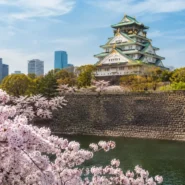
Late March to early April is one of the hardest periods for bargain accommodation, especially after forecast dates become more certain. Rooms near Osaka Castle, Namba, Umeda and convenient rail hubs can tighten quickly. The blossoms themselves are free, but the season raises the cost of sleeping near them. Book a cancellable room early, then recheck prices rather than waiting for a perfect forecast before making any reservation.
Golden Week
Golden Week, centered on national holidays from late April into early May, creates heavy domestic demand. Trains, attractions and hotels can all feel more crowded, and cheap room inventory disappears first. This is not the time to arrive with a flexible “I will book later” strategy. If your dates are fixed, secure transport and accommodation before optimizing minor expenses.
Summer
June can offer softer prices on some dates because of the rainy season, but there is no guarantee: weekends, concerts and school schedules still matter. July and August bring heat, humidity, festivals and school-holiday travel. Mid-August around Obon can be especially busy. Budget extra for drinks, indoor breaks, coin lockers and occasional short train rides you might otherwise walk.
Autumn Foliage Season
Osaka’s foliage generally comes later than northern Japan, often becoming attractive from mid-to-late November into early December depending on weather. Demand may rise because travelers use Osaka as a base for Kyoto, Nara and Minoh. Kyoto-side day trips can become the real cost pressure through packed trains, higher room rates and last-minute tour purchases. Compare staying in Osaka with staying in Kyoto; Osaka can still be the better-value base even after transport.
Christmas and New Year
Christmas illuminations and weekend events can lift demand, but New Year is the more complicated budgeting period. Some restaurants, attractions and small businesses close or operate reduced hours, while holiday transport demand rises. A cheap room is less useful if your preferred dining options are shut and you depend on taxis or hotel restaurants. Check operating calendars before booking a bargain year-end stay.
Quieter Winter Periods
Mid-January through February can produce attractive hotel rates on ordinary weekdays after the New Year rush, particularly when there is no major event. However, Lunar New Year travel, three-day weekends, concerts and conventions can tighten supply. February is often a good period to compare, not a month that is automatically cheapest. Look at Sunday-to-Thursday stays and test nearby neighborhoods before committing.
Practical rule: The cheapest Osaka dates are usually created by a combination of weekday timing, low event demand and flexible hotel location—not by one universally cheap month. Always compare the same room across several date patterns.
A Realistic 5-Day Osaka Budget Example
Budget Solo Traveler
- Accommodation: ¥25,000–¥38,000 for five nights in a hostel, capsule or basic room
- Food: ¥14,000–¥19,000
- Local transport: ¥4,000–¥6,000
- Attractions and small entertainment: ¥5,000–¥10,000
- Airport transfer and hidden-cost buffer: ¥5,000–¥9,000
Estimated five-day total: approximately ¥53,000–¥82,000 (about US$340–$530), excluding flights, major shopping, USJ and intercity rail.
Mid-Range Traveler Sharing a Room
- Accommodation share: ¥45,000–¥70,000 per person for five nights
- Food: ¥25,000–¥38,000
- Local transport: ¥5,000–¥8,000
- Attractions and experiences: ¥12,000–¥22,000
- Airport transfer and buffer: ¥8,000–¥15,000
Estimated five-day total: approximately ¥95,000–¥153,000 per person (about US$615–$990), excluding flights, large purchases, USJ and long-distance Shinkansen.
Comfortable Traveler Sharing a Room
- Accommodation share: ¥85,000–¥140,000 per person for five nights
- Food and drinks: ¥45,000–¥75,000
- Transport including occasional taxis: ¥10,000–¥20,000
- Attractions and experiences: ¥25,000–¥45,000
- Airport transport and buffer: ¥15,000–¥30,000
Estimated five-day total: approximately ¥180,000–¥310,000 per person (about US$1,160–$2,000), excluding international flights, luxury shopping and premium theme-park add-ons.
Hidden Osaka Costs Worth Adding Before You Book
- Accommodation tax: currently ¥200–¥500 per guest per night for taxable room charges from ¥5,000 upward.
- Coin lockers: useful before check-in or after checkout, but large lockers cost more and can be unavailable at busy stations.
- Luggage forwarding: often worth paying for when changing cities, but the fee depends on suitcase size and distance.
- Reserved-seat or limited-express supplements: airport and intercity trains may charge more than the base fare.
- Oversized Shinkansen baggage: luggage with combined dimensions over 160 cm requires a reserved baggage-area seat on relevant Tokaido–Sanyo–Kyushu Shinkansen services. Arriving without the required reservation can trigger a ¥1,000 fee and unnecessary stress.
- Hotel breakfast: a ¥2,000 breakfast added every day can exceed the savings from choosing a slightly cheaper room.
- Laundry: coin laundry is inexpensive, but detergent, drying cycles and time still belong in a long-stay budget.
- Late-night transport: trains do not run all night. Check the last practical connection, not only the final departure from the first station.
- Card and ATM charges: your home bank, card issuer and Japanese ATM operator may each apply separate costs.
Common Budget Mistakes
1. Counting Only Flights and Hotels
The mistake: Treating food, transport and attractions as small miscellaneous spending.
The fix: Build separate daily envelopes for meals, local transport, attractions and discretionary snacks. Add a 10–15% contingency after the first total, not before.
2. Forgetting the Airport-to-City Journey
The mistake: Assuming arrival in Osaka means arrival at the hotel.
The fix: Price the exact route from Kansai International Airport to your station, including transfers and any reserved-seat supplement. Repeat the calculation for departure day.
3. Assuming a JR Pass Covers Everything
The mistake: Buying a nationwide or regional JR pass and expecting it to cover Osaka Metro, Nankai, Hankyu, Hanshin, Keihan and Kintetsu.
The fix: Match each itinerary segment to its operator. Compare the pass price with individual fares and include non-covered transport before deciding.
4. Scheduling Distant Areas on the Same Day
The mistake: Jumping from the bay area to Osaka Castle, then Namba, then Umeda because the map makes everything look close.
The fix: Divide Osaka into clusters and finish one cluster before moving. You will spend less and experience more.
5. Setting a Low Food Budget While Buying Constant Treats
The mistake: Budgeting ¥3,000 for food, then buying two coffees, a dessert, takoyaki, a convenience-store drink and a late-night snack on top of lunch and dinner.
The fix: Give snacks and drinks their own allowance. A daily “fun food” cap of ¥1,000–¥2,000 is easier to control than pretending it does not exist.
6. Having No Separate Shopping Limit
The mistake: Letting cosmetics, anime goods, kitchenware and drugstore purchases come from the same money used for meals and transport.
The fix: Set a trip-wide shopping ceiling in yen and track it after every purchase. Keep one final-day allowance so early enthusiasm does not consume the whole budget.
7. Ignoring Luggage Storage and Delivery
The mistake: Planning a full sightseeing day between hotels with no place for bags.
The fix: Confirm hotel storage policies, station locker sizes and luggage-forwarding lead times. Paying for hands-free travel can be better value than losing hours to luggage.
8. Choosing an Inconvenient Hotel to Save a Small Amount
The mistake: Booking far from a useful station because the nightly rate is ¥1,500 lower.
The fix: Multiply the expected transport difference by every day and add transfer time. A centrally connected hotel often produces the cheaper trip.
9. Leaving No Emergency Money
The mistake: Spending the entire daily allowance because tomorrow has a new allowance.
The fix: Hold ¥5,000–¥10,000 per person outside the day-to-day wallet. Use it only for weather changes, medical needs, missed transport or other genuine surprises.
10. Accepting Dynamic Currency Conversion
The mistake: Choosing your home currency because the amount looks familiar.
The fix: Select Japanese yen unless you have compared the offered conversion and know it is better. Familiarity is not a discount.
Key FAQs
How much money do I need per day in Osaka including a hotel?
A careful traveler should plan around ¥11,000–¥17,000 per person per day including basic lodging. A mid-range traveler sharing a room should allow roughly ¥20,000–¥32,000, while a comfortable trip commonly needs ¥38,000–¥60,000. Solo private-room travelers should add a room supplement because they cannot split the accommodation cost.
Is ¥10,000 a day enough for Osaka?
It can be enough if accommodation is already paid, or if you use a low-cost hostel and keep attractions modest. It is tight for a private hotel room, frequent café stops, nightlife or paid experiences. For less stressful planning, ¥12,000–¥15,000 is a safer budget-traveler target on ordinary dates.
How much should I budget for five days in Osaka?
Excluding international flights, major shopping, USJ and long-distance Shinkansen, a budget solo traveler can target roughly ¥53,000–¥82,000. A mid-range traveler sharing a room should consider about ¥95,000–¥153,000 per person. Add a separate theme-park amount if USJ is part of the trip.
Final Verdict and Your Next Step
A good Osaka budget is not the lowest number you can force onto a spreadsheet. It is the amount that lets you stay in a sensible location, eat the food you came for, move around without constant second-guessing and absorb one or two surprises without panic.
Budget travelers should prioritize location, free sights, supermarkets and area-based itineraries. Mid-range travelers get the best balance by sharing a central business hotel and separating major attraction days from normal days. Comfortable travelers should spend where it protects time and energy: direct airport transport, good hotel access, useful taxis and advance reservations for high-priority experiences.
Book accommodation early with a cancellable rate when traveling during cherry blossom season, Golden Week, autumn weekends or major events. Then compare again before the free-cancellation deadline. Check the final price, room size, nearest useful station, breakfast policy and accommodation tax—not just the headline discount.
- Compare Osaka hotel prices on Agoda
- Check Osaka rooms and cancellation terms on Booking.com
- Compare Osaka attraction tickets and passes on Klook
- Browse Osaka activities and day trips on KKday
Affiliate disclosure: Some booking links may earn this website a commission at no extra cost to you. Prices, availability, exchange rates and operating conditions can change. Always confirm the final checkout amount and cancellation rules before payment.
Price and Rule Sources Checked
- Osaka Prefecture accommodation tax
- Osaka Metro one-day pass
- Kansai International Airport rail access
- Nankai Rapi:t ticket information
- Universal Studios Japan ticket information
- Shinkansen oversized baggage rules
- Visa guidance on Dynamic Currency Conversion
- Japan Cabinet Office national holiday calendar