
💡 Key Takeaways
- The best-value first trip is usually a Bangkok train plus local transport. Check the exact Bangkok departure station: most useful northbound services leave Krung Thep Aphiwat, while only some ordinary trains still leave Hua Lamphong.
- Ayutthaya Railway Station is not inside the main temple zone. It sits east of the Pa Sak River, so budget for the short ferry, a tuk-tuk, or a pre-arranged pickup—especially with a suitcase.
- There is no magic transport pass that solves Ayutthaya. Bangkok BTS/MRT passes do not cover the intercity train, minivan, ferry, bike rental or tuk-tuk. Pay for the rides you actually need.
Last transport check: 23 August 2026. Timetables, promotional fares and local quotes can change; the links below lead to the live operator or booking page wherever possible.
An Ayutthaya transportation guide can look simple on paper: travel roughly 80 kilometres north from Bangkok, see the ruins and come back. The frustrating part begins in the details. “Bangkok Station” may mean Hua Lamphong or the much larger Krung Thep Aphiwat terminal. Ayutthaya’s train station leaves you on the opposite side of the river from the historic island. Minivans may have almost no luggage space, and a cheap tuk-tuk quote is meaningless until you know whether it is per hour, per vehicle or for the entire route.
This guide is built around those decision points. It explains which option fits a day trip, an overnight stay, a family with luggage, a heat-sensitive traveller or a tight budget—and where spending a little more genuinely saves time and sore feet.
Jump to: 1-minute comparison · survival tips · full transport guide · FAQs · final verdict
The 1-Min Cheat Sheet
- Train from Bangkok: best overall for independent travellers. Allow roughly 1 hour 10 minutes to 2 hours, depending on the service. Third-class ordinary or rapid tickets can be extraordinarily cheap; air-conditioned services cost more. Add a ferry, bicycle or tuk-tuk after arrival. Best when you have a small bag and can tolerate a little timetable uncertainty.
- Minivan from Bangkok: useful if Mo Chit suits your location. The road journey is commonly scheduled at around 1.5 hours, but Bangkok traffic and intermediate stops can stretch it. Online fares were around THB 180 for the main operator when checked. Avoid this option with a large suitcase unless the operator confirms baggage space or an extra seat.
- Private car, taxi or organised tour: best with children, seniors or luggage. Door-to-door travel removes the Bangkok-terminal transfer and the local-transport puzzle. It costs more, but a group can split the vehicle price. Confirm whether the booking includes waiting time, tolls, parking, temple tickets, lunch and an actual guide.
- Frog-head tuk-tuk in Ayutthaya: best heat-and-time saver. A working negotiation benchmark is around THB 200–300 per vehicle per hour, with four-hour circuits often discussed around THB 800–1,200. This is not a guaranteed tariff. Agree on the exact temples, total hours and total price before boarding.
- Bicycle: best for a cool morning on the historic island. Basic rentals are often around THB 50–100 per day. The terrain is flat, but heat, traffic, weak lighting and off-island temples make an all-day ride less easy than the low price suggests.
Top Survival Tips
- Read the station name on your ticket, not the name in an old blog post. Krung Thep Aphiwat Central Terminal is Bangkok’s main long-distance hub. Hua Lamphong still handles selected ordinary trains. They are different stations, and crossing Bangkok after discovering the mistake can cost you the departure.
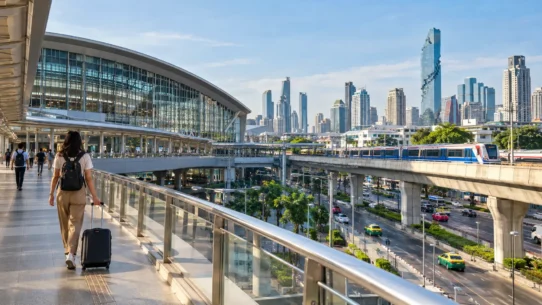
- Do not confuse three “Bang Sue” references. Bang Sue MRT is the Blue Line station connected by an underground walkway to Krung Thep Aphiwat. Bang Sue Junction is a separate railway station. Follow signs for Krung Thep Aphiwat Central Terminal, then use the departure screens. Allow 20–30 minutes inside this enormous building if it is your first visit.
- The new air-conditioned train has a date-sensitive catch. SRT Bangkok Connex began its expanded Krung Thep Aphiwat–Ayutthaya service on 1 August 2026. Its THB 30–50 introductory fare is scheduled only through 31 October 2026. Tickets are currently station-only and seats are unreserved. If you read this later, verify both the service and fare rather than trusting a screenshot.
- Plan the east-bank-to-island transfer before you arrive. From Ayutthaya Railway Station, the small cross-river pier is reached by walking down the road opposite the station. The crossing is quick, but reported fares and final operating times vary. With wheeled luggage, a toddler or reduced mobility, a tuk-tuk or booked pickup is less awkward than a narrow boat landing.
- Retire the old “Victory Monument minivan” advice. The dependable starting point to search today is the Mochit New Van Terminal beside Bangkok’s northern bus-terminal complex. It is not Mo Chit BTS station; there is still a last-mile transfer. Check the operator counter and drop-off printed on your voucher.
- Treat van luggage as a separate passenger. Many vans have little or no dedicated hold. A carry-on may fit at your feet; a large suitcase may require an extra paid seat or may be refused when the van is full. Message the operator before booking, not after reaching the platform.
- Negotiate a tuk-tuk route, not just a number. Write down: vehicle price, total hours, included waiting, and named stops. Wat Mahathat, Wat Phra Si Sanphet and Wat Ratchaburana cluster reasonably well; Wat Yai Chai Mongkhon and Wat Chaiwatthanaram require more driving. A vague “temple tour” gives the driver and passenger different expectations.
- Use a hybrid plan in hot weather. Cycle the central island early, return the bike before the worst afternoon heat, then hire a tuk-tuk for off-island temples. It costs more than cycling alone but saves energy precisely where the road crossings and distances become least pleasant.
- Do not make Grab your only return plan. App-based cars are available in Ayutthaya, but supply can be thin near outlying temples or around closing time. Check the live app first; if the wait is long, arrange a tuk-tuk pickup or keep a driver’s number.
- Store luggage before sightseeing. Recent traveller reports confirm a left-luggage service at Ayutthaya station, but reported prices and hours are inconsistent. Ask the station counter on arrival, photograph the claim ticket and keep valuables with you. An overnight hotel is the safer fallback for multiple bags.
- Buy transport, not the fantasy of “unlimited” transport. A Rabbit Card or Bangkok day pass may help you reach a Bangkok terminal, but it does not pay for your Ayutthaya train, van, ferry, rental or tuk-tuk. For most day-trippers, separate tickets and a small cash reserve are cheaper and clearer.
- Protect the return journey. Screenshot your train or van details, pin the correct departure point offline and arrive early. Do not connect the last realistic Ayutthaya service straight into an international flight or a separately booked sleeper with no buffer.
The Full Experience
🚆 SRT Trains: Best Overall for Independent Bangkok Day-Trippers
Best value · Scenic · Small-bag friendly · Variable comfort
The train is the most satisfying answer for a first independent visit because the Bangkok–Ayutthaya leg is cheap, legible and largely immune to road traffic. The trade-off is that “the train” is not one uniform product. An ordinary third-class carriage with open windows, a rapid fan-cooled service, an air-conditioned express seat and the new SRT Bangkok Connex all have different fares, boarding rules and comfort.
The practical station rule: search the exact journey on the official SRT D-Ticket site or the SRT timetable. Enter Krung Thep Aphiwat and Ayutthaya for most useful northbound trains. Search Bangkok or Hua Lamphong separately if that older station is more convenient. Do not assume every train shown for one terminal calls at the other.
For budget travel, selected ordinary or rapid third-class tickets are commonly around THB 15–20, while second-class fan seats and air-conditioned express seats can rise from roughly THB 60 to THB 300 or more. Treat those as class examples, not one route-wide fare. Some low-cost seats are sold only close to departure or at the station, while reservable trains appear online.
2026 update: SRT Bangkok Connex uses refurbished, air-conditioned KIHA 40/48 railcars. The published daily tourist-friendly pairing is train 9003 from Krung Thep Aphiwat at 09:05, reaching Ayutthaya at 10:20, with returns at 14:40 and 19:45. A weekday-only early pair also operates. As checked, the THB 50 Bangkok–Ayutthaya promotional ticket is sold only at stations, has no reserved seat and is scheduled through 31 October 2026. Arrive early on weekends; the inaugural service filled every seat.
After arrival: exit Ayutthaya station, ignore any pressure to decide instantly, and choose one of three clean plans. Walk roughly 300 metres to the cross-river pier and rent a bicycle after crossing; negotiate a tuk-tuk at the station for a multi-temple circuit; or meet a pre-booked driver. The station has reported left-luggage facilities, but confirm the current fee and collection time before handing over a bag.
✅ What Other Travelers Say
Travellers consistently value the very low third-class price, countryside views and simple direct journey. The open-window carriage is part of the fun on a short trip. Recent interest in the air-conditioned KIHA service also shows that many visitors will pay a modest premium for a cooler, more comfortable ride.
⚠️ The Catch (Things to Keep in Mind)
Ordinary trains can run late, third class can be hot and crowded, and the station names remain the biggest first-timer trap. The cheap train ticket also does not finish the journey: you still need to cross the river or hire local transport. If you are carrying a large suitcase, compare the total effort—not just the THB fare—with a door-to-door transfer.
🚐 Minivans: Best When Mo Chit Is Convenient and Your Bag Is Small
Frequent departures · Air-conditioned · Traffic-sensitive · Weak for large luggage
The video is useful for visualising the terminal journey; use the current operator listing below for today’s counter, fare and timetable.
A minivan looks faster than the train because the published road time is often around 90 minutes. That comparison hides two extra legs: reaching Mochit New Van Terminal from your Bangkok hotel and getting from the Ayutthaya drop-off to your first temple. If you already stay near Chatuchak, the arithmetic can work. From Silom, riverside Bangkok or Sukhumvit, the train may still produce the easier day.
Current listings for Win 91 Ayutthaya show regular departures from the new van terminal and an online fare around THB 180. Schedules often appear hourly, but vans may leave once full, make roadside pickups or arrive later in traffic. The Ayutthaya endpoint may be labelled Ayutthaya Win, Central Ayutthaya or another operator-specific point. Save the map pin from the voucher; “Ayutthaya” does not guarantee the historical-park gate or railway station.
Terminal reality: Mo Chit BTS and Mochit New Van Terminal are not the same place. From the BTS, use a short taxi, ride-hailing car or appropriate local bus rather than starting a hot roadside walk with luggage. At the terminal, go to the building or counter shown on your ticket and check in around 30 minutes early.
Luggage test: if your bag cannot sit safely at your feet or on your lap, contact the operator. Some services sell an additional seat for a suitcase; others use a minibus with better storage. Never assume the driver can create a boot after every passenger arrives.
✅ What Other Travelers Say
Recent verified-booking reviews often praise the air-conditioning, low price and flexible departure rhythm. Several passengers report being allowed onto an earlier van when space was available, which can be helpful on a relaxed itinerary.
⚠️ The Catch (Things to Keep in Mind)
The same reviews mention late departures, intermediate stops, unclear final stops and unexpected baggage arrangements. The vehicle has no toilet, and the schedule is less dependable during Bangkok traffic. Use a train or private car if a hard airport connection follows.
🚘 Private Cars, Taxis and Guided Tours: Best for Door-to-Door Ease
Best with luggage · Family-friendly · Flexible route · Higher upfront cost
A private vehicle is not automatically “luxury.” For three or four people, it can be a rational purchase once you combine Bangkok hotel-to-station transport, four hours of local tuk-tuk hire and the energy cost of moving children or bags through multiple interchanges. Current one-way taxi listings begin around the mid-US$30s per vehicle, while full-day charters and guided tours vary much more by vehicle size and inclusions.
The booking label matters. A private transfer normally takes you from A to B and leaves. A car charter with driver waits and follows an agreed route, but the driver may not be a licensed guide. A guided day tour adds interpretation and a planned itinerary, sometimes in a shared van rather than a private car.
Before paying, check seven lines: hotel pickup zone, total service hours, mileage limit, overtime, tolls and parking, child-seat fee, and whether temple admissions and lunch are included. One current Ayutthaya charter listing, for example, charges THB 500–600 per extra hour and treats child seats as an add-on. Those details can matter more than a small difference in headline price.
This option is especially strong if you want Bang Pa-In Palace, Wat Yai Chai Mongkhon and Wat Chaiwatthanaram in one day, because they do not form a compact walking circuit. It is also the cleanest choice from Suvarnabhumi Airport, which has no direct train to Ayutthaya. From Don Mueang Airport, however, a direct northbound SRT train can be much cheaper if its schedule fits.
✅ What Other Travelers Say
Travellers like hotel pickup, air-conditioning between exposed temple sites and not having to renegotiate every ride. Families and small groups repeatedly value the ability to keep bags in the vehicle and change the pace when someone is tired.
⚠️ The Catch (Things to Keep in Mind)
A driver is not necessarily a guide, “private” can still exclude admissions, and overtime or out-of-zone surcharges may be paid in cash. Shared tours can feel rushed and may bundle a floating market that steals time from the ruins. Choose the itinerary, not merely the lowest advertised price.
🛺 Frog-Head Tuk-Tuks: Best for a Fast, Custom Temple Circuit
Iconic local ride · Per-vehicle value · Negotiation required · No air-conditioning
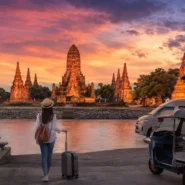
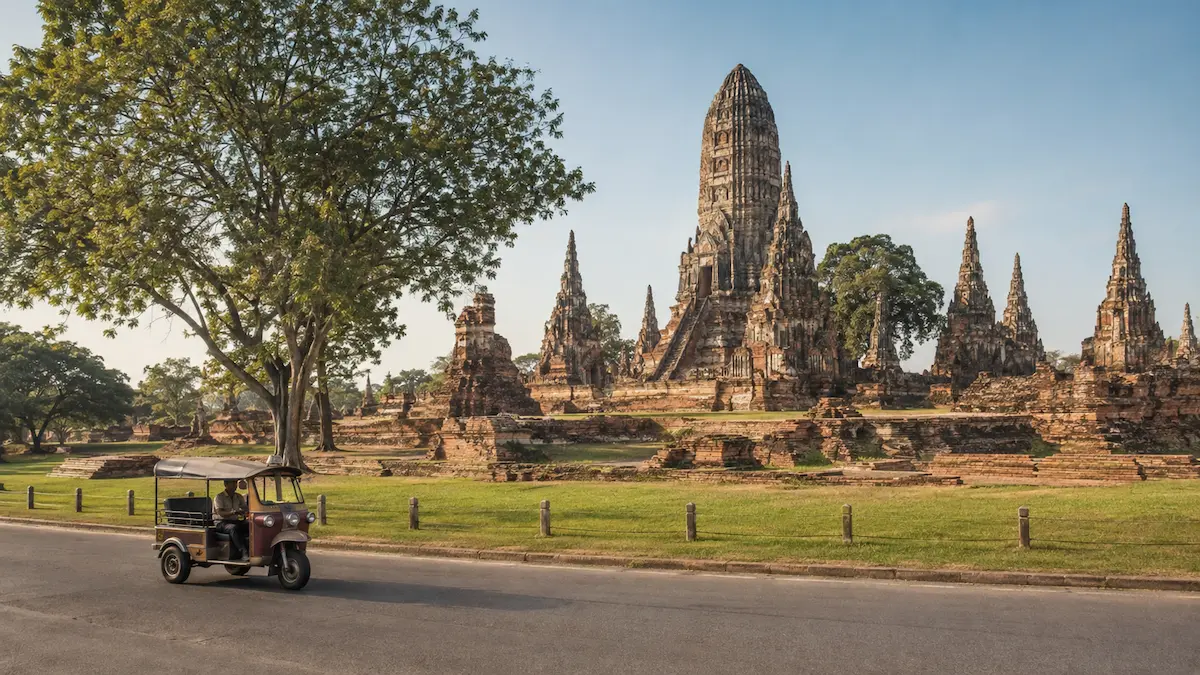
Ayutthaya’s vintage tuk-tuk hua kop—the “frog-head” tuk-tuk—is not just a photo prop. It is the most practical local vehicle when you have three to five hours and want both central and off-island temples. Drivers usually wait at the railway station, around tourist streets and near major sights.
There is no fare meter, so use a process rather than a heroic bargaining performance. Show the driver a written route, state the total number of hours, ask for the price for the whole vehicle, confirm that waiting at each temple is included, and type the total into your phone. A useful planning range is THB 200–300 per hour per vehicle, with many recent four-hour discussions around THB 800–1,200. Demand, language, pickup point and route can move the quote.
A sensible four-hour circuit: Wat Mahathat or Wat Ratchaburana, Wat Phra Si Sanphet, Wat Lokayasutharam, and either Wat Chaiwatthanaram or Wat Yai Chai Mongkhon. Trying to add every famous temple turns the day into a sequence of parking lots. If you want sunset, agree on the final stop and return pickup before the driver leaves.
For a one-way hop, ask the price before boarding and keep small notes. A single ride can make sense after bicycle return or when Grab supply is weak. Repeated ad-hoc rides are often worse value than a pre-agreed circuit.
✅ What Other Travelers Say
Positive reports focus on patient drivers, easy temple-to-temple movement and the breeze between hot sites. Groups often find the per-vehicle price reasonable, and the unusual frog-nose design feels genuinely local to Ayutthaya rather than a generic Bangkok ride.
⚠️ The Catch (Things to Keep in Mind)
Station touting can feel intense, initial quotes vary and a “four-hour tour” may not include the temples you imagined. One well-publicised complaint involved visitors being pressured into a four-hour, THB 1,200 package. Most drivers are not scammers; the protection is simply a written route, total price and freedom to decline.
🚲 Bicycles: Best for the Historic Island Before Midday
Cheapest local option · Flat terrain · Flexible stops · Heat and traffic exposure
A bicycle is excellent inside the historical core because the land is flat and several headline ruins sit only minutes apart. Rentals around the station, the ferry landing and tourist streets are commonly THB 50–100 per day for a basic city or mountain bike. Some hotels include bikes, which makes an overnight stay even easier.
If you arrive by train, consider crossing the river before renting. Carrying a bicycle onto the small ferry can cost extra and adds an awkward step. On the island, check the brakes, tyre pressure, saddle clamp, bell and lock before leaving the shop. Photograph the bike’s existing scratches and confirm the return deadline.
A low-stress morning loop: Wat Ratchaburana, Wat Mahathat, Bueng Phra Ram, Wat Phra Si Sanphet and Wat Lokayasutharam. This keeps most riding within the island. Wat Yai Chai Mongkhon and Wat Chaiwatthanaram require busier roads, bridges or longer exposed sections; take a tuk-tuk for those unless you are comfortable in Thai traffic.
Carry water, sun protection and an offline map. Start when temples open, take a long lunch in the hottest hours and avoid riding after dark: lighting and lane discipline are inconsistent. A cheap rental stops being a bargain if exhaustion ruins the final two temples.
✅ What Other Travelers Say
Travellers love the freedom to stop at minor ruins, the short distances inside the central park and the almost absurdly low rental price. The ride also makes the scattered city feel coherent in a way that jumping between car parks does not.
⚠️ The Catch (Things to Keep in Mind)
“Flat” does not mean “effortless.” Midday heat, fast traffic, potholes, dogs and poorly lit roads are the real difficulty. Rental-bike quality varies, and small frames can be uncomfortable for taller riders. Families with young children and anyone unused to road cycling should take a tuk-tuk.
🛵 Motorbike Rentals: Best Only for Licensed, Confident Riders
Maximum freedom · Easy off-island reach · Licence required · Insurance risk
A scooter makes Ayutthaya’s geography easy: central ruins in the morning, Wat Yai Chai Mongkhon before lunch and Wat Chaiwatthanaram later without waiting for a driver. Rentals are often advertised around THB 200–300 per day before fuel and deposit. That convenience is appropriate only if you already ride motorcycles and carry the correct documents.
Thai authorities require visiting drivers to carry an International Driving Permit together with the national licence. For a scooter, the licence and IDP must cover motorcycles; a car-only licence is not enough. A rental shop willing to hand over a key does not make an unlicensed ride legal. Thai law also requires a helmet, and riding without a valid licence may invalidate travel insurance.
Before accepting the bike, film every side, test both brakes and lights, inspect the tyres, photograph the fuel gauge, and ask what happens after a puncture. Prefer a cash deposit or a documented copy where possible rather than leaving your passport. Confirm that the supplied helmet fits and fastens properly.
Traffic keeps left. Expect vehicles to enter from side streets, loose lane discipline and limited shade. Do not learn to ride here, carry a child without suitable protection or assume a quiet-looking bridge stays quiet.
✅ What Other Travelers Say
Experienced riders value covering outlying temples quickly, avoiding repeated negotiations and being able to stop at cafés or lesser-known ruins. A scooter can be the most efficient independent option for an overnight visitor with a broad route.
⚠️ The Catch (Things to Keep in Mind)
The legal and insurance exposure is far more serious than the rental price suggests. Incorrect licence categories, poor helmets, road unfamiliarity and damage disputes can turn a THB 200 rental into the trip’s worst decision. If any document or skill is missing, hire a tuk-tuk instead.
⛴️ River Ferries and Boat Tours: Best as a Shortcut or Sunset Add-On
Station shortcut · Cash fare · Weather-sensitive · Boat tours are not transfers
This video shows a sightseeing river journey, not a scheduled public ferry between Bangkok and Ayutthaya.
Two different products are often blurred together. The tiny ferry near Ayutthaya Railway Station is a practical cross-river shuttle to the city-island side. A sunset or three-temple boat tour is a sightseeing experience around the waterways and usually returns you to its starting area. It is not a regular Bangkok–Ayutthaya transfer.
For the station ferry, walk out of the station, cross the road and continue down the lane opposite toward the Pa Sak River. Online reports quote roughly THB 5–15 per passenger, with an extra charge for a bicycle, and a crossing of only a few minutes. Because reports disagree on the last departure—often somewhere around 19:00–20:00—carry small cash and ask the boat operator before planning an evening return.
Shared sunset tours are often sold through guesthouses for around THB 200 per person, while private boats can cost THB 1,500 or more per group depending on duration and stops. Confirm whether the boat merely passes temples or waits for you to enter them, whether admission is extra, the return pier, and what happens in heavy rain or high water.
Use the ferry to remove an unnecessary road detour. Use a boat tour when the river view is part of your day—not because a seller implies it is the fastest way back to Bangkok.
✅ What Other Travelers Say
The station ferry is repeatedly described as quick, cheap and memorable. Sunset-boat passengers enjoy seeing riverside communities and temples from a perspective that road transport misses, especially after a hot day of walking.
⚠️ The Catch (Things to Keep in Mind)
Small landings are awkward with rolling luggage, bicycles cost extra, operating hours are not consistently published online, and water levels can interrupt service. Boat-tour routes, duration and prices vary widely. Ask for the return pier in writing before boarding.
Three Transport Plans That Avoid Backtracking
- Cheapest sensible day trip: morning train from Krung Thep Aphiwat → station ferry → bicycle for the central island → return bicycle → tuk-tuk to one off-island sunset stop if energy and time allow → preselected evening train.
- Least walking with a normal budget: train → negotiate a three- or four-hour frog-head tuk-tuk circuit at the station → lunch in town → one final temple or boat ride → train back. The driver handles the awkward distances while you keep the inexpensive intercity leg.
- Family or luggage day: pre-booked Bangkok hotel pickup → Wat Yai Chai Mongkhon → central historical park → lunch → Wat Chaiwatthanaram → Bangkok hotel return. Keep the bags in the vehicle and confirm child seats, guide status and overtime before payment.
Key FAQs
What is the best way to get from Bangkok to Ayutthaya for a day trip?
For most independent first-time visitors, take a morning SRT train from the exact Bangkok station shown in the timetable, then use the river ferry plus a bicycle or hire a tuk-tuk at Ayutthaya station. Choose a private car instead if you have large luggage, young children, reduced mobility or four people who can split the vehicle cost. A minivan works best when you already stay near Mo Chit and travel light.
How do you get around Ayutthaya Historical Park without renting a scooter?
Cycle the central island in the cooler morning, hire a frog-head tuk-tuk for three to four hours, or combine both. Walking alone covers only a compact cluster and wastes time between outlying temples. Grab can fill a single gap, but do not depend on immediate app availability at remote sites or near closing time.
Can I visit Ayutthaya with luggage and continue by night train to Chiang Mai?
Yes. Book the sleeper with Ayutthaya as your boarding station, not Bangkok, and verify that your chosen train stops there. Recent reports confirm left-luggage service at Ayutthaya station, but check the current fee and closing or collection procedure when you arrive. Keep valuables with you, return well before the sleeper, and avoid a minivan if your suitcase has no confirmed seat or storage space.
Sources and Verification Notes
Core operational details were checked against the State Railway of Thailand timetable, SRT D-Ticket, the August 2026 SRT Bangkok Connex launch report, current minivan schedules and verified traveller reviews, the Royal Thai Embassy driving guidance, Tourism Authority of Thailand and UNESCO. Local fares are presented as planning ranges because tuk-tuks, rentals and small boats do not publish one dependable visitor tariff.
Final Verdict and Your Next Step
For a first visit, choose the train plus one decisive local mode. Use a bicycle if you travel light, start early and enjoy road cycling. Use a tuk-tuk if you have only one day, want off-island temples or dislike midday heat. Choose a private car or well-designed tour when luggage, children, mobility or a multi-stop itinerary matters more than the lowest fare.
Do not prepay a reseller for the unreserved SRT Bangkok Connex ticket while SRT sells it only at stations. Do pre-book the things that genuinely sell out or remove uncertainty: a good day tour, a private driver, and an overnight hotel in the right part of town.
- Check this Ayutthaya day tour on Klook if you want transport and a planned itinerary from Bangkok. Read the latest inclusion list before paying.
- Compare an Ayutthaya one-day tour on KKday for current departure times, language and cancellation terms.
- Check a private Ayutthaya car charter on Klook if door-to-door pickup, luggage space and route flexibility are the priority.
- Browse Ayutthaya hotels on Agoda or compare Ayutthaya stays on Booking.com. For a low-effort visit, stay on or near the historic island rather than choosing only by distance from the railway station.