
💡 Key Takeaways
- Choose the station and final walk before choosing the neighborhood name. A hotel deep inside a Sukhumvit lane can be less convenient than a modest hotel beside the train.
- Siam is the easiest shopping base; Asok offers BTS and MRT connections; Silom balances city transport with food and park access.
- Riverside and Old Town reward different itineraries. Check the exact pier, station, boat schedule and nighttime return route before paying for a view.
The best areas to stay in Bangkok solve different problems. Siam saves shopping transfers, Asok makes rail journeys easier, and the river can turn a hotel stay into part of the holiday. But a beautiful map pin can hide a tiring walk, a major road crossing or a hotel shuttle that stops before your evening ends. In Bangkok, the last few hundred metres often matter more than the number of stars.
This comparison covers five useful accommodation zones: Siam–Ratchaprasong, Asok–Sukhumvit, Silom–Sathorn, the lower Chao Phraya riverside, and Rattanakosin Old Town. These are planning zones rather than rigid administrative boundaries. The advice below combines official transport information with specific accommodation evidence; hotel reviews illustrate individual properties, not a verdict on every street in a district.
The 1-Min Cheat Sheet
- Siam and Ratchaprasong: Best for a first visit built around shopping, restaurants and uncomplicated BTS journeys. Usually a higher room budget; less atmospheric for temple-focused mornings.
- Asok and central Sukhumvit: Best for travelers who want both BTS and MRT. Choose near Asok/Sukhumvit interchange, not simply somewhere with “Sukhumvit” in the address.
- Silom and station-adjacent Sathorn: Best all-round balance for food, city exploration and access toward the river. Sala Daeng/Si Lom has two rail systems; farther-down Sathorn addresses need closer inspection.
- Lower riverside around Bang Rak and Saphan Taksin: Best for couples, river views and boat outings. Hotels farther upstream, downstream or across the river can involve an extra shuttle leg.
- Old Town around Sanam Chai and the temple quarter: Best for historic sights and an early start at the major temples. Khao San nightlife is a separate micro-location, not a synonym for a quiet Old Town stay.
Top Survival Tips
- Plan your three repeat journeys. Mark the hotel, an evening food area and your main sightseeing cluster. An excellent airport transfer used twice should not outweigh a difficult commute repeated every day.
- Inspect the route, not a straight-line distance. Check the usable hotel entrance, road crossings and station exit. Bangkok heat, rain, stairs and uneven pavements can make an apparently short luggage walk uncomfortable.
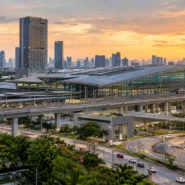
- Check the railway name. Krung Thep Aphiwat is the main long-distance terminal for many northern, northeastern and southern services. Hua Lamphong still serves other trains. Read the departure station on your actual ticket before choosing a hotel beside the wrong terminal.
- Rail systems are connected, but transfers take effort. Siam connects the two BTS lines; Asok BTS connects with Sukhumvit MRT; Sala Daeng BTS connects with Si Lom MRT. Allow time to walk between systems and deal with separate ticketing. The official BTS planner and MRT Blue Line information are useful starting points.
- Read the room category carefully. A river view, balcony, separate bedroom and extra bed can belong to different categories at the same hotel. Search using every child’s age and compare the final amount including breakfast and taxes.
- Check noise at street level. A station district can contain calm residential lanes and busy entertainment streets side by side. Look at recent room-specific reviews and request a quieter position; requests remain subject to availability.
The Full Experience
🛍️ Siam and Ratchaprasong: Best for First-Time Shoppers
Tags: BTS interchange · Shopping convenience · Broad dining choice · Moderate to premium budget
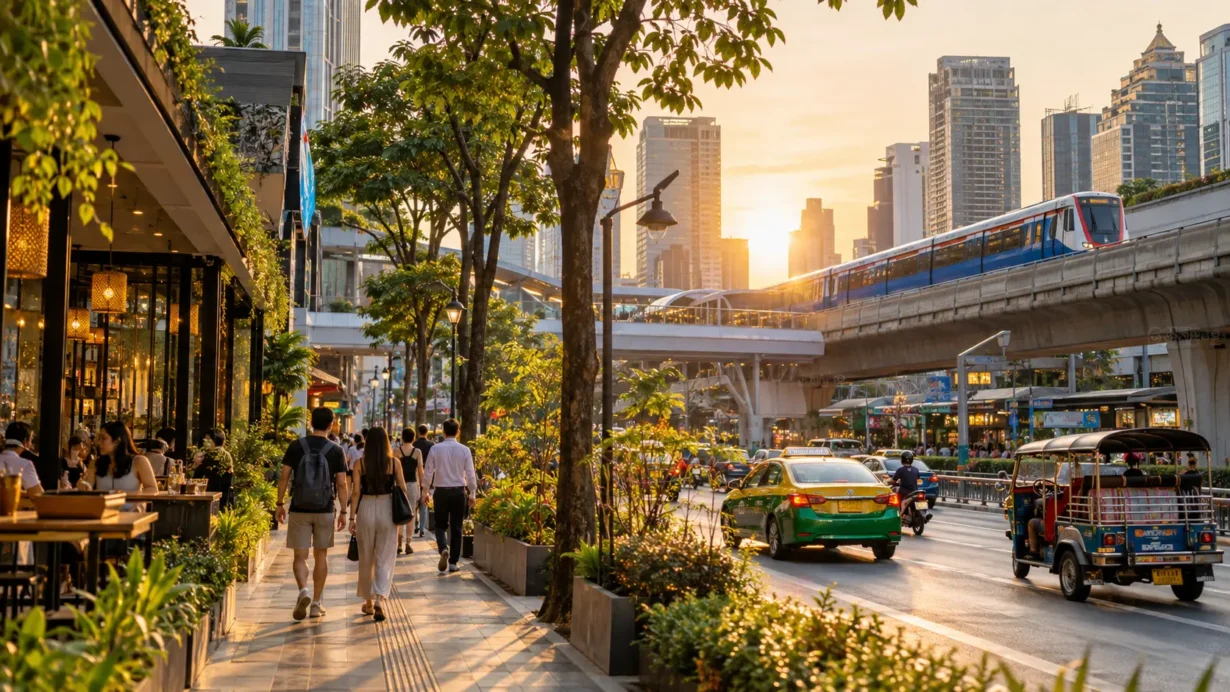
For a short first visit with shopping, cafés and several different city outings, this is the easiest default. Siam station connects the BTS Sukhumvit and Silom lines. National Stadium sits to the west near MBK; Chit Lom anchors the Ratchaprasong side to the east. That gives you several practical hotel clusters within the broader commercial center.
Pay particular attention to which mall or skywalk a hotel actually connects to. A covered connection can save repeated pavement walks, but a route through a shopping center may depend on its opening hours. An arrival after midnight needs a normal street entrance as well.
✅ What Other Travelers Say
At Pathumwan Princess, sampled guest feedback highlights the location, comfort and service. That supports the appeal of the MBK side for shoppers; it does not mean every hotel using “Siam” in its name has the same connection.
⚠️ The Catch (Things to Keep in Mind)
This is a busy commercial district with traffic and crowds. The BTS does not run directly to the Grand Palace. If the river and temple quarter dominate your itinerary, allow for a transfer or road journey instead of assuming “central” means walking distance to everything.
🚇 Asok and Central Sukhumvit: Best for Flexible Rail Travel
Tags: BTS plus MRT · Restaurant choice · Nightlife nearby · Short-stay flexibility
Asok works because two useful systems meet here: Asok BTS and Sukhumvit MRT. The Blue Line makes Chinatown, Sanam Chai and the Bang Sue terminal connection more straightforward than they are from a BTS-only location. The BTS handles the Siam shopping corridor and neighborhoods farther east.
The winning move is to stay near the interchange or a genuinely manageable walk from it. Sukhumvit Road stretches far beyond central Asok, and numbered side streets can run a long way from the train. Do not mistake a free hotel shuttle for the flexibility of walking to a station whenever you want.
✅ What Other Travelers Say
Grande Centre Point Terminal21 guest feedback places a strong emphasis on location, including its shopping-mall connection. This is a useful example of how a well-connected building can matter more than the broad neighborhood label.
⚠️ The Catch (Things to Keep in Mind)
The interchange is crowded, and road traffic can be slow. Parts of nearby Nana and Soi Cowboy have adult nightlife. Families and light sleepers should inspect the exact street and room orientation rather than dismissing—or booking—the entire district on reputation alone.
🌳 Silom and Station-Adjacent Sathorn: Best for a Balanced City Stay
Tags: Local food · Park access · BTS and MRT options · Mixed budgets
Silom is a strong choice when you want a city base that can support more than shopping. Around Sala Daeng and Si Lom, you have access to the BTS, MRT and the Lumphini Park end of the district. Farther west, Chong Nonsi and Saint Louis serve a different accommodation cluster; they remain useful, but should not be described as the same two-system interchange.
Sathorn is a broad address. A hotel a few minutes from a station can work well; a property deep along a side road may make you depend on cars. Compare the walking route with where you expect to eat each evening. Buying a larger room farther away only makes sense if you accept that daily transfer.
✅ What Other Travelers Say
Sampled ibis Styles Bangkok Silom reviews praise the convenient location and service; one guest also values its setback from the main road. This illustrates why a short, quieter approach can be a useful compromise.
⚠️ The Catch (Things to Keep in Mind)
Business traffic and nightlife coexist here. Patpong, Silom’s restaurant lanes and residential Sathorn streets have different evening atmospheres. A hotel labeled “Sathorn” may also be much farther from your preferred station than expected.
🚤 Lower Chao Phraya Riverside: Best for River Views and Slower Evenings
Tags: Scenic hotels · Boat outings · Couples · Check the final connection
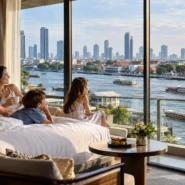
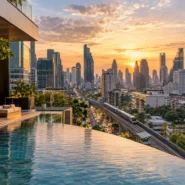
The river is a collection of locations, not a single interchangeable hotel zone. Bang Rak around Saphan Taksin is particularly useful because the BTS and Sathorn pier sit near each other. A hotel elsewhere along the river may offer a boat shuttle, but its timetable becomes part of your daily planning.
Choose this area when the hotel pool, river view and relaxed dinner are real priorities. Look at the bank of the river as well as the address: crossing by hotel boat is pleasant when it runs at the right time and inconvenient when it does not. The linked video shows the Asiatique section farther south; use it for waterfront atmosphere, not as evidence that every riverside hotel is beside Saphan Taksin.
✅ What Other Travelers Say
Guests at Shangri-La Bangkok highlight river views, comfortable rooms and access to boats. Those are property-specific advantages; they should not be extended to a distant riverside hotel without checking its transport arrangements.
⚠️ The Catch (Things to Keep in Mind)
Boat routes, fares and final departures differ. Do not assume a hotel shuttle is a public sightseeing service or runs all night. Check the road alternative for late dinners and trips to the airport.
🏛️ Rattanakosin Old Town: Best for Temples and Historic Bangkok
Tags: Temple mornings · Heritage setting · Boutique stays · Sanam Chai access
Stay around the temple quarter when the Grand Palace, Wat Pho and river crossings are the reason for your trip. Sanam Chai on the MRT Blue Line improves access, but Old Town hotels can still be a substantial walk from it. Plot the hotel rather than using the station as a label for the entire historic district.
Old Town also needs more precise wording than many guides give it. A riverside room near Wat Pho, a guesthouse around the Giant Swing and a room above Khao San’s bars offer very different nights. Select the street according to whether your priority is sleep, heritage scenery or nightlife.
✅ What Other Travelers Say
At sala rattanakosin, sampled guests value the temple-area location and views. Its booking details also state that it has no lift, a useful reminder that a small heritage-style property needs a mobility check as well as a location check.
⚠️ The Catch (Things to Keep in Mind)
Side lanes and older buildings can complicate luggage access. Ask where a car can stop and whether staff can help. A temple-focused base is less convenient for repeated evenings in Sukhumvit, so budget the journey honestly.
Key FAQs
Which Bangkok neighborhood is best for a first-time visitor without a car?
Choose Siam for a shopping-led itinerary or Asok for access to both BTS and MRT. Silom around Sala Daeng is another practical choice. In each case, favor a short, usable station walk over a cheaper hotel farther down a lane.
Is Riverside or Sukhumvit better for a family staying in Bangkok?
Choose riverside when pool time, boat outings and hotel comfort dominate the plan. Choose central Sukhumvit near a station when you expect varied daily outings. Confirm family occupancy, breakfast charges and whether the hotel shuttle fits your evening routine.
Should I split my Bangkok stay between Old Town and Siam?
For only two or three nights, moving hotels usually costs more time than it saves. On a longer stay, a deliberate split can work if you group temple and river days together, then move once for shopping and modern-city outings.
Final Verdict and Your Next Step
For the broadest first-visit convenience, start with Siam, Asok or the Sala Daeng end of Silom. Choose riverside because you want the river experience, and Old Town because you want historic sights close at hand. Narrow the choice to two actual hotels, compare their final station walk and then check the complete room price.
Look early for the room type you need, particularly during busy holiday periods. Use the verified property pages above to compare current availability: Siam accommodation, Asok accommodation, Silom accommodation, lower-riverside accommodation, and Old Town accommodation. Compare cancellation terms before booking; the best location is the one that makes your own days easier.