

💡 Key Takeaways
Finding the best areas to stay in Nagoya is more complicated than the city map suggests. Nagoya looks compact, and the major districts are only a few subway stops apart, but the wrong hotel can quietly add friction to every day: a ten-minute underground walk before you even reach the platform, a change between different railway operators, a room on the noisy side of Sakae, or a “cheap” location that requires two trains whenever you want dinner.
The real decision is not simply Nagoya Station versus downtown. You need to match your base to the way you will actually travel. Are you taking the Shinkansen with large suitcases? Planning early departures to Takayama, Kyoto or Osaka? Spending evenings eating and shopping? Visiting LEGOLAND, the Port of Nagoya Public Aquarium or Ghibli Park with children? Your answer changes which neighborhood is genuinely convenient.
For most travelers, the safest choices are Nagoya Station, Sakae or Fushimi. Kanayama is a smart specialist choice for airport access, southern attractions and better-value rooms, while Osu is more rewarding for repeat visitors who value character over effortless transport. Below is the honest comparison, including the trade-offs that hotel listings tend to hide.
The 1-Min Cheat Sheet
- Nagoya Station (Meieki): Best for Shinkansen travel, regional day trips, airport connections, short stays and anyone who hates moving luggage. Choose the east side for a more polished city feel; choose the west side for easier Shinkansen access and often better value.
- Sakae: Best for first-time visitors who want shopping, restaurants, nightlife and attractions outside the hotel door. It feels more like Nagoya’s true downtown, but hotel selection within Sakae matters because Nishiki can be lively late at night.
- Fushimi: Best for couples, business travelers and light sleepers who want a central location without Sakae’s intensity. It sits between Nagoya Station and Sakae and has two subway lines, but some “Fushimi” hotels are farther from the station than the map first implies.
- Kanayama: Best for airport convenience, families visiting the aquarium, travelers using JR and Meitetsu lines, and budget-conscious visitors who do not need to sleep beside the Shinkansen. It is practical rather than atmospheric.
- Osu and Kamimaezu: Best for street food, vintage shopping, anime and subculture, longer stays and repeat visitors. It has personality and walkable local life, but it is less convenient with luggage and usually requires a transfer to reach Nagoya Station.
Top Survival Tips
- Check the station exit, not only the station name. Nagoya Station is a huge complex involving JR, Shinkansen, Meitetsu, Kintetsu, subway and bus facilities. A hotel that is “five minutes from Nagoya Station” may be five minutes from one entrance but much farther from the line you need. Search the hotel entrance on a map, identify the nearest named exit and trace the walking route to your actual train.
- Understand Nagoya Station’s east-west split before booking. The east side around Sakura-dori and Meieki has major towers, department stores, office buildings and a more polished evening environment. The west Taiko-dori side is convenient for Shinkansen platforms and often cheaper, but parts of it feel less refined and have fewer destination-worthy places to spend the evening.
- Do not assume every “Sakae” hotel is equally family-friendly. Sakae covers a broad central zone. Hotels near Hisaya-odori Park, Oasis 21 and the main shopping streets are generally easier for sightseeing. Rooms deep in Nishiki’s entertainment lanes can be convenient for nightlife but may bring street noise, touts or a less comfortable late-night atmosphere for families.
- Use walking distance realistically. A 900-metre walk may look harmless on a booking map. Add summer heat, rain, uneven energy after a full sightseeing day and a 20-kilogram suitcase, and it becomes a repeated nuisance. For a multi-night stay, aim for roughly five to seven minutes from a useful station entrance unless the hotel is significantly better.
- Match the railway operator to your itinerary. The Shinkansen and many regional JR services favor Nagoya Station. Meitetsu is useful for Chubu Centrair International Airport and destinations such as Inuyama. The subway is best for central sightseeing. Kanayama is excellent when JR, Meitetsu and the subway matter more than the Shinkansen.
- Families must check occupancy rules, not just bed size. Japanese hotels often price and regulate rooms by the number and age of guests. A “double room” that physically fits two adults and a child may not permit that occupancy. Confirm the child policy, breakfast charge and whether the room is genuinely non-smoking before paying.
- Look for practical room features during longer stays. Nagoya is a strong base for several day trips, so a coin laundry, luggage storage, breakfast hours that suit early trains and a room larger than the bare minimum can matter more than a stylish lobby.
- Compare the final price across platforms. Taxes, breakfast, cancellation terms, payment timing and room type can differ. Compare the exact same dates and occupancy, then book the option with the clearest conditions rather than automatically choosing the lowest headline price.
The Full Experience
🚉 Nagoya Station (Meieki): Best for Easy Transport, Day Trips and Heavy Luggage
Tags: Shinkansen hub · Airport access · Day-trip base · Short stays · Luggage-friendly
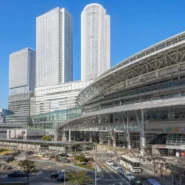
Quick verdict: Nagoya Station is the most efficient base when transport is the backbone of your trip. It is the obvious choice for travelers arriving by Shinkansen, taking several day trips, leaving early in the morning or staying only one or two nights. You can reach Tokyo, Kyoto and Osaka on the Tokaido Shinkansen, connect to regional JR services, use Meitetsu for the airport and access the city subway without dragging luggage across town.
The convenience is real, but “Nagoya Station” is not one simple neighborhood. The station complex is large, busy and split by multiple operators. The best hotel location depends on which transport you use most.
Choose the east side if you want department stores, modern towers, better shopping, polished restaurants and an easier evening without taking another train. The Sakura-dori side feels more like a central business district and generally suits couples, first-time visitors and travelers who want convenience without sacrificing city atmosphere.
Choose the west side if your priority is fast access to the Shinkansen platforms, highway buses or a lower room rate. This side is practical for a one-night stop and can save meaningful walking with large luggage. The trade-off is a rougher visual environment in some blocks, fewer attractive places to wander after dinner and a bigger quality difference from street to street.
Best micro-location: Aim for a hotel within a genuine five-to-seven-minute walk of the station entrance that matches your line. Travelers using Meitetsu airport trains should confirm the route to Meitetsu Nagoya Station rather than assuming the nearest JR entrance is equally convenient. Travelers taking the Shinkansen should favor the Taiko-dori side or a route that does not require crossing the full station complex.
Who should skip it: Travelers who want a lively nightlife district, independent cafés and a neighborhood that remains interesting after the commuter rush may feel that Meieki is efficient but slightly impersonal. Sakae or Osu offers a stronger sense of place.
✅ What Other Travelers Say
Travelers repeatedly praise the station area for removing uncertainty: restaurants, convenience stores and transport are close, and early day trips become much easier. Families with luggage often value this more than being beside a particular attraction. Visitors also commonly note that the east side has more to do, while the west side works best when price and platform access matter most.
⚠️ The Catch (Things to Keep in Mind)
The biggest trap is booking by straight-line distance. Underground passages, enormous station buildings and different operator entrances can turn a short-looking route into a tiring walk. The immediate station area can also feel crowded at peak commuting times, and changing between JR, subway, Meitetsu and Kintetsu is not always as quick as the shared station name suggests.
🌃 Sakae: Best for First-Time Visitors, Shopping and Nightlife
Tags: Downtown energy · Shopping · Restaurants · Nightlife · Walkable sightseeing
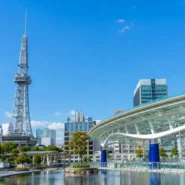
Quick verdict: Sakae is the best all-round answer for most first-time visitors who plan to experience Nagoya itself rather than use the city mainly as a transport base. The area places shopping, food, Hisaya-odori Park, Oasis 21 and the Chubu Electric Power MIRAI TOWER within easy reach. It also gives you a much better chance of finding dinner, dessert or a late drink without boarding another train.
Sakae connects to Nagoya Station on the Higashiyama Line and sits on the Meijo Line, which is useful for moving around the central city. In practical terms, the subway ride to Nagoya Station is short enough that many travelers are happier staying in Sakae and commuting to the station only when needed.
Best micro-location: For a balanced stay, target the blocks near Sakae Station, Oasis 21, Hisaya-odori Park or the main department stores. This keeps you close to transport and activity without placing you too deep inside late-night entertainment streets. Hisaya-odori can be a good compromise for couples and design-conscious travelers who want park views and slightly more breathing room.
Best for food and evenings: Sakae wins when you want to return from sightseeing, rest briefly and then walk to dinner. This matters more than it sounds. In a station-only base, travelers sometimes lose motivation to go back out after a long day. In Sakae, the evening is part of the neighborhood experience.
Who should skip it: Light sleepers, families uncomfortable around nightlife and travelers making daily Shinkansen trips may prefer Fushimi or Nagoya Station. Sakae is central, but it is not the easiest place to manage a very early train with large luggage.
✅ What Other Travelers Say
Visitors often describe Sakae as livelier and more rewarding on foot than the immediate Nagoya Station area. The concentration of malls, restaurants, parks and nightlife makes it easy to fill unplanned time. Many travelers also feel that the short subway ride to Nagoya Station is a small price to pay for a more enjoyable evening base.
⚠️ The Catch (Things to Keep in Mind)
Do not treat the whole district as one uniform environment. Nishiki and nearby entertainment lanes can remain noisy late into the night, especially on weekends. A hotel may be perfectly safe and well reviewed yet still face clubs, bars or busy streets. Read recent room-specific comments about external noise and request a high floor or inward-facing room where possible.
☕ Fushimi: Best for a Quieter Central Stay and Couples
Tags: Quiet central base · Two subway lines · Couples · Business travel · Balanced location
Quick verdict: Fushimi is the sensible middle ground. It is one stop from Nagoya Station on the Higashiyama Line, one stop before Sakae in the opposite direction, and it also connects to the Tsurumai Line. You give up some doorstep excitement, but you gain calmer streets, easier sleep and a central position that rarely feels inconvenient.
This is often the smartest choice for couples, business travelers, repeat visitors and anyone who finds major Japanese station districts overwhelming. The area has offices, good restaurants, coffee shops and cultural attractions, including the Nagoya City Science Museum and Nagoya City Art Museum around Shirakawa Park.
Best micro-location: Stay close to Fushimi Station, ideally on the side that matches your daily walking plans. Hotels stretching west toward Nagoya Station can be attractive and good value, but some sit in an in-between zone where you walk ten minutes before every subway ride. Hotels extending north toward Marunouchi may be quiet but less convenient for casual evening dining.
Why it saves energy: Fushimi avoids the enormous internal walking distances of Nagoya Station and the more intense crowds of Sakae. The two subway lines are useful, and central destinations are close enough that taxis are reasonable when weather or luggage makes the subway inconvenient.
Who should skip it: Travelers who expect dramatic nightlife outside the hotel or want the widest late-night food selection may find Fushimi too subdued. Families focused on LEGOLAND or the airport may be better served by Nagoya Station or Kanayama.
✅ What Other Travelers Say
Guests frequently appreciate being close to both Nagoya Station and Sakae without sleeping in either area’s busiest streets. Fushimi receives particularly positive comments from travelers who value clean business hotels, calmer evenings and quick subway access. It is also a common “pleasant surprise” for visitors who initially assumed only Nagoya Station or Sakae were viable.
⚠️ The Catch (Things to Keep in Mind)
The neighborhood can become quiet after office hours, and the quality of the location changes quickly as you move away from the station. A discounted hotel twelve minutes from Fushimi may not feel like a central bargain after several rainy walks. Check the exact entrance and whether your route crosses wide roads or requires stairs.
✈️ Kanayama: Best for Airport Access, Families and Better Value
Tags: Airport trains · JR and Meitetsu hub · Families · Southern attractions · Value
Quick verdict: Kanayama is Nagoya’s underrated practical base. JR, Meitetsu and the subway converge here, and direct Meitetsu airport services make it especially attractive for an early flight or late arrival. It is also useful for Atsuta Jingu, the Port of Nagoya area and travelers whose plans lean south rather than toward the Shinkansen.
Rooms can offer better value than comparable hotels beside Nagoya Station or in central Sakae. Around the station, you will find everyday restaurants, supermarkets and the ASUNAL Kanayama commercial complex. The area is functional and easy to navigate, which can be a relief for families.
Best micro-location: Stay on the north side or immediately around the main station complex. Kanayama’s main advantage disappears if your hotel requires a long walk through residential streets. Prioritize a clear, flat route and confirm whether the hotel offers a shuttle if it advertises itself as “Kanayama” but sits farther away.
Best family use case: Kanayama works well for families combining the airport, Port of Nagoya Public Aquarium and central sightseeing. The Meiko Line serves the port direction, while JR and subway links keep the rest of the city accessible. It can also feel less chaotic than Nagoya Station when supervising children and luggage.
Who should skip it: First-time visitors who want a classic downtown atmosphere, luxury shopping or nightlife outside the hotel will probably prefer Sakae. Travelers making repeated Shinkansen trips should stay at Nagoya Station instead of adding a train ride each morning.
✅ What Other Travelers Say
Travelers who choose Kanayama tend to value its straightforward transport, airport convenience and lower-stress station layout. Families often appreciate having useful shops and food nearby without the full intensity of Nagoya Station. It also earns praise as a practical base when room prices rise in the most central districts.
⚠️ The Catch (Things to Keep in Mind)
Kanayama is a transport hub, not a must-see neighborhood. You will probably take a train for most sightseeing and evening entertainment. Also remember that it does not have Shinkansen service. The area saves money only when its lines match your itinerary; otherwise, the repeated commute cancels out the benefit.
🍢 Osu and Kamimaezu: Best for Food, Subculture and Repeat Visitors
Tags: Street food · Vintage shopping · Anime and electronics · Local character · Longer stays
Quick verdict: Osu is the most characterful option in this comparison. The covered shopping arcades mix street food, vintage clothing, electronics, anime goods, temples, cafés and independent shops. It is a strong choice for repeat visitors, solo travelers and anyone who prefers a lived-in neighborhood to a polished transport hub.
For accommodation, Kamimaezu is usually more useful than staying only near Osu Kannon Station because Kamimaezu connects the Meijo and Tsurumai subway lines. Osu Kannon is convenient for the western end of the arcades and Fushimi, while Kamimaezu offers better access toward Sakae and Kanayama.
Best micro-location: Target the edges of the shopping district near Kamimaezu Station if transport matters, or near Osu Kannon if the temple, arcades and Fushimi side are your priority. A hotel directly inside the busiest shopping lanes may be fun by day but less convenient for taxis and luggage.
Why longer stays work better: Osu rewards unstructured time. You can revisit cafés, browse shops in stages and enjoy local meals without treating every hour as a checklist. The neighborhood is also walkable to parts of central Sakae for travelers who do not mind covering distance.
Who should skip it: First-time visitors with large suitcases, travelers leaving on frequent Shinkansen day trips and families needing the simplest possible station access should choose Nagoya Station, Sakae or Fushimi. Osu is enjoyable because of its texture, not because it minimizes every transfer.
✅ What Other Travelers Say
Visitors praise Osu for feeling distinct from generic downtown Japan. Food, retro games, secondhand fashion and subculture shops create an easy day of wandering, and the covered arcades help in light rain or strong sun. Repeat visitors often prefer Osu because it offers more personality than staying beside a major station.
⚠️ The Catch (Things to Keep in Mind)
Many shops close earlier than Sakae’s nightlife venues, so the district can become surprisingly quiet later in the evening. There is no direct subway ride from Osu Kannon to Nagoya Station; a transfer at Fushimi is normally required. Hotel supply is also smaller, so the cheapest room may be farther from the useful station than expected.
Key FAQs
Is Nagoya Station or Sakae better for first-time visitors?
Choose Sakae if your priority is experiencing Nagoya’s shopping, restaurants, parks and nightlife on foot. Choose Nagoya Station if you have large luggage, a short stay or several early day trips. For a first visit of three or more nights focused mainly on the city, Sakae is usually more enjoyable. For a transport-heavy itinerary, Nagoya Station is the safer choice.
Where is the best area to stay in Nagoya for families visiting LEGOLAND, the aquarium and Ghibli Park?
Nagoya Station is the strongest all-purpose family base because the Aonami Line serves the LEGOLAND and Kinjofuto direction, and the station is convenient for luggage and onward travel. Kanayama is better if the airport and Port of Nagoya Public Aquarium are major priorities. Ghibli Park requires travel toward Fujigaoka and then the Linimo line, so Sakae, Fushimi and Nagoya Station can all work; choose based on the rest of your itinerary rather than that single day.
What is the best area to stay in Nagoya for day trips to Takayama, Shirakawa-go, Kyoto and Osaka?
Stay near Nagoya Station. Kyoto and Osaka are easiest by Shinkansen, while Takayama and many regional bus or rail journeys also begin around the main station area. The time saved is especially valuable for early departures. Before booking, identify whether your service leaves from JR Nagoya, the highway bus terminal, Meitetsu Nagoya or Kintetsu Nagoya, because these are connected but not identical boarding points.
Final Verdict and Your Next Step
For the majority of first-time visitors, the final choice comes down to this: stay at Nagoya Station when movement matters more than atmosphere, or stay in Sakae when the neighborhood experience matters more than shaving minutes off a train journey. Fushimi is the best compromise for quieter nights. Kanayama is the clever value choice when the airport and southern Nagoya fit your plans. Osu is the personality pick for travelers willing to accept a little extra transport friction.
Before you book, open the hotel on a map and check four things: the exact station exit, the route with luggage, recent comments about noise, and the permitted room occupancy. That five-minute check prevents more disappointment than choosing between two hotels with nearly identical review scores.
Nagoya often offers better hotel value than Tokyo, Kyoto or Osaka, but the best-located rooms can still disappear around weekends, concerts, major events and Japanese holiday periods. Reserve a cancellable option early, then recheck prices later rather than waiting until only inconvenient locations remain.
Check live availability: Compare Nagoya hotels on Agoda · Compare Nagoya hotels on Booking.com · Browse Nagoya hotels on Klook · Browse Nagoya passes and experiences on KKday.