


💡 Key Takeaways
- Do not confuse JR Nara Station with Kintetsu-Nara Station. Kintetsu-Nara is already beside the main shopping streets and about a five-minute walk from the western edge of Nara Park. JR Nara is farther west and usually needs a 15–20 minute walk, a short bus ride or a taxi.
- Walking is best only when your bags and the weather cooperate. The route along Sanjo-dori is straightforward and pleasant, but the “20-minute walk” becomes much less appealing in summer humidity, heavy rain or with a full-size suitcase.
- A taxi can be the sensible budget choice for three or four people. A short metered ride split between a group may cost little more per person than multiple bus fares while delivering you directly to the hotel entrance.
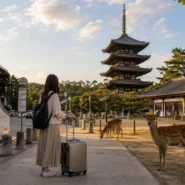
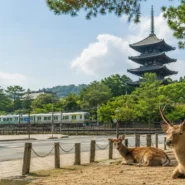
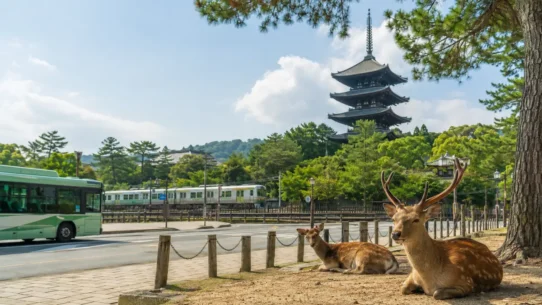
Getting from JR Nara Station to Nara city center looks simple on a map, but this final stretch catches out a surprising number of visitors. Travelers arriving from Kansai International Airport via Tennoji, or from Osaka and Kyoto on JR services, often assume that “Nara Station” opens directly onto the deer park and temple district. It does not. The historic visitor core stretches east from Kintetsu-Nara Station toward Kofuku-ji, Nara Park and Todai-ji, while JR Nara Station sits roughly one kilometre farther west.
That distance is not a problem with a daypack. It is a very different experience after a flight, at 3:00 p.m. in August, in pouring rain, with children, or while pulling two suitcases over crossings and textured paving. The right choice depends less on headline travel time and more on your exact hotel, arrival hour, group size and luggage load.
Planning note: fares and operating details in this guide were checked in August 2026. Transport operators can change timetables, pass conditions and prices, so confirm the final departure on the day of travel.
The 1-Min Cheat Sheet
- Walk via Sanjo-dori: Choose this for zero cost, no waiting and a simple introduction to the city. Allow about 12–15 minutes to the Kintetsu-Nara shopping area, around 20 minutes to the western edge of Nara Park, and roughly 30–35 minutes to the Todai-ji approach. Best with light luggage and comfortable weather.
- Nara Kotsu local bus: The best low-cost option for Nara Park, Kofuku-ji and Todai-ji. From JR Nara Station East Exit stop 2, buses reach Kencho-mae in about six minutes and the Todai-ji area in about eight to nine minutes before traffic. A typical central sightseeing ride is ¥250.
- Taxi from the station rank: Best for large bags, children, older travelers, mobility limitations, late arrivals and groups of three or four. Expect roughly ¥800–¥1,200 for many central hotels and around ¥1,200–¥1,800 for park-side or Todai-ji-area addresses, depending on the exact entrance and traffic. These are estimates, not fixed fares.
- Rental bicycle: Best for luggage-free travelers who plan to continue beyond the center to several spread-out sights. It is not a substitute for a hotel transfer when you have suitcases. Rent only after storing or dropping your bags.
Top Survival Tips
- Check the hotel’s nearest landmark, not just “Nara city center.” A hotel beside JR Nara Station, Higashimuki Shopping Street, Naramachi, Nara Park and Kasuga Taisha can all be marketed as central, yet the best arrival route is different for each.
- If you have not bought your intercity ticket yet, compare your arrival station first. Kintetsu-Nara Station is usually the easier arrival point for Nara Park and the main restaurant and shopping area. JR Nara can still be the better choice when a JR pass covers your journey or your hotel is beside the JR station.
- Use the JR Nara Station East Exit for the tourist core. The main bus platforms for Nara Park, Kofuku-ji, Todai-ji and Kasuga Taisha are on this side. Going out the wrong side adds confusion and unnecessary walking.
- Do not blindly buy a one-day bus pass. The central-area pass costs ¥600 for an adult. With ¥250 single rides, it begins to make financial sense from the third paid ride, but a traveler who takes one bus to the park and walks back spends less with single fares.
- Late arrivals lose some support options. The JR Nara Bus Information Center is listed as operating from 8:30 a.m. to 4:00 p.m. If you arrive later, rely on station signage, an IC card, the driver’s display and a saved hotel address in Japanese.
- Ask whether your hotel has a shuttle before paying for a taxi. Some larger or hillside properties run scheduled station transfers, but these are often reservation-only and may stop early in the evening.
- Store luggage before sightseeing. Carrying a suitcase into Nara Park is tiring, and deer may investigate loose paper bags or food. Use station lockers or hotel luggage storage, then explore with only what you need.
The Full Experience
🚶 Walking via Sanjo-dori: Best for Light Luggage, Good Weather and Zero Waiting
Features: Free • No transfers • Approximately 12–35 minutes depending on destination • Best for daypacks and flexible travelers
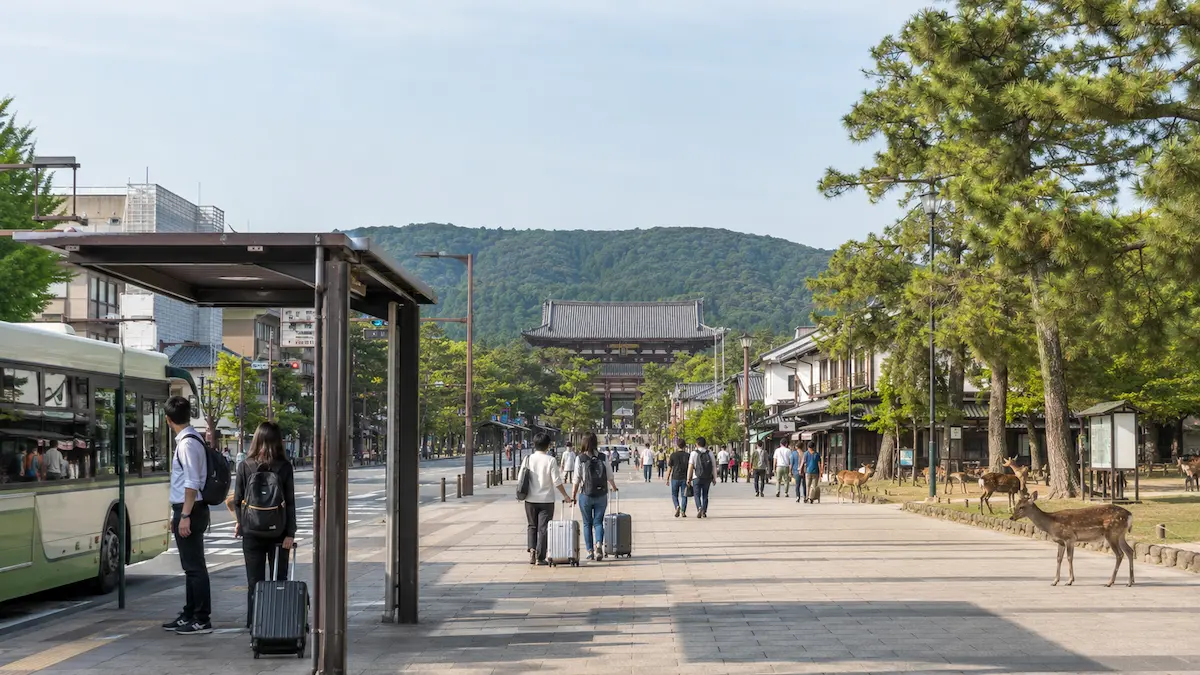
Walking is the default answer you will see in many quick guides, and in the right conditions it is genuinely the nicest way to arrive. Leave JR Nara Station through the East Exit and head east toward Sanjo-dori. The road leads naturally toward the historic core, with convenience stores, cafes, restaurants and local shops appearing along the way.
The important detail is that “Nara city center” is not one single point. The Kintetsu-Nara and Higashimuki shopping area is the first useful target, usually around 12–15 minutes away at a normal pace. Kofuku-ji and the western edge of Nara Park are closer to 20 minutes. Todai-ji is farther inside the park, so travelers heading straight to accommodation near the Great Buddha Hall should budget around 30–35 minutes rather than believing the shorter headline figure.
The route is mostly straightforward and the city center is relatively flat, but there are traffic lights, curb transitions, textured paving and crowds. A wheeled suitcase turns every crossing into a small delay. Two large cases can make a “pleasant stroll” feel like an airport transfer you should have paid to avoid.
Best hotel zones for walking: Sanjo-dori, the area between JR Nara and Kintetsu-Nara, the western side of Naramachi and hotels near Higashimuki Shopping Street. For accommodation deep in Takabatake, around Kasuga Taisha or near Todai-ji, walking with luggage is poor value even when the distance looks manageable.
✅ What Other Travelers Say
Traveler discussions repeatedly describe the route as easy to follow, well signed and more interesting than expected because it passes through an active shopping street rather than an empty transit corridor. Visitors without luggage often enjoy using the walk as the beginning of their sightseeing day instead of treating it as wasted transfer time.
⚠️ The Catch (Things to Keep in Mind)
The hidden cost is energy. Nara Park itself involves substantial walking, and spending your first 20–30 minutes hauling luggage can leave you tired before reaching the main sights. In midsummer, humidity matters more than distance. During heavy rain, the bus or a short taxi is usually worth the money.
🚌 Nara Kotsu Local Bus: Best for Nara Park, Kofuku-ji and Todai-ji on a Budget
Features: Around ¥250 per central ride • Approximately 6–9 minutes before traffic • IC-card friendly • Best for solo travelers with manageable bags
For most first-time visitors arriving at JR Nara Station, the local bus offers the best balance of price and effort. Use the East Exit and look for platform 2. Several services run east through Kintetsu-Nara toward the park. The exact bus number matters less than confirming the destination display and your stop before boarding.
For Kofuku-ji, the prefectural office and the western edge of Nara Park, get off at Kencho-mae. The official station guide lists a journey of about six minutes from JR Nara Station. For Todai-ji, continue to Todai-ji Daibutsuden/Kasuga-taisha-mae or Todai-ji Daibutsuden; the scheduled ride is roughly eight to nine minutes, followed by about a five-minute walk to the temple approach.
Travelers staying in southern Naramachi should not automatically ride toward Todai-ji. From East Exit platform 5, route 1 serves Tanaka-cho, which is more useful for parts of Naramachi and avoids walking back south from the park.
A central sightseeing ride is typically ¥250 for an adult. The Nara Park and Nishinokyo one-day bus pass is ¥600, so it pays off from the third ¥250 ride. It can be useful when your plan includes JR Nara Station, Todai-ji, Kasuga Taisha, Naramachi and a return to the station, but it is unnecessary for a simple one-way transfer.
Check the official JR Nara Station bus-stop guide before travel. Nara Kotsu operates both front-boarding and rear-boarding buses, so watch the signs and follow the passenger flow rather than assuming every bus uses the same payment sequence.
✅ What Other Travelers Say
Travelers value the bus most when it saves their legs for the park itself. The ride is short, announcements and displays are generally tourist-friendly, and the main sightseeing stops are difficult to miss when the bus is not packed. Many visitors also appreciate being dropped closer to Todai-ji than Kintetsu-Nara Station.
⚠️ The Catch (Things to Keep in Mind)
Scheduled travel time is not door-to-door time. Add time to find the platform, wait for the bus, load your luggage and walk from the final stop. Weekend traffic around Nara Park can erase much of the time advantage, and a crowded bus is uncomfortable with large cases or a stroller. If three or four people are traveling together, compare the total bus cost with a taxi before boarding.
🚕 Taxi from JR Nara Station: Best for Luggage, Families, Late Arrivals and Small Groups
Features: Door-to-door • No transfer • Usually 5–15 minutes in normal traffic • Best value when shared by three or four people
Taxis wait at JR Nara Station, removing the need to navigate an app or explain a pickup point. This is the transport option most budget guides dismiss too quickly. For one person with a backpack, it is a luxury. For four people with luggage, it can be the most rational choice.
The published standard starting fare in the Nara area is ¥720 for the first 1.3 kilometres, followed by distance-based increments, with time-based charging also affecting the meter in slow traffic. As a practical estimate, many hotels between JR Nara and Kintetsu-Nara fall around ¥800–¥1,200. Properties near the park edge, Todai-ji or Takabatake may be around ¥1,200–¥1,800. The hotel driveway, traffic and waiting time can move the final amount in either direction, so treat these as planning ranges rather than quoted prices.
Show the driver the hotel name and address in Japanese. Do not simply say “Nara Park,” because the park covers a huge area and cars cannot deliver you to every walking path. For Todai-ji, specify the hotel, restaurant or practical entrance you actually need.
For a group of four, a ¥1,400 ride works out to ¥350 per person. That is only ¥100 more than a ¥250 bus fare, while avoiding platform hunting, crowding and the walk from the bus stop. The value becomes even clearer after dark or in bad weather.
✅ What Other Travelers Say
Families and travelers with several bags consistently describe the short taxi ride as money well spent, especially after a long intercity journey. The clean vehicles, station taxi rank and direct hotel drop-off remove nearly all of the stress from the final kilometre.
⚠️ The Catch (Things to Keep in Mind)
The meter keeps running in congestion, and app bookings may add pickup or service charges. Standard sedans may not hold four passengers plus four large suitcases, so a larger vehicle can be necessary. Taxis also cannot shortcut pedestrian-only parts of Nara Park, meaning “door-to-door” depends on the actual property entrance.
🚲 Rental Bicycle: Best for Luggage-Free Travelers Visiting Several Spread-Out Sights
Features: From about ¥990 per day • Fast between dispersed attractions • Flexible • Best after luggage storage, not as an arrival transfer
Nara’s central terrain is relatively flat, and a bicycle can turn a tiring cross-city sightseeing day into an efficient one. A rental shop is located close to the JR station, making it possible to start soon after arrival. Yamato Kanko Rental Cycle at JR Nara Station lists a reservation price of ¥990 for one day, with opening hours of 8:00 a.m. to 3:00 p.m. and closure on Wednesdays except public holidays at the time of checking.
The bicycle makes most sense when your plan extends beyond the compact Kintetsu-Nara and Nara Park core. It is useful for linking the station, Naramachi, the park perimeter and more distant areas without repeatedly waiting for buses. An electric-assist bicycle is worth considering if your route reaches hillier ground.
However, rent a bicycle only after leaving your luggage at the hotel or in a locker. A basket is designed for a small bag, not a suitcase. You also need to use designated parking areas and walk the bicycle through dense pedestrian zones where riding would be inconsiderate or unsafe.
✅ What Other Travelers Say
Visitors who cycle tend to praise the freedom to move between sights without rebuilding their day around bus schedules. The experience is especially popular with travelers who want to see more than the standard deer-park loop and who are comfortable riding on the left in Japan.
⚠️ The Catch (Things to Keep in Mind)
Rental counters can close earlier than expected, and return deadlines are a real constraint. Rain, summer heat, crowded park approaches and unfamiliar traffic rules can make cycling less relaxing than it appears. For a direct station-to-hotel transfer, a bicycle usually creates more problems than it solves.
Which Nara Area Should You Stay In?
Near JR Nara Station: Best for late arrivals, early departures, JR-pass users and travelers coming from Kansai Airport through the JR network. You gain easy station access and often better-value business hotels, but you will walk or ride east for most headline sights.
Near Kintetsu-Nara and Higashimuki Shopping Street: The strongest all-round choice for a first visit. Restaurants, shopping, Kofuku-ji and the park are close, and arriving by Kintetsu minimizes the final transfer. From JR Nara Station, walk with light bags or take a short bus or taxi.
Naramachi: Best for atmosphere, traditional streets, cafes and a slower evening. The district is broad, so check whether your property is closer to JR Nara, Kintetsu-Nara or Tanaka-cho bus stop before choosing a route.
Nara Park, Takabatake and Todai-ji side: Best for quiet mornings, temple access and a special overnight experience. It is the least forgiving zone with luggage. A taxi or confirmed hotel shuttle is usually the right arrival plan.
Key FAQs
Is JR Nara Station or Kintetsu-Nara Station closer to Nara Park?
Kintetsu-Nara Station is much closer. The western edge of Nara Park is about a five-minute walk away, while the official Nara guide estimates roughly 20 minutes on foot from JR Nara Station. For Todai-ji, allow additional walking from either station.
How much is the bus from JR Nara Station to Nara Park, and which stop should I use?
A typical central Nara Kotsu ride is ¥250 for an adult. Use JR Nara Station East Exit platform 2. Get off at Kencho-mae for Kofuku-ji and the western park area, or continue to Todai-ji Daibutsuden/Kasuga-taisha-mae for Todai-ji. Check the live timetable because route numbers and departure patterns can change.
Can I walk from JR Nara Station to Nara city center with luggage?
Yes, but it is sensible only with one manageable suitcase, decent wheels and comfortable weather. The Kintetsu-Nara shopping area is around 12–15 minutes away, while park-side hotels can require 20–35 minutes. With two large cases, children, rain or summer heat, use a bus or taxi.
Final Verdict and Your Next Step
For a solo traveler with a daypack, walk along Sanjo-dori and treat the route as your introduction to Nara. For one or two travelers with normal luggage, take the Nara Kotsu bus if your hotel is near Kofuku-ji, Nara Park or Todai-ji. For families, older travelers, late arrivals and groups of three or four, take a taxi and save your energy for the temples and park. Rent a bicycle only after your bags are stored and only when it improves the rest of your sightseeing day.
The biggest planning win happens before you arrive: choose a hotel zone that matches your train line. Staying near JR Nara is convenient for rail connections; staying near Kintetsu-Nara minimizes daily walking to the main sights; staying in Naramachi or beside the park rewards you with atmosphere but makes luggage handling more important.
Accommodation near the park and the two stations can sell out quickly during cherry-blossom season, autumn weekends, major temple events and Japanese holidays. Compare the final price, cancellation policy and exact map location before booking:
- Check Nara hotels on Agoda
- Compare Nara accommodation on Booking.com
- Check the Kintetsu Rail Pass on Klook — confirm which version includes the train and Nara Kotsu bus coverage you need.
- Check a private Osaka, Kyoto or Nara charter on KKday — most useful for families, larger groups or travelers avoiding multiple transfers.
Some booking links may be affiliate links. You pay the same listed price, while the website may receive a commission that supports the production of independent travel guides.
Useful official checks before departure: Official Nara Park access guidance, JR Nara Station bus platforms and journey times, and current Nara bus-pass prices and coverage.