
💡 Key Takeaways
- Do not treat Seoul like a compact old town. Its headline sights are spread across several large districts, and careless planning can waste hours on transfers.
- Keep Day 1 in historic Jongno, Day 2 around Namdaemun, Myeongdong and Namsan, and Day 3 in the western neighborhoods of Hongdae, Yeonnam and Mangwon.
- Gyeongbokgung is normally closed on Tuesdays, while tourist access to Bukchon’s restricted residential zone is limited to 10:00 a.m.–5:00 p.m.
- An online N Seoul Tower voucher can save money and reduce ticket-buying friction, but it does not automatically eliminate cable-car, redemption, elevator or security queues.
- For a three-night trip, stay in one hotel. Splitting your stay usually creates more luggage hassle than transport savings.
A good 3-day Seoul itinerary is not a checklist of every landmark that appears on Instagram. Seoul is huge, subway stations can involve surprisingly long walks, and several famous places sit on hills or inside pedestrian-heavy districts. The classic first-timer mistake is to schedule Gyeongbokgung, Bukchon, Gangnam, Lotte World, Hongdae and N Seoul Tower in one heroic day—then spend half the trip underground, hungry and irritated.
This route takes a stricter approach. It gives each day one geographical direction, puts the most crowded places at smarter times, and leaves enough breathing room for lunch, shopping and the inevitable wrong subway exit. It is designed for a first visit, not for someone trying to prove how many map pins can fit into 72 hours.
Fact-check note: Hours, admission rules and commercial voucher instructions were checked on August 7, 2026. Seoul attractions can change seasonal hours, maintenance schedules and reservation rules, so always recheck the official page shortly before departure.
The 1-Minute Cheat Sheet
- Gyeongbokgung Palace
Best for: first-time visitors, history lovers and photographers.
Suggested time: 2–2.5 hours.
Admission: normally KRW 3,000 for a standard adult ticket; qualifying visitors wearing proper hanbok can enter free under the palace rules.
Nearest transport: Gyeongbokgung Station, Subway Line 3, Exit 5.
Reservation: not normally needed for an independent visit; group and special-program rules differ.
Best time: arrive for opening at 9:00 a.m., before large tour groups settle in.
Biggest catch: normally closed Tuesdays, exposed courtyards are hot in summer, and the complex is much larger than it looks from Gwanghwamun Gate. - Bukchon Hanok Village, Insadong and Ikseondong
Best for: traditional architecture, small galleries, crafts, cafés and slow neighborhood wandering.
Suggested time: 3–4 hours including lunch or tea.
Admission: streets are free; individual museums, workshops and exhibitions may charge.
Nearest transport: Anguk Station, Subway Line 3.
Reservation: not needed for the streets; workshops and popular hanok experiences may require booking.
Best time: Bukchon around 10:30 a.m.–noon, then descend toward Insadong and Ikseondong.
Biggest catch: Bukchon is a real residential area. The restricted red-zone visiting window is 10:00 a.m.–5:00 p.m.; hills, narrow lanes and privacy rules make it unsuitable for loud groups or rolling suitcases. - Namsan Park and N Seoul Tower
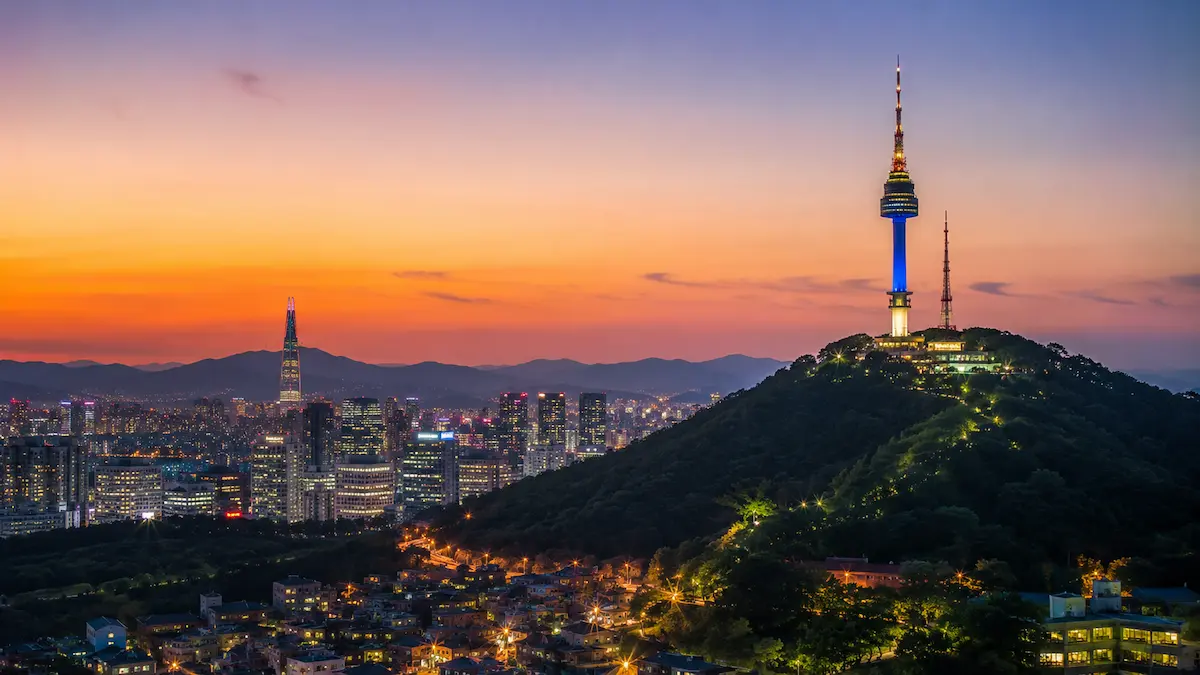
Best for: skyline views, couples, families and travelers who want one iconic sunset stop.
Suggested time: 1.5–2 hours at the top, plus approach and queue time.
Admission: Namsan Park and the tower plaza are free; the observatory is separately ticketed, with the official adult price listed as KRW 29,000 at the time of verification. Cable-car fare is separate unless a package explicitly includes it.
Nearest transport: Namsan circulation bus from Chungmuro or Dongguk University, or the cable-car approach from Myeongdong.
Reservation: not essential, but buying a dated or open e-voucher in advance is sensible during weekends and peak seasons.
Best time: reach the tower 60–90 minutes before sunset and stay for the first city lights.
Biggest catch: haze can erase the distant view, the cable-car queue can be longer than the ride, and “online ticket” does not always mean “walk straight into the elevator.” - Namdaemun Market and Myeongdong
Best for: first-time shoppers, easy food choices, cosmetics and a lively central-city evening.
Suggested time: 3–4 hours split between a morning market visit and an evening Myeongdong stroll.
Admission: free; spending depends entirely on food and shopping.
Nearest transport: Hoehyeon Station for Namdaemun; Myeongdong Station or Euljiro 1-ga for Myeongdong.
Reservation: not needed, except for specific restaurants, shows or beauty services.
Best time: Namdaemun before lunch; Myeongdong from late afternoon into evening.
Biggest catch: individual market stalls keep different hours, some famous food alleys become cramped at lunch, and Myeongdong street snacks are often priced for tourists rather than value hunters. - Hongdae, Yeonnam-dong, Mangwon Market and Mangwon Hangang Park
Best for: younger travelers, cafés, street fashion, casual food and a less monumental side of Seoul.
Suggested time: 5–7 hours at an unhurried pace.
Admission: neighborhoods and park are free; shops, cafés and performances are optional spending.
Nearest transport: Hongik University Station for Hongdae and Yeonnam; Mangwon Station for the market and river park.
Reservation: not needed for general exploring.
Best time: start late morning, eat at Mangwon in mid-afternoon, and reach the river before sunset.
Biggest catch: Hongdae is packed on Friday and Saturday nights, and “Hongdae” covers a much larger area than one shopping street.
Tourist Traps to Avoid & Itinerary Hacks
- Trap: Planning by fame instead of geography. Gyeongbokgung and Bukchon belong together. Hongdae and Mangwon belong together. Namsan and Myeongdong belong together. Lotte World, COEX and Gangnam should not be casually bolted onto those days just because the subway map looks connected.
- Trap: Visiting Bukchon at dawn for “empty photos.” That advice is now both inconsiderate and potentially rule-breaking in the restricted zone. Visit during the permitted daytime window, speak quietly, never photograph into private homes and keep doorways clear.
- Trap: Assuming the Namsan cable car is the easy option. The ride is short, but the uphill approach, ticket line and boarding queue can turn it into the slowest route. The Namsan circulation bus is often the better leg-saving choice, especially if you do not care about the cable-car experience itself.
- Trap: Buying every city pass before doing the math. This itinerary contains many free neighborhoods and low-cost palace entries. A pass only makes sense when the paid attractions you will actually use cost more than the pass—and when their locations fit your route.
- Trap: Treating Myeongdong street food as the cheapest dinner. It is fun for sampling, not always for value. Choose one or two snacks, then eat a proper meal on a side street, at Namdaemun, or in a restaurant with posted prices.
- Trap: Confusing the AREX Express with the all-stop airport train. The Express runs non-stop to Seoul Station and does not stop at Hongik University. Travelers staying in Hongdae often do better on the all-stop train, which accepts a transit card and avoids backtracking from Seoul Station.
- Trap: Dragging luggage through Bukchon, markets or Namsan. Station lockers, dedicated luggage rooms and hotel-to-airport delivery exist for a reason. Cobblestones, steep lanes and crowded stalls are miserable with a large suitcase.
- Hack: Build in one deliberate rest period. On Day 2, return to your hotel or sit down for a long coffee before Namsan. That one pause can be the difference between enjoying the night view and resenting the hill.
The Perfect 3-Day Itinerary at a Glance
Day 1: Royal Seoul, Bukchon and the Jongno Old Town
Why this order works: It starts at the palace when the grounds are coolest and quietest, reaches Bukchon only after the 10:00 a.m. visitor window begins, then follows a mostly southward/downhill flow toward Insadong, Ikseondong and Cheonggyecheon. You avoid bouncing between Gwanghwamun and Anguk on separate days.
- Suggested start: 8:30 a.m. at Gwanghwamun Square; enter Gyeongbokgung around 9:00 a.m.
- Main sequence: Gwanghwamun Square → Gyeongbokgung Palace → optional National Palace Museum of Korea → lunch in Seochon or near Anguk → Bukchon Hanok Village → Insadong → Ikseondong → optional evening walk along Cheonggyecheon.
- Between stops: Walk inside the Gwanghwamun–palace zone; take a short taxi or bus to the upper Bukchon side if hills are a problem; otherwise walk toward Anguk and continue downhill.
- Walking and effort: roughly 7–9 km, moderate. Palace courtyards are flat but exposed; Bukchon adds slopes and uneven lanes.
- Lunch strategy: Do not wait until the center of Bukchon, where small cafés fill quickly. Eat in Seochon after the palace or near Anguk before climbing into the residential lanes.
- Easiest stop to cut: Ikseondong. It is photogenic but increasingly commercial and can feel like a café queue wrapped in hanok architecture.
- Rain or low-energy alternative: Spend longer at the National Palace Museum, use Anguk-area museums and cafés, and take a taxi past Bukchon viewpoints rather than climbing every alley.
Day 2: Namdaemun, Central Seoul, Namsan and Myeongdong
Why this order works: Traditional markets are livelier before and around lunch, while N Seoul Tower is most rewarding near sunset. Myeongdong naturally works as the final stop because shops, restaurants and street stalls remain active into the evening. The route stays in central Jung-gu rather than making a wasteful trip across the river.
- Suggested start: 9:00–9:30 a.m. at Hoehyeon Station.
- Main sequence: Namdaemun Market → Sungnyemun Gate → optional Deoksugung and the stonewall road → late lunch or hotel rest → Namsan circulation bus or cable-car approach → N Seoul Tower before sunset → descend to Myeongdong for dinner and shopping.
- Between stops: Walk from Namdaemun to Sungnyemun; use subway, bus or a short taxi for the Namsan approach. Do not walk all the way uphill unless the hike itself is part of your plan.
- Walking and effort: roughly 6–8 km, moderate. It becomes strenuous if you climb Namsan on foot or stand in a long cable-car queue.
- Lunch strategy: Eat before 11:45 a.m. or after 1:30 p.m. in the market. The famous kalguksu and hairtail alleys are compact and can feel claustrophobic during the lunch rush.
- Easiest stop to cut: Deoksugung. Keep it only if you still have energy and enjoy palaces; do not force a second royal complex just because it is nearby.
- Rain or low-energy alternative: Skip the observatory if visibility is poor. Use Myeongdong’s underground shopping areas, the Bank of Korea Money Museum area, cafés and department stores instead.
Day 3: Hongdae, Yeonnam, Mangwon and the Han River
Why this order works: These western neighborhoods sit in the same Mapo orbit and reveal the Seoul that first-time palace-and-tower itineraries often miss. You move from cafés and shops toward food, then finish in open space at the river. There is no reason to cross to Gangnam and back on the same day.
- Suggested start: 10:00–10:30 a.m. at Hongik University Station, Exit 3 for Yeonnam-dong.
- Main sequence: Gyeongui Line Forest Park in Yeonnam → Hongdae side streets and shopping → late lunch or snack break → subway or local bus to Mangwon Market → walk or short taxi to Mangwon Hangang Park → sunset picnic or riverside stroll.
- Between stops: Walk between Yeonnam and Hongdae; use Line 6, a local bus or taxi to reach Mangwon rather than forcing the entire distance on foot.
- Walking and effort: roughly 6–8 km, easy to moderate and mostly flat.
- Lunch strategy: Treat Mangwon as a tasting stop, not a one-stall mission. Share several small items, carry some cash for tiny vendors, and remember that hours and closing days vary by shop.
- Easiest stop to cut: central Hongdae shopping streets. If crowds are draining you, spend more time in Yeonnam or go directly to Mangwon.
- Rain or low-energy alternative: Replace the river with indoor shopping, cafés, small galleries and entertainment venues around Hongdae. Do not sit through a wet Han River picnic merely because it was on the plan.
Want Gangnam, COEX, Seoul Sky or Lotte World? Replace Day 3 with a full southeastern Seoul day. Do not add those places after Mangwon. Lotte World is a full-day commitment for most visitors, and Seoul Sky plus Seokchon Lake works best as its own Jamsil-focused route.
Save Your Legs! The Most Efficient Route
The route works because each day follows a neighborhood cluster rather than a list of rankings. Gyeongbokgung, Bukchon, Insadong and Ikseondong share the same north-central historical zone. Namdaemun, Myeongdong and Namsan form a practical central-city arc. Hongdae, Yeonnam and Mangwon all sit in western Seoul and connect without a cross-city detour.
Several attractions look deceptively close on a map but should not be placed in the same time block. Bukchon and N Seoul Tower are both “central,” yet one involves quiet residential slopes during a restricted daytime window and the other is best near sunset with a separate hill approach. Likewise, Hongdae and Gangnam are linked by transit, but the station walks, train ride and crowd friction make a casual back-and-forth inefficient.
Use the subway for district-to-district jumps, especially Anguk to central areas and Hongdae to Mangwon. Use buses for Namsan, where rail lines do not climb the hill. Walk within each neighborhood, because the interesting streets are often between stations. Use taxis selectively when three or four people are sharing, during heavy rain, or when a short uphill transfer would otherwise exhaust someone. A ten-minute taxi that protects the rest of the day can be better value than a “free” walk that ruins the evening.
Bukchon has steep lanes, uneven paving and residential steps. Gyeongbokgung is mostly flat but involves long distances across broad stone and packed-earth surfaces. Namsan has sustained uphill sections, and the cable-car station approach itself is not perfectly flat. Namdaemun and Myeongdong can be shoulder-to-shoulder, with narrow shop entrances and limited space for strollers. Large suitcases do not belong in any of these places.
Where to stay for this itinerary:
- Myeongdong: the easiest all-round base for a first visit. It is central to Days 1 and 2, has many restaurants and airport-bus options, and remains lively at night. The trade-off is tourist pricing, busy streets and a less residential atmosphere.
- Seoul Station: best for AREX, intercity rail and travelers with heavy luggage. It is practical rather than charming, and the station is so large that “next to Seoul Station” can still mean a long walk.
- Jongno or Anguk: best for historic atmosphere and an easy first day. Nights are calmer, but airport access and late shopping can be less convenient than Myeongdong or Hongdae.
- Hongdae: best for nightlife, cafés and direct all-stop airport-rail access. It makes Day 3 effortless but adds travel time to the palaces and Namsan.
For only three days, do not change hotels. On arrival or departure day, leave bags with your hotel, use station lockers, or book a reputable luggage-delivery service. Seoul Station and Hongik University now have dedicated storage options in addition to standard station lockers, but capacity and size limits can change. Keep medication, passports, electronics and same-day essentials with you rather than in a delivery bag.
Ticket Tips & Skip-the-Line Hacks
Start with the honest version: most stops in this itinerary do not need advance tickets. Gyeongbokgung’s standard admission is inexpensive and normally easy to buy at the gate. Bukchon, Insadong, Ikseondong, Namdaemun, Myeongdong, Hongdae, Yeonnam, Mangwon and the Han River do not have general entrance tickets. Buying a complicated pass for these areas can cost more than paying individually.
N Seoul Tower is the one attraction where an advance e-voucher is useful, especially if the online price is lower or your visit falls on a weekend. However, read the redemption instructions carefully. Some Klook and KKday products provide a mobile voucher or QR code that must still be exchanged or scanned at a kiosk/counter before the observatory entry process. The standard voucher does not necessarily skip the cable-car queue, tower elevator queue, security process or a separate ticket-redemption step. A product specifically labeled “fast track” is different from a normal discounted ticket, and package inclusions can change.
Check N Seoul Tower ticket options on Klook
Check N Seoul Tower e-ticket options on KKday
The Namsan cable car is a separate transport product unless your package explicitly says otherwise. Even with a prepaid combo, some products require collecting a physical cable-car ticket in Myeongdong. This is not a universal skip-the-line service. If your priority is efficiency rather than the cable-car ride itself, take the Namsan circulation bus and put the saved money toward dinner.
For airport transport, an online AREX Express voucher can be convenient for travelers based near Seoul Station. Klook currently promotes in-app activation and seat selection, while KKday’s product instructions state that its voucher code must be redeemed for the actual train ticket; the QR code itself may not be the boarding ticket. Travelers staying near Hongdae should compare the all-stop train before buying an Express ticket, because the Express does not stop at Hongik University.
Check AREX Express tickets on Klook
Check AREX Express tickets on KKday
Before departure, check the latest official opening hours, last admission, maintenance closures, holiday adjustments and reservation rules. This matters most for Gyeongbokgung’s Tuesday closure, seasonal palace hours, Bukchon’s residential access restrictions, Namsan cable-car maintenance or weather suspensions, and N Seoul Tower’s final entry time.
Tried & Tested: My Honest Review
Video note: YouTube rankings and embed permissions can change. The following public videos were selected for strong practical relevance and were confirmed as live watch pages when this guide was prepared. If a creator later disables embedding, use the plain URL shown beneath the player.
📍 Stop 1: Gyeongbokgung Palace
Tags: Royal history · Best early-morning stop · Big open courtyards · Low admission cost
Gyeongbokgung deserves a real morning, not a 30-minute photo stop between bus tours. The visual payoff is strongest before midday, when the courtyards feel spacious and the mountain backdrop is clearer. The palace is also a good place to understand Seoul’s scale: even the “main” route involves more walking than many first-timers expect.
✅ What Other Travelers Say: Visitors repeatedly praise the architecture, mountain views, changing-of-the-guard atmosphere and the fun of wearing hanbok. Many also say that arriving early transforms the experience compared with joining the late-morning crowd.
⚠️ The Catch (Things to Keep in Mind): Tuesday closure catches people every week. Hanbok rental adds dressing, hair styling, deposit and return time, so a “quick palace visit” can expand into half a day. In summer there is limited shade across the main courtyards.
📍 Stop 2: Bukchon Hanok Village, Insadong and Ikseondong
Tags: Traditional streets · Residential etiquette · Hills · Crafts and cafés
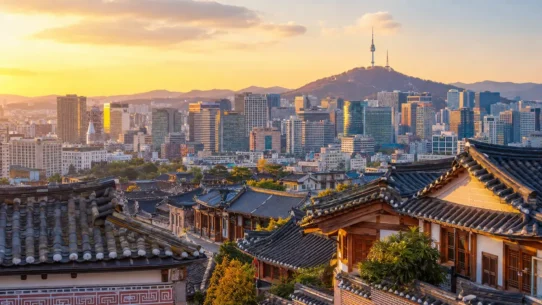
This cluster is at its best when treated as a slow descent rather than three separate attractions. Bukchon provides the architecture, Insadong adds crafts and accessible souvenir shopping, and Ikseondong supplies the stylish café finish. The combination works; trying to “complete” every famous alley does not.
✅ What Other Travelers Say: Travelers love the contrast between tiled roofs and the modern skyline, plus the easy access to tea houses, galleries and small shops. Many prefer the area before lunch, when photography and walking are less stressful.
⚠️ The Catch (Things to Keep in Mind): Bukchon is not an open-air film set. Tourist access in the restricted residential zone is limited to 10:00 a.m.–5:00 p.m., and residents deserve quiet. The lanes are steep enough to frustrate anyone with weak knees, a stroller or rolling luggage. Ikseondong can become intensely crowded and commercially repetitive.
📍 Stop 3: Namsan Park and N Seoul Tower
Tags: Sunset viewpoint · Separate transport and admission · Weather-dependent · Queue risk
N Seoul Tower is worth doing once, but the best part is the timing rather than the building. Arrive before sunset, see the city in daylight, and wait for the lights. That gives the paid observatory much better value than rushing up after dark for one black-window panorama.
✅ What Other Travelers Say: Visitors consistently enjoy the 360-degree city view, the day-to-night transition and the romantic atmosphere around the love-lock terraces. Online discounts are often appreciated because the official walk-up price is not cheap.
⚠️ The Catch (Things to Keep in Mind): Fog, pollution or rain can flatten the view. Cable-car lines, voucher redemption and elevator waits are separate problems. The plaza itself offers free viewpoints, so budget travelers should decide whether the indoor observatory adds enough value.
📍 Stop 4: Namdaemun Market and Myeongdong
Tags: Market breakfast or lunch · Tourist shopping · Easy evening · Variable value
Namdaemun is the more interesting daytime food-and-market stop; Myeongdong is the easier nighttime shopping stop. Combining them gives you both without pretending they offer the same experience. Namdaemun rewards curiosity, while Myeongdong rewards convenience.
✅ What Other Travelers Say: Namdaemun gets strong feedback for affordable local dishes, kitchenware, accessories and the feeling of a working market. Myeongdong remains popular because almost every major beauty brand, chain restaurant and tourist service is concentrated in a walkable area.
⚠️ The Catch (Things to Keep in Mind): Market hours vary by section and vendor. Famous food alleys can feel cramped, and not every stall is comfortable for travelers with dietary restrictions. In Myeongdong, compare prices before buying cosmetics and do not assume every street-food item is a bargain.
📍 Stop 5: Hongdae, Yeonnam-dong, Mangwon Market and Mangwon Hangang Park
Tags: Youth culture · Local-market stop · Mostly flat · Best slow day
This is the day that prevents the itinerary from becoming three straight days of monuments and shopping malls. Yeonnam is good for a calm start, Hongdae provides energy and retail, Mangwon supplies a more neighborhood-focused food stop, and the river finally gives your eyes and feet some space.
✅ What Other Travelers Say: Many visitors prefer Mangwon’s scale and prices to more heavily promoted food markets. Hongdae is praised for fashion, busking and nightlife, while Yeonnam feels easier for cafés and daytime wandering.
⚠️ The Catch (Things to Keep in Mind): Hongdae on a weekend night can be loud, slow and crowded. Mangwon stalls keep individual hours, and the river is only enjoyable when weather and air quality cooperate. Do not force the picnic in rain, extreme heat or winter wind.
Key FAQs
Is three days enough for Seoul for first-time visitors?
Three days is enough for a satisfying introduction to historic Seoul, one skyline viewpoint, central shopping and one modern neighborhood day. It is not enough for every palace, Gangnam, Lotte World, a DMZ tour, multiple museums and day trips. A good three-day trip requires choosing, not squeezing.
Where should I stay in Seoul for a 3-day itinerary without wasting time?
Myeongdong is the best general-purpose choice for this exact route. Seoul Station is best for airport and rail convenience, Jongno or Anguk is best for historic atmosphere, and Hongdae is best for nightlife and all-stop airport-rail access. Choose one base and keep it for all three nights.
Can I add Lotte World or a DMZ tour to this 3-day Seoul itinerary?
Yes, but replace a day rather than adding it. Lotte World and Jamsil need a full day if rides matter. Most DMZ tours consume the morning and a significant part of the afternoon, so they should replace Day 3 or be followed only by an easy evening near your hotel.
Final Verdict and Your Next Step
The perfect first-time Seoul trip is not the one with the most attractions. It is the one where you arrive at Gyeongbokgung before the crowds, respect Bukchon’s residents, eat before the market rush, reach Namsan with enough energy for sunset, and still have a final day that feels like a city rather than a museum marathon.
Book only the products that solve a real problem. Gyeongbokgung and the neighborhoods can usually be handled on the day. N Seoul Tower is the clearest candidate for an advance online ticket, while AREX is useful when your hotel and flight timing make the Express train logical. Read the redemption details before paying—especially any QR-code, kiosk, physical-ticket or time-slot requirement—and recheck official hours before leaving your hotel.
Recommended booking checks:
N Seoul Tower tickets on Klook
N Seoul Tower tickets on KKday
AREX Express tickets on Klook
AREX Express tickets on KKday
Official and Primary Planning Sources
- VISITKOREA: Gyeongbokgung Palace hours and closure information
- Visit Seoul: Bukchon Hanok Village visitor hours and transport
- Seoul Metropolitan Government: Bukchon restricted-zone notice
- N Seoul Tower: official operating hours
- N Seoul Tower: official observatory admission information
- N Seoul Tower: cable-car and Namsan Ormi access information
- Visit Seoul: airport rail overview
- AREX: official Express Train reservation page