
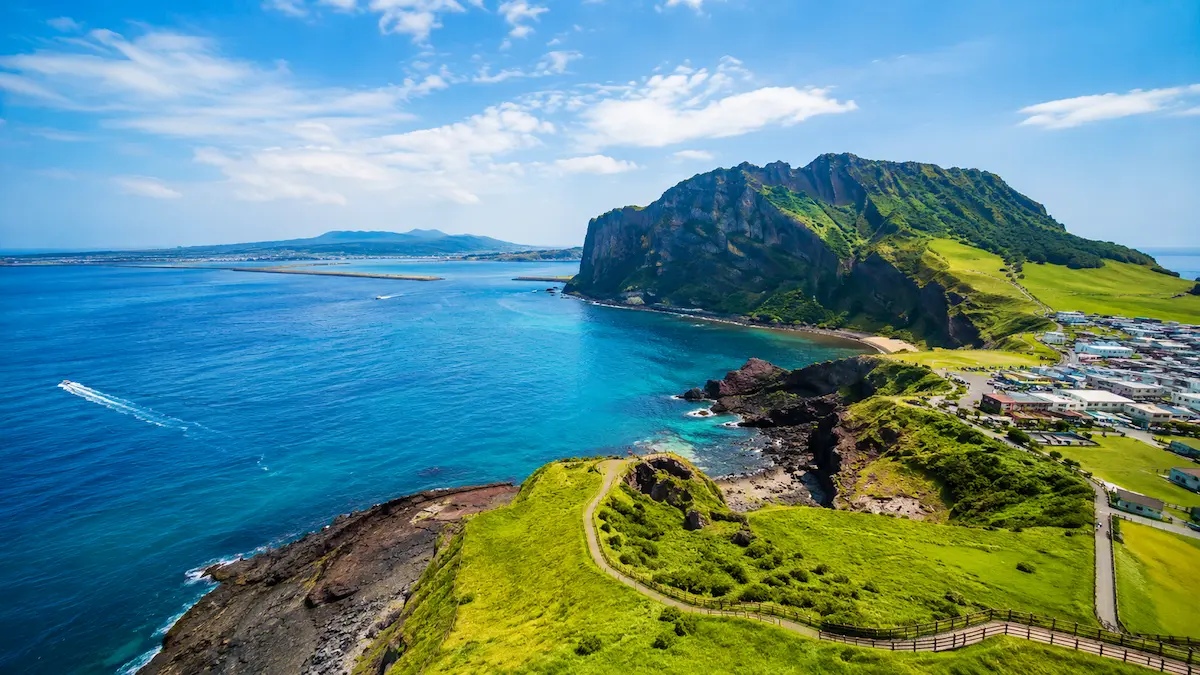
💡 Key Takeaways
- Do not treat Jeju like a compact city break. Jeju City is a convenient base, but the island is large enough that crossing from east to west for one “must-see” photo can quietly waste hours.
- Give one full day to eastern Jeju. Hamdeok, the Gujwa coast, Seongsan Ilchulbong and Seopjikoji naturally form an eastbound route; Aewol, O’sulloc and the western coast do not belong on that same day.
- Use the right transport for the right day. Walking and short taxis work well in central Jeju City, while a rental car or organized east-coast tour can save a surprising amount of dead time on Day 2.
- Do not confuse “popular” with “needs advance tickets.” Seongsan Ilchulbong normally does not require a timed reservation, while Hallasan’s summit-access sections on Seongpanak and Gwaneumsa do require official reservations. Eoseungsaengak does not.
- Build around weather, not ego. Jeju is windy and exposed. A cloudy mountain day, cancelled haenyeo performance or rough sea is a reason to swap stops, not force a bad itinerary.
A good 3-day Jeju City itinerary should not feel like a race around an island-shaped checklist. The most common first-timer mistake is assuming that because Jeju looks small on a map, Seongsan, Hallasan, Aewol, O’sulloc and Seogwipo can all be mixed freely. They cannot—not without spending a large part of your trip in traffic, waiting for buses or marching across parking lots and exposed coastal paths when you are already tired.
This route is designed for travelers who want to sleep in one Jeju City base, avoid dragging luggage between hotels and still see the island’s most rewarding first-trip scenery. Day 1 stays close to Jeju City, Day 2 commits fully to the east, and Day 3 uses the Hallasan side of the city before looping back toward the airport. It is deliberately less ambitious than many viral itineraries. That is the point: you actually have time to enjoy the places you came to see.
Freshness note: operational details in this guide were checked on August 7, 2026. Jeju’s trail access, beach operations, attraction hours and weather-related closures can change quickly, so verify official notices again shortly before travel.
The 1-Min Cheat Sheet
- Jeju Dongmun Traditional Market & Old Town
Best for: first-time visitors, food lovers, rainy-day flexibility and an easy arrival-day experience.
Suggested stay: 1.5–2.5 hours, longer if you eat dinner here.
Admission: Free; you pay only for food and shopping.
Main transport: Walk from the old-town core; short taxi or local bus from Jeju Airport/Yeondong.
Reservation: No.
Best time: Late morning for calmer browsing or roughly 17:00–19:30 for more atmosphere.
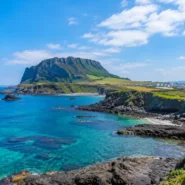
Biggest catch: “Dongmun Market” is not one single hall with one universal closing time. Individual shops and night-market operations vary, so do not build a tight late-night meal plan around an old blog post. - Hamdeok Beach (Hamdeok Seoubong Beach)
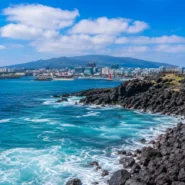
Best for: families, photographers, couples and anyone who wants a beautiful coast without committing to a long hike.
Suggested stay: 60–90 minutes; add another 45–60 minutes if walking partway up Seoubong.
Admission: Free.
Main transport: Eastbound local/intercity bus, taxi, rental car or east-coast group tour from Jeju City.
Reservation: No for the beach itself.
Best time: Early morning before the café zone and parking areas get busy, or late afternoon for softer light.
Biggest catch: The beachfront can feel far more commercial and crowded than postcard photos suggest, especially in summer. Do not spend half your day waiting for a famous café seat. - Seongsan Ilchulbong (Sunrise Peak)
Best for: first-time Jeju visitors, UNESCO scenery, active travelers and anyone who wants the island’s classic volcanic viewpoint.
Suggested stay: 1.5–2 hours including the summit climb and recovery time.
Admission: Adult individual admission is currently KRW 5,000; youth and children KRW 2,500 for the paid summit area.
Main transport: Rental car, east-coast tour, taxi or eastbound bus; official visitor information lists Bus 111 from Jeju Airport as one option.
Reservation: Standard admission normally does not require an advance timed reservation.
Best time: Early morning, especially May–August when the official opening schedule starts at 04:30. Seasonal hours vary.
Biggest catch: The summit route is short but steep and stair-heavy. “It only takes about 25–30 minutes up” does not mean it feels easy in heat, wind or humidity. The first Monday of each month is the regular closing day, with holiday exceptions. - Seopjikoji
Best for: coastal walkers, K-drama scenery fans, photographers and travelers who prefer open landscapes to another indoor attraction.
Suggested stay: 60–90 minutes.
Admission: General access is free; parking or private facilities may charge separately.
Main transport: Rental car or taxi is far easier than trying to connect the final leg by bus; many eastern Jeju tours include it.
Reservation: No for the coastal walking area.
Best time: Mid-to-late afternoon after Seongsan Ilchulbong.
Biggest catch: It is exposed. Wind, rain and summer sun can turn an “easy scenic stroll” into a tiring walk, and the return to the parking area is not magically shorter because you are done taking photos. - Eoseungsaengak Trail, Hallasan National Park
Best for: travelers who want a real Hallasan experience without sacrificing an entire day to the summit.
Suggested stay: About 1.5–2 hours including pauses; the trail itself is roughly 1.3 km one way and is commonly described as about 30 minutes one way.
Admission: Free.
Main transport: Taxi, rental car or bus to the Eorimok area; confirm the current bus schedule before departure.
Reservation: No. The Hallasan reservation system currently applies to specified summit-access sections of Seongpanak and Gwaneumsa, not Eoseungsaengak.
Best time: Clear early morning before clouds build over the mountain.
Biggest catch: Weather is the attraction and the enemy. If the summit view is buried in cloud, forcing the hike rarely improves the experience.
Tourist Traps to Avoid & Itinerary Hacks
- Trap: East coast + west coast in one sightseeing day. Seongsan Ilchulbong and Aewol may both be “top Jeju attractions,” but they sit on opposite sides of the island. Add O’sulloc and Seogwipo and you have created a driving tour with occasional sightseeing. Hack: stay directional. This itinerary gives the east its own day and does not pretend that every famous spot deserves a slot.
- Trap: Planning Jeju by straight-line distance. A map makes some stops look close while the actual route requires a bus transfer, a long walk from the road or a taxi through slow tourist traffic. Hack: compare door-to-door travel time in Naver Map or KakaoMap, not just kilometers.
- Trap: Building the day around viral cafés. The east-coast café belt around Hamdeok and Woljeongri is attractive, but a one-hour queue for a sea-view seat is rarely the best use of a three-day trip. Hack: choose the beach first and the café second. If your first choice has a line, move on.
- Trap: Treating Seongsan Ilchulbong as a flat photo stop. The iconic summit viewpoint requires stairs. Travelers routinely underestimate the combination of sun, humidity and steep steps. Hack: climb early, carry water, and do not schedule another major uphill walk immediately afterward.
- Trap: Copying old Manjanggul closure information. This is a particularly current Jeju planning problem. Manjanggul Lava Tube was closed for more than two years after a rockfall, but reopened to general visitors on May 30, 2026 after safety improvements. Current official hours list 09:00–18:00 with last ticketing/admission at 17:00 and closure on the first Wednesday of each month. Hack: use it as a weather-proofing option on the east-coast day, but confirm the live notice before going because cave operations can still change.
- Trap: Booking a Hallasan summit because “Hallasan is a must.” A full summit day can consume most of your daylight and leaves little energy for a short three-day trip. Hack: Eoseungsaengak gives you Hallasan terrain and a high viewpoint without turning Day 3 into an endurance test. If reaching Baengnokdam is a personal goal, rebuild the whole day around it instead of squeezing it in.
- Trap: Assuming every famous attraction has skip-the-line tickets. Seongsan Ilchulbong is not an amusement park with a magic fast lane. Hack: the real “skip-the-line” strategy is early timing, buying only genuinely useful e-vouchers and prebooking transport when transport—not admission—is the bottleneck.
- Trap: Taking a giant suitcase sightseeing on arrival or departure day. Coastal paths, stairs and traditional market aisles are the wrong place for wheeled luggage. Hack: leave bags at your hotel whenever possible. Jeju Airport also has baggage storage/courier services around the terminal; confirm current hours and capacity before relying on them during weekends or holidays.
The Perfect 3-Day Itinerary at a Glance
Day 1: Jeju City Old Town, Dongmun Market and the North Coast
Suggested start: 10:00 if you have a full day, or simply begin after hotel check-in if this is your arrival day.
Route: Gwandeokjeong & Jeju Mokgwana area → Jeju old-town lanes → Dongmun Traditional Market → Sanjicheon / Black Pork Street area → Yongduam Rock → optional Dodu/Iho coast.
Transport between stops: Walk through the old-town core. After Dongmun, use a short taxi for Yongduam and another short ride if continuing to Dodu or Iho. Trying to save a few won by forcing multiple local-bus connections is usually false economy on a short trip.
Walking and difficulty: Easy to moderate. Expect roughly 5–8 km if you explore the old town properly and add the coast. The route is mostly urban, but market aisles can be crowded and coastal sections can be windy.
Lunch strategy: Do not arrive at Dongmun desperately hungry and buy the first viral snack you see. Walk one lap, compare stalls, then eat. For a heavier meal, use the Black Pork Street/Sanjicheon area rather than trying to make street snacks your entire lunch.
Easiest stop to cut: Iho Tewoo Beach or the Dodu coastal area. Keep Yongduam if you want a quick airport-side coastal landmark; cut the extra western hop if your flight was tiring.
Rain or low-energy alternative: Stay in the old-town area longer, add the Jeju Folklore & Natural History Museum or a café break, then return to Dongmun for dinner. Day 1 is intentionally flexible because flight delays and check-in times are unpredictable.
Why this ordering works: You are not burning your first day crossing the island. Everything important is clustered near central Jeju City, so you can begin late, stop early or adjust around a delayed flight without destroying the rest of the itinerary.
Day 2: Hamdeok, the Gujwa Coast, Seongsan Ilchulbong and Seopjikoji
Suggested start: 07:00 from Jeju City. In peak summer, leaving closer to 06:30 is even better if you are driving.
Route: Hamdeok Beach → choose one mid-morning stop (Woljeongri Beach or Manjanggul Lava Tube) → Seongsan Ilchulbong → Seopjikoji → return to Jeju City.
Transport between stops: Rental car or an organized east-coast tour is the most efficient. Public transport is possible, but the bus version should be simplified to Hamdeok → Seongsan, with either Woljeongri or Seopjikoji removed. Seopjikoji’s final access is exactly the kind of short-looking rural connection that eats time without a car.
Walking and difficulty: Moderate to moderately hard. Hamdeok is easy; Seongsan adds a steep stair climb; Seopjikoji is an exposed coastal walk. This is the most physically demanding day even though none of the individual walks is extremely long.
Lunch strategy: Eat around Seongsan after the climb or just before it if your arrival slips toward midday. Do not detour inland for a “must-eat” restaurant unless you have a confirmed reservation; you will lose the geographic efficiency that makes this day work.
Easiest stop to cut: Seopjikoji. If weather is poor, you are tired, or the Seongsan climb takes longer than expected, cut it without guilt. Your east-coast day is already successful.
Rain or low-energy alternative: Replace Woljeongri and/or Seopjikoji with Manjanggul Lava Tube. The cave reopened on May 30, 2026 and currently operates 09:00–18:00 with last admission at 17:00. Expect dripping water, cool temperatures and a roughly 1 km visitor section each way; shoes with grip matter more than fashionable sneakers.
Why this ordering works: The day moves broadly eastward instead of zigzagging. Hamdeok warms you up with almost no effort, the Gujwa stop breaks the drive, Seongsan becomes the day’s main physical challenge, and Seopjikoji is an optional scenic finish rather than another compulsory box to tick.
Day 3: Hallasan’s Eoseungsaengak, Nohyeong/Yeondong and an Easy Airport Finish
Suggested start: 07:00–07:30 from your Jeju City hotel, earlier if the weather forecast shows clouds building by late morning.
Route: Eorimok area → Eoseungsaengak Trail → return toward Nohyeong/Yeondong for lunch → optional Halla Arboretum or Dodu/Iho coast → airport or final evening in Jeju City.
Transport between stops: Taxi or rental car is simplest for the early mountain transfer. Bus travel can work, but check the live schedule the day before because mountain-area frequency is not the same as central Jeju City frequency.
Walking and difficulty: Moderate. Eoseungsaengak is much shorter than a Hallasan summit hike but still includes steady uphill walking, steps and potentially slippery sections. Give yourself around 1.5–2 hours door-to-trail experience rather than timing only the ascent.
Lunch strategy: Come back down toward Nohyeong or Yeondong, where you have far more restaurant choice and a much easier taxi ride to the airport. This is smarter than hunting for a scenic mountain lunch when you may be wet, cold or behind schedule.
Easiest stop to cut: The afternoon coast. If you fly out today, protect your airport buffer first.
Rain or low-energy alternative: Skip the mountain entirely if visibility is poor or trails are restricted. Use Jeju Museum of Art, an old-town museum, cafés and a relaxed lunch instead. A “Hallasan day” with zero view is not a moral victory.
Why this ordering works: Eoseungsaengak sits on the Hallasan side of Jeju City, and the second half of the day naturally returns toward the city and airport. You avoid the classic mistake of visiting a far-flung eastern or western attraction immediately before a flight.
Save Your Legs! The Most Efficient Route
The biggest efficiency gain in this 3-day Jeju City itinerary comes from treating the island as directional zones. Day 1 is central/north, Day 2 is east, and Day 3 is mountain-to-airport. That sounds obvious, but many first-time itineraries fail because they are built from search-result popularity rather than geography.
What belongs together: Dongmun, Gwandeokjeong, Sanjicheon and the old town belong on the same walking day. Hamdeok, Woljeongri/Manjanggul, Seongsan and Seopjikoji belong in the same eastbound corridor. Eoseungsaengak belongs with a return toward Nohyeong, Yeondong and the airport.
What looks compatible but is not: Seongsan plus O’sulloc is a poor pairing for a relaxed day because you are crossing most of the island. Hamdeok plus Aewol has the same problem in miniature. A full Hallasan summit plus Seongsan is also theoretically possible for a very fit traveler with a car, but it is a bad default recommendation for a three-day first visit.
Train, subway, bus, taxi or walking? Jeju has no subway network that solves tourist routing. Walk inside compact Jeju City clusters; use buses for longer straightforward corridors if you have time; use taxis for awkward 10–25 minute links; and consider a rental car or organized tour for the east-coast day. The Jeju City Tour Bus can be useful for city sightseeing when its current timetable matches your dates, but it is not a substitute for an island-wide transport plan.
Where your legs will notice the difference: Seongsan Ilchulbong is stair-heavy. Seopjikoji is exposed and can feel longer in wind. Eoseungsaengak is a genuine uphill trail even though it is short. Market streets can be crowded and uneven. Large suitcases and strollers are particularly annoying on steps, older pavements, tight market aisles and rougher coastal paths.
Where to stay: For this exact route, I would choose one Jeju City base rather than changing hotels. Yeondong/Shin Jeju is practical for airport access, restaurants and taxis, but it is less atmospheric. Dongmun/old town is better for markets, local evening walks and Day 1, but some eastbound or airport trips may take slightly longer. Hamdeok is lovely if your priority is the beach and eastern Jeju, but it makes Day 1 old-town sightseeing and a flight-day exit less frictionless. For only three days, changing hotels usually costs more time than it saves.
Luggage strategy: On arrival, ask your hotel to store bags before check-in. On departure, leave bags after check-out and collect them before the airport whenever the route allows. If your hotel is inconvenient, Jeju Airport has baggage storage/courier facilities around the terminal; capacity and hours can change, so confirm before you build a same-day plan around the service. Do not drag a full-size suitcase up Seongsan, into Dongmun or along a volcanic coast.
Ticket Tips & Skip-the-Line Hacks
Jeju is one of those destinations where tourists often overbook the wrong things. The major natural sights in this itinerary are not all timed-entry attractions, so paying a reseller for a basic admission ticket does not automatically save time.
Seongsan Ilchulbong: Current official information lists seasonal operating hours of 05:00–19:00 in March–April and September–October, 04:30–20:00 in May–August, and 06:00–18:00 in November–February, with final ticketing one hour before closing. The regular closing day is the first Monday of the month, or the following day when that Monday is a public holiday. Adult admission is KRW 5,000; youth and children KRW 2,500. For ordinary independent visits, buying on site is usually sufficient. There is no meaningful “skip-the-line” product that lets you bypass the physical summit stairs.
Hallasan: This is where reservation confusion matters. The Hallasan National Park reservation system currently states that reservation control applies to specified summit-access sections on Seongpanak and Gwaneumsa. Eorimok, Yeongsil, Donnaeko, Seokguram and Eoseungsaengak are currently available without that reservation. If you decide to replace Day 3 with a full summit attempt, reserve through the official Hallasan system rather than assuming a tour marketplace booking is your hiking permit.
Manjanggul Lava Tube: It reopened on May 30, 2026 after a long safety-improvement closure. Current Visit Jeju information lists 09:00–18:00, last ticketing/admission at 17:00, and closure on the first Wednesday each month. On-site ticketing is normally adequate; the bigger risk is relying on outdated “still closed” blog posts or arriving after last admission.
Hamdeok, Seopjikoji and Dongmun: These do not need attraction reservations for a normal visit. The reservation decision is about optional activities, restaurants, surf lessons or transportation—not beach access, coastal walking or market entry.
The one thing I would prebook: If you are not renting a car, a well-reviewed east Jeju day tour can save far more time than a standalone attraction ticket. The current Klook east-coast product below includes transport and an east route featuring Seongsan Ilchulbong, Seopjikoji and Hamdeok; the current listing states that entry fees are included. KKday also has an eastern UNESCO route with an e-voucher and transport. Product routes can change, so read the exact date-specific package before paying.
Verified booking links:
Klook: East Jeju UNESCO Highlights Day Tour
KKday: Jeju Eastern UNESCO Sites Tour
Affiliate disclosure: these are affiliate links, which may generate a commission for the publisher at no extra cost to the traveler. Availability, inclusions, meeting points and pricing should be checked on the product page before booking.
QR-code reality check: Tour marketplaces commonly issue mobile/e-vouchers, but a QR code is not the same thing as a universal fast lane. Save the voucher offline, arrive at the stated meeting point early, and follow the operator’s redemption instructions. For independent natural attractions, an old-fashioned on-site ticket may still be the fastest and least confusing option.
Tried & Tested: My Honest Review
Rather than pretending every famous Jeju stop is equally essential, here is how I would judge the five anchors of this route: what earns its place, what other travelers repeatedly appreciate, and what can ruin the experience if you arrive with the wrong expectation.
📍 Stop 1: Jeju Dongmun Traditional Market & Old Town
Tags: 🍊 Local food · 🛍️ Souvenirs · 🌧️ Weather-friendly · 🦵 Low effort
Why it earns a slot: Dongmun works because it is useful, not because it is pristine. You can eat, buy tangerine products, browse seafood, pick up last-minute gifts and recover from bad weather without committing to a long journey. It also gives the itinerary a genuinely urban Jeju layer between beaches and volcanoes.
✅ What Other Travelers Say: Travelers tend to value Dongmun for the sheer range of food and souvenirs and for the lively evening atmosphere. Walking videos and visitor reports also show why it is worth doing one full lap before buying: the market is larger and more fragmented than many people expect.
⚠️ The Catch (Things to Keep in Mind): Some of the most photographed stalls are tourist-priced, queues can form around social-media-famous snacks, and “market opening hours” do not mean every vendor operates at exactly the same times. Go for choice and atmosphere, not the fantasy that every bite is a hidden local bargain.
📍 Stop 2: Hamdeok Beach and Seoubong
Tags: 🌊 Emerald water · 👨👩👧 Family-friendly · 📸 Easy photos · ☀️ Weather-sensitive
Why it earns a slot: Hamdeok gives you a high-reward coast with almost no mandatory effort. The water color can be spectacular in good light, facilities are convenient, and the optional Seoubong walk adds elevation if you want it. This makes Hamdeok a smart first stop before the harder Seongsan climb.
✅ What Other Travelers Say: The clear, shallow-looking water and easy access are the consistent positives. Families appreciate the developed facilities, while photographers like the contrast between white sand, volcanic coastline and the green slope of Seoubong.
⚠️ The Catch (Things to Keep in Mind): Summer crowds can be intense, and the popular frontage is heavily commercialized. The sea can also look completely different under gray skies. If you arrive and the light is flat, enjoy a short walk and keep moving rather than waiting two hours for “the photo.”
📍 Stop 3: Seongsan Ilchulbong (Sunrise Peak)
Tags: 🌋 UNESCO landscape · 🥾 Stair climb · 🌅 Early-start winner · ⭐ First-trip essential
Why it earns a slot: If you only do one iconic volcanic landmark on a first Jeju trip, this is the one I would prioritize. The crater geometry, ocean position and view back across eastern Jeju make it visually distinct from a normal hill hike. The official site notes that the summit is about a 25-minute climb from the ticket office for many visitors, but give yourself more time for rests and photos.
✅ What Other Travelers Say: Recent traveler reports continue to praise the summit view and describe the wooden stair route as straightforward but steep. Organized-tour reviews also frequently mention Seongsan as a highlight of the eastern route.
⚠️ The Catch (Things to Keep in Mind): “Sunrise Peak” does not mean you can blindly use an old sunrise blog’s opening time. Official hours now vary significantly by season. Wind can also affect nearby haenyeo performances, and strong summer sun makes the short climb feel much harder than the distance suggests.
📍 Stop 4: Seopjikoji
Tags: 🌾 Open coast · 🎬 K-drama scenery · 🌬️ Windy · 📷 Golden-hour friendly
Why it earns a slot: Seopjikoji gives the east-coast day a completely different texture after Seongsan: open grassland, volcanic rock, cliffs and a long horizon. It is also close enough to Seongsan to make geographic sense, which is more important than squeezing in a theoretically “higher ranked” attraction far away.
✅ What Other Travelers Say: Visitors consistently like the coastal views and the combination of fields, cliffs and Seongsan in the background. Spring canola and clear-weather days are especially photogenic.
⚠️ The Catch (Things to Keep in Mind): There is very little shelter. On a hot, windy or rainy day, this is the first stop I would shorten. It is also not the easiest place to reach efficiently by public transport, so independent bus travelers should treat it as optional rather than mandatory.
📍 Stop 5: Eoseungsaengak, Hallasan National Park
Tags: 🏔️ Short Hallasan hike · 🌲 Nature · ⏱️ Time-efficient · ☁️ Visibility-dependent
Why it earns a slot: This is the compromise I wish more short itineraries used. You still enter Hallasan National Park, gain elevation and get a genuine mountain walk, but you do not spend eight to ten hours chasing the summit. The current Hallasan reservation notice explicitly lists Eoseungsaengak among the trails available without the summit reservation system.
✅ What Other Travelers Say: Hikers like the route because it delivers a broad view for relatively little distance. Dedicated hiking guides often describe it as one of the easiest ways to get a Hallasan experience.
⚠️ The Catch (Things to Keep in Mind): Easy is relative. There are still steps and uphill sections, winter can bring ice, and summer humidity matters. Most importantly, low cloud can erase the view. Check the live Hallasan status and CCTV/weather information before committing.
Key FAQs
Is 3 days enough for Jeju City without a car?
Yes, if you accept that “enough” means a focused first trip rather than a lap of the island. Day 1 and much of Day 3 work well with walking, taxis and buses. For Day 2, an organized east-coast tour is the easiest substitute for a rental car because it removes the slowest rural connections. If you insist on buses only, cut at least one east-coast stop and keep generous transfer buffers.
Can I visit Seongsan Ilchulbong and Hallasan in the same 3-day Jeju itinerary?
Absolutely, but do them on separate days. Seongsan belongs on the eastern route; Hallasan belongs on the mountain day. If “Hallasan” means Eoseungsaengak, this itinerary is comfortable. If it means Baengnokdam summit, the schedule changes completely: reserve the required trail access and dedicate most of Day 3 to hiking.
Do I need to book Jeju attractions in advance?
Not most of the natural attractions in this route. Standard Seongsan admission, Hamdeok, Seopjikoji, Dongmun and Eoseungsaengak do not normally need timed reservations. Hallasan summit-access sections are the major exception. Transport-heavy experiences, guided tours and some activities are worth booking in advance because capacity—not the attraction gate—is what can sell out.
Final Verdict and Your Next Step
The best three-day Jeju trip is not the one with the most pins saved in Google Maps. It is the one where you are still enjoying the coast at 16:00 instead of calculating whether you can drive across the island before closing time.
Use Jeju City as one base. Keep Day 1 local. Give the east coast a full day. Use Eoseungsaengak for a realistic Hallasan experience unless the summit is one of your main travel goals. And keep one stop every day mentally marked as “optional.” That single habit prevents bad weather, traffic or tired legs from turning your itinerary into a failure.
If you are comfortable driving in Korea, a rental car gives you the most flexibility. If you are not, the smartest advance purchase is usually transport bundled with sightseeing, not random individual tickets. The two currently verified east-Jeju booking pages below are practical starting points; compare the exact route, pickup point, language and cancellation rules for your date before paying.
Check the Klook East Jeju UNESCO Highlights Day Tour
Check the KKday Jeju Eastern UNESCO Sites Tour
Before you leave: re-check Seongsan’s seasonal hours and closing day, Hallasan live trail status, Manjanggul’s operating notice, your tour pickup instructions, and the weather forecast. Jeju rewards flexible travelers far more than perfectly color-coded spreadsheets.