
💡 Key Takeaways
- Do not treat Gyeongju as one compact walking zone. The royal-tomb core is walkable, but Bulguksa Temple and Seokguram Grotto sit well east of downtown and deserve their own day.
- Seokguram looks “next to” Bulguksa on many itineraries, yet the mountain road and roughly hourly Bus 12 can turn a casual add-on into a long wait. Plan the bus first, then the sights.
- Split Gyeongju’s two best night experiences: finish Day 1 at Woljeonggyo Bridge and save Donggung Palace & Wolji Pond for Day 3. Chasing both at perfect blue hour is the sort of clever-looking plan that becomes a sprint.
- Most headline heritage sites do not need advance attraction tickets. Bulguksa and Seokguram are currently free; Daereungwon’s grounds are free; and Donggung & Wolji is inexpensive to buy on site. The advance bookings that matter more are your KTX/KORAIL transport or an organized tour.
- Stay around Hwangnidan-gil/Daereungwon or the bus-terminal side of downtown, not beside Gyeongju KTX Station just because it has “Gyeongju” in the name. The high-speed rail station is outside the historic center.
A good 3-day Gyeongju itinerary is not about collecting the largest possible number of UNESCO sites. It is about respecting the city’s geography. First-time visitors often underestimate three things: how far the Tohamsan temple area is from downtown, how much walking accumulates across the historic core, and how badly an hourly mountain bus can punish an overpacked schedule. Add weekend queues on Hwangnidan-gil and the post-sunset surge at Donggung & Wolji, and a seemingly simple itinerary can collapse by late afternoon. The route below is built to avoid that: one compact downtown day, one dedicated eastern temple day, and one museum-and-palace day that finishes with Gyeongju’s strongest night view.
Last fact-check: August 8, 2026. Opening hours, seasonal bus schedules, restoration access and special-exhibition rules can change. Recheck the official attraction pages shortly before travel, especially Bulguksa in 2026.
The 1-Min Cheat Sheet
- Daereungwon Tomb Complex + Hwangnidan-gil — Best for first-time visitors, photographers, café hunters and anyone who wants history without difficult transport. Allow 2–3 hours for Daereungwon/Cheonmachong plus 1.5–2 hours for a meal and an unhurried Hwangnidan-gil wander. Daereungwon grounds are currently free; Cheonmachong Tomb is KRW 3,000 for adults. No reservation is normally needed. From Gyeongju KTX Station, use a downtown bus such as routes listed by the city for the Hwangnidan area, then walk; from the intercity/express bus terminals, the area is much closer. Best time: Daereungwon around 09:00, then Hwangnidan-gil for an early lunch around 11:15. Biggest catch: weekend restaurant and dessert queues can consume more time than the sights themselves.
- Cheomseongdae + Gyerim Forest + Gyochon + Woljeonggyo Bridge — Best for walkers, couples, families and travelers who want Gyeongju’s classic “open-air museum” atmosphere. Allow 3–4 hours at a relaxed pace, longer if you stop for photos and snacks. The outdoor heritage areas and Woljeonggyo are free. No advance reservation is needed. These stops are best reached on foot from Daereungwon/Hwangnidan-gil. Best time: late afternoon into dusk, with Woljeonggyo saved for the light-up period. Biggest catch: the distance looks trivial on a map, but repeated photo detours, grass paths, stone surfaces and summer heat can push the day’s total walking much higher than expected.
- Seokguram Grotto — Best for UNESCO completists, Buddhist-art lovers and travelers comfortable with a short forest walk and a winding mountain road. Allow roughly 45–75 minutes at the site, but budget much more for transport. General admission is currently free. No normal individual reservation is required. Public-transport travelers first reach Bulguksa, then take Bus 12 to Seokguram; the city’s smart-tourism guide lists roughly hourly service, so check the live/seasonal timetable before leaving. Best time: one of the earliest useful morning departures. Biggest catch: photography is restricted inside the grotto, the actual viewing moment is brief, and missing Bus 12 can cost close to an hour.
- Bulguksa Temple — Best for nearly every first-time visitor: architecture, history, Buddhist culture and autumn/spring scenery are all strong here. Allow 1.5–2 hours. General admission is currently free, and routine individual visits do not need advance booking. Bus 10/11 connects the downtown corridor with the Bulguksa area; city guidance puts the terminal-to-Bulguksa ride at roughly 40–50 minutes depending on traffic. Best time: morning, immediately after Seokguram on this itinerary. Biggest catch: slopes, stone steps and tour groups make the complex more tiring than the ticket price suggests. A major dismantling repair of Daeungjeon was announced for 2026, so check the temple’s latest access notices before travel.
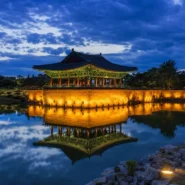
- Gyeongju National Museum + Donggung Palace & Wolji Pond — Best for history lovers, rainy days, families and anyone who wants one lower-stress day after the temple hills. Allow 2–3 hours for the museum and 60–90 minutes for Donggung & Wolji around dusk/night. The museum’s permanent displays are generally free; Donggung & Wolji is currently KRW 3,000 for adults, with last ticketing/admission at 21:30 and closing at 22:00. No normal advance booking is necessary, although special museum exhibitions or group programs can have separate rules. Best time: museum at 10:00, then Donggung about 30–45 minutes before sunset. Biggest catch: Donggung’s prettiest period is also its busiest, so arrive before the full post-sunset crowd rather than after it.
Tourist Traps to Avoid & Itinerary Hacks
- Trap: “Everything in Gyeongju is close.” Downtown heritage sites are compact; the eastern temple zone is not. Bulguksa and Seokguram belong together, but they do not belong in the middle of a downtown walking day. Give the east its own day and you remove the biggest source of backtracking.
- Trap: Treating Seokguram as a 20-minute add-on to Bulguksa. The two sites are historically paired but operationally separated by a winding mountain road. Gyeongju’s own smart-tourism guidance tells independent travelers to transfer at Bulguksa to Bus 12, which runs about once an hour. Decide your Bus 12 timing before you decide whether to browse one more souvenir shop.
- Hack: Do Seokguram first on the temple day if the morning bus/taxi timing works. You get the mountain transport bottleneck out of the way while your energy is high, then come downhill to Bulguksa where you have more flexibility. This is particularly useful on weekends and peak foliage/blossom dates. If the timetable is awkward, take a taxi uphill and use the bus downhill rather than sacrificing an hour to prove you can do everything by public transport.
- Trap: Building a Busan-style “one-day greatest hits” route inside a three-day stay. Commercial day tours can visit Bulguksa, tombs, Hwangnidan-gil and night sights in 10–12 hours because a coach removes transfer friction. Copying that stop list independently is not the same experience. With three days, use the luxury you actually have: time.
- Trap: Lunching on Hwangnidan-gil at the exact time everyone else does. On weekends, lunch around 12:30–14:00 can turn a 45-minute meal into a 90-minute project. Eat around 11:00–11:30, or put your name down early and use the wait for a nearby shop rather than standing in a queue.
- Trap: Trying to photograph both Woljeonggyo and Donggung & Wolji at perfect blue hour on the same evening. They are geographically linkable, but the best-light window is not. One site usually gets sacrificed to a hurried walk or taxi. This itinerary gives each night landmark its own evening.
- Trap: Adding Yangdong Folk Village to the Bulguksa/Seokguram day. Yangdong is a worthy UNESCO site, but it is out toward the northwest while the temples are east. It is a fourth-day excursion, a road-trip add-on, or a replacement for another day—not a sensible “while we’re nearby” stop.
- Hack: Use Naver Map or KakaoMap for real-world routing. In Korea, they are generally more useful for local transit and pedestrian detail than relying on Google Maps alone. Screenshot your hotel name and address in Korean for taxi drivers as a backup.
- Trap: Booking a hotel beside Gyeongju KTX Station to “save transport time.” The station is about 7.4 km by road from Hwangnidan-gil according to the city’s current access page. Unless you have a very early train and no interest in evenings downtown, you will spend that saved station time repeatedly commuting to the sights.
- Hack: Treat taxis as a time-management tool, not a failure. Two strategic taxi rides—one when Bus 12 timing goes wrong and one on a rainy/late evening—can protect several hours of a short trip without turning the entire itinerary into an expensive private-car holiday.
The Perfect 3-Day Itinerary at a Glance
Day 1: Royal Tombs, Hwangnidan-gil and the Southwest Historic Core
Suggested start: 08:45–09:00. Order: Daereungwon → Cheonmachong → Hwangnidan-gil early lunch → Cheomseongdae → Gyerim Forest → Gyochon Traditional Village → Woljeonggyo Bridge around dusk. This is the day to stay on foot instead of repeatedly boarding buses for tiny hops.
- Transport between stops: Walk. The value of this day comes from the continuous historic landscape; a taxi between every sight saves little and breaks the flow.
- Walking / effort: Roughly 7–10 km if you explore fully, easy to moderate in gradient but surprisingly tiring in hot or humid weather. Expect grass, compacted earth, stone and occasional uneven surfaces.
- Lunch strategy: Reach Hwangnidan-gil before the noon crush. Eat around 11:15, then use the busiest lunch period for cafés, shops or your walk toward Cheomseongdae.
- Easiest stop to cut: Gyochon. It is pleasant, but if your legs are fading, go directly through the Gyerim/Wolseong side toward Woljeonggyo.
- Rain / low-energy alternative: Spend longer inside Cheonmachong, take a long café break, then taxi to the Woljeonggyo area if the rain eases for evening photos.
Why this beats the common internet itinerary: Many routes continue from Woljeonggyo straight to Donggung & Wolji because both are famous at night. That is geographically possible, but it forces two photogenic sites into the same short light window after a full walking day. Stopping at Woljeonggyo preserves your energy and gives Donggung its own proper evening on Day 3.
Day 2: Tohamsan Mountain — Seokguram First, Then Bulguksa
Suggested start: Leave downtown around 07:30–08:00, adjusting to the current Bus 12 timetable. Order: downtown → Bulguksa transfer area → Seokguram Grotto → Bulguksa Temple → lunch near Bulguksa → optional Bomun Lake only if the weather and your legs are still good.
- Transport between stops: Bus 10/11 or taxi from downtown toward Bulguksa; Bus 12 or taxi between Bulguksa and Seokguram. Bus 12 is the key constraint and is listed by Gyeongju’s smart-tourism service at about hourly intervals.
- Walking / effort: Around 4–6 km of actual sightseeing walking, but this is the most physically demanding day because of slopes, stone steps, the forest approach to Seokguram and the long mountain-road transfer. Motion-sensitive travelers may dislike the winding road.
- Lunch strategy: Eat after Bulguksa, not between the two UNESCO sites. A long lunch before Seokguram risks losing the bus rhythm and the calmer morning window.
- Easiest stop to cut: Bomun Lake. It is a pleasant resort area, not a must-do historic stop. Cutting it makes this day feel dramatically better.
- Rain / low-energy alternative: Taxi to Seokguram, taxi or bus downhill to Bulguksa, then return downtown after the temple. Do not force the optional lake stop.
Why this order is smarter: The hardest-to-control part of the day is the mountain link, not Bulguksa itself. By dealing with Seokguram first, you reduce the chance that afternoon traffic, a long lunch or a missed bus kills the UNESCO grotto visit. Bulguksa is larger and easier to pace once you are back downhill.
Day 3: Museum, Wolseong and the Eastern Royal-Capital Nightscape
Suggested start: 09:45. Order: Gyeongju National Museum at opening → lunch → Wolseong palace-site landscape → optional Hwangnyongsa/Bunhwangsa history detour → rest/café → Donggung Palace & Wolji Pond 30–45 minutes before sunset.
- Transport between stops: Walk between the museum, Wolseong and Donggung if weather is comfortable; use a short taxi or local bus if you are protecting your legs. This is intentionally a small geographic cluster.
- Walking / effort: Roughly 5–7 km, easy to moderate. The museum gives you several indoor hours and seats—useful after Day 2’s hills.
- Lunch strategy: Eat after the museum before the exposed outdoor sites. Avoid saving lunch until late afternoon when you should be resting before the night visit.
- Easiest stop to cut: Hwangnyongsa/Bunhwangsa. Choose one only if you are genuinely history-focused; neither should cost you the energy needed for Donggung & Wolji.
- Rain / low-energy alternative: Make the museum the main event, return to your hotel for a break, then taxi to Donggung if the weather improves. If it does not, you still had a worthwhile cultural day.
Why this beats a packed final day: The museum turns the outdoor ruins into a story rather than a collection of grassy foundations, and the day naturally ends at Donggung without crossing the city. If you have an early departure on Day 3, move Donggung to the end of Day 1 and accept seeing Woljeonggyo before full darkness; do not try to squeeze both night landmarks into 40 minutes.
Save Your Legs! The Most Efficient Route
The route works because each day follows one geographic logic. Day 1 keeps you in the western/central historic core: Daereungwon, Hwangnidan-gil, Cheomseongdae, Gyerim, Gyochon and Woljeonggyo are genuinely walkable as one chain. Day 2 commits to the east: Bulguksa and Seokguram are historically paired and share the same approach corridor, so it makes sense to absorb their transport cost once. Day 3 stays around the museum–Wolseong–Donggung area, which lets you learn the Silla story indoors before seeing the palace landscape outdoors.
The pair that most often fools first-timers is Bulguksa + Seokguram. They look adjacent in guidebooks and are always mentioned in the same sentence, but Seokguram is up on Tohamsan and public-transport visitors normally transfer at Bulguksa to Bus 12. The city’s smart-tourism guide describes the service as roughly hourly. That means the right question is not “How long does the grotto take?” but “Which bus am I building the morning around?” A taxi becomes excellent value if it prevents a 50-minute wait.
Another misleading “close pair” is Woljeonggyo + Donggung & Wolji at sunset. They can absolutely sit in one night walk, and Gyeongju itself promotes a longer nightscape route linking central heritage sites. But for a first visit, both deserve the same scarce resource: the period from late golden hour through blue hour to full illumination. Splitting them across two nights is less Instagram-efficient on paper and much more satisfying in real life.
For transportation, use walking first in the downtown heritage core, Bus 10/11 for the eastbound Bulguksa corridor, Bus 12 for Seokguram if its timing suits you, and taxis selectively. Gyeongju has no subway network to rescue a badly designed itinerary. The city’s official “Golden Line” information says Bus 10 runs through the downtown sights, Bomun and Bulguksa, with the terminal-to-Bulguksa trip taking roughly 40–50 minutes depending on traffic; Bus 11 follows the same general loop in the opposite direction. Check current real-time transit data rather than treating an old blog timetable as a promise.
Where your legs will notice the route: Seokguram involves a forest approach from the parking/bus area and some steps; Bulguksa has slopes, stairways and stone surfaces; the historic core is flatter but accumulates distance. Gyochon and heritage lanes can have uneven paving. Large suitcases and bulky strollers are a bad match for a sightseeing day here, even when a site is technically accessible by road. If you are traveling with limited mobility, a stroller or young children, use taxis to reduce the “connector” walking and verify current accessible entrances with each site.
Where to stay: For most first-timers, the best base is the Hwangnidan-gil / Daereungwon edge. You can walk to the royal tombs, restaurants and the evening heritage zone, and you return to atmosphere rather than a transport hub. The downside is weekend crowding, possible street noise and smaller hanok-style rooms. The intercity/express bus terminal side is less romantic but often better value, convenient for bus arrivals and still walkable to Hwangnidan-gil. Bomun Lake works for resort travelers, families with a car and people who value hotel facilities over late-night downtown wandering; without a car, you will repeatedly pay in bus/taxi time. Gyeongju KTX Station is useful for trains but is not the sightseeing center: the city’s own Hwangnidan access page gives a 7.4 km road distance to the area, so staying there usually creates more commuting, not less.
Luggage strategy: Do not drag a suitcase through Daereungwon and the hanok streets after checkout. Gyeongju’s Hwangnidan-gil Living Culture Center currently lists free luggage lockers from 10:00 to 18:30 at 1058-26 Poseok-ro. Station lockers and private luggage-delivery services can also be useful, but availability and cut-off times change, so verify them on your travel date. On an arrival day, store or send your bag first, then begin sightseeing. On departure day, keep the last few hours near your stored luggage or arrange a taxi/bus buffer back to the KTX station rather than finishing at Seokguram with a train departure hanging over you.
Useful official planning links: Gyeongju Bus 10 “Golden Line” guide, Gyeongju Bus 12 smart-tourism guide, Hwangnidan-gil access guide, and Hwangnidan-gil Living Culture Center luggage information.
Ticket Tips & Skip-the-Line Hacks
Here is the ticket advice that will save you from buying something you do not need: Gyeongju is not a city where the classic sights require a stack of expensive timed-entry tickets. As of this fact-check, VISITKOREA lists general admission to Bulguksa Temple and Seokguram Grotto as free. Daereungwon’s grounds are free while Cheonmachong costs KRW 3,000 for adults. Cheomseongdae and Woljeonggyo are free. Gyeongju National Museum’s permanent exhibitions are generally free. Donggung Palace & Wolji Pond is only KRW 3,000 for adults. For these normal visits, there is no meaningful official “skip-the-line” product that lets you magically bypass the crowd.
At Bulguksa and Seokguram, the queue you should fear is not a ticket counter: it is traffic, buses, tour-group timing and narrow visitor flow. At Donggung & Wolji, the better “skip-the-line hack” is arriving before the post-sunset wave rather than paying a reseller for a product described with vague priority language. At Daereungwon/Cheonmachong, on-site purchase is normally adequate. For the museum, individual permanent-gallery admission does not normally need advance booking, but special exhibitions, special programs and large groups can have their own rules.
Always check the latest official opening hours, closure days, restoration access and reservation rules before departure. This matters particularly in 2026 because a dismantling repair of Bulguksa’s Daeungjeon was announced after structural monitoring found the hall required repair. The temple remains worth planning for, but the exact construction phase and what visitors can see may change. Seokguram’s published hours also appear differently across current official tourism listings, which is another reason to verify the site itself rather than trusting a screenshot from an old itinerary.
So what should you book online? If your Korea trip includes several KTX/KORAIL travel days, an online KORAIL PASS can be worth comparing with individual fares. Klook’s current Korail Pass page describes an online e-ticket and QR seat ticket after reservation; KKday lists an e-ticket/QR process as well. Do the math first: a pass is not automatically cheaper for a simple Seoul → Gyeongju → Busan routing. If you want to see Gyeongju from Busan without dealing with buses, a guided day tour is another sensible online e-voucher purchase—but that is a logistics product, not an attraction “skip-the-line” ticket.
Recommended pre-trip e-ticket / e-voucher links:
Klook: KORAIL PASS – KTX Train Ticket
KKday: KORAIL PASS / KTX Train Pass
Klook: Gyeongju UNESCO World Heritage Day Tour from Busan
KKday: Gyeongju Best Selection Day / Half-Day Tour from Busan
Affiliate note: the booking links above may earn this site a commission at no extra cost to you. They are included because they lead to real transport/tour booking products, not because the free heritage attractions require third-party tickets.
Tried & Tested: My Honest Review
📍 Stop 1: Daereungwon Tomb Complex and Hwangnidan-gil
Best for: first-timers, photography, cafés, low-stress arrival day | Time: 3.5–5 hours combined | Energy: easy to moderate | Trap level: high at meal times, low for transport
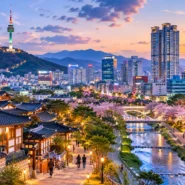
Daereungwon is where Gyeongju first makes visual sense. The grassy Silla burial mounds are not merely isolated monuments; they form a landscape that changes how you read the rest of the city. Go inside Cheonmachong, then leave enough time to wander rather than treating every mound as a photo checkpoint. Hwangnidan-gil, immediately nearby, is the useful modern counterweight: lunch, coffee, small shops and hanok façades without needing another bus.
✅ What Other Travelers Say — Recent traveler reviews consistently like Daereungwon for its calm landscaping, photogenic tomb silhouettes and the unusual experience of entering Cheonmachong. Hwangnidan-gil is popular because it gives the historic core food and café energy instead of feeling like an archaeological park all day.
⚠️ The Catch (Things to Keep in Mind) — Hwangnidan-gil is also where Gyeongju’s popularity becomes visible. Weekend queues can make an ordinary snack or lunch disproportionally expensive in time. Do not confuse “famous” with “must queue.” Pick one priority food stop, keep a backup nearby and move on if the line is absurd.
📍 Stop 2: Cheomseongdae, Gyerim, Gyochon and Woljeonggyo Bridge
Best for: slow walkers, couples, families, sunset photography | Time: 3–4 hours | Energy: moderate by accumulated steps | Trap level: low, except trying to add too many night sights
This is the section I would resist “optimizing” too aggressively. Cheomseongdae itself is a short stop; the pleasure comes from the landscape around it—Gyerim’s trees, the open Wolseong area, Gyochon’s traditional architecture and the approach to Woljeonggyo. The bridge is a reconstruction, not an untouched Silla original, but that does not make the evening view fake or unworthy. It is one of the best places to end a walking day because it is free, open late and visually dramatic without requiring another major ticketed attraction.
✅ What Other Travelers Say — Woljeonggyo regularly gets strong feedback for its night illumination and riverside reflections, and many visitors appreciate that the surrounding walk feels spacious compared with the most crowded commercial streets.
⚠️ The Catch (Things to Keep in Mind) — The “one more stop” effect is real here. Because Donggung & Wolji also appears close on maps, travelers keep walking long after their legs are done. Unless you have only one night, do not force both into the same prime light window.
📍 Stop 3: Seokguram Grotto
Best for: UNESCO seekers, Buddhist-art lovers, travelers comfortable with mountain logistics | Time: 45–75 minutes on site | Energy: moderate | Trap level: high if you ignore Bus 12 timing
Seokguram is a case where significance and sightseeing “wow factor” are not identical. The UNESCO-listed granite grotto is one of Korea’s essential Buddhist works, but the visitor experience is deliberately controlled to protect it. You approach through the mountain landscape, then the central Buddha is viewed rather than explored like a large temple hall. That restraint is part of the conservation reality.
✅ What Other Travelers Say — Travelers who care about art history and UNESCO heritage tend to find the journey worthwhile. The mountain setting also gives the visit a sense of pilgrimage that a city-center museum cannot reproduce.
⚠️ The Catch (Things to Keep in Mind) — Other travelers are candid that the viewing itself is short, photography inside is restricted, and the statue is protected behind glass. The bigger operational issue is transport: Bus 12 is roughly hourly, so a missed departure can be longer than the entire grotto visit. If you are not deeply interested in Buddhist art and your trip is squeezed, Seokguram is the first major site I would make optional—not Bulguksa.
📍 Stop 4: Bulguksa Temple
Best for: almost every first-time visitor, architecture, religion, foliage | Time: 1.5–2 hours | Energy: moderate | Trap level: medium due to crowds, steps and 2026 restoration uncertainty
Bulguksa is the site I would protect even if the rest of Day 2 has to shrink. The stone terraces, bridges and pagodas make the temple architecturally legible even if you know very little about Korean Buddhism. Unlike Seokguram, there is enough spatial variety here to reward an unhurried 90 minutes or more. The fact that general admission is currently free makes it even easier to recommend.
✅ What Other Travelers Say — Recent reviews frequently describe Bulguksa as beautiful and worth the trip, while also advising an early start because the temple is a standard stop for school groups and organized tours. Visitors commonly spend at least an hour and often longer.
⚠️ The Catch (Things to Keep in Mind) — This is not a flat, effortless attraction. Stone stairs and slopes add up, and popular photo areas can bottleneck. More importantly, 2026 is not a normal year: heritage authorities announced that Daeungjeon required dismantling repair after structural monitoring. Check the latest Bulguksa notice before you go so you know what is open and what may be screened or under conservation work.
📍 Stop 5: Gyeongju National Museum and Wolseong
Best for: context, rainy weather, families, serious history lovers | Time: 2.5–4 hours combined | Energy: easy to moderate | Trap level: low
The museum is the stop many rushed itineraries cut, and that is exactly why rushed itineraries make Gyeongju feel like “tombs, temples and more stones.” The permanent displays explain Silla power, gold culture, Buddhist art and the objects excavated around Wolji. Seeing those artifacts before walking through Wolseong makes the outdoor foundations feel far less abstract. The museum is also a practical recovery block: air-conditioning or heating, toilets, indoor galleries and fewer transport variables.
✅ What Other Travelers Say — Reviews often praise the museum for being easier to digest than a giant national museum while still having enough Silla material to justify several hours. Travelers who arrive with only a vague understanding of Gyeongju tend to get more from the surrounding ruins afterward.
⚠️ The Catch (Things to Keep in Mind) — “Free” does not mean “always walk straight in to everything.” The permanent collection is generally free, but special exhibitions, gallery maintenance, guided programs and group visits can have separate capacity or reservation rules. The official museum website should be your final check.
📍 Stop 6: Donggung Palace and Wolji Pond
Best for: night photography, couples, first-time visitors, low-effort evening finale | Time: 60–90 minutes | Energy: easy | Trap level: high immediately after sunset on busy dates
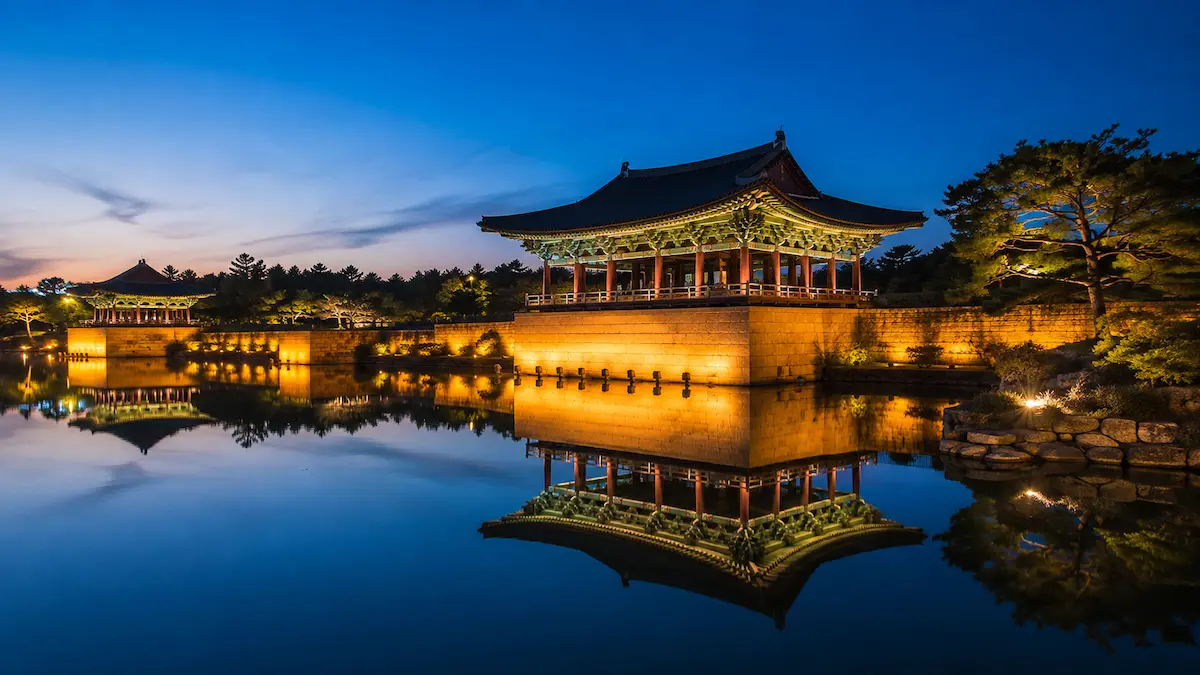
Donggung & Wolji is worth the hype—but only if you treat it as a night experience rather than a box to tick at 14:00. The reconstructed pavilions and pond reflections are at their best as the light fades, and the site stays open late enough that you do not need to rush dinner and photography into the same 20 minutes. My preferred tactic is to enter 30–45 minutes before sunset, walk the circuit once in fading daylight, then linger for the illumination instead of arriving into the biggest surge.
✅ What Other Travelers Say — Night lighting and water reflections are the reason this site appears so often in traveler favorites. Recent reviews and trip reports repeatedly put it among Gyeongju’s strongest evening experiences.
⚠️ The Catch (Things to Keep in Mind) — It can be crowded, and much of what you see is reconstructed rather than an intact palace. If you arrive expecting a preserved palace interior, you may be underwhelmed. If you arrive expecting a landscaped archaeological site whose power comes from light, water and silhouette, the KRW 3,000 adult ticket is easy to justify.
Key FAQs
Is 3 days in Gyeongju too much for a first-time visitor?
No. Three days is close to the sweet spot if you want Bulguksa and Seokguram without sacrificing the downtown historic core or Gyeongju’s night sights. One day is a highlights sprint; two days is workable; three days lets you absorb one transport-heavy temple day and still have time for the museum, food and evenings without racing.
Can you visit Bulguksa and Seokguram in one day without a car?
Yes, and they are the logical pair. Use Bus 10/11 or another current route/taxi to reach Bulguksa, then Bus 12 between Bulguksa and Seokguram. The catch is frequency: the city’s current smart-tourism information describes Bus 12 at roughly hourly intervals. Check the live timetable first. If the connection is poor, a taxi for the mountain leg is often the smartest use of money on the entire trip.
Where should I stay in Gyeongju for a 3-day itinerary without a car?
Choose the Hwangnidan-gil/Daereungwon edge for the best mix of walkability, restaurants and atmosphere, or the intercity/express bus-terminal side for better value and convenient regional buses. Bomun is better for resort stays than car-free sightseeing. Gyeongju KTX Station is excellent for catching a train, but it is outside the historic center and usually a poor base for three days of sightseeing.
Final Verdict and Your Next Step
The best three-day Gyeongju route is not the one with the most pins. It is the one that respects the bottlenecks: one compact walking day in the royal-tomb core, one eastbound temple day built around the Seokguram connection, and one museum-and-palace day that ends at Donggung & Wolji. This sequence avoids the classic mistakes—cross-city backtracking, hour-long bus surprises, two blue-hour attractions fighting for the same evening, and dragging luggage through heritage streets.
Before you leave, recheck official hours and restoration notices, save your hotel name in Korean, download Naver Map or KakaoMap, and decide whether your Korea rail pattern actually makes a KORAIL PASS worthwhile. If it does, buying the e-ticket in advance and saving the QR/booking details on your phone is smarter than handling the decision at the station. If you are based in Busan and would rather outsource the transport entirely, a verified Gyeongju day-tour e-voucher can also be a practical choice.
Book / compare before travel:
Check KORAIL PASS on Klook
Check KORAIL PASS on KKday
Check the Gyeongju UNESCO day tour from Busan on Klook
Check Gyeongju day / half-day tour options on KKday
Official pages worth checking before departure:
VISITKOREA: Bulguksa Temple
VISITKOREA: Seokguram Grotto
VISITKOREA: Daereungwon
Gyeongju National Museum: Visitor Information
VISITKOREA: Donggung Palace & Wolji Pond
VISITKOREA: Woljeonggyo Bridge