
💡 Key Takeaways
- For most first-time visitors, Hwangnidan-gil and Daereungwon are the best overall base. You can walk to many of Gyeongju’s headline sights, eat well without planning every meal, and enjoy the historic center after day-trippers leave.
- Stay by the Intercity/Express Bus Terminal if luggage convenience and budget matter more than atmosphere. It is less photogenic, but it saves a surprising amount of dragging bags and makes buses to the KTX station and outlying sights easier.
- Bomun Lake is a resort choice, not a “central Gyeongju” choice. It works very well for families, drivers, convention visitors and travelers who want a full-service hotel, but it adds transport time whenever you want Hwangnidan-gil, Daereungwon or the central night sights.
- Do not book beside Gyeongju KTX Station just because the name sounds central. The current high-speed station, formerly called Singyeongju, is roughly 11 km from Hwangnidan-gil. Most first-timers are better off sleeping downtown and transferring once.
- Bulguksa is worth staying near only when the temple, Seokguram, quiet mornings or a slower trip are the priority. For a one- or two-night first visit, the historic center usually gives you a better balance.
Planning note: Hotel price bands below are practical budgeting ranges based on 2026 booking spot-checks and recent traveler reports, not fixed quotes. Gyeongju prices can jump on Fridays, Saturdays, cherry-blossom weekends, autumn foliage dates, school holidays and major events. Bus routes and last departures can also change, so verify the final leg in Naver Map or Kakao Map on your travel day.
If you are trying to decide where to stay in Gyeongju for a first visit, the difficult part is not finding a “nice” hotel. It is understanding that Gyeongju’s attractions are split between a very walkable historic core and several important outlying zones. A hotel that looks close on a zoomed-out map can quietly add two bus rides a day; a beautiful hanok can leave you dragging a suitcase down a narrow lane; and a resort with excellent facilities can be inconvenient if your actual plan is to spend both evenings around Daereungwon and Donggung Palace.
There is also a naming trap that catches first-time visitors. Today’s Gyeongju Station is the high-speed rail station formerly known as Singyeongju Station, outside the historic center. The old downtown railway station is no longer the rail hub. If you remember only one thing before booking, remember this: being close to “Gyeongju Station” does not mean being close to the sights most first-timers want to walk around.
The 1-Min Cheat Sheet
- Hwangnidan-gil & Daereungwon — Best overall for first-time visitors. Choose this if you want the easiest walking access to cafés, restaurants, royal tombs and the historic center. Expect stronger weekend demand and higher prices for attractive hanok-style stays.
- Intercity/Express Bus Terminal & Noseo-dong — Best for luggage, budget and transport. Choose this if you arrive by bus, have heavy suitcases, want a modern room for less, or plan to use buses frequently. The visual atmosphere is much more ordinary than Hwangnidan-gil.
- Cheomseongdae, Gyochon & Donggung side — Best for quiet evenings near the historic sights. Choose this if you value sunrise walks, night photography and calm more than having dozens of cafés outside your door. Dining choices thin out faster at night.
- Bomun Lake — Best for families, resorts and hotel facilities. Choose this for larger rooms, pools, lake views, kids’ facilities, parking and a retreat feel. Do not choose it because you assume it is the most convenient sightseeing base.
- Bulguksa / Ma-dong — Best for temple-focused and slow trips. Choose this if Bulguksa, Seokguram and quiet mornings are central to your itinerary. It is a weak base for travelers who want to walk Hwangnidan-gil every evening.
- Gyeongju KTX Station / Geoncheon — Best only for a very early or very late train. Choose this only when rail timing is genuinely more important than sightseeing. For almost everyone else, stay downtown and take one taxi or bus to the station.
Top Survival Tips
- Measure your hotel from the places you will visit at night, not only from the station. Gyeongju’s most rewarding hours are often after sunset, when Donggung Palace & Wolji Pond, Woljeonggyo and the tomb area take on a completely different atmosphere. If your hotel forces you to wait for a bus or pay for a taxi after every evening walk, the “cheap” room may not feel cheap by night two.
- With a large suitcase, treat the terminal area as a legitimate strategy rather than a compromise. The bus terminal is roughly a 15-minute walk from Daereungwon, and many hotels around it are used to short stays and luggage storage. By contrast, some atmospheric hanok properties sit down lanes where the final few hundred meters are annoying with wheels, especially in rain, heat or snow.
- Do not assume city buses are luggage-friendly in the same way as airport coaches. Local buses are designed primarily for passengers, not large cases. Boarding can be awkward when crowded, and some vehicles have steps. If you have two large suitcases, a taxi from the KTX station to your hotel is often the sensible expense rather than a test of endurance.
- Use the bus network for planned daytime legs; use taxis selectively for “time-sensitive” legs. Gyeongju’s public buses are inexpensive, and major corridors are workable, but frequency varies. A 10- to 20-minute taxi can be good value when it prevents a long wait, saves a missed sunset, or removes a complicated transfer to Bulguksa or your departing train.
- Check whether “hanok stay” means a traditional floor bed or a Western mattress. The atmosphere can be wonderful, but sleeping on a thin floor setup is not automatically romantic after 20,000 steps. If you have back, knee or mobility concerns, look at the actual bedding and bathroom photos rather than booking from the exterior courtyard shot.
- On weekends, book the location before you book the room style. A cheaper room 20–30 minutes away can cost you more in time and taxi fares than a slightly more expensive central room. This is especially true for a one-night visit, when every transfer consumes a meaningful share of your trip.
- Do not plan Gyeongju like Seoul. Nightlife is calmer, many cafés and shops close earlier than big-city travelers expect, and the city’s appeal after dark is walking, illuminated heritage sites, dinner and a slower pace. If you need bars, clubs and late-night shopping on your doorstep, no Gyeongju district will feel like Hongdae or Shinjuku.
The Full Experience
📍 Hwangnidan-gil & Daereungwon: Best Overall for First-Time Visitors
Best for: First visits, couples, food-focused travelers, one- to two-night stays, travelers who hate unnecessary transit | Typical room budget: about KRW 90,000–250,000+, with stylish private hanok stays often higher | Night vibe: lively by Gyeongju standards, then calm later
If a friend asked me to pick one area in Gyeongju without giving me any other information, I would put them here. Hwangnidan-gil sits beside Daereungwon, with Cheomseongdae, Gyerim, Gyochon and the broader historic center extending east and south. That means your first sightseeing day can begin on foot rather than with a transport decision.
The practical advantage is bigger than it looks on a map. You can return to your room between walks, change before dinner, drop shopping bags, or rest during the hottest part of a summer afternoon. In spring and autumn, when the center gets busy, being able to walk home instead of queuing for transport is genuinely valuable. For a one-night stay, this area gives you the highest chance of feeling that you actually experienced Gyeongju rather than commuting around it.
The accommodation mix is part of the appeal. You will find photogenic hanok-style stays, small boutique properties, guesthouses and modern mini-hotels within walking distance. The catch is that “traditional-looking” does not always mean old, spacious or soundproof. Some rooms are tiny; some use floor bedding; some have bathrooms that feel more guesthouse than hotel. Look closely at room dimensions, bed type and whether the property is directly on a busy pedestrian street.
✅ What Other Travelers Say
Recent travelers repeatedly praise this part of Gyeongju for being able to walk between the royal tombs, cafés, restaurants and evening sights. A common pattern in traveler reports is to arrive in the afternoon, spend the first evening in the historic center, then use the second day for Bulguksa or another outlying attraction. That rhythm works because the hotel is already where you want to end the day.
⚠️ The Catch (Things to Keep in Mind)
This is not automatically the easiest area with heavy luggage. Some of the nicest stays are tucked inside side streets, and vehicle access can be less convenient than at a standard roadside hotel. Hwangnidan-gil also attracts heavy weekend foot traffic, queues and higher room rates. Finally, do not book here expecting late-night big-city entertainment: the area becomes markedly quieter after the dinner-and-café crowd fades.
Who should skip it? Travelers who prioritize a large full-service hotel, swimming pool, extensive on-site facilities, easy parking, or the absolute lowest room price. In those cases, Bomun or the terminal area may fit better.
📍 Intercity/Express Bus Terminal & Noseo-dong: Best for Luggage, Budget and Easy Connections
Best for: Budget-conscious travelers, bus arrivals, heavy luggage, short stays, solo travelers who value practical transport | Typical room budget: about KRW 60,000–150,000 | Night vibe: functional, local, neon-lit in places, usually quieter than it looks
This is the area I would choose for a traveler carrying a large suitcase who wants to remove friction from the trip. Gyeongju’s intercity and express bus terminals sit close to each other, west of the main tomb area. Daereungwon is roughly a 15-minute walk away, and Hwangnidan-gil is still realistic on foot. The difference is that your hotel is much more likely to be on a normal road with straightforward taxi access.
The terminal area is also one of the easiest places to understand Gyeongju’s transport network. Buses heading toward the KTX station, central stops and outlying attractions pass through or near this zone, and taxis are easy to find. If you are arriving from Busan by intercity bus, this can be simpler than arriving by KTX because you step off much closer to the tourist core.
Room value is often stronger than in the most photogenic streets. Modern business hotels and motel-style properties can offer larger rooms, big bathrooms, luggage space, laundry facilities or newer in-room equipment for less money than a design-led hanok stay. For travelers who care more about a comfortable bed and a painless departure than a courtyard photo, that is a very fair trade.
✅ What Other Travelers Say
Traveler reviews frequently mention the convenience of being beside the terminal, with easy access to the historic center and buses. Recent visitors also point out that some rooms here are surprisingly spacious for the price. For a one-night stop between Busan and Seoul, many travelers find the area especially efficient because they can store bags, sightsee on foot, then return directly before departure.
⚠️ The Catch (Things to Keep in Mind)
The streets immediately around the terminal are not the Gyeongju you saw on Instagram. There are ordinary commercial buildings, traffic, signs and a cluster of motel-style accommodation. Some properties are Korea’s “love motel” type, which may feel unfamiliar to first-time visitors even when the rooms are perfectly usable and well reviewed. Solo travelers who dislike that atmosphere should read recent reviews and street-view imagery before booking.
Also note that the terminal is convenient, but it is not literally inside Hwangnidan-gil. You will still walk 10–20 minutes depending on the exact hotel and destination. In peak summer humidity, winter cold or heavy rain, that distance can feel longer than it looks.
Who should skip it? Honeymooners, travelers who want a romantic hanok atmosphere from the moment they step outside, or anyone willing to pay more to wake up beside the tombs.
📍 Cheomseongdae, Gyochon & Donggung Side: Best for Quiet Historic Evenings
Best for: Photographers, early risers, walkers, travelers who prioritize night illuminations and calm | Typical room budget: about KRW 80,000–190,000, depending heavily on guesthouse vs. private hanok | Night vibe: peaceful and scenic, with limited late dining
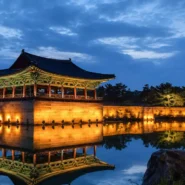
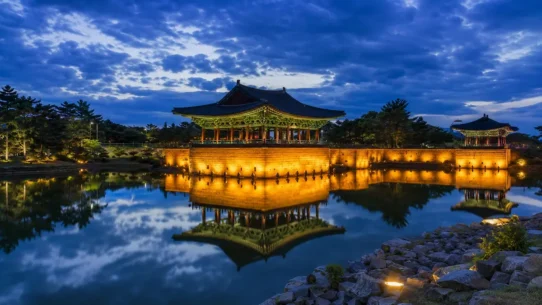
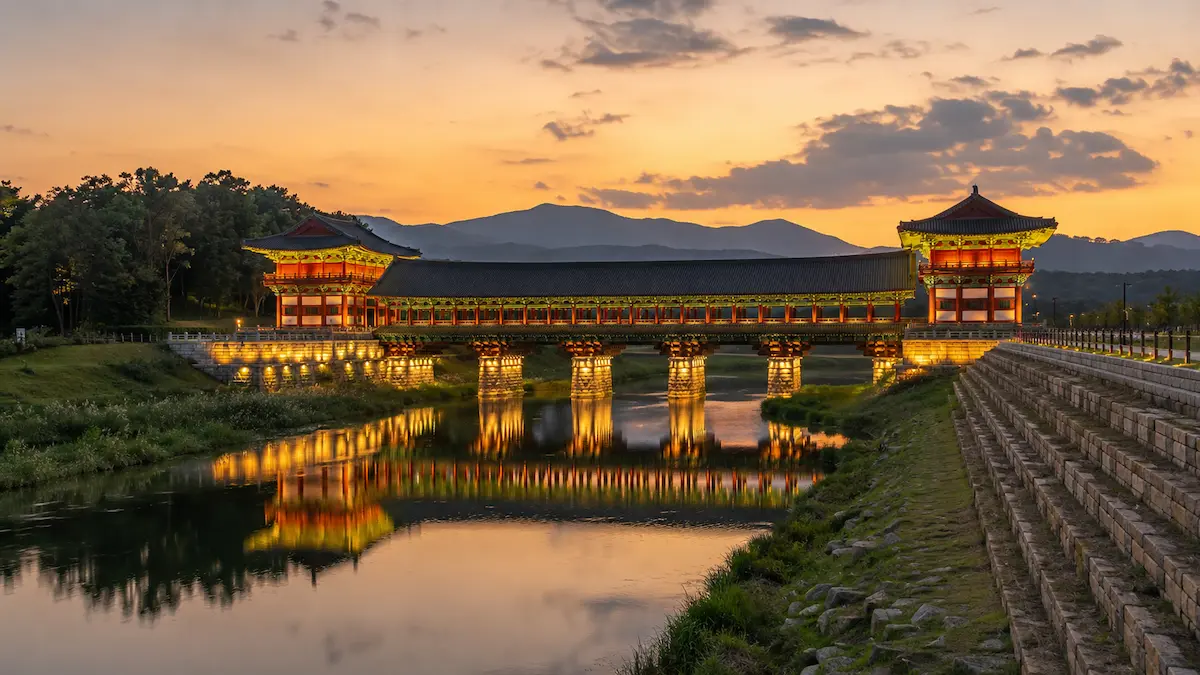
This is the more atmospheric alternative to staying directly on Hwangnidan-gil. The broad historic zone around Cheomseongdae, Gyochon, Woljeonggyo and Donggung Palace & Wolji Pond rewards people who like to walk when the crowds thin. If your ideal Gyeongju evening is a slow route past illuminated heritage sites rather than browsing shops, the eastern side of the center can be excellent.
You also gain a different rhythm in the morning. Before tour groups arrive, the paths, tombs, fields and low-rise streets feel far more spacious. A traveler staying here can often step outside and begin sightseeing immediately. That is a real advantage for photographers and for summer visitors who want to complete most outdoor walking before the heat builds.
Accommodation is more scattered than on Hwangnidan-gil. You may find small guesthouses, family-run stays and hanok-style properties rather than a dense block of conventional hotels. Exact location matters: two properties both described as “near Cheomseongdae” can produce very different walks to restaurants and bus stops.
✅ What Other Travelers Say
Visitors who stay near this side of the historic center often highlight the ability to walk to Cheomseongdae, Donggung Palace & Wolji Pond, Woljeonggyo and Gyochon without building the day around buses. Travelers also repeatedly describe central Gyeongju’s night scenery as one of the reasons an overnight stay is better than a rushed day trip.
⚠️ The Catch (Things to Keep in Mind)
Food density is weaker than around Hwangnidan-gil. You can absolutely eat well, but there is less margin for “we will just walk outside at 9:30 p.m. and choose somewhere.” Some streets become extremely quiet after the attractions wind down. That calm is the reason to stay here, but it can feel too sleepy for solo travelers who prefer activity around the hotel.
It can also be less convenient with luggage. Depending on the property, you may have a longer walk to a major bus stop or need a taxi from the KTX station. Check the final 500 meters carefully rather than trusting a broad neighborhood label.
Who should skip it? Travelers who want the maximum choice of restaurants and cafés directly outside, or anyone who wants to minimize the arrival/departure logistics with big bags.
📍 Bomun Lake: Best for Families, Resorts and Full-Service Hotels
Best for: Families, drivers, couples wanting a resort break, conference visitors, travelers who value pools and hotel facilities | Typical room budget: about KRW 100,000–300,000+, with upscale properties and peak weekends higher | Night vibe: calm lakeside resort zone rather than downtown nightlife
Bomun Lake is where Gyeongju starts to feel like a resort destination. Large hotels, lake views, walking paths, family facilities and easier parking make it attractive to travelers who do not want every day to be a compact city walk. If you are traveling with children, using a rental car, attending an event at HICO, or simply want a proper hotel lobby, pool and breakfast buffet, Bomun has a much stronger selection than the historic center.
It is also a pleasant place to decompress. The lake paths work well for a morning or evening walk, and some hotels have genuine destination-level facilities. Families visiting Gyeongju World can find the location especially useful. After a long day of temples and tombs, returning to a spacious room and on-site restaurant can feel luxurious rather than inconvenient.
But this is the area most likely to disappoint first-time visitors who book from hotel photos without studying the map. Bomun is several kilometers east of central Gyeongju. You cannot casually walk from your resort to Hwangnidan-gil for dinner or stroll home from Donggung Palace. Every downtown outing becomes a bus or taxi decision.
✅ What Other Travelers Say
Guests consistently praise lake views, quiet rooms, walking trails and the comfort of larger hotels. Families often like having pools, breakfast, parking and more space under one roof. The lakefront atmosphere is especially appealing in spring and autumn.
⚠️ The Catch (Things to Keep in Mind)
The quiet can be too quiet. Recent travelers have described weekday Bomun as almost empty outside the hotels, which is ideal if you want retreat energy but less appealing if you want a lively neighborhood. Dining is also more dispersed, and hotel restaurants may become the easiest option.
The other issue is accumulated taxi time. One taxi into central Gyeongju is not a problem; doing it twice a day for two or three days changes the trip. If your itinerary is mostly Daereungwon, Hwangnidan-gil, Gyochon, Woljeonggyo and Donggung, you are paying resort prices to stay away from your main activities.
Who should skip it? First-time visitors with only one night, backpackers, travelers who want to walk most of the trip, and anyone whose evening plan revolves around the historic center.
📍 Bulguksa / Ma-dong: Best for Temple Mornings, Nature and a Slower Pace
Best for: Temple-focused travelers, repeat visitors, hikers, drivers, early risers and travelers who dislike crowds | Typical room budget: about KRW 70,000–200,000+, with larger family rooms and spa-style rooms costing more | Night vibe: very quiet
Staying near Bulguksa changes the emphasis of a Gyeongju trip. Instead of waking in the café-and-tomb district and commuting outward, you start near one of the city’s most important temple areas. That makes sense if you want an early Bulguksa visit, plan to continue to Seokguram, enjoy forest walking, or have already seen the historic center on a previous trip.
It can also be a smart choice for travelers with a car. Parking is generally less stressful than in the Hwangnidan-gil area, and you are well positioned for the southeastern side of Gyeongju. Some local hotels offer surprisingly large rooms, spa baths and parking at prices that would buy much less space in the center.
The atmosphere is markedly slower. Once day visitors leave, you get a much quieter version of Gyeongju. For some people that is exactly the point: early dinner, good sleep, temple first thing in the morning. For others, it feels isolated after 8 or 9 p.m.
✅ What Other Travelers Say
Visitors often appreciate the peaceful setting and the ability to devote proper time to Bulguksa and Seokguram rather than treating them as a rushed side trip. Recent traveler discussions also note that the Ma-dong/Bulguksa corridor can be useful when those attractions are the main goal, with buses available and taxis cutting journey times significantly for small groups.
⚠️ The Catch (Things to Keep in Mind)
This is not the right first-time base for a short trip centered on Hwangnidan-gil. Each evening in central Gyeongju becomes a return journey, and bus frequency matters more. Restaurant choice after the daytime tourist flow drops is narrower, so you should know where dinner is coming from rather than relying on spontaneous late-night options.
Do not underestimate how tiring a “Bulguksa base + central sightseeing + KTX departure” day can become when you add luggage. If you have only 1.5 days in Gyeongju, the historic center normally produces a cleaner itinerary.
Who should skip it? One-night first-timers, travelers without a car who dislike checking bus times, foodies wanting a large evening restaurant choice, and anyone planning multiple nights around central Gyeongju.
📍 Gyeongju KTX Station / Geoncheon: Best Only for Early or Late Trains
Best for: Very early departures, very late arrivals, rail-focused overnight connections | Typical room budget: inventory is limited and value is inconsistent; compare downtown before booking | Night vibe: transport hub, not a sightseeing neighborhood
This is the area I would actively warn most first-time visitors not to book by accident. The station currently called Gyeongju Station is the former Singyeongju high-speed station, around 11 km by road from Hwangnidan-gil. A direct bus can take you downtown, and taxis are straightforward, but the station is not the historic center.
The naming is especially confusing because older travel blogs, videos and map listings may still use “Singyeongju,” while some accommodation pages or old references use “Gyeongju Station” for the former central rail location. Always open the map pin and check the road address before paying.
There are a few situations where staying here can make sense. If your train leaves extremely early, you arrive too late to justify going downtown, or you are simply using Gyeongju as a rail connection, reducing the risk of missing a train may matter more than atmosphere. But those are exceptions.
✅ What Other Travelers Say
Travelers generally report that the transfer between the KTX station and downtown is manageable. Buses 50, 51 and 70 are commonly used toward central Gyeongju, while taxis can cut the transfer to around the low-teens in minutes when traffic is light. In other words, the station being outside town is an inconvenience, not a disaster.
⚠️ The Catch (Things to Keep in Mind)
If you stay beside the KTX station for two nights, you repeat that transfer every day. You also lose the ability to wander out after dinner and see the historic center illuminated. The savings can disappear quickly once you add taxis, and the hotel inventory is not compelling enough to make the location a destination in itself.
Who should skip it? Almost every normal first-time leisure visitor. Stay in Hwangnidan-gil, the terminal area or another central district and make one station transfer instead.
How I Would Choose by Trip Type
- One night, first visit: Hwangnidan-gil/Daereungwon. You need maximum sightseeing time and minimum transit.
- Two nights, no car: Hwangnidan-gil if budget allows; terminal/Noseo-dong if you want easier bags and better value.
- Two nights with children: Hwangnidan-gil for active sightseeing families; Bomun for families who value hotel facilities, space and a slower pace.
- Large suitcases or mobility limitations: Terminal-area modern hotel or a central hotel with direct vehicle access. Do not book a charming lane-access hanok without checking the final approach.
- Romantic trip: A well-reviewed hanok-style stay near Hwangnidan-gil or the quieter Cheomseongdae/Gyochon side, provided the bed and bathroom setup suit you.
- Rental car: Bomun or Bulguksa becomes much more attractive, because you remove the biggest weakness of both areas: dependence on public transport.
- Temple and hiking priority: Bulguksa/Ma-dong. Just accept that you are choosing nature and quiet over downtown convenience.
Key FAQs
What is the best area to stay in Gyeongju for first-time visitors without a car?
Hwangnidan-gil and Daereungwon are the strongest default because you can walk to a large share of central attractions, restaurants and cafés, then use buses or a taxi only for places such as Bulguksa, Bomun and the KTX station. If you have heavy luggage or want a lower room rate, the bus-terminal/Noseo-dong area is the practical runner-up.
Is it better to stay near Hwangnidan-gil or Bomun Lake in Gyeongju?
Choose Hwangnidan-gil for a short first trip focused on sightseeing, food and walking. Choose Bomun Lake for a resort-style stay, families, drivers, hotel facilities, lake views or Gyeongju World. The main mistake is treating the two as interchangeable: Bomun is a separate resort district, so downtown visits require transport.
Should I stay near Gyeongju KTX Station to make the train easier?
Usually no. The KTX station is outside the historic center, so staying there saves one transfer on departure but creates repeated transfers during the rest of your visit. Unless your train is extremely early or you arrive very late, stay downtown and take a bus or taxi to the station once.
Final Verdict and Your Next Step
For most first-time travelers, the answer is simple: book Hwangnidan-gil/Daereungwon if you can get a room that fits your budget and luggage situation. You are paying for time, not just a postcode. Being able to walk to the tombs, dinner, cafés and evening sights makes a one- or two-night Gyeongju trip feel much more relaxed.
If central hanok prices are high, do not panic-book Bomun. Move your search west toward the Intercity/Express Bus Terminal and Noseo-dong first. You may save money while staying close enough to walk into the historic center. Choose Bomun deliberately for resort facilities, Bulguksa deliberately for temples and quiet, and the KTX station only for a genuine rail-timing reason.
Gyeongju is also a city where the best-located rooms can disappear quickly on spring weekends, autumn weekends and holidays. Once you know your area, I would reserve a cancellable room rather than waiting for a perfect last-minute deal. Check the map pin, bed type, luggage access and recent reviews before paying.
Compare accommodation:
Check Gyeongju hotels on Booking.com
|
Compare Gyeongju stays on Agoda
If you prefer to reduce transport planning:
Browse Gyeongju tours and activities on Klook
|
See a Gyeongju highlights tour on KKday