
💡 Key Takeaways
- Do not treat Gyeongju like one compact old town. The royal-tomb core is wonderfully walkable, but Bulguksa, Seokguram, Yangdong and the East Coast sit in different directions. Five days work best when each outlying zone gets its own half-day or full day.
- The biggest transport mistake is waiting for the “perfect” bus when a short taxi would save an hour of dead time. Gyeongju buses are useful, but frequencies thin out on rural routes. Use buses for the long trunk journey and taxis selectively for awkward final gaps.
- Do not drag a suitcase through Hwangridan-gil or the tomb district. Drop luggage at your hotel, use station/terminal lockers, or use Gyeongju’s luggage-storage and delivery services before sightseeing.
- Not every famous sight needs advance tickets. Bulguksa and Seokguram are currently free, Daereungwon grounds are free, and Cheomseongdae and Woljeonggyo are free. Do not pay a reseller simply because an old blog still lists entrance fees.
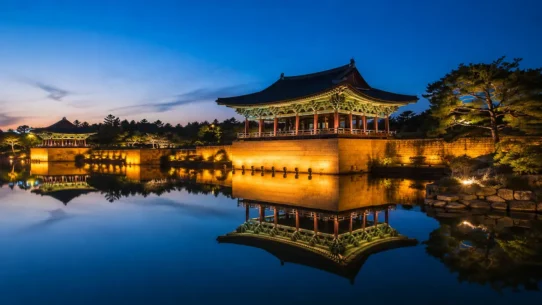
- Night views are worth planning, but not all on the same night. Woljeonggyo and Donggung Palace & Wolji Pond are better split across two evenings so you are not power-walking through the historic core after an already long day.
A good Gyeongju 5-day itinerary is not about squeezing every UNESCO label, café street and photo spot into a giant checklist. The first-time mistake is assuming that because central Gyeongju is walkable, the entire destination is easy to connect. It is not. The historic center, Tohamsan temple area, Bomun Lake, Yangdong Folk Village and the East Coast all pull you in different directions, and the wrong sequence can turn a relaxed heritage trip into a week of bus waiting, repeated taxi rides and sore feet. This itinerary keeps the famous first-timer highlights, but reorganizes them into geographic clusters, gives you realistic rest windows, and tells you what to cut when weather, crowds or fatigue stop cooperating.
Verification note: ticket prices, opening hours and transport information below were checked against current official Gyeongju City, VISITKOREA, Gyeongju National Museum and attraction sources on August 8, 2026. Gyeongju has several older English pages still indexed by search engines, so where old and newer information conflicted, this guide prioritizes the newer official source. Always recheck the linked official page shortly before travel because seasonal hours, construction and bus operations can change.
The 1-Min Cheat Sheet
- Daereungwon Ancient Tomb Complex + Cheonmachong — Best for first-time visitors, Silla history and easy photography. Allow 60–90 minutes. Daereungwon grounds are currently free; Cheonmachong inside the complex is paid (adult KRW 3,000 on current official/KTO information). Walk from Hwangridan-gil rather than taking a bus for a one-stop hop.
- Cheomseongdae — Best for a short historical stop, families and sunset/night walkers. Allow 20–30 minutes, longer if you linger in the surrounding fields. Admission is free. It is best reached on foot from Daereungwon, Gyerim or Wolseong.
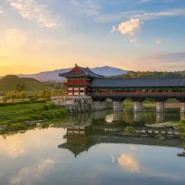
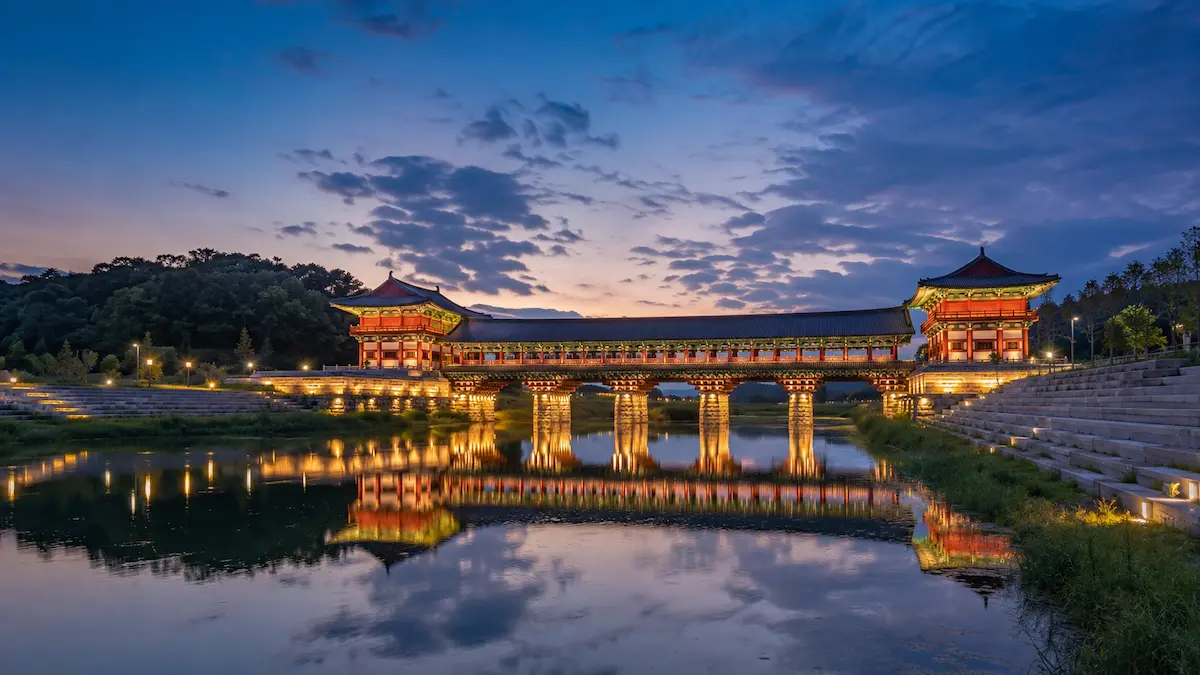
- Woljeonggyo Bridge — Best for architecture and an easy evening photo stop. Allow 30–45 minutes. Admission is free; current operating hours are generally 09:00–22:00. Walk from Gyochon/Gyerim, or take a short taxi if your legs are done.
- Gyeongju National Museum — Best for understanding what you have actually been looking at all week. Allow 90–120 minutes. General admission is free except for separately ticketed special exhibitions. The main museum does not require routine advance booking, although certain children’s programs or group activities can.
- Donggung Palace & Wolji Pond — Best for night photography and visitors who want one polished, cinematic evening sight. Allow 60–90 minutes. Current adult admission is KRW 3,000; closing is 22:00 with ticketing/entry ending earlier. Go before the late-evening rush rather than arriving right before closing.
- Bulguksa Temple — Best for Buddhist architecture, UNESCO heritage and first-time Korea visitors. Allow 90 minutes. Admission is currently free. Bus 10/11 serves the east-side sightseeing corridor; from central Gyeongju the ride is roughly 40–50 minutes depending on traffic, so do not schedule it as a “quick morning stop.”
- Seokguram Grotto — Best for Buddhist art and travelers who care about historical context more than photo opportunities. Allow 60 minutes plus transfer time. Admission is currently free. Bus 12 connects the Bulguksa area with Seokguram, but departures are not metro-frequency; check the live timetable before leaving Bulguksa.
- Yangdong Folk Village — Best for traditional architecture, slower travel and visitors willing to walk hills. Allow 2.5–3 hours. Current adult admission is KRW 4,000. Public bus 203 serves the area, but rural timing makes this a poor place to improvise late in the day.
The Most Practical 5-Day Itinerary
Day 1: Daereungwon, Hwangridan-gil, Cheomseongdae & Woljeonggyo — Start Easy, Not Heroically
- Suggested start: 13:30–14:00 if this is your arrival day. If you already slept in Gyeongju, begin around 09:00 and take a longer café/lunch break.
- First rule: get rid of your luggage before sightseeing. Do not “just roll it along” Hwangridan-gil. The historic core rewards wandering, and suitcase wheels turn every curb, gravel path and crowded lane into friction.
- Stop 1 — Daereungwon + Cheonmachong: 60–90 minutes. Enter the tomb park before the busiest late-afternoon photo period if possible. If you only want landscapes, the free park is enough; pay for Cheonmachong if you want to understand how a Silla tomb was structured.
- Stop 2 — Hwangridan-gil: 60–90 minutes for lunch, coffee or an early dinner. Treat it as a rest zone, not a mandatory shopping attraction. The main lane can feel commercial and crowded on weekends; the side streets are often more pleasant.
- Stop 3 — Cheomseongdae: 20–30 minutes. Walk there from the tomb district. Do not waste time finding a bus for a short central hop.
- Stop 4 — Gyerim / Gyochon: 30–45 minutes only if energy is good. This is the easiest piece to delete without damaging the day.
- Stop 5 — Woljeonggyo Bridge: 30–45 minutes around blue hour or after dark. The bridge is free and visually strongest when illuminated, but you do not need to stand there for an hour waiting for a perfect empty frame.
- Best transport: walk the central chain in one direction. Use a taxi only to return to the hotel if you are tired or staying outside the central heritage district.
- Lunch/rest area: Hwangridan-gil, where there are far more food and café choices than around the open archaeological spaces.
- If you are tired: cut Gyerim/Gyochon first. Keep Daereungwon and Woljeonggyo.
- If it rains: shorten the outdoor tomb/observatory loop and move Gyeongju National Museum forward from Day 2. Keep a waterproof layer rather than relying on an umbrella alone; much of the central route is exposed.
- Evening area: Hwangridan-gil for food, or Jungang Market if you prefer a more market-like atmosphere.
- Why this beats the typical influencer route: many one-day lists continue all the way to Donggung Palace after Woljeonggyo. That creates a long night walk after you have already covered the tombs, shopping streets and archaeological fields. Saving Donggung for Day 2 gives it a proper evening slot and saves your legs.
Day 2: Gyeongju National Museum, Wolseong & Donggung Palace — Put the History Before the Night Photos
- Suggested start: 10:00, matching the museum’s normal opening time. This is intentionally not a dawn start.
- Stop 1 — Gyeongju National Museum: 90–120 minutes. Start with the museum while your attention is fresh. The Silla objects make the tombs, palace sites and temple art far more meaningful afterward.
- Stop 2 — Lunch near the museum / Wolseong side: 60–75 minutes. Eat before the long open-air stretch rather than waiting until you are hungry in an archaeological field with fewer convenient options.
- Stop 3 — Wolseong area, Seokbinggo and nearby archaeological landscape: 60–90 minutes at an easy pace. This is an atmosphere-and-context stop, not a “must photograph every marker” stop.
- Optional Stop — Bunhwangsa / Hwangnyongsa-area interpretation facilities: 45–60 minutes only if you still want more history. Skip it if you are museumed-out.
- Rest window: take a café or hotel break around 16:00–17:30. This gap is deliberate. A five-day trip should not feel like a school field trip with no sitting down.
- Final stop — Donggung Palace & Wolji Pond: arrive before the heaviest late-evening cluster, ideally with enough time to see the transition from daylight to illumination. Allow 60–90 minutes.
- Best transport: museum, Wolseong and Donggung sit in the same eastern-central zone. Walk the short links if weather is good; use a short taxi from your hotel for the evening return rather than adding another long walk.
- If you are tired: delete Bunhwangsa/Hwangnyongsa before cutting the museum or Donggung.
- If it rains: make this your strongest indoor day: extend the museum, then add an indoor café break or the botanical facilities at Gyeongju East Palace Garden instead of roaming open archaeological ground.
- Evening area: Donggung first, then dinner back in central Gyeongju. Do not wait until 21:20 to start queueing for a 22:00 closing; official guidance warns that heavy night-view demand can make late entry difficult.
- Why this is more efficient: the museum and palace landscape explain one another. It also avoids the common “three night sights in one evening” plan that turns the last two hours into rushing between tripod crowds.
Day 3: Bulguksa, Seokguram & Bomun — One East-Side Day, No Downtown Reset
- Suggested start: leave central Gyeongju around 07:45–08:00 so you can reach the Bulguksa area near opening rather than arriving with the late-morning wave. Current official seasonal hours vary; in the March–September period the temple lists opening from 09:00.
- Stop 1 — Bulguksa Temple: about 90 minutes. Give the temple enough time to breathe; racing through in 35 minutes defeats the point.
- Stop 2 — Seokguram Grotto: about 60 minutes on site, plus transfer and walking. Check the next Bus 12 departure before finishing at Bulguksa. If the wait is long and you are traveling as a pair or small group, compare the cost of a taxi with the value of losing an hour.
- Lunch: eat around the Bulguksa approach area after returning from Seokguram, or continue toward Bomun if your transport timing lines up. Do not plan a tight restaurant reservation between two infrequent rural transfers.
- Stop 3 — Bomun Lake / Bomun Tourist Complex: 60–90 minutes for a low-pressure lakeside walk and rest. This is deliberately a recovery stop after a temple morning, not another museum marathon.
- Family/ride alternative: Gyeongju World can replace the lake stroll if a theme park is genuinely a priority. It should not be added on top of a full temple day merely because it is nearby.
- Best transport: use Bus 10/11 for the main east-side corridor when timings work, Bus 12 for Bulguksa–Seokguram, and a taxi for the awkward gap when the next rural departure would cost disproportionate time. Do not return downtown between Bulguksa and Bomun.
- If you are tired: history-focused travelers should keep Bulguksa and cut Bomun. Travelers with mobility issues may prefer Bulguksa + Bomun and skip Seokguram because the grotto visit still involves uphill access and a final approach on foot.
- If it rains: temple stone can be slippery. Keep Bulguksa if rain is light, skip exposed viewpoints, and move more time into Gyeongju East Palace Garden or another indoor attraction in the Bomun zone.
- Evening area: stay around Bomun for a relaxed dinner if your accommodation is there; otherwise take one return trip to central Gyeongju and call the sightseeing day finished.
- Why this is more efficient: the bad version of this day visits Bulguksa, returns downtown for lunch, then rides back east to Bomun. The smart version keeps moving through the same side of the city.
Day 4: Yangdong Folk Village & Oksanseowon — Give the Northwest Its Own Day
- Suggested start: around 08:30, after checking the live Bus 203 timing for Yangdong. Do not assume a turn-up-and-go urban frequency.
- Stop 1 — Yangdong Folk Village: 2.5–3 hours. The village is still inhabited, hilly and much larger than a staged “folk street.” Walk slowly and treat homes as homes, not photo sets.
- Lunch: plan it before you become dependent on the next bus. Food choices are less dense than central Gyeongju, so a simple backup snack is sensible.
- Stop 2 — Oksanseowon Confucian Academy: 60–90 minutes. This is the moment where a taxi can make more sense than trying to engineer multiple low-frequency connections. If you are alone on a strict budget, skip it rather than wasting half a day in transfer gaps.
- Best transport: Bus 203 for the main city–Yangdong leg where convenient; taxi for the Yangdong–Oksan gap or return connection if live bus timing is poor.
- If you are tired: cut Oksanseowon and spend the afternoon resting in central Gyeongju. Yangdong is the more distinctive first-timer stop.
- If it rains: seriously consider swapping Day 4 with a drier day. Yangdong’s slopes and outdoor lanes are the point of the visit, so turning it into a wet-weather endurance test is poor value. Use the museum or an indoor Bomun attraction instead.
- Evening area: return to Hwangridan-gil or Jungang Market. This is a good evening for an unstructured meal rather than another ticketed attraction.
- Why this is more efficient: Yangdong sits away from the downtown/Bulguksa axis. Pairing it with Bulguksa because both are “UNESCO” looks neat on a list but makes no geographic sense. Giving the northwest its own day eliminates a large cross-city zigzag.
Day 5: Gyeongju East Coast — Gameunsa, King Munmu’s Tomb & Gampo Without a Bus-Stop Marathon
- Suggested start: 08:00. This is the one day where paying for selected taxi legs can transform the experience.
- Stop 1 — Gameunsa Temple Site: 45–60 minutes. The twin stone pagodas and the site’s connection to King Munmu are the reason to stop; it is not a large “temple complex” with lots of interiors.
- Stop 2 — Tomb of King Munmu / Bonggil coast: 30–45 minutes. This is a landscape-and-history stop, not a conventional royal tomb you walk inside.
- Stop 3 — Gampo: 60–90 minutes for lunch and a harbor break.
- Optional Stop 4 — Golgulsa: 60–90 minutes if Buddhist culture or Seonmudo interests you. The official Bus 100 corridor serves Golgulsa/Gampo, but the temple approach includes walking from the stop. Skip it if stairs and slopes are already a problem.
- Best transport: Bus 100 is the budget backbone toward Golgulsa and Gampo, but do not assume it directly serves every stop in this Day 5 sequence. Gameunsa and King Munmu’s Tomb require separate live-route planning, and coastal service can be sparse. For two to four travelers, using a taxi for the Gameunsa–Bonggil/coastal gaps can be far more rational than spending hours synchronizing rural buses.
- Lunch/rest area: Gampo, where you have a clearer concentration of food options and a natural midpoint break.
- If you are tired: do Gameunsa + King Munmu’s Tomb + Gampo only. The coast is your “space and scenery” day; do not turn it into a checklist of every lighthouse and port.
- If it rains: this is the first full day to swap. Move an indoor/museum day here and use whichever earlier dry day you freed for the coast. Strong wind and poor visibility erase much of the value.
- Evening area: return to central Gyeongju for a final dinner, or stay near the coast only if you intentionally booked a coastal night.
- Why this is more efficient: the official city tourism route itself treats the East Coast as a distinct travel zone. Trying to bolt the coast onto Bulguksa after lunch is how first-timers end up watching the clock instead of the sea.
Tourist Traps to Avoid & Itinerary Hacks
- Trap: assuming every old blog price is still correct. Bulguksa and Seokguram are currently free, despite older pages that still show admission charges. Daereungwon grounds are also free, while Cheonmachong inside remains ticketed. Always check the date and source.
- Trap: arriving at Donggung & Wolji at the very end of the night. The attraction is popular specifically because of the illumination. The official fee page cautions that late entry can be difficult when many visitors arrive for the night view. Aim for before the last-ticket window, not at it.
- Trap: walking every central attraction because “it is only 15 more minutes.” Five extra 15-minute walks become 75 minutes, and most of those happen on hard pavement or exposed paths. Save your walking for the heritage areas where walking is the experience.
- Trap: using local buses as if Gyeongju has a Seoul-style frequency. The core 10/11 loop is useful, but rural routes such as those serving Yangdong or the coast require more timing discipline. Check live bus information before committing to a transfer.
- Trap: taking a taxi for every single ride. That solves waiting but can quietly destroy a budget. Better strategy: bus the long trunk segment, then taxi only the low-frequency connector where it prevents major dead time.
- Trap: buying a rail pass because it says “Korea travel essential.” A KORAIL Pass can be excellent for a multi-city rail-heavy trip, but it is not a Gyeongju local transport pass. If you only take one or two KTX journeys, compare point-to-point fares first.
- Trap: doing Bulguksa and Seokguram only because they are famous. They are culturally important, but travelers who are not interested in Buddhist art or architecture sometimes find the time-to-wow ratio lower than expected, especially for Seokguram. Keep them if history matters to you; do not force them into a rushed day trip from another city simply for a checklist.
- Trap: expecting an unobstructed photo at Seokguram. It is a sacred heritage setting, not a photo studio, and interior photography restrictions should be respected. Go for the art and history, not a social-media shot.
- Trap: expecting Yangdong to be a flat open-air museum. It is a real, inhabited historic village with hills. Comfortable shoes matter more than a carefully styled outfit.
- Hack: separate your two big night-photo stops. Woljeonggyo on Day 1, Donggung on Day 2. You get two strong evenings without a late-night endurance march.
- Hack: use Hwangridan-gil as a recovery base, not the center of every day. Eat and rest there when you are already downtown. Do not repeatedly return there between outlying sights just because every travel reel shows the same street.
- Hack: keep one day weather-flexible. Day 5 coast and Day 4 Yangdong are the most weather-sensitive. Swap them with museum/Bomun time rather than obeying a rigid calendar.
Save Your Legs! The Most Efficient Route
The geography of Gyeongju is the entire logic behind this five-day plan. Think of the destination as five practical zones: the downtown Silla core (Daereungwon, Hwangridan-gil, Cheomseongdae, Gyerim, Woljeonggyo), the museum/palace core (Gyeongju National Museum, Wolseong, Donggung & Wolji), the east/Tohamsan corridor (Bulguksa, Seokguram and Bomun), the northwest heritage zone (Yangdong and Oksanseowon), and the East Coast (Gameunsa, King Munmu’s Tomb, Gampo and Golgulsa). Central attractions can be chained on foot because official city tourism routes place many of them within a roughly two- to three-kilometer historic core. Once you leave that core, stop pretending walking or one continuous local-bus loop is always the best answer.
Walk Daereungwon → Hwangridan-gil → Cheomseongdae → Gyerim/Gyochon → Woljeonggyo when weather and mobility allow. Use Bus 10/11 for the main east-side sightseeing corridor toward Bomun and Bulguksa, and Bus 12 for the Bulguksa–Seokguram connection after checking departure timing. Use Bus 203 as the budget line toward Yangdong when its live timetable suits you. Use Bus 100 as the trunk route toward Golgulsa and Gampo on the East Coast. Gyeongju City specifically recommends checking real-time bus information rather than relying on a static timetable.
Short taxis are most valuable when they replace a long wait, not when they replace a pleasant ten-minute walk. Good taxi moments include the Yangdong–Oksan gap, a badly timed Seokguram connection, the final tired return from a night attraction, or one or two awkward East Coast links. If there are two to four people, the per-person premium can be modest compared with losing an hour to a rural connection. Conversely, taking a taxi from every central sight to the next one is unnecessary.
During busy weekends, spring blossom periods and holiday peaks, buses serving the main tourist corridor can be fuller and road traffic can slow surface transport. That is another reason to start Bulguksa early and avoid stacking fixed-time reservations immediately after a long bus ride. Gyeongju’s official Bus 10 guidance puts the city-to-Bulguksa ride at roughly 40–50 minutes depending on traffic, so build a buffer.
Do not return to Gyeongju Station every day. The KTX station sits outside the old center. Since July 2026, Gyeongju expanded city-bus service through the station district, but that does not make the station a useful sightseeing hub. For most first-time visitors, staying near Hwangridan-gil / the intercity-bus-terminal side minimizes evening walking and keeps the downtown historic core close. Choose Bomun instead if you prioritize resorts, lake views, family attractions and quieter nights, accepting that you will commute into the heritage center more often.
Large luggage deserves its own plan. Current Gyeongju information lists lockers at Gyeongju Station, storage at the express/intercity terminal area, free one-time storage at the Hwangridan-gil Culture Center during its operating hours, and paid storage/delivery services including “짐캐리” at Gyeongju Station and terminal-area luggage services. If you arrive before hotel check-in, pay a few thousand won to store or forward the bag. Dragging a 20-kilogram suitcase over a kilometer of sightseeing streets to “save” a small storage fee is the wrong economy.
Ticket Tips & Skip-the-Line Hacks
First, the reality check: Gyeongju is not a destination where every historical attraction has a QR fast lane. In fact, many of the headline heritage sights are free or use simple on-site admission. The useful “skip-the-line” strategy here is mostly about timing, rail reservations and avoiding unnecessary ticket hunting, not buying a universal attraction pass.
Free admission currently: Bulguksa Temple, Seokguram Grotto, Daereungwon grounds, Cheomseongdae, Woljeonggyo Bridge and general admission to Gyeongju National Museum. The museum may charge for separately organized special exhibitions. Do not buy a third-party “entry ticket” for a sight that currently has no general admission fee.
Normally paid on site: Cheonmachong inside Daereungwon, Donggung Palace & Wolji Pond, and Yangdong Folk Village. Current official information lists adult prices of KRW 3,000 for Cheonmachong, KRW 3,000 for Donggung & Wolji and KRW 4,000 for Yangdong. I could not verify a current official fast-track e-ticket that meaningfully bypasses a queue for these core heritage sites, so this guide does not pretend one exists.
Reservations that can actually matter: reserve your KTX seat for Gyeongju Station when traveling on a busy date; a rail pass alone does not guarantee the seat you want. Book fixed-time cultural experiences, temple programs or hanbok sessions in advance when the operator requires a slot, especially on weekends or during seasonal events. At Gyeongju National Museum, routine entry is free and normally does not require advance booking, but some children’s or educational programs and group arrangements do.
When an e-ticket is genuinely useful: if your wider Korea trip has enough long-distance rail travel to justify a KORAIL Pass, both Klook and KKday currently sell electronic-voucher KORAIL Pass products. This can simplify pre-trip purchasing, but compare the pass price with your actual Seoul–Gyeongju–Busan (or other) point-to-point fares before buying. A KORAIL Pass does not cover Gyeongju city buses.
Check KORAIL Pass on Klook (affiliate link)
Check KORAIL Pass on KKday (affiliate link)
Optional family/theme-park ticket: if you intentionally make Gyeongju World part of Day 3, check the park’s current official ticket options close to your travel date. I found third-party product pages whose displayed validity information was not consistently current enough to recommend as a verified 2026 affiliate purchase, so no Gyeongju World affiliate link is included here.
What not to prebook blindly: do not lock yourself into non-refundable minor activities on Days 4–5 before checking the weather. Yangdong and the coast lose much of their appeal in heavy rain. Likewise, paying for a “skip-the-line” label is pointless where the attraction is free and does not have a verified fast-track system.
Tried & Tested: My Honest Review
Editorial note: the judgments below combine current official visitor information with recurring recent traveler feedback. They are deliberately not written as fake first-person “I stood here last Tuesday” claims. Where traveler opinion is divided, both sides are shown.
📍 Stop 1: Daereungwon Ancient Tomb Complex & Cheonmachong
Tags: Silla Royal Tombs · UNESCO Historic Area · Easy Walk · First-Timer Essential
Why it earns a place: this is one of the easiest ways to “read” Gyeongju immediately. The huge grassy burial mounds are visually distinctive, the park sits next to Hwangridan-gil, and Cheonmachong gives first-time visitors a rare chance to understand the interior form of a Silla tumulus without needing a long transfer.
✅ What Other Travelers Say: recent visitors repeatedly praise the central tomb district for being easy to combine with the evening heritage walk. Travelers who arrive late in the day often find the tombs and nearby night-lit sites more rewarding than trying to rush out to remote temples.
⚠️ The Catch (Things to Keep in Mind): Daereungwon is photogenic but can feel repetitive if you walk every path. The free grounds are enough for some people; buy the Cheonmachong ticket for historical context, not because you feel every paid sub-attraction must be completed.
📍 Stop 2: Cheomseongdae
Tags: Silla Landmark · Free · Quick Stop · Best as Part of a Walk
Why it earns a place: Cheomseongdae is small, free and perfectly positioned between other central sights. It works because it is part of a route, not because the stone tower alone needs an hour of your life.
✅ What Other Travelers Say: travelers like the surrounding night walk and the way Cheomseongdae fits naturally between the tombs, Gyerim, Wolseong and the palace area.
⚠️ The Catch (Things to Keep in Mind): this is one of Gyeongju’s most famous symbols, but physically it is a compact structure viewed from outside. Anyone expecting an observatory you can climb or enter will be disappointed. Give it 20–30 minutes, not a half-day.
📍 Stop 3: Woljeonggyo Bridge & Gyochon
Tags: Night View · Reconstructed Architecture · Free · Low-Effort Photo Stop
Why it earns a place: Woljeonggyo gives you a strong visual finish to the downtown walking route without another ticket or long bus ride. It is especially effective after Gyerim/Gyochon because the movement is linear.
✅ What Other Travelers Say: recent independent travelers often single out Gyeongju’s illuminated central heritage sites as a trip highlight, and some prefer Woljeonggyo’s architecture to the more crowded Donggung night-view experience.
⚠️ The Catch (Things to Keep in Mind): today’s bridge is a reconstruction. If you only value untouched original fabric, manage expectations. Also, the “perfect” river reflection depends on weather and water conditions; do not let one photo angle dictate your evening.
📍 Stop 4: Gyeongju National Museum
Tags: Free Museum · Silla Masterpieces · Rainy-Day Essential · Context Builder
Why it earns a place: skipping the museum is one of the easiest ways to turn Gyeongju into “a lot of old stones.” The objects recovered from Silla tombs and palace sites explain why the landscape matters. It is also one of the best-value stops in the city because general admission is free.
✅ What Other Travelers Say: history-focused visitors consistently value Gyeongju more when they allow time for the museum instead of treating the city only as a photo destination. It is also a popular backup when summer heat or rain makes outdoor sightseeing unpleasant.
⚠️ The Catch (Things to Keep in Mind): two hours of artifact labels can exhaust visitors who are not museum people. Pick one or two galleries and the major Silla pieces rather than forcing yourself through every display case.
📍 Stop 5: Donggung Palace & Wolji Pond
Tags: Night Photography · Silla Palace Site · Paid · Peak-Time Crowd Risk
Why it earns a place: the illuminated pavilions reflected in the pond are one of Gyeongju’s signature evening scenes, and the low admission price makes it an easy recommendation for first-timers.
✅ What Other Travelers Say: many visitors call the night view one of Gyeongju’s most memorable scenes. The contrast with daytime archaeological sites gives the trip a different rhythm after dark.
⚠️ The Catch (Things to Keep in Mind): the same reputation creates the problem: nighttime crowding. Recent traveler feedback includes people who loved the setting but found it the most crowded stop of their evening. Arriving earlier in the dusk window is usually smarter than chasing the absolute darkest sky with everyone else.
📍 Stop 6: Bulguksa Temple
Tags: UNESCO · Buddhist Architecture · Free Admission · Early-Start Recommended
Why it earns a place: Bulguksa is one of Korea’s most important Buddhist heritage sites and makes sense on a first trip if architecture, religion or Silla history matters to you. Its value is much higher when you arrive before the day-trip wave and give the complex at least 90 minutes.
✅ What Other Travelers Say: history and architecture fans tend to see Bulguksa as a core Gyeongju stop. Travelers also appreciate pairing it with Seokguram so the long east-side transfer pays off.
⚠️ The Catch (Things to Keep in Mind): it can be crowded, and visitors who have already seen many East Asian Buddhist temples sometimes find it less emotionally dramatic than the UNESCO reputation suggests. That does not make it overrated; it means cultural importance and personal “wow factor” are not the same thing.
📍 Stop 7: Seokguram Grotto
Tags: UNESCO · Buddhist Sculpture · Free Admission · Time-to-Reward Debate
Why it earns a place: the grotto’s Buddha and its religious/art-historical significance are exceptional. It belongs on the classic route because it tells a different story from Bulguksa, not because it offers lots of rooms to explore.
✅ What Other Travelers Say: Buddhist-art enthusiasts can find Seokguram the standout of the temple day. Some experienced Korea travelers specifically praise the statue and the quieter mountain context.
⚠️ The Catch (Things to Keep in Mind): other travelers are disappointed by how much transfer time is required for a relatively brief viewing experience. Photography restrictions and the protected viewing arrangement mean this is not a conventional scenic photo stop. If you have limited mobility, little interest in Buddhist art or a very tight day, it is the easiest famous stop to question.
📍 Stop 8: Yangdong Folk Village
Tags: UNESCO · Living Historic Village · Hilly · Slow-Travel Pick
Why it earns a place: Yangdong adds Joseon-era living architecture to a trip otherwise dominated by Silla heritage. It also rewards a slower pace and gives you a reason to explore beyond downtown and Tohamsan.
✅ What Other Travelers Say: visitors who like traditional architecture often describe Yangdong as peaceful, photogenic and more immersive than a single preserved building. Many spend two to four hours depending on how deeply they explore.
⚠️ The Catch (Things to Keep in Mind): the village is hilly, bus timing can be inconvenient, and repeated traditional-house views may feel monotonous to travelers who are not especially interested in architecture. It is also a living community, so privacy matters: do not wander into spaces that are clearly residential simply for a photo.
Key FAQs
Is 5 days in Gyeongju too long for a first-time visitor?
For a traveler interested only in Daereungwon, Bulguksa and one night view, yes—five days is more than necessary. But a Gyeongju 5-day itinerary for first-time visitors makes sense if you want the museum, Yangdong, Bomun and the East Coast without rushing. The extra time is valuable mainly because it lets you separate geographic zones and absorb weather or transport delays.
Where should I stay in Gyeongju for a 5-day itinerary without a car?
For most first-timers, the most practical base is the central area near Hwangridan-gil, Daereungwon and the intercity/express-bus-terminal side. It keeps multiple evening sights walkable and prevents unnecessary returns to the outlying KTX station. Stay in Bomun instead if resort facilities, lake scenery and family attractions matter more than walking access to the historic center.
Can I visit Bulguksa, Seokguram and Yangdong Folk Village in one day by public transport?
Technically you may be able to force the connections on some days, but it is a poor first-time plan. Bulguksa/Seokguram are east of the center while Yangdong is to the northwest, and rural bus timings add risk. Separate them. You will spend more time actually seeing Gyeongju and less time staring at a bus app.
Final Verdict and Your Next Step
The smartest five-day Gyeongju trip is not the itinerary with the most pins. It is the one where every day has a clear direction. Walk the central Silla sites in a chain, dedicate a separate day to Bulguksa/Seokguram and Bomun, give Yangdong the northwest day it deserves, and only go to the East Coast when weather is good enough to justify it. Most importantly, build permission to skip. A tired traveler who cuts one optional stop and enjoys dinner is having a better trip than someone who reaches every pin angry and exhausted.
Before departure, reserve the rail segment that actually needs reserving, especially if you are traveling on a busy weekend or holiday. If a KORAIL Pass is good value for your wider Korea route, buying the e-voucher online before you fly is more useful than hunting for a nonexistent “skip-the-line” package at free Gyeongju heritage sites.
Check KORAIL Pass prices on Klook (affiliate link)
Check KORAIL Pass prices on KKday (affiliate link)
One final warning: do not let an old cached travel article overrule a current official attraction page. Gyeongju’s ticket policy has changed at major temples, transport routes are being updated, and seasonal hours move. Recheck the official links below a few days before your visit.
Official Sources & Verification Notes
- Bulguksa official visitor hours and admission information — confirms free admission and seasonal entry hours.
- VISITKOREA: Gyeongju National Park / Bulguksa & Seokguram — current free-admission reference.
- VISITKOREA: Seokguram Grotto — current hours, admission and parking reference.
- VISITKOREA: Daereungwon / Cheonmachong — confirms free Daereungwon grounds and paid Cheonmachong.
- Gyeongju City: Historic-nightscape visitor information — Cheomseongdae, Woljeonggyo and central walking-route information.
- Gyeongju City: Donggung Palace & Wolji visitor information.
- Gyeongju National Museum official visitor information — current operating hours, closure notes and free general admission.
- VISITKOREA: Yangdong Folk Village — current hours and admission information.
- Gyeongju City: Golden Line Bus 10/11 and city-bus fare information.
- Gyeongju City: Bus 100 / East Coast route information.
- Gyeongju City: luggage storage and delivery facilities.
- Gyeongju City: East Coast travel course — Gameunsa, King Munmu’s Tomb and coastal routing context.
- Recent traveler discussion: first-time Gyeongju experiences — used only as subjective traveler feedback, not as the source for fees or opening hours.