
💡 Key Takeaways
- Take the JR Rapid Airport train by default when speed and reliability matter, but use the airport bus when it drops you close to a Susukino or Nakajima Park hotel and saves a difficult luggage transfer.
- Do not buy a Hokkaido rail pass just because it offers unlimited rides. A Sapporo-only trip, even with an Otaru day trip, usually costs far less with normal fares and an IC card.
- In 2026, contactless bank-card fare capping changed the subway decision. Use the same physical card or the same phone all day and the adult subway fare automatically stops at the applicable daily cap.
Information checked: August 2026. Transport fares and seasonal timetables can change, so use the linked official pages for a final check before travel.
A good Sapporo transportation guide should do more than list trains and buses. First-time visitors usually struggle with three practical problems: choosing between the airport train and bus while carrying luggage, understanding where JR ends and the municipal subway begins, and buying an expensive “unlimited” pass that never comes close to paying for itself. Sapporo is easy to navigate once you understand the roles of each system, but it can feel surprisingly awkward when snow, underground passages, crowded ticket machines and unfamiliar station names all arrive at the same time.
The simplest strategy is to treat Sapporo as two transport layers. JR trains handle the airport and regional trips such as Otaru. The subway handles most city sightseeing. The streetcar and buses fill specific gaps. Taxis solve the last few hundred metres when luggage, ice or a badly located hotel turns a theoretically cheap route into an exhausting one.
The 1-Min Cheat Sheet
- JR Rapid Airport train — best all-round airport choice: The fastest services reach Sapporo in about 33 minutes, while many journeys take roughly 37 to 43 minutes. The adult base fare is ¥1,230. Use a compatible IC card to skip the ticket-machine queue; reserve U-Seat separately when a guaranteed seat matters.
- Sapporo subway — best for city sightseeing: Fares are ¥210 to ¥380. The three-line network covers Sapporo Station, Odori, Susukino, Maruyama, the Sapporo Dome area and many useful hotel districts. It is the least weather-sensitive option during heavy snow.
- Sapporo streetcar — best for the southern central loop: The flat adult fare is ¥230. It is useful for areas around Nakajima Park, the Mt. Moiwa access corridor and neighbourhoods away from subway entrances, but it is rarely the fastest way to cross central Sapporo.
- Airport and city buses — best for direct hotel access: The airport bus to central Sapporo costs ¥1,500 and can save a subway transfer. The trade-off is road traffic, winter delays and the fact that airport limousine buses are generally not reservable.
- Taxi or rental car — best as a targeted solution: Use a taxi for short luggage-heavy transfers, late arrivals or icy walks. Rent a car for rural Hokkaido itineraries, not for ordinary sightseeing around central Sapporo.
Top Survival Tips
- Separate “JR Sapporo” from subway “さっぽろ” in your mind. They connect, but they are different systems with separate gates. Do not follow the first train symbol you see. Check whether your next ride is JR, the Namboku subway line or the Toho subway line before entering a gate.
- Use the same payment medium all day. For the 2026 subway fare cap, a physical Visa card and the same card loaded into Apple Pay or Google Pay are treated as different media. Switching between card, phone and watch can stop your rides from accumulating toward one cap.
- Your existing Suica, PASMO or ICOCA is probably enough. Major nationwide IC cards work on Sapporo’s subway, streetcar and participating buses, and they can also be used for JR travel within the supported area. Most short-stay visitors do not need to buy SAPICA.
- Do not rely on SAPICA for the airport JR train. SAPICA is designed around Sapporo municipal transport and local buses. A nationwide interoperable card such as Kitaca, Suica, PASMO or ICOCA is the more flexible visitor choice.
- Never assume U-Seat is included because you tapped an IC card. On the Rapid Airport service, the IC card covers the base fare. Car 4 is the reserved U-Seat car, and the seat reservation is a separate purchase.
- With luggage, choose the route with the fewest level changes—not simply the fewest kilometres. One direct airport bus stop beside your hotel can be better than a faster train followed by two lifts, a subway transfer and a snowy pavement.
- Do not buy a pass before writing down your actual rides. Price the airport, Otaru and any long-distance trips separately. “Unlimited” has no value when most of your sightseeing is walkable between Sapporo Station, Odori, Tanukikoji and Susukino.
- On weekends, let fare capping do the work. The adult subway cap is ¥520 on eligible weekends and holidays. You no longer need to predict perfectly whether a Donichika ticket will pay off, provided you use an accepted contactless bank card consistently.
- Board the streetcar at the rear and pay when leaving at the front. This is the opposite of what some visitors expect. When using contactless payment, tap only at exit. Do not tap when boarding.
- Top up before the streetcar arrives. Onboard IC-card top-ups can be inconvenient in a crowd, and only ¥1,000 notes are accepted for onboard charging. A station machine or convenience store is easier.
- Keep a winter Plan B. The subway usually remains the most dependable city option, but JR trains and buses can be delayed or suspended during severe snow. Check the official operating status before leaving for the airport and avoid planning a zero-buffer connection.
- Do not drag luggage through central Sapporo merely to save one short fare. A short taxi between the station and a hotel can be sensible after a long flight, especially when pavements are icy or snowbanks narrow the walking route.
The Full Experience
🚆 JR Trains: Best for New Chitose Airport, Otaru and Regional Travel
Fastest Airport Option · IC Card Friendly · Best for Otaru · Separate U-Seat Fee
JR is the transport system you will most likely use first. New Chitose Airport Station sits beneath the domestic terminal area, and Rapid Airport trains connect the airport with Sapporo throughout the day. The quickest scheduled services take about 33 minutes; other rapid and semi-rapid services commonly take around 37 to 43 minutes. The adult base fare between New Chitose Airport and Sapporo is ¥1,230.
For most visitors, the best move is to walk past the ticket machines and tap a compatible IC card at the gate. This avoids one of the airport’s most predictable bottlenecks: arriving passengers studying machines with suitcases beside them. Suica, PASMO, ICOCA, Kitaca and other nationwide interoperable cards are accepted.
Choose a non-reserved car when: you are travelling outside a peak period, can stand briefly if necessary, or want the cheapest and most flexible option. Cars 1 to 3 and 5 to 6 are normally non-reserved.
Choose U-Seat when: you have large luggage, are travelling during a holiday rush, want to work, or simply do not want the first hour of your holiday to become a seat-hunting contest. Car 4 is the reserved car. From March 14, 2026, the U-Seat supplement is ¥1,000 when bought as a conventional ticket or ¥800 through the ticketless option. Remember that this is added to the basic fare.
JR is also the natural choice for Otaru. However, read the destination display rather than boarding any westbound-looking train. Not every departure from Sapporo continues to Otaru: local services terminating at Teine or Hoshimi will not take you there. Also note that IC cards cannot be used beyond Otaru toward Yoichi, Kutchan or Niseko, so regional travellers may need ordinary tickets or an appropriate rail pass.
✅ What Other Travelers Say
Recent rider discussions repeatedly favour the Rapid Airport train for its clear route, predictable journey time and easy IC-card entry. The most common point of confusion is U-Seat: travellers often understand the base fare but only discover later that a reserved seat needs an additional ticket.
⚠️ The Catch (Things to Keep in Mind)
The train delivers you to JR Sapporo Station, not directly to every hotel district. A hotel near Susukino or Nakajima Park may still require a subway ride or taxi. In severe winter weather, rail disruption is possible, so check JR Hokkaido’s operating information before a flight. Large luggage is allowed within JR’s stated limits, but keeping oversized cases out of aisles is still your responsibility.
🚇 Sapporo Subway: Best for Fast, Weather-Proof City Sightseeing
Three Simple Lines · Snow-Proof Core Travel · 2026 Daily Fare Cap · Best for First-Timers
Sapporo’s subway is the workhorse for city sightseeing. The Namboku Line runs through Sapporo, Odori and Susukino; the Tozai Line is useful for places such as Maruyama; and the Toho Line serves Sapporo, Odori and the Fukuzumi direction. The network is much less intimidating than Tokyo’s, but the large interchange spaces at Sapporo and Odori can still consume time when you choose the wrong corridor.
Adult single fares range from ¥210 to ¥380. A conventional adult one-day subway ticket costs ¥830. The discounted Donichika ticket costs ¥520 and is valid on Saturdays, Sundays, national holidays and the year-end period from December 29 to January 3. Both traditional tickets are sold at subway machines and counters, and the official guidance states that payment is cash only.
The bigger news for visitors is the contactless fare cap introduced on March 26, 2026. When an adult uses the same accepted contactless credit, debit or prepaid card—or the same phone or watch—for every subway ride, total subway spending is automatically capped at ¥830 on weekdays or ¥520 on eligible weekends and holidays. You can therefore tap and ride without deciding in advance whether a day ticket will pay off.
When a normal IC card is still better: you want one stored-value card for JR, subway, streetcar, buses, shops and convenience stores; you are paying a child fare; or you want an IC-based transfer discount where applicable.
When contactless fare capping is better: you are an adult, plan several subway rides in one day, do not want to buy a paper day pass, and can commit to one payment medium from the first ride to the last.
Break-even reality: on a weekday, the ¥830 cap normally becomes useful after roughly three or four rides, depending on distance. On a weekend, three minimum-fare journeys would already total ¥630, so the ¥520 cap can pay off quickly. If you only take one outward ride and one return ride, ordinary fares may remain cheaper.
✅ What Other Travelers Say
Visitors generally describe the three-line network as easy once they stop treating every underground passage as part of the railway station. Rider reports do warn that trains and platforms around Sapporo and Odori can become crowded during morning and evening commuting periods.
⚠️ The Catch (Things to Keep in Mind)
Fare capping applies to adult subway fares only. It does not combine subway, streetcar, JR and bus spending into one universal cap. A physical card and the same card stored on a phone are not treated as one payment medium, so switching devices halfway through the day can make you pay more than expected.
🚋 Sapporo Streetcar: Best for the Southern Loop and Mt. Moiwa Side of Town
Flat ¥230 Fare · Rear Boarding · Weekend Fare Cap · Scenic but Slower
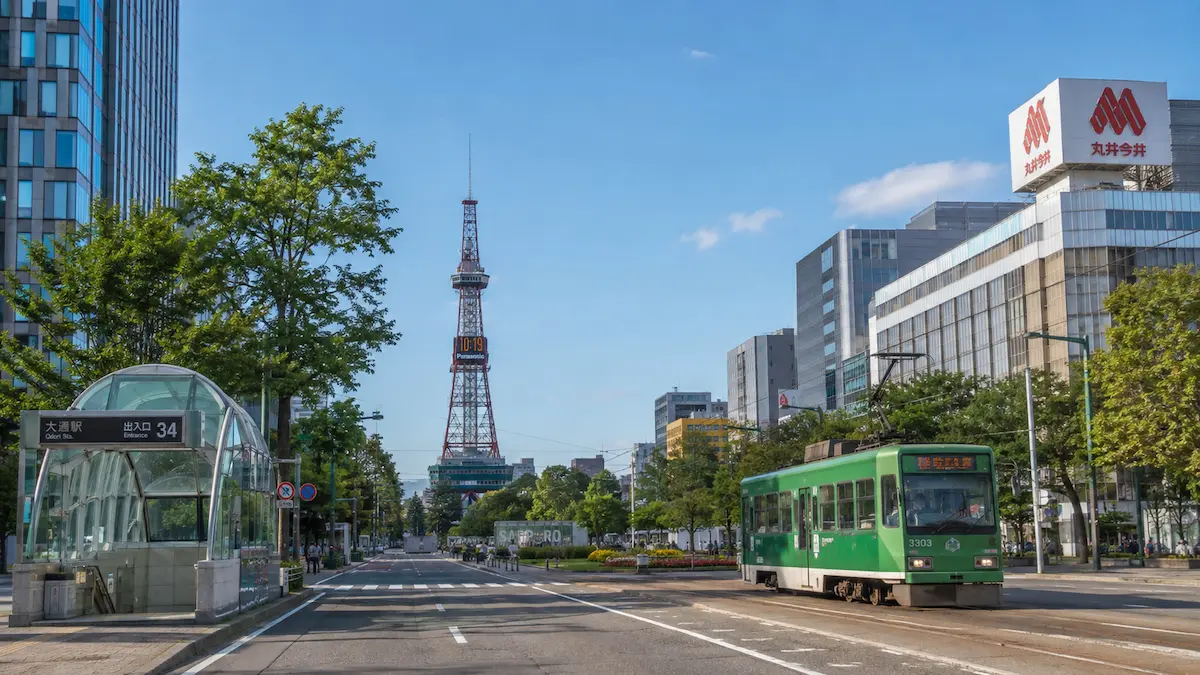
The Sapporo streetcar is useful, charming and easy to misuse. It runs a central loop through the southern side of the city and serves districts that are less convenient from the subway. It is particularly practical when your accommodation or destination lies along the loop, including the corridor used to approach the Mt. Moiwa Ropeway area.
The adult fare is a flat ¥230. Board through the rear door, move forward during the ride, and pay when exiting through the front. With a transport IC card, tap at the reader near the driver when leaving. With a supported contactless bank card, also tap only when exiting—there is no entry tap.
Since April 27, 2026, the streetcar accepts contactless Visa, Mastercard, JCB, American Express, Diners Club, Discover and UnionPay cards. On eligible weekends and holidays, an adult using the same contactless payment medium has streetcar spending capped at ¥460 for the day. In practical terms, the third and later rides do not increase the total once two standard adult fares have been charged.
Streetcar-to-subway transfer discounts can be applied automatically when using an eligible transport IC card and following the required transfer conditions. A contactless credit card does not receive that IC-card transfer discount, so fare capping is not automatically the cheapest choice for every mixed streetcar-and-subway itinerary.
Use the streetcar when: it serves your exact hotel or attraction, you want to avoid a long icy walk, or you are exploring the southern neighbourhoods at a relaxed pace.
Skip the streetcar when: you are travelling directly between Sapporo Station, Odori and Susukino. The subway or even walking through central underground passages is often faster.
✅ What Other Travelers Say
Travellers enjoy the street-level views and the sense of seeing everyday Sapporo rather than moving through tunnels. The recurring practical complaint is crowding near the front at busy stops, especially when visitors wait until the last moment to prepare a card or cash.
⚠️ The Catch (Things to Keep in Mind)
The loop can look more useful on a map than it is in real time. Stops are frequent, traffic affects progress and the route does not replace the subway for fast cross-city travel. Prepare your payment before the stop and avoid trying to top up an IC card onboard during a crowded ride; onboard charging accepts ¥1,000 notes only.
🚌 Airport and City Buses: Best for Direct Hotel Stops and Transport Gaps
Direct to Hotel Districts · Good with Luggage · Road-Delay Risk · No Airport Bus Reservation
The New Chitose Airport bus is not the fastest way to reach Sapporo, but it can be the least tiring. Current central-city fares are ¥1,500 for adults and ¥750 for children. Timetables include stops around Sapporo Station, Odori, Susukino and Nakajima Park, with some services continuing to selected hotels or neighbourhood stops.
Published schedules show central journeys commonly taking around 60 to 80 minutes in normal conditions. That is slower than JR, yet the comparison changes when you include the final transfer. A bus that leaves you one minute from a hotel entrance can beat a 33-minute train followed by a crowded subway, two lift searches and a snow-covered walk.
The airport bus is the better choice when: your hotel is close to a listed stop, you have heavy luggage, you are travelling with a child or older relative, and road conditions are normal.
The train is the better choice when: you have a tight schedule, your hotel is near JR Sapporo Station, snow or congestion may affect roads, or you want frequent departures without studying several bus routes.
Airport limousine buses generally cannot be reserved. When a bus is full, you may need to wait for the next departure. A ¥2,900 adult round-trip ticket is available for the central ¥1,500 sector, but it saves only ¥100 compared with two single fares. Do not lock yourself into a round trip unless you are reasonably sure the bus suits both your arrival and departure plans.
Within Sapporo, local buses become important for attractions beyond the subway and streetcar network. They are not the best tool for spontaneous central sightseeing because stop names, boarding procedures and route variations demand more attention. Use a route-planning app, verify the destination displayed on the bus, and keep a screenshot of the stop name in Japanese.
During a major rail disruption, official airport guidance also identifies a slower backup using local buses via Chitose Station and Fukuzumi. This is an emergency alternative rather than a recommended normal route because departures are less frequent and the journey involves extra transfers.
✅ What Other Travelers Say
Travellers who stay beside a limousine-bus stop often consider the extra road time worthwhile because they avoid carrying luggage through Sapporo Station. Less positive reports focus on traffic uncertainty, queues and the inability to reserve a seat in advance.
⚠️ The Catch (Things to Keep in Mind)
The linked video remains useful for understanding the airport-bus process, but fares and timetables shown in older videos may be outdated. Use the 2026 fare in this guide and check the operator’s current timetable. Winter road conditions can turn a comfortable direct ride into a stressful airport connection, so allow a generous buffer on departure day.
🚕 Taxis and Rental Cars: Best for Luggage, Late Arrivals and Rural Hokkaido
Door-to-Door · Best for Groups · High Airport Cost · Winter Skill Required
Taxis are not a failure of budget planning. In Sapporo, they are often the correct final link when a hotel is technically “near the station” but the actual route involves an underground maze, a staircase and a slippery pavement. Use them selectively: the short trip that saves twenty minutes and prevents a fall is often better value than forcing every journey onto public transport.
A direct taxi from New Chitose Airport to central Sapporo is expensive and can cost many times the rail fare, with the final meter affected by traffic, route, time and road conditions. It becomes more defensible for a group splitting the cost, a very late arrival, specialist luggage, reduced mobility or an accommodation far from both rail and bus stops. Designated airport pick-up areas support taxi and app-based services including GO, DiDi and Uber, subject to availability.
Rental cars are unnecessary for a normal Sapporo city break. Central attractions are better served by subway, streetcar, walking and occasional taxis, while parking and winter road conditions add cost and mental load. A rental car starts to make sense when Sapporo is the beginning of a wider Hokkaido road trip to rural areas with limited public transport.
Consider a rental car when: you are visiting several rural stops in one day, carrying ski or outdoor equipment, staying at accommodation beyond practical bus access, or travelling outside the urban core.
Avoid driving when: your itinerary is mainly Sapporo, Otaru and other rail-connected places; you have no experience with compacted snow and black ice; or you are relying on an aggressive same-day winter schedule.
✅ What Other Travelers Say
Groups and families value the door-to-door convenience, particularly after long flights. Experienced Hokkaido drivers repeatedly stress that winter travel times are not comparable with dry-road estimates and that confidence driving elsewhere does not automatically equal confidence on snow and ice.
⚠️ The Catch (Things to Keep in Mind)
Do not compare a private transfer with a train using headline journey time alone. Compare total door-to-door effort, but also include possible traffic, tolls, parking and weather. For winter car rental, choose appropriate tyres, understand the vehicle controls before leaving the depot and leave large timing margins.
Which Sapporo Transport Pass Is Actually Worth Buying?
Subway One-Day Ticket: Worth It for a Planned Multi-Stop Weekday
The ¥830 adult subway one-day ticket can make sense when you know you will take at least three or four medium-to-long subway rides and prefer a physical ticket. However, the 2026 contactless weekday cap reaches the same ¥830 ceiling without an advance purchase. For most adult visitors with an accepted bank card, fare capping is now the lower-friction option.
Donichika Ticket: Good Value, but Contactless Is Easier for Many Adults
At ¥520, the Donichika ticket is excellent value on eligible weekends and holidays. Yet adult contactless riders can receive the same subway cap automatically. Buy the paper ticket when you do not have a supported contactless card, need a child ticket, or simply prefer to keep transport spending separate from your bank card.
SAPICA: Useful Locally, Usually Unnecessary for Short-Stay Tourists
SAPICA costs ¥2,000, including ¥1,500 stored value and a ¥500 deposit. It works across Sapporo municipal transport and participating local bus services. The problem for visitors is flexibility: it is not the card to depend on for JR airport travel, while a card such as Kitaca, Suica, PASMO or ICOCA covers a broader set of typical tourist journeys. Buy SAPICA only when you have a specific local reason, not because it is the city-branded card.
Hokkaido Rail Pass: Only for a Real Regional Rail Itinerary
The 2026 advance-purchase prices for the Hokkaido Rail Pass are ¥22,000 for 5 days, ¥28,000 for 7 days and ¥37,000 for 10 days, with higher prices when purchased at a station in Japan. Those numbers can work for long-distance travel across Hokkaido, but they are difficult to justify for a Sapporo city break.
A traveller doing New Chitose Airport, central Sapporo and Otaru should normally pay regular fares. The pass does not become good value merely because it is unlimited, and it does not replace Sapporo subway or streetcar tickets. Calculate every long-distance sector before buying.
Sapporo–Noboribetsu and Sapporo–Furano Area Passes: Strong Only When the Route Matches
The Sapporo–Noboribetsu Area Pass costs ¥10,000 for four days. JR Hokkaido’s own example shows regular round trips from Sapporo to Noboribetsu and from Sapporo to Otaru totalling ¥13,380, which demonstrates a genuine saving for that specific combination.
The Sapporo–Furano Area Pass costs ¥11,000 when purchased in advance or ¥12,000 at a station. JR’s example places a regular Sapporo–Furano round trip at ¥13,520. This pass can be useful when Furano is definitely part of the plan, but train frequency and seasonal service patterns still matter. A cheap pass does not fix a timetable that does not suit your day.
The rule: choose a pass because your confirmed routes cost more than the pass—not because the pass name contains the place you are visiting.
A Practical Airport Decision You Can Make in 30 Seconds
- Hotel near JR Sapporo Station: take the JR Rapid Airport train.
- Hotel near an airport-bus stop in Susukino or Nakajima Park: compare the direct bus with train plus subway; choose the option with fewer luggage transfers.
- Arrival during severe snow or disruption: check both JR and bus operating information before committing, and do not assume one mode is automatically operating because the other is not.
- Late arrival with a family or several large cases: price a private transfer against multiple train tickets plus taxis at both ends.
- Departure for an international flight: prioritise reliability and buffer time over saving a few hundred yen.
Key FAQs
What is the best way to get from New Chitose Airport to Sapporo with luggage?
The JR Rapid Airport train is the best default because it is fast, frequent and cheaper than the airport bus. Reserve U-Seat separately when you want a guaranteed seat. Choose the ¥1,500 airport bus instead when it stops very close to your hotel and eliminates a difficult subway or taxi transfer. With several people, late arrival or bulky luggage, compare a pre-booked private transfer on a door-to-door basis.
Is a Sapporo subway day pass or Hokkaido Rail Pass worth it for first-time visitors?
A subway day ticket can be worthwhile after several rides, but adult visitors using one accepted contactless card can now receive the same ¥830 weekday or ¥520 eligible weekend cap automatically. A Hokkaido Rail Pass is usually not worth buying for Sapporo, the airport and Otaru alone. It becomes relevant only when your priced long-distance JR itinerary exceeds the pass cost.
Can I use Suica, PASMO or ICOCA in Sapporo and on the airport train?
Yes. Major nationwide interoperable IC cards can be used on the JR Rapid Airport train within the supported area and on Sapporo’s subway, streetcar and participating buses. For a reserved U-Seat, your IC card covers only the base fare; buy the seat reservation separately. IC cards cannot be used beyond Otaru toward Yoichi, Kutchan or Niseko.
Final Verdict and Your Next Step
For most first-time visitors, the winning Sapporo transport plan is simple: use the JR Rapid Airport train for speed, an existing nationwide IC card for everyday travel, the subway for most sightseeing, the streetcar only when its loop matches your destination, and taxis for the short luggage-heavy gaps that public transport handles badly.
The biggest mistake is buying transport before choosing accommodation. A hotel beside Sapporo Station creates a different airport strategy from a hotel near Susukino or Nakajima Park. Check the nearest station, the walking route and the airport-bus stops before confirming a room—not after landing with two suitcases.
Book the pieces that genuinely benefit from advance planning:
- Compare Sapporo hotels on Agoda, focusing on the actual walk from JR Sapporo, Odori, Susukino or an airport-bus stop.
- Check Sapporo accommodation on Booking.com and verify station access before choosing the cheapest room.
- Check JR Hokkaido and regional rail-pass options on Klook only after calculating your individual fares.
- Compare Hokkaido, Noboribetsu and Furano rail-pass options on KKday against your confirmed route.
- Pre-book a New Chitose Airport private transfer on Klook when late arrival, group size or luggage makes rail inconvenient.
- Compare a New Chitose Airport private transfer on KKday before assuming a taxi on arrival will be the easiest option.
Reserve a rail pass only when the arithmetic supports it, reserve U-Seat when comfort has real value, and reserve a private transfer when it removes a genuine transport problem. The cheapest ticket is not always the cheapest journey once you include lost time, wrong exits, icy walking and luggage fatigue.
Official References Checked for This Guide
- JR Hokkaido: New Chitose Airport access
- JR Hokkaido: Rapid Airport fares and U-Seat information
- JR Hokkaido: Rail pass prices and coverage
- Sapporo City Transportation Bureau: Fares and IC cards
- Sapporo City Transportation Bureau: One-day subway tickets
- Sapporo City Transportation Bureau: 2026 contactless subway fare cap
- Sapporo Transportation Service Promotion Corporation: Streetcar fares and contactless cap
- Sapporo Transportation Service Promotion Corporation: How to ride the streetcar
- Hokkaido Chuo Bus: New Chitose Airport timetable and fares
- New Chitose Airport: Bus access information