



💡 Key Takeaways
- Kintetsu Nara is the safest first-time choice because it puts Nara Park, Higashimuki Shopping Street, restaurants and buses within the easiest walking range.
- JR Nara is better for rail-pass users and heavy luggage, but it is not the station closest to the deer, Todai-ji or the eastern side of Nara Park.
- Do not book by the word “Nara” alone. A peaceful park ryokan, a Naramachi townhouse and a Shin-Omiya business hotel can create completely different trips, especially after dark.
Choosing among the best areas to stay in Nara looks simple until you open a map and discover that “Nara Station” may refer to two different railway systems, the famous temples stretch farther east than expected, and a hotel described as “near Nara Park” can still involve a tiring walk with suitcases. The real problem is not finding a decent hotel. It is choosing a base that matches the train line you will actually use, the amount of walking your group can handle, and how much atmosphere you are willing to trade for convenience.
Nara is more compact than Kyoto, but that does not mean every central neighborhood is interchangeable. The distance from JR Nara Station to the park feels reasonable on a sightseeing day and much less reasonable when it is humid, raining, or you are pulling a large suitcase over crossings and shopping streets. Staying deep inside the park can be magical at dawn, yet inconvenient when you want a casual dinner or an early train. Naramachi has far more character than a station-front block, but some traditional properties have narrow stairs, limited soundproofing and no elevator.
This guide compares five genuinely useful bases: Kintetsu Nara, JR Nara, Naramachi, Nara Park and Takabatake, and Shin-Omiya. Each has a clear purpose. The goal is not to declare every area “wonderful,” but to help you avoid paying for a location that works against your itinerary.
The 1-Min Cheat Sheet
- 🚉 Kintetsu Nara Station: Best overall for first-time visitors, short stays, dining convenience and the least walking to Nara Park. Choose this when your priorities are Todai-ji, Kofuku-ji, Kasuga Taisha and easy access from Osaka-Namba or Kyoto via Kintetsu.
- 🚆 JR Nara Station: Best for JR pass users, travelers arriving from Osaka or Kyoto on JR services, families with large luggage, and anyone who values modern station facilities over being closest to the sights.
- 🏮 Naramachi: Best for couples, repeat visitors, café lovers and travelers who want traditional streets rather than a generic station district. It is atmospheric and walkable, but not the easiest choice with mobility issues.
- 🦌 Nara Park and Takabatake: Best for a special ryokan stay, sunrise walks, nature and a slower two-night escape. It offers the strongest sense of place, but usually costs more and has fewer convenient evening options.
- 🌿 Shin-Omiya: Best for value, larger modern rooms, business travelers, drivers and repeat visitors. It is quieter and often cheaper, but you will commute to the famous sights instead of stepping straight into them.
Top Survival Tips for Choosing Where to Stay in Nara
- Treat Kintetsu Nara and JR Nara as separate bases. They are connected by the Sanjo-dori corridor, but a 10-to-15-minute walk can become an annoying daily tax. Choose the station that matches your arrival route and main day trips rather than assuming you can casually use both every day.
- Map the hotel entrance, not just the neighborhood label. Booking sites may group properties under “Nara Park,” “Nara Station” or “Naramachi” even when the practical walking experience differs. Check the exact route to the nearest station, whether it is uphill, and whether the path includes stairs or an underpass.
- With large luggage, prioritize the first and last 500 meters. A direct train is only half the journey. JR Nara generally offers a straightforward modern-station arrival, while some old-town guesthouses and park lodgings require a bus, taxi or uneven final walk.
- Do not overvalue a park address if your stay is only one night. For a late arrival and early departure, a station base saves more time than a romantic location. The park experience is best when you have enough time to enjoy dawn, dusk and a slower dinner.
- Check dinner plans before booking a secluded ryokan. Nara becomes calm earlier than Osaka or central Kyoto. If your accommodation includes dinner, this can be a benefit. If it does not, confirm nearby opening hours or expect to take a taxi or bus back toward the station area.
- Traditional does not always mean comfortable. Machiya stays may have steep stairs, low beams, thinner walls, shared bathrooms or limited climate control in older sections. Read room-specific details instead of assuming every renovated townhouse performs like a modern hotel.
- Families should calculate walking after the attractions, not before them. A child may happily walk from a station to the deer in the morning and struggle on the return after Todai-ji, Kasuga Taisha and snack stops. A hotel near Kintetsu Nara or a bus stop can prevent an avoidable end-of-day meltdown.
- One night is enough for highlights; two nights change the experience. With two nights, Naramachi or the park becomes more rewarding because you can explore after day-trippers leave. For a fast one-night stop, Kintetsu Nara or JR Nara is usually more efficient.
The Full Experience
🚉 Kintetsu Nara Station: Best for First-Time Visitors and Minimum Walking
Best for: First trips, one-night stays, food access, Osaka-Namba and Kyoto connections | Feel: Lively, practical and tourist-friendly | Budget: Broadest range
Kintetsu Nara is the best all-round answer for most leisure travelers. The station sits on the western edge of the main sightseeing zone, with the covered Higashimuki Shopping Street, Kofuku-ji and the entrance to Nara Park close enough that you can begin exploring without first taking a bus. This matters more than it appears on a map. Nara’s major sights are spread across a large park, so saving energy at the beginning and end of the day improves the whole visit.
The surrounding blocks also provide the easiest concentration of casual restaurants, bakeries, cafés, convenience stores and souvenir shops. After the temples close, you can still find dinner without planning a special journey. For a one-night itinerary, this flexibility is valuable: arrive, leave your luggage, walk into the park, eat nearby and return without another transfer.
Kintetsu is especially logical when you are traveling from Osaka-Namba or using Kintetsu services from Kyoto. It also works well for visitors planning trips toward western and southern Nara Prefecture via Yamato-Saidaiji, although some routes require a transfer. The station has lockers and visitor facilities, which makes it useful even before hotel check-in.
Who should book here
Book near Kintetsu Nara when Nara Park is your main purpose, you have only one or two nights, you dislike relying on buses, or you want the simplest evening dining setup. It is also the strongest compromise for mixed groups in which one traveler values temples and another values cafés, shopping streets and easy meals.
✅ What Other Travelers Say
Guest reviews repeatedly praise the ability to walk to the park, Kofuku-ji and shopping arcades within minutes. Travelers also like having restaurants near the hotel after a long sightseeing day. Families and first-time visitors often describe the area as easier than expected because they can return to the room during the day without crossing the city.
⚠️ The Catch (Things to Keep in Mind)
This is the most convenient tourist base, so it can feel busy during the day and rates may rise on weekends, public holidays, cherry blossom dates and autumn weekends. The station is underground, and the wrong exit can add stairs or an inconvenient road crossing when you have luggage. Confirm the nearest elevator exit before arrival. Also, travelers committed to JR passes may find themselves walking to JR Nara or paying separately for Kintetsu trips.
Bottom line: When you are undecided, choose Kintetsu Nara. It minimizes the most common Nara mistake: spending too much of a short stay walking between transportation and the sights.
🚆 JR Nara Station: Best for Rail-Pass Users, Luggage and Easy Arrivals
Best for: JR pass holders, heavy luggage, families, onward rail travel | Feel: Modern, organized and less touristy | Budget: Strong midrange and business-hotel value
JR Nara Station is the practical counterweight to Kintetsu Nara. It is farther from the park, but easier for travelers whose wider Kansai itinerary is built around JR. The station area has modern hotels, bus connections, convenience stores and straightforward access for rolling luggage. Several popular hotels sit directly beside or within a few minutes of the station, making arrival almost frictionless.
The trade-off is simple: you save effort on intercity travel and spend more effort reaching the sightseeing core. Nara Park is roughly a 20-minute walk east, depending on your exact destination and pace. The route along Sanjo-dori is not unpleasant; it passes shops and gradually becomes more atmospheric. However, that same walk feels longer after a full day covering Todai-ji, Kasuga Taisha and the park’s eastern paths.
JR Nara is a good choice when you plan to use the Yamatoji Line toward Osaka, the Nara Line toward Kyoto, or local JR routes toward places such as Sakurai and the Yamanobe-no-Michi area. It is also sensible for travelers arriving late, because there is less risk of dragging luggage through old streets after dark.
Who should book here
Choose JR Nara when your rail pass or onward route matters more than waking up beside the park. It is particularly suitable for families with strollers, travelers with multiple suitcases, older visitors who intend to use buses, and anyone who wants a modern hotel with larger common facilities or an on-site bath.
✅ What Other Travelers Say
Travelers frequently praise station-adjacent hotels for easy check-in, bus access, breakfast convenience and relief from carrying luggage. Reviews also highlight the usefulness of nearby supermarkets and the ability to board JR services without a cross-town transfer. Many guests consider the walk toward the park pleasant in good weather.
⚠️ The Catch (Things to Keep in Mind)
The label “Nara Station” can mislead first-time visitors into assuming this is the closest station to the deer and temples. It is not. If you plan to walk both ways every day, the extra distance becomes significant. The immediate station blocks also feel more functional than historic, so travelers seeking a romantic old-Japan atmosphere may find the setting ordinary.
Bottom line: JR Nara is the best logistics base, not the best sightseeing base. Choose it deliberately for rail convenience and luggage handling, not because you assume all Nara stations are equivalent.
🏮 Naramachi: Best for Couples, Traditional Streets and Slow Travel
Best for: Couples, cafés, boutique stays, repeat visitors, photographers | Feel: Historic, intimate and residential | Budget: Guesthouses to high-end heritage stays
Naramachi is where Nara begins to feel like a place you are staying in rather than a list of attractions you are visiting. South of the busiest station streets, the neighborhood is shaped by narrow lanes, traditional merchant houses, small temples, craft shops, galleries, coffee counters and restaurants hidden behind understated façades. It is one of the most rewarding areas after the day-trip crowds thin out.
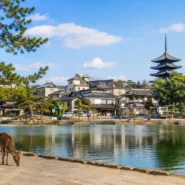
The location is more convenient than its old-town atmosphere suggests. The northern part of Naramachi can be within a comfortable walk of Kintetsu Nara, Sarusawa Pond, Kofuku-ji and the western edge of Nara Park. Deeper properties around Gango-ji and the southern lanes feel quieter but add distance to the station. That distinction matters: “Naramachi” is not one compact hotel block, so always map the exact address.
Accommodation ranges from sociable guesthouses to carefully restored machiya and design-led boutique hotels. This is the area to choose when the hotel itself is part of the trip. A room with timber details, a small courtyard or a neighborhood café outside the door can make a two-night Nara stay feel far more memorable than a station-front business hotel.
Who should book here
Naramachi suits couples, solo travelers who enjoy wandering, architecture lovers and anyone planning a relaxed two-night visit. It is also a strong choice for food-focused travelers who research specific small restaurants and are comfortable making reservations or checking opening days.
✅ What Other Travelers Say
Guests consistently value the calm streets, beautiful room design and feeling of living in an older part of Nara. Many mention that morning and evening walks are more enjoyable than the busy midday period. Travelers also appreciate being able to reach both the park and local cafés without staying in the busiest tourist blocks.
⚠️ The Catch (Things to Keep in Mind)
Old buildings come with real compromises. Some have steep stairs, no lift, low ceilings, shared facilities or weaker soundproofing. A property that looks close on a map may be awkward with large luggage because of narrow lanes and uneven approaches. Restaurants and cafés may close on irregular days or earlier than expected, so spontaneous late dinners are less dependable than near Kintetsu Nara.
Bottom line: Choose Naramachi for atmosphere, not maximum efficiency. It is the best neighborhood for travelers who want Nara to feel like an overnight destination rather than a day trip.
🦌 Nara Park and Takabatake: Best for Ryokans, Dawn Walks and a Special Stay
Best for: Honeymoons, ryokans, nature, luxury, temple-focused trips | Feel: Serene before and after day-trippers | Budget: Mostly premium, with limited simpler options
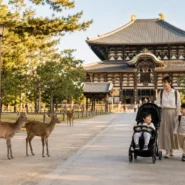
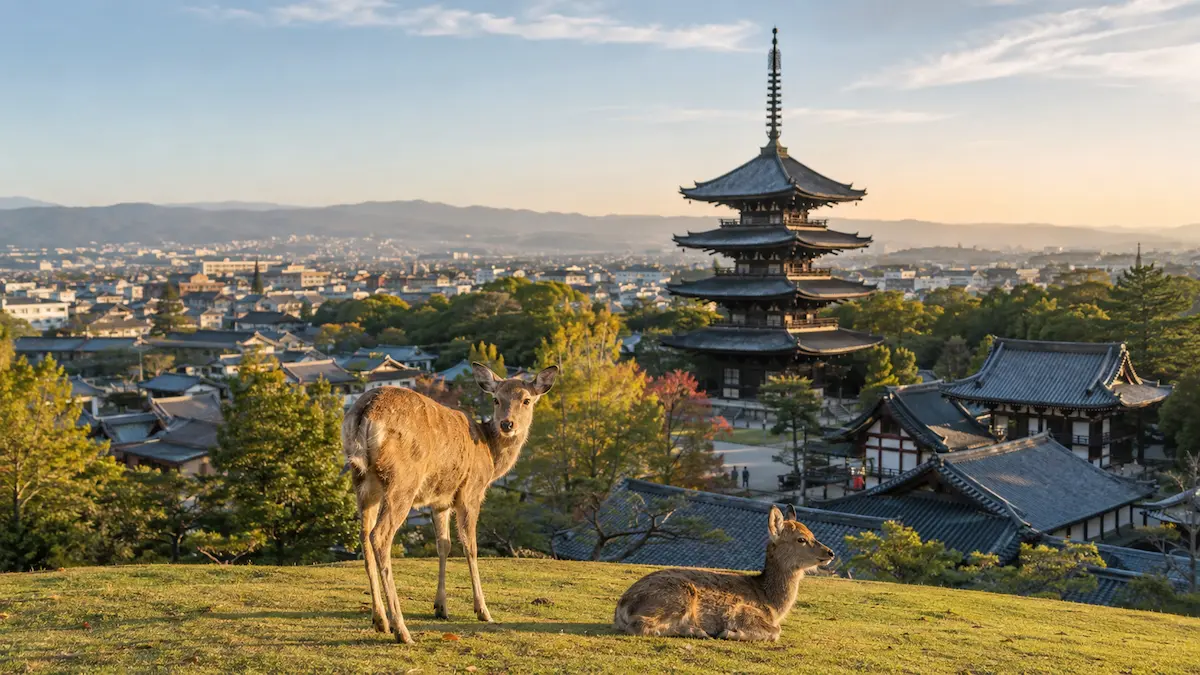
Staying beside or inside Nara Park offers the most distinctive version of Nara. Before tour groups arrive, the paths around the temples, lawns and wooded shrine approaches are quiet enough to hear birds, sweeping brooms and the movement of deer through the grass. In the evening, the atmosphere changes again as the souvenir shops close and the park returns to a slower local rhythm.
This area includes several different micro-locations. Properties near Noborioji and the western park edge remain relatively close to Kintetsu Nara. Lodgings deeper toward Kasugano, Todai-ji, Kasuga Taisha or the lower slopes of Mount Wakakusa feel far more secluded. Takabatake, south of the park, combines greenery, historic properties and access to Naramachi, but some addresses are uphill or farther from rail stations than booking maps suggest.
The strongest reason to stay here is not convenience; it is access to moments day-trippers rarely experience. A dawn walk to Todai-ji, a quiet evening near Sarusawa Pond, or a ryokan dinner followed by an early night can justify the higher price. This is also where many of Nara’s memorable heritage and luxury stays are concentrated.
Who should book here
Choose the park or Takabatake for a honeymoon, anniversary, ryokan experience, photography trip or a two-night stay centered on temples and nature. It is also excellent for travelers who prefer an included dinner and breakfast, because that removes the need to search for late meals.
✅ What Other Travelers Say
Travelers rave about peaceful views, deer near the property, attentive ryokan service and the ability to visit the park before crowds arrive. Reviews of premium stays often describe the setting as the highlight of the trip rather than simply a place to sleep. Guests who plan meals in advance tend to enjoy the seclusion most.
⚠️ The Catch (Things to Keep in Mind)
This area can be inconvenient with suitcases, limited mobility or a packed day-trip schedule. Some hotels provide shuttles, but times may be fixed and advance reservations may be required. Buses become less useful later in the evening, taxis add cost, and nearby casual dining is limited in the deepest park sections. Deer are wild animals, not hotel mascots; keep food secured and follow local guidance rather than approaching them carelessly.
Bottom line: The park is the best emotional choice and the weakest purely logistical choice. Book it when the setting is worth paying and planning for.
🌿 Shin-Omiya: Best for Value, Modern Hotels and Repeat Visitors
Best for: Budget-conscious couples, business trips, drivers, repeat visitors | Feel: Local, quiet and practical | Budget: Often better value for room size
Shin-Omiya is the sensible outsider in this comparison. One Kintetsu stop west of Kintetsu Nara, it is a working city district with government offices, local restaurants, convenience stores, modern hotels and access toward the Heijo Palace side of Nara. It does not deliver instant temple atmosphere, but it can deliver a quieter room and better value.
This base works particularly well for repeat visitors who have already seen the core park sights, business travelers, drivers who need parking, and guests using newer full-service hotels west of the historic center. It can also suit travelers who dislike tourist crowds and are happy to take a short train or bus ride each morning.
The area is more spread out than Kintetsu Nara. A hotel described as “Shin-Omiya” may sit near the station, closer to the convention center, or toward the palace site. Check the actual walking route and do not assume every property is a two-minute train solution. Some larger hotels operate shuttles, but those should be treated as a bonus rather than your only transport plan.
Who should book here
Book Shin-Omiya when you find a meaningfully better room, need parking, are attending an event, or plan to explore western Nara. It is also practical for longer stays when saving money and having a larger modern room matters more than stepping outside into a historic streetscape.
✅ What Other Travelers Say
Guests commonly appreciate quiet nights, convenient station access, nearby convenience stores and lower prices than the park-side premium areas. Business-hotel reviews often mention efficient service and good value. Drivers value properties with easier road access than the narrow old-town lanes.
⚠️ The Catch (Things to Keep in Mind)
You will not feel immersed in classic Nara when you leave the hotel. Reaching the park usually requires a train, bus, bicycle or longer walk, and returning to the room during the day is less convenient. The savings are only worthwhile if the price or room quality is clearly better; for a one-night first visit, the daily transfer can cancel out the benefit.
Bottom line: Shin-Omiya is a value strategy, not a sightseeing shortcut. It works best when you knowingly trade atmosphere for space, price or parking.
How to Choose Between the Five Areas
Choose Kintetsu Nara when you want the lowest-risk decision. It is the easiest base for the classic park-and-temple itinerary and the best balance of transport, food and walkability.
Choose JR Nara when your Kansai trip is already built around JR, you have heavy luggage, or your hotel is directly beside the station. Use buses strategically rather than forcing yourself to walk to the park every time.
Choose Naramachi when atmosphere is a major part of the trip. Stay at least two nights so you can enjoy the neighborhood outside sightseeing hours and avoid rushing through the old streets with luggage.
Choose Nara Park or Takabatake when you are booking an experience, not merely a bed. Confirm meals, shuttle arrangements and the final approach before paying a premium.
Choose Shin-Omiya when the hotel deal is substantially better, you need parking, or you are returning to Nara with a broader itinerary. First-time visitors on a tight schedule will usually be happier farther east.
Key FAQs
Is it better to stay near JR Nara Station or Kintetsu Nara Station?
Kintetsu Nara is better for most first-time tourists because it is closer to Nara Park, Kofuku-ji, Higashimuki Shopping Street and the main restaurant zone. JR Nara is better for travelers using JR passes, carrying large luggage or continuing on JR routes. Do not choose based only on the station name; choose based on your train line and walking tolerance.
How many nights should I stay in Nara instead of taking a day trip from Kyoto or Osaka?
One night is enough to see the major park sights without rushing and enjoy a quieter evening. Two nights are better for Naramachi, a ryokan stay, Kasuga Taisha at a slower pace, museums, gardens or a side trip elsewhere in Nara Prefecture. More than two nights makes sense when Nara is a regional base rather than just a city stop.
Where is the best place to stay in Nara with luggage, children or limited mobility?
JR Nara is usually easiest for large luggage because of its modern station setup and station-front hotels. Kintetsu Nara is often better once sightseeing begins because the park is closer. For limited mobility, prioritize a hotel near a bus stop or taxi stand, confirm elevator access and avoid assuming that an old-town or park property has a flat, step-free approach.
Final Verdict and Your Next Step
For most readers, the final recommendation is straightforward: stay near Kintetsu Nara for the best first visit, near JR Nara for the easiest rail-and-luggage logistics, in Naramachi for character, beside Nara Park for a special experience, or in Shin-Omiya only when value, space or parking clearly wins.
The biggest booking mistake is delaying until the most practical rooms disappear, then accepting a property that is technically in Nara but poorly matched to your route. Weekend dates, spring blossoms, autumn foliage and Japanese holiday periods can reduce the best-located options quickly. Compare the exact map pin, room type, cancellation terms and breakfast or dinner arrangements before paying.
- Compare Nara hotels on Booking.com
- Check Nara hotel deals on Agoda
- Browse Nara hotels on Klook
- Book Nara activities and day tours on KKday
One final check before booking: open the hotel map and trace the actual journey from your arrival station to the front door, then from the hotel to Todai-ji. That two-minute check is more useful than a vague “central location” label and can save you repeated walks, taxi fares and unnecessary luggage stress.