
💡 Key Takeaways
Deciding where to stay in Hiroshima looks easy on a map. The city center is compact, the streetcars cover the main sights, and many hotels describe themselves as “central.” The problem appears when you arrive with a suitcase: Hiroshima Station, Peace Memorial Park, Hondori and the busiest restaurant streets are not in one tight cluster. A hotel that seems close in straight-line distance may still involve a tram platform, a river crossing, a crowded arcade or a ten-minute walk with luggage.
For a first visit, the right area depends less on which neighborhood sounds most exciting and more on how you will actually move. Are you arriving late by Shinkansen? Taking an early train to Miyajimaguchi? Traveling with children? Planning to eat and drink after 10 p.m.? Spending only one night? Those details matter more than a hotel’s star rating.
This guide gives a clear recommendation for seven practical bases, including their drawbacks, realistic planning price bands and the travelers who should avoid them. Prices below are rough nightly planning ranges for a standard room, not live quotes. Weekend events, cherry-blossom season, autumn foliage, school holidays and dates around August 6 can push rates much higher. Transport details and booking pages were checked in August 2026.
The 1-Min Cheat Sheet: Which Hiroshima Area Should You Book?
- Hiroshima Station: Best overall for first-time visitors with luggage, rail passes, short stays and multiple day trips. Less atmospheric at night than downtown, although the rebuilt station complex has improved dining and shopping.
- Hatchobori: Best central compromise for restaurants, department stores, okonomiyaki and easy tram access. Busy, energetic and convenient, but not peaceful.
- Hondori and Kamiyacho: Best for walking to Peace Memorial Park, shopping under a covered arcade and using Hiroshima Bus Center. Excellent for city-focused trips; less convenient for repeated Shinkansen journeys.
- Peace Memorial Park and Tokaichi: Best for quiet mornings, museum access, riverside walks and a calmer stay. Evening dining is thinner than in Hatchobori or Nagarekawa.
- Nagarekawa and Yagenbori: Best for nightlife, late meals and travelers who want Hiroshima after dark. Avoid it if street noise, touts or adult-entertainment venues would make you uncomfortable.
- Yokogawa: Best for value, a more local atmosphere and a useful JR-plus-streetcar transport combination. Hotel choice is smaller and most headline sights require a ride.
- Miyajima: Best for a memorable ryokan night, sunrise walks and seeing the island after day-trippers leave. Expensive and inconvenient as a base for the rest of Hiroshima.
Top Survival Tips Before You Choose an Area
- Count transfers, not just minutes on Google Maps. A twelve-minute tram ride can become a thirty-minute hotel-to-platform journey when you add walking, waiting, crowded doors and an unfamiliar stop. With suitcases, a direct route from Hiroshima Station is often worth paying slightly more for.
- Check which side of Hiroshima Station your hotel is on. The station is large, and a hotel described as “near Hiroshima Station” may be convenient for the Shinkansen side but less direct for streetcars, airport buses or downtown-facing exits. Open the map, identify the exact entrance and read recent comments about the walk rather than trusting the distance shown in a listing.
- Do not confuse Miyajima with Miyajimaguchi. Miyajimaguchi is the mainland rail-and-ferry gateway; Miyajima is the island. A cheap hotel near Miyajimaguchi can be useful for an early ferry, but it is not the same experience as sleeping on the island and is not a convenient base for central Hiroshima nightlife.
- Treat streetcars as useful, not fast. Hiroshima’s trams are easy to understand and the flat city fare is currently ¥240 for adults, but they share streets with traffic and can be crowded. The official Hiroden sightseeing route puts Hiroshima Station to Genbaku Dome-mae at about 13 minutes, yet your door-to-door time will be longer. See the official Hiroden route map and current streetcar fares.
- Use luggage forwarding when splitting Hiroshima and Miyajima. Carrying a large suitcase onto a local train, through Miyajimaguchi, onto a ferry and then along Miyajima’s streets is possible, but rarely enjoyable. Send the main bag to your next mainland hotel and take one small overnight bag to the island.
- Check dinner and check-in times on Miyajima. Many ryokan meals are served at fixed times, and the island becomes quiet after day visitors leave. Arriving late can mean missing dinner with few alternatives nearby. Confirm the ferry timetable and your property’s final check-in time before booking; the JR West Miyajima Ferry timetable shows a crossing time of about ten minutes.
- Read reviews for noise, not only cleanliness. In Nagarekawa, Yagenbori and parts of Hatchobori, a hotel can be excellent yet still sit above late-night bars, karaoke rooms or busy roads. Search recent reviews for “noise,” “smoke,” “bar,” “ambulance” and “weekend” before paying a non-refundable rate.
- Reserve early when your dates are fixed. Hiroshima has good-value business hotels, but the best-located twin rooms and family rooms disappear first. Waiting can leave you choosing between a cheap room far from useful transport and an overpriced room in the center.
The Full Experience: Hiroshima’s Best Areas to Stay
📍 Hiroshima Station: Best Overall for First-Time Visitors with Luggage
Tags: Shinkansen convenience · Airport access · Day trips · Minimal transfers · Business hotels
My verdict: When someone asks me for one low-risk recommendation without giving any other details, I choose Hiroshima Station. It removes the most common first-day frustration: arriving tired, finding the streetcar, squeezing luggage into a busy car and then walking another eight minutes to a hotel.
The station area is especially strong for one- or two-night trips. You can step off the Shinkansen, drop your bags and start sightseeing without reorganizing your entire route. It also makes early departures straightforward and gives you easy JR access toward Miyajimaguchi for Miyajima, as well as day trips such as Onomichi or Iwakuni.
The area became more convenient after Hiroshima’s elevated streetcar stop moved into the station building in August 2025. The tram platform is now directly connected at concourse level, reducing the awkward outdoor transfer that older guidebooks still describe. This does not make the station “downtown,” but it does make trips toward Hatchobori, Kamiyacho and the Peace Memorial area less annoying.
Typical nightly price: About ¥7,000–¥12,000 for capsules or compact budget rooms, ¥12,000–¥22,000 for reliable mid-range business hotels, and roughly ¥22,000–¥45,000 or more for larger rooms and upper-upscale properties. Station-side prices rise quickly on Saturday nights and during major events.
Best for: First-time visitors, rail-pass users, solo travelers, business travelers, anyone with heavy luggage, late arrivals, early departures and travelers making more than one rail day trip.
Not ideal for: People who want to walk out of the hotel directly into Hiroshima’s main nightlife, bar streets or Peace Memorial Park. You will use the tram, bus or a taxi for most central-city evenings.
✅ What Other Travelers Say
Recent traveler feedback around station hotels repeatedly praises the easy check-in after a Shinkansen journey, convenient luggage storage and quick access to restaurants inside or beside the station. Couples and families often value not having to navigate a second transport leg on arrival day.
⚠️ The Catch (Things to Keep in Mind)
The station area can feel functional rather than charming. Some streets become quiet after the station complex closes, while hotel rooms facing railway lines or major roads may pick up noise. Also check the exact exit: “five minutes from Hiroshima Station” can mean a very different walk depending on whether your train, tram or airport bus arrives on the opposite side.
📍 Hatchobori: Best Central Balance for Food, Shopping and Nightlife
Tags: Central location · Okonomiyaki · Department stores · Trams · Evening energy
My verdict: Hatchobori is the best compromise for travelers who want to feel they are in the center of Hiroshima without committing to the louder core of Nagarekawa. Restaurants, shopping, streetcars and evening options are all close, and you can walk toward Hondori, Kamiyacho and Okonomimura without planning every movement.
On a city-focused itinerary, Hatchobori often saves more time than Hiroshima Station because your evening starts the moment you leave the hotel. You can eat, browse department stores, stop for coffee, return to the room and go out again without paying for another tram. It also works well for couples and solo travelers who like flexibility rather than a rigid sightseeing schedule.
Typical nightly price: Roughly ¥9,000–¥16,000 for smaller business-hotel rooms, ¥16,000–¥28,000 for comfortable mid-range stays, and ¥28,000–¥45,000 or more for larger or upscale rooms.
Best for: Food lovers, couples, repeat visitors, shoppers, travelers who stay out after dinner and first-timers who want an energetic but practical center.
Not ideal for: Very light sleepers, families who want quiet streets, travelers with oversized luggage or anyone taking an early Shinkansen on several mornings.
✅ What Other Travelers Say
Travelers commonly like Hatchobori because almost every daily need is nearby: convenience stores, pharmacies, casual restaurants, shopping and frequent transport. Many reviews describe it as easier for dinner than the station area and more convenient overall than staying directly beside the Peace Park.
⚠️ The Catch (Things to Keep in Mind)
Central convenience brings traffic, pedestrians and nightlife spillover. A hotel one block closer to Nagarekawa can feel much livelier than one block toward Kamiyacho. Check the actual street view and recent noise comments. With luggage, the tram from Hiroshima Station is manageable but not as comfortable as simply walking into a station hotel.
📍 Hondori and Kamiyacho: Best for Sightseeing on Foot
Tags: Peace Park access · Covered shopping arcade · Bus Center · Restaurants · Rain-friendly
My verdict: Hondori and Kamiyacho are the strongest choices when your priorities are Peace Memorial Park, shopping and walking rather than repeated train trips. The long covered Hondori arcade is more useful than it looks on a sunny map: it gives you an easy route for food, pharmacies and shopping when it rains or summer heat becomes tiring.
The western end brings you close to the Atomic Bomb Dome and Peace Memorial Park, while Kamiyacho adds the Hiroshima Bus Center, department stores and several tram stops. The official Hondori site lists the arcade as about 577 meters long and notes quick access from Hondori, Kamiyacho-higashi and Kamiyacho-nishi stops. Hiroshima Airport limousine buses also serve Hiroshima Bus Center, making this area more practical for flyers than many first-time visitors realize. Check the official Hondori access guide before choosing your hotel.
Typical nightly price: About ¥8,000–¥15,000 for hostels and compact rooms, ¥15,000–¥27,000 for comfortable mid-range hotels, and ¥27,000–¥45,000 or more for premium rooms.
Best for: First-time sightseers, museum visitors, couples, travelers without heavy luggage, rainy-season visits and anyone who prefers walking to major attractions.
Not ideal for: Travelers whose schedule revolves around the Shinkansen, people who dislike shopping crowds or visitors expecting the arcade itself to stay lively late into the night.
✅ What Other Travelers Say
Visitors like being able to walk to the Peace Park, find food without searching and use the covered arcade in bad weather. Reviews also highlight the convenience of Hiroshima Bus Center for airport connections and regional buses.
⚠️ The Catch (Things to Keep in Mind)
Hondori is busy by day but some sections feel much quieter after shops close. Hotels set inside pedestrian or arcade blocks may require a short luggage walk from the taxi drop-off point. Kamiyacho can also feel more commercial than atmospheric, so choose a hotel toward the Peace Park if evening riverside walks matter to you.
📍 Peace Memorial Park and Tokaichi: Best for Quiet Mornings and Museum Access
Tags: Peace Memorial Museum · Riverside walks · Quieter nights · Cafés · Reflective atmosphere
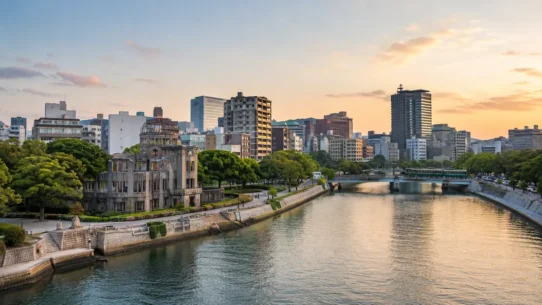
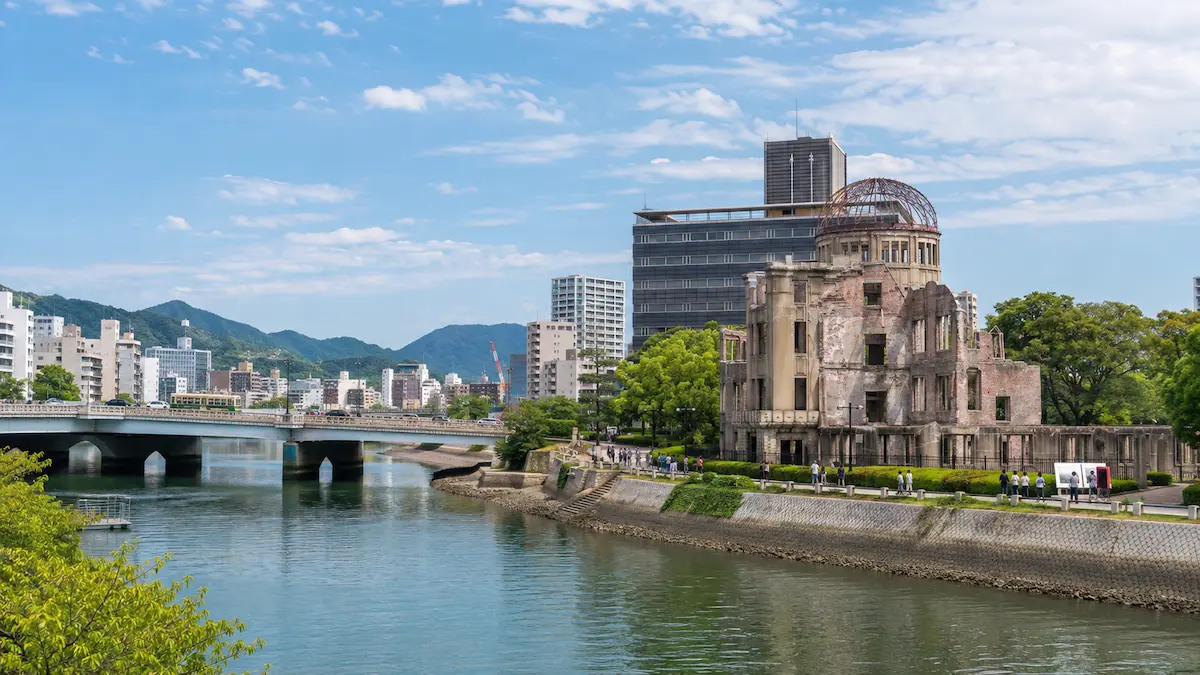
My verdict: Stay near Peace Memorial Park when the museum and memorial sites are the emotional center of your trip, or when you value quiet mornings more than late-night convenience. Tokaichi, just north-west of the main park area, often gives better value while keeping the A-Bomb Dome and riverside within walking distance.
This is a good area for travelers who want to visit the museum early, take breaks during an emotionally heavy day or return to the park in softer evening light. The rivers create open views and make the area feel less enclosed than Hatchobori. It can also suit families who prefer calmer streets.
Typical nightly price: Roughly ¥7,000–¥14,000 for hostels, apartments and compact hotels, ¥14,000–¥25,000 for better mid-range rooms, and around ¥25,000–¥40,000 or more for larger boutique or apartment-style stays.
Best for: Museum-focused visitors, families, mature travelers, photographers, walkers and anyone who wants a calm base near the city’s most important site.
Not ideal for: Nightlife seekers, travelers who need dozens of late dinner choices or people making repeated early-morning departures from Hiroshima Station.
✅ What Other Travelers Say
Travelers often appreciate being able to walk to the museum without rushing and returning to the hotel for a rest afterward. Apartment-style stays around Tokaichi receive positive comments from families and longer-stay visitors who want more space than a standard business hotel.
⚠️ The Catch (Things to Keep in Mind)
The immediate park area is intentionally open and reflective, not a dense entertainment zone. Dinner choice narrows earlier than in Hatchobori, and some streets become very quiet. A hotel advertised as “near Peace Park” may be on the far side of a river, so check the bridge route rather than relying on straight-line distance.
📍 Nagarekawa and Yagenbori: Best for Nightlife and Late-Night Food
Tags: Bars · Izakaya · Late dining · Neon streets · Adult entertainment
My verdict: Nagarekawa is a smart base for the right traveler and a poor recommendation for everyone else. It is Hiroshima’s main nightlife district, packed with bars, izakaya, karaoke, clubs and late-night food. You can finish dinner at midnight and still have options around you. That convenience is real.
It is equally important to be direct about the atmosphere. Parts of Nagarekawa and Yagenbori include hostess bars, adult-entertainment businesses and people inviting customers into venues. The area is generally busy rather than deserted, but families, solo travelers who dislike nightlife attention and anyone sensitive to smoke or noise may feel more comfortable in Hatchobori or Hondori.
Typical nightly price: Around ¥8,000–¥15,000 for compact business hotels, ¥15,000–¥26,000 for comfortable mid-range rooms, and ¥26,000–¥40,000 or more for larger or higher-grade stays.
Best for: Night owls, groups of friends, food-focused travelers, repeat visitors and anyone who wants to walk home after drinking.
Not ideal for: Families with young children, light sleepers, travelers uncomfortable around adult-oriented venues, non-smokers who are sensitive to bar environments and visitors who want peaceful early nights.
✅ What Other Travelers Say
Nightlife-focused visitors praise the huge choice of food and drinks, short walk back to the hotel and energetic atmosphere on Friday and Saturday nights. Some travelers also find room rates competitive compared with equally central hotels closer to Kamiyacho.
⚠️ The Catch (Things to Keep in Mind)
Street noise can continue well after midnight, and a room on a low floor may hear music, conversations or taxis. Some nearby restaurants permit smoking. Do not book solely because the map looks central; watch the area video, inspect street view and read reviews from travelers with a similar comfort level.
📍 Yokogawa: Best Value with JR and Streetcar Connections
Tags: Better value · Local neighborhood · JR station · Streetcars · Casual dining
My verdict: Yokogawa is my value pick for travelers who do not need to sleep beside a headline attraction. It feels more residential and local than Hiroshima Station or Hatchobori, while still giving you both JR trains and streetcars. That combination is useful for reaching central Hiroshima and making selected regional trips.
The area has casual restaurants, supermarkets and a neighborhood rhythm that some travelers prefer to the polished station complex. Accommodation supply is smaller, but good deals appear when central hotels become expensive. It can also work well for longer stays when you want laundromats, food shops and less tourist traffic.
Typical nightly price: About ¥6,500–¥12,000 for budget rooms, ¥12,000–¥20,000 for good mid-range options, and roughly ¥20,000–¥30,000 or more for larger rooms or apartments.
Best for: Budget-conscious couples, repeat visitors, longer stays, travelers who like local neighborhoods and visitors comfortable using public transport daily.
Not ideal for: One-night first-timers who want maximum simplicity, nightlife seekers or visitors who expect to walk to every major sight.
✅ What Other Travelers Say
Travelers who enjoy Yokogawa often mention better room value, useful food shops and a less touristy feel. The transport choice is another strength: you are not dependent on a single tram stop or bus route.
⚠️ The Catch (Things to Keep in Mind)
You will spend more time riding into the central sightseeing zone, and late-night frequency is less forgiving than simply walking back from Hatchobori. Hotel inventory is limited, so compare the exact property rather than assuming every Yokogawa option is automatically a bargain.
📍 Miyajima: Best for a Special Ryokan Night and Crowd-Free Evenings
Tags: Ryokan · Onsen · Sunrise · Itsukushima Shrine · Romantic splurge
My verdict: Miyajima is not the most efficient place to stay, but it can be the most memorable. After the daytime crowds leave, the waterfront becomes quieter, the shrine area feels more spacious and an early-morning walk gives you an experience day-trippers rarely see. For a honeymoon, anniversary or one special night in a longer Japan trip, it is worth considering.
Access is straightforward but involves stages. From Miyajimaguchi, the ferry takes about ten minutes, and JR West describes Itsukushima Shrine as roughly a twelve-minute walk from Miyajima Pier. The ferry crossing is easy with a small bag; it is less pleasant with multiple large cases, rain or a late arrival.
Typical nightly price: Roughly ¥15,000–¥30,000 for simpler guesthouses or hotel rooms, ¥30,000–¥55,000 for comfortable ryokan packages, and ¥55,000–¥90,000 or more for premium rooms with dinner, breakfast, baths or views. Always check whether meals are included before comparing prices.
Best for: Couples, honeymooners, photographers, ryokan first-timers, slow travelers and visitors who can carry a small overnight bag.
Not ideal for: Tight budgets, late arrivals, travelers with several mainland day trips, people who need flexible late-night dining or anyone unwilling to manage a ferry transfer.
✅ What Other Travelers Say
Overnight guests consistently value the peaceful atmosphere after the last big wave of day visitors, early access to the shrine area and the complete ryokan experience of baths and multi-course meals. Many describe the island evening as the emotional highlight of their Hiroshima stay.
⚠️ The Catch (Things to Keep in Mind)
Miyajima becomes quiet early, and spontaneous dinner choices are limited. Ryokan meal and check-in times can be strict. Deer are wild animals and may approach food or bags, so do not leave belongings unattended. Most importantly, staying here adds friction whenever you need to return to Hiroshima city: walk, ferry, transfer and then train or tram.
Key FAQs About Where to Stay in Hiroshima
Is it better to stay near Hiroshima Station or Peace Memorial Park for a first visit?
Choose Hiroshima Station when you have large luggage, a short stay, early trains or several day trips. Choose Peace Memorial Park, Hondori or Kamiyacho when you will spend most of your time sightseeing in central Hiroshima and prefer walking to the museum, restaurants and shops. For most first-time visitors staying only one or two nights, the station is the safer logistical choice; for a slower three-night city stay, Hondori or Kamiyacho often feels more enjoyable.
How many nights should first-time visitors stay in Hiroshima and Miyajima?
Two nights is the practical minimum for one full Hiroshima city day and one Miyajima day. Three nights is better if you want the Peace Memorial Museum without rushing, time for Hiroshima Castle or Shukkeien, and a relaxed Miyajima visit. A strong plan is two nights near Hiroshima Station or Hondori plus one separate night on Miyajima, using luggage forwarding so you do not drag a full suitcase onto the ferry.
What is the best area to stay in Hiroshima for families who want less walking?
Hiroshima Station is usually easiest for families arriving by train because it minimizes transfers and keeps food, shops and transport together. Hondori and Kamiyacho are better when children can manage the arrival transfer and the family wants to walk to Peace Memorial Park. Avoid booking deep inside Nagarekawa without checking the street, and consider a larger apartment-style room around Tokaichi when space and laundry matter more than immediate station access.
Final Verdict and Your Next Step
For most first-time visitors, book Hiroshima Station when transport simplicity matters most. Choose Hondori or Kamiyacho when walking to the Peace Park and central restaurants matters more. Pick Hatchobori for the best city energy, Tokaichi for quiet value, Nagarekawa for nightlife, and Yokogawa when central prices are poor. Add one night on Miyajima only when you want the island atmosphere enough to accept the ferry and luggage logistics.
Do not wait until the last few weeks if you need twin beds, family rooms, a non-smoking room or a well-rated hotel within five minutes of useful transport. Compare the exact map location and cancellation terms before paying, then reserve the best refundable option while it is still available.
Check accommodation: Compare Hiroshima hotels on Agoda or browse Hiroshima stays on Booking.com.
Book tours and transport: see Hiroshima and Miyajima experiences on Klook or compare Hiroshima day tours on KKday.