
💡 Key Takeaways
- Downtown Hiroshima around Hatchobori, Kamiyacho and Hondori is the best all-round base for most first-time visitors. You can walk to restaurants, shopping, the Peace Memorial area and nightlife without spending every evening on a tram.
- Hiroshima Station is better when luggage and day trips matter more than atmosphere. It is the least stressful choice for Shinkansen arrivals, early departures, Miyajima by JR and side trips to places such as Onomichi, Iwakuni or Himeji.
- Miyajima is an experience stay, not the most practical Hiroshima base. Spend one night there for the quiet evening atmosphere, a ryokan meal and an early start before day-trippers arrive—but do not use it as your only base for several city-sightseeing days.
Choosing among the best areas to stay in Hiroshima looks easy on a map, but the city has a hidden planning trap: the main railway station, the Peace Memorial sights, the busiest restaurant streets and the ferry route to Miyajima are not all in the same place. A hotel described as “central” may still leave you riding a streetcar twice a day, while a bargain near Hiroshima Station may save your back but put you away from the city’s best evening atmosphere.
The real decision is not simply “station or city centre.” It is whether you want to minimise luggage transfers, sightseeing travel, late-night walking, room cost or early-morning stress. Hiroshima’s streetcars are useful and characterful, but they are not a subway: stops are frequent, vehicles can become crowded, and a route that looks short on a map can feel slow when you are standing with a suitcase.
This guide compares five practical accommodation bases rather than inventing too many micro-neighbourhoods. You will see exactly who each area suits, where the compromises appear, and which “good location” claims deserve a closer look before you book.
The 1-Min Cheat Sheet: Where Should You Stay in Hiroshima?
- Hiroshima Station: Choose it for Shinkansen convenience, one-night stays, early trains, large luggage and frequent regional day trips. Skip it when your priority is stepping outside into Hiroshima’s main dining and nightlife scene.
- Hatchobori, Kamiyacho and Hondori: The best overall choice for first-time visitors, food lovers and travellers staying two or three nights. It gives the strongest balance of walkability, transport and evening options.
- Peace Memorial Park, Otemachi and Fukuromachi: Best for couples, families, reflective sightseeing and travellers who prefer a calmer central base. Check the exact block because some hotels are close to the park but less convenient for dinner.
- Nagarekawa and Shintenchi: Best for nightlife, izakayas, bars and late dinners. Book only after checking recent noise comments and the hotel’s precise entrance street.
- Miyajima Island or Miyajimaguchi: Best for a memorable ryokan night, sunrise or evening walks and a slower pace. It adds friction to Hiroshima city sightseeing, so it works best as a split stay.
Top Survival Tips for Choosing the Right Hiroshima Hotel Area
- Decide which inconvenience you would rather pay for. A station hotel saves transfers on arrival and departure. A downtown hotel saves repeated transport during the stay. For two or three nights focused on Hiroshima city, downtown usually wins. For one night between long train journeys, the station usually wins.
- Do not judge distance using a straight line on Google Maps. Rivers, bridges, large crossings, underground passages and tram stops shape the real walking route. A hotel that is “900 metres from the Peace Memorial Park” may involve more exposed walking than a hotel slightly farther away but beside a direct tram or bus stop.
- Check the correct side of Hiroshima Station. The south side faces the city centre and is generally more intuitive for trams, buses and walking toward Hatchobori. The north side is useful for the Shinkansen gate and airport buses. A station-area hotel can still require a long internal walk if it sits on the opposite side from your daily route.
- The rebuilt Hiroshima Station is easier than older travel reports suggest. Streetcars began using the integrated second-floor station platform in August 2025, improving transfers between JR trains and city trams. Older forum posts and videos may show the previous street-level arrangement, so use current maps when planning your first arrival.
- Streetcars are excellent for coverage, not always for speed. They are ideal for short, direct rides and are easy to understand once you see the network. However, frequent stops and busy boarding periods mean a hotel that requires a tram for every meal can become annoying, especially with children or tired feet.
- For Miyajima, separate “island” from “Miyajimaguchi.” Miyajimaguchi is on the mainland beside the train stations and ferry terminals. Miyajima accommodation is across the water on the island itself. Mainland hotels are usually cheaper and easier for onward transport; island ryokans deliver the special after-hours atmosphere.
- Do not carry large luggage to Miyajima without a reason. Station lockers, hotel luggage storage or luggage forwarding can turn an awkward ferry-and-cobblestone transfer into a pleasant overnight. Many ryokans have shuttles, but you should confirm the pickup point and operating hours directly.
- Look beyond a hotel’s overall review score. Search recent reviews for “tram,” “noise,” “luggage,” “laundry,” “breakfast,” “smoking,” “elevator” and “room size.” In Hiroshima, location complaints are often more useful than generic praise about staff.
- Be cautious with cheap rooms inside the nightlife zone. Nagarekawa can be excellent value because business hotels compete heavily there. The trade-off may be street noise, late-night foot traffic, smoking odours in older buildings or an entrance beside adult-oriented venues. This is not automatically unsafe, but it may feel uncomfortable for some families.
- Book early around major dates and busy weekends. Hiroshima fills for public holidays, autumn weekends, major conventions, Peace Memorial events and popular baseball games. Flexible cancellation is valuable because station and downtown prices can move differently as your dates approach.
The Full Experience
🚉 Hiroshima Station: Best for Easy Transport, Heavy Luggage and Day Trips
Area tags: Shinkansen convenience · Airport bus access · Short stays · Day trips · Luggage-friendly
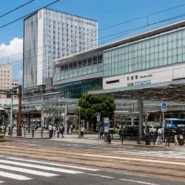
Hiroshima Station is the practical answer for travellers who do not want to drag luggage through tram stops, crowded streets or bad weather. It is especially strong when Hiroshima is one stop in a longer Japan itinerary and you plan to arrive by Shinkansen, sleep one or two nights, then continue to Osaka, Fukuoka or another city.
The station is also the simplest starting point for JR trips toward Miyajimaguchi, Iwakuni, Onomichi and other destinations along the Sanyo corridor. The airport limousine bus serves Hiroshima Station’s Shinkansen side, and the station complex now contains a much better selection of restaurants, food halls, shops and souvenir options than older descriptions suggest.
Where to look: Hotels physically connected to the station or within roughly five minutes of either the south or north exit are worth paying extra for when you have large suitcases. The south side is more convenient for trams and movement toward downtown. The north side is useful for the Shinkansen gate, airport buses and quieter streets, but it can feel less connected to evening Hiroshima.
Best for: First or last night in the city, rail-pass users, business travellers, families with several bags, people arriving late, travellers taking two or more regional day trips, and anyone with an early Shinkansen.
✅ What Other Travelers Say
Guests repeatedly praise station hotels for being able to drop bags immediately, find food without another journey and reach the platform with minimal stress. This convenience matters more than it appears on a map, particularly after a long travel day or during summer heat and rain. Travellers also like having reliable breakfast choices, convenience stores and station restaurants close by.
Another common positive is predictability. Even if you return from Miyajima or a day trip later than planned, you do not need to calculate a final tram ride across town. For a one-night stop, many experienced Japan travellers consider this more valuable than staying in the liveliest neighbourhood.
⚠️ The Catch (Things to Keep in Mind)
The station is not where Hiroshima’s most enjoyable evening street life is concentrated. You can eat well around the station, including in the Ekinishi lanes and station restaurant floors, but the choice feels more contained than Hatchobori, Hondori or Nagarekawa. If you stay three nights and spend each evening downtown, the repeated ride back can erase some of the convenience you gained on arrival.
Also, “near Hiroshima Station” is a loose marketing phrase. Some properties are 10 to 15 minutes away, across a major road or on a route that is uncomfortable with luggage. Check the walking route from the exact station exit—not just the distance pin.
My verdict: Pick Hiroshima Station when your trip is transport-heavy. Do not pick it automatically just because you arrive by train. For a sightseeing-focused stay of two or three nights, downtown is often the more satisfying base.
🛍️ Hatchobori, Kamiyacho and Hondori: Best for First-Time Visitors, Food and All-Round Convenience
Area tags: Best overall base · Shopping · Restaurants · Central transport · Walkable evenings
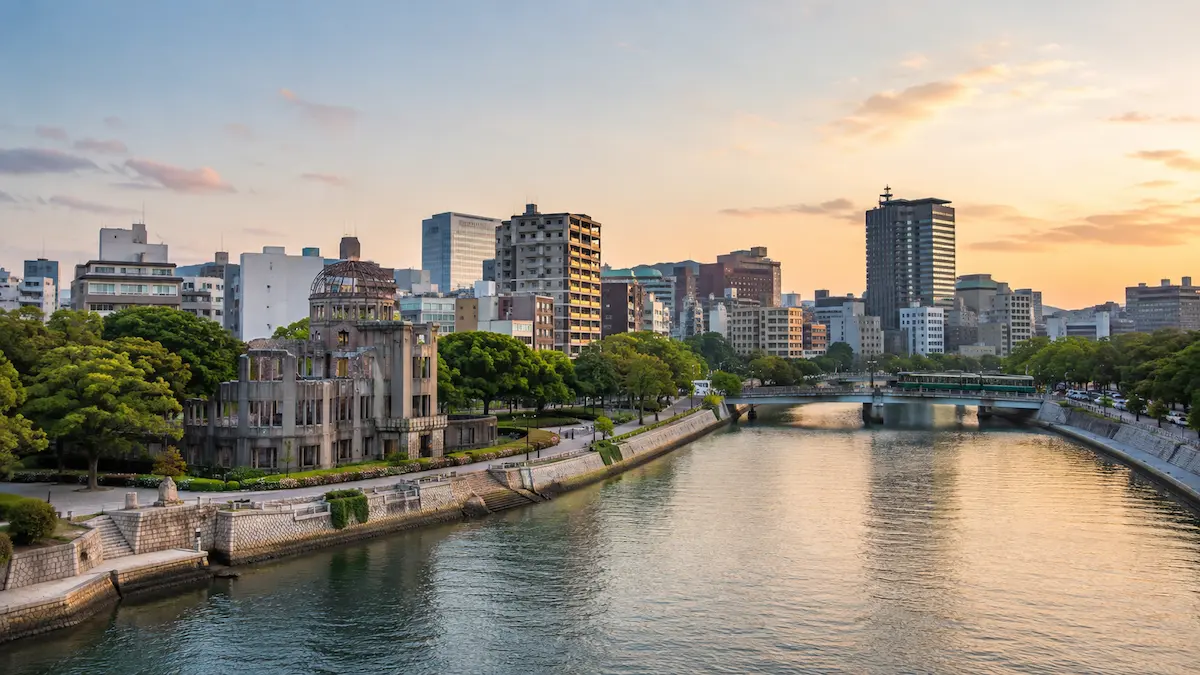
This broad downtown zone is the safest recommendation for most travellers asking where to stay in Hiroshima. Hatchobori sits near department stores, tram junctions and the entrance to the restaurant-heavy Shintenchi area. Kamiyacho is closer to Hiroshima Bus Center, Hiroshima Castle and the Atomic Bomb Dome. Hondori links the two with a covered shopping arcade and easy access toward Otemachi and the Peace Memorial Park.
The advantage is not one single landmark—it is the ability to change plans without wasting time. You can visit the museum in the morning, rest at the hotel, shop under cover during rain, walk to dinner, and still have tram and bus options for the station or other parts of the city.
Where to look: The most balanced blocks are around Hatchobori, Tatemachi, Kamiyacho, Hondori and the northern side of Fukuromachi. Staying directly on a main avenue can simplify transport, while a property one or two streets back may be quieter. Kamiyacho is particularly useful for the airport bus via Hiroshima Bus Center and for intercity buses.
Best for: First-time visitors, couples, solo travellers, food-focused trips, rainy-season travel, travellers who like returning to the hotel during the day, and anyone who wants a central base without committing to the nightlife district.
✅ What Other Travelers Say
Visitors commonly value being able to walk to Hondori, Okonomimura, the Peace Memorial area and a wide range of cafes and restaurants. The covered arcade is more useful than it sounds: it provides shade in summer, protection in rain and an easy landmark when you are tired.
Travellers staying in this zone also report that Hiroshima feels compact and manageable. Instead of treating every outing as a transport problem, they can combine sights naturally—Hiroshima Castle, the bus centre, shopping, the riverfront and the Peace Memorial Park can fit into one flexible day.
⚠️ The Catch (Things to Keep in Mind)
Downtown hotels can have smaller rooms for the price, and weekend rates may rise faster than around the station. Some buildings face busy avenues, tram tracks or entertainment streets, so “central” does not always mean quiet. Read recent room-specific reviews, especially if you are a light sleeper.
This area is also less convenient than Hiroshima Station when you have multiple early rail departures. Reaching the station is straightforward, but it is still an extra journey. A couple with one suitcase may barely notice; a family carrying four large cases probably will.
My verdict: This is the best area to stay in Hiroshima for the majority of first-time visitors. Choose Hatchobori for food and energy, Kamiyacho for buses and major sights, or Hondori for the strongest walking balance.
🕊️ Peace Memorial Park, Otemachi and Fukuromachi: Best for Sightseeing, Couples and a Calmer Central Stay
Area tags: Peace Park access · Riverside walks · Quieter nights · Couples · Families
Staying near the Peace Memorial Park gives you a different Hiroshima experience. Mornings are quieter, the rivers soften the city atmosphere, and the main memorial sites are close enough to visit before tour groups build. This is a strong choice for travellers who want to take their time at the museum rather than squeeze it between transport connections.
The area is not isolated. Otemachi and Fukuromachi sit between the park and downtown, so the right hotel can keep you within walking distance of Hondori, restaurants and tram stops. The problem is that accommodation listings often use “Peace Park” broadly. A hotel south or west of the park may be peaceful but less convenient for dinner than one near Fukuromachi or Otemachi.
Where to look: For the best balance, focus on Otemachi, Fukuromachi, Nakamachi and the east or south-east side of the park. Tokaichi and Honkawa-cho can offer better value and a more residential feel north-west of the Atomic Bomb Dome, but you may walk farther for a broad restaurant selection.
Best for: Couples, families, mature travellers, architecture and history visitors, anyone who appreciates riverside walks, and people who prefer calm nights without staying far from the centre.
✅ What Other Travelers Say
Guests often highlight the emotional and practical value of walking to the Peace Memorial Park early or returning near sunset. The riverside setting also makes the area feel less commercial than Hatchobori, while still remaining central enough for a short stay.
Travellers who dislike crowded public transport appreciate being able to cover the Atomic Bomb Dome, museum, Orizuru Tower, Hondori and central riverside areas on foot. Hotels here can also provide attractive views, particularly from upper floors facing the park or river.
⚠️ The Catch (Things to Keep in Mind)
The park itself becomes very quiet at night, and some blocks have fewer late dinner choices than the map suggests. A cheap hotel west or south of the park may require a 10- to 20-minute walk each way for the restaurants you actually want. This is manageable in good weather but less appealing in heavy rain, humid summer evenings or with young children.
The museum experience can also be emotionally demanding. Some travellers prefer not to see the park directly from their room or pass it every time they leave the hotel. That is a personal consideration rather than a location flaw, but it is worth thinking about.
My verdict: Choose the Peace Park area when calm surroundings and walkable sightseeing matter more than nightlife. Fukuromachi and eastern Otemachi offer the best compromise; the far side of the park is quieter but less useful after dinner.
🌙 Nagarekawa and Shintenchi: Best for Nightlife, Izakayas and Late Dinners
Area tags: Nightlife · Okonomiyaki · Bars · Late dining · Adults and solo travellers
Nagarekawa is Hiroshima’s best-known entertainment district, while Shintenchi connects it to Hatchobori and the famous Okonomimura building. This is where to stay when dinner is part of the itinerary rather than something you fit in after sightseeing. Izakayas, cocktail bars, ramen shops and late-night food are concentrated within a small area, and you can walk home after an evening out.
It is also more practical than many nightlife districts in larger Japanese cities. You remain close to Hatchobori trams, Hondori shopping and the central sightseeing zone. A hotel on the outer edge can give you easy access without placing your room directly above the busiest streets.
Where to look: The blocks closer to Hatchobori, Ebisu-cho, Shintenchi or the northern edge of Nagarekawa offer the best balance. Deeper streets around Yagenbori are livelier and may feel more adult-oriented. Check Street View and the hotel entrance before booking if that atmosphere matters to you.
Best for: Solo travellers, couples who enjoy nightlife, food lovers, groups of friends, repeat visitors and anyone who dislikes ending the evening early because of transport.
✅ What Other Travelers Say
Travellers praise the density of food and the freedom to choose a restaurant spontaneously. Instead of planning dinner reservations around the last convenient ride, you can explore several streets, queue for okonomiyaki, move to a small bar and walk back to the hotel.
Many guests also find business hotels here surprisingly good value for such a central location. Competition is high, and properties may include baths, breakfast or larger public facilities at rates lower than trendier central hotels.
⚠️ The Catch (Things to Keep in Mind)
Noise is the obvious risk, but it is not the only one. Smoking environments, late-night voices, delivery activity and adult-entertainment signage may affect your impression of the area. Hiroshima is generally easy to navigate, yet some families and solo travellers simply feel more comfortable staying one or two blocks outside the core.
Hotel quality varies. A low rate can reflect an older property, small room, central air-conditioning, limited soundproofing or former smoking-room inventory. Read the newest negative reviews before treating a bargain as a win.
My verdict: Stay here when you actively want nightlife. Otherwise, choose Hatchobori or Fukuromachi and walk in for dinner—you will keep most of the convenience with fewer sleep risks.
⛩️ Miyajima Island and Miyajimaguchi: Best for a Ryokan Night, Romance and Early Island Access
Area tags: Ryokan experience · Onsen · Scenic stay · Early mornings · Slow travel
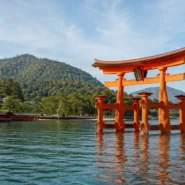
Miyajima is the emotional splurge option. During the day, the island can be crowded around the ferry terminal, Omotesando shopping street and Itsukushima Shrine. In the evening, many day-trippers leave, shutters come down, deer wander through quieter streets and the illuminated waterfront feels entirely different.
An island ryokan stay works best when the accommodation itself is part of the plan: kaiseki dinner, public or private bath, tatami room, sea view and time to see the shrine at different tides. Miyajimaguchi, on the mainland, offers a more practical version of the same geography. You can stay near JR Miyajimaguchi Station and the ferry terminals, cross early, then continue by train without paying island ryokan prices.
Where to look: On Miyajima, accommodation near the ferry pier is easiest with luggage; properties closer to Daisho-in or higher on the slope can be more atmospheric but may require a shuttle. At Miyajimaguchi, prioritise walking distance to both the JR station and ferry terminal rather than a sea-view claim from farther along the coast.
Best for: Honeymoons, anniversaries, couples, slow travellers, photographers, ryokan first-timers, visitors hiking Mount Misen and anyone willing to split their stay between Hiroshima city and the island.
✅ What Other Travelers Say
The most repeated positive is the contrast after the crowds leave. Overnight guests value quiet walks, evening views of the torii gate, early access to the shrine area and the feeling of experiencing Miyajima as a place rather than a rushed day trip.
Guests also speak highly of the complete ryokan experience when dinner and breakfast are included. The higher price can make sense because it replaces accommodation, two substantial meals and part of the evening’s entertainment.
⚠️ The Catch (Things to Keep in Mind)
Miyajima is not a smart base for repeated Hiroshima city sightseeing. Reaching the city requires a ferry plus train or tram journey, and dinner flexibility is limited once day businesses close. Missing a meal time at a ryokan can be a serious problem because multi-course dinners are prepared to a schedule.
Large luggage is another source of friction. Ferry boarding is easy, but the island has slopes, textured paths and accommodation that may not be beside the pier. Confirm shuttle times and luggage storage before arrival. The ferry crossing itself takes about 10 minutes from Miyajimaguchi, but the full journey from Hiroshima Station includes the local train and transfer walk.
My verdict: Spend one night on Miyajima if your budget allows and the island experience matters to you. For most itineraries, pair it with one or two nights in downtown Hiroshima or near the station. Choose Miyajimaguchi instead when you want early access and lower prices without committing to a ryokan.
How I Would Choose for Different Hiroshima Itineraries
One night, arriving and leaving by Shinkansen: Stay at Hiroshima Station. The time and energy saved on baggage handling outweigh the weaker nightlife location.
Two nights, first visit, Peace Park plus Miyajima: Stay around Hatchobori, Kamiyacho or Hondori. You get a pleasant evening base and can reach both the Peace Memorial area and Hiroshima Station without excessive effort.
Three nights with food, shopping and relaxed sightseeing: Choose Hatchobori or Fukuromachi. You will make fewer unnecessary transport trips and have better evening flexibility.
Three nights with Onomichi, Iwakuni or other rail day trips: Stay near Hiroshima Station, preferably with direct station access or a genuinely short walk.
Romantic trip or special occasion: Combine downtown Hiroshima with one night on Miyajima. This split stay creates a stronger experience than spending the entire trip in either place.
Family with children and several suitcases: Choose Hiroshima Station for simple logistics, or a quiet Fukuromachi/Otemachi hotel near a direct tram stop. Avoid the core of Nagarekawa unless recent family reviews specifically reassure you.
Solo traveller focused on food and nightlife: Stay on the edge of Nagarekawa near Hatchobori. You can walk home while keeping straightforward daytime transport.
Key FAQs
What is the best area to stay in Hiroshima for first-time visitors?
Hatchobori, Kamiyacho and Hondori form the best all-round area for a first visit. You can walk to major restaurants, shopping and parts of the Peace Memorial zone, while trams and buses connect you to Hiroshima Station. Hatchobori suits food and nightlife; Kamiyacho suits buses, Hiroshima Castle and the Atomic Bomb Dome; Hondori gives the best pedestrian balance.
Is it better to stay near Hiroshima Station or the Peace Memorial Park?
Stay near Hiroshima Station when you have large luggage, an early train, a one-night stop or several rail day trips. Stay near the Peace Memorial Park when your priority is walking to central sights, enjoying calmer riverside surroundings and avoiding repeated daytime transport. For a two- or three-night first visit, the middle ground around Hondori, Otemachi or Fukuromachi is often better than either extreme.
Should I stay overnight on Miyajima or visit as a day trip from Hiroshima?
A day trip is enough to see Itsukushima Shrine, the shopping street and some of Mount Misen, but an overnight stay is better for quiet evening and early-morning atmosphere. One night is usually the sweet spot. Stay in Hiroshima city if restaurant choice, budget and onward transport matter more; stay on Miyajima when the ryokan experience is a major part of your trip.
Useful Official Checks Before You Travel
- Check the current Hiroshima Electric Railway route map before choosing a hotel based on a tram stop.
- Check Hiroshima Airport limousine bus times for Hiroshima Station and Hiroshima Bus Center.
- Check the JR Miyajima Ferry timetable, especially for early or late crossings.
- Review current access options between Hiroshima Station and Peace Memorial Park.
Final Verdict and Your Next Step
For most first-time visitors, Hatchobori, Kamiyacho and Hondori are the best areas to stay in Hiroshima. They reduce daily walking and transport friction without trapping you in a purely tourist-focused zone. Choose Hiroshima Station when luggage, early departures or regional rail trips dominate your itinerary. Choose the Peace Park side for calm, Nagarekawa for nightlife, and Miyajima for one memorable experience night rather than as your default city base.
Before booking, zoom in on the exact entrance, identify the nearest usable tram or bus stop, and read recent reviews specifically about noise and luggage access. Two hotels with the same “central Hiroshima” label can produce very different trips.
Good-value rooms in the most convenient blocks often disappear before cheaper but awkwardly located properties. Compare cancellation terms and total prices now:
- Compare Hiroshima hotels on Agoda
- Check Hiroshima availability on Booking.com
- Book Hiroshima and Miyajima activities on Klook
- Compare Hiroshima tours and transport options on KKday
My final recommendation: Book a refundable downtown hotel first if your dates are fixed but your itinerary is not. You can always switch later if a station hotel or Miyajima ryokan better matches your final plan—but waiting until the best central options are gone usually costs more time, more walking or more money.