



💡 Key Takeaways
- Kintetsu-Nara Station is usually the smarter arrival point for Nara Park. It is roughly an 8-minute walk from the park, while JR Nara Station is around 20 minutes away on foot.
- Do not confuse a Kintetsu Express with a Limited Express. An ordinary Express needs only the base fare; a Limited Express requires an extra ticket, and the Kintetsu Rail Pass does not cover that surcharge.
- Most first-time day-trippers do not need an unlimited pass. Pay-as-you-go with an IC card is often cheaper unless your plan includes several bus rides, Nishinokyo, Horyuji, or multiple Kintetsu journeys.
Transport times, fares and pass prices in this Nara transportation guide were checked in August 2026. Timetables and promotional products can change, so confirm your final departure on the operator’s website before travel.
A first visit to Nara looks simple on a map: take a train, meet the deer, see Todai-ji and go home. The reality becomes less tidy when Google Maps offers two different Nara stations, several train types with similar English names, buses that use different boarding doors, and passes that sound economical before you calculate what they actually cover.
This Nara transportation guide focuses on the decisions that affect your feet, luggage, time and budget. The most important choice is not simply “JR or Kintetsu.” It is where you are starting, where you want to finish, whether you are carrying bags, and whether your sightseeing stays inside the compact Nara Park core or reaches temples farther west and south.
The 1-Min Cheat Sheet
- From Osaka-Namba: Take a Kintetsu Rapid Express or Express to Kintetsu-Nara. It is direct, normally about 35–40 minutes, costs around ¥680 one way, and leaves you closer to Nara Park.
- From Osaka/Umeda or Tennoji: Take the JR Yamatoji Rapid to JR Nara. It is direct from Osaka Station in about 50 minutes and convenient when you are already using JR or staying near a JR station.
- From Kyoto Station: Choose JR Miyakoji Rapid for the simplest JR route, especially with a JR pass; choose Kintetsu when arriving closer to Nara Park matters more. Some ordinary Kintetsu Express services require a change at Yamato-Saidaiji, so check the destination board.
- Inside central Nara: Walk between Kintetsu-Nara, Kofuku-ji, Nara Park, Todai-ji, Kasuga Taisha and Naramachi when the weather and your mobility allow. Buses are more useful for saving energy after a long day than for every short hop.
- For Nishinokyo, Horyuji or limited mobility: Use Nara Kotsu buses, a local bus pass, or a taxi. These are the cases where paying for transport can save meaningful time and walking rather than merely replacing a pleasant ten-minute stroll.
Top Survival Tips
1. Decide between Kintetsu-Nara and JR Nara before choosing a train
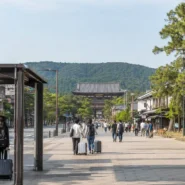
The two stations are not interchangeable entrances to the same place. Kintetsu-Nara sits near the eastern end of the city centre and is about an 8-minute walk from Nara Park. JR Nara is farther west, around 20 minutes on foot from the park, although the bus connection is straightforward.
Choose Kintetsu-Nara when your priority is Nara Park, Todai-ji, Kofuku-ji, Kasuga Taisha or Naramachi and you are starting near Osaka-Namba or a convenient Kintetsu connection.
Choose JR Nara when you hold a valid JR pass, start near Osaka Station or Tennoji, want a direct JR ride from Kyoto, or need onward JR connections toward Horyuji, Sakurai or other parts of Nara Prefecture.
The mistake to avoid is blindly following the first “Nara” result on a route app. Check whether the destination says Kintetsu-Nara or Nara (JR), then compare the total door-to-door journey, including the walk or bus after arrival.
2. “Express” and “Limited Express” are not the same ticket
On Kintetsu, an ordinary Express or Rapid Express can be ridden with a normal base-fare ticket or IC card. A Limited Express has reserved seating and requires an additional Limited Express ticket. This distinction catches visitors because “Express” sounds as though a supplement should be required, but it is the word “Limited” that changes the ticket rules.
From Kyoto, the Limited Express can reduce travel time and guarantee a seat, which is useful with children, older travellers or luggage. For a normal day trip, however, it often saves only a modest amount of time compared with a regular Express. Do not pay the surcharge automatically just because the train looks more comfortable on the booking screen.
The sightseeing Limited Express AONIYOSHI is an experience rather than a budget shortcut. It can be worth reserving for the atmosphere, pairs of seats and a special journey, but it should be treated as an attraction with limited departures, not the default way to reach Nara.
3. Calculate a pass against the trips you will really take
The Kintetsu Rail Pass 1day costs ¥1,900 for an adult and covers designated Kintetsu lines between Osaka, Kyoto and Nara plus designated Nara Kotsu bus zones. A normal Osaka-Namba–Kintetsu-Nara return is about ¥1,360, so the pass does not pay for itself on the train ride alone. You still need roughly ¥540 of covered bus or extra Kintetsu travel before the pass begins to make financial sense.
A Kyoto–Kintetsu-Nara return is about ¥1,520 on ordinary trains, so the gap is smaller. The pass can become worthwhile when you add several covered bus trips, Nishinokyo, or another Kintetsu journey. It is still not automatically the best choice, particularly if your route home uses JR or another railway.
The Nara Kotsu local bus passes are more targeted: the standard 1-Day Pass is ¥600, the 1-Day Pass Wide is ¥1,100, and the 2-Day Pass is ¥1,650. The ¥600 pass is sensible when your plan includes several bus rides or Nishinokyo temples. It is usually unnecessary for a simple Kintetsu-Nara–Nara Park visit where most attractions are reached more naturally on foot.
A useful rule: buy a pass for a planned route, not for the emotional comfort of “unlimited rides.” Unlimited travel is poor value when the best sightseeing route is mostly walking.
4. Learn the bus door and payment pattern before boarding
Nara Kotsu operates both front-boarding and rear-boarding buses. On a front-boarding bus, you normally pay or tap when entering. On a rear-boarding bus, you enter at the back and pay or tap when leaving at the front. Look at the door signs and follow local passengers instead of assuming every bus works the same way.
An IC card removes most of the cash stress. With cash, carry small notes and coins: fare boxes do not give change, although many buses have a change machine, and notes above ¥1,000 may not be accepted. Press the stop button when your stop is announced; the bus will not necessarily stop just because a tourist attraction is nearby.
5. Do not drag luggage through Nara Park unless your itinerary requires it
Nara is practical as a stop between Kyoto and Osaka, but only when your bags are stored. Both main stations have lockers, and Kintetsu-Nara is particularly convenient for a park-focused stop. Locker availability can tighten on weekends, public holidays, cherry-blossom season and autumn foliage dates, so arrive early or have a backup luggage-storage location saved.
If you are staying overnight, luggage forwarding is often better than carrying a full suitcase through stations and buses. Send large bags to your next hotel and keep one small overnight bag. This costs money, but it can save far more energy than any local transport pass.
6. Use the correct station side for buses and information
At JR Nara Station, most sightseeing buses use the East Exit. At Kintetsu-Nara, bus stops are spread along the streets outside the station, so check the stop number rather than waiting at the first shelter you see. The Nara Kotsu information centre is reached from the west ticket gate and Exit 5, which is useful when you need a paper map or want to buy a bus pass.
For Nara Park from Kintetsu-Nara, walking is often faster than searching for the perfect bus stop. Save the bus for Todai-ji, Kasuga Taisha, the return journey, bad weather or tired legs.
7. From Kansai Airport, remember that “Nara” is not a direct Haruka ride
The discounted WEST QR HARUKA one-way product lists Nara as a valid destination, but the Haruka itself does not run directly into JR Nara Station. The practical route is Haruka to Tennoji followed by a JR Yamatoji service to Nara. The official Nara fare for the eligible product is ¥1,800 for an adult, but eligibility and purchase restrictions apply to temporary visitors, and the ticket requires a smartphone connection.
With heavy luggage, compare this with an airport limousine bus if one matches your date and destination. A train transfer may be faster and more frequent, while a bus can be physically easier. Never book an airport product based only on the headline destination; check the number of transfers and the final stop.
8. Build a route that moves east, then returns west
A low-backtracking central Nara route is: Kintetsu-Nara or JR Nara → Kofuku-ji → Nara Park → Todai-ji → Nigatsu-do → Kasuga Taisha → Naramachi → station. Starting early lets you cover the farthest eastern sights while your legs are fresh, then finish around restaurants and shops closer to the stations.
When energy drops, take a bus or taxi back from the Kasuga Taisha or Todai-ji area. This is a better use of money than riding a bus for the short outward journey and then discovering that the final return walk is the hardest part of the day.
The Full Experience
🚆 Kintetsu Trains: Best for Osaka-Namba and the Shortest Walk to Nara Park
Closest station to Nara Park · Direct from Osaka-Namba · IC card friendly · Limited Express costs extra
Kintetsu is the default recommendation for many day-trippers because the railway finishes at Kintetsu-Nara, the more convenient station for the park and historic core. From Osaka-Namba, Rapid Express and Express services are frequent, direct and normally take about 35–40 minutes. The ordinary one-way fare is around ¥680.
From Kyoto, Kintetsu offers ordinary Express trains and reserved Limited Express services. Ordinary services cost around ¥760 and commonly take about 45–50 minutes; some are direct, while others require a change at Yamato-Saidaiji. Limited Express services can take roughly 35 minutes but require both the base fare and the Limited Express surcharge.
Kintetsu is also useful when Nara is a stop between Kyoto and Osaka because the network connects both cities through Nara. Store your bags, explore, then continue without returning to your starting city. This one-way itinerary is often more efficient than treating Nara as an out-and-back day trip.
✅ What Other Travelers Say
Travellers repeatedly value the station location more than a small difference in train time. The short walk to the park is especially noticeable at the end of the day, and visitors using Nara as a Kyoto-to-Osaka stop often praise the locker facilities and the ability to continue through the Kintetsu network.
⚠️ The Catch (Things to Keep in Mind)
The JR Pass does not work on Kintetsu. A Kintetsu Rail Pass also does not include Limited Express surcharges. At Kyoto Station, confirm that you are at the Kintetsu platforms rather than the JR Nara Line platforms, and check whether your train is direct or requires a transfer at Yamato-Saidaiji.
Official details: Kintetsu Railway and Kintetsu Rail Pass 1day.
🚉 JR Trains: Best for JR Pass Holders, Osaka/Umeda and Simple Kyoto Departures
Covered by eligible JR passes · Direct from Osaka Station · Direct Miyakoji Rapid from Kyoto · Longer walk to Nara Park
JR is not the inferior option; it is the better option for a different starting point. From Osaka Station, the Yamatoji Rapid runs directly to JR Nara in around 50 minutes and costs about ¥820. From Tennoji, the ride is shorter. This avoids crossing Osaka to reach Namba merely to use Kintetsu.
From Kyoto Station, the JR Miyakoji Rapid reaches JR Nara in roughly 45 minutes for about ¥720. It is easy to understand, normally direct and useful for travellers already inside the JR system. Avoid boarding a local service unless the timetable suits you: local trains stop more frequently and can take considerably longer.
JR Nara Station has a large, clear station building, tourist information and bus stops at the East Exit. The trade-off is location. Walking to Nara Park takes around 20 minutes, so people with limited mobility, young children or summer luggage should take a bus or taxi rather than treating the distance as negligible.
✅ What Other Travelers Say
JR users like the simplicity of staying within one railway company and the direct trains from Osaka Station and Kyoto. Travellers with regional JR passes appreciate not paying a separate fare, and many find the JR station easier when connecting onward to other JR destinations.
⚠️ The Catch (Things to Keep in Mind)
The station-to-park distance can erase the small fare advantage from Kyoto if you then pay for buses both ways. JR Nara and Kintetsu-Nara are separate stations about 15 minutes apart on foot, so do not arrange a meeting at “Nara Station” without naming the railway.
Official details: JR-West Nara information and JR-West Kansai Area Pass.
🚌 Nara Kotsu Buses: Best for Nishinokyo, Horyuji, Heat and Tired Legs
Best for outer temples · IC cards accepted · Several tourist passes · Front or rear boarding
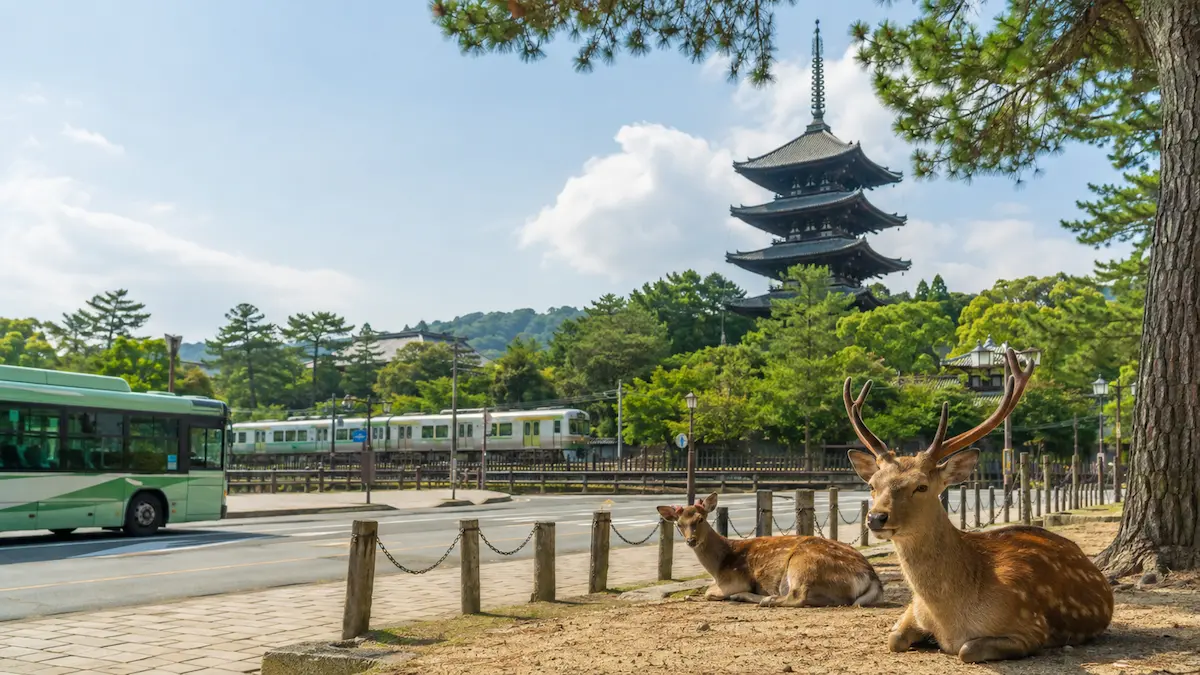
Nara’s bus network is more valuable than it first appears, but not always for the obvious reason. Around Nara Park, traffic and crowds can make a short bus hop slower than walking. The buses become genuinely useful when you are heading to Kasuga Taisha after a long morning, visiting Yakushiji and Toshodaiji in Nishinokyo, travelling to Horyuji, or protecting your energy in summer heat and rain.
The standard Nara Bus 1-Day Pass costs ¥600 and covers Nara Park, Naramachi, Nishinokyo and other city areas. The ¥1,100 Wide pass extends to Horyuji and nearby Ikaruga sights. The ¥1,650 two-day pass reaches a much broader area including Asuka and several southern destinations. The larger passes are only good value when your itinerary actually uses their outer zones.
Bus stop numbers matter. Around Kintetsu-Nara, stops are distributed on different sides of the road, and buses with similar-looking displays may travel in opposite directions. Use the official Nara Bus Navi route search, verify the destination shown on the front of the bus and arrive with enough time to find the correct stop.
✅ What Other Travelers Say
Visitors appreciate the buses most when they prevent a long return walk or connect temples that are awkward on foot. Travellers with children and older family members often find that one carefully chosen bus ride improves the entire day more than trying to maximise the number of attractions.
⚠️ The Catch (Things to Keep in Mind)
Central buses can be crowded, delayed by traffic and confusing at first because boarding and payment differ by vehicle. A pass must be shown correctly and should not be dropped into the fare box. If you travel beyond the covered zone, you are responsible for the extra fare.
Official details: Nara Bus Pass, How to ride Nara Kotsu buses, and Nara Bus Navi.
🚶 Walking, Cycling and Taxis: Best for the Park Core and Flexible Sightseeing
Best for central Nara · No timetable stress · E-bikes help on wider routes · Taxis save the final walk
Central Nara rewards walking because the spaces between attractions are part of the experience. The route from Kintetsu-Nara through Kofuku-ji and into Nara Park is easy to follow, while the paths around Todai-ji, Nigatsu-do and Kasuga Taisha reveal gardens, lanterns, deer and quieter corners that a bus cannot show.
The danger is underestimating the total distance. A full park day can involve well over 15,000 steps, and the eastern side rises gently toward Kasuga Taisha and Mount Wakakusa. Comfortable shoes, water and a route that avoids backtracking matter more than shaving five minutes off the train journey.
Rental bicycles, especially electric-assist models, are useful for Heijo Palace Site, Nishinokyo or a wider city loop. They are less useful inside the most crowded deer and temple areas, where walking is safer and parking rules can interrupt the flow. Check where bicycles may be parked before setting off.
Taxis are not a failure of planning. A short taxi from Kasuga Taisha, Todai-ji or a hotel to the station can rescue tired legs, keep a dinner reservation and prevent a stressful bus search. Taxi ranks are normally found outside JR Nara, Kintetsu-Nara and around major park locations, although availability can tighten during rain and peak weekends.
✅ What Other Travelers Say
Many visitors remember Nara as a walking day rather than a transport day. The favourite moments are often on the paths between the headline sights. Travellers who start early and move steadily usually prefer walking outward, then using a bus or taxi only when their energy drops.
⚠️ The Catch (Things to Keep in Mind)
The park is much larger than the cluster of deer near the entrance suggests. Heat, humidity, rain and uneven paths can turn an ambitious route into a tiring one. Travellers with wheelchairs, strollers or limited mobility should check accessible approaches for individual temples and budget for taxis where bus stops are not close enough.
Which Nara Pass Is Actually Worth Buying?
Kintetsu Rail Pass 1day: worth it for a route, not a return ticket
Buy it when: you are travelling between Osaka or Kyoto and Nara, will use multiple covered Nara buses, and perhaps add Nishinokyo, Horyuji or another Kintetsu ride.
Skip it when: your day is simply Osaka-Namba → Kintetsu-Nara → Nara Park on foot → Osaka-Namba. Normal fares are cheaper.
Nara Bus 1-Day Pass: useful for three or more meaningful rides
Buy it when: your route includes Nishinokyo, repeated bus use around the park, or you know that walking limitations will make several rides necessary.
Skip it when: you arrive at Kintetsu-Nara, walk the central sights and take only one bus back.
JR Kansai Area Pass: only for a wider Kansai plan
Buy it when: Nara is one part of several days of eligible JR travel, particularly when you also use the Haruka airport train or make longer JR journeys within the coverage area.
Skip it when: you are trying to justify it with a single Kyoto–Nara or Osaka–Nara return. A normal ticket or IC card is simpler and usually cheaper.
IC card: the best default for most visitors
ICOCA, Suica, PASMO and other compatible nationwide IC cards can be used on the main JR and Kintetsu routes and on Nara Kotsu buses. An IC card does not normally provide a fare discount, but it prevents ticket-machine confusion and lets you mix operators without committing to a pass.
Keep enough stored value for the full trip and remember that an IC card covers only the base fare on a Kintetsu Limited Express. The reserved-seat surcharge remains separate.
Suggested Routes for Common First-Time Itineraries
Half-day Nara from Osaka-Namba
Take an early Kintetsu Rapid Express to Kintetsu-Nara. Walk to Kofuku-ji, Nara Park and Todai-ji, then return through Higashimuki or Naramachi. Use normal fares and an IC card; a pass is unlikely to pay off.
Full day from Kyoto with a JR pass
Take the JR Miyakoji Rapid to JR Nara, then a bus from the East Exit to the Todai-ji or Kasuga Taisha area. Walk west through the park, Kofuku-ji and Naramachi before returning to JR Nara. The JR pass covers the intercity train, but local buses require separate payment unless another valid product covers them.
Nara between Kyoto and Osaka with luggage
Use Kintetsu from Kyoto to Kintetsu-Nara, store your luggage, explore the park and continue to Osaka-Namba in the evening. This removes unnecessary backtracking. Reserve a locker backup or luggage-storage location, especially on weekends.
Nara Park plus Nishinokyo temples
Start at Nara Park early, then use a bus or Kintetsu local connection toward Nishinokyo for Yakushiji and Toshodaiji. This is a case where the ¥600 bus pass or the Kintetsu 1-day pass may become useful, depending on your starting city and exact return route.
Arrival from Kansai Airport
Use the Haruka to Tennoji and transfer to a JR Yamatoji service for JR Nara, or compare a limousine bus if it matches your schedule and luggage needs. Do not assume a ticket labelled for Nara means a direct airport train. If your hotel is near Kintetsu-Nara, add the final walk, bus or taxi when comparing options.
Key FAQs
What is the best train station for Nara Park: JR Nara or Kintetsu-Nara?
Kintetsu-Nara is usually best for Nara Park because it is roughly an 8-minute walk away, compared with about 20 minutes from JR Nara. JR Nara can still be the better overall choice when you start near a JR station, hold a JR pass or need onward JR connections.
Is the Kintetsu Rail Pass worth it for a Nara day trip from Osaka?
Not for a basic Osaka-Namba return alone. The ordinary return fare is about ¥1,360, below the ¥1,900 pass price. It becomes worthwhile only when you add enough covered bus rides or other Kintetsu journeys to close the difference.
Can I use Suica, PASMO or ICOCA on Nara trains and buses?
Yes, compatible nationwide IC cards work on the main JR and Kintetsu routes and Nara Kotsu buses. They cover ordinary base fares, but a Kintetsu Limited Express still needs a separate reserved-seat ticket.
Final Verdict and Your Next Step
For most first-time visitors, the smartest Nara transport plan is simple: use Kintetsu from Osaka-Namba, use JR when it fits your hotel location or an existing JR pass, walk the central park route, and pay for a bus or taxi only when it saves real effort. The best pass is often no pass at all.
Choose the station before choosing the train. Choose the route before choosing the pass. And if Nara sits between Kyoto and Osaka, treat it as a one-way stop with stored luggage rather than wasting time returning to the city you just left.
For peak weekends, cherry-blossom season, autumn foliage and Japanese public holidays, book your hotel, special train or guided transport early. Limited Express seats and well-located Nara hotels can disappear long before ordinary local trains become a problem.
- Check the Kintetsu Rail Pass only after calculating your route: Book the Kintetsu Rail Pass on Klook
- Compare the same pass and cancellation terms: Book the Kintetsu Rail Pass on KKday
- Prefer a guided day without train and bus decisions: Check Kyoto and Nara day tours on Klook
- Stay overnight to enjoy the park before day-trippers arrive: Compare Nara hotels on Agoda or compare Nara hotels on Booking.com