
💡 Key Takeaways
- Sakuragicho is the best all-round base for a first Yokohama trip because it combines JR access, a walkable route into Minato Mirai and easy evening dining in Noge.
- Yokohama Station is the smartest choice for day trips to Tokyo, Kamakura and beyond, but it is a huge transport hub and not the most atmospheric place to stay.
- Minato Mirai is best for waterfront views, families and a polished stay, although room rates are higher and the district is more spread out than it looks on a map.
- Kannai and Bashamichi usually offer the best balance of price and sightseeing access, but the feel changes noticeably from one block to the next.
- Do not book Shin-Yokohama simply because it contains the word “Yokohama.” Stay there mainly for the Shinkansen, Yokohama Arena or Nissan Stadium.
Deciding where to stay in Yokohama is harder than it first appears. The main sights are close together on a city map, yet the wrong hotel can leave you dragging luggage through a giant station, crossing elevated walkways, or making an unnecessary train transfer every morning. Yokohama Station, Minato Mirai, Sakuragicho, Kannai and Chinatown are all marketed as “central,” but they serve very different trips.
The most important question is not which area has the largest number of attractions. It is whether you need fast regional trains, a short walk to the waterfront, late-night food, a quieter hotel, or the lowest reasonable room rate. This guide makes those trade-offs explicit, including the drawbacks that hotel descriptions tend to hide.
Price note: The room-rate bands below are practical planning estimates for a standard double room, based on live booking pages checked in August 2026. They are not fixed quotes. Fridays, Saturdays, public holidays, baseball games, concerts and major events can push Yokohama prices sharply higher.
The 1-Minute Cheat Sheet
- Sakuragicho — best overall for first-time visitors: Walkable to Minato Mirai, direct JR access and plenty of food nearby. Typical planning range: ¥10,000–¥22,000. The east side is calmer and more convenient for the waterfront; the west side leads into lively Noge.
- Yokohama Station — best for transport and day trips: The strongest rail connections, convenient access from Haneda and the easiest base for Tokyo or Kamakura excursions. Typical planning range: ¥12,000–¥28,000. The station is enormous, so “five minutes away” can be misleading.
- Minato Mirai — best for views, families and couples: Modern hotels, malls, museums and a beautiful waterfront. Typical planning range: ¥16,000–¥38,000+. It is attractive but expensive, and distances between landmarks are longer than they look.
- Kannai and Bashamichi — best value near major sights: Walkable to Yokohama Stadium, Chinatown, the Red Brick Warehouse and the historic waterfront. Typical planning range: ¥8,000–¥20,000. Hotel quality and nighttime atmosphere vary by street.
- Chinatown, Motomachi and Yamashita Park — best for food and character: A memorable local atmosphere, excellent evening walks and easy access to the Minatomirai Line. Typical planning range: ¥10,000–¥27,000. It is less convenient for JR-heavy itineraries.
- Shin-Yokohama — best for the Shinkansen and arena events: Practical for early bullet trains, Yokohama Arena and Nissan Stadium. Typical planning range: ¥8,000–¥20,000, except on event nights. It is not the scenic Yokohama most visitors imagine.
Top Survival Tips Before You Book
- Measure the route from the correct station exit, not the station pin. Yokohama Station is a multi-operator complex with long underground passages. A hotel that appears 300 metres away may involve ten minutes of indoor navigation, stairs, crowds and a road crossing. Check the hotel’s nearest exit and whether that exit has an elevator.
- Choose your railway before choosing your hotel. JR is usually more useful for Tokyo, Kamakura and longer regional trips. The Minatomirai Line is better for Minato Mirai, Bashamichi, Nihon-odori and Motomachi-Chukagai, and it continues directly toward Shibuya on many services. The Blue Line is especially useful between Shin-Yokohama, Yokohama, Sakuragicho and Kannai.
- Do not confuse Shin-Yokohama with central Yokohama. Shin-Yokohama is the city’s Shinkansen gateway, but it is inland and separate from the classic waterfront. This matters because a low room price can be cancelled out by repeated travel to Minato Mirai and Chinatown.
- Check which side of Sakuragicho Station you are booking. The east side faces Minato Mirai and is better for families, views and quieter evenings. The west side leads toward Noge, which is excellent for izakaya hopping but can be noisy and crowded late at night.
- Treat “waterfront hotel” as a location category, not a promise of a short walk. Minato Mirai is spacious, with broad roads, malls, conference venues and elevated pedestrian routes. A hotel near K-Arena, Pacifico Yokohama or Hammerhead may still be a substantial walk from another waterfront attraction.
- Look at the final 500 metres with luggage in mind. A flat covered walkway is very different from an exposed bridge, an underground platform and two elevator queues. This is especially important in humid summer weather, heavy rain or when travelling with children.
- Check the event calendar before assuming a hotel is overpriced. Yokohama Arena, Nissan Stadium, K-Arena Yokohama, Pacifico Yokohama and Yokohama Stadium can create sudden demand. On major event nights, book early or compare Kannai, Yokohama Station and Shin-Yokohama rather than paying the first rate you see.
- Do not chase the absolute cheapest room into an inconvenient block. Saving ¥2,000 can be a poor trade if it adds two transfers, a twenty-minute walk or an uncomfortable late-night route. In Yokohama, paying slightly more for the right station often saves more time and energy than upgrading the hotel itself.
The Full Experience: Best Areas to Stay in Yokohama
📍 Sakuragicho: Best Overall for First-Time Visitors
Best for: First visits, waterfront sightseeing, short stays, couples, travellers who want JR access and evening food nearby
Sakuragicho is the most balanced answer for travellers whose main goal is to experience Yokohama rather than use it only as a transport base. From the station’s east side, you can walk toward Landmark Tower, the Nippon Maru, Kishamichi Promenade, Cosmo World and the wider Minato Mirai waterfront. On the west side, Noge provides a completely different evening scene of compact izakaya, yakitori counters, jazz bars and casual restaurants.
Transport is straightforward without being as overwhelming as Yokohama Station. Sakuragicho is served by the JR Negishi Line and the Yokohama Municipal Subway Blue Line. JNTO describes it as roughly two minutes from Yokohama Station and about sixteen minutes from Shin-Yokohama, making it a useful middle ground for both central sightseeing and onward travel.
The location also reduces “dead travel time.” You can start a waterfront walk directly from your hotel, return for a break, and go out again for dinner without planning another train journey. For a one- or two-night Yokohama stay, that convenience is difficult to beat.
Where exactly to book: Choose the east or southeast side of the station for the smoothest route to Minato Mirai and a calmer nighttime atmosphere. Choose the west side only when easy access to Noge nightlife is a priority. Hotels around Cross Gate, Colette Mare and the station-front pedestrian routes are especially practical for reducing street crossings.
Typical hotel feel and price: Expect a mix of efficient business hotels, mid-range city hotels and rooms with harbour-facing views. A realistic planning range is around ¥10,000–¥22,000 for a standard double, with view rooms and weekends costing more.
✅ What Other Travelers Say
Guest feedback commonly praises the ability to walk to Minato Mirai while remaining close to JR trains, restaurants and convenience stores. Travellers also like having both a polished waterfront and the more local Noge dining scene within a short distance. Hotels around Sakuragicho are frequently booked because the location works well even for visitors who do not know Yokohama’s transport system.
⚠️ The Catch (Things to Keep in Mind)
The word “Sakuragicho” covers two very different experiences. A room facing the railway or busy roads may have traffic noise, while hotels deeper toward Noge can feel much livelier late at night. Noge is not a place to panic about, but narrow bar streets, smokers and late-night crowds may not suit families seeking a quiet evening. Sakuragicho is also not on the Minatomirai Line, so Chinatown and Motomachi usually require JR, subway or a longer walk.
Good choice for: Most first-time visitors, especially those staying one to three nights.
Skip it if: You need the easiest possible airport connection, have an early Shinkansen, or want a resort-style luxury hotel with every attraction inside the same complex.
📍 Yokohama Station: Best for Transport, Haneda and Day Trips
Best for: Tokyo day trips, Kamakura, Haneda Airport, rail-heavy itineraries, shopping, travellers with limited time
Yokohama Station is the practical winner when your itinerary extends beyond Yokohama. JR services include the Tokaido, Yokosuka, Shonan-Shinjuku and Keihin-Tohoku–Negishi corridors, giving you useful routes toward Tokyo, Shinjuku, Kamakura, Ofuna and other parts of the region. Keikyu lists a typical journey of about 28 minutes between Haneda Airport and Yokohama, making this the easiest central area for many air travellers.
This is also the safest choice for an itinerary that is still changing. You can decide each morning whether to visit central Tokyo, Kamakura, Enoshima or the Yokohama waterfront without being locked into a slow local connection. Shopping and food are abundant inside and around the station, including department stores, underground malls and the Bay Quarter area.
The east side generally works better for visitors who want a smoother connection toward Minato Mirai and the waterfront. The west side has denser dining, shopping and nightlife, but it feels more like a busy commercial centre than a seaside destination. The north side can offer newer hotels and access to K-Arena, although some routes involve elevated walkways and longer-than-expected luggage walks.
Where exactly to book: Do not accept “near Yokohama Station” without checking the named exit. A hotel near the wrong side can require a long underground detour. For airport and JR convenience, a property within five to seven minutes of a clearly identified east, west, north or south exit is more useful than a cheaper hotel ten to fifteen minutes away.
Typical hotel feel and price: The area has modern business hotels, larger international brands and compact rooms above shopping complexes. Plan on roughly ¥12,000–¥28,000 for a standard double, with newer north-side properties and larger rooms costing more.
✅ What Other Travelers Say
Guests consistently value the ability to reach multiple train lines, shops and restaurants without a taxi. Reviews of well-located station hotels often mention easy luggage handling and the convenience of buying food or travel supplies on arrival. The area is especially popular with travellers splitting their time between Yokohama and Tokyo.
⚠️ The Catch (Things to Keep in Mind)
Yokohama Station is busy, complicated and easy to underestimate. Different rail companies have separate gates, and the underground network can be confusing on the first day. The classic attractions are not directly outside the station, so you will still take a train or walk a considerable distance to Minato Mirai, the Red Brick Warehouse or Chinatown. Travellers seeking a romantic waterfront atmosphere may find the area functional rather than memorable.
Good choice for: Travellers taking several regional day trips, arriving late from Haneda, or staying in Yokohama as a lower-key alternative to central Tokyo.
Skip it if: Your whole trip is focused on the waterfront and you want to step outside directly into Yokohama’s most attractive scenery.
📍 Minato Mirai: Best for Waterfront Views, Families and Couples
Best for: Harbour views, family attractions, romantic stays, modern hotels, Pacifico Yokohama and K-Arena events
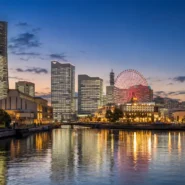
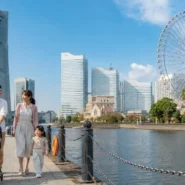
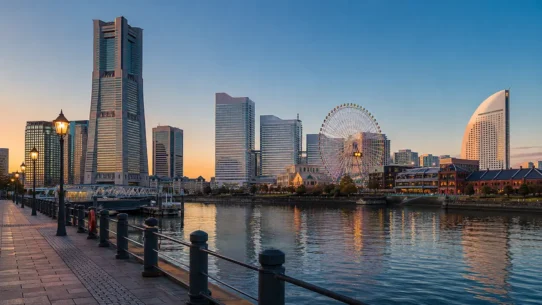
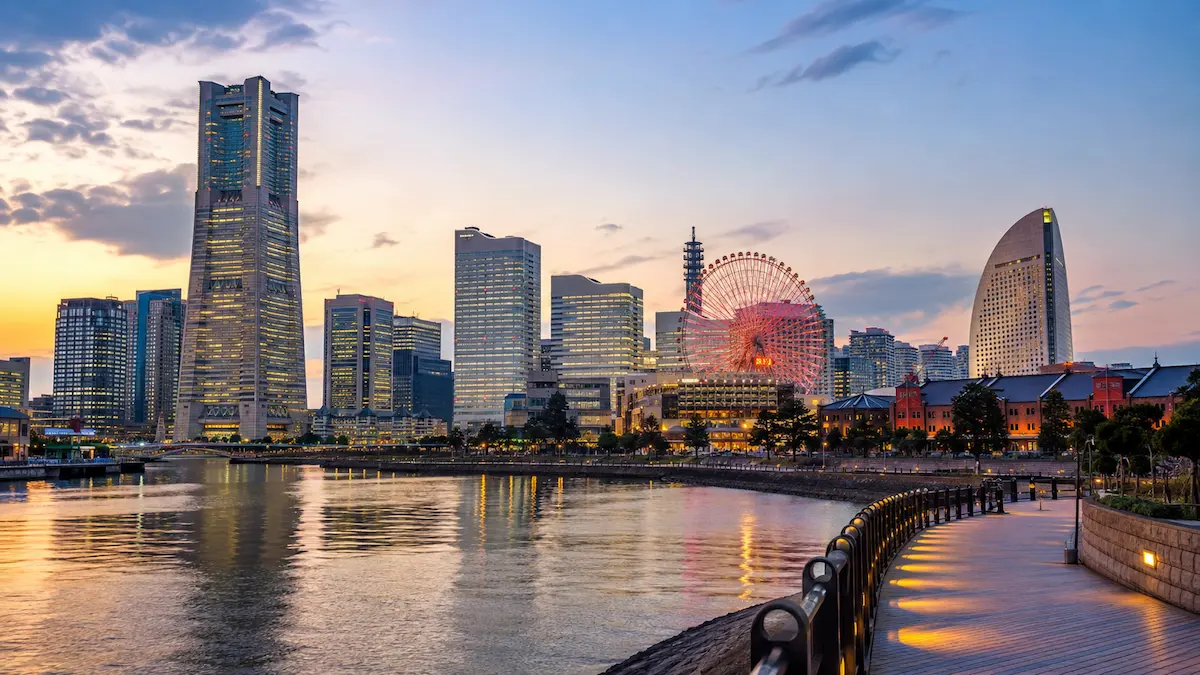
Minato Mirai is the Yokohama that appears in travel photographs: a broad waterfront, modern towers, the Cosmo Clock Ferris wheel, museums, shopping centres and illuminated harbour views. For families and couples with a comfortable budget, it offers the most polished stay in the city.
Many attractions are easy to combine on foot, including the Cup Noodles Museum, Cosmo World, Landmark Plaza, MARK IS, the waterfront parks and parts of the Red Brick Warehouse route. The Minatomirai Line connects the district to Yokohama Station and continues toward Bashamichi, Nihon-odori and Motomachi-Chukagai. The line also operates through services toward Shibuya, although the correct train and stopping pattern still matter.
Minato Mirai works particularly well for families because malls provide indoor dining, toilets, nursing facilities and weather protection. It also suits couples who value a room view and a pleasant evening walk more than having hundreds of tiny local restaurants outside the door.
Where exactly to book: Stay close to Minatomirai Station for Queen’s Square, MARK IS and Pacifico Yokohama. Choose the Sakuragicho edge for easier JR access. Choose the Shinko, Hammerhead or K-Arena side only when those venues are central to your plans, because the last stretch can involve a longer walk.
Typical hotel feel and price: This is the strongest area for upper-mid-range and luxury hotels, large windows, harbour views and better room sizes. A practical planning range is ¥16,000–¥38,000+, and premium view rooms can climb much higher on weekends.
✅ What Other Travelers Say
Travellers frequently praise the skyline, cleanliness, spacious public areas and the convenience of having attractions, malls and restaurants connected by pedestrian routes. Booking reviews for Minato Mirai hotels repeatedly highlight room views and easy access to family-friendly sights. The district is also popular with travellers who want a calmer evening than central Tokyo.
⚠️ The Catch (Things to Keep in Mind)
The biggest trap is scale. Minato Mirai looks compact on a map, but broad blocks, convention facilities, bridges and waterfront detours add distance. Some streets become quiet after malls close, and late-night independent dining is weaker than in Noge, Kannai or Yokohama Station. You may also pay a substantial premium for a “harbour view” that is partial or visible only from a higher room category, so read the room description carefully.
Good choice for: Families, couples, first-time visitors who prefer comfort and scenery, and anyone attending an event at Pacifico Yokohama or K-Arena.
Skip it if: You are on a strict budget, want lively local nightlife, or plan to make several JR day trips.
📍 Kannai and Bashamichi: Best Value Near the Main Sights
Best for: Budget-conscious travellers, baseball fans, food, historic streets, walking to Chinatown and the Red Brick Warehouse
Kannai and Bashamichi are often the smartest value choices in central Yokohama. They sit between Minato Mirai and Chinatown, placing Yokohama Stadium, Nihon-odori, the historic port district, the Red Brick Warehouse and many restaurants within a practical walking radius.
Kannai Station has JR Negishi Line and Blue Line access, while Bashamichi is on the Minatomirai Line. That combination gives you flexibility: JR for Yokohama Station and regional connections, the subway for Shin-Yokohama, and the Minatomirai Line for the waterfront and direct services toward Tokyo.
Bashamichi generally feels more refined, with historic façades, offices, cafés and a straightforward walk toward the harbour. Kannai has more budget hotels and everyday restaurants. It is less polished but often more useful for travellers who care about price and location more than a skyline view.
Where exactly to book: For sightseeing, favour the east and northeast side of Kannai toward Yokohama Stadium, Nihon-odori and Bashamichi. Hotels west of the station toward Isezakicho may be cheaper and have more late-night food, but the atmosphere becomes busier and grittier. A location close to Bashamichi Station is excellent for travellers who want a quieter base without paying full Minato Mirai prices.
Typical hotel feel and price: Expect compact business hotels, practical mid-range chains and several newer apartment-style or lifestyle options. A normal planning range is around ¥8,000–¥20,000, making this one of the best areas for keeping accommodation costs under control.
✅ What Other Travelers Say
Guests often mention the ability to walk to Chinatown, the stadium and the waterfront while paying less than in Minato Mirai. Reviews for well-rated properties in the area frequently highlight station proximity, laundry facilities and access to convenience stores. Bashamichi in particular earns praise for feeling central without being as hectic as Yokohama Station.
⚠️ The Catch (Things to Keep in Mind)
This area changes character quickly. The blocks near government buildings and Bashamichi feel orderly, while parts toward Isezakicho, Hinodecho and Koganecho have more bars, pachinko venues, adult-oriented businesses and late-night street activity. These are not automatic no-go areas, but they may feel less comfortable to families or solo travellers returning late. Older business hotels can also have very small rooms, dated bathrooms or smoking floors, so read recent reviews rather than relying only on the star rating.
Good choice for: Travellers who want central access without Minato Mirai prices, baseball fans and visitors who enjoy walking.
Skip it if: You want a luxury resort feel, a guaranteed harbour view, or a completely quiet neighbourhood at night.
📍 Chinatown, Motomachi and Yamashita Park: Best for Food and Character
Best for: Food lovers, couples, slower trips, harbour walks, travellers who prefer atmosphere over transport-hub convenience
Staying near Yokohama Chinatown, Motomachi or Yamashita Park gives you the strongest sense of place. You can eat breakfast buns in Chinatown, walk through Yamashita Park, continue to Osanbashi Pier, and return through the illuminated streets without planning your day around a major station.
Motomachi-Chukagai Station is the final stop of the Minatomirai Line, which links the area with Nihon-odori, Bashamichi, Minato Mirai and Yokohama Station. Through services continue toward Shibuya and beyond. Ishikawacho Station on the JR Negishi Line is another useful option, particularly for hotels on the southern side of Chinatown or near Motomachi.
This area is especially good for couples and repeat visitors who enjoy cafés, independent shops, slower mornings and evening walks. Yamashita Park and the waterfront feel open and relaxing, while Motomachi is more polished and residential than Chinatown’s busy food streets.
Where exactly to book: Choose the Yamashita Park or Nihon-odori side for a calmer and more elegant stay. Choose central Chinatown for food at the doorstep, accepting more daytime crowds. Choose Motomachi for boutiques and a quieter evening. Check the exact station exit because Motomachi-Chukagai is deep underground and the wrong exit can add a surprising walk.
Typical hotel feel and price: The area ranges from compact budget properties and classic city hotels to upscale international brands near Yamashita Park. Plan around ¥10,000–¥27,000 for a standard double, with bay-facing rooms and larger hotels costing more.
✅ What Other Travelers Say
Travellers like being able to walk to Chinatown restaurants, Yamashita Park and the historic waterfront. Reviews often praise the atmosphere, the variety of food and the direct Minatomirai Line connection. Hotels near Nihon-odori and Yamashita Park also receive strong feedback for quieter surroundings and scenic morning walks.
⚠️ The Catch (Things to Keep in Mind)
Chinatown is busiest during the day and early evening, but many businesses close earlier than visitors expect, so the district can become surprisingly quiet later at night. Food quality varies, and the most visible tourist menus are not automatically the best. For JR day trips, you may need to use Ishikawacho or change at Yokohama Station. Travellers with large luggage should also account for the depth of Motomachi-Chukagai Station and the distance from the platform to street level.
Good choice for: Food-focused travellers, couples and visitors spending two or more nights at a relaxed pace.
Skip it if: You plan daily trips on JR lines, have a very early airport departure, or want late-night shopping and dining every evening.
📍 Shin-Yokohama: Best for the Shinkansen, Yokohama Arena and Nissan Stadium
Best for: Early Shinkansen departures, late arrivals, Yokohama Arena concerts, Nissan Stadium events, business trips
Shin-Yokohama is a specialist choice, not a default sightseeing base. Its main advantage is the Tokaido Shinkansen, giving direct access toward Tokyo, Nagoya, Kyoto and Shin-Osaka. It is also the obvious area for events at Yokohama Arena and often the most practical base for Nissan Stadium.
The station is served by the JR Yokohama Line, the Yokohama Municipal Subway Blue Line and the newer Shin-Yokohama rail connections toward the Tokyu and Sotetsu networks. Central Yokohama is reachable, but you will commute to the waterfront rather than live inside it. Sakuragicho is around sixteen minutes away by the most useful connections under normal conditions, though waiting and station navigation add time.
The area has dependable business hotels, restaurants in and around the station complex, and the Shin-Yokohama Ramen Museum. It is easy to use, but the streets largely feel like a transport and office district.
Where exactly to book: Stay within five minutes of the station if you have luggage or an early train. For arena events, check the walking route rather than booking farther away to save a small amount. For Nissan Stadium, compare event access carefully because crowd-control routes and post-event queues can change the practical journey.
Typical hotel feel and price: Most rooms are business-oriented, clean and compact, with a few larger full-service hotels. A typical planning range is ¥8,000–¥20,000, but concert and stadium nights can sell out or rise dramatically.
✅ What Other Travelers Say
Guests appreciate the direct access to the Shinkansen, the ability to walk to Yokohama Arena and the convenience of station restaurants. Event travellers often prefer staying here rather than joining a late-night crowd back to central Yokohama or Tokyo.
⚠️ The Catch (Things to Keep in Mind)
Shin-Yokohama does not provide the harbour scenery, Chinatown atmosphere or walkable sightseeing that most leisure visitors expect. Staying here for a low rate can become repetitive when every day begins with a train into central Yokohama. The area can also be strangely expensive when a major concert or match is scheduled, so check event dates before treating it as a budget option.
Good choice for: One-night transit stays, arena events, stadium events and early Shinkansen travel.
Skip it if: This is your first leisure visit and your priority is Minato Mirai, Chinatown or the waterfront.
How to Choose Based on Your Actual Itinerary
- For a one-night Yokohama stop: Stay in Sakuragicho. It lets you see the waterfront efficiently without wasting time learning a huge station.
- For two or three nights focused on Yokohama: Choose Sakuragicho for balance, Minato Mirai for comfort, or Kannai/Bashamichi for value.
- For Yokohama plus Tokyo and Kamakura: Yokohama Station is usually the best transport base. Sakuragicho remains reasonable when you prefer atmosphere over the absolute fastest connections.
- For families with small children: Minato Mirai is easiest because malls, attractions, toilets and indoor dining are close together. Check the final walking distance to your hotel.
- For food and evening atmosphere: Choose Chinatown/Motomachi for destination dining or Sakuragicho’s west side for Noge nightlife.
- For a concert or major event: Stay by the venue or on a direct line. K-Arena favours north/east Yokohama Station or Minato Mirai; Yokohama Arena favours Shin-Yokohama; Yokohama Stadium favours Kannai.
- For large luggage or limited mobility: Prioritise a hotel with a clearly documented elevator route. A slightly more expensive station-adjacent hotel can be far easier than a “nearby” property across bridges or underground passages.
Key FAQs
What is the best area to stay in Yokohama for first-time visitors?
Sakuragicho is the best overall area for most first-time visitors. It is close to Minato Mirai, has JR and subway access, offers easy dining and is simpler to navigate than Yokohama Station. Choose Yokohama Station instead when day trips and airport transport matter more than waterfront atmosphere.
Is it better to stay near Yokohama Station or Minato Mirai?
Stay near Yokohama Station for Haneda Airport, Tokyo, Kamakura and flexible rail travel. Stay in Minato Mirai for views, family attractions, a romantic setting and a more polished hotel experience. Yokohama Station saves transport time; Minato Mirai improves the experience outside your hotel.
Where should I stay in Yokohama near Chinatown and the waterfront?
Choose Nihon-odori, Yamashita Park or the eastern side of Kannai for the best compromise. These locations are close to Chinatown while remaining walkable to Osanbashi, the Red Brick Warehouse and Bashamichi. Central Chinatown is best for food at the door, while Nihon-odori is quieter and more refined.
Final Verdict and Your Next Step
For a first visit built around Yokohama itself, Sakuragicho is the strongest all-round choice. It keeps the waterfront walkable, provides direct rail access and gives you both modern Minato Mirai and local Noge within the same evening. For a trip with frequent Tokyo, Kamakura or airport travel, Yokohama Station is more efficient. Choose Minato Mirai when views, family convenience and hotel quality justify a higher budget, and choose Kannai or Bashamichi when value matters most.
Chinatown and Motomachi are ideal for travellers who want food, atmosphere and slower evenings. Shin-Yokohama should be booked for a specific reason: the Shinkansen, Yokohama Arena, Nissan Stadium or a business appointment. It is useful, but it is not the best introduction to the city.
Once your dates are fixed, compare the exact hotel location on more than one booking platform. Pay close attention to the named station exit, room size, smoking policy, cancellation terms and whether breakfast is included. Yokohama rates can jump quickly around concerts, baseball games, conferences and weekends, so booking a refundable room early is usually safer than waiting for a last-minute bargain.