
💡 Key Takeaways
- There is no single “Yokohama city center” station. Use the Minatomirai Line for Minato Mirai, Bashamichi, the Red Brick Warehouse side and Chinatown; use JR for Sakuragicho and Kannai.
- The fastest train ride is not always the easiest journey. Yokohama Station is huge, and reaching a deep underground platform can take longer than the train itself when you have suitcases.
- Do not confuse Yokohama Station with Shin-Yokohama Station. Shin-Yokohama is the Shinkansen stop and sits several kilometres away from the waterfront center.
Figuring out how to get from Yokohama Station to the city center sounds simple until you arrive from Haneda, Narita or Tokyo with luggage and discover that “central Yokohama” covers several different districts. A hotel in Minato Mirai needs a different final leg from one near Sakuragicho, Kannai, Yamashita Park or Chinatown. Choose the wrong line and you may save a few yen on paper but lose 20 minutes underground, climb unnecessary stairs or finish with a long pavement walk while pulling a suitcase.
This guide treats Yokohama Station as the city’s main railway hub and compares the real door-to-door experience—not just the minutes shown on a route planner. Fares and service details were checked on 5 August 2026. JR East revised fares on 14 March 2026, so older guides may show prices that are no longer current.
The 1-Min Cheat Sheet
- Minatomirai Line: Best overall for hotels near Minatomirai Station, Queen’s Square, Pacifico Yokohama, Bashamichi, Nihon-odori, Yamashita Park and Chinatown. Expect a short ride but a relatively long underground walk inside Yokohama Station.
- JR Keihin-Tohoku–Negishi Line: Best for Sakuragicho, Kannai and Ishikawacho. Usually the simplest low-cost choice when your hotel is close to a JR station.
- Taxi: Best for families, late arrivals, mobility needs, rain or two or more large suitcases. The fare is much easier to justify when split between three or four people.
- Bayside Blue bus: Best for daytime travelers who want a scenic ride and are not in a hurry. Less suitable with bulky luggage or a fixed check-in deadline.
- Walking: Best only for light travelers staying on the northern Minato Mirai side. It can be pleasant in good weather, but it is not a smart money-saving trick with heavy bags in summer heat, rain or strong waterfront wind.
Top Survival Tips
- Check the nearest station to your hotel, not the district name. “Minato Mirai hotel” can mean a property near Minatomirai Station, Sakuragicho, Shin-Takashima or even Bashamichi. The nearest station entrance can change your best route completely.
- Use the East Exit side for the waterfront. Minato Mirai, the Red Brick Warehouse, Yamashita Park and Chinatown are east or southeast of Yokohama Station. Accidentally emerging at the West Exit adds confusion and can increase a taxi journey.
- Follow line symbols rather than platform numbers. For JR, follow the light-blue JK signs toward Sakuragicho and Ofuna. For the Minatomirai Line, follow the MM signs. Platforms can change, but the line symbols are consistent.
- Allow 10 extra minutes inside Yokohama Station. The Minatomirai Line is deep underground, and airport arrivals may first need to cross from another railway company’s gates. A “three-minute train ride” is not a three-minute transfer.
- Use an IC card when possible. Suica, PASMO and compatible transport cards remove the need to calculate small fare differences at the machine. The Minatomirai Line’s official fare from Yokohama is currently ¥193 by IC card or ¥200 with a paper ticket to Shin-Takashima, Minatomirai or Bashamichi; Nihon-odori and Motomachi-Chukagai cost ¥224 by IC card or ¥230 by paper ticket.
- Do not buy a sightseeing pass for one short ride. A day pass becomes worthwhile only when you plan several additional bus, subway or JR journeys. Buying a pass merely to reach your hotel is usually false economy.
- After a Shinkansen arrival, confirm which station you are actually at. From Shin-Yokohama, the Blue Line can take you directly toward Yokohama, Sakuragicho and Kannai. Traveling to Yokohama Station first is not always necessary.
The Full Experience
🚇 Minatomirai Line: Best for Minato Mirai, Bashamichi, Yamashita Park and Chinatown
Fastest for the waterfront · No transfer after Yokohama Station · Elevators available · Deep platform
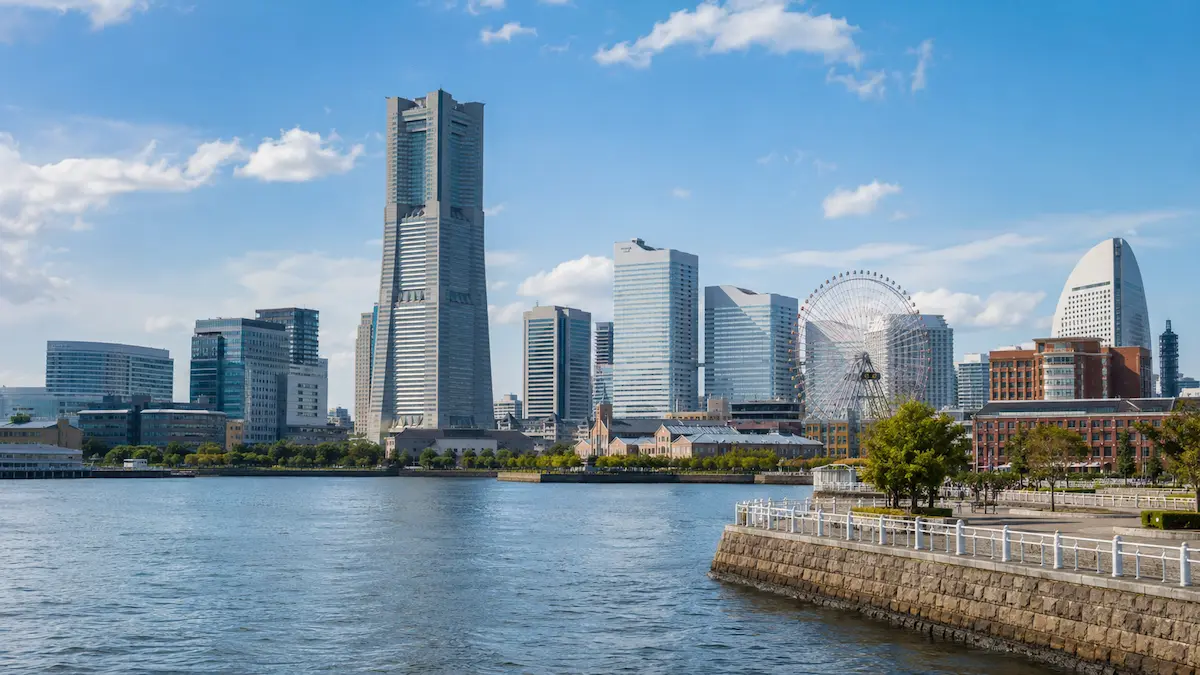
For most first-time visitors staying along Yokohama’s waterfront, the Minatomirai Line is the cleanest answer. From Yokohama Station, trains run through Shin-Takashima, Minatomirai, Bashamichi, Nihon-odori and Motomachi-Chukagai. That single line covers a large share of the hotels and attractions travelers casually call “Yokohama city center.”
The rail portion is extremely short: Minatomirai is only two stops away. The real work happens before boarding. Depending on which railway or airport service brought you into Yokohama, you may need to walk several minutes through the station complex and descend to a deep underground platform. Elevators and escalators are available, but the most obvious signs may lead you to a long escalator rather than the quickest lift.
Where to get off: Choose Shin-Takashima for the Nissan Global Headquarters, Anpanman Museum and some newer northern hotels; Minatomirai for Queen’s Square, Landmark Plaza, Pacifico Yokohama and the Bay Hotel Tokyu area; Bashamichi for the canal side, some Red Brick Warehouse hotels and APA Hotel & Resort Yokohama Bay Tower; Nihon-odori for Osanbashi Pier, the prefectural offices and the eastern Red Brick Warehouse side; and Motomachi-Chukagai for Chinatown, Yamashita Park, Hotel New Grand and Motomachi.
Cost reality: The official adult fare from Yokohama is ¥193 by IC card or ¥200 by ticket to Shin-Takashima, Minatomirai or Bashamichi. It is ¥224 by IC card or ¥230 by ticket to Nihon-odori or Motomachi-Chukagai. Check the official Minatomirai Line fare page before travel if your trip is far in the future.
✅ What Other Travelers Say
Travelers generally like that the line removes the uncertainty of street-level navigation and drops them close to major waterfront hotels. The strongest praise is for Minatomirai Station sitting directly beneath Queen’s Square. Visitors with luggage also appreciate that every station has step-free access when they follow the elevator signs.
⚠️ The Catch (Things to Keep in Mind)
The station depth is the hidden cost. A hotel that appears only one stop away may still require a long walk from the train platform to street level and then through a shopping complex. At busy event times around Pacifico Yokohama or K-Arena, platforms and escalators can become crowded. Also, do not board a Tokyu Toyoko train in the wrong direction: from Yokohama, you need the Minatomirai Line toward Motomachi-Chukagai, not a northbound train toward Shibuya.
🚆 JR Keihin-Tohoku–Negishi Line: Best for Sakuragicho, Kannai and Budget Hotels
Cheapest practical option · Very short ride · Easy for JR arrivals · Can leave a long final walk
Use the JR Keihin-Tohoku–Negishi Line when your hotel is near Sakuragicho, Kannai or Ishikawacho. From Yokohama Station, follow the light-blue JK signs for trains heading toward Sakuragicho, Isogo or Ofuna. Sakuragicho is the next stop, Kannai is the second and Ishikawacho is the third.
This is often the least stressful option for travelers arriving on another JR service because you may remain inside the JR paid area instead of exiting and entering a different railway. The train ride to Sakuragicho is around three to four minutes. Following the March 2026 fare revision, short JR journeys start from ¥160; verify the exact current fare for your destination in an IC-card app or the ticket machine because older travel pages frequently display the former fare.
Where to get off: Choose Sakuragicho for Landmark Tower, Nogecho nightlife, the Air Cabin and hotels around the station; Kannai for Yokohama Stadium, Isezakicho, city hall and many value hotels; and Ishikawacho for the south side of Chinatown and Motomachi. For hotels directly beside Yamashita Park, Motomachi-Chukagai on the Minatomirai Line is usually easier than walking from Ishikawacho with luggage.
✅ What Other Travelers Say
Visitors like the JR route because it feels obvious: one local train, one or two stops and no special ticket. It is especially popular with travelers arriving from Tokyo, Kamakura or another JR station who do not want to navigate a separate underground railway.
⚠️ The Catch (Things to Keep in Mind)
Sakuragicho is not automatically the nearest station to every Minato Mirai hotel. A property near Pacifico Yokohama can still be a 15- to 20-minute walk from Sakuragicho, and the final section may feel much longer with luggage. Kannai also has multiple exits; leaving on the wrong side can add several blocks. Check the hotel’s exact pin before deciding that JR is “close enough.”
🚕 Taxi: Best for Families, Heavy Luggage and Late-Night Arrivals
Door-to-door · Lowest physical effort · Best for groups · Traffic-dependent
A taxi is rarely the cheapest choice for one person with a backpack, but it can be the best-value choice for a family or group carrying several suitcases. The biggest saving is not just walking distance—it is avoiding a confusing station transfer, crowded escalators and the final search for the correct hotel entrance.
For waterfront destinations, use a taxi rank on the East Exit side when practical. Tell the driver the hotel name and show the address in Japanese on your booking confirmation. For Minato Mirai, a normal trip is often around 5 to 15 minutes once you are in the vehicle; Bashamichi, Kannai and Chinatown take longer. A realistic working budget is roughly ¥1,000 to ¥2,500 for the central districts, but traffic, the exact taxi stand, waiting time and late-night surcharges can push the meter higher.
Taxi apps can help, but calling a car inside a complex station is not always easier than joining the official rank. GPS pickup pins can land on the wrong road level, and Yokohama Station has multiple vehicle approaches. When you are already at the station, the staffed taxi queue is often the lower-stress option.
✅ What Other Travelers Say
Families and travelers with mobility limitations consistently value the door-to-door convenience. Groups also find the price surprisingly reasonable after splitting the fare, particularly in rain or after a long flight. Japanese taxis are generally clean, metered and do not require tipping.
⚠️ The Catch (Things to Keep in Mind)
The time saved can disappear during concerts, conventions, weekend shopping periods or road congestion around the waterfront. A taxi may also have limited boot space if four adults each carry a large suitcase. For five or more passengers, or unusually bulky luggage, arrange a larger vehicle rather than assuming two standard taxis will be available together.
🚌 Bayside Blue Bus: Best for a Scenic Daytime Arrival
Waterfront sightseeing en route · Low single fare · Limited frequency · Not ideal for large luggage
The blue articulated Bayside Blue bus links Yokohama Station with the central waterfront, including areas around Pacifico Yokohama, Hammerhead, the Red Brick Warehouse, Yamashita Park and Chinatown. It can turn the hotel transfer into a useful first look at the city, which is appealing if you arrive during the day and are not rushing.
Board from the Yokohama Station East Exit bus area and confirm the latest stop order before getting on. The service is designed as a waterfront loop, so journey times vary considerably by destination and direction. It is not a fast substitute for the train, and a missed bus can cost more time than the ride itself.
Travelers planning a full sightseeing day should compare the single fare with the Minato Burari Ticket. As of August 2026, the standard pass costs ¥700 for adults and covers designated municipal subway and bus services; the ¥750 Wide version also includes Shin-Yokohama on the Blue Line. Do the math first: the pass is useful for several rides, not merely for reaching your hotel.
✅ What Other Travelers Say
Visitors enjoy the large windows, waterfront views and the novelty of the articulated vehicle. It is a good choice for travelers who want to see the city rather than disappear underground immediately after arrival.
⚠️ The Catch (Things to Keep in Mind)
Frequency is much lower than the trains, road delays are possible and luggage space is not comparable with an airport coach. Do not block the aisle with multiple suitcases. Payment arrangements have also changed on this service in recent years, so carry a compatible IC card or contactless payment method and check the latest official notice rather than relying on an old blog that says cash is accepted.
🚶 Walking: Best for Light Travelers Staying in Northern Minato Mirai
Free · Pleasant in good weather · No waiting · Poor choice with heavy bags
Walking can make sense for hotels near Shin-Takashima, K-Arena, the Nissan headquarters or the northern edge of Minato Mirai. A practical route from the East Exit passes Yokohama Bay Quarter and uses pedestrian links toward the Nissan Global Headquarters and Minato Mirai. Depending on your exact destination and walking speed, allow roughly 15 to 30 minutes for the northern and central Minato Mirai area.
The route is more attractive than a typical station-to-hotel walk, with modern pedestrian decks and skyline views. However, a map’s distance estimate does not include the time needed to find the correct station exit, wait for lifts or navigate multi-level walkways.
✅ What Other Travelers Say
Travelers with small bags often enjoy the walk because it provides an immediate sense of place and avoids descending into another station. In mild weather, the waterfront approach can be a memorable start to a Yokohama stay.
⚠️ The Catch (Things to Keep in Mind)
Do not underestimate humidity, summer heat, sudden rain or strong wind between high-rise buildings. Pavement seams and long ramps become tiring with a heavy rolling suitcase. Walking all the way to Bashamichi, the Red Brick Warehouse, Kannai or Chinatown is rarely sensible immediately after an airport journey unless you are deliberately sightseeing and have very light luggage.
Which Route Fits Your Hotel Area?
Minato Mirai Station area: Take the Minatomirai Line. A taxi is the comfort upgrade when carrying several bags.
Sakuragicho Station area: Take JR. Do not pay extra for the Minatomirai Line unless your hotel entrance is actually closer to Bashamichi or Minatomirai Station.
Bashamichi and Red Brick Warehouse area: Bashamichi or Nihon-odori on the Minatomirai Line is usually best. Check which side of the Red Brick Warehouse your hotel sits on.
Kannai and Yokohama Stadium area: Take JR to Kannai. The Blue Line is mainly useful if you are already arriving from Shin-Yokohama.
Chinatown and Yamashita Park: Motomachi-Chukagai is normally easiest. Ishikawacho works well for the southern side of Chinatown but is less convenient for hotels facing Yamashita Park.
K-Arena and northern Minato Mirai: Shin-Takashima, walking or a short taxi may beat traveling farther south and backtracking.
Key FAQs
What is the fastest way from Yokohama Station to Minato Mirai?
The Minatomirai Line is normally fastest and takes only a few minutes on the train. Allow extra time to reach its deep platform inside Yokohama Station. For three or four travelers with luggage, a taxi can be faster door-to-door even when the road journey is longer than the train ride.
Is Yokohama Station in Yokohama city center?
Yokohama Station is a major commercial center, but most famous sightseeing areas sit farther southeast along the waterfront. Minato Mirai, Sakuragicho, Kannai, Yamashita Park and Chinatown are all central Yokohama districts, yet they use different stations.
Can I walk from Yokohama Station to the Red Brick Warehouse or Chinatown?
Yes, but it is not the practical choice with luggage. The Red Brick Warehouse is a long walk beyond central Minato Mirai, while Chinatown is farther again. Take the Minatomirai Line to Bashamichi or Nihon-odori for the Red Brick Warehouse and to Motomachi-Chukagai for Chinatown.
Final Verdict and Your Next Step
For most travelers, the correct answer is based on the hotel’s nearest station—not the words “Yokohama” or “city center” in the address. Choose the Minatomirai Line for the waterfront stations, JR for Sakuragicho and Kannai, and a taxi when luggage, children, mobility or a late arrival matters more than saving a few hundred yen. Use Bayside Blue as a sightseeing experience, not as your default fastest transfer. Walk only when your bags and the weather make it genuinely comfortable.
Before booking accommodation, open the map and check the walking route from the nearest station entrance—not merely the straight-line distance. A hotel that costs slightly more but sits directly above Minatomirai, Bashamichi, Sakuragicho or Kannai Station can save significant time and effort over several days.
Book early if your dates overlap with a concert, convention, cruise departure, weekend or Japanese holiday. Compare current Yokohama hotel availability on Booking.com and Agoda. For attraction tickets and Yokohama experiences, check Klook and KKday before arrival so you are not trying to compare options while standing in a crowded station with your luggage.
Editorial note: Transport fares, operating hours, accepted payment methods and commercial availability can change. Recheck your route on the travel date, especially for late-night arrivals and event days.