

💡 Key Takeaways
- Best overall balance: Aim for mid-May to early June or late October to mid-November for comfortable walking weather without paying the full cherry-blossom premium.
- Biggest weather trap: July and August are not merely “warm.” Yokohama’s humidity can turn an easy waterfront itinerary into an exhausting series of air-conditioned breaks.
- Biggest booking trap: Late March to early April is beautiful but expensive and unpredictable, while Golden Week around late April and early May can raise prices even after the blossoms have faded.
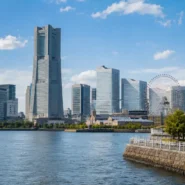
The best time to visit Yokohama depends less on finding a perfect month and more on choosing which compromise you can live with. Cherry blossom season is photogenic, but rooms around Minato Mirai and Sakuragicho can become expensive and the best waterfront viewpoints fill quickly. Summer brings fireworks and long evenings, yet the heat and humidity can seriously reduce how much ground you cover on foot. The rainy season is often misunderstood: it does not necessarily rain all day, every day, but forecasts are less dependable and damp weather can disrupt outdoor-heavy plans.
There are also demand spikes that have little to do with the weather. Golden Week, Japanese public holidays, school holidays, concerts at major arenas and large waterfront events can make an otherwise ordinary weekend surprisingly costly. Winter is usually calmer and drier, but daylight is shorter, the harbour wind feels colder than the thermometer suggests, and some gardens look muted outside their peak seasons.
This guide uses Yokohama’s 1991–2020 climate normals from the Japan Meteorological Agency, official holiday and event information, and recurring feedback from independent travellers. One warning before you compare months: there is no trustworthy single monthly hotel-price index covering every Yokohama property. The price labels below are therefore practical demand guidance, not fixed promises. Always check your exact dates before committing.
The 1-Min Cheat Sheet
- March to April: Best for cherry blossoms and spring atmosphere. Expect changeable temperatures, premium rates around peak bloom and heavier crowds on sunny weekends. Avoid late April into early May if Golden Week overlaps your trip.
- May to June: Best for a balanced trip, especially from mid-May to early June. May is mild and green; June is humid and less predictable, but hydrangeas and softer hotel demand can compensate.
- July to August: Best for fireworks, summer-night energy and travellers who genuinely tolerate heat. Worst for walking-heavy itineraries, young children, older travellers and anyone prone to heat exhaustion.
- September to November: Best overall autumn window once the late-summer heat and typhoon risk ease. Late October to mid-November is excellent for city sightseeing, but Yokohama’s strongest foliage often arrives later than first-time visitors expect.
- December to February: Best for lower crowds, clearer views, winter lights and value-focused stays. Nights are cold and early, but this is one of the easiest periods for museums, Chinatown dining and skyline photography.
Top Survival Tips
- Do not book “April” as if it were one season. Early April can mean sakura crowds; mid-April is often calmer; late April can collide with Golden Week. A difference of ten days can change both price and atmosphere.
- Use flexible hotel bookings for cherry blossom trips. Yokohama’s average sakura flowering date is March 25 and average full bloom is April 1, but actual timing can shift significantly. Reserve early, then adjust within your cancellation window when forecasts become more reliable.
- Check event calendars before judging a hotel rate. A random-looking price spike may come from a concert, baseball game, convention or waterfront festival rather than normal seasonal demand.
- Treat the waterfront wind as a separate weather system. Yamashita Park, Osanbashi Pier and Minato Mirai can feel cooler in spring and winter, and stickier in summer, than inland neighbourhoods.
- Do not assume rainy season means constant rain. June can deliver useful dry windows, but you need a flexible daily plan. Pair outdoor sights with indoor backups such as the Cup Noodles Museum, shopping complexes, art museums and Chinatown restaurants.
- Schedule summer walking before 10 a.m. and after sunset. Put museums, malls, long lunches and hotel breaks in the middle of the day. Trying to “push through” July or August heat is a poor use of limited holiday time.
- Keep September itineraries refundable. September is quieter than August, but it is also Yokohama’s wettest month by normal monthly rainfall. Typhoons are not a daily event, yet a single system can affect trains, flights and outdoor attractions.
- Do not visit in early November solely for red maple leaves. Yokohama’s official average dates are late: ginkgo yellowing averages around November 30 and maple colouring around December 14. Early November is pleasant, but peak foliage is not guaranteed.
- Compare Yokohama Station with Sakuragicho, Kannai and Minato Mirai. Staying one or two train stops away from the postcard waterfront can reduce costs without making sightseeing difficult.
- Book weekends first, then build the rest of the trip. Waterfront hotels often show the sharpest demand on Saturdays, holiday eves and event nights. Weekday flexibility can make a meaningful difference.
The Full Experience
🌸 March to April: Best for Cherry Blossoms, but Not for Bargain Hunters
Season tags: Sakura · Cool-to-mild weather · High weekend demand · Unpredictable bloom timing
March begins cooler than many spring photos suggest. Yokohama’s March normal is about 9.7°C overall, with a typical daily high near 14.0°C and low near 6.0°C. April is much easier for long walks, averaging 14.5°C with highs near 18.9°C. Layers matter because a sunny afternoon can feel gentle while a cloudy harbour evening still feels properly cold.
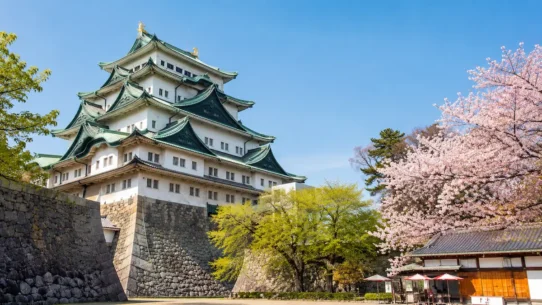
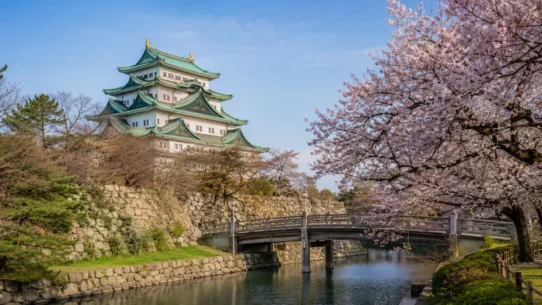
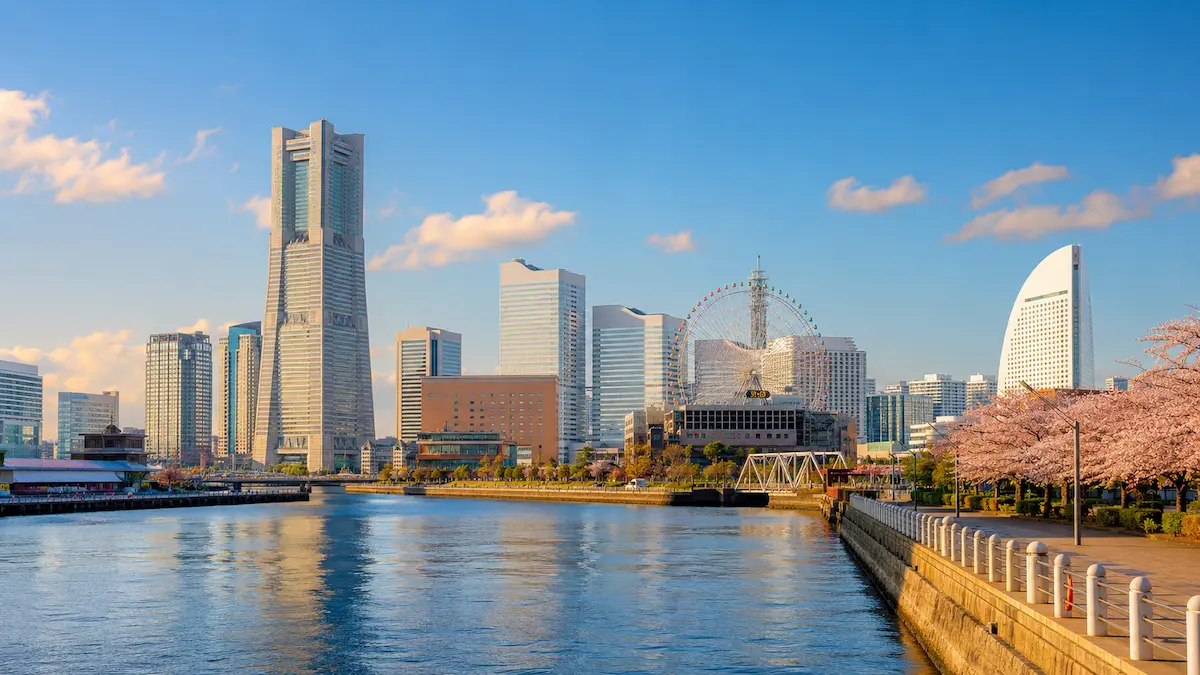
The visual payoff is real. Sakura around the Ooka River, Minato Mirai, Yamashita Park, Sankeien Garden and Mitsuike Park can transform an ordinary city walk. The long-term average is March 25 for flowering and April 1 for full bloom, but those dates are not appointments. A cold spell can delay the display; warm weather, wind or heavy rain can shorten it. Travellers who build an expensive trip around one exact blossom day are taking a gamble.
Crowds and cost: The highest pressure usually appears on sunny weekends around full bloom rather than across the entire two-month period. Hotel rates can rise well before forecasts are final because travellers reserve cancellable rooms early. Mid-April, after the main blossom rush and before Golden Week, can be a smart compromise. The danger returns from late April as domestic holiday travel builds.
Who should choose this period: First-time Japan visitors, photographers, couples and travellers who value seasonal scenery more than price certainty. It is also a good fit for people who can start early and avoid the busiest afternoon hours.
✅ What Other Travelers Say
Independent traveller discussions tend to split into two camps: some say the blossoms justify the crowds, while others dislike paying a premium for a short, weather-sensitive window. The most useful recurring advice is to reserve refundable accommodation and treat full bloom as a bonus rather than a guarantee.
⚠️ The Catch (Things to Keep in Mind)
Sakura season does not guarantee warm weather. Rainy or windy days can feel raw beside the bay, and the most famous views may be crowded precisely when the light and blossoms are best. Golden Week is a separate trap: you can miss peak sakura and still pay holiday prices if you arrive too late in April.
🌿 May to June: Best Balance in May, Best Value Gamble in June
Season tags: Comfortable May weather · Roses and hydrangeas · Rainy-season flexibility · Better value potential
For many travellers, mid-May to early June is the most sensible answer to when to visit Yokohama. May averages 18.8°C, with a normal high near 23.1°C and low near 15.5°C. Parks are green, outdoor dining is comfortable and the waterfront is pleasant without the heavy clothing of early spring.
The catch is timing. The first part of May can overlap Golden Week, one of Japan’s major domestic travel periods. Once that rush ends, the city often becomes easier. Rose displays add colour in May, while hydrangeas become a June highlight at places such as Yokohama English Garden and Hakkeijima.
June averages 21.8°C and is much more humid. Normal rainfall rises to about 188.8 mm, and sunshine hours are lower than in May. Rainy season does not mean a continuous wall of rain. A more realistic pattern is a mix of grey skies, light rain, humid dry spells and occasional heavy downpours. This is manageable for a city trip, but frustrating for travellers who want guaranteed blue-sky photography.
Crowds and cost: Mid-May is usually moderate outside major event weekends. June can offer better room availability and softer demand, especially on weekdays, but prices still jump around concerts, conventions and Saturday nights. The value is strongest for travellers willing to accept weather uncertainty.
Who should choose this period: Food-focused travellers, couples, repeat Japan visitors, museum lovers and anyone seeking a fair balance between comfort and cost. June also works well for photographers who prefer hydrangeas, wet streets and moody city scenes over postcard sunshine.
✅ What Other Travelers Say
Many travellers find the rainy season less disastrous than expected because Yokohama has abundant indoor attractions and covered shopping areas. They often praise the greenery and lower pressure compared with sakura season, although experiences vary sharply depending on the exact week.
⚠️ The Catch (Things to Keep in Mind)
Humidity can make June feel warmer than the temperature suggests. Shoes may not dry quickly in a small hotel room, umbrellas create congestion on narrow pavements, and skyline views can disappear behind low cloud. Build at least one indoor alternative into every day.
🎆 July to August: Best for Summer Events, Worst for Walking Comfort
Season tags: Fireworks · High humidity · Long evenings · School-holiday demand · Heat-risk planning
July and August show Yokohama at its most energetic and least forgiving. July’s normal daily high is around 29.4°C, while August reaches about 31.0°C. More important than the headline temperature are the warm nights and high humidity: normal lows remain near 22.9°C in July and 24.3°C in August, so the city may not cool enough for quick recovery after a long day.
Summer can still be memorable. Fireworks, harbour events, illuminated attractions and evening walks around Minato Mirai create a lively atmosphere. Travellers who shift their day later can have a very different experience from those marching between outdoor sights at noon. Start with Sankeien or Yamashita Park early, retreat indoors for lunch and museums, then return to the waterfront after sunset.
Crowds and cost: Summer pricing is inconsistent. Ordinary humid weekdays may be reasonable, while fireworks nights, long weekends, school holidays and major events can cause sharp spikes. August is not automatically cheap simply because the weather is uncomfortable.
Who should choose this period: Festival-focused travellers, night photographers, people tied to school holidays and visitors from equally hot, humid climates who already know their tolerance. It is a poor choice for a first Japan trip built around 20,000-step days.
✅ What Other Travelers Say
Traveller feedback about Japanese summer is unusually consistent: even people familiar with high temperatures often underestimate the combination of humidity, sun exposure, crowded stations and constant walking. Positive reports usually come from visitors who slowed down, used air-conditioned breaks and treated evening events as the main attraction.
⚠️ The Catch (Things to Keep in Mind)
Heat can turn a beautifully planned itinerary into a checklist of missed stops. Dehydration, headaches and poor sleep are common trip-ruiners. Typhoons also become a consideration later in summer. Choose refundable transport where practical, carry water and electrolytes, and do not schedule every outdoor attraction on consecutive afternoons.
🍂 September to November: Best Overall Autumn Window, with a September Warning
Season tags: Improving comfort · Typhoon flexibility · Late foliage · Excellent city walking in late autumn
This three-month block contains both one of the riskiest and one of the best times to visit Yokohama. September still averages 23.7°C, with highs around 27.3°C, and can feel like an extension of summer. It is also the wettest month in Yokohama’s climate normals at about 241.5 mm. October is cooler, but its normal rainfall total is nearly as high at 240.4 mm, reflecting autumn rain and occasional tropical systems.
That does not mean you should avoid the whole season. By late October, walking becomes far more comfortable, and November is one of the easiest months for combining Minato Mirai, Chinatown, Yamate, Motomachi and Sankeien without fighting heat or winter cold. November averages 13.4°C, with a normal high near 17.1°C and lower rainfall than September or October.
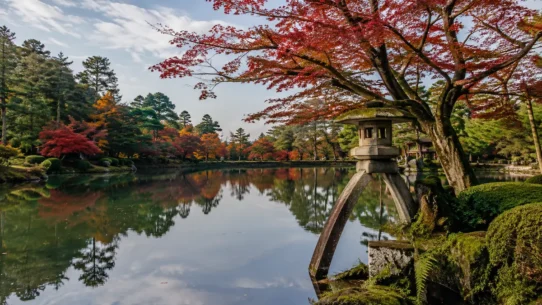
There is an important foliage reality check. Yokohama colours later than many inland or higher-elevation destinations. Official phenological averages place ginkgo yellowing around November 30 and maple colouring around December 14. Late November can be rewarding, but early November should be chosen for pleasant weather and sightseeing rather than guaranteed peak leaves.
Crowds and cost: September can be relatively calm after school holidays, although weather disruptions remain possible. October and November weekends attract domestic day-trippers, photographers and event visitors. Demand is normally manageable compared with peak sakura dates, but waterfront hotels can still be expensive on clear Saturdays.
Who should choose this period: Most first-time visitors, active walkers, food lovers and travellers planning a wider Tokyo–Yokohama–Kamakura itinerary. Late October to mid-November offers the best all-round urban experience; late November to early December is better for foliage hunters.
✅ What Other Travelers Say
Travellers often describe autumn as comfortable and easy, with crowd problems concentrated at specific foliage spots rather than everywhere. The most common disappointment comes from arriving in early November expecting Kyoto-style peak colour, only to find Yokohama still largely green.
⚠️ The Catch (Things to Keep in Mind)
September plans need flexibility because a single typhoon or heavy-rain system can disrupt trains and outdoor venues. October is usually more comfortable but not automatically dry. For the safest weather bet within this period, lean toward late October or November rather than early September.
✨ December to February: Best for Lower Crowds, Clear Views and Winter Value
Season tags: Dry air · Winter lights · Lower crowd pressure · Cold waterfront evenings · Short daylight
Winter is Yokohama’s underrated season. December averages 8.7°C, January 6.1°C and February 6.7°C. Daytime highs are commonly around 10–12°C, while average lows fall to roughly 3–5°C. Snow is possible but not a defining feature of a normal Yokohama winter. The more consistent issue is the wind: exposed piers and waterfront promenades can feel much colder after sunset.
The rewards are substantial. Drier air often means cleaner skyline views, winter illuminations make early darkness feel useful rather than limiting, and restaurants, museums and shopping districts remain easy to enjoy. Chinatown is especially appealing when cold weather makes steaming dumplings, noodles and hot tea part of the experience rather than just a meal stop.
Crowds and cost: January and February often provide the best chance of lower accommodation rates, excluding New Year, long weekends, major events and Lunar New Year activity around Chinatown. December can be busier around Christmas-market dates and illumination weekends, but it is still usually less pressured than sakura season.
Who should choose this period: Budget-conscious travellers, photographers, museum visitors, couples seeking illuminated waterfront views and anyone who prefers cold weather to humidity. It also suits travellers using Yokohama as a calmer base for Tokyo day trips.
✅ What Other Travelers Say
Winter fans regularly praise the clearer skies, easier restaurant access and reduced crowd fatigue. Visitors from colder climates often find the daytime temperatures mild, although nearly everyone notices the harbour wind and the need for gloves after dark.
⚠️ The Catch (Things to Keep in Mind)
Daylight is short, gardens are less colourful and outdoor evenings require real winter layers. New Year can also bring closures or reduced opening hours, so do not assume a cheap flight in early January guarantees a fully operating sightseeing schedule.
Key FAQs
What is the best month to visit Yokohama for good weather and fewer crowds?
November is the safest single-month recommendation. It is generally cool enough for long walks, less humid than summer and less weather-sensitive than September. For slightly warmer conditions, consider mid-May after Golden Week. Travellers focused on foliage should target late November rather than the start of the month.
Is Yokohama worth visiting during cherry blossom season?
Yes, especially if you want urban waterfront sakura without making every day about famous Tokyo parks. However, the bloom is short and weather-dependent. Book a refundable room, check forecasts close to departure and include several blossom locations so one crowded or wind-damaged spot does not define the trip.
How bad is the rainy season in Yokohama in June?
June is inconvenient rather than automatically disastrous. It is humid, forecasts change and rainfall is higher than in spring, but many days contain usable dry periods. A June trip works well when you have waterproof shoes, a compact umbrella and indoor alternatives. It is a poor choice for travellers demanding clear views every day.
Final Verdict and Your Next Step
Choose mid-May to early June for the best balance of pleasant temperatures, greenery and manageable demand. Choose late October to mid-November for the best walking weather and easiest all-round sightseeing. Choose late March to early April only when cherry blossoms are a genuine priority and you accept higher prices, crowds and timing risk. Choose January or February for lower crowd pressure and a better chance of value. Avoid August for a walking-heavy itinerary, avoid Golden Week unless your dates are fixed, and avoid a rigid outdoor schedule in September.
Once your dates are clear, book accommodation early enough to protect your preferred neighbourhood—especially for sakura weekends, Golden Week, Saturday event nights and late-autumn weekends. Use refundable rates where the seasonal timing is uncertain, then recheck the price before the cancellation deadline.
Check Yokohama hotels: Compare Yokohama stays on Agoda or browse Yokohama hotels on Booking.com.
Book attractions and day trips: See Yokohama activities on Klook or compare Yokohama experiences on KKday.
Disclosure: Some booking links are affiliate links. This does not change the price you pay, and the seasonal recommendations above are based on weather, crowd and trip-quality considerations rather than commission.
Editorial Sources and Methodology
- Japan Meteorological Agency: Yokohama 1991–2020 monthly climate normals
- Yokohama Local Meteorological Office: cherry blossom, ginkgo and maple seasonal observations
- Japan Meteorological Agency: typhoon climatological averages
- Japan national holiday dates and Golden Week context
- Yokohama Official Visitors Guide: current event and seasonal attraction checks
- Traveller sentiment was cross-checked against independent Japan travel discussions about summer heat, cherry blossom crowds, autumn timing and winter travel. Individual experiences vary, so anecdotal comments were used for recurring practical themes rather than hard statistics.