

💡 Key Takeaways
- Best all-round timing: late May after Golden Week, or mid-October to early November, when walking weather is comfortable and peak-season pressure is usually more manageable.
- Biggest weather trap: July and August are not merely “warm.” Kanazawa is hot, humid and exposed to sudden heavy rain, which can turn an ambitious walking itinerary into a string of air-conditioned breaks.
- Most overrated assumption: winter is quieter and can be cheaper, but it is not dry. Kanazawa’s Japan Sea climate brings frequent rain, wet snow, short daylight hours and slippery streets.
The best time to visit Kanazawa depends on which compromise you are willing to accept. Cherry blossom season is beautiful, but rooms can become expensive and Kenrokuen Garden can feel crowded at the exact hours when the light is best. Summer offers festivals and long days, but heat and humidity can seriously reduce how much of this walkable city you can enjoy. The rainy season does not mean nonstop rain every day, yet forecasts become less reliable and a single downpour can disrupt gardens, outdoor districts and day trips. Golden Week, Japanese public holidays and major events can also push up accommodation demand, while winter brings lower prices at the cost of shorter days, wet cold and uncertain snow cover.
This guide does not pretend that every season is equally good. It compares the practical trade-offs in weather, crowds, travel costs and seasonal experiences so you can choose a month that matches the way you actually travel.
The 1-Minute Cheat Sheet
- March to April: Choose early April for cherry blossoms and late March for a quieter spring trip. Expect cool mornings, unpredictable bloom dates and the highest spring hotel pressure around full bloom. Best for photographers and first-time visitors who consider sakura a priority.
- May to June: Late May is one of the smartest value-and-weather windows of the year. Early June brings the Hyakumangoku Festival, while mid-June onward enters the wetter, more humid Baiu season. Best for balanced itineraries, gardens and cultural events.
- July to August: The weakest period for heat-sensitive travelers and anyone planning long days on foot. Summer events can be fun, but midday sightseeing often becomes inefficient. Best only for school-holiday travelers, festival fans and people comfortable with humid heat.
- September to November: October is the most reliable all-round month; mid-to-late November is better for autumn foliage but cooler and wetter. September may still feel like summer and carries greater heavy-rain or typhoon disruption risk. Best for food, walking and autumn scenery.
- December to February: Usually quieter outside New Year, with excellent winter seafood and the possibility of snow-covered gardens. However, snow is not guaranteed on your exact dates, and wet snow or slush is more common than a permanent powder postcard. Best for repeat visitors, food lovers and flexible photographers.
Top Survival Tips
- Do not treat adjacent months as interchangeable. Late May and late June belong to the same section on many travel sites, but they deliver very different trips. The same is true of September versus October, and early November versus late November.
- Book a refundable room before you book a nonrefundable bargain. For cherry blossoms, autumn weekends and the Hyakumangoku Festival, secure a workable hotel early, then recheck rates as your dates approach. Cheap rooms far from the center can cost you valuable morning time and extra bus queues.
- Check the Japanese holiday calendar, not only international flight prices. In 2026, the busiest Golden Week cluster runs around May 2–6, and a five-day September holiday period forms from September 19–23. Domestic demand can change hotel availability even when overseas airfares look normal.
- Assume you will need an umbrella in every season. Kanazawa receives substantial precipitation year-round. A compact umbrella helps, but waterproof shoes with grip often matter more when stone paths, crossings and garden slopes become slick.
- Keep one indoor backup block per day. The 21st Century Museum area, craft workshops, tea experiences and covered sections of Omicho Market can rescue an afternoon when rain or heat makes outdoor sightseeing unpleasant.
- Visit Kenrokuen at opening time or late in the day. This is more effective than simply choosing a weekday. During sakura and foliage periods, the middle of the day attracts tour groups and day-trippers even outside weekends.
- Reserve transport for popular side trips. Buses to Shirakawa-go can sell out during weekends, foliage season, snow season and holiday periods. Do not assume you can decide the night before.
- Build slack into summer itineraries. A route that looks easy on a map may involve hours of exposed walking. In July and August, alternate outdoor sights with cafés, museums or hotel breaks instead of stacking Kenrokuen, Higashi Chaya, Nagamachi and Omicho into one continuous march.
The Full Experience
🌸 March to April: Best for Cherry Blossoms, but Not for Bargain Hunters
Best for: Sakura, photography, first-time trips | Crowds: Moderate in March, high around full bloom | Cost: Moderate to high
Most popular relevant YouTube video found during verification:
March is a transitional month. Japan Meteorological Agency climate normals put Kanazawa’s average March temperature at about 7.3°C, with an average daytime high of 11.6°C and a nighttime low of 3.4°C. Snow can still appear, especially earlier in the month, so marketing photos of soft spring light can be misleading. The upside is lower demand than peak sakura week and more breathing room in Higashi Chaya and Nagamachi.
April is much more comfortable, averaging roughly 17.3°C in the daytime and 8.2°C at night. Kanazawa’s main cherry blossom window usually falls in early April and lasts only about a week. It is typically later than Tokyo and Osaka, which makes the city useful for travelers trying to extend a sakura trip northward. However, bloom timing shifts every year. A warm March can move the season forward, while colder weather can delay it.
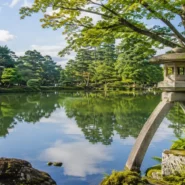
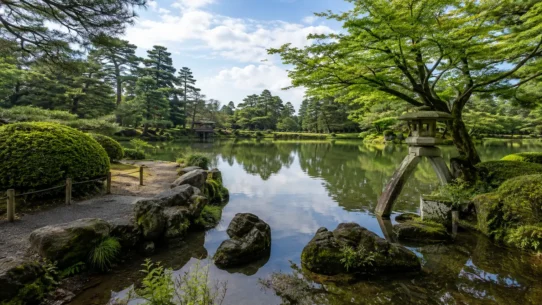
The visual payoff is real. Blossoms around Kanazawa Castle, Kenrokuen, the Asanogawa riverside and Kazuemachi create one of Japan’s best combinations of flowers and historic architecture. Yet the practical cost is also real: central hotels fill earlier, the famous viewpoints become busy, and free-entry or illumination periods attract additional visitors. Kanazawa remains less overwhelming than Kyoto at citywide scale, but its signature sakura spots can still feel packed.
✅ What Other Travelers Say
Travelers who arrive at popular gardens early often describe the experience as worth the premium, especially when they can walk quieter riverside streets afterward. Others note that the city itself remains manageable if they stop chasing only the most famous photo positions. The common success pattern is simple: start before tour groups arrive, accept that peak bloom cannot be guaranteed months in advance, and keep one non-sakura day in the plan.
⚠️ The Catch (Things to Keep in Mind)
Do not book an expensive first week of April solely because a historical average says “full bloom.” Forecasts become useful only closer to departure. Late March can be cold and bare; mid-April can arrive after the petals have fallen. If sakura is non-negotiable, use refundable accommodation and monitor the official bloom updates. If price and calm matter more, visit in the second half of March or after the main bloom, when spring temperatures improve but demand begins to ease.
Editorial verdict: Worth it for cherry blossom-focused travelers. Poor value for anyone who does not care deeply about sakura.
🌿 May to June: The Best Balance—Until Rainy Season Changes the Rules
Best for: Comfortable walking, gardens, cultural events | Crowds: High during Golden Week and festival weekend, otherwise moderate | Cost: Good after Golden Week
Most popular relevant YouTube video found during verification:
May is the sleeper winner. Average daytime highs are around 22.3°C, nights average 13.6°C, and the month has one of the year’s strongest normal sunshine totals in the JMA data used for this guide. Gardens are green, walking is comfortable, and you can usually cover more ground than in midsummer. The problem is timing: Golden Week can erase much of the value. In 2026, the main domestic holiday cluster runs through May 6, so the safer window begins after that rush.
Late May is our strongest recommendation for travelers who want a polished trip without paying for a headline season. You miss peak cherry blossoms, but gain longer days, fresh greenery, easier restaurant reservations and more predictable outdoor conditions. Wisteria, irises and other seasonal plants may still add color without generating sakura-level crowds.
Early June can also be rewarding because Kanazawa’s biggest annual event, the Hyakumangoku Festival, is held over the first weekend of the month. The parade, traditional performances and citywide atmosphere provide genuine cultural value. This is not a low-crowd weekend, however. Road closures and bus detours change how normal sightseeing works, and hotels near the station or city center may price accordingly.
From around mid-June into late July, Hokuriku enters the Baiu rainy season. This does not mean twelve hours of rain every day. It means more cloud, higher humidity, sudden downpours and less confidence in a tightly scheduled outdoor itinerary. June’s normal rainfall is about 170.3 mm, and the average relative humidity rises to 74%.
✅ What Other Travelers Say
Festival visitors frequently praise the parade and traditional performances, but also warn that Saturday no longer feels like an ordinary sightseeing day. Streets close, buses detour and prime viewing areas require early positioning. Travelers visiting later in May often report a calmer, more efficient experience because the weather supports full days on foot without the sakura premium.
⚠️ The Catch (Things to Keep in Mind)
The label “May to June” hides three separate realities: crowded Golden Week, excellent late May, and increasingly wet mid-to-late June. Choose dates within this period carefully. If your ideal trip is garden-heavy and outdoors, late May beats late June. If the festival is the main reason for visiting, accept higher demand and plan routes around closures rather than fighting them.
Editorial verdict: Late May is the best overall value window. Early June is excellent for event-focused travelers; the second half of June is a calculated weather gamble.
☀️ July to August: Best for Festivals, Worst for Uninterrupted Walking
Best for: Summer events, long daylight, families tied to school holidays | Crowds: Variable, with domestic peaks around long weekends and Obon | Cost: Mixed
Most popular relevant YouTube video found during verification:
July and August are where many itineraries fail on paper. July averages a daytime high of 29.5°C, a nighttime low of 22.9°C and 75% relative humidity. It is also one of Kanazawa’s wetter months, with normal precipitation around 233.4 mm. August is hotter: the normal daytime high reaches 31.3°C, nights average 24.1°C and hot spells can climb well beyond the monthly average.
The issue is not simply discomfort. Heat changes how quickly you move, how long you can remain in exposed areas and how much energy remains for dinner or evening activities. Kenrokuen, Kanazawa Castle Park and the walk between Higashi Chaya and Omicho Market involve limited shade in places. A schedule that is easy in October can become exhausting in August.
Summer still has advantages. Days are long, festivals and fireworks add atmosphere, and early mornings can be beautiful. Travelers who build the day around heat—outdoor sightseeing from opening time, a long indoor midday break, then an evening return—can enjoy the city. Visitors who insist on continuous sightseeing from 10 a.m. to 5 p.m. are much more likely to feel that Kanazawa is “smaller than expected” simply because the weather reduced what they could comfortably see.
August also overlaps with Obon travel in the middle of the month, when domestic trains, buses and hotels can become busier. Late summer and early autumn bring a greater risk of typhoon-related rain or transport disruption. Kanazawa is not hit directly every year, but flexible plans and travel insurance are sensible.
✅ What Other Travelers Say
Summer travelers are divided. Some enjoy lighter crowds at outdoor sights during the hottest hours and appreciate seasonal events. Others admit they underestimated the combination of humidity, strong sun and the amount of walking involved. The positive reports almost always involve parasols, frequent hydration, cooling products, early starts and substantial indoor breaks.
⚠️ The Catch (Things to Keep in Mind)
“I handle 30°C at home” is not a reliable test. High humidity, warm nights and limited recovery time can make Kanazawa feel harsher than the temperature number suggests. Heat-sensitive travelers, older visitors, families with very young children and anyone planning multiple day trips should avoid late July and August when possible. If these are your only available dates, reduce the number of daily stops rather than trying to power through.
Editorial verdict: Our least recommended period for general sightseeing. Go only for a specific summer event, fixed school holidays or a carefully heat-adapted itinerary.
🍁 September to November: Best Overall, but September Is Still Summer in Disguise
Best for: Walking, food, autumn foliage, first-time visits | Crowds: Moderate, high at foliage hotspots and holiday weekends | Cost: Moderate to high in peak foliage weeks
Most popular relevant YouTube video found during verification:
This is the strongest three-month block, but September should not be grouped blindly with October and November. September averages 27.2°C during the day, 19.9°C at night and about 231.9 mm of rain. Early September can still feel unmistakably summery, and late-season storms may disrupt trains or outdoor plans. In 2026, the September 19–23 holiday period also creates a domestic demand spike.
October is the cleanest answer for most travelers. Normal daytime highs sit around 21.8°C, nights average 13.9°C, and the air is generally more comfortable for long walks. You may be too early for peak maple color, but the city functions beautifully: gardens remain green, seafood season strengthens, and you can move between neighborhoods without planning your day around heat or snow.
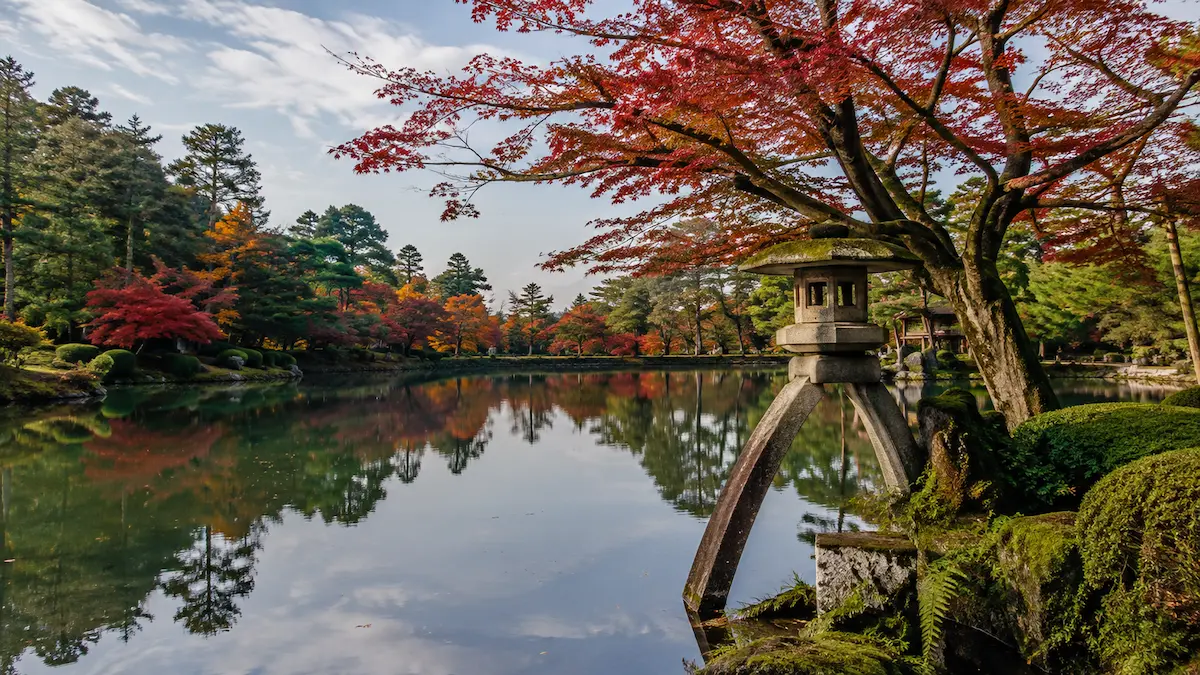
November brings the visual reward. Kanazawa Castle Park often colors earlier in the month, while Kenrokuen’s best viewing period usually builds through mid-to-late November. Yukitsuri ropes begin appearing, creating the classic transition from autumn to winter. Snow crab season also starts in November, adding a serious food reason to visit.
There is one important correction to the usual “dry autumn” sales pitch. November’s normal rainfall is about 250.8 mm—higher than July in the JMA normals. October is more weather-balanced; November is more photogenic but less reliably dry. By late November, cold rain, thunderstorms or sleet become possible, and average nighttime temperatures fall to around 8.1°C.
✅ What Other Travelers Say
Many travelers consider autumn the easiest season for enjoying Kanazawa at a human pace. They praise the combination of crisp walking weather, seasonal seafood, evening illuminations and fewer logistical compromises than sakura season. The main frustration is foliage timing: warm years can delay color, so travelers arriving in early November may see mixed green and yellow rather than full red.
⚠️ The Catch (Things to Keep in Mind)
Do not choose September because a generic Japan guide calls it “autumn.” For Kanazawa, October is the safer weather choice. Do not choose early November expecting guaranteed peak foliage either. If leaves are your priority, mid-to-late November offers better odds, but pack for rain and colder evenings. Reserve central accommodation early for weekend illuminations and peak foliage dates.
Editorial verdict: Mid-October to early November is the best all-round period. Mid-to-late November is best for foliage and food, with more rain and colder nights.
❄️ December to February: Best for Quiet Streets and Winter Food, Not Guaranteed Snow
Best for: Winter seafood, atmospheric photography, quieter travel | Crowds: Low outside New Year and selected weekends | Cost: Often lower, with holiday exceptions
Most popular relevant YouTube video found during verification:
Winter Kanazawa is widely misunderstood. Temperatures are not extreme by northern Japan standards: January averages about 7.1°C during the day and 1.2°C at night, while February is similar. The challenge is moisture. December is Kanazawa’s wettest month in the climate normals at roughly 301.1 mm of precipitation, followed by January at 256.0 mm. Rain, sleet and heavy wet snow can alternate within the same trip.
JMA normals record average total snowfall of about 24 cm in December, 67 cm in January and 53 cm in February. These are monthly snowfall totals, not a promise that snow will remain on the ground. The city can look spectacular after a fresh fall, then turn slushy or bare after rain. Book winter for the atmosphere and food, not for a guaranteed white landscape on a specific morning.
The rewards are substantial. Kenrokuen’s yukitsuri ropes look most meaningful under snow, Higashi Chaya feels calmer, and winter seafood—especially snow crab, yellowtail and hot oden—can be a highlight of the entire Japan trip. Hotel rates are often friendlier than sakura or foliage season, particularly from mid-January into February.
The main exceptions are the New Year period, when domestic travel rises and some museums, restaurants or small businesses close or shorten hours. Daylight is limited, and wet stone streets demand footwear with traction. Buses may run normally in light snow, but major storms can still produce delays.
✅ What Other Travelers Say
Winter visitors often love the quiet mood, seafood and chance of seeing traditional districts under snow. They also appreciate that Kanazawa remains a functioning city rather than a seasonal resort. The less positive reports focus on wet shoes, slush, grey skies and disappointment when carefully chosen “snow dates” arrive without snow on the ground.
⚠️ The Catch (Things to Keep in Mind)
Snow photographs create unrealistic expectations. A winter trip can deliver rain for two days and one magical snowy morning—or no settled snow at all. Pack waterproof footwear, a wind-resistant umbrella and layers that can handle heated interiors. Verify New Year opening schedules individually instead of assuming every attraction follows standard hours.
Editorial verdict: Excellent for flexible repeat visitors and food-focused trips. A poor choice for travelers who require predictable sunshine or guaranteed snow cover.
Key FAQs
What is the best month to visit Kanazawa for good weather and fewer crowds?
Late May is the best spring compromise after Golden Week, while October is the best autumn compromise. Late May offers mild temperatures, long daylight and fresh greenery. October is slightly cooler and generally better for long urban walks. Choose late May for lower seasonal hype; choose October for the most reliable overall sightseeing conditions.
Is Kanazawa worth visiting during cherry blossom season despite the crowds?
Yes, if cherry blossoms are a major reason for your Japan trip. The combination of sakura, castle walls, rivers and historic teahouse districts is genuinely special. It is less worthwhile if you dislike early starts, flexible planning or premium room rates. Full bloom usually lasts about a week, so paying more does not guarantee perfect timing.
How bad is the rainy season in Kanazawa in June?
It is inconvenient rather than automatically trip-ruining. The Hokuriku rainy season normally begins around mid-June and continues into late July. You may get dry half-days, light rain or sudden heavy downpours rather than nonstop rain. The real problem is unpredictability: garden visits, outdoor photography and day trips require backup plans. Early June is normally safer than late June.
Final Verdict and Your Next Step
For the best blend of weather, manageable crowds and value, book late May after Golden Week or mid-October to early November. Choose early April only if cherry blossoms justify higher prices and uncertain timing. Choose mid-to-late November for foliage and seafood, accepting wetter weather. Choose mid-January to February for quieter streets and winter food, but never assume snow will be waiting on your exact dates.
Travelers sensitive to heat should avoid late July and August. Travelers whose plans collapse in rain should avoid mid-June to late July. Anyone seeking value should avoid Golden Week, the Hyakumangoku Festival weekend and major Japanese holiday clusters unless the event itself is the point of the trip.
Kanazawa has a limited supply of well-located rooms compared with Tokyo or Osaka, so early booking matters more than many first-time visitors expect. Reserve a cancellable hotel once your dates are realistic, then book popular activities and side-trip transport before the best time slots disappear.
Check Kanazawa hotel prices on Agoda
Compare Kanazawa accommodation on Booking.com
Browse Kanazawa tours and activities on Klook
Browse Kanazawa experiences on KKday
Affiliate disclosure: some booking links may earn travelstayguide.com a commission at no extra cost to you. Availability, prices, event dates and seasonal conditions can change; verify the latest details before purchasing.
Sources and Methodology
This guide compares Japan Meteorological Agency 1991–2020 climate normals with official Kanazawa seasonal and event information, Japan’s official public-holiday calendar, current booking pages and recurring traveler feedback. Seasonal dates are planning ranges, not guarantees.