
💡 Key Takeaways
A first visit to Seoul can go wrong without anything dramatic happening. You simply spend too much time underground, book a hotel that looks central on a map but is awkward with luggage, arrive at a palace on its closure day, queue for an overhyped photo spot, and discover that your “nearby” evening plan is another 50-minute journey away. This Seoul travel guide for first-time visitors is designed to prevent exactly that kind of trip: not a glossy checklist, but a realistic plan built around walking distance, transfer friction, neighbourhood character, opening-day traps and the places that are genuinely worth your limited time.
Seoul rewards travellers who group each day geographically. The best first trip is usually not the one with the most pins saved; it is the one where your morning, lunch, afternoon and evening naturally flow into one another. You should finish most days pleasantly tired, not frustrated because you crossed the Han River three times to chase recommendations from unrelated social-media videos.
The 1-Minute Cheat Sheet
- Ideal first stay: five to six nights gives you four or five useful sightseeing days without turning every day into a race. Three nights is possible, but you must choose between depth and variety.
- Best all-round base: Myeongdong, Euljiro or City Hall for central sightseeing; Hongdae for nightlife, cafés and a direct all-stop AREX ride from Incheon Airport.
- Best quiet-cultural base: Jongno, Anguk or Insadong, especially for palaces, hanok streets and slower mornings.
- Usually a poor first base: Gangnam, Jamsil or Seongsu unless most of your booked activities are south or east of the Han River.
- Airport rule: Take the all-stop AREX directly to Hongik University for Hongdae, or the AREX to Seoul Station for central areas. An airport limousine bus can be easier when it stops near your hotel and you have heavy luggage.
- Navigation rule: Install Naver Map or KakaoMap. Google Maps can help with discovery, but it is not the app to trust for precise walking and transit routing in Korea.
- Transit rule: Use T-money for flexible pay-as-you-go travel. Consider a short-term Climate Card only after checking that your routes stay inside its valid network.
- Realistic daily pace: one major zone in the morning, one connected zone in the afternoon, and one nearby evening area.
- Pre-book first: your hotel, airport transfer if arriving late, timed experiences, popular beauty appointments, DMZ tours and major attractions on weekends or holidays.
- Do not overpack your itinerary: Gyeongbokgung, Bukchon, Changdeokgung, Insadong, Ikseon-dong, Gwangjang Market, Namsan and Hongdae are not one sensible day.
Top Survival Tips for a First Trip to Seoul
1. Choose a Hotel by the Exact Subway Exit, Not Just the Neighbourhood Name
“Myeongdong hotel” or “Hongdae guesthouse” can describe very different experiences. One property may be 90 seconds from a lift-equipped exit; another may involve a 12-minute walk, a road crossing, stairs and a steep final slope. Before booking, check all of the following:
- The walking route from the exact station exit, not the station icon.
- Whether that exit has a lift or escalator.
- Whether your airport train or bus arrives at the same side of the station.
- Whether the final block is uphill. This matters in Myeongdong, Itaewon, Hannam, Haebangchon, parts of Jongno and many residential streets.
- Whether reviews mention nightlife noise, thin walls or construction.
A hotel that is slightly more expensive but two minutes from the correct exit can be better value than a bargain property that adds 25 minutes of friction to every day.
2. Treat Large Subway Stations as Mini Neighbourhoods
Seoul’s subway is efficient, but transfers are not always quick. Seoul Station, Express Bus Terminal, Jongno 3-ga, Dongdaemun History & Culture Park and other major interchanges can involve long corridors, stairs and several minutes of walking. A route planner may show a 32-minute journey without making the transfer effort obvious.
For a traveller carrying a suitcase, a direct airport bus that takes 15 minutes longer can be the smarter choice. For sightseeing, changing lines twice to save five minutes is often not worth it. Choose the route with fewer transfers unless the time difference is substantial.
3. Do Not Drag Luggage Through Seoul During Rush Hour
Weekday commuting periods can be intensely crowded. Avoid taking large suitcases onto central subway lines around the morning and evening peaks when possible. If your flight arrives early and check-in is later, use your hotel’s luggage storage, a staffed storage service or station lockers before sightseeing. Do not design an arrival day that requires three transfers followed by a palace visit while carrying bags.
4. T-money and the Climate Card Solve Different Problems
T-money is the simplest option for most visitors: load credit, tap in and out, and use it across a broad network. The short-term Climate Card can be good value for travellers making many eligible rides inside Seoul. As of 2026, the official short-term options are one, two, three, five and seven days, priced from KRW 5,000 to KRW 20,000, with the physical card purchased separately. However, the Climate Card does not cover every private line, airport bus or route outside its service area.
The common mistake is buying an unlimited pass, then planning day trips or airport journeys it does not fully cover. Check your actual itinerary first. Also remember that short-term validity begins on the day you activate the pass; a one-day pass activated at 8 p.m. does not run for 24 hours.
5. Download Naver Map Before You Land
Naver Map and KakaoMap provide far better local route detail than most international map apps. Save your hotel in Korean, screenshot its address and pin the airport bus stop or station exit before flying. This becomes invaluable when mobile data is slow, a taxi driver cannot find an English hotel name, or several businesses share similar translated names.
For taxis, Kakao T is widely used. Save a Korean destination address instead of relying on pronunciation. Late at night, a taxi can be a sensible time-saving tool for two or three people, but central traffic can make it slower than the subway during busy periods.
6. Group Your Days by Geography, Not by “Top 10” Ranking
A practical first-trip structure looks like this:
- Historic north-central Seoul: Gyeongbokgung, Gwanghwamun, Bukchon, Insadong, Ikseon-dong and Cheonggyecheon.
- Central shopping and night views: Myeongdong, Euljiro, Namdaemun, Namsan and City Hall.
- West Seoul: Hongdae, Yeonnam, Mangwon and the Han River.
- East Seoul: Seongsu, Seoul Forest, Ttukseom and optionally Jamsil.
- South Seoul: Gangnam Station, COEX, Bongeunsa, Apgujeong and Sinsa.
Crossing from Hongdae to Jamsil and back to Myeongdong in one day may look possible on a metro map. It is possible. It is also an unnecessary drain on your time and energy.
7. Check Palace Closure Days Before Fixing Your Historic Day
Gyeongbokgung is normally closed on Tuesdays, while other royal sites have different closure days. Seasonal hours also change. Verify the official schedule shortly before your visit, especially around public holidays. Do not assume every palace is open every day simply because the grounds appear on an itinerary app.
For a first visit, one major palace explored properly is often better than rushing through three. Gyeongbokgung gives the grandest first impression; Changdeokgung feels more intimate and becomes more rewarding with its garden experience when available.
8. Respect Bukchon: It Is a Residential Area, Not a Film Set
Bukchon’s most sensitive Red Zone restricts tourist access from 5 p.m. to 10 a.m., with fines in force, and Sunday is treated as a rest day for designated alleyways. Visit during the permitted daytime window, keep voices low, do not block doorways and do not photograph residents through windows. This is not just etiquette; the restrictions were introduced because overtourism was affecting people’s homes.
9. Know Which Famous Stops Are Overhyped
- Starfield Library: visually impressive, but usually a 15-to-30-minute photo stop unless you also plan COEX, Bongeunsa or the aquarium.
- Myeongdong street-food stalls: fun for atmosphere and easy sampling, but prices can be high for small portions. Eat a proper meal elsewhere and treat the stalls as snacks.
- N Seoul Tower cable car: the view can be excellent, but queues can erase the convenience. Walking, a bus or another viewpoint may suit you better.
- Gangnam Station: busy and famous, but not automatically interesting to every visitor. Go with a purpose—shopping, nightlife, a treatment or a nearby attraction.
- Nami Island on a very short trip: pleasant in the right season, but it consumes most of a day. Do not sacrifice central Seoul’s best neighbourhoods just because every package itinerary includes it.
10. Plan for More Walking Than the Metro Map Suggests
Seoul sightseeing regularly involves 15,000 to 25,000 steps. Palace grounds are large, Bukchon is hilly, underground stations add hidden distance, and cafés or restaurants may be several floors above street level. Wear proper shoes, schedule a seated break after lunch and avoid stacking two hill-heavy areas on the same day.
11. Be Realistic About Solo Dining
Solo travel in Seoul is easy overall, but not every restaurant is designed for one person. Korean barbecue, hotpot and some shared dishes may require two portions. Solo-friendly choices include noodle shops, gimbap restaurants, soup specialists, department-store food halls, markets and many casual chains. Search recent reviews for “solo dining” rather than arriving hungry at a restaurant famous for group meals.
12. Reserve Trend-Driven Experiences Before Your Flight
Popular personal-colour consultations, hair salons, scalp treatments, makeup sessions, cooking classes and K-pop experiences can sell out well before weekends. These are not good activities to improvise if they are a major reason for your trip. Book the fixed-time experience first, then build that day around its neighbourhood.
How Many Days Do You Really Need in Seoul?
Three nights: enough for a sharp introduction, not a complete city experience. Prioritise historic Seoul, one modern neighbourhood and one evening area. Skip long day trips.
Five nights: the sweet spot for most first-time visitors. You can cover historic Seoul, Myeongdong/Namsan, Hongdae, one eastern or southern district and one flexible day.
Seven nights: best for travellers who want beauty appointments, café-hopping, shopping and a day trip without sacrificing neighbourhood time. You can also include slower mornings and bad-weather flexibility.
A useful rule is to count full sightseeing days, not hotel nights. A six-night trip with a 9 p.m. arrival and 8 a.m. departure gives you only five practical days.
A Realistic First-Time Seoul Itinerary
A Smart 3-Day Seoul Plan
- Day 1 — Historic Seoul: Gyeongbokgung in the morning, a short and respectful Bukchon walk, lunch around Anguk or Insadong, then Ikseon-dong and Cheonggyecheon in the late afternoon.
- Day 2 — Central Seoul: Namdaemun or Myeongdong, a proper local lunch, Namsan in the late afternoon and Euljiro after dark.
- Day 3 — Choose your Seoul: Hongdae and Yeonnam for energy; Seongsu and Seoul Forest for trends; or COEX and Gangnam for modern Seoul. Do not attempt all three.
A Balanced 5-Day Seoul Plan
- Day 1: arrival, hotel check-in and a low-pressure evening near your accommodation.
- Day 2: Gyeongbokgung, Gwanghwamun, Bukchon, Insadong and Ikseon-dong.
- Day 3: Hongdae, Yeonnam and Mangwon or a Han River evening.
- Day 4: Seongsu, Seoul Forest and Ttukseom; continue to Jamsil only if Lotte World, Seoul Sky or Seokchon Lake is a priority.
- Day 5: Myeongdong, Namdaemun, Namsan and Euljiro, or replace this with your booked beauty/shopping day.
- Day 6: one day trip, museum day, Gangnam/COEX or a weather backup before departure.
The Full Experience
📍 Myeongdong & Euljiro: Best for First-Time Convenience Without Constant Cross-City Travel
🏷️ Best for: first-time bases, central transport, skincare shopping, night markets, Namsan access, short stays
Myeongdong is popular for a reason: it sits in a practical part of Seoul, gives first-time visitors familiar services, and places shopping, food, Namsan, Namdaemun and central subway connections within easy reach. It is not Seoul’s coolest neighbourhood, and parts of it can feel like an outdoor shopping mall built for visitors. But convenience has real value on a four-day trip.
The smarter version of staying in Myeongdong is to look beyond the busiest pedestrian streets. Hotels near Euljiro 1-ga, Euljiro 3-ga, City Hall or the northern edge of Myeongdong can offer easier connections and a more local evening atmosphere. Euljiro’s older workshops, small bars and converted industrial spaces provide a useful contrast to the bright chain stores a few blocks away.
A good half-day route: start at Namdaemun Market or Deoksugung, walk through central Seoul, shop in Myeongdong after lunch, then head toward Namsan near sunset. Finish with dinner in Euljiro rather than relying entirely on street-food stalls.
Stay here if: you have three to five nights, want easy access to major first-time sights, prefer hotels with English-speaking service or expect to shop heavily.
Do not stay here if: you dislike crowds, want a neighbourhood café atmosphere outside your door, or plan to spend most evenings clubbing.
✅ What Other Travelers Say
The recurring praise is convenience: visitors like being close to central attractions, department stores, food options and transport. The recurring criticism is that the area feels crowded, commercial and tourist-heavy. Both views are fair. Myeongdong is a highly efficient base, not necessarily the neighbourhood that best represents everyday Seoul.
⚠️ The Catch (Things to Keep in Mind)
- Restaurants and stalls on the busiest streets are not automatically the best value.
- Namsan-facing hotels may involve uphill walks despite appearing close on the map.
- Myeongdong Station is useful, but Euljiro 1-ga or Euljiro 3-ga may fit some itineraries better.
- Weekend evenings can become shoulder-to-shoulder busy.
- Do not spend an entire day inside cosmetics chains. Compare prices, check tax-refund rules and leave time for actual neighbourhoods.
📍 Jongno, Gwanghwamun & Insadong: Best for Palaces, History and Walkable First-Day Sightseeing
🏷️ Best for: royal palaces, hanok streets, museums, traditional tea, photography, slower mornings
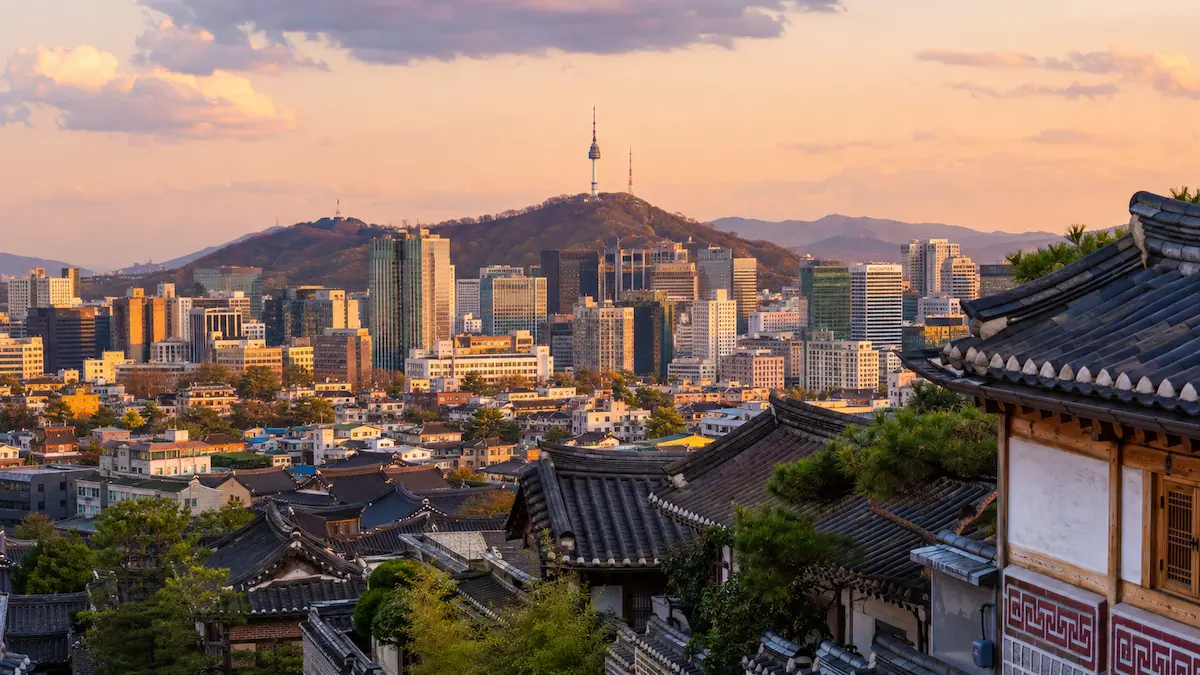
This is the part of Seoul that most clearly explains the city. Gyeongbokgung, Gwanghwamun, Changdeokgung, Jogyesa, Bukchon, Insadong and Ikseon-dong sit close enough to combine intelligently, but not all in a rushed morning. The pleasure comes from seeing royal architecture, government boulevards, residential hanok lanes, craft shops and modern cafés overlap within one district.
Start early at one palace. Gyeongbokgung is the obvious first choice for scale and ceremony. Walk toward Bukchon only during permitted visitor hours, then descend toward Anguk and Insadong for lunch or tea. Continue to Ikseon-dong later, when cafés and restaurants are fully open. Cheonggyecheon or Euljiro works naturally as the evening finish.
Hanbok rental can be enjoyable and often includes practical benefits such as palace entry arrangements, but do not rent purely because you think it is compulsory. In hot, humid or freezing weather, an elaborate outfit can turn a relaxed palace visit into a costume-management exercise. Choose a rental shop close to the palace, allow changing time and avoid booking the shortest package.
Stay here if: history is your priority, you like quiet mornings and you want several headline sights within walking distance.
Do not stay here if: your ideal trip revolves around late-night shopping, clubs or direct airport convenience.
✅ What Other Travelers Say
Visitors frequently describe this as their most satisfying sightseeing day because the route feels coherent and distinctly Korean. Insadong and Ikseon-dong receive praise for tea houses, crafts, cafés and evening ambience. Bukchon produces more mixed reactions: beautiful in the right light, but crowded, hilly and uncomfortable when visitors treat residents’ homes as photo props.
⚠️ The Catch (Things to Keep in Mind)
- Gyeongbokgung is normally closed on Tuesdays; verify holiday exceptions and seasonal hours.
- Bukchon’s Red Zone restricts tourist visits from 5 p.m. to 10 a.m., and designated alleyways observe a Sunday rest day.
- Ikseon-dong’s narrow lanes become congested on weekends, and viral cafés may operate waitlists.
- Palace grounds are larger than they look. Budget at least two focused hours for a meaningful visit.
- Do not schedule Namsan immediately after a full palace-and-Bukchon day if anyone in your group struggles with hills.
📍 Hongdae, Yeonnam & Mangwon: Best for Nightlife, Solo Travelers and Direct Airport Access
🏷️ Best for: nightlife, live energy, cafés, younger travellers, solo trips, airport access, casual shopping
Hongdae is one of the easiest areas to recommend to a first-time solo traveller who wants to leave the hotel and immediately find food, people, shops and nightlife. Hongik University Station is connected to the all-stop AREX from Incheon Airport, which removes one of the most annoying arrival-day problems: changing trains with luggage.
The district is larger and more varied than the club streets shown online. The main Hongdae core is loud, commercial and crowded. Yeonnam-dong, north and east of the station, is better for cafés, small restaurants and a more relaxed walk along the Gyeongui Line Forest Park. Mangwon, farther west, brings a market and more residential feel. Together they make a full day without needing to cross the city.
A good route: brunch or coffee in Yeonnam, shop and explore Hongdae in the afternoon, eat around Sangsu or Mangwon, then return to Hongdae after dark for street performances, bars or nightlife. Travellers who do not drink can still enjoy the area; cafés, photo booths, arcades, karaoke rooms and late shopping keep it active.
Stay here if: you are travelling solo, arrive at Incheon with luggage, value evening energy or plan a late-night schedule.
Do not stay here if: you sleep lightly, want to walk to palaces, or are travelling with relatives who dislike dense youth-oriented crowds.
✅ What Other Travelers Say
Travellers repeatedly praise the direct airport connection, late food options, easy social atmosphere and amount of activity within walking distance. Many first-time solo visitors find it less intimidating than expected. Complaints focus on weekend noise, crowds, club-street messiness and the commute to palaces or Jamsil.
⚠️ The Catch (Things to Keep in Mind)
- “Near Hongdae” can mean a quiet Yeonnam lane or a room above a late-night bar. Read noise reviews carefully.
- Hongik University Station is huge. Confirm the nearest exit and lift before booking.
- The area is west of most royal attractions and far from Jamsil.
- Some clubs have entry policies based on age, dress, nationality or group composition; never make one venue the entire reason for your night.
- Weekend taxis can be harder to secure at closing time, so know your walking route or last-train plan.
📍 Seongsu & Seoul Forest: Best for Design, Pop-Ups and Seoul’s Current Café Culture
🏷️ Best for: fashion, beauty flagships, pop-up stores, industrial design, cafés, Seoul Forest, repeat visitors
Seongsu is often called the Brooklyn of Seoul, a comparison that is overused but not entirely wrong. Former industrial buildings now hold cafés, fashion stores, beauty flagships and temporary brand experiences. The area is a strong choice for travellers who care more about how Seoul feels now than about completing a traditional sightseeing checklist.
The main planning problem is that Seongsu is spread out. A viral shop may be 15 minutes from the next saved café, and pop-ups change constantly. Build a route with three or four priorities rather than trying to visit every bookmarked address. Combine the area with Seoul Forest and, in good weather, Ttukseom Hangang Park.
A good route: arrive late morning, visit one flagship or pop-up, eat before the peak café rush, walk through the industrial side streets, continue to Seoul Forest and finish near Ttukseom or Konkuk University. Jamsil can follow if you still have energy, but it should not be treated as an automatic add-on.
Stay here if: you have already seen Seoul’s headline sights, love design and cafés, or have appointments concentrated in the east.
Do not stay here if: this is a short first trip and most of your plans are palaces, Hongdae and Myeongdong.
✅ What Other Travelers Say
Fans love the creative retail, photogenic interiors and the feeling of seeing trends before they spread elsewhere. Others leave underwhelmed after queuing for expensive drinks and discovering that the “must-see” pop-up is mostly a branded photo set. Seongsu works best when you genuinely enjoy browsing, not when you chase a checklist.
⚠️ The Catch (Things to Keep in Mind)
- Pop-ups have short runs, reservation systems and changing hours. Verify them on the brand’s current channel.
- Café queues can be longest on weekends and rainy afternoons.
- The neighbourhood requires more street walking than visitors expect.
- Some stores prioritise visual presentation over product range or value.
- Seongsu is a great visit but usually not the most efficient first-time hotel base.
📍 Gangnam, COEX & Bongeunsa: Best for K-Beauty Appointments and Modern Seoul—Not for Every First-Timer
🏷️ Best for: beauty treatments, luxury shopping, business travel, COEX, K-pop interests, modern architecture
Gangnam is a district, not one attraction. Gangnam Station, Sinsa, Apgujeong, Cheongdam, Samseong and COEX are separate clusters that should not be treated as a single walkable zone. This is the most common planning error in southern Seoul.
COEX works best when paired with Bongeunsa Temple, an exhibition, the aquarium, a concert or shopping. Starfield Library is visually dramatic but does not justify crossing the city by itself. Gangnam Station is useful for nightlife, underground shopping and nearby appointments, but the main boulevard can feel like a busy commercial district rather than a cinematic travel highlight.
Travellers coming for personal colour analysis, cosmetic treatments, hair services or luxury retail may find Gangnam essential. Book the appointment first, then build a focused route around it. Trying to “see Gangnam” without a specific goal often leads to a lot of walking past offices, traffic and chain stores.
Stay here if: your bookings are concentrated south of the river, you have business at COEX, or modern Seoul matters more than palace access.
Do not stay here if: you have only three or four days and your must-sees are Gyeongbokgung, Bukchon, Myeongdong and Hongdae.
✅ What Other Travelers Say
Visitors with clear plans—beauty appointments, concerts, shopping or COEX events—often appreciate the polished infrastructure and late dining. Travellers who go only because of the name “Gangnam” are more divided, frequently saying the area felt less distinctive than expected and added unnecessary commuting.
⚠️ The Catch (Things to Keep in Mind)
- Crossing the Han River repeatedly wastes time, especially from Hongdae or Jongno.
- Starfield Library is a stop, not a destination day.
- Apgujeong, Sinsa and COEX are not next door to Gangnam Station.
- Beauty clinics and salons vary widely in communication, pricing and aftercare. Read recent reviews and confirm the full price before treatment.
- Rush-hour roads can make taxis frustratingly slow.
📍 Jamsil, Seokchon Lake & Songridan-gil: Best for Families, Lotte World and Big Skyline Views
🏷️ Best for: Lotte World, Seoul Sky, families, rainy days, shopping, lake walks, baseball and concerts
Jamsil is easy to understand: Lotte World, Lotte World Mall, Seoul Sky, Seokchon Lake and Songridan-gil form a concentrated entertainment zone. Families can spend an entire day here without complicated transfers, and the indoor attractions are useful during rain, extreme heat or winter cold.
The best version of Jamsil is not necessarily an open-to-close theme-park marathon. For couples or non-riders, Seokchon Lake, Songridan-gil, the mall and a timed Seoul Sky visit around sunset can be more enjoyable. Baseball fans should also check whether a game fits their dates; the atmosphere can be more memorable than another shopping mall.
A good route: Lotte World in the morning if that is your priority, late lunch outside the park, Seokchon Lake, then Seoul Sky or dinner around Songridan-gil. Travellers skipping the theme park can begin later and avoid a 12-hour day.
Stay here if: you are travelling with children, attending an event nearby or dedicating multiple days to eastern/southern Seoul.
Do not stay here if: your trip is centred on historic Seoul and you have no Jamsil-specific booking.
✅ What Other Travelers Say
Families value the all-weather convenience and concentration of attractions. Seoul Sky receives strong praise on clear days, while Lotte World reviews often depend on queue lengths and crowd levels. Songridan-gil and Seokchon Lake are commonly appreciated as a calmer counterbalance to the mall and theme park.
⚠️ The Catch (Things to Keep in Mind)
- Lotte World can consume a full day, and popular rides may involve long queues.
- Observation-deck value depends heavily on visibility. Check the weather before committing.
- Jamsil is far from Hongdae and not convenient for a palace-heavy trip.
- Cherry-blossom season around Seokchon Lake can be extremely crowded.
- Food inside major attractions is convenient, but walking a little farther often improves choice and value.
📍 Itaewon & Hannam: Best for International Dining, Bars and a More Global Evening
🏷️ Best for: international restaurants, bars, halal-friendly options, galleries, nightlife, expat atmosphere
Itaewon remains one of Seoul’s easiest areas for international dining, English-friendly nightlife and a visibly global crowd. Hannam-dong, nearby but different in mood, offers galleries, stylish cafés and polished retail. The National Museum of Korea, War Memorial of Korea and Leeum Museum can also make this part of the city more than an evening destination.
The difficulty is topography. Streets rise sharply away from Itaewon Station, and a restaurant that appears close may sit halfway up a punishing hill. Hannam also has pockets that are awkward to reach by subway. Use buses or a taxi strategically rather than forcing every route on foot.
A good route: choose one museum or gallery, have an early dinner in Itaewon or Hannam, then continue to a bar or viewpoint. Do not add both Namsan and Haebangchon hills after an already long walking day.
Stay here if: dining and nightlife matter more than direct palace access, or you need a broad range of international and dietary options.
Do not stay here if: anyone in your group has mobility difficulties, you are travelling with large luggage, or you want the easiest airport connection.
✅ What Other Travelers Say
Visitors appreciate the diverse food, social atmosphere and the ability to take a break from Korean-only menus. Hannam is often praised for style and galleries. The main complaints are steep hills, fragmented transport and the fact that the nightlife experience varies dramatically from one street to the next.
⚠️ The Catch (Things to Keep in Mind)
- A short map distance can hide a steep climb.
- Itaewon Station is not a direct airport stop.
- Late-night streets can be noisy, so confirm your hotel’s exact block.
- Some famous restaurants are popular because they are unusual in Seoul, not necessarily because they are the city’s best food.
- Use recent venue information; nightlife businesses change quickly.
What to Book in Advance—and What Can Wait
Book early: hotels during cherry-blossom and autumn periods, weekend stays, major concerts, Lotte World on peak dates, Seoul Sky sunset slots, popular DMZ tours, personal-colour sessions, beauty treatments, hair appointments and small-group classes.
Book after checking weather: observation decks, river cruises and outdoor day trips when flexible cancellation is available.
Usually safe to decide locally: palace entry, markets, neighbourhood walks, most cafés and ordinary museum visits—unless a special exhibition or guided garden tour has limited capacity.
Important DMZ warning: access, route content and military-area operations can change with little notice. Book with a provider that states its cancellation or substitution policy clearly. Do not place a non-refundable evening event immediately after a tour that may return late.
Budgeting Without Ruining the Experience
Seoul can be good value, but visitors often overspend in three places: accommodation in the wrong zone, trend-driven cafés and repeated cross-city taxis. Spend more on a well-located hotel, then save by eating one serious meal and one casual meal each day, using transit intelligently and skipping attractions that do not match your interests.
- Save on transport: group days by district and compare T-money with the short-term Climate Card based on actual eligible rides.
- Save on food: use markets for sampling, not every meal; search for restaurants one or two streets away from the tourist core.
- Save on coffee: choose one destination café per day instead of paying premium prices at every viral address.
- Save on attractions: one good skyline view is enough. You do not need N Seoul Tower, Seoul Sky and every rooftop observatory.
- Spend where it helps: an airport bus, luggage service or taxi can be worth paying for when it removes a difficult transfer with bags.
Key FAQs
What is the best area to stay in Seoul for first-time visitors?
Myeongdong, Euljiro and City Hall are the safest all-round choices for a short first trip because they reduce travel time to palaces, Namsan, Namdaemun and central shopping. Hongdae is better for nightlife, solo travel and a direct all-stop airport train. Insadong or Anguk suits travellers who prefer history and calmer evenings. Gangnam is best only when your appointments and activities are mostly south of the Han River.
How many days in Seoul are enough for first-time visitors?
Four full sightseeing days is the practical minimum for seeing historic Seoul, one major shopping area, Hongdae and one modern district without rushing every hour. Five to six nights is more comfortable, especially if you want a day trip, beauty appointment or theme park. With only two or three days, skip Nami Island and focus on Seoul itself.
Is Myeongdong or Hongdae better for a first-time Seoul trip?
Choose Myeongdong for central sightseeing, department stores, skincare shopping and shorter trips. Choose Hongdae for nightlife, cafés, solo travel, late food and easier airport access. Families and palace-focused travellers usually find Myeongdong more efficient; younger travellers who value evening atmosphere often prefer Hongdae. The wrong choice is not either neighbourhood—it is booking a room far from the useful station exit.
Final Verdict and Your Next Step
The most important principle for a first Seoul trip is simple: reduce unnecessary movement. Stay where your priorities are, group each day by district, and stop treating every viral landmark as mandatory. Seoul becomes far more enjoyable when you allow a neighbourhood to unfold instead of constantly checking how long until the next train.
For a three- or four-night trip: stay around Myeongdong, Euljiro, City Hall or Jongno, focus on historic and central Seoul, and choose only one of Hongdae, Seongsu or Gangnam.
For solo travellers and night owls: Hongdae is often the easiest balance of airport access, food, nightlife and social energy. Book away from the loudest club streets if sleep matters.
For families: a central hotel keeps palace days easy, while one dedicated Jamsil day covers Lotte World, the mall, the lake and Seoul Sky without complicated routing.
For K-beauty and shopping trips: schedule appointments first. A split stay or a few nights in Gangnam can make sense when several bookings are south of the river.
For travellers who hate crowds: avoid making Myeongdong’s pedestrian core your entire evening routine. Consider Euljiro, Jongno, Yeonnam or quieter blocks near Anguk, and visit headline sights early on weekdays.
Do not leave accommodation until the final weeks if your dates fall on a weekend, public holiday, cherry-blossom period, autumn foliage season or major concert window. The best-value rooms beside useful exits disappear before the generic hotels do. Compare cancellation terms and the exact station route before paying.
Check Seoul accommodation:
Compare Seoul hotels on Agoda
Compare Seoul hotels on Booking.com
Pre-book attractions, transfers and experiences:
Browse Seoul activities on Klook
Browse Seoul activities on KKday
Your first booking should not be the most photogenic hotel. It should be the hotel that makes your real itinerary easier. Once that is fixed, reserve the few experiences that genuinely matter to you, leave breathing room for weather and queues, and let the rest of Seoul surprise you.