

💡 Key Takeaways
- Do not buy the one-day bus pass automatically. Kanazawa is compact, so walking between nearby sights plus one or two single bus rides is often cheaper and faster than chasing “unlimited” value.
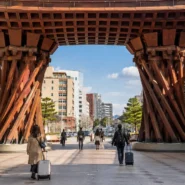
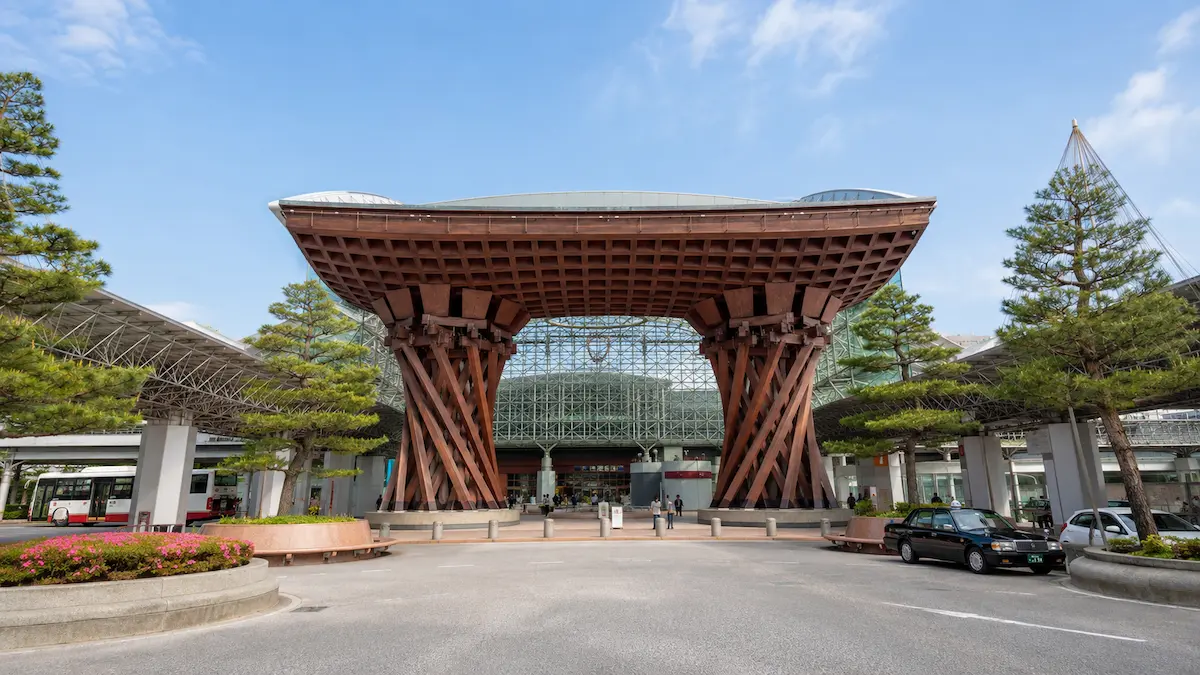
- Use the correct side of Kanazawa Station. The East Gate, also called the Kenrokuen Gate, is the practical side for city sightseeing buses; the West Gate, also called the Kanazawa Port Gate, is used for the Komatsu Airport limousine bus and many highway services.
- Payment rules change by bus operator. Suica, PASMO and ICOCA work on the Kanazawa Loop Bus and JR local buses, but not on ordinary Hokutetsu local buses. Carry a physical card or cash backup instead of assuming every vehicle accepts the same method.
The hardest part of a first visit is not the distance—it is understanding which bus you are looking at, which station exit you need, and whether your IC card will work after you board. This Kanazawa transportation guide focuses on those real-world decisions: when to walk, when a taxi saves the day, how to judge the one-day pass, where luggage becomes a problem, and how to avoid wasting half an hour waiting for a bus that is slower than your own feet.
Kanazawa’s headline attractions sit in a relatively tight historic core, but Kanazawa Station is outside that core. Most visitors therefore need one useful ride at the beginning or end of the day, then a sensible walking route between Omicho Market, Kanazawa Castle, Kenrokuen Garden, the 21st Century Museum of Contemporary Art, Nagamachi Samurai District and the teahouse districts. The most efficient plan is usually a mix—not loyalty to one transport mode.
The 1-Min Cheat Sheet
- Walking plus single bus rides: The best default for most first-time visitors. Take one bus from Kanazawa Station to your first sightseeing cluster, walk between nearby attractions, then decide whether to bus or taxi back.
- Kanazawa City One Day Pass: Best when you genuinely expect at least four covered ¥220 rides, or when the included attraction discounts improve the math. It is not automatically good value for a compact one-day itinerary.
- Taxi or ride-hailing: Best with luggage, in heavy rain, after a long rail journey, or for two to four people splitting the fare. A short taxi can be better value than losing an hour to a detour.
- Machi-nori e-bike: Best in dry weather for confident riders who want flexible point-to-point travel. It is poor for large bags, icy conditions, rushed returns or visitors uncomfortable riding on the left.
- Train and airport bus: Best for arriving, leaving and taking regional day trips. Trains are not useful for moving among central Kanazawa sights because the historic core is served by roads, walking routes and buses.
Top Survival Tips
- Memorize “East for sights, West for flights.” At Kanazawa Station, follow signs for the East/Kenrokuen Gate for the Loop Bus and most city sightseeing departures. Use the West/Kanazawa Port Gate for the Komatsu Airport limousine bus. This simple distinction prevents the classic mistake of crossing a large station concourse with luggage after reaching the wrong bus terminal.
- Read the route code, not only the bus color. The Right Loop and Left Loop serve many of the same sightseeing areas in opposite directions. Check “RL” or “LL” and the next major stop before boarding. A bus in a familiar color is not enough proof that it is your bus.
- Do the pass calculation before buying. With ordinary covered rides priced at ¥220 and the one-day pass at ¥800 for adults, the pass needs roughly four rides to beat single fares on transport alone. Three rides cost ¥660. Buying the pass for a day built mostly around walking is paying extra for a benefit you never use.
- Do not assume “IC card accepted” means every Kanazawa bus. The Loop Bus accepts nationwide IC cards, while standard Hokutetsu local buses generally do not. JR local buses do accept nationwide IC cards, but their contactless credit-card rules differ. Look for the payment logos at the door and keep small cash available.
- Leave buffer time at peak sightseeing hours. Buses share city streets and can be crowded around Kenrokuen, Omicho Market and Higashi Chaya. A printed interval is a planning guide, not a promise that the bus will appear exactly on time.
- Walk between attractions that are already close. Kenrokuen to the 21st Century Museum is only a few minutes on foot. Omicho Market to Kanazawa Castle’s Otemon side is also a short walk. Waiting for a bus between these pairs usually adds effort rather than saving it.
- Use luggage delivery or storage before sightseeing. Dragging a suitcase over wet pavements, historic stone paths and crowded bus aisles is the fastest way to make Kanazawa feel difficult. Kanazawa Station has lockers and a same-day baggage delivery service to participating accommodation; use them before entering the sightseeing loop.
- From Kyoto or Osaka, expect a transfer at Tsuruga. The old direct Thunderbird journey to Kanazawa no longer exists. You now take the Thunderbird limited express to Tsuruga and transfer to the Hokuriku Shinkansen. Keep your transfer ticket ready and avoid burying it under luggage.
- Build a rain version of your itinerary. Kanazawa weather can change quickly. Keep a taxi budget for one strategic ride, choose covered attractions near each other, and avoid committing to an e-bike day before checking conditions.
The Full Experience
🚄 Hokuriku Shinkansen and Local Trains: Best for Arrivals and Regional Day Trips
Best for: Tokyo arrivals, Toyama and Fukui trips, Kyoto/Osaka connections | Typical cost: Route-dependent | Effort: Low, except for the Tsuruga transfer from Kansai
Kanazawa Station is the city’s transport anchor, but rail is mainly for getting into or out of Kanazawa—not for sightseeing inside the historic center. From Tokyo, the Hokuriku Shinkansen offers the simplest rail journey, with the fastest services reaching Kanazawa in roughly two and a half hours. Kagayaki services are all-reserved, so travelers who want that faster pattern should secure a seat rather than turning up expecting an unreserved carriage.
From Kyoto or Osaka, the journey changed when the Hokuriku Shinkansen extension opened in March 2024. Take a Thunderbird limited express to Tsuruga, then transfer to the Hokuriku Shinkansen for Kanazawa. The transfer is designed to be manageable, but it still matters if you have children, multiple suitcases or a tight connection. Stand near the train door before arrival, keep tickets and passports accessible, and follow the large Shinkansen transfer signs rather than drifting toward the main exit.
Rail passes deserve especially careful math. The Hokuriku Arch Pass can make sense for a multi-city route linking Tokyo, the Hokuriku region and Kansai within its validity period. It is not a Kanazawa city transport pass, and it is poor value for someone simply taking a Tokyo–Kanazawa return or staying mainly within Ishikawa Prefecture. Price the exact trains you will use before buying.
✅ What Other Travelers Say
Travelers commonly praise the Hokuriku Shinkansen for comfort, legroom, clean facilities and an easy arrival directly at Kanazawa Station. The station itself is well signed and has food, lockers, tourist information and bus connections in one place, which makes the first hour in the city less stressful.
⚠️ The Catch (Things to Keep in Mind)
The Kansai transfer at Tsuruga surprises visitors using older guidebooks. Reserved seats can also sell out during Japanese holiday periods, autumn weekends and major events. Large luggage is easier to manage when you reserve seats early, avoid the shortest possible connection and use forwarding services instead of carrying everything through every transfer.
🚌 Kanazawa Loop Bus and Local Buses: Best for Major Sights
Best for: Station-to-sightseeing access and longer hops | Typical cost: ¥220 per covered ride; ¥800 adult one-day pass | Effort: Easy once you identify the operator and direction
The Kanazawa Loop Bus is the easiest bus product for a first visit because it links Kanazawa Station with Omicho Market, Higashi Chaya, Kenrokuen, the 21st Century Museum, Korinbo and nearby districts. Both directions leave from bus stop number 7 at the East/Kenrokuen Gate side of Kanazawa Station. The Right Loop generally runs every 15 minutes from around 8:30 to 18:00, while the Left Loop generally runs every 20 minutes from around 8:38 to 17:58. Check the current timetable on the day because seasonal and operational changes can occur.
Direction matters more than it first appears. The Right Loop may be quicker for one attraction and the Left Loop for another, even though both eventually cover much of the sightseeing circuit. Before boarding, compare the next two or three stops—not only the final destination. For example, a loop going the “wrong” way may still reach your attraction, but only after a long ride through the opposite side of the city.
The adult one-day pass costs ¥800 and covers the Loop Bus, selected Hokutetsu and JR local bus sections, the Shopping Liner and Kanazawa Flat Bus within its designated area. It is not valid on every special service, including the Light-up Bus. The pass is also not sold on board, so buy it at an official counter or through the supported digital option before your first ride.
Here is the honest pass test: four ¥220 rides cost ¥880, so the pass begins to win on transport after roughly four covered rides. Three rides cost ¥660. If your plan is Station → Kenrokuen, then a long walk through the castle, museum, market and teahouse district before returning once, single fares are usually better. The pass becomes more attractive when your itinerary includes separated areas such as Nishi Chaya, Higashi Chaya and Kenrokuen, or when poor weather makes repeated walking unrealistic.
Payment is the most confusing part. The Loop Bus accepts cash, nationwide IC cards such as Suica, PASMO and ICOCA, contactless credit cards and the one-day pass. Ordinary Hokutetsu local buses generally accept cash, contactless credit cards and the pass, but not nationwide IC cards. JR local buses accept nationwide IC cards and cash, but do not follow the same contactless credit-card setup. Always check the logos on the actual vehicle.
✅ What Other Travelers Say
Many visitors find the Loop Bus map easy to understand and appreciate that the route reaches nearly every major first-timer sight. The one-day pass also feels convenient when the weather is poor or when travelers prefer shorter walks. Review patterns are generally positive about coverage and simplicity once the correct direction is understood.
⚠️ The Catch (Things to Keep in Mind)
Crowding, traffic delays and queues can erase the time advantage. Around midday and late afternoon, you may wait through one full bus if it is packed. A scheduled 15-minute interval does not guarantee a 15-minute door-to-door journey. For nearby sights, start walking and treat the bus as a tool for the longer legs rather than the backbone of every move.
Check the current Kanazawa Loop Bus information and review the latest bus payment guide before travel.
🚶 Walking: Best for Sight-to-Sight Hops in the Historic Center
Best for: Castle, garden, museum, market and old-town clusters | Typical cost: Free | Effort: Moderate, with slopes and weather exposure
Walking is the transport option most visitors underestimate. Kanazawa’s main attractions are not all next door to the station, but they are close to one another once you reach the historic center. A well-planned route can save both money and waiting time: start at Omicho Market, continue toward Kanazawa Castle, cross into Kenrokuen, visit the 21st Century Museum, then finish around Korinbo or Nagamachi before returning by bus or taxi.
Useful real-world walking times include about 15 minutes from Kanazawa Station to Omicho Market, around 9 minutes from Omicho Market to the castle’s Otemon side, and only a few minutes from Kenrokuen’s Mayumizaka side to the 21st Century Museum. Kenrokuen to Nagamachi is roughly 15 minutes, while Kenrokuen to Higashi Chaya is around 20 minutes. These are often shorter than waiting, boarding and riding one stop on a crowded bus.
The city is pleasant on foot, but it is not completely flat or weatherproof. Kenrokuen and the castle area include slopes, gravel and uneven historic surfaces. In winter, snow and slush make footwear important; during rain, water-resistant shoes matter more than a stylish itinerary. Save energy by choosing a route that flows in one direction rather than zigzagging across the city.
✅ What Other Travelers Say
Independent travelers often say that walking reveals small canals, preserved streets, gardens, cafés and craft shops they would miss from a bus. The historic center feels more coherent on foot because the transition between districts becomes part of the experience rather than dead travel time.
⚠️ The Catch (Things to Keep in Mind)
Do not confuse “compact” with “effortless.” A full sightseeing day can still exceed 15,000 steps, especially inside Kenrokuen and Kanazawa Castle. Older travelers, families with young children and anyone carrying luggage should use one strategic taxi or bus ride rather than forcing a heroic walking plan.
🚲 Machi-nori E-Bikes: Best for Freedom in Good Weather
Best for: Flexible sightseeing beyond the core walking route | Typical cost: ¥165 for the first 30 minutes per use, then ¥165 per additional 30 minutes; in-person day pass ¥1,650 | Effort: Low to moderate
Machi-nori is Kanazawa’s public bike-share system, and its electric assistance is genuinely useful on gentle slopes and longer cross-town hops. It works best for travelers who can ride confidently in city traffic, understand left-side road use and are willing to return the bike correctly at a designated port.
The standard pay-as-you-go price starts at ¥165 for the first 30 minutes of each use, then adds ¥165 for every additional 30 minutes. This pricing rewards short rides followed by a proper return. It punishes people who keep the bike while eating lunch or touring a museum. The in-person one-day pass costs ¥1,650 and removes the repeated 30-minute pressure until 23:59, but it is only good value when cycling is a central part of your day.
Before unlocking, check the battery level, brakes, tires and saddle. Before walking away after a return, confirm the app or dock shows a completed return. During busy seasons, popular ports may be full or empty; use the app to check availability before committing to a route. The service requires riders to be at least 145 cm tall, and the app payment setup accepts credit cards but not ordinary debit cards.
✅ What Other Travelers Say
Riders enjoy the freedom to reach quieter neighborhoods and connect districts without waiting for buses. Electric assistance makes the system feel approachable even for casual cyclists, and short rides can be inexpensive when the bike is returned within the first 30 minutes.
⚠️ The Catch (Things to Keep in Mind)
Bike-share is not a luggage solution, and it is a bad choice in heavy rain, snow, strong wind or after dark for riders unfamiliar with the streets. A “day pass” does not guarantee a bike will be available at every port. Also, a failed return can continue charging your account, so never leave until the return is confirmed.
Check current Machi-nori prices and usage rules before relying on cycling for a full itinerary.
🚕 Taxis and Ride-Hailing: Best for Luggage, Rain and Small Groups
Best for: Door-to-door travel, families, mobility needs and bad weather | Typical cost: About ¥800–¥1,900 from Kanazawa Station to major central sights | Effort: Very low
A taxi is not the cheapest default, but it is often the most rational purchase when it removes a difficult transfer, protects luggage from rain or saves a tired family from another 20-minute walk. From Kanazawa Station, rough daytime estimates are around ¥800 or more to Omicho Market, ¥1,800 or more to Kenrokuen, ¥1,600 or more to Higashi Chaya, ¥1,600 or more to the 21st Century Museum, ¥1,400 or more to Nagamachi and ¥1,900 or more to Nishi Chaya. Traffic and exact drop-off points affect the final fare.
At Kanazawa Station, the East/Kenrokuen Gate taxi stand is the practical choice for the historic center and major sights. The West/Kanazawa Port Gate stand is more convenient for the port and western side. Uber and the GO taxi app operate in Kanazawa, although a regular taxi rank may be faster when vehicles are already waiting.
For two to four people, compare the group taxi fare with individual bus fares and the value of the time saved. A ¥1,600 taxi split by four is ¥400 each—more than a bus, but sometimes worth it for a direct ride with seats and no navigation stress. Write the destination in Japanese or show the driver the official map pin, especially for small hotels and traditional inns.
✅ What Other Travelers Say
Visitors consistently value Kanazawa taxis for cleanliness, professional drivers and relief during rain or winter weather. They are especially useful at the end of a long sightseeing day, when the difference between a direct 10-minute ride and a bus-plus-walk combination feels much larger than it did in the morning.
⚠️ The Catch (Things to Keep in Mind)
Fares rise with distance, waiting and traffic, and app availability can tighten at dinner time or during major events. Some historic streets have limited vehicle access, so the driver may need to stop a short walk from the exact entrance. Do not assume every taxi will hold several oversized suitcases; request a larger vehicle when necessary.
✈️ Komatsu Airport Limousine Bus: Best for a Direct Airport Transfer
Best for: Komatsu Airport arrivals and departures | Typical cost: ¥1,400 adult and ¥700 child from Kanazawa Station from August 1, 2026 | Effort: Low
The airport limousine bus is the simplest public transport link between Komatsu Airport and central Kanazawa. At Kanazawa Station, it uses bus stop number 3 at the West/Kanazawa Port Gate terminal—the opposite side from the sightseeing Loop Bus. Build in enough time to cross the station if you are connecting from a hotel shuttle, local bus or train.
From August 1, 2026, the adult fare between Kanazawa Station and Komatsu Airport is ¥1,400, with a ¥700 child fare. Contactless credit-card payment is accepted. Airport timetables are coordinated with flights but may change monthly, so check the official schedule again shortly before travel rather than relying on a screenshot saved weeks earlier.
For airport-to-city services, buses commonly depart after flight arrivals, but delays and operational adjustments are possible. For city-to-airport travel, choose a bus that leaves a generous check-in buffer. The lowest-stress plan is to arrive at Kanazawa Station early, buy drinks or food inside the station, then go to the West Gate only when you are ready to board.
✅ What Other Travelers Say
Travelers appreciate the direct ride, under-bus luggage storage and the fact that no rail transfer is required. For solo visitors, the bus is usually much cheaper than a taxi while still delivering them to a major transport hub with hotel connections.
⚠️ The Catch (Things to Keep in Mind)
The bus shares roads with traffic, so it cannot offer the same timing certainty as a dedicated airport train. Missing the correct station side is the avoidable risk: sightseeing buses use the East Gate area, while the airport limousine bus uses the West Gate. During disruption or very early and late flights, compare the bus schedule with a taxi before committing.
Check the latest Komatsu Airport limousine bus timetable and fare.
Smart Luggage Strategy: Save Your Back Before You Save ¥220
Kanazawa is enjoyable with a day bag and frustrating with a rolling suitcase. Historic streets, wet paving, crowded buses and station transfers turn luggage into a transport problem, not merely a packing issue. Use station lockers when returning the same day, ask your hotel about early baggage storage, or use the same-day delivery counter at the Kanazawa Station Tourist Information Center for participating accommodation and selected regional destinations.
The station baggage counter is generally open from 8:30 to 20:00, but delivery acceptance deadlines and coverage depend on destination. Confirm the current cutoff before leaving your bag. This service can be worth far more than its fee because it lets you board a bus without blocking the aisle and prevents a long detour to the hotel before sightseeing.
Check current same-day baggage delivery details at Kanazawa Station.
Suggested Transport Plans for Real Itineraries
One Day in Kanazawa, Good Weather
Take a single bus from Kanazawa Station to Omicho Market or Higashi Chaya, then walk through the central cluster in one direction. Use a second single bus or a taxi back to the station. Unless you deliberately add distant stops, the one-day pass is unlikely to save money.
One Day in Kanazawa, Heavy Rain
Buy the one-day pass only when you expect repeated covered rides. Otherwise, use one bus to the first attraction, short walks between closely grouped indoor sights and one taxi for the least convenient leg. The goal is not to avoid every raindrop; it is to avoid standing at an exposed stop for a bus that arrives full.
Two Nights with a Shirakawa-go Day Trip
Stay near Kanazawa Station when early departures and luggage convenience matter most. Use buses and walking for the city day, then reserve the intercity bus or organized tour for Shirakawa-go well in advance. A city one-day pass does not cover that regional journey.
Family or Multi-Generation Trip
Choose fewer sightseeing clusters and use taxis strategically. A station-area hotel reduces luggage stress, while a Korinbo or Omicho-area hotel reduces daily walking to central attractions. Compare the full group cost rather than assuming the bus is always the most economical once fatigue and time are included.
Key FAQs
Is the Kanazawa One Day Pass worth it for a one-day itinerary?
It is worth considering when you will take at least four covered ¥220 rides, when bad weather makes repeated bus use likely, or when attraction discounts create extra value. For a standard route that links Omicho Market, Kanazawa Castle, Kenrokuen and the 21st Century Museum mostly on foot, single fares are usually cheaper.
Can I use Suica, PASMO or ICOCA on buses in Kanazawa?
Yes on the Kanazawa Loop Bus and JR local buses, but generally not on ordinary Hokutetsu local buses. Hokutetsu local buses support cash and contactless credit cards on covered vehicles, while JR bus payment options differ. Check the payment logos on the bus you are boarding and keep a cash backup.
What is the easiest way to travel from Kyoto or Osaka to Kanazawa?
Take the Thunderbird limited express to Tsuruga, then transfer to the Hokuriku Shinkansen for Kanazawa. There is no longer a direct Thunderbird train all the way to Kanazawa. Reserve seats during busy periods and allow a comfortable transfer when traveling with large luggage.
Final Verdict and Your Next Step
For most first-time visitors, the best Kanazawa transport strategy is simple: use one bus from Kanazawa Station to your first sightseeing cluster, walk between nearby attractions, and take a bus or taxi back when your feet or the weather say it is time. Buy the ¥800 one-day pass only when your itinerary truly needs at least four covered rides or its attraction discounts make the total cheaper. “Unlimited” is not a bargain when you spend the day walking.
Choose your accommodation around the trip you are actually taking. Stay near Kanazawa Station for easy luggage handling, early trains and regional day trips. Stay around Omicho Market or Korinbo for better walkability to the historic center. On weekends, Japanese public holidays, cherry blossom season and autumn foliage periods, book accommodation, reserved trains and popular regional tours ahead; the local city bus pass can usually wait until your itinerary is final.
- Check Kanazawa hotel availability on Booking.com
- Compare Kanazawa hotel prices on Agoda
- Check the JR Hokuriku Arch Pass on Klook—buy only after comparing it with your exact point-to-point fares.
- Reserve a Shirakawa-go day tour from Kanazawa on KKday when independent bus seats or timing do not fit your plan.
Last practical reminder: save the latest bus route map to your phone, screenshot your hotel name and map pin, and confirm your station gate before you start walking with luggage. Kanazawa is easy to navigate once you stop treating every ride as interchangeable.