
💡 Key Takeaways
- Yokohama Station and Shin-Yokohama Station are not the same place. The Shinkansen stops at Shin-Yokohama, while most waterfront sightseeing begins around Yokohama, Sakuragicho, Minatomirai, Bashamichi or Motomachi-Chukagai.
- An IC card is the safest default for most first-time visitors. Buy a one-day pass only when your route clearly stays inside its coverage area; many Yokohama passes do not include JR trains or the Minatomirai Line.
- Do not underestimate Yokohama Station. It is a huge multi-operator hub, and a transfer that looks instant on a map can involve long underground corridors, several ticket gates and a surprisingly deep platform.
This Yokohama transportation guide is built for the moment when a simple-looking day trip becomes complicated: you arrive at the wrong “Yokohama,” follow a route app into the wrong side of a giant station, or buy an unlimited pass that does not cover the train you actually need. Yokohama is easy once you understand its geography, but first-time visitors often treat it like one compact station area. In reality, the city has several useful transport hubs, and choosing the right one can save twenty minutes, a tiring luggage drag and an unnecessary transfer.
The practical rule is simple: use fast regional trains to reach the city, then switch to the transport that matches your sightseeing zone. JR is excellent for Tokyo, Kamakura and Sakuragicho. The Minatomirai Line is the cleanest sightseeing spine for the waterfront and Chinatown. The Blue Line is the most useful connection from Shin-Yokohama. Buses become valuable when your legs are tired or when you are heading to places that are awkward by rail, especially Sankeien Garden. Most visitors do not need to master every operator; they only need to avoid combining the wrong ones.
The 1-Min Cheat Sheet
- JR trains: Best for Tokyo Station, Shinagawa, Shinjuku, Kamakura and Sakuragicho. From Tokyo Station, the JR Tokaido Line is usually the quickest straightforward choice to Yokohama Station. From Shinjuku, the Shonan-Shinjuku Line is the convenient direct option. Use JR when your destination is Yokohama Station or Sakuragicho and you want speed rather than sightseeing stops.
- Tokyu Toyoko and Minatomirai through-services: Best from Shibuya and useful when you want to continue beyond Yokohama Station to Minatomirai, Bashamichi, Nihon-odori or Motomachi-Chukagai without changing trains. Check the train destination and service pattern before boarding.
- Minatomirai Line: Best for the waterfront corridor, Red Brick Warehouse area, Osanbashi, Yamashita Park and Chinatown. It is convenient but separate from JR and the municipal subway, so a pass for one operator may not cover it.
- Yokohama Municipal Subway Blue Line: Best for Shin-Yokohama, Yokohama, Sakuragicho and Kannai. It is the simplest rail link for many Shinkansen arrivals, but it is not the same network as the Minatomirai Line.
- BAYSIDE BLUE, Akai Kutsu and city buses: Best for reducing walking, reaching Sankeien and connecting waterfront attractions in poor weather. They are slower than trains when roads are busy, so use them for convenience rather than guaranteed speed.
Top Survival Tips
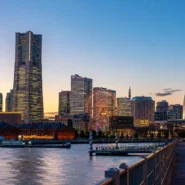
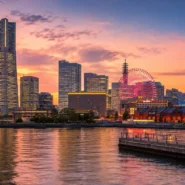
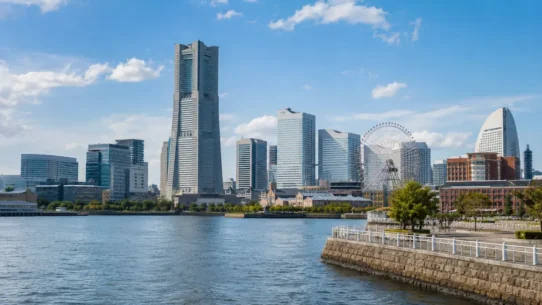
- Search the exact station, not just “Yokohama.” For the Shinkansen, use Shin-Yokohama Station. For the central rail hub, use Yokohama Station. For the classic waterfront skyline, Sakuragicho or Minatomirai may place you closer than Yokohama Station. For Chinatown and Yamashita Park, Motomachi-Chukagai is normally the most useful Minatomirai Line station.
- Choose your exit before you leave the platform. Yokohama Station’s east side is the practical direction for Sogo, YCAT airport buses and several waterfront connections. The west side serves a different commercial and hotel district. Crossing the station after choosing the wrong side can mean another long indoor walk, especially with luggage.
- Add a transfer buffer at Yokohama Station. Different companies operate JR, Keikyu, Tokyu, Minatomirai, Sotetsu and the municipal subway. Some platforms are deep underground, and changing operators may require exiting one ticketed area and entering another. A route app’s “transfer” time can feel optimistic when the station is crowded.
- Do not assume “subway” means one network. The Minatomirai Line feels like a subway, but it is not part of the Yokohama Municipal Subway. A municipal subway pass does not automatically cover Minatomirai Line rides.
- An IC card does not magically apply the cheapest pass. Suica, PASMO and compatible nationwide IC cards make transfers easy, but ordinary pay-as-you-go use usually does not retroactively cap your spending at a one-day pass price. Decide before your first ride whether a pass genuinely fits the day.
- The Minatomirai Line one-day ticket is not an automatic bargain. At ¥460 for an adult, it usually makes sense when you plan several separate rides along the line. A simple Yokohama-to-Chinatown trip followed by a long waterfront walk may cost less or roughly the same with an IC card, while giving you more flexibility to return by JR or bus.
- The Minato Burari Ticket is better for a bus-heavy sightseeing day. The ¥700 version covers designated municipal subway and bus areas around central Yokohama. The ¥750 Wide version is the one to examine when your day begins or ends at Shin-Yokohama. Neither should be bought blindly: confirm that your actual attractions and operators are inside the designated area.
- The ¥830 municipal bus and subway pass has broader city coverage, but still excludes JR and the Minatomirai Line. It can be excellent for a day involving multiple buses, the Blue Line and an outlying attraction. It is poor value for a mostly walkable Minato Mirai–Red Brick Warehouse–Chinatown itinerary.
- Do not take the Shinkansen from central Tokyo merely because it sounds faster. It delivers you to Shin-Yokohama, not the waterfront. Once you include the extra local transfer, a normal JR or Tokyu train to central Yokohama is often easier and far cheaper.
- With a large suitcase, fewer transfers matter more than saving a few yen. From Haneda, the Keikyu train is fast, but the airport bus to YCAT removes stairs and platform changes. From Narita, the direct Narita Express offers reserved seating and a straightforward arrival at Yokohama Station; the bus can be comfortable but is exposed to road delays.
- A taxi is a strategic tool, not necessarily a luxury. It can be worth using for the final kilometre from a station to a hotel, after the last train, during heavy rain or when two adults are sharing the fare with several bags. It is rarely the smartest way to move between major sightseeing zones during congested daytime hours.
- Save the destination in Japanese. A screenshot of the hotel name, station exit and address is useful when asking station staff or a taxi driver. It also protects you when mobile data becomes unreliable inside underground passages.
The Full Experience
🚆 JR and Private Railways: Best for Tokyo, Kamakura and Fast Cross-City Travel
Best for: Tokyo day trips, Kamakura, Sakuragicho, direct regional travel | Budget: Pay as you go | Luggage: Good outside rush hour
Yokohama Station is one of the most useful rail hubs in the Tokyo region, but it is not one unified railway. JR East, Tokyu, Keikyu, Sotetsu, the Minatomirai Line and the municipal subway all meet here. That variety is a strength when you choose deliberately and a headache when you follow only the next departure shown by an app.
From Tokyo Station or Shinagawa, JR is normally the simplest choice. The Tokaido Line is fast because it makes relatively few stops, while the Yokosuka Line is also direct and can be useful depending on timing. The Keihin-Tohoku Line reaches Yokohama too, but it stops more frequently; it is better when your origin or destination sits naturally on that line rather than when you are chasing the fastest trip.
From Shinjuku, Shibuya or Ikebukuro, compare two route families. JR’s Shonan-Shinjuku Line is convenient for Yokohama Station and onward travel toward Kamakura. Tokyu and connected through-services can be smarter when your real destination is Minatomirai or Chinatown, because many trains continue through Yokohama onto the Minatomirai Line. The cheapest route is not always the route with the least walking, so check the final station rather than just the arrival time at Yokohama.
For Kamakura, the JR Yokosuka Line gives a direct ride from Yokohama Station. This is one reason a Yokohama hotel near JR can work well for travelers combining Tokyo, Yokohama and Kamakura: you avoid returning to central Tokyo and spend less time backtracking.
✅ What Other Travelers Say
Travelers generally like how quickly Yokohama connects to Tokyo and Kamakura. The recurring frustration is not the train ride itself but the transfer inside Yokohama Station. People who plan the operator and ticket gate in advance usually find the system easy; people who treat every “Yokohama” platform as adjacent often lose time underground.
⚠️ The Catch (Things to Keep in Mind)
Rush-hour trains can be extremely crowded, especially on weekday mornings toward Tokyo and in the evening away from Tokyo. Large luggage is legal but uncomfortable for everyone during peak periods. Also watch for Green Cars on some JR services: the double-decker or premium seating section requires an additional Green Car ticket even on an ordinary commuter train.
🚇 Minatomirai Line: Best for the Waterfront and Chinatown
Best for: Minato Mirai, Bashamichi, Nihon-odori, Chinatown | Budget: Low to moderate | Walking saved: High
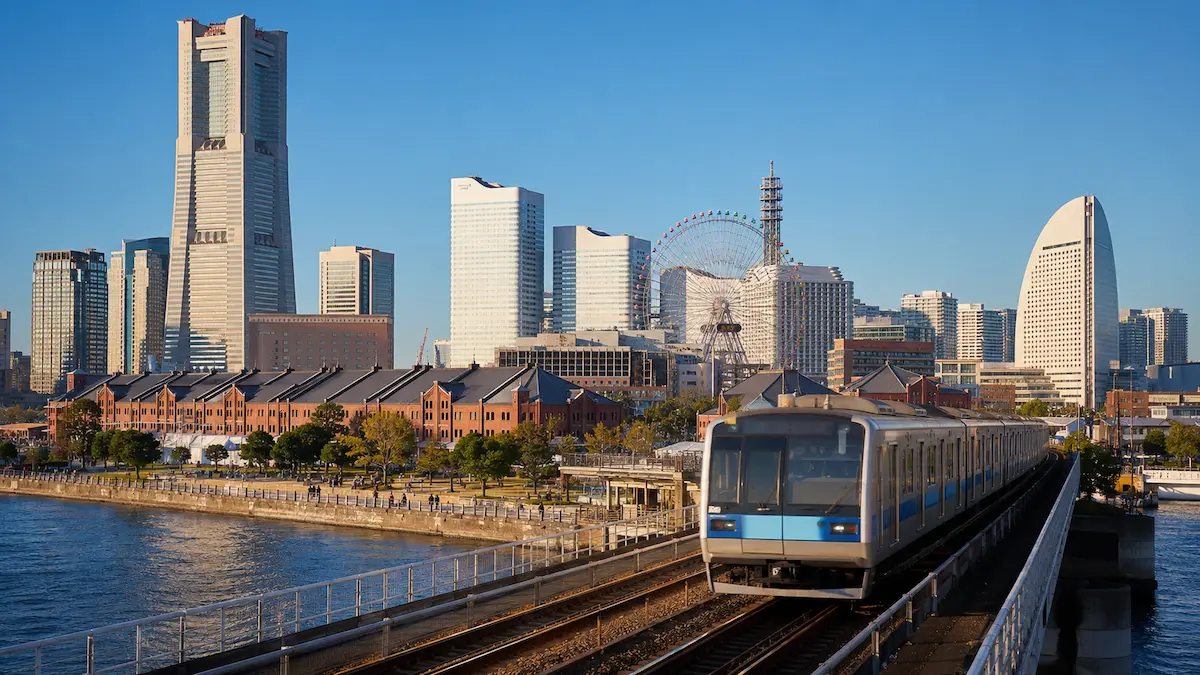
The Minatomirai Line is the sightseeing backbone most first-time visitors actually want. From Yokohama Station it runs through Shin-Takashima, Minatomirai, Bashamichi and Nihon-odori before terminating at Motomachi-Chukagai. Those stations map neatly onto the city’s main visitor zones.
- Minatomirai Station: Convenient for Queen’s Square, Landmark Plaza, Pacifico Yokohama and the central modern waterfront.
- Bashamichi Station: Useful for the historic port district, Kitanaka area and a comfortable approach to the Red Brick Warehouse.
- Nihon-odori Station: Often the best rail stop for Osanbashi Pier, Yokohama Stadium’s eastern side and parts of Yamashita Park.
- Motomachi-Chukagai Station: Best for Chinatown, Motomachi and the eastern end of Yamashita Park. Exit choice matters because the station is long and its exits serve quite different streets.
The line’s greatest advantage is through-running with the Tokyu Toyoko Line and other connected services. From Shibuya or Shinjuku-sanchome, you may be able to remain on one train all the way to the waterfront. Still, do not board based only on platform direction: check whether the train continues onto the Minatomirai Line and where it terminates.
The official Minatomirai Line one-day ticket costs ¥460 for adults. It is worth considering for a stop-by-stop itinerary, such as Yokohama → Minatomirai → Nihon-odori → Motomachi-Chukagai → Yokohama. It is less compelling when you intend to ride once, walk along the harbor for most of the day and return from Sakuragicho on JR.
✅ What Other Travelers Say
Visitors appreciate the clean stations, clear numbering and direct access to the main waterfront zones. Families and travelers in summer heat often feel the line saves far more energy than its modest fare suggests, particularly between Minato Mirai and Chinatown.
⚠️ The Catch (Things to Keep in Mind)
The platforms at Yokohama Station are deep underground, so the “short” transfer from JR can include a long descent. The line is also separate from JR and the Yokohama Municipal Subway. A JR Pass, municipal subway pass or bus-and-subway pass does not cover it unless the specific product explicitly says so.
🚉 Yokohama Municipal Subway: Best for Shin-Yokohama and Rainy-Day Connections
Best for: Shinkansen arrivals, Yokohama, Sakuragicho, Kannai | Budget: Moderate | Luggage: Usually manageable
The Blue Line is the transport link that rescues many confused Shinkansen arrivals. Shin-Yokohama Station sits inland, away from the port. From there, the Blue Line runs directly to Yokohama Station, Sakuragicho and Kannai, making it the most intuitive option for many hotels and attractions.
For a hotel near Yokohama Station, take the Blue Line directly and then follow the correct exit. For a hotel around Sakuragicho or Kannai, staying on the same train can avoid an unnecessary transfer at Yokohama. This is especially helpful with luggage because changing to JR at Yokohama often adds walking without delivering a meaningful time saving.
The municipal subway’s one-day pass costs ¥740, while the combined municipal bus and subway pass costs ¥830. These can be useful for a genuinely subway-heavy day, but the Blue Line is not the main line for every waterfront attraction. Many visitors discover that their ideal route mixes the Blue Line, Minatomirai Line, JR and walking—exactly the situation in which a single-operator pass becomes less valuable.
The Minato Burari Ticket Wide, priced at ¥750 for adults, is often the more relevant sightseeing product for Shinkansen arrivals because it adds Shin-Yokohama access to the designated central sightseeing area. Read the coverage map rather than assuming it is a citywide unlimited subway ticket.
✅ What Other Travelers Say
Shinkansen passengers value the Blue Line because it removes the mental load of piecing together JR local trains. Travelers staying around Kannai also like having a direct indoor rail option when the weather is wet or humid.
⚠️ The Catch (Things to Keep in Mind)
Shin-Yokohama has multiple rail operators and separate station areas, so allow time to move from the Shinkansen concourse to the subway. At Yokohama Station, the municipal subway is not beside every JR gate. Follow signs for the Blue Line rather than assuming the nearest downward escalator is correct.
🚌 BAYSIDE BLUE, Akai Kutsu and City Buses: Best for Saving Your Legs
Best for: Low-walking days, Sankeien, waterfront sightseeing | Budget: Low | Reliability: Traffic-dependent
Yokohama’s buses are most useful when you stop thinking of them as a faster train replacement. Their real value is reducing walking, reaching places without a convenient station and giving tired travelers a seated link between sightseeing zones.
BAYSIDE BLUE connects Yokohama Station’s east side with major waterfront areas, including Minato Mirai, the Red Brick Warehouse area, Yamashita and Chinatown. It is particularly appealing when you arrive with children, have limited mobility or want to avoid the long walk from Yokohama Station to the waterfront.
Akai Kutsu is the recognizable retro-style sightseeing bus associated with central historic attractions. It is convenient for leisurely sightseeing, but do not build a tight airport or restaurant reservation around it. A route that looks short on a map can slow down when central roads are busy.
For Sankeien Garden, a bus is normally part of the practical route because the garden is not beside a railway station. This is one of the clearest cases where a bus-inclusive pass may make sense. The Minato Burari Ticket covers designated central bus and subway areas including Sankeien access, while the broader municipal bus and subway pass covers municipal bus routes and both subway lines.
For a one-day waterfront itinerary, compare two styles. A walker who rides only once or twice should use an IC card. A visitor combining Yokohama Station, Red Brick Warehouse, Chinatown and Sankeien with several bus rides may recover the cost of a pass quickly. Count realistic rides, not imaginary “just in case” rides.
✅ What Other Travelers Say
Families, older visitors and travelers visiting in midsummer often rate the sightseeing buses more highly than energetic solo travelers do. The buses feel especially worthwhile late in the day, when the waterfront’s pleasant distances start to feel much longer.
⚠️ The Catch (Things to Keep in Mind)
Traffic makes journey times less predictable, and luggage space on ordinary city buses is limited. At Yokohama Station, use the east-side directions for BAYSIDE BLUE and confirm the boarding platform on the day. Do not confuse an attractive loop route with a hop-on frequency that is guaranteed to match your schedule.
✈️ Airport Transfers: Best Choices from Haneda and Narita
Best for: First and last travel days | Priority: Fewer transfers | Luggage: Bus or reserved train recommended
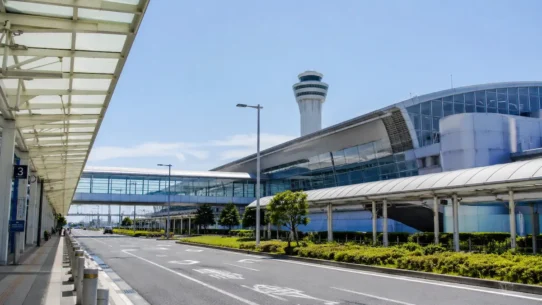
From Haneda Airport, the Keikyu train is usually the best balance of speed and cost. Official visitor information gives a typical journey of about 25 minutes to Yokohama Station. The important platform mistake is boarding toward central Tokyo when you need the Yokohama direction. Check the destination display and ask staff when the platform serves trains in more than one direction.
The Haneda–YCAT airport bus is the luggage-friendly option. The current adult fare is ¥800, and the official scheduled journey is roughly 30 minutes in normal conditions. YCAT sits by Yokohama Station’s east side. This is ideal when your hotel is near the east exit, when you have heavy bags or when avoiding train stairs matters more than a small time difference. Road delays are possible, so the bus is less suitable when you have a tight flight check-in deadline.
From Narita Airport, the direct Narita Express is the simplest rail choice. It reaches Yokohama in roughly 89 minutes according to official Yokohama visitor information and provides reserved seating. The airport limousine bus to YCAT takes around 90 minutes in normal traffic and removes the need to handle luggage through stations, but its arrival time is more vulnerable to congestion.
For early flights, confirm the first train or bus on your exact date rather than relying on a generic timetable screenshot. For late arrivals, check the final connection from Yokohama Station to your hotel before leaving the airport. A cheap flight is not cheap if the last local train has finished and you need a long taxi ride.
✅ What Other Travelers Say
Light packers tend to prefer Keikyu from Haneda because it is fast and frequent. Travelers with large suitcases often prefer the YCAT bus because the luggage goes under the coach and the arrival point is easier than navigating a crowded rail transfer. From Narita, reserved seating on the Narita Express reduces stress after a long flight.
⚠️ The Catch (Things to Keep in Mind)
YCAT is at Yokohama Station, not automatically beside every Yokohama hotel. A property in Minato Mirai, Kannai or Chinatown may still require a local train, bus or taxi. Airport buses can also be delayed by road conditions, while direct trains can be affected by railway disruptions. Check live information before committing on the day.
💳 IC Cards and Transport Passes: The Money-Saving Decision Most Visitors Get Wrong
Best for: Flexible mixed-operator trips | Default choice: Suica or PASMO | Main risk: Buying unlimited travel you will not use
For most first-time visitors, a rechargeable Suica, PASMO or compatible IC card is the least stressful answer. It works across JR, Tokyu, Keikyu, the Minatomirai Line, the municipal subway and most buses. You tap in and out without calculating separate tickets, and you avoid queues at fare machines.
The trap is assuming convenience equals maximum savings. An IC card normally charges each ride separately. A pass can be cheaper, but only when you stay within its operator and geographic limits. Before buying one, write down your likely rides in order. If the list mixes JR, Minatomirai Line and buses, a single-operator pass may force you to change an otherwise sensible route just to “use the pass.” That is not saving money; it is letting the ticket design your holiday.
- Use pay-as-you-go IC travel for a flexible day involving two or three rides, long waterfront walks or mixed operators.
- Consider the ¥460 Minatomirai Line one-day ticket for several stops entirely along Yokohama–Motomachi-Chukagai.
- Consider the ¥700 Minato Burari Ticket for central sightseeing with multiple designated buses and Blue Line rides.
- Consider the ¥750 Wide version when Shin-Yokohama is genuinely part of the day.
- Consider the ¥830 municipal bus and subway pass for heavy use of municipal buses plus the Blue or Green Line, especially beyond the core walkable waterfront.
- Do not buy a nationwide JR Pass for Yokohama alone. It does not cover the Minatomirai Line, municipal subway or city buses, and ordinary Tokyo–Yokohama fares are modest.
✅ What Other Travelers Say
Travelers value the freedom of tapping an IC card without studying every fare. Those happiest with passes are usually the ones who planned a dense route inside the pass area. The most disappointed are visitors who bought a pass first and only later discovered that their preferred train belonged to another operator.
⚠️ The Catch (Things to Keep in Mind)
Pass prices, sales methods and digital-ticket procedures can change. Some digital passes require showing a screen to staff rather than tapping through a gate. Keep your phone charged, avoid taking screenshots when the ticket requires an animated validation screen and check the official operator page shortly before travel.
Key FAQs
What is the best way to get around Yokohama for first-time visitors?
Use an IC card and combine transport by zone. Take JR or Tokyu into the city, the Minatomirai Line for the waterfront and Chinatown, the Blue Line from Shin-Yokohama, and a bus for Sankeien or when you need to reduce walking. A one-day pass is worthwhile only when most of your rides stay inside its coverage.
Is the Yokohama one-day transportation pass worth buying?
Sometimes, but there is no single pass that automatically covers every useful Yokohama train. The Minatomirai Line ticket is good for several rides along the waterfront line. The Minato Burari products suit central sightseeing and buses. The municipal bus and subway pass is better for heavier citywide use. Calculate your actual route and remember that JR and the Minatomirai Line are often excluded from municipal passes.
How do I travel from Shin-Yokohama Station to Minato Mirai with luggage?
The simplest approach is usually the Yokohama Municipal Subway Blue Line from Shin-Yokohama to Yokohama or Sakuragicho, depending on your hotel or attraction. For central Minato Mirai hotels, changing at Yokohama to the Minatomirai Line may place you closer, but staying on the Blue Line to Sakuragicho can be easier when you want fewer deep-station transfers. Compare the final walk, not just the train time.
Final Verdict and Your Next Step
Yokohama is not difficult to navigate; it is difficult only when you use the wrong mental map. Treat Shin-Yokohama as the Shinkansen gateway, Yokohama Station as the regional rail hub, Sakuragicho as the JR gateway to the waterfront, and the Minatomirai Line as the sightseeing spine. Once those roles are clear, most routes become obvious.
For a first visit, start with an IC card and resist buying a pass until your itinerary is fixed. Stay near Yokohama Station for the easiest Tokyo, airport and Kamakura connections. Stay in Minato Mirai for waterfront views and walkable attractions. Stay around Kannai or Chinatown for food, history and a more atmospheric evening base. The cheapest hotel can become poor value when it adds two daily transfers and a long luggage walk.
Accommodation and popular attractions can sell out on weekends, event dates and holiday periods. Compare the hotel’s actual nearest station and exit before booking, not just the distance shown from “central Yokohama.” Reserve early enough to choose a location that removes unnecessary transfers:
- Check Yokohama hotels on Booking.com
- Compare Yokohama hotel locations on Agoda
- Review and book the Klook Pass Yokohama — compare the included attractions and transport against your exact plan before paying.
- Browse bookable Yokohama experiences on KKday
Final editor’s recommendation: pay as you go for a flexible half-day or simple waterfront walk; buy the Minatomirai Line ticket for repeated stops along that line; choose Minato Burari for a planned central bus-and-subway sightseeing day; and prioritize a direct airport transfer whenever luggage is the main problem. The best transportation ticket is not the one with the biggest “unlimited” label. It is the one that lets you follow the most sensible route without adding detours.
Transport details and fares were checked against official operator and destination sources in August 2026. Timetables, fares, pass conditions and sales channels can change. Recheck the Yokohama Official Visitors Guide, Minatomirai Line fare page, Yokohama municipal one-day pass page, Minato Burari coverage page and Keikyu airport bus page before travel.