
💡 Key Takeaways
- The fastest train is not automatically the easiest option. AREX Express reaches Seoul Station quickly, but the final transfer to Myeongdong, Dongdaemun or another neighborhood can add walking, elevators and another fare.
- For Hongdae, the cheaper AREX All-Stop Train is usually the smarter choice. It goes directly to Hongik University Station, so paying extra for the Express and backtracking from Seoul Station makes little sense.
- Heavy luggage changes the answer. A limousine bus or pre-booked transfer can save more energy than the train, especially when your hotel is near a bus stop but far from a station elevator.
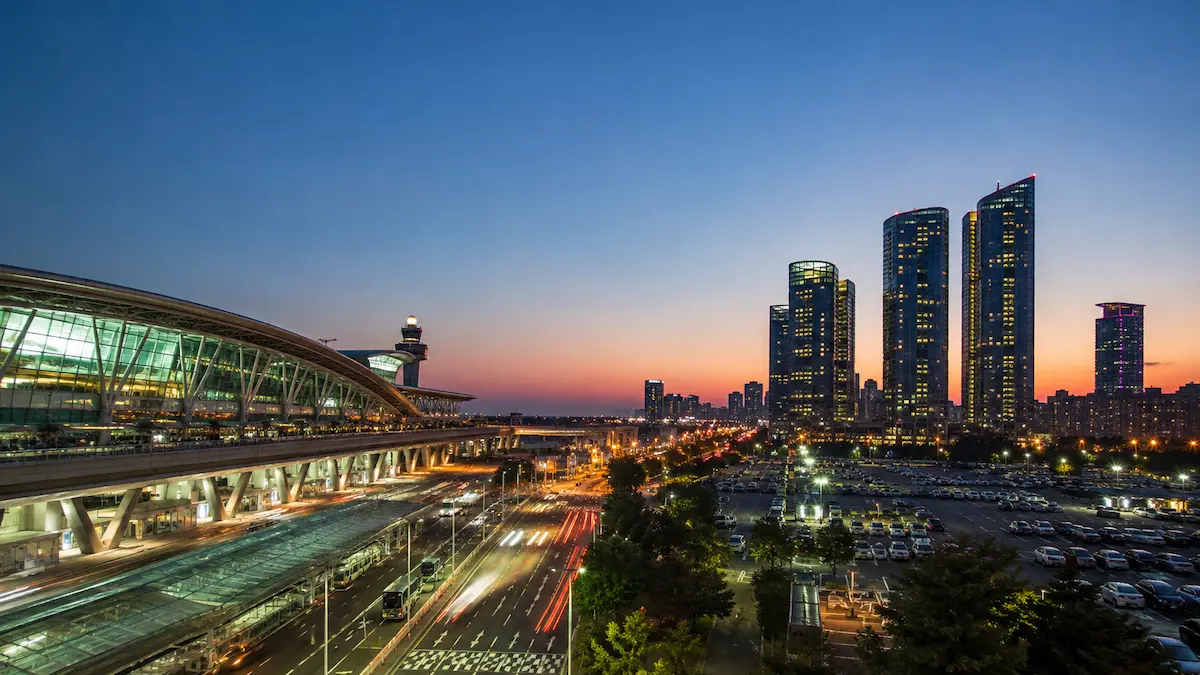
Working out how to get from Seoul Airport to the city center looks simple until you realize that “central Seoul” is not one destination. Seoul Station, Myeongdong, Hongdae, Insadong, Dongdaemun and Gangnam all reward different transport choices. The quickest ride on paper can become the slowest door-to-door journey once you add a long station transfer, stairs, a crowded subway carriage and a final walk over uneven pavement with two suitcases.
This guide focuses mainly on Incheon International Airport (ICN), where most long-haul international travelers arrive. It also explains what to do if your ticket says Gimpo International Airport (GMP). Prices and service details were checked in August 2026, but transport operators can adjust schedules, promotional fares and boarding rules, so use the linked official pages for a final same-day check.
The most useful question is not “Which option is fastest?” It is: Which option gets me closest to my accommodation with the fewest difficult steps?
The 1-Min Cheat Sheet
- AREX Express — best for Seoul Station and travelers who value a reserved seat: about 43 minutes from Terminal 1 or 51 minutes from Terminal 2 to Seoul Station. Budget roughly KRW 13,000 at commonly sold rates, although the official full tariff is higher and online discounts vary. Add time for the walk and transfer to your hotel.
- AREX All-Stop Train — best for Hongdae, Gongdeok and budget travelers: about 59 minutes from Terminal 1 or 66 minutes from Terminal 2 to Seoul Station, with direct stops at Hongik University and Gongdeok. Current adult transport-card fares are around KRW 4,650 from Terminal 1 to Hongdae and KRW 4,750 to Seoul Station; Terminal 2 costs more.
- Airport Limousine Bus — best for Myeongdong, Dongdaemun, City Hall and many hotels: usually KRW 16,000–18,000 and roughly 60–100 minutes, longer in traffic. The main advantage is not speed; it is avoiding subway transfers while your luggage travels underneath the bus.
- Taxi or private airport transfer — best for families, groups and heavy luggage: usually 60–100 minutes depending on traffic. A sensible budget for central Seoul is roughly KRW 70,000–100,000, potentially more at night, in severe traffic or for distant districts. Pre-booking gives clearer pickup instructions and a known vehicle size.
- Late-night airport bus — best when trains have stopped: selected night routes continue into Seoul, but departures can be more than an hour apart. It is cheaper than a private car, yet missing one bus can erase the saving in waiting time.
Top Survival Tips
- Search your hotel in Naver Map or KakaoMap before choosing transport. Check the exact bus stop, station exit, elevator location and walking distance. “Five minutes from the station” may mean five minutes from a specific exit on the opposite side of a large interchange.
- Do not confuse the two AREX services. The orange Express Train is non-stop and has reserved seating. The blue All-Stop Train works more like a subway and stops at Hongdae, Gongdeok and other stations.
- Do not buy the Express just because your hotel is in Myeongdong. It only takes you to Seoul Station. You still need Line 4, a taxi or a walk, and Seoul Station is large enough to feel exhausting after a long flight.
- Do not rely on a Seoul Climate Card for boarding at Incheon Airport. Current rules allow limited airport-related use in one direction, but you cannot board the AREX at Terminal 1 or Terminal 2 with it. Use a T-money card, another accepted transport card or a single-use ticket for the All-Stop Train.
- At Terminal 2, buy your airport bus ticket before joining the boarding queue. Since March 2026, several Airport Limousine routes require a ticket from a staffed counter or machine rather than payment after boarding.
- Check your terminal before booking a timed train. Terminal 2 is farther from Seoul and adds about eight minutes to the Express journey. Do not assume your airline always uses the same terminal.
- Build in immigration and baggage uncertainty. A flight landing at 21:30 does not mean you will reach the transport center at 21:45. A flexible voucher or pay-on-arrival option can be safer than the cheapest non-changeable departure.
- Ignore unsolicited ride offers inside the arrivals hall. Use the official taxi rank, the airport’s transportation counters or a confirmed transfer with clear meeting instructions.
- Count luggage, not just passengers. Four adults with four large suitcases may not fit into a standard sedan. Book a van or jumbo vehicle rather than hoping the driver can solve it at the curb.
The Full Experience
🚆 AREX Express: Best for Seoul Station, Reserved Seating and Predictable Travel Time
Best for: Seoul Station, KTX connections, solo travelers with manageable luggage, travelers avoiding road traffic | Typical ride: 43–51 minutes | Transfers: None to Seoul Station, often one more journey to your hotel
The AREX Express is the cleanest answer when your destination is genuinely Seoul Station. It travels non-stop from Incheon Airport, offers an assigned seat and keeps your arrival time largely independent of Seoul’s road traffic. From Terminal 1, the scheduled ride is about 43 minutes; from Terminal 2, about 51 minutes.
The pricing is more confusing than many guides admit. AREX’s published 2026 full adult tariff is KRW 18,100 from Terminal 1 and KRW 18,700 from Terminal 2, while the commonly marketed retail fare and online reseller prices are often around KRW 13,000 or lower during promotions. In other words, do not judge the train by one old blog price. Compare the official booking screen and reputable resellers on your actual date.
Who should take it: travelers staying by Seoul Station; passengers continuing by KTX; people who want a guaranteed seat after a long flight; and travelers arriving during road rush hour. It can also work for Myeongdong when you are comfortable transferring to Line 4 or taking a short taxi from Seoul Station.
Real door-to-door reality: the 43-minute headline does not include walking from arrivals to the airport station, waiting for the next departure, navigating Seoul Station, transferring to the subway and walking from the final station. A hotel near a direct airport bus stop may still be easier.
✅ What Other Travelers Say
Travelers consistently like the reserved seat, clear luggage areas and predictable arrival. The Express is especially appreciated after an overnight flight because there is no need to stand in a crowded commuter carriage. Many also find online vouchers cheaper than buying the full fare at the station.
⚠️ The Catch (Things to Keep in Mind)
The Express does not stop at Hongdae or Gongdeok. Travelers staying in Hongdae sometimes pay more, ride past their useful stop, then backtrack from Seoul Station. Another common disappointment is underestimating Seoul Station itself: the transfer can involve long corridors, multiple levels and waiting for an elevator with luggage.
Bottom line: choose AREX Express for a fast, comfortable trip to Seoul Station—not simply because it has “Express” in the name.
🚇 AREX All-Stop Train: Best for Hongdae, Gongdeok and the Lowest Fare
Best for: Hongdae, Gongdeok, Digital Media City, budget travelers, easy metro connections | Typical ride: about 59–66 minutes to Seoul Station | Transfers: None for Hongdae or Gongdeok
The All-Stop Train is the option that experienced budget travelers often choose, not because it is glamorous, but because it stops where many visitors actually stay. Hongik University Station serves Hongdae directly. Gongdeok offers useful connections and accommodation options. Digital Media City connects to other rail lines without forcing you through Seoul Station.
Under the current 2026 fare schedule, an adult transport-card trip costs about KRW 4,650 from Terminal 1 to Hongik University and KRW 4,750 from Terminal 1 to Seoul Station. From Terminal 2, the corresponding fares are about KRW 5,250 and KRW 5,350. Single-use tickets can cost slightly more and require a refundable deposit.
Who should take it: solo travelers and couples staying near Hongdae, Gongdeok or another station on the line; travelers comfortable using urban rail; and anyone who would rather spend the fare difference on food than on a reserved seat.
Real luggage experience: the airport stations are manageable, but the All-Stop Train is part of the commuter network. At busy times you may stand, and luggage can feel awkward when the carriage fills. The real challenge usually comes at the transfer station or during the last walk to the hotel.
✅ What Other Travelers Say
Budget-conscious visitors praise how easy it is to reach Hongdae without changing trains. Frequent departures also reduce the stress of missing a specific service after immigration. Travelers who already use a T-money card like continuing onto Seoul’s metro under the integrated fare system.
⚠️ The Catch (Things to Keep in Mind)
There are no reserved seats, and the train can become crowded around commuter hours. It is also easy to board the wrong service if you follow only the word “AREX” rather than checking whether the signs show Express or All-Stop. Before boarding, confirm the train’s final destination on the platform display; not every airport-line movement is equally useful for every direction.
Bottom line: for Hongdae, the All-Stop Train is usually the best combination of price, simplicity and door-to-door time.
🚌 Airport Limousine Bus: Best for Myeongdong, Dongdaemun and Avoiding Subway Transfers
Best for: hotels near a bus stop, large suitcases, Myeongdong, City Hall, Dongdaemun, Gangnam | Typical ride: 60–100+ minutes | Typical fare: KRW 16,000–18,000
The airport limousine bus is often the least tiring public transport option. You hand over your large luggage for storage underneath, sit in a coach seat and get off near a major hotel, station or landmark. For travelers staying close to a stop, this can beat a faster train that requires a difficult transfer.
Popular examples include routes serving Myeongdong, City Hall and central districts, plus K-Airport Limousine routes for Gwanghwamun, Namsan, Dongdaemun, Gangnam, COEX and Jamsil. Standard Airport Limousine routes commonly cost KRW 17,000 for adults, while K-Airport Limousine services are often KRW 18,000. Some routes cost slightly less.
Who should take it: travelers with one or two large suitcases; families who do not want to manage children and baggage through a station; visitors staying near a named stop; and anyone happy to exchange predictable rail time for less walking.
How to choose the correct bus: search your hotel’s Korean or English name on the operator’s route page, then check the walking route from the exact stop to reception. Do not select a bus merely because it says “Myeongdong” or “Gangnam.” These are large areas, and the wrong stop can still leave you with a long walk or taxi ride.
At Incheon Airport, ticketing rules differ by operator and direction. A particularly important 2026 change is that passengers boarding several Airport Limousine routes at Terminal 2 must buy a ticket in advance from the counter or ticket machine. K-Airport Limousine online QR tickets may also need to be exchanged for a physical reserved ticket before airport boarding.
✅ What Other Travelers Say
Travelers love not having to lift a suitcase through station gates or squeeze it into a packed metro carriage. Many describe the bus as the most relaxing first hour in Korea, especially when the stop is beside their hotel. The driver or ground staff handling large bags is a major advantage.
⚠️ The Catch (Things to Keep in Mind)
Traffic is the obvious risk. A ride advertised as 60–90 minutes can take longer during weekday peaks, bad weather or incidents on the expressway. Stops are also not true door-to-door service, and the bus may reach your district only after serving several earlier stops. Frequency varies by route, so a 30- to 60-minute wait can cancel out the convenience.
Bottom line: choose the limousine bus when it stops close to your hotel and you value low-effort luggage handling more than the shortest possible travel time.
🚕 Taxi or Private Airport Transfer: Best for Families, Groups and Door-to-Door Convenience
Best for: three or more travelers, children, seniors, late arrivals, heavy luggage, apartments and hotels far from rail | Typical ride: 60–100+ minutes | Cost: variable by district, traffic, tolls and vehicle size
A taxi is not cheap for one traveler, but the calculation changes for three or four people. Divide a KRW 80,000 ride among four passengers and the gap from four bus tickets becomes much smaller—while the car takes everyone directly to the accommodation.
For central Seoul, budgeting roughly KRW 70,000–100,000 is sensible, with higher totals possible for Gangnam, Jamsil, heavy traffic, a larger vehicle, tolls and night surcharges. Seoul standard taxis currently apply higher night surcharges between 22:00 and 04:00, with the steepest period around 23:00–02:00. Always treat an estimate as a range rather than a guaranteed fare.
Official taxi versus pre-booked transfer: an official airport taxi is flexible and does not require you to predict immigration time. A private transfer gives you a named meeting process, an agreed vehicle category and often a clearer total before arrival. The latter is particularly useful when you need a child seat, a van, multilingual support or a driver waiting after a late flight.
Who should take it: families with sleeping children; groups splitting the cost; travelers with several large bags; people with reduced mobility; and guests staying in residential streets, hillside areas or accommodation far from an airport bus stop.
✅ What Other Travelers Say
Groups often say the best part is not speed but mental relief: no ticket machine, no wrong platform, no final transfer and no luggage drag through the neighborhood. Pre-booked transfer reviews frequently highlight punctual pickup and help with bags, while official taxis remain useful when arrival timing is uncertain.
⚠️ The Catch (Things to Keep in Mind)
Road traffic can make an expensive ride feel painfully slow. Standard sedans also have limited boot space, so a “four-person car” may not hold four large suitcases. Check the luggage allowance, waiting-time policy, flight-delay coverage, toll inclusion and late-night fee before paying. Never follow an unverified person offering a ride inside the terminal.
Bottom line: a private transfer is often worth the premium when the group has enough people or luggage to turn public transport into a stressful operation.
🌙 Late-Night Airport Bus: Best When You Arrive After the Trains Stop
Best for: midnight arrivals, solo travelers avoiding a full taxi fare, passengers staying near Seoul Station or central night-bus stops | Typical fare: around KRW 17,000–18,000 | Frequency: limited
Late-night airport buses are the useful middle ground between waiting at the airport and paying for a private car. Routes change over time, but current services include options toward central Seoul, Seoul Station, Dongdaemun, Gangbuk and Gangnam-area terminals.
For example, K-Airport Limousine’s N6701 night service links the airport with Mapo, Seoul Station, Euljiro and Dongdaemun Design Plaza. Current airport departures extend through the night, but intervals can be roughly two hours. Other night routes have different stops, terminals and ticketing systems.
Who should take it: travelers who clear immigration after the final useful train, whose accommodation is close to a night-bus stop, and who are comfortable completing the final segment by walking or a short taxi ride.
✅ What Other Travelers Say
Midnight arrivals describe the bus as a trip-saver because it avoids both an airport hotel and a full-distance taxi. The ride is usually quiet, luggage storage is straightforward and central stops make a short onward taxi more affordable.
⚠️ The Catch (Things to Keep in Mind)
Low frequency is the real risk. Missing one departure can mean a long wait, and not every route serves both terminals at the same time. Your final stop may still be far from the hotel, while Seoul’s local public transport may no longer be running normally. Check the live official timetable after landing, not a screenshot saved months earlier.
Bottom line: use a night bus when the stop is genuinely useful and the next departure is reasonable; otherwise, protect your first night by pre-booking a transfer.
Which Option Is Best for Your Seoul Neighborhood?
- Hongdae: take the AREX All-Stop Train directly to Hongik University Station. The Express usually wastes money and adds backtracking.
- Seoul Station: take AREX Express for comfort and speed, or the All-Stop Train when price matters more than 15–20 minutes.
- Myeongdong: choose a direct limousine bus when the stop is close to your hotel. Take AREX Express plus Line 4 only when you are comfortable navigating Seoul Station with luggage.
- City Hall and Gwanghwamun: a direct limousine bus is usually easiest. AREX plus a short taxi can be a good traffic-proof compromise.
- Dongdaemun: look for a direct airport bus or use a pre-booked transfer. Train transfers can be tiring with luggage.
- Gangnam and COEX: consider a direct limousine route or private transfer. Traveling via Seoul Station sends you farther north than necessary and often creates a long cross-city connection.
- Jamsil: direct bus or private transfer usually wins on simplicity. Public rail can be economical but involves a long journey and at least one transfer.
- Insadong and Jongno: an airport bus toward central Seoul is often easiest. AREX to Gongdeok or Seoul Station followed by metro or taxi is the backup.
What About Gimpo Airport?
Gimpo International Airport is much closer to central Seoul than Incheon. The AREX All-Stop Train takes about 23 minutes to Seoul Station, while Subway Line 5 is useful for Gwanghwamun and central districts. Line 9 is particularly useful for parts of Gangnam, and express services can save time.
For most Gimpo arrivals, there is no reason to pay Incheon-level transfer prices. Use AREX or the subway unless you have heavy luggage, several passengers or accommodation far from a convenient station. A taxi to central Seoul is also far cheaper than one from Incheon, although traffic still matters.
Key FAQs
What is the cheapest way to get from Incheon Airport to Seoul city center?
The AREX All-Stop Train is normally the cheapest practical option. In the 2026 fare schedule, Terminal 1 to Seoul Station is about KRW 4,750 with a transport card, while Terminal 2 to Seoul Station is about KRW 5,350. It is especially good for Hongdae because no transfer is required.
Is AREX Express or the airport limousine bus better for Myeongdong?
The airport limousine bus is usually easier when it stops close to your hotel because it avoids the Seoul Station transfer. AREX Express is faster and more predictable during road traffic, but you must still travel from Seoul Station to Myeongdong. With large luggage, the bus often wins; with light luggage during rush hour, AREX can win.
How do I get from Incheon Airport to Seoul after midnight?
Check the current late-night airport bus routes first. They serve selected central and Gangnam-area stops but run infrequently. When the next bus is far away, your hotel is not near a stop, or you have several bags, a pre-booked private transfer is the safer and less exhausting option.
Final Verdict and Your Next Step
There is no single best way to get from Incheon Airport to Seoul. The right answer depends on the final kilometer:
- Choose AREX Express for Seoul Station, KTX connections or a guaranteed seat with predictable timing.
- Choose AREX All-Stop for Hongdae, Gongdeok and the lowest fare.
- Choose the airport limousine bus when it stops close to your hotel and you want to avoid carrying luggage through a transfer.
- Choose a taxi or private transfer for families, groups, late arrivals, accessibility needs or several suitcases.
- Choose the late-night bus only after confirming the exact departure and the distance from its Seoul stop to your accommodation.
Before booking anything, put your hotel into Naver Map, identify the nearest useful airport-bus stop and station elevator, then compare the full door-to-door journey. Ten minutes saved on the airport train is not a saving if you spend another 25 minutes dragging luggage through Seoul Station.
Advance booking is most valuable for the AREX Express, a reserved airport bus ticket or a private transfer. The All-Stop Train normally does not require advance booking.
Book an AREX Express ticket: Check AREX tickets on Klook or compare AREX tickets on KKday.
Reserve an airport limousine bus: Check K-Airport Limousine tickets on Klook or check K-Limousine tickets on KKday.
Book a door-to-door airport transfer: Compare Incheon Airport transfers on Klook or compare private transfers on KKday.
Still choosing where to stay? A hotel beside a direct airport route can save more time than a slightly cheaper room in an inconvenient side street. Compare Seoul hotels on Booking.com or Seoul hotels on Agoda, then check the walking route from the station exit or bus stop before confirming.
Useful official checks before departure: AREX official website, Incheon Airport bus routes, Airport Limousine routes, K-Airport Limousine routes, official airport taxi information, and late-night airport bus information.