
💡 Key Takeaways
- Seomyeon is the safest all-round choice for a first Busan trip because Metro Lines 1 and 2 meet here, cutting down the number of transfers when your itinerary mixes beaches, markets and central-city sights.
- Haeundae is better if the beach and eastern Busan are the trip, not just one stop on it. You gain a much better evening atmosphere and easy access to Haeundae, Mipo and the Blue Line Park area, but you pay with longer journeys to Nampo, Jagalchi, Gamcheon and Songdo.
- Gwangalli is the best “I want to enjoy my hotel area” option. The bridge view, cafés and waterfront are hard to beat after dark, but beachfront hotels are not as close to the subway as the map first suggests.
- Nampo is underrated for short, sightseeing-heavy trips. It puts Jagalchi, BIFF Square, Gukje Market and Yongdusan Park within an easy cluster and keeps Gamcheon and Songdo relatively close.
- Do not choose a hotel by district name alone. In Busan, a hotel that is 12 to 15 minutes from the station can feel much farther with luggage, summer humidity, stairs or late-night shopping bags.
If you are wondering where to stay in Busan for your first visit, the difficult part is not finding a “good neighborhood.” Busan has several good neighborhoods. The real problem is that they are spread across a long coastal city, and the area that gives you a perfect beach evening may add 40 to 60 minutes to a market-heavy sightseeing day. On a three-night trip, that difference is not small.
The biggest first-timer mistake is booking the prettiest hotel without checking the actual daily route. Haeundae, Gwangalli, Seomyeon and Nampo all look reasonably close when you zoom out on a map. They do not feel close when you are changing subway lines after 20,000 steps, carrying shopping bags, or dragging a suitcase through a station interchange.
This guide compares the areas the way a practical traveler actually needs them compared: transport, walking, luggage friction, night atmosphere, realistic hotel price bands, who each area suits, and who will probably regret staying there. The aim is simple: help you pick a base that saves time rather than just looks good in photos.
Price note: The nightly ranges below are planning ranges for a standard private double room, based on 2026 booking patterns and current listings rather than guaranteed rates. Summer beach weekends, festivals, major concerts and holiday dates can push Busan hotel prices dramatically higher. Always compare your exact dates before choosing an area.
The 1-Minute Cheat Sheet
- Seomyeon — Best overall for first-time visitors: choose it if you have a mixed itinerary and care more about efficient transport than waking up beside the sea. Rough planning range: ₩60,000–₩140,000 for many budget-to-midrange options.
- Haeundae — Best for beaches, families and eastern Busan: choose it if Haeundae, Mipo, Cheongsapo, the Blue Line Park and relaxed evenings matter more than old-town markets. Rough planning range: ₩80,000–₩180,000, with ocean-view and luxury hotels easily going far higher.
- Gwangalli — Best for night views, couples and café-hopping: choose it if you want your neighborhood itself to feel like part of the trip. Rough planning range: ₩70,000–₩160,000, while prime bridge-view rooms can cost more.
- Nampo-dong — Best for markets, street food and west-side sightseeing: choose it if Jagalchi, BIFF Square, Gukje Market, Gamcheon and Songdo are high priorities. Rough planning range: ₩50,000–₩120,000.
- Busan Station — Best for KTX convenience and one-night stays: choose it if you arrive late, leave early, use day tours, or hate moving luggage. Rough planning range: ₩55,000–₩130,000.
- Songdo — Best for a quieter ocean stay near southwest Busan: choose it if you want sea views without Haeundae’s scale and your itinerary leans toward Gamcheon, Nampo and Yeongdo. Rough planning range: ₩60,000–₩140,000.
Top Survival Tips
- Build your area choice around the side of Busan where you will spend most of your daylight hours. This matters because Busan is not a compact center-and-suburbs city for tourists. If four of your six must-dos are Haeundae, Blue Line Park, Haedong Yonggungsa and Centum City, staying in Nampo just because the hotel is cheaper is false economy. The reverse is also true for a Gamcheon–Jagalchi–Songdo-heavy itinerary.
- Check walking time to the exact station exit, not just the station name. A listing may advertise “near Gwangan Station” while sitting much closer to the beach than the subway. Official Visit Busan guidance puts Gwangalli Beach at roughly a 13-minute walk from Gwangan Station, while Haeundae Beach is around a 15-minute walk from Haeundae Station. Those walks are fine after dinner; they are less charming with a large suitcase in rain or August humidity.
- With luggage, one easy transfer can be worth paying slightly more for the hotel. Gimhae Airport connects to the Busan-Gimhae Light Rail, with a transfer at Sasang for Metro Line 2. Seomyeon is a relatively straightforward airport base; Haeundae is much farther east. Busan also has airport limousine services to the Seomyeon/Bujeon and Haeundae/Gijang corridors as of 2026, but schedules can change, so recheck before arrival.
- Do not stay inside Gamcheon Culture Village just because it looks atmospheric online. Visit it; do not automatically base yourself there on a first trip. The slopes, stairs, bus dependence and awkward luggage access are exactly the problems this guide is trying to help you avoid.
- Expect Gwangalli and Haeundae to behave like event districts on busy weekends. Drone shows, beach events, summer crowds and nightlife can turn a normally easy waterfront evening into road congestion, noise and fully booked restaurants. Light sleepers should prioritize a room away from the main beachfront road, not simply “ocean view at any cost.”
- Do not trust an average nightly rate during major events. Busan prices can jump sharply around festivals, concerts and peak summer dates. A flexible cancellation policy is often more valuable than saving a small amount on a non-refundable booking months out.
- For a first trip of four nights or more, splitting your stay can genuinely make sense. Two nights in Haeundae or Gwangalli plus two nights in Seomyeon or Nampo sounds less convenient on paper, but it can remove repeated cross-city commutes and give you two very different versions of Busan.
The Full Experience
📍 Seomyeon: Best Overall for First-Time Visitors
🚇 Best transit hub · 🍜 Excellent food · 🛍️ Shopping · 🌙 Busy nightlife · 💰 Strong midrange value
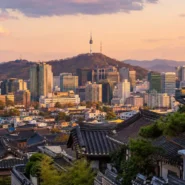
If a friend told me they had three nights in Busan, had never been before, and had a normal mixed itinerary, Seomyeon would be my default recommendation. It is not the most beautiful area in the city. That is exactly why some travelers dismiss it too quickly. Its value is practical: Busan Metro Lines 1 and 2 meet at Seomyeon, so you can reach the old downtown side and the beach side without repeatedly backtracking through another hub.
Line 1 takes you toward Busan Station, Nampo and Jagalchi. Line 2 takes you toward Gwangalli, Centum City and Haeundae. In a city where the attractions are spread out, that transfer geometry matters more than a postcard view if your trip is short.
Typical hotel budget: around ₩60,000–₩140,000 for many practical private rooms, with upscale hotels costing more. Seomyeon usually gives you a broader supply of business hotels and city hotels than the beach districts, so it is often easier to find a clean, well-located room without paying an ocean-view premium.
Night atmosphere: lively, bright and late. Around Seomyeon 1-beonga and the bar streets, you will see restaurants, bars, karaoke rooms and late-night foot traffic. A few blocks can make a big difference: one hotel can be convenient and quiet, while another sits above a drinking street that stays noisy well after midnight.
Why Seomyeon works so well
You can return to your hotel between daytime sightseeing and dinner without feeling as though you crossed the entire city for a shower. There are also plenty of restaurants and shops around the station, so you do not need to “plan” every meal. That flexibility is especially useful on a first trip when sightseeing days tend to run longer than expected.
Seomyeon also makes sense if you are coming from Gimhae Airport. The airport rail connection reaches Sasang, where you can transfer to Metro Line 2 toward Seomyeon. Official airport guidance estimates the rail journey to Seomyeon at roughly 30 minutes after the relevant connections, while Haeundae is much farther along the same eastbound axis.
✅ What Other Travelers Say
The recurring theme in recent traveler discussions is not that Seomyeon is anyone’s dreamiest Busan neighborhood. It is that it is the easiest base when you want to visit several different parts of the city in only two to four days. Travelers repeatedly point to the Lines 1 and 2 interchange, the large number of food options and the ability to reach both east and west Busan without overthinking every route.
⚠️ The Catch (Things to Keep in Mind)
Seomyeon is “central” in a transport sense, not in a sightseeing sense. You are not waking up beside Busan’s most famous beach, market or coastal view. You will commute somewhere almost every day. It can also feel hectic, especially around nightlife streets, and some hotels marketed as Seomyeon are farther from the station than the name suggests.
Best for: first-time visitors, food-focused travelers, shoppers, solo travelers, couples with packed itineraries, and anyone prioritizing subway convenience.
Not ideal for: travelers who want quiet seaside mornings, people who strongly dislike nightlife districts, or anyone whose itinerary is almost entirely Haeundae/Gijang.
📍 Haeundae: Best for Beaches, Families and Eastern Busan
🏖️ Iconic beach · 👨👩👧 Family-friendly · 🚶 Great evening walks · 🚆 Line 2 access · 💸 Higher peak-season prices
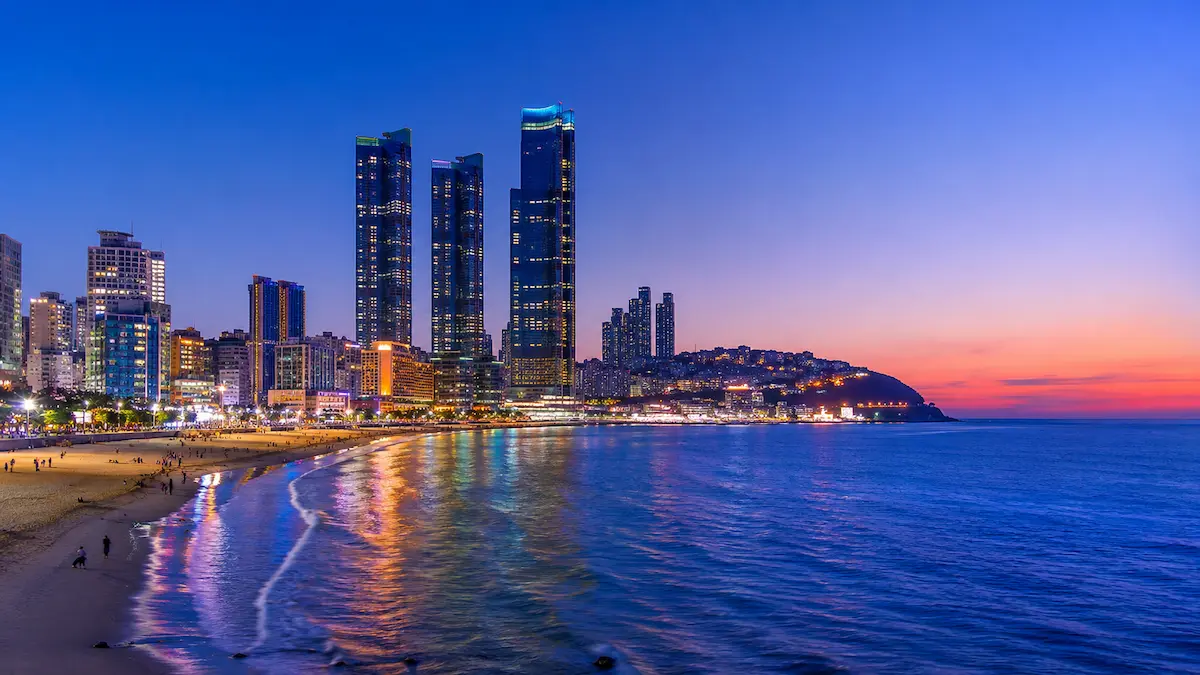
Haeundae is the easiest area to fall in love with before you arrive. It has the beach, high-rise hotels, restaurants, Haeundae Market, the Mipo end of the coast and easy access toward the Blue Line Park. If your mental picture of Busan is “coastal city break,” staying here delivers that feeling every morning and every evening.
For many first-time visitors, this is a better experience than staying centrally and commuting to the sea. The key is to be honest about your itinerary. If you want Haeundae, Mipo, Cheongsapo, Songjeong, Haedong Yonggungsa and maybe Centum City, then Haeundae is not “far out.” It is exactly where you should be.
Typical hotel budget: around ₩80,000–₩180,000 for many standard private rooms outside the most expensive dates. Ocean-view rooms, branded hotels and luxury properties can easily run ₩220,000–₩500,000+, especially on summer weekends.
Transport reality: Haeundae Station is on Metro Line 2, and official Visit Busan guidance places Haeundae Beach about a 15-minute walk from Exit 5. That means a “beachfront” hotel can be wonderfully close to the sand but less convenient for daily subway use than a hotel halfway between the beach and station.
Why Haeundae is more practical than it looks
You can do an entire low-friction day without touching public transport: beach walk, aquarium, Haeundae Market, coffee, sunset, dinner and the Mipo area are all within the broader neighborhood. Families especially benefit from having things to do close to the hotel rather than forcing children through long cross-city journeys morning and night.
Airport access has also improved compared with the period when the limousine bus was suspended. Busan Metropolitan City reorganized airport limousine routes in 2026, including service through Haeundae. That can be a much more pleasant arrival with large bags than taking the light rail to Sasang and then sitting through the long Line 2 journey east.
✅ What Other Travelers Say
Recent first-timer discussions often split into two camps: travelers who value efficient citywide sightseeing recommend Seomyeon, while travelers who want the most immediately “Busan” experience lean toward Haeundae. People staying here consistently like having restaurants, beach walks and attractions concentrated in one district rather than returning to a purely functional hotel area at night.
⚠️ The Catch (Things to Keep in Mind)
The penalty is obvious once you schedule Nampo, Jagalchi, Gamcheon or Songdo. Haeundae to the old downtown side can consume a large part of an hour each way, usually with a transfer. That is fine once; it becomes tiring if you do it repeatedly. Haeundae can also feel more polished and tourist-oriented than the older parts of Busan, and summer weekends bring higher prices and more crowds.
Best for: families, couples, beach lovers, first-timers who want a vacation atmosphere, and travelers focusing on eastern Busan.
Not ideal for: market-heavy itineraries, ultra-budget travelers in peak season, or people who want to explore both sides of Busan intensively in only two days.
📍 Gwangalli: Best for Night Views, Couples and Café-Hopping
🌉 Gwangan Bridge views · ☕ Café scene · 🍸 Bars and restaurants · 💑 Great for couples · 🚶 Longer station walk
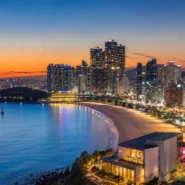
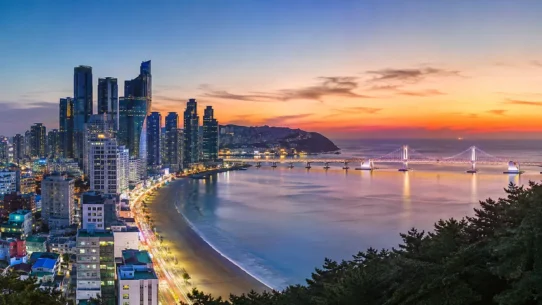
Gwangalli is the area I would choose when the hotel neighborhood itself needs to be enjoyable, not merely convenient. The beach faces Gwangan Bridge, and after dark the whole waterfront becomes one long sequence of cafés, restaurants, bars and people sitting by the sea. It feels social without having the same resort-strip character as Haeundae.
For couples and repeat visitors, I often prefer Gwangalli’s evening atmosphere to Haeundae. For a first-timer, I still think you need to understand the transport trade-off before booking.
Typical hotel budget: around ₩70,000–₩160,000 for many standard rooms, with good bridge-view rooms commonly costing more. The exact view matters: “ocean view” and “full Gwangan Bridge view” are not always the same thing, so inspect room photos carefully.
Transport reality: Gwangalli Beach is not directly on top of Gwangan Station. Official Visit Busan guidance gives roughly a 13-minute walk from Exit 5 to the beach, and some Millak-side hotels are farther from the subway. In practice, many travelers use buses more than expected.
Why Gwangalli can be the best quality-of-trip choice
A central hotel saves transit time, but it does not automatically improve the hours you spend after 7 p.m. Gwangalli does. You can come back tired, shower, then walk downstairs to a bridge view, seafood dinner or café without planning another journey. If you are the kind of traveler who values evening atmosphere as much as daytime sightseeing, this matters.
✅ What Other Travelers Say
Traveler comments repeatedly describe Gwangalli as the “vibes” choice: better for a relaxed waterfront evening, good cafés and scenic drinks, particularly for people who are not trying to race through every major attraction. One common practical comment is that the beach and hotels can feel farther from the subway than expected, so buses or taxis become part of the routine.
⚠️ The Catch (Things to Keep in Mind)
Gwangalli is a poor choice if your top attractions are mostly Gamcheon, Songdo, Jagalchi and Nampo. You will spend too much time crossing the city. Weekend events and drone-show nights can also make the beachfront noisy and crowded. If you are a light sleeper, consider a side street or a room set back from the main road even if that means giving up a direct bridge view.
Best for: couples, café lovers, nightlife-without-clubbing travelers, photographers and anyone who wants a memorable waterfront base.
Not ideal for: travelers with large luggage who insist on subway-only transport, west-Busan-heavy itineraries, or anyone who wants the shortest possible commute to every major sight.
📍 Nampo-dong: Best for Markets, Street Food and West-Side Sightseeing
🐟 Jagalchi Market · 🍢 Street food · 🛍️ Gukje & BIFF · 🚇 Line 1 · 💰 Good value
Nampo is the area I think first-time visitors overlook most often. It does not give you a glamorous beach, but it puts you inside one of Busan’s densest sightseeing clusters. Jagalchi Market, BIFF Square, Gukje Market, Gwangbok-ro and Yongdusan Park are all close enough to combine without repeatedly opening a transit app.
If your first-day plan looks like “markets, seafood, street snacks, Busan Tower, then Gamcheon tomorrow,” Nampo can save more time than Seomyeon. It is also only a few stops from Busan Station on Line 1, so arriving by KTX is simple.
Typical hotel budget: around ₩50,000–₩120,000 for many private rooms, with a good number of value-focused business hotels and smaller properties. Current Agoda listings in the area include well-reviewed hotels around the low-to-mid price tier, and Nampo generally avoids the beach premium found in Haeundae.
Night atmosphere: active around BIFF Square, Gwangbok-ro and food streets in the evening, but less of a late-night party district than Seomyeon. Some shopping streets quiet down noticeably after stores close, which is either a benefit or a drawback depending on what you want.
Why Nampo is excellent for a short itinerary
First-time trips are often overloaded. Nampo lets you remove transit from part of the day. You can walk between several major attractions, take a short ride toward Gamcheon, and reach Songdo more easily than you could from Haeundae or Gwangalli. For travelers who love old downtown neighborhoods, markets and food, it also feels more distinctive than a generic central business district.
✅ What Other Travelers Say
Travelers who choose Nampo often praise the walkability of the market cluster and the older-city atmosphere. In recent discussions comparing Nampo with Seomyeon and Gwangalli, people consistently note that Nampo makes particular sense when most of the itinerary sits on the Jung-gu, Gamcheon and Songdo side of the city.
⚠️ The Catch (Things to Keep in Mind)
Eastern Busan becomes the long commute. Haeundae, Gwangalli, Centum City and Haedong Yonggungsa are all less convenient from here. Nampo can also feel quieter late at night than Seomyeon, and some cheaper hotels are older or more motel-like in style, so read recent room reviews rather than booking purely by star rating.
Best for: food lovers, market lovers, photographers, budget-conscious travelers and first-timers with a west-side itinerary.
Not ideal for: travelers planning multiple Haeundae/Gijang days, people wanting a beach outside the hotel, or visitors who prioritize modern nightlife.
📍 Busan Station: Best for KTX Convenience and One-Night Stays
🚄 KTX at the door · 🧳 Minimal luggage hassle · 🚌 Tour pickup convenience · 🚇 Line 1 · 🌃 Functional rather than atmospheric
Staying near Busan Station is not the romantic choice, but it can be the smartest choice for a very specific traveler: someone arriving late by KTX, leaving early, joining day tours, or carrying enough luggage that every extra transfer feels like work.
The main station connects directly to Busan Metro Line 1, so Nampo and Jagalchi are easy. Seomyeon is also straightforward. If your trip is only one night before moving on to Gyeongju, Seoul or another city, there is little value in hauling bags all the way to Haeundae just to reverse the journey the next morning.
Typical hotel budget: around ₩55,000–₩130,000, with several chain and business-style hotels around the station. Agoda currently lists Ramada Encore by Wyndham Busan Station around the city’s midrange level, while other small hotels can be considerably cheaper.
Night atmosphere: practical and urban. The station plaza and main roads stay active, but the area does not have the same “walk downstairs and enjoy Busan” feeling as Gwangalli, Haeundae or Nampo. Some side streets have budget motels and older commercial buildings, so check recent guest comments about the immediate block.
Why Busan Station can save a surprising amount of effort
The value is not just KTX access. Many Busan day tours use Busan Station as a pickup point, and the station has food, shops and luggage facilities. If your itinerary includes an organized day trip plus a rail journey, you can eliminate a lot of dead travel time by sleeping here.
✅ What Other Travelers Say
Travelers who stay here typically praise the convenience, room value and ease of walking from the train with luggage. The criticism is equally consistent: it is a useful base, but not necessarily the area they would choose for a longer leisure stay when Haeundae, Gwangalli, Seomyeon or Nampo offer more atmosphere.
⚠️ The Catch (Things to Keep in Mind)
If your holiday is beach-focused, Busan Station puts you on the wrong side of the city. Haeundae is roughly a cross-city journey with a transfer at Seomyeon, and travelers commonly report around 40 to 50 minutes depending on the exact destination and wait time. You save effort on arrival day but may pay it back every sightseeing day.
Best for: one-night stays, KTX arrivals, early departures, travelers with large luggage, and people joining tours from the station.
Not ideal for: beach trips, romantic stays, nightlife-focused travelers, or visitors who want to step outside into a major sightseeing district.
📍 Songdo: Best for a Quieter Ocean Stay Near Southwest Busan
🌊 Ocean views · 🚠 Cable car · 😌 Quieter evenings · 🚕 Better with buses/taxis · 📍 Good for Gamcheon and Nampo side
Songdo is the alternative I would suggest to someone who says, “I want to stay by the sea, but Haeundae feels too far from the things I actually want to see.” It sits much closer to Nampo, Jagalchi and Gamcheon than the eastern beaches do, and the waterfront has the Songdo Bay cable car, coastal scenery and a slower evening rhythm.
It is particularly appealing for couples, families or older travelers who want a hotel with a sea view but do not need a huge nightlife district outside the door.
Typical hotel budget: around ₩60,000–₩140,000 for many standard rooms, with sea-view upgrades often still cheaper than equivalent prime Haeundae rooms. This is one of the areas where paying a little extra for the right view can actually improve the stay because the waterfront is the main reason to base yourself here.
Transport reality: this is the catch. Songdo Beach does not have its own metro station. You rely more on buses and taxis to connect back toward Jagalchi/Nampo and the wider network. If you hate buses in unfamiliar cities, Songdo will create more friction than Seomyeon or Nampo.
Why Songdo works for the right first-time itinerary
If your plan includes Gamcheon Culture Village, Jagalchi, Nampo, Yeongdo and perhaps Taejongdae, Songdo gives you a coastal base without forcing a daily trip from the far east. You get sea air in the morning and still stay on the correct side of the city for the older port neighborhoods.
✅ What Other Travelers Say
Travelers who like Songdo tend to emphasize the calmer waterfront and value compared with better-known beaches. It is often recommended as a pleasant compromise for people who want ocean views but do not need Haeundae’s resort scale. The recurring practical warning is transport: buses or taxis are much more important here.
⚠️ The Catch (Things to Keep in Mind)
Do not book Songdo and then build a Haeundae–Gwangalli–Centum itinerary. That defeats the entire point of staying here. Evening dining choice is also smaller than in Haeundae or Seomyeon, and the area becomes quieter later at night. For some travelers that is a major benefit; for others it feels too sleepy.
Best for: couples, families, quieter beach stays, ocean-view value seekers, and travelers focusing on southwest Busan.
Not ideal for: subway-only travelers, clubbing/nightlife trips, or itineraries concentrated in Haeundae and Gijang.
Key FAQs
Is Seomyeon or Haeundae better for first-time visitors to Busan?
Choose Seomyeon if your itinerary is mixed and you want the easiest access to both Line 1 and Line 2. Choose Haeundae if the beach, Blue Line Park, Mipo, Cheongsapo and eastern Busan are major priorities and you want a better neighborhood experience after sightseeing. For a two- or three-night trip trying to “see everything,” Seomyeon is usually more efficient. For a slower coastal trip, Haeundae is more enjoyable.
What is the best area to stay in Busan without a car?
Seomyeon is the easiest car-free base overall because two major metro lines meet there. Nampo is also excellent if your itinerary is concentrated around markets, Gamcheon and the old downtown. Gwangalli and Haeundae are both perfectly workable without a car, but the walk between the beach and subway matters more than many first-time visitors expect. Songdo is the least subway-friendly option in this guide because you will use buses or taxis more often.
Where should I stay in Busan for 2, 3 or 4 nights?
For 2 nights, stay in one area and minimize transfers: Seomyeon for a mixed itinerary, Nampo for west-side sights, or Haeundae for an east-side/beach trip. For 3 nights, Seomyeon is the safest single-base choice. For 4 nights or more, consider splitting the stay between an eastern coastal area such as Haeundae or Gwangalli and a central/western base such as Seomyeon or Nampo. The hotel move costs you an hour; repeated cross-city trips can cost much more.
Editorial Verification Notes
Transport and walking guidance in this article was cross-checked against current information from Busan Metropolitan City, Gimhae International Airport and Visit Busan. Current hotel-market context was checked against live 2026 listings and city pages on Booking.com and Agoda, while traveler-fit observations were compared with recent Korea travel discussions rather than relying only on tourism-board descriptions.
- Busan Metropolitan City public transportation
- Gimhae International Airport public transportation
- Visit Busan
- Booking.com Busan listings
- Agoda Busan listings
Final Verdict and Your Next Step
If you want one answer and do not want to overthink it, book near Seomyeon Station. Aim for a genuine five-to-eight-minute walk from an entrance, read recent noise comments, and choose a room with free cancellation if your dates are far away.
If waking up beside the sea is a core part of the trip, choose Haeundae for the easiest all-round beach experience or Gwangalli for the better night view and café/bar atmosphere. If your itinerary is mostly Jagalchi, BIFF Square, Gamcheon and Songdo, stop forcing yourself to stay “central” and choose Nampo. You will save time every day.
For travelers arriving late by KTX or leaving early, Busan Station is a logistics decision, not a sightseeing decision — and sometimes that is exactly the right decision. Songdo is the niche pick for travelers who want a quieter ocean hotel while staying on the southwest side of the city.
The last piece of advice is simple: once you know your area, book earlier than you think you need to, especially for summer weekends, festival periods and major events. Busan can have plenty of hotel rooms citywide while the good rooms in the right neighborhood disappear quickly.