
💡 Key Takeaways
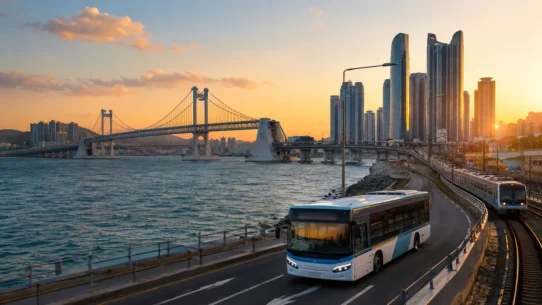
- For Seomyeon with light luggage, the light rail plus Metro Line 2 is usually the smartest budget choice. It avoids road traffic and needs only one transfer at Sasang.
- For travelers dragging suitcases, the airport limousine bus is often worth the extra fare. The current 2026 routes serve Seomyeon/Bujeon and Haeundae/Gijang, but departures are much less frequent than the metro and cash is not accepted.
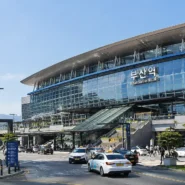
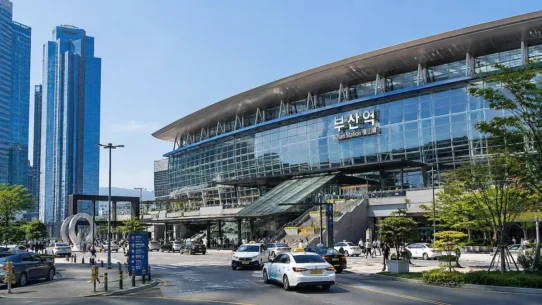
- Do not blindly follow old Busan airport guides. Airport limousine service was restored, but the current routes do not provide a direct airport-to-Busan-Station bus. If you are staying near Busan Station or Nampo with heavy bags, a taxi or private transfer can save two rail transfers and a lot of corridor walking.
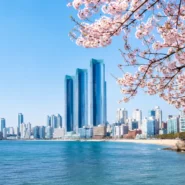
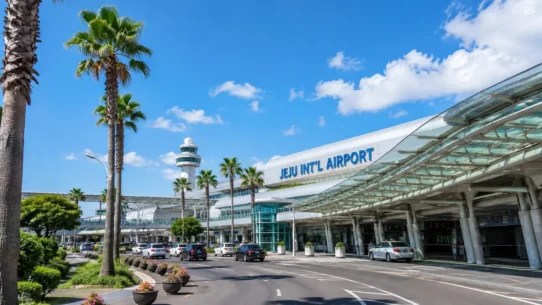
Figuring out how to get from Busan Airport to the city center sounds simple until you realize that “Busan city center” can mean very different places. Seomyeon is the most practical central transport hub, Busan Station and Nampo sit farther south, while Gwangalli and Haeundae are well to the east. The cheapest option is not always the easiest once you add a 20-kilogram suitcase, a tired child, a late-night arrival, or a hotel that is ten minutes uphill from the nearest station.
This guide focuses on the decision that actually matters: which option will get you to your hotel with the least regret? Prices, operating patterns and airport bus routes were checked against current official information on August 7, 2026. Where traveler experiences are mentioned, they are treated as practical observations rather than official guarantees.
The 1-Min Cheat Sheet
- Light rail + subway — best for solo travelers, couples and light packers. Take the Busan-Gimhae Light Rail Transit from Airport Station to Sasang, then transfer to Metro Line 2. It is cheap, frequent and traffic-proof. Best fit: Seomyeon, Gwangalli and Haeundae. The downside is suitcase handling during transfers.
- Airport limousine bus — best balance of comfort and price if its route matches your hotel. In 2026, the Seomyeon/Bujeon route costs KRW 6,000 and the Haeundae/Gijang route costs KRW 9,500. You avoid dragging luggage through subway corridors, but departures are roughly hourly rather than every few minutes.
- Regular taxi — best for 2–4 travelers with bags, late arrivals or hotels far from a station. Official airport estimates put a standard taxi at roughly KRW 18,000 to Seomyeon, KRW 20,000 to Nampo/Jagalchi, and KRW 25,000 to Gwangalli or Haeundae under normal conditions. Traffic and night surcharges can push the final fare higher.
- Pre-booked private transfer — best for families, first-time visitors, oversized luggage and stress-free arrivals. It usually costs more than a normal taxi, but the value is in having a driver waiting, a vehicle selected for your group and less uncertainty after immigration.
Top Survival Tips
- Decide by hotel area, not by the words “city center.” Seomyeon, Busan Station, Nampo, Gwangalli and Haeundae require different transfer strategies.
- Do not trust an old blog post that says the airport limousine is still suspended. Service returned and the current routes were reorganized again in January 2026.
- Do not expect the present limousine bus to drop you at Busan Station. The Seomyeon/Bujeon route finishes around Bujeon, while the eastern route serves Haeundae/Gijang. Staying near Busan Station or Nampo usually means rail transfers, taxi, or private transfer.
- If you have two big suitcases, count transfers as a real cost. A route that saves KRW 10,000 but forces you through several station corridors, elevators and platforms can feel like a bad bargain after a long flight.
- For the limousine bus, plan around the timetable rather than simply walking to the stop. The Seomyeon/Bujeon airport departures currently run from 07:20 to 21:30, while Haeundae/Gijang services operate within roughly the 07:10 to 21:40 window depending on the specific run and endpoint.
- Cash is not the fallback for the airport limousine. Current official guidance says to buy through the Bustago system or airport kiosk, or board with an accepted transit/credit card when seats are available. Cash is not accepted.
- Check your luggage against the limousine allowance. The published rule allows up to two pieces per passenger with a combined weight under 30 kg. If you are carrying sports gear, multiple giant cases or a stroller plus several bags, a larger taxi or private van is safer.
- Do not assume a Busan Metro pass covers the airport light rail. Busan Transportation Corporation notes that its one-day and multi-day metro passes do not apply to the Busan-Gimhae Light Rail Transit.
- Save your hotel name and address in Korean before landing. It makes taxi communication easier and helps you confirm that you are heading to the correct branch when hotels have similar English names.
- Use Naver Map or KakaoMap for local route checking. They are generally more useful in Korea for station exits, local buses and walking approaches. For taxis, compare the route and estimated fare on your phone instead of accepting an unexplained fixed cash quote.
- If you land close to 23:00, treat public transport as a bonus rather than a promise. Immigration, baggage delivery and walking to the station can eat your margin. Standard taxi night surcharges begin at 23:00 and become higher after midnight.
The Full Experience
🚆 Light Rail + Metro: Best for Seomyeon, Gwangalli and Budget Travelers
Tags: Cheapest-feeling option • Frequent • Traffic-proof • 1 transfer to Seomyeon/Haeundae • Awkward with heavy luggage
The rail route is the default choice I would recommend to a reasonably mobile traveler arriving during normal operating hours with one manageable suitcase. Gimhae International Airport has its own station on the Busan-Gimhae Light Rail Transit. From there, ride to Sasang Station, follow the transfer signs to Busan Metro Line 2, and continue east.
For Seomyeon, this is pleasantly straightforward: airport light rail to Sasang, one transfer, then Line 2 to Seomyeon. For Gwangalli, stay on Line 2 to Gwangan Station. For Haeundae, stay on Line 2 farther east to Haeundae Station. The train itself is easy; the part that makes or breaks the trip is how much luggage you have to move through Sasang and how far your hotel is from the final station exit.
Busan Station and Nampo are less elegant by rail. You still take the airport light rail to Sasang and Line 2 to Seomyeon, but then you must transfer again to Line 1 for Busan Station, Jagalchi or Nampo. With a backpack, that is fine. With two hard-shell suitcases, it is exactly the kind of “cheap” journey that can stop feeling cheap.
Current Busan Metro adult fares start at KRW 1,600 with a transit card for a shorter urban-rail journey and rise by distance; the airport light rail has its own fare/transfer rules, so your exact total depends on distance and ticket/card type. The practical takeaway is simpler: this remains the lowest-cost mainstream airport option and normally comes to only a few thousand won rather than tens of thousands.
✅ What Other Travelers Say
Recent travelers continue to describe the light rail-to-Sasang connection as the dependable budget route, especially for Seomyeon and Line 2 neighborhoods. The recurring complaint is not the trains themselves; it is the extra effort of moving large suitcases through transfer corridors and station exits. Travelers carrying only a backpack or one rolling case tend to view the same route much more positively.
⚠️ The Catch (Things to Keep in Mind)
Rail is not door-to-door. Add the walk from your arrival gate to Airport Station, the Sasang transfer, elevator waits, and the final walk from your destination station to the hotel. Haeundae can also feel much farther after a long-haul flight than it looks on a simple metro map. If you arrive very late, do not cut the last-train timing close; delays at immigration and baggage claim are outside your control.
Best for: solo travelers, couples, backpackers, light luggage, Seomyeon hotels near the station, and anyone who values predictable travel time over door-to-door convenience.
🚌 Airport Limousine Bus: Best for Suitcases to Seomyeon or Haeundae
Tags: Luggage-friendly • Fewer transfers • Reserved/limited seating • Cash not accepted • Traffic-sensitive
The limousine bus is the option most likely to be misrepresented by older online guides. Busan airport limousine service was suspended for a period, then returned, and the network was reorganized again from January 5, 2026. If you see an article saying there is no airport limousine at all, it is outdated.
The current Seomyeon/Bujeon route is particularly useful for central Busan. It departs from Platform 3 outside both terminals, costs KRW 6,000 for an adult, and operates from the airport from roughly 07:20 to 21:30. The route runs through Jurye, Dongeui University, Seomyeon near the Lotte Hotel/Department Store area, Bujeon Market and Bujeon Station. Busan City lists about 50 minutes one way for the Seomyeon/Bujeon route, although traffic can change that.
The Haeundae/Gijang route costs KRW 9,500 and serves the eastern side of the city through areas including Namcheon, Centum, BEXCO, the yacht center/Marine City zone, Haeundae and Jangsan, with some services continuing toward Gijang. Airport departures operate within roughly 07:10 to 21:40, but not every run serves the same endpoint, so check the exact timetable for your date rather than treating “Haeundae/Gijang” as one identical trip.
Tickets can be arranged through the Bustago system, and the airport has ticket kiosks near Gate 4 on the first floor. Official 2026 guidance also allows boarding with eligible transit or credit cards if seats are available. Cash is not accepted. The published luggage rule is up to two pieces per passenger with a combined weight under 30 kg, with large bags stored in the luggage compartment.
One important correction: the current airport limousine routes do not provide a direct airport-to-Busan-Station service. If your hotel is beside Busan Station, do not buy a ticket assuming “Seomyeon/Bujeon” means the bus continues south to the KTX station.
✅ What Other Travelers Say
Travelers who have used the revived service generally like it for exactly the reason you would expect: fewer suitcase transfers. Recent Busan discussions also confirm that the service is operating again and that airport ticket machines are in use. For a traveler staying near a listed stop in Seomyeon or Haeundae, the bus can be the sweet spot between the cheap metro and a more expensive taxi.
⚠️ The Catch (Things to Keep in Mind)
The biggest drawback is frequency. A metro train missed by three minutes is a minor inconvenience; a limousine missed by a few minutes can mean waiting close to an hour. Road traffic is the other variable. The bus is also not a hotel shuttle: if your accommodation is several blocks from the stop, you still have a final walk or short taxi ride. There is no free transfer benefit after you get off the limousine bus.
Best for: suitcase travelers staying near Seomyeon, Bujeon, Centum, BEXCO, Haeundae or Jangsan who arrive while the bus is operating and do not want to wrestle luggage through metro transfers.
🚕 Standard Taxi: Best for Late Arrivals, Busan Station, Nampo and Small Groups
Tags: Door-to-door • No transfers • Great for 2–4 people • Night surcharge • Traffic affects fare/time
A regular metered taxi is not automatically a “luxury” choice in Busan, especially once the fare is split between several people. Gimhae Airport’s current official estimates for a standard taxi are roughly KRW 18,000 to Seomyeon, KRW 20,000 to Nampo/Jagalchi, and KRW 25,000 to Gwangalli or Haeundae. Official estimated travel times are about 45 minutes to Seomyeon, 60 minutes to Nampo/Jagalchi, and around 70 minutes to Gwangalli or Haeundae under typical conditions.
The normal standard-taxi base fare in Busan is currently KRW 4,800 for the first 2 km. Night surcharges apply: the standard-taxi surcharge is 20% from 23:00 to midnight, 30% from midnight to 02:00, and 20% from 02:00 to 04:00. That matters if your flight lands late enough that the “KRW 18,000 to Seomyeon” daytime estimate no longer reflects your trip.
For Busan Station or Nampo with heavy luggage, this is where taxi value improves dramatically. The rail route is cheap but normally means two transfers. A taxi replaces that with one curb-to-door ride. For three travelers, even a KRW 20,000–25,000 fare can be a very reasonable per-person price for avoiding station stairs, corridors and a final hotel walk.
Traveling as four adults with four large suitcases is a different problem: the passengers may fit, but the luggage may not. In that case, ask for a larger vehicle, deluxe/jumbo taxi, or reserve a van transfer instead of forcing bags into a standard sedan.
✅ What Other Travelers Say
Travelers with early flights, small children or multiple bags often describe taxis as the low-stress option rather than the extravagant one. Community discussions also repeatedly point out that Busan taxi fares can feel reasonable when split across a group, particularly compared with the hassle of changing trains with luggage.
⚠️ The Catch (Things to Keep in Mind)
Traffic can wipe out the taxi’s time advantage during busy periods, and the meter plus night surcharge means the official airport estimate should be treated as a reference, not a fixed quote. Recent travelers have occasionally warned about unexplained fixed-price overquotes. The sensible defense is simple: use the official taxi queue or a reputable taxi app, keep your hotel address ready, check the approximate route/fare on Naver Map or KakaoMap, and use the meter rather than agreeing to a random cash number.
Best for: Busan Station, Nampo, families, 2–4 travelers sharing the fare, late arrivals, hotels far from a station, or anyone carrying enough luggage that rail transfers are no longer worth the savings.
🚐 Private Airport Transfer: Best for Families, Large Luggage and Zero-Friction Arrivals
Tags: Meet-and-greet • Pre-booked vehicle • Best for bulky luggage • Higher price • Check waiting-time rules
A private transfer solves a different problem from a taxi. You are not necessarily paying for a dramatically faster drive; you are paying to remove uncertainty. Your vehicle is booked in advance, the pickup procedure is explained before arrival, and you can choose a vehicle size that makes sense for your passengers and bags.
This is especially useful for families with children, groups with several large suitcases, travelers carrying strollers or sports equipment, first-time visitors arriving after a long flight, and anyone landing late enough that public transport becomes risky. It also works well if your hotel is in Haeundae or another eastern neighborhood where a cross-city rail journey feels like the wrong way to start a holiday.
Do not compare a private transfer only with the cheapest metro fare. Compare it with the real alternative for your group. If four people would otherwise need a larger taxi, manage several bags, or split into two cars, a pre-arranged van can become much more rational.
✅ What Other Travelers Say
Recent verified customer feedback on major booking platforms frequently praises punctual pickups, proactive driver communication and help with luggage. Those are the benefits worth paying for. The strongest value is not glamour; it is arriving tired and knowing exactly who is meeting you and where your bags will fit.
⚠️ The Catch (Things to Keep in Mind)
Private-transfer conditions vary by product. Read the final booking page for included waiting time, flight-delay handling, late-night supplements, child-seat availability, tolls, extra stops, oversized baggage and the precise service area. A low headline price can become less attractive if your hotel sits outside the included zone or your flight lands during a surcharge period. Compare the final checkout price, not just the first number you see.
Best for: families, groups, first-time visitors, oversized luggage, late-night arrivals and travelers who would rather pay more to remove the last-mile uncertainty.
Which Option Is Best for Your Area?
- Seomyeon: Light rail + Line 2 if you pack light; limousine bus if you have suitcases and the schedule lines up; taxi if you arrive late or are sharing the fare.
- Busan Station: Rail is cheapest but requires two transfers. With large luggage, a taxi or private transfer is much easier because the current limousine bus does not run directly to Busan Station.
- Nampo / Jagalchi: Similar to Busan Station: public transport is economical but transfer-heavy. Taxi value improves quickly for two or more people with bags.
- Gwangalli: Line 2 is simple once you transfer at Sasang, but a taxi saves a long cross-city ride and final walk. The Haeundae-side limousine route may get you closer via Namcheon-area stops, but only choose it if the listed stop genuinely reduces your last mile.
- Haeundae: Airport limousine is excellent when a departure matches your arrival and your hotel is near a stop. Light rail + Line 2 is the low-cost, traffic-proof alternative. Taxi/private transfer wins for late arrivals, families and heavy bags.
Key FAQs
What is the cheapest way from Gimhae Airport to Seomyeon?
For most visitors, the Busan-Gimhae Light Rail Transit to Sasang followed by Metro Line 2 to Seomyeon is the lowest-cost practical route. It requires one transfer and is not affected by road traffic. If you have large suitcases, compare the small extra cost of the KRW 6,000 airport limousine with the physical effort of the rail transfer.
Is there a direct bus from Gimhae Airport to Busan Station in 2026?
Not on the current airport limousine network. The reorganized 2026 routes focus on Seomyeon/Bujeon and Haeundae/Gijang. For Busan Station, the cheapest rail route normally involves the airport light rail to Sasang, Line 2 to Seomyeon, then Line 1 to Busan Station. With heavy luggage, a taxi or private transfer is much more convenient.
How do I get from Gimhae Airport to Haeundae with luggage or after 9 PM?
With luggage, the Haeundae/Gijang airport limousine is usually the best public-transport choice if your flight arrives early enough to catch a suitable departure; airport services run within roughly the 07:10–21:40 operating window depending on the run. If you land late, need time for immigration, or have several large bags, a taxi or pre-booked transfer is safer than gambling on the last public-transport connections.
Final Verdict and Your Next Step
There is no single “best” way from Gimhae Airport to Busan because the right answer changes with your hotel, luggage and arrival time. For Seomyeon, choose rail when you want the lowest cost and the limousine when you want fewer luggage transfers. For Haeundae, the limousine is the comfort-value winner when its timetable works; rail is the dependable budget backup. For Busan Station and Nampo, the two-transfer rail route is fine for light packers, but a taxi becomes much more attractive as soon as you add suitcases or another passenger.
If you have not booked your accommodation yet, this is also the moment to think about airport convenience. A hotel within a short walk of Seomyeon Station can make the rail journey painless, while a cheaper hotel that requires another local bus or a steep 15-minute walk may cost you more energy than it saves in money.
- Check Busan hotel options on Agoda
- Browse Seomyeon hotels on Booking.com
- Compare Gimhae Airport private transfers on Klook
- Check a Gimhae Airport to Busan private transfer on KKday
My practical booking rule: if you are arriving in daytime with one suitcase, you can decide between rail and limousine after checking the live timetable. If you are landing late, traveling with children, carrying several large bags, or arriving as a group, pre-book the transfer before you fly. Airport arrival is the worst time to discover that the last convenient bus has left or that your luggage will not fit comfortably into the plan you made at home.