
💡 Key Takeaways
- Base yourself near Banwoldang or the south side of Dongseongno if sightseeing is your priority. It is the most useful interchange for this route and prevents the common mistake of returning to Dongdaegu Station between unrelated sights.
- Do not build your trip around Seomun Night Market unless your dates match its current schedule. As verified in August 2026, the night market operates Friday and Saturday 19:00–23:30 and Sunday 19:00–22:30, and is closed Monday through Thursday; weather can also cause cancellations.
- Use the metro for the urban core and E-World, but pay for a strategic taxi when the last mile is ugly. Apsan and especially Palgongsan are where a modest taxi spend can save more energy than another long bus transfer.
- E-World is the one major stop on this itinerary where buying an e-ticket in advance is genuinely useful. A mobile voucher can reduce ticket-counter friction, but it does not give you priority access to rides.
- Do not drag a suitcase through the Modern Culture Alley, Seomun Market, Apsan or Palgongsan. Leave bags with your hotel, use a locker only when you have confirmed capacity, or pre-book a supported luggage delivery service for an arrival/departure day.
Fact-check note: key operating hours, ticket products and transport details in this guide were re-checked in August 2026. Weather-sensitive cable cars, fountains, night markets and theme-park hours can still change, so re-check the official page on the day you visit.
A good Daegu 5-day itinerary is not difficult because Daegu lacks attractions; it is difficult because the places first-time visitors save on Instagram are scattered across very different parts of the city. The classic wish list usually mixes Seomun Market and the old downtown, Apsan, E-World, Suseongmot and Palgongsan. Put those in the wrong order and you spend a surprising amount of the trip changing lines, waiting for buses, crossing the city twice, or arriving at a weather-dependent attraction when the useful part of the day is already gone.
This itinerary fixes that problem by grouping Daegu into five practical sightseeing zones: Jung-gu old downtown, Apsan/Daebong, Palgongsan/Dong-gu, Duryu/E-World, and Suseong. The goal is deliberately not to collect the largest possible number of pins. It is to make the five days actually feel like a holiday: fewer backtracks, fewer dead transfers, sensible meal breaks, enough buffer for queues, and clear permission to skip attractions that do not match your interests.
The 1-Min Cheat Sheet
- Daegu Modern Culture Alley: Best for history, architecture and first-day orientation. Allow 1.5–2 hours. The walking route itself is free; small indoor heritage spaces have their own opening hours. It pairs naturally with Seomun Market and does not need advance booking.
- Seomun Market & Seomun Night Market: Best for budget food, local-market atmosphere and casual shopping. Allow 1.5–2.5 hours. General entry is free. Use Line 3 to Seomun Market Station or walk from the Modern Culture Alley. The daytime market and night market are not the same schedule; the current night market runs only Friday–Sunday.
- Dongseongno: Best for shopping, cafés, cosmetics and an easy evening. Allow 1.5–3 hours. Free to enter; use Banwoldang or Jungangno. It is more useful as an evening base than as a precious morning sightseeing slot.
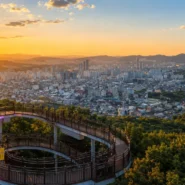
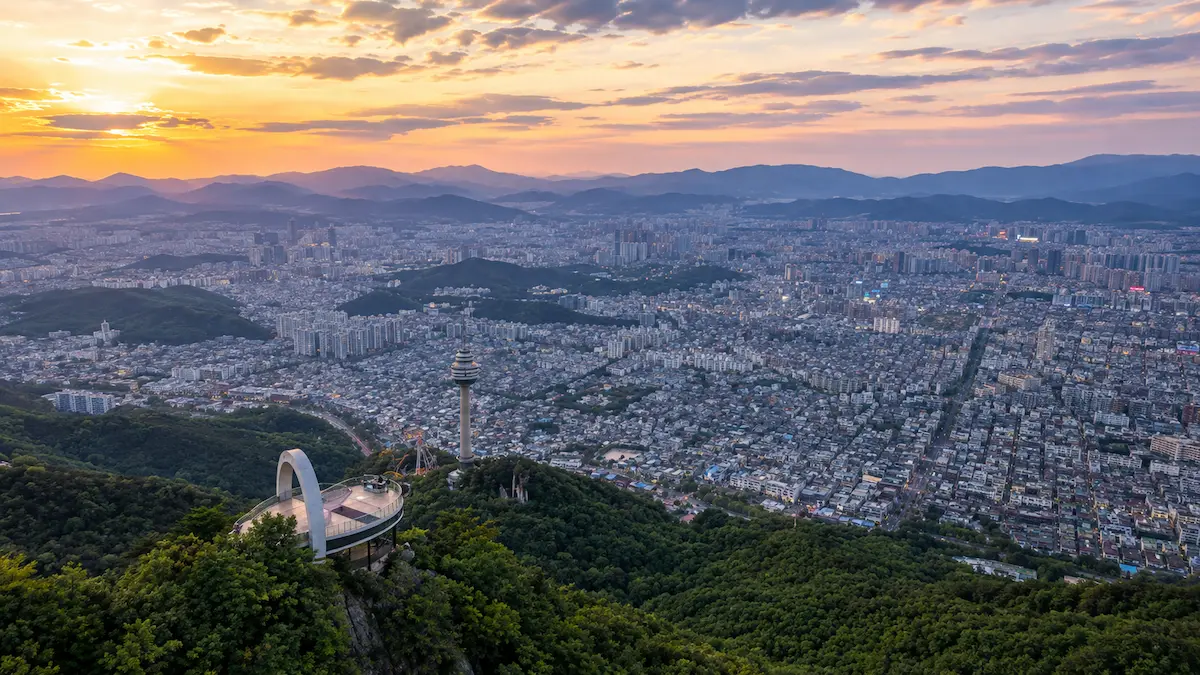
- Apsan Observatory & Apsan Cable Car: Best for city views without committing to a long hike. Allow 2.5–3.5 hours. The observatory is free; the cable car is paid. A tourism listing reviewed for this guide shows an adult round trip at KRW 14,000, but operating hours vary by day/season and weather, so check before leaving.
- Kim Gwangseok-gil: Best for music fans, murals and a relaxed café stop. Allow 45–90 minutes, not half a day. Free to visit. Line 3 to Daebonggyo Station plus a short walk works well. If you do not know Kim Gwang-seok’s music, treat this as a pleasant add-on rather than a must-see pilgrimage.
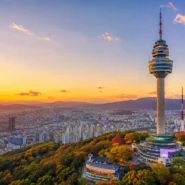
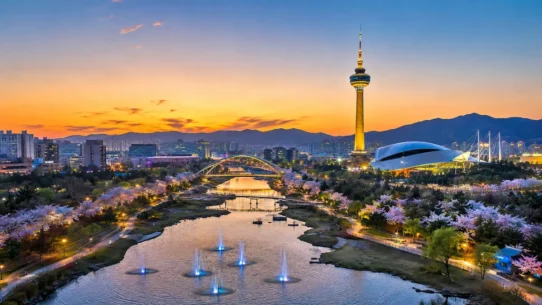
- E-World & 83 Tower: Best for families, couples, rides and night views. Allow 4–6 hours if riding attractions, or much less if you only care about the tower. Use Line 2 to Duryu Station, Exit 15, then walk about five minutes. Advance e-vouchers are currently sold by Klook and KKday.
- Suseongmot Lake: Best for a low-effort late afternoon, dinner and an easy final day. Allow 1–2 hours. Free; Line 3 serves Suseongmot. Current tourism information lists the media-art fountain season as March–October with evening shows at 19:00, 20:00 and 21:00, with no show on Mondays or rainy days; verify before going.
- Palgongsan Cable Car & Donghwasa Temple: Best for mountain scenery and a slower temple day. Allow 5–7 hours including transfers. The cable car is paid; the current official listing shows an adult round trip at KRW 14,000 and seasonal operating hours. There is no metro to the mountain zone. Do not casually add the Gatbawi hike unless you deliberately want a hiking day.
The Most Practical 5-Day Itinerary
Day 1: Modern Culture Alley → Seomun Market → Dongseongno
- Suggested start: 09:00. This is intentionally a gentle first day, especially if you arrived by KTX or flight the previous evening.
- 09:00–11:00 — Daegu Modern Culture Alley: Start around Cheongna Hill/Gyesan Cathedral, then follow the historic lanes toward the old downtown. The popular route is compact enough to walk and is far more pleasant before the lunchtime foot traffic builds.
- 11:15–13:30 — Seomun Market: Walk or take a very short transit hop depending on where you finish the alley. Make this your lunch zone. Browsing before choosing food is smart because the market is large; do not waste time queueing at the first famous-looking stall just because a social-media clip told you to.
- 13:30–15:00 — Market buffer / coffee: If you love traditional markets, keep browsing. If not, leave early. This is one of the easiest places to lose an hour without noticing.
- 15:00–16:30 — Hotel rest or café break: The itinerary deliberately includes a reset. First-time visitors often turn Day 1 into a 20,000-step marathon and then pay for it on the mountain days.
- 17:00 onward — Dongseongno: Walk the central shopping streets, eat dinner and use the area for cosmetics, cafés or casual nightlife. It works better after late afternoon than as a dedicated daytime attraction.
- If your Day 1 is Friday, Saturday or Sunday: You may return to Seomun Night Market after 19:00 if street food matters to you. Friday is generally the easier choice for avoiding the heaviest weekend crush. Do not schedule the night market Monday–Thursday; as of August 2026 it is closed on those nights.
- Cut if tired: Cut the night market first. You have already seen Seomun in daytime, and forcing a second visit purely because it is on a checklist adds little if you are exhausted.
- Rain plan: Keep the day downtown and favor the covered market, cafés and indoor heritage/museum spaces. The outdoor lanes are still walkable in light rain, but slippery paving and umbrellas make the route slower.
- Best evening area: Dongseongno/Banwoldang. Staying here also means you finish close to the most useful transport interchange for the next days.
- Why this beats the influencer route: A common mistake is to do Seomun, jump to Apsan for sunset, then return to Dongseongno at night. That creates an unnecessary cross-city detour on your first day. Keeping Day 1 entirely in Jung-gu gives you food, history and nightlife with almost no wasted transfer time.
Day 2: Apsan Observatory → Anjirang Lunch → Kim Gwangseok-gil
- Suggested start: Leave your hotel around 09:45–10:00 and aim to reach the Apsan cable-car area near opening time. The currently published operating window begins at 10:30 on the tourism listing reviewed for this guide, but hours can change seasonally.
- 10:30–13:00 — Apsan Cable Car & Observatory: Ride up, walk the viewpoint area and give yourself time for photos without turning the visit into a full hike. If you prefer hiking, that is a separate decision; do not accidentally convert a sightseeing day into a mountain trek because a map makes the trail look short.
- Best transport from the center: For one person on a tight budget, metro plus local bus works. For two to four people, a taxi for the awkward last mile can be one of the best value-for-energy decisions in the whole itinerary. The point is not luxury; it is avoiding a slow transfer before you even start walking uphill.
- 13:15–14:30 — Lunch around Apsan/Anjirang: Eat before crossing back toward Daebong. Anjirang is useful if you want its gopchang-focused food scene; otherwise choose a simple local lunch rather than making a second food pilgrimage.
- 15:30–17:00 — Kim Gwangseok-gil: Take transit or a taxi north-east toward Daebong. Walk the mural street, listen to the music installations where available, and stop for coffee if the area clicks with you.
- Cut if tired: Kim Gwangseok-gil. It is compact and easy to visit on another central-city evening. Do not cut Apsan after already spending the transfer time to reach it.
- If sunset is your priority: Reverse the order and do Kim Gwangseok-gil earlier, then reach Apsan well before sunset. Do not arrive at the cable car at the exact sunset time; queues, weather and the final operating time can ruin the plan.
- Rain plan: Do not force Apsan in low cloud or heavy rain just because it is “Day 2.” Swap this day with the lighter Suseong day. A good wet-weather substitute is the Daegu National Museum plus cafés or shopping; check its Monday closure before relying on it.
- Best evening area: Daebong/Bangcheon for a quieter dinner, or Dongseongno if you want more nightlife.
- Why this beats the influencer route: It keeps the southern viewpoint and Daebong district in one directional sweep. The common bad plan is Apsan → Seomun → Suseongmot, which zigzags across the city and makes a simple day feel like a transport challenge.
Day 3: Palgongsan Cable Car → Mountain Lunch → Donghwasa Temple
- Suggested start: 08:30–09:00 from central Daegu, earlier on weekends or during autumn foliage season. The current Palgongsan cable-car listing starts at 09:30, with closing time varying by month and sometimes extended on weekends.
- 09:30–12:00 — Palgongsan Cable Car & summit area: Arrive close to opening rather than at midday. Ride the cable car, enjoy the upper walking area and viewpoints, then descend before the biggest lunch-period crowd.
- 12:00–13:15 — Lunch in the Palgongsan/Donghwasa zone: Stay in the mountain area. Returning toward the city for a “famous” restaurant and then coming back would destroy the efficiency of this day.
- 13:30–15:30 — Donghwasa Temple: Give the temple enough time to feel like a temple visit rather than a photo stop. Current VisitKorea information lists the site as open year-round and does not show a general admission fee; special programs are separate.
- Transport: There is no metro to the cable-car/temple zone. Budget travelers can use the current public-bus routing shown in Naver Map/KakaoMap on the day. If there are two to four people, a taxi for part or all of the mountain transfer can save a large block of waiting and transfer time. Do not rely on an old blog’s bus number without checking live routing.
- The big trap — do not add Gatbawi by default: Gatbawi is not a five-minute extension of the cable-car stop. It belongs to a hiking-oriented plan. Cable car + Donghwasa is the sensible first-timer mountain day; Gatbawi is for travelers who consciously want more climbing and are willing to cut something else.
- Cut if tired: Shorten the upper mountain walk, not the transport buffer. If your knees or weather are poor, enjoy the cable car and temple rather than chasing every viewpoint.
- Rain plan: This is the day to swap, not “push through.” Cable-car operations and mountain visibility are weather-sensitive. Move Palgongsan to the clearest day and use Daegu National Museum, Dongseongno, cafés or another indoor-heavy day instead.
- Best evening area: Keep it simple after returning to the city: Dongseongno, your hotel neighborhood, or an early dinner near Dongdaegu if your return route passes there.
- Why this beats the influencer route: Some one-day tours combine Palgongsan, Seomun and E-World, which can be convenient if you want a fixed coach itinerary. For an independent five-day trip, however, cramming the mountain and theme park into one day sacrifices flexibility and makes you vulnerable to one late transfer. Giving Palgongsan its own day is slower on paper but far more robust in real life.
Day 4: E-World → 83 Tower → Duryu Evening
- Suggested start: Check E-World’s official calendar for your exact date and arrive about 15–20 minutes before the posted opening time. Hours change by date and season, so do not copy a fixed “10:00 opening” from an old itinerary.
- Opening–14:00 — Priority rides first: If rides matter, go directly to your top two or three attractions instead of taking photos at the entrance for an hour. Theme parks reward early prioritization more than perfect walking order.
- 14:00–15:00 — Lunch/rest: Eat inside the park or around Duryu. The purpose of the break is to stay seated during the middle of the day rather than queue continuously until your legs are done.
- 15:00–17:30 — Secondary rides / seasonal areas: Re-check live wait conditions and weather. Do not queue 60 minutes for a mediocre ride simply because it is “included.”
- Late afternoon to evening — 83 Tower: Use the tower when the light starts improving. Sunset is popular, so if the queue is ugly, going a little before or after the exact sunset moment can be smarter than standing in line through it.
- Transport: Metro Line 2 to Duryu Station, Exit 15, then roughly a five-minute walk. This is exactly the kind of day when the metro is better than a taxi because it avoids road traffic and drops you predictably close to the entrance.
- Cut if tired or not a theme-park person: Do not buy a full day because everyone else does. If rides are not your thing, make 83 Tower the main goal and spend the rest of the day elsewhere. The park is not automatically good value for every adult traveler.
- Rain plan: Light rain does not necessarily close the whole park, but outdoor rides can pause and need drying time, and stronger weather can shorten operations. If the forecast is genuinely bad, swap Day 4 rather than betting your most expensive attraction day on limited ride availability.
- Best evening area: Duryu if you want to stay local, or return directly by Line 2 to Banwoldang/Dongseongno.
- Why this beats the influencer route: The bad version of this day adds Apsan at sunset because both have city views. That sounds efficient until you realize you are leaving a paid theme park, transferring across town and racing a cable-car schedule. One view day does not need two observation points.
Day 5: Slow Morning → Suseongmot → Final Dinner / Departure Buffer
- Suggested start: 09:30–10:00. Keep the final day intentionally lighter so a late breakfast, checkout, shopping or departure does not break the itinerary.
- 10:00–12:00 — Optional Daegu National Museum or free morning: Use the museum if you want context, air-conditioning or a rain-proof activity. If it is Monday, check closure and replace it with cafés, shopping or a slow start.
- 12:00–13:30 — Lunch in the Suseong/Deurangil area: Moving toward Suseong before lunch means you do not have to commute back and forth for the lake later.
- 14:00–16:00 — Suseongmot Lake: Walk only as much of the lake as you actually enjoy. A full lap is pleasant but not compulsory. Sit down, have coffee and use the park as a recovery day rather than another step-count contest.
- If the fountain matters: Current tourism information lists March–October evening shows at 19:00, 20:00 and 21:00, with no show on Mondays or rainy days. Re-check on the day, then time dinner around the show rather than waiting beside the lake for hours.
- Transport: Line 3 serves Suseongmot. If you are checking out before visiting, leave your luggage at your hotel first whenever possible; do not haul it onto Line 3 and around the lake.
- Cut if you have an early departure: Skip the museum and go straight to Suseongmot for a short walk, or skip the lake entirely. A relaxed final meal is better than missing a KTX because you insisted on one more viewpoint.
- Rain plan: Museum + cafés + shopping. The fountain is not a reliable rainy-day target.
- Best evening area: Suseong for dinner if you are staying the night; Dongdaegu if you are catching an evening train; Banwoldang if you want a final central-city night.
- Why this beats the influencer route: Many itineraries waste the final day on Palgongsan or another weather-sensitive, long-transfer attraction. Keeping Day 5 urban gives you departure insurance and creates a built-in swap day if Apsan or Palgongsan had bad weather earlier.
Tourist Traps to Avoid & Itinerary Hacks
- Trap #1: Assuming Seomun “Night Market” means every night. It does not. The official 2026 schedule checked for this article is Friday/Saturday 19:00–23:30 and Sunday 19:00–22:30, with Monday–Thursday closed. Weather can cancel operations. Plan the daytime market independently so your trip does not fail if the night market is unavailable.
- Trap #2: Arriving at the daytime market too late because you are waiting for “night-market energy.” Many daytime businesses wind down around early evening. If food browsing is important, go for lunch or early afternoon, then treat the weekend night market as a separate experience.
- Trap #3: Going to Apsan at the exact sunset time. Sunset photos are beautiful, but sunset is also when everyone has the same idea. Cable-car hours change by season and weather. If views matter more than golden light, go near opening. If sunset is non-negotiable, arrive comfortably early.
- Trap #4: Treating Palgongsan Cable Car, Donghwasa and Gatbawi as one compact cluster. They belong to the same mountain, not the same effortless stroll. Gatbawi adds a hiking commitment. First-time visitors trying to “complete Palgongsan” often end up tired and late.
- Trap #5: Taking a bus just because it is cheaper, even when it creates two transfers and an uphill walk. Save the metro for predictable urban legs. Use a strategic taxi for Apsan’s last mile or Palgongsan if your group size makes the per-person cost reasonable.
- Trap #6: Using Dongdaegu Station as your sightseeing hub for all five days. Dongdaegu is excellent for KTX arrivals and departures, but most of this itinerary is easier from Banwoldang/Dongseongno. Unless you have early trains or multiple day trips outside Daegu, staying beside the station can add repetitive metro rides.
- Trap #7: Paying for E-World when you only want the skyline. A full park pass is great for riders and families; it can be poor value if you dislike amusement parks. Decide whether your real goal is rides, seasonal lights, or the tower view before buying.
- Trap #8: Thinking an online E-World voucher is a ride FastPass. Current Klook and KKday products can streamline admission/ticket handling, but neither should be described as universal priority access to rides. Peak queues can still exist.
- Trap #9: Allocating half a day to Kim Gwangseok-gil because photos make it look enormous. The street is atmospheric but compact. Music fans may love the nostalgia; travelers unfamiliar with the artist can be finished in under an hour. Pair it with Apsan/Daebong rather than building a whole day around it.
- Trap #10: Carrying large luggage into “walkable” heritage districts. Walkable for a person is not automatically suitcase-friendly. Market aisles, curbs, stairs, uneven lanes and transfers become much more annoying with a 20–25 kg case. Drop bags before sightseeing.
- Hack: Use weather as a scheduling variable, not an inconvenience. Days 2, 3 and 4 are weather-sensitive in different ways. Keep Day 5 deliberately flexible so you can move Palgongsan or Apsan to the clearest forecast without rebuilding the whole trip.
- Hack: Build around meal zones, not viral restaurants. Seomun, Anjirang/Apsan, Palgongsan, Duryu and Suseong all have places to eat. Crossing the city for one restaurant often costs more time than the meal is worth.
Save Your Legs! The Most Efficient Route
The easiest way to understand Daegu is to stop thinking of it as one big downtown. For a five-day trip, divide it into Jung-gu/old downtown, the Apsan–Daebong corridor, Palgongsan/Dong-gu, Duryu, and Suseong. Day 1 is the strongest walking day because Modern Culture Alley, Seomun and Dongseongno are in the same central-western orbit. Day 2 uses one purposeful move south to Apsan and then comes back toward Daebong. Day 3 accepts that Palgongsan is a separate mountain excursion. Day 4 uses the metro cleanly to Duryu. Day 5 moves east/southeast to Suseong and stays relaxed.
What should you walk? Walk the Modern Culture Alley itself, the transition between nearby historic lanes, Dongseongno, Kim Gwangseok-gil and the section of Suseongmot you actually want to see. These are places where walking is part of the experience. Do not “save money” by walking long approach roads to Apsan or Palgongsan with no sightseeing payoff.
What should you take by metro? Use Daegu Metro for the repeatable urban legs: Banwoldang as your interchange, Line 2 for Duryu/E-World, Line 3 for Seomun Market, Daebonggyo/Kim Gwangseok-gil and Suseongmot, and Line 1 when moving to or from Dongdaegu. There is no Kyoto-style decision between JR and several private railways here. KORAIL/KTX is for intercity arrival and departure; for this itinerary, local decisions are mainly metro vs. bus vs. taxi.
When is a short taxi smarter? A taxi is worth considering when public transport creates a slow last-mile transfer, especially at Apsan, or when a small group is going to Palgongsan and values time more than the lowest possible fare. It is also useful after a long mountain day when another bus connection would save little money but cost your remaining energy. By contrast, taking a taxi to E-World from central Daegu during traffic is often unnecessary because Line 2 gets you close to the entrance predictably.
Which transport is most vulnerable at busy times? Surface buses and taxis share road congestion; mountain buses can also be less forgiving because missing one connection matters more than missing a metro. The metro is usually the safer choice for central sightseeing, especially around commuting periods. Rather than memorizing old bus numbers from blogs, use Naver Map or KakaoMap on the day for mountain buses and confirm the final return option before wandering away from the stop.
How do you avoid returning to Dongdaegu every day? Stay near Banwoldang or the southern edge of Dongseongno if the five sightseeing days are your priority. You get Line 1 and Line 2, easy access to the old downtown, and a quick connection to Line 3. Choose Dongdaegu instead if your trip has several KTX day trips, an extremely early train, or you care more about luggage convenience than evening walkability. Changing hotels midway through a five-night Daegu stay usually creates more check-in, packing and luggage time than it saves.
What about large luggage? First choice: ask your hotel to hold bags before check-in or after checkout. Second choice: use a station locker only after confirming a suitable size is actually available; do not build a tight itinerary around the assumption that a large locker will be empty. If you arrive through Daegu Airport and want to sightsee immediately, Klook currently lists a Daegu luggage-delivery service to registered hotels, with size/weight limits and same-day timing conditions. It is useful for the right arrival day, but it is not universal: private accommodations without staffed front desks may be excluded, supported hotels must be checked, and delivery timing is not instant.
Check Daegu luggage delivery availability on Klook
Ticket Tips & Skip-the-Line Hacks
The biggest ticket mistake in Daegu is assuming every famous attraction works like a modern theme park. It does not. Some of the best stops are free streets, markets, parks or temples; the cable cars are operational transport attractions with weather-sensitive schedules; E-World is the main place in this itinerary where a current advance e-ticket is genuinely useful.
Free / no advance ticket needed: Daegu Modern Culture Alley, Seomun Market, Dongseongno, Kim Gwangseok-gil and Suseongmot do not need an attraction ticket. The Apsan Observatory itself is free, although the cable car costs extra. Current VisitKorea information for Donghwasa does not show a general admission fee; temple programs or special events can have separate conditions.
Paid but plan for on-site purchase: Apsan Cable Car and Palgongsan Cable Car are the two places where you should plan around operating hours, weather and possible queues rather than assuming a universal online QR product exists. I did not find a verified official “skip-the-line” product for either cable car that I would confidently tell readers to buy in advance. Check the operator’s current schedule the day before and arrive earlier on weekends, foliage season or clear-sky days.
Advance e-ticket that is actually useful: E-World + 83 Tower. At the time this article was checked, Klook’s current product offered an all-day E-World pass plus 83 Tower Observatory, instant confirmation and mobile-voucher entry; the displayed package was valid through 30 September 2026. KKday also had a live E-World + 83 Tower product listed as an e-ticket, with the e-voucher presented on site. Prices and validity can change, so compare both before paying.
Important wording: I am deliberately not calling these tickets a guaranteed “QR skip-the-line pass.” Klook currently says “enter with voucher” and “present your mobile voucher.” KKday labels the ticket an e-ticket and tells guests to present the e-voucher on site. That can save ticket-counter friction, but it does not mean you skip ride queues, security checks or every redemption step.
Buy / check E-World + 83 Tower tickets on Klook
Compare E-World + 83 Tower tickets on KKday
Intercity trains: If you are entering or leaving Daegu by KTX on a Friday evening, weekend, public holiday or peak travel period, reserve the intercity train in advance rather than designing Day 5 around “whatever seat is left.” KTX booking is separate from Daegu local transport; do not buy a complicated rail pass purely for these five city days unless it also makes sense for the rest of your Korea trip.
Cultural experiences, rentals and seasonal events: E-World school-uniform rentals and other bookable experiences do exist, but they are optional photo/experience products, not a requirement for this itinerary. Seasonal illumination, fireworks, festivals and fountain performances can change dates. Book only when the specific event is confirmed for your travel date. A reservation that solves no actual queue or capacity problem is not a travel hack.
Tried & Tested: My Honest Review
Transparency matters: I will not invent a personal visit or pretend every traveler has the same experience. The judgments below are an editorial “tried and tested” route review built from current official access/ticket information, map logic and recurring traveler feedback. The YouTube links are live relevant videos surfaced during the research for this article; uploader embedding settings can change after publication.
📍 Stop 1: Daegu Modern Culture Alley
Tags: #History #Architecture #LowBudget #Walkable #BestOnDay1
Popular YouTube reference surfaced in live search:
The Modern Culture Alley is one of Daegu’s best first-day attractions because the value is not a single landmark; it is the way the route teaches you how central Daegu fits together. The popular course connects Cheongna Hill, the missionary-house area, Gyesan Cathedral and historic residences/alleys in a compact walk.
✅ What Other Travelers Say: The appeal is the combination of history, photogenic lanes and a slower pace than a major palace district. Travelers who enjoy urban history tend to get more from it than travelers chasing one spectacular “hero shot.”
⚠️ The Catch (Things to Keep in Mind): The lane itself is always there, but small indoor spaces are not necessarily open whenever you walk past. It can also feel underwhelming if you do not read the context. Give it 90–120 minutes, not an entire day, and combine it with Seomun.
📍 Stop 2: Seomun Market & Seomun Night Market
Tags: #StreetFood #TraditionalMarket #BudgetFriendly #WeekendNightMarket #CrowdTrap
Popular YouTube reference surfaced in live search:
Seomun is worth visiting because it functions as a real market, not merely a row of tourist food stalls. That is also why it can be confusing: the daytime market, individual vendors and the weekend night market do not operate as one synchronized attraction.
✅ What Other Travelers Say: Recent review aggregations and community posts consistently praise the food variety, scale and local atmosphere. Recent visitors also describe the market as busy, especially on weekends, and report that wandering before choosing what to eat is part of the fun.
⚠️ The Catch (Things to Keep in Mind): The night market is the schedule trap. As checked in August 2026, it is Friday/Saturday 19:00–23:30 and Sunday 19:00–22:30, with Monday–Thursday closed. Weather can cancel it. Seating can be limited when crowded, and individual vendors may not match the market’s maximum published hours.
📍 Stop 3: Dongseongno
Tags: #Shopping #Nightlife #Cafes #CentralBase #BestAfter5PM
Popular YouTube reference surfaced in live search:
Dongseongno is useful less as a “sight” and more as Daegu’s urban living room. For first-time visitors, that makes it valuable at night: you can eat, shop, browse cosmetics, find cafés and end the day without another dedicated transport mission.
✅ What Other Travelers Say: Recent Tripadvisor reviews describe it as one of Daegu’s busiest shopping areas, easy to access and packed with restaurants, cafés and shops. That matches the reason I use it as an evening zone rather than a formal sightseeing block.
⚠️ The Catch (Things to Keep in Mind): If you already spend significant time in Seoul’s Myeongdong, Hongdae or Busan’s Seomyeon, Dongseongno may not feel radically different. Do not sacrifice a mountain or market morning for it. Let it fill the natural gap after dinner.
📍 Stop 4: Apsan Observatory & Apsan Cable Car
Tags: #CityView #CableCar #Sunset #WeatherSensitive #SaveYourLegs
Popular YouTube reference surfaced in live search:
Apsan delivers one of the clearest “this is Daegu” panoramas without requiring first-time visitors to make a serious hike. Using the cable car is not cheating; if the purpose of your trip is sightseeing rather than training, it is the sensible choice.
✅ What Other Travelers Say: Review aggregations are strongly positive about the panoramic city view and often recommend sunset or the transition into night. The cable car is repeatedly mentioned as the easy-access option for visitors who do not want the full climb.
⚠️ The Catch (Things to Keep in Mind): Sunset is exactly when crowd pressure and schedule anxiety can collide. Weather, haze and seasonal operating hours matter. The current tourism listing reviewed for this guide shows a KRW 14,000 adult round trip, but re-check the operator before going rather than treating any old blog fare or closing time as permanent.
📍 Stop 5: Kim Gwangseok-gil
Tags: #Murals #Music #CafeStop #ShortVisit #NicheAppeal
Popular YouTube reference surfaced in live search:
This is one of those attractions that can be either touching or “is that it?” depending on what you bring to it. If you know Kim Gwang-seok’s songs, the murals and music references add emotional weight. If you do not, it is still a pleasant Daebong stroll, but the experience is much smaller than social-media framing can imply.
✅ What Other Travelers Say: Traveler comments commonly praise the murals, music atmosphere, cafés and nostalgic mood. Visitors often treat it as a compact one-hour stop rather than a major half-day attraction.
⚠️ The Catch (Things to Keep in Mind): Much of the cultural context is Korean-language and music-specific. Non-fans may enjoy the visuals but finish quickly. That is not a failure; it is exactly why it belongs after Apsan instead of owning a separate day.
📍 Stop 6: E-World & 83 Tower
Tags: #ThemePark #FamilyFriendly #NightView #ETicket #PaidAttraction
Popular YouTube reference surfaced in live search:
E-World is the most expensive commitment in this five-day plan, so it deserves a more demanding value test. It is worth a half/full day if you actually like rides, seasonal lighting or family attractions. It is not automatically a must just because 83 Tower is a Daegu landmark.
✅ What Other Travelers Say: The current Klook listing is rated 4.3/5 with 70 reviews and 2K+ bookings at the time of checking; reviews praise easy voucher use, the city view and the park’s evening atmosphere. KKday’s current product page shows a 4.8 rating and 7K+ sold. These are positive signals, but crowd and ride availability vary by date.
⚠️ The Catch (Things to Keep in Mind): Weather can pause outdoor rides, some add-ons can cost extra, and the online ticket is not a ride FastPass. Also watch product validity: the Klook package displayed during this August 2026 check showed validity through 30 September 2026, so travelers after that date must re-check the current product rather than buying based on an old screenshot.
📍 Stop 7: Suseongmot Lake
Tags: #EasyEvening #FreeAttraction #LakeWalk #Fountain #DepartureDay
Popular YouTube reference surfaced in live search:
Suseongmot is not the place I would tell someone to fly to Daegu just to see. That is precisely why it works so well on Day 5. It is low-stress, flexible, scenic enough for a slow walk and surrounded by places to eat or sit down.
✅ What Other Travelers Say: Tripadvisor reviews frequently mention relaxed walks, cafés and visiting in the late afternoon or evening. Some travelers explicitly say it is worth stopping by when already in Daegu rather than being a destination worth a special long trip on its own.
⚠️ The Catch (Things to Keep in Mind): Do not over-schedule the fountain. Current tourism information lists March–October evening shows at 19:00, 20:00 and 21:00, closed Mondays and on rainy days. If the show is cancelled, the lake is still pleasant—but it is not a substitute for a major attraction.
📍 Stop 8: Palgongsan Cable Car & Donghwasa Temple
Tags: #MountainDay #Temple #CableCar #Autumn #LongTransfer
Popular YouTube reference surfaced in live search:
Palgongsan is the day that makes Daegu feel larger than a compact city break. The mountain scenery and Donghwasa give the itinerary a completely different texture from markets and shopping streets. It is worth doing—but only if you respect the transfer time and keep the plan simple.
✅ What Other Travelers Say: Mountain travelers praise the scenery, hiking and cable-car access, particularly in clear weather and foliage season. The slower pace is part of the appeal; this is not a “tick three attractions in two hours” zone.
⚠️ The Catch (Things to Keep in Mind): This is the easiest day to sabotage with overconfidence. The cable car, Donghwasa and Gatbawi are not one frictionless cluster. The current official cable-car page shows seasonal hours and a KRW 14,000 adult round trip; weather and peak-season demand can change the experience. Pick cable car + temple for a first visit and add serious hiking only by choice.
Key FAQs
What is the best 5-day Daegu itinerary for first-time visitors without a car?
Use Banwoldang/Dongseongno as your base, keep Day 1 in Jung-gu, group Apsan with Daebong, dedicate one day to Palgongsan, use Line 2 for E-World and Line 3 for Seomun/Kim Gwangseok/Suseongmot. You do not need a rental car. A few strategic taxi rides are more useful than renting a car for five urban days.
Is five days in Daegu too long for a first trip?
Five days is comfortable if you want one mountain day, one theme-park day and enough time to experience local neighborhoods without rushing. If you do not care about E-World or Palgongsan, three to four days may be enough. The right length depends more on your interests than the number of “top 10” attractions.
Where should first-time visitors stay in Daegu to reduce transport time?
For this itinerary, Banwoldang or the south side of Dongseongno is the strongest all-round base because Lines 1 and 2 intersect there and the old downtown is walkable. Stay near Dongdaegu Station instead when early KTX departures, airport connections or multiple intercity day trips matter more than evening walkability.
Final Verdict and Your Next Step
The smartest Daegu trip is not the one that proves you visited the largest number of places. It is the one where every long transfer earns its place. Keep the historic core together, use Apsan and Kim Gwangseok-gil as one south-to-central day, give Palgongsan enough breathing room, reserve E-World for people who genuinely want a theme park, and use Suseongmot as your flexible final-day buffer.
Before you leave, check three things again: the weather on your Apsan/Palgongsan days, the exact Seomun Night Market schedule for your weekday, and E-World’s operating calendar. Those three checks prevent more itinerary failures than trying to memorize another twenty restaurant names.
If E-World is definitely on your list, buying the current e-voucher in advance is the clearest ticket-time saver in this itinerary. Compare the live package, validity and price before paying; do not assume last season’s product conditions still apply.
Check E-World + 83 Tower tickets on Klook
Compare E-World + 83 Tower tickets on KKday
If you are arriving with large luggage and want to start sightseeing immediately, compare a supported luggage-delivery service with simply leaving bags at your hotel. Delivery is useful only when your route, accommodation and drop-off time match the product conditions.
Check Daegu luggage delivery on Klook
One final anti-trap rule: if a plan requires you to cross Daegu twice in one day just to hit a viral photo spot, delete the photo spot. Five days is enough time to travel well. You do not need to travel badly just to make the itinerary look fuller.