
💡 Key Takeaways
- Best overall balance: late September through October is the safest bet for comfortable walking weather, clearer-feeling days, manageable crowds and fewer summer weather disruptions.
- Best for cherry blossoms: early April is the target, but bloom timing can shift by days or more. Book cancellable accommodation rather than treating one forecast date as a guarantee.
- Biggest trap: July and August look perfect in beach photos, but heat, humidity, rain risk, Korean summer-holiday crowds and higher seaside room rates can make them the least efficient months for sightseeing-heavy trips.
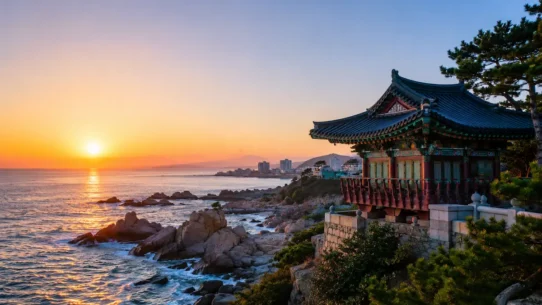
The best time to visit Gangneung is not simply “spring or autumn.” Gangneung is a coastal city where the month you choose changes the trip quite dramatically. Early April can deliver beautiful cherry blossoms around Gyeongpo, but blossom weekends can sell out faster and feel far busier than the same streets one week later. July and August bring the beach atmosphere many travelers imagine, yet Korea’s midsummer heat and humidity can turn a café-and-walking itinerary into a slow crawl. The rainy season does not mean nonstop rain every day, but it does make outdoor plans less predictable. Winter often offers better room value and atmospheric East Sea sunrises, but daylight is shorter, the wind can bite, and New Year’s sunrise dates are anything but quiet.
One correction worth making before you plan: Japan’s Golden Week is not a local public holiday in Gangneung, so it should not be treated as a primary pricing trigger here. Korean public holidays, long weekends, school summer vacation, the Gangneung Danoje Festival, Chuseok and the New Year sunrise period have a much more direct effect on local crowds and accommodation demand. International visitor surges can still add pressure, but local travel patterns matter more.
Climate normals are useful for choosing a season, not predicting your exact trip. The World Meteorological Organization’s 1991–2020 normals show a cold winter and much warmer, wetter conditions in the warm season; Korea Tourism Organization guidance also warns that late June to late July overlaps with the rainy season, late July to August can be extremely hot and humid, and typhoons or heavy rain can affect Korea between June and October. In other words, always re-check the forecast shortly before departure.
The 1-Min Cheat Sheet
- March to April — Best for blossoms and spring atmosphere: March is quieter but still chilly. Early April is the cherry blossom target and the more photogenic choice, but it is also less flexible, more weather-sensitive and potentially more expensive around Gyeongpo. Best for: photographers, couples, first-time visitors who prioritize spring scenery. Avoid if: you hate uncertainty or weekend crowds.
- May to June — Best for mild-to-warm sightseeing and culture: May is one of the easiest months for long outdoor days. June gets warmer and more humid, and late June can move toward rainy-season conditions. Gangneung Danoje is a major cultural draw, but festival dates can transform normally easy areas into crowd zones. Best for: food, markets, culture, coastal walks. Avoid if: you need predictable dry weather in late June.
- July to August — Best for a true beach trip, worst for efficient city sightseeing: this is the time for swimming and a lively coast, but also the period most likely to punish an overpacked itinerary with humidity, downpours, heat and peak domestic vacation demand. Best for: travelers who genuinely want beach time. Avoid if: you plan to walk all day or want bargain seaside rooms.
- September to November — Best overall: September is still warm and can remain wet, while October is the sweet spot for comfortable temperatures and outdoor exploration. November is cooler, quieter and often better value. Best for: first trips, hikers, café hopping, couples and travelers who want the fewest compromises.
- December to February — Best for lower prices, winter sea and sunrise: expect cold mornings, wind and limited beach use. The exception is New Year’s Eve and New Year’s Day around Jeongdongjin and other sunrise spots, when crowds can surge sharply. Best for: winter photography, cafés, seafood and budget-conscious travelers outside holiday dates. Avoid if: cold wind ruins coastal sightseeing for you.
Top Survival Tips
- Do not book cherry blossoms by calendar alone. In 2026, Korea Tourism Organization’s forecast put Gangneung’s first bloom around April 1 and explicitly warned that actual blooming and peak dates can differ with weather. Treat blossom predictions as a moving target. A cancellable hotel is more valuable than saving a small amount on a non-refundable room months ahead.
- Separate “beach weather” from “good sightseeing weather.” July and August are the obvious swimming months, but they are not automatically the best months for Ojukheon, Seongyojang, Gyeongpo Lake, markets, coastal trails and café hopping in one day. Heat and humidity reduce how much ground you can comfortably cover.
- The rainy season is a disruption risk, not a daily all-day washout. Late June through July can bring short dry windows, cloudy stretches, intense downpours or multiple wet days. The real problem is schedule uncertainty. Build one indoor backup block such as ARTE Museum, cafés, museums or a slower market day instead of assuming every outdoor plan will run on time.
- Watch festival dates before judging a hotel price. Gangneung Danoje is one of the city’s most important events. The 2026 main festival ran June 15–22. Future dates follow the festival calendar and should be checked every year. If you want the festival, book early; if you do not, those dates can mean paying more for crowds you did not ask for.
- Chuseok can affect transport even if your hotel looks affordable. The Korean Thanksgiving holiday changes dates each year. Intercity trains and roads can become much busier because Koreans travel nationwide. Do not plan a tight Seoul–Gangneung transfer around a major Korean holiday without checking transport inventory first.
- New Year’s sunrise is a special-event trip, not a quiet winter escape. Jeongdongjin is one of Korea’s best-known sunrise locations. Korea Tourism Organization specifically notes that New Year crowds can make it difficult to enjoy peacefully. Visit on an ordinary winter weekday if you want the winter sea without the crush.
- Stay by the beach only when the beach is the point. Gyeongpo, Gangmun and Anmok are convenient for sea views and cafés, but a coastal premium is less useful if most of your itinerary is downtown food, Ojukheon, Seongyojang or transport connections. In peak periods, compare central Gangneung rooms before automatically paying for an ocean view.
- For value, Sunday to Thursday usually gives you more leverage than Friday and Saturday. Gangneung is an easy domestic getaway from the Seoul region, so weekend demand matters. A one-day shift can be more useful than obsessing over which booking site is cheapest.
- Pack for the East Sea, not just the temperature number. Wind can make spring and winter coastlines feel colder than the forecast suggests. In summer, humidity can make a moderate temperature feel more exhausting. Layers in spring and autumn, wind protection in winter, and breathable quick-dry clothing in summer are more practical than packing from temperature averages alone.
The Full Experience
🌸 March to April: Best for Cherry Blossoms, but Not for Bargain Hunters
Best for: cherry blossoms, Gyeongpo Lake walks, photography, couples | Crowds: low in March, high on blossom weekends | Cost: low-to-moderate in March, higher around peak bloom | Weather risk: cold wind, bloom timing shifts
March is the underrated half of this period. It is much easier to find breathing room, but the coast can still feel properly cold and the landscape is not yet at its spring peak. If your priority is cafés, seafood, museums and a quieter East Sea rather than flowers, late March can be a sensible value play.
April is why most people consider spring. Gyeongpo’s combination of lake, pavilion, beach and blossom-lined roads is visually strong enough to justify the hype when timing works. For 2026, the official national blossom forecast expected Gangneung to begin blooming around April 1, with the important caveat that weather can shift real dates. A bloom forecast should therefore guide your booking window, not lock you into a single “guaranteed” day.
Who should choose it? Pick early April if spring photography matters more to you than price certainty. If you mainly want a pleasant Gangneung trip and blossoms are a bonus, choose mid-to-late April instead. You lose some flower certainty but gain a less fragile itinerary.
✅ What Other Travelers Say
Spring visitors repeatedly praise the visual payoff of Gangneung’s coast-and-blossom combination, but traveler reviews also reveal the biggest problem: flower tours can miss the blossoms when nature runs early or late. That is the lesson to take seriously. The destination is not disappointing; overconfident date planning is.
⚠️ The Catch (Things to Keep in Mind)
Do not assume “April” equals warm weather. Coastal mornings can still require a jacket, and wind near Gyeongpo or Jumunjin can make it feel colder. Blossom weekends also concentrate visitors into a small number of famous photo areas. If you can, stay overnight and visit the lake early in the morning rather than arriving from Seoul at the same time as day-trip groups.
🌿 May to June: Best for Comfortable Exploring, with a Festival-and-Rain Caveat
Best for: cultural sights, markets, cycling, cafés, Danoje | Crowds: moderate, very high around major events | Cost: moderate, event spikes possible | Weather risk: rising humidity and late-June rain
May is one of the strongest all-round months in Gangneung. The cold edge of early spring is mostly gone, midsummer humidity has not fully taken over, and outdoor attractions are easier to combine in a single day. This is the period when a bike ride around Gyeongpo, a walk through historic areas and an evening on Anmok Coffee Street can fit together without weather dominating every decision.
June is more complicated. Early June can still be very enjoyable, but humidity rises and the approach of Korea’s rainy season adds uncertainty later in the month. At the same time, Gangneung Danoje can make June one of the most culturally rewarding times to visit. The festival is recognized as intangible cultural heritage and mixes traditional rites, performances and a huge market atmosphere. The 2026 main event ran from June 15 to June 22; always verify the current year because the dates change.
Who should choose it? May is excellent for travelers who want a low-drama, activity-heavy trip. June is better for travelers who value cultural events enough to accept more crowd and weather variability.
✅ What Other Travelers Say
Travelers tend to like Gangneung most when they have enough time to slow down rather than treating it as a checklist day trip. This season supports that style well: market food, beaches, traditional sites and cafés all work without requiring a single headline attraction. Festival visitors get a much more local-feeling experience than a standard coastal itinerary.
⚠️ The Catch (Things to Keep in Mind)
If your accommodation is near the Danoje festival zone, expect more noise, pedestrian traffic and competition for restaurants during event nights. If you are visiting in late June for outdoor photography, keep at least one day flexible. Rain does not have to last all day to ruin a tightly timed coastal walk or sunset plan.
🏖️ July to August: Best for Beaches, Worst for Heat-Sensitive Sightseeing
Best for: swimming, beach atmosphere, water activities, nightlife | Crowds: high, especially weekends and Korean summer vacation | Cost: often high near beaches | Weather risk: humidity, downpours, heat, typhoons
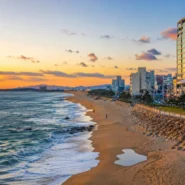
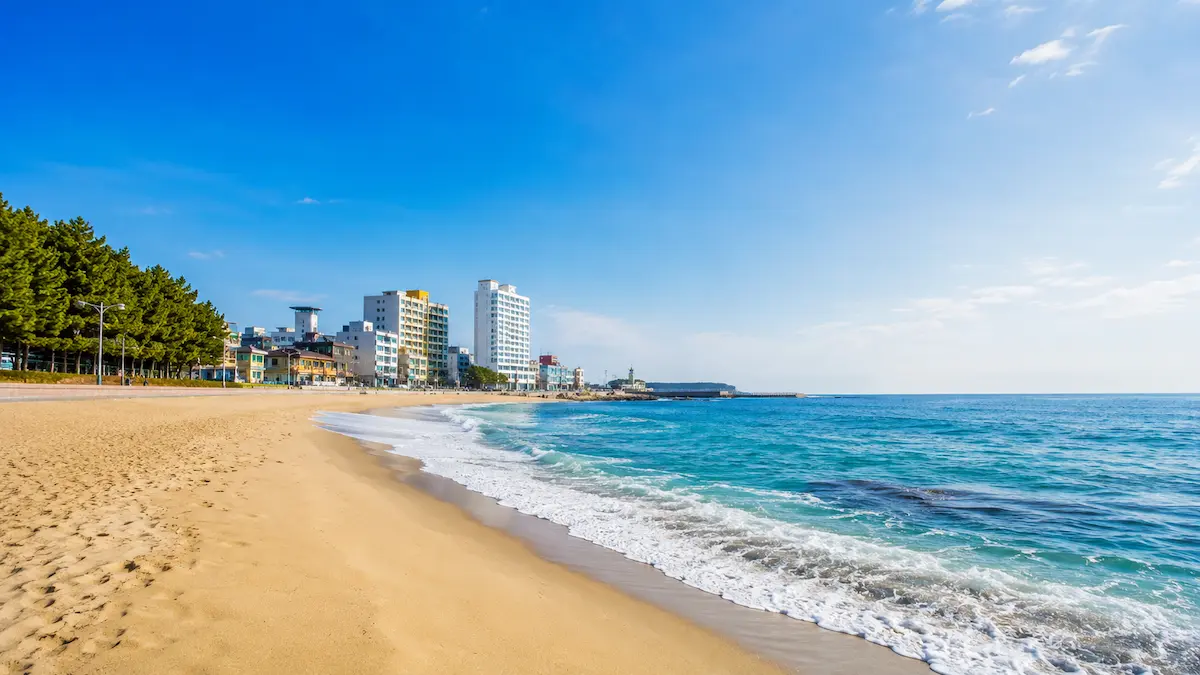
This is the season where expectations need the most adjustment. If your dream is to swim, spend hours on the sand, eat seafood, shower, change and return to the coast after dark, July and August make sense. Gyeongpo Beach is a major summer attraction and the city becomes noticeably more energetic.
But summer is not the automatic answer to “When should I visit Gangneung?” Korea Tourism Organization warns that late July through August can become extremely hot and humid, while the rainy-season window overlaps with late June through late July. Typhoons and heavy rain are also a seasonal risk from June into autumn. Even when the temperature looks manageable on paper, humidity can make a midday walk feel much harder than expected.
Accommodation is another issue. Beachfront demand rises because Korean domestic travelers also head east for summer. A room that feels poor value in August may be perfectly reasonable in October or November. If you are only sleeping near the coast and spending the day elsewhere, compare central Gangneung before paying the seasonal premium.
Who should choose it? Choose July or August only if beach use is a core trip objective. If you want museums, heritage sites, long walks, cycling, café hopping and photography, there are better months.
✅ What Other Travelers Say
Public beach reviews show the split clearly: travelers love Gyeongpo’s long shoreline and East Sea color, while summer visitors and local reviewers also describe the beach as packed during the busiest period. A June visitor reported fewer people before peak season but also found the water cold and waves strong. In short, summer gives you the full beach scene, not necessarily the calmest beach scene.
⚠️ The Catch (Things to Keep in Mind)
Do not plan outdoor sightseeing from late morning through mid-afternoon as if this were October. Start early, use the hottest hours for lunch, cafés or indoor attractions, then return outside later. Keep rain gear light and pack footwear that can handle sudden wet streets. If a typhoon or heavy-rain advisory is issued, coastal scenery is not worth ignoring local safety guidance.
🍂 September to November: Best Overall for Weather, Walking and Fewer Compromises
Best for: first visits, coastal walks, hiking, cafés, couples, photography | Crowds: moderate, lower in November | Cost: moderate, often better in November | Weather risk: early-autumn rain or typhoon effects, Chuseok transport pressure
If you want one answer with the fewest caveats, choose late September through October. The worst summer humidity usually eases, walking becomes much more comfortable, and the city still feels alive without relying on beach-season entertainment. October in particular is ideal for travelers who want to combine the sea, Gyeongpo Lake, traditional architecture, food markets and day trips into the mountains.
September deserves a warning label. It can still feel warm, and Gangneung can receive substantial rainfall in early autumn. Typhoon-related weather is still possible. It is a transition month rather than guaranteed crisp autumn.
October is the sweet spot. You are not chasing a one-week blossom event, swimming conditions are no longer the main reason to come, and the trip does not collapse if one famous seasonal feature is late. For most first-time travelers, that flexibility is worth more than peak-season spectacle.
November is the value option. Temperatures fall quickly, foliage fades, evenings get colder and the trip feels less “classic autumn,” but crowds ease. If your ideal Gangneung day is seafood, coffee, a windy beach walk and a warm hotel rather than swimming or flower photography, November can be excellent.
Who should choose it? Almost everyone who values comfort and itinerary efficiency. If you are unsure, October is the safest recommendation in this guide.
✅ What Other Travelers Say
Autumn trip reports often emphasize how well Gangneung works as a slower coastal break: sunrise, cafés, traditional neighborhoods and foliage can all fit into the same trip without midsummer heat dictating the pace. Travelers visiting in October and November also highlight ginkgo and autumn color around quieter heritage areas, not just the beach.
⚠️ The Catch (Things to Keep in Mind)
Chuseok can be the hidden problem. Even if Gangneung itself does not look overwhelmed, nationwide holiday movement can make KTX tickets and road travel much harder. Check the Korean holiday calendar before booking. If your trip falls near Chuseok, secure intercity transport as soon as reservations open rather than treating the train as a last-minute decision.
❄️ December to February: Best for Winter Value and Sunrise, Except New Year
Best for: winter sea, sunrise, cafés, seafood, lower room rates | Crowds: generally low, extremely high at famous sunrise spots around New Year | Cost: often lower outside holidays | Weather risk: cold wind, snow or icy conditions
Winter Gangneung is better than many first-time visitors expect. The East Sea remains dramatic, cafés are more satisfying when the weather is cold, and winter light can be excellent for photography. WMO climate normals put January’s mean daily minimum around -2.7°C and the mean daily maximum around 5.3°C, so this is not a mild seaside escape. Add coastal wind and you need proper winter layers.
The upside is value. Outside the holiday period, you are not competing with peak beach demand or cherry blossom weekends. A sea-view room that feels indulgent in summer can be easier to justify in winter.
The major exception is New Year. Jeongdongjin Sunrise Festival is held around New Year’s Eve and New Year’s Day, and Korea Tourism Organization describes the location as one of the country’s most famous sunrise spots. It also notes that the New Year crowds can make peaceful viewing difficult. If you want quiet, go on an ordinary January weekday instead.
Who should choose it? Travelers who care more about atmosphere, food, coffee, photography and value than outdoor comfort. Winter is also useful for repeat Korea visitors who have already seen the country in spring or autumn.
✅ What Other Travelers Say
Traveler reviews consistently frame Jeongdongjin as a memorable sunrise location, while official tourism guidance confirms what experienced visitors quickly discover: New Year’s Day is the wrong moment if your priority is solitude. Winter works best when you separate the beauty of the season from the single busiest sunrise date.
⚠️ The Catch (Things to Keep in Mind)
Shorter daylight and cold wind reduce how many outdoor stops feel enjoyable in one day. Build a compact itinerary rather than forcing a summer schedule into January. Snow is possible but should never be treated as guaranteed coastal scenery; book winter for the sea and atmosphere, not for a promise of fresh snow.
So, What Is the Best Month to Visit Gangneung?
October is the best month for most travelers. It offers the strongest balance of comfortable walking weather, manageable humidity, scenery, café culture, coastal time and itinerary reliability. It is not the cheapest month and it does not deliver the dramatic seasonal headline of cherry blossoms or swimming, but that is exactly why it works: fewer parts of your trip depend on a narrow weather window.
May is the runner-up if you prefer spring greenery and longer-feeling outdoor days. Early April is the right choice if cherry blossoms are non-negotiable. November is the practical value pick for travelers who do not mind cooler temperatures. July and August should be chosen deliberately for the beach, not by default. Late June and July are the least attractive for weather-sensitive itineraries because rainfall and humidity can reduce flexibility.
Key FAQs
What is the best time to visit Gangneung for cherry blossoms?
Early April is the usual target. For 2026, Korea Tourism Organization forecast Gangneung’s first bloom around April 1, while warning that actual dates can shift with weather. Peak viewing generally follows first bloom rather than occurring on the first-bloom date itself, so monitor the latest forecast and favor flexible bookings.
Is Gangneung worth visiting during Korea’s rainy season?
Yes, but only if your itinerary can absorb changes. The rainy season does not mean rain from morning to night every day. The problem is unpredictability: heavy showers, cloudy periods and sudden schedule changes are more likely from late June into July. Travelers focused on cafés, food, museums and a slower pace can still have a good trip; hikers, photographers and beach-focused visitors have more to lose.
What is the cheapest month to visit Gangneung without terrible weather?
November is one of the best compromises for value, lower crowd pressure and still-manageable sightseeing if you dress warmly. Winter from December to February can be cheaper outside holidays, but it is much colder and windier. Avoid New Year’s Eve and New Year’s Day if you are specifically chasing low prices around Jeongdongjin.
Final Verdict and Your Next Step
For the majority of travelers, book October. Choose May if you want spring without gambling the entire trip on blossom timing. Choose early April if flowers are the main event. Choose July or August only when swimming and beach energy are more important than comfort, price and efficient sightseeing. Choose November through February for value and a quieter coastal mood, while keeping clear of the New Year sunrise surge if crowds are exactly what you are trying to avoid.
The best strategy is to lock in a cancellable room as soon as your dates enter a high-demand window, then re-check rates and weather closer to departure. This matters most for cherry blossom weekends, Danoje, summer beach weekends, Korean long holidays and New Year.
- Compare Gangneung hotels on Agoda: Check Gangneung hotel availability on Agoda
- Compare Gangneung hotels on Booking.com: Check Gangneung hotel availability on Booking.com
- Browse Gangneung day tours and activities on Klook: See Gangneung tours on Klook
- Browse Gangneung activities on KKday: See Gangneung activities on KKday
Booking tip: do not compare only the headline nightly price. Check cancellation terms, room type, breakfast, parking if you drive, distance from the beach or station, and whether the rate jumps on your Friday or Saturday night. The “cheapest” room can cost more in time and transport if it is in the wrong part of Gangneung.
Editorial methodology: seasonal guidance was cross-checked against World Meteorological Organization 1991–2020 climate normals, Korea Tourism Organization climate guidance and blossom information, the official Gangneung Danoje schedule, public traveler reviews, and current booking/activity landing pages. Seasonal weather, blossom dates, event dates, room prices and transport availability change from year to year, so verify the latest conditions before travel.
Weather reference: WMO Gangneung climate ·
Korea seasonal weather: VISITKOREA Climate ·
Cherry blossom forecast reference: VISITKOREA Cherry Blossom Forecast ·
Danoje schedule: Gangneung Danoje Festival