



💡 Key Takeaways
- Do not choose transport by price alone. A 30-baht ride is not a bargain if it drops you far from your hotel, leaves you waiting in the heat, or forces you to negotiate again with luggage in hand.
- For most first-time visitors, the best mix is walking + red songthaews + Grab/Bolt. Add the city bus when its route suits you, and pre-book an airport transfer when you arrive late, travel with children, or carry bulky luggage.
- Do not buy an “unlimited” pass just because it sounds convenient. Chiang Mai is not Bangkok: many trips are cheap point-to-point rides, while some city passes are attraction passes rather than true unlimited public-transport passes.
A good Chiang Mai transportation guide should do more than list tuk-tuks, red trucks and ride-hailing apps. The real challenge for a first-time visitor is knowing which option works for the exact trip in front of you: airport to hotel with two suitcases, Old City to Nimman in midday heat, Doi Suthep without getting stranded, or a late-night ride back from the Night Bazaar. Chiang Mai is relatively compact, but transport is fragmented. There is no metro, no single ticket that solves every journey, and the cheapest option is not always the smartest once waiting time, walking distance, luggage and weather are factored in.
This guide focuses on what actually matters on the ground: what to take, what to avoid, when a fare is fair, when negotiation becomes a headache, which apps are worth installing, and where old online advice can send you in the wrong direction.
The 1-Min Cheat Sheet
- Red songthaew (rod daeng): Best cheap all-rounder for short central trips. Shared rides in the central tourist zone are commonly around 30 THB per person, but farther trips and private use cost more. Great when you are flexible; less ideal with large suitcases or a strict schedule.
- Grab / Bolt: Best for door-to-door convenience, night rides, air-conditioning and clear destination pins. Always compare both apps before confirming because prices and waiting times change with demand, rain and traffic.
- Tuk-tuk: Best for short hops when you value speed, atmosphere and easy roadside availability. It is usually more expensive than a shared songthaew; agree on the total price before getting in.
- RTC City Bus / airport shuttle: Best for budget-conscious travelers whose hotel is close to the route. Current Airports of Thailand information lists the RTC City Bus at 30 THB per trip; airport shuttle routes A1/A2 are listed at 40 THB and A3 at 60 THB. The trade-off is slower travel and more walking at the end.
- Scooter or private driver: A scooter gives maximum freedom only if you are already a confident, properly licensed motorcycle rider. For families, mountain sights, multiple stops or bad weather, a private driver is often the more sensible “pay more, waste less time” choice.
Useful rule of thumb: inside the Old City, walk when the distance is genuinely short; for Old City ↔ Nimman or Night Bazaar, compare a red songthaew with Grab/Bolt; for airport arrivals with luggage, prioritize a clean handoff over saving the last 50–100 baht.
Top Survival Tips
- At Chiang Mai Airport, do not follow the first person who says “taxi.” Use the official taxi counter, the signed app-based pickup area, an official bus/shuttle, or a pre-booked driver. Grab has an officially established pickup/drop-off area at CNX, so follow the pickup instructions in the app rather than wandering between exits.
- With songthaews, confirm the destination before boarding. Red trucks are flexible shared transport, not a fixed-route metro. Show the driver a landmark or your map pin. If the destination is outside the normal central flow, ask the price first.
- Never assume a quoted tuk-tuk fare is “per vehicle.” Say the destination, confirm the total price, and if you are a group, clarify that the amount is for everyone—not per person—before you sit down.
- Keep small Thai-baht notes. A pocket of 20-, 50- and 100-baht notes makes songthaews, tuk-tuks and small fares easier. Do not create a negotiation problem by trying to break a 1,000-baht note for a tiny ride.
- Compare Grab and Bolt instead of developing brand loyalty. Grab has a large network and official CNX facilities; Bolt also operates in Chiang Mai and can be cheaper on some rides. The better app is the one with the better price and pickup time at that moment.
- Rain changes the equation. Waiting for a cheap shared ride in a downpour is rarely worth it. During heavy rain or evening peaks, app fares can jump, but paying extra may still be rational if it avoids soaked luggage, a 20-minute roadside wait and another walk at the far end.
- Do not plan around an old “tourist bus card” article without checking current sales. Older guides mention RTC unlimited tourist cards, but the current official AOT RTC page prominently lists a 30 THB single-trip fare and tells passengers to re-check routes and fares. Treat old pass information as historical unless you can confirm the product is being sold when you travel.
- Do not confuse the TAGTHAi Chiang Mai Pass with a simple unlimited city-transit pass. It is primarily a 24-hour attractions, activities and dining pass. Buy it only if the included experiences fit your planned day; do not buy it merely because you expect unlimited everyday transport.
- A scooter is not a money-saving hack for beginners. Thailand recognizes specified foreign licences and international driving permits, and driving without a valid licence is an offence. For a rented motorcycle, you also need the correct motorcycle entitlement—not just a car licence. Wear a helmet, check your travel-insurance conditions and photograph the bike before leaving the shop.
- Do not drag luggage farther than necessary. Chiang Mai looks compact on a map, but heat, broken pavements, curb gaps and traffic make a “12-minute walk” feel much longer with a roller bag. Door-to-door transport is often worth the small premium on arrival and departure days.
The Full Experience
✈️ Chiang Mai Airport Transfers: Best for Arrivals, Luggage and Late-Night Peace of Mind
Best for: first arrival · families · late flights · 2+ suitcases · zero negotiation · hotel-to-airport departures
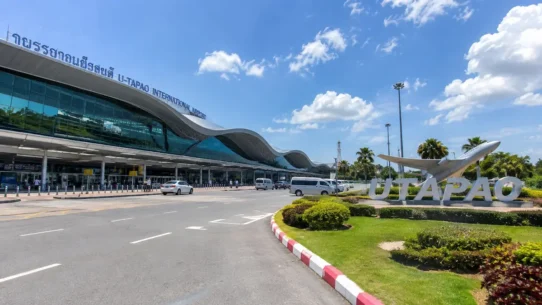
Chiang Mai International Airport (CNX) is unusually close to the city, which creates a dangerous illusion: “It is only a short ride, so I will figure it out after landing.” That works if you arrive fresh, with one backpack, mobile data and a central hotel. It is much less fun after a delayed flight, immigration, baggage claim and a tired travel companion.
You have four sensible arrival strategies. The official airport taxi counter is straightforward when you want a conventional car without app setup. Grab is easy if your phone is working and you can follow the designated pickup instructions. The RTC city bus or airport shuttle can be excellent value if your hotel is close to the route and you are traveling light. A pre-booked private transfer costs more than the cheapest public option but removes the most failure points: no route research, no fare negotiation, no wondering whether a large vehicle will accept all your luggage.
The current AOT airport information lists RTC city-bus service from roughly 06:00 to 23:30 and separately lists airport shuttle routes A1/A2/A3. Do not treat those hours as a promise for every future date—airport ground transport can change—so re-check if you arrive very early or late.
✅ What Other Travelers Say
Recent booking-platform reviews for Chiang Mai airport transfers repeatedly praise the simple meet-and-greet handoff, especially when travelers arrive with bags or want a fixed plan after a long flight. The appeal is not that a private transfer is always the cheapest; it is that the cost buys certainty. Grab users also benefit from the official CNX pickup/drop-off arrangement introduced with Airports of Thailand.
⚠️ The Catch (Things to Keep in Mind)
App pickup pins are not always directly outside the door where you emerge, so read the in-app instructions before walking. During rain or busy arrival banks, ride-hailing prices can rise. If you are four adults with large luggage, a standard sedan can be technically bookable but practically miserable—choose a larger vehicle. And if your hotel is inside a narrow Old City lane, the final 50–100 metres may still need to be walked.
Editor’s choice: Backpacker arriving before 10 p.m.? Try the bus if the route is convenient. Couple with two medium suitcases? Compare Grab with the official taxi. Family, senior travelers, or arrival after a long international connection? Pre-book the transfer and save your energy for Chiang Mai.
🚐 Red Songthaews (Rod Daeng): Best for Cheap Central Trips and Flexible Shared Rides
Best for: Old City · Nimman · markets · casual daytime trips · budget travelers · Doi Suthep shared rides
The red songthaew is the transport mode that makes Chiang Mai feel like Chiang Mai. It is a converted red pickup truck with two bench seats in the back, operating somewhere between a bus and a shared taxi. Within the central tourist area, a shared ride is commonly around 30 THB per person, but the system is flexible rather than rigidly route-based.
To use one, stand where the vehicle can safely pull over, wave it down, tell the driver your destination and wait for a yes or no. If the destination fits the driver’s current direction and passenger mix, you get in. If not, the driver may decline. You normally pay when you get off.
The key is understanding the difference between a shared ride and a private charter. If you ask the driver to go somewhere unusual, wait for you, or take only your group, the price is no longer the basic shared fare. This is where first-time travelers think they are being “overcharged” when they have actually asked for a different service.
✅ What Other Travelers Say
Travelers like songthaews because they are cheap, frequent in central areas and require no app account. They are especially useful for simple daytime hops where you do not mind sharing space and taking a slightly indirect route. Many visitors also use them for the climb toward Doi Suthep, where shared departures can be much better value than hiring a private car.
⚠️ The Catch (Things to Keep in Mind)
There is no guaranteed “next stop” screen, no air-conditioning and no promise that your ride will be direct. At tourist hotspots, a parked driver may quote more than a passing shared truck. For a normal central ride, avoid turning it into a long negotiation: state the destination, ask the price only when the trip is clearly outside the usual central pattern, and walk away politely if the quote makes no sense.
Do not use a red truck when: you are rushing to the airport, carrying fragile luggage, dressed for an important event, or traveling in heavy rain. In those cases, saving a few baht is not worth the hassle.
📱 Grab & Bolt: Best for Door-to-Door Travel, Night Rides and Price Transparency
Best for: precise hotel pickup · late night · rain · air-conditioning · couples · awkward destinations · airport trips
If this is your first trip to Chiang Mai, install both Grab and Bolt before you need them. Grab officially operates car/taxi services in Chiang Mai and has a dedicated facility at CNX. Bolt also currently lists Chiang Mai with Economy, Bolt, Taxi and Motor categories.
The strongest advantage is not simply price—it is clarity. You can pin the exact hotel, see the vehicle and driver details, follow the route and avoid repeating a Thai street name over traffic noise. For narrow lanes or hotels with multiple entrances, pin the lobby driveway rather than only typing the hotel name.
There is no permanent winner between the two apps. One may be cheaper while the other has a driver three minutes away. Check both. If the difference is tiny, choose the faster pickup or better-suited vehicle rather than automatically taking the lowest fare.
For travelers planning a day with several scattered stops, Grab also advertises an hourly “Rent” service in Chiang Mai. That can make sense for a temple-and-café day when you would otherwise order four or five separate rides, but compare the total package cost with a local private driver before committing.
✅ What Other Travelers Say
Visitors consistently value app rides for straightforward booking and reduced bargaining. Recent travel discussions also note that Grab is easy for normal commuting around Chiang Mai, while many comparison users find Bolt competitive on price. The strongest shared benefit is being able to see the fare before accepting the ride.
⚠️ The Catch (Things to Keep in Mind)
Prices are dynamic. Rain, evening demand and festivals can turn a cheap ride into an expensive one. Drivers can also cancel or struggle to reach you on a lane blocked by market traffic. If pickup is repeatedly failing, walk 100–200 metres to a wider road or a recognizable landmark. For distant mountain attractions, do not assume a driver will happily wait or that a return ride will be easy to find—arrange the return before you lose signal or driver supply.
Best money-saving move: Use apps as a price benchmark even when you plan to take a tuk-tuk. Knowing roughly what a private air-conditioned car costs gives you a reality check before accepting a higher street quote.
🛺 Tuk-Tuks: Best for Short, Fast, Fun Rides—Not for Automatic Bargains
Best for: short Old City hops · night-market atmosphere · couples · quick rides when no app car is nearby
A tuk-tuk ride is part transport, part Chiang Mai experience. It is open-sided, noisy and fun in small doses. It can also be one of the easiest ways to overpay if you get in before agreeing on the fare.
There is no single fixed citywide tourist fare you should memorize. Short rides are often quoted in the rough 80–150 THB range, but distance, time, traffic, waiting and tourist demand matter. The exact number is less important than the method: agree on the total before boarding.
If a tuk-tuk is parked outside a major tourist attraction, Night Bazaar or a nightlife cluster, expect the first quote to be higher than a passing vehicle. That does not automatically mean “scam”; the driver is pricing convenience and tourist demand. Your decision is simple: compare with Grab/Bolt, make one reasonable counteroffer, and walk if the gap is silly.
✅ What Other Travelers Say
Travelers love tuk-tuks for the open-air experience, easy photo stops and the feeling of moving through the city rather than being sealed inside a car. For a short evening hop between the Old City and Night Bazaar, the experience itself can justify paying more than a shared songthaew.
⚠️ The Catch (Things to Keep in Mind)
No air-conditioning, limited luggage space, traffic fumes and inconsistent pricing. If you are carrying several bags, wearing formal clothes, traveling with a toddler or trying to arrive sweat-free, choose a car. Also avoid agreeing to a vague “city tour” without a clear duration, stops, waiting time and total price.
Best use: one memorable ride, not every ride. Treat the tuk-tuk as a convenience or experience upgrade, not Chiang Mai’s default budget transport.
🚌 RTC Chiang Mai City Bus & Airport Shuttle: Best for Low-Cost Travel When the Route Matches
Best for: airport-to-city on a budget · solo travelers · light luggage · daytime sightseeing near published routes
Chiang Mai’s city bus is useful, but it should not be treated like the BTS in Bangkok. The service is smaller, routes have changed over time, and old blog posts can conflict with current airport information.
As of the latest Airports of Thailand page checked for this guide, the RTC Chiang Mai City Bus is listed at 30 THB per trip. The airport information also lists two R3 loops connecting CNX with areas including Wualai Road, Chiang Mai Gate, Night Bazaar, Tha Phae Gate, Chang Phuak Gate, Nimman and Suan Dok. AOT separately lists airport shuttle A1 and A2 at 40 THB and A3 at 60 THB.
This is excellent value if your accommodation is within a short walk of the route. It is poor value in terms of time if the bus takes a long loop and then leaves you with a 15-minute walk in heat. The budget calculation should include your legs and your luggage, not only the ticket price.
✅ What Other Travelers Say
Budget travelers who catch the bus successfully like the low fare, air-conditioning and airport connection. The main positive is obvious: it can move you from CNX to central Chiang Mai for a fraction of a private ride.
⚠️ The Catch (Things to Keep in Mind)
Online timetable and fare information has changed more than once. Some older traveler reviews quote 50 THB, older guides discuss 20 THB or unlimited tourist cards, and the current official AOT page now lists 30 THB per trip. This is exactly why you should check the current AOT page when you travel rather than build your itinerary around a screenshot from an old blog.
Pass warning: Older information has mentioned 1-day and 3-day unlimited RTC tourist cards. The current official AOT RTC page used for this article does not prominently advertise those passes. Unless you can verify current sale and validity in person, plan your budget using per-ride fares. If a pass is offered, calculate how many bus rides you will realistically take before buying it.
🛵 Scooter Rental: Best for Experienced, Properly Licensed Riders—A Bad “Cheap Transport” Shortcut for Beginners
Best for: experienced motorcycle riders · flexible day trips · longer stays · places poorly served by public transport
Scooters are everywhere in Chiang Mai, and rental prices can look irresistible. Typical small-scooter rentals are often advertised around 150–300 THB per day. That number creates the wrong comparison. The real cost is rental + fuel + deposit + helmet quality + legal compliance + insurance risk + your riding skill.
Thailand’s Department of Land Transport states that recognized foreign driving documents include ASEAN licences under specified conditions and International Driving Permits issued under the relevant road-traffic conventions. It also states that driving without a valid licence is an offence. For a motorcycle, your licence/permit needs to cover motorcycles. A car-only licence does not magically become a motorcycle licence because a rental shop hands you a key.
Before leaving any rental shop, photograph all sides of the scooter, wheels, mirrors and existing scratches. Test the brakes, indicators, horn and lights. Read the fuel policy. Ask what happens in the event of damage. Do not rely on the sentence “insurance included” until you understand what is actually covered.
✅ What Other Travelers Say
Confident riders love the freedom: no waiting, easy café hopping, and the ability to reach viewpoints or trailheads on their own schedule. For a long stay outside the Old City, a scooter can be genuinely convenient.
⚠️ The Catch (Things to Keep in Mind)
Chiang Mai traffic mixes scooters, cars, tuk-tuks and songthaews that can stop suddenly. Road conditions change quickly, mountain roads add curves and weather, and police licence/helmet checks are a real concern. More importantly, an accident without the correct licence can create serious insurance problems. If you do not already ride motorcycles confidently at home, Chiang Mai is not the place to learn just to save taxi money.
Safer alternative: Use Grab/Bolt in town and hire a driver or shared songthaew for mountain sights. It costs more than a bare rental rate but removes most of the legal and physical risk.
🚆 Train & Intercity Bus: Best for Bangkok, Chiang Rai and Pai—Not for Getting Around Chiang Mai
Best for: Bangkok–Chiang Mai · Chiang Rai · Pai · overnight travel · travelers continuing through Northern Thailand
Chiang Mai Railway Station and the Arcade bus terminals are useful regional gateways, but neither solves local sightseeing transport. First-time visitors often make the mistake of choosing a hotel based on being “near the station” even when most of their sightseeing is in the Old City or Nimman.
For Bangkok, the State Railway of Thailand’s official D-Ticket site is the safest place to check actual train availability. SRT’s 2026 timetable and popular-train pages confirm direct Bangkok–Chiang Mai services, but train numbers, rolling stock and prices differ by service and class. Sleeper berths can sell out around weekends and holidays, so book the specific train you want rather than assuming you can buy a bed at the station on the day.
For Chiang Rai and other northern routes, long-distance buses generally use the Arcade terminal area. For Pai, minivans are common; the road is famously winding, so travelers prone to motion sickness should choose seats and medication accordingly and avoid a heavy meal immediately before departure.
✅ What Other Travelers Say
The overnight train is popular because the journey itself becomes part of the trip and can replace a hotel night. Intercity buses and minivans are usually faster to book and reach more regional destinations directly.
⚠️ The Catch (Things to Keep in Mind)
Do not confuse “arriving in Chiang Mai” with “arriving at your hotel.” The railway station and Arcade bus terminals are outside the core Old City sightseeing area, so budget for a final Grab, Bolt, songthaew or tuk-tuk. With luggage, this last-mile ride is usually worth paying for instead of attempting a long walk.
Which Chiang Mai Transport Pass Is Actually Worth Buying?
For most first-time visitors: none. That is not because passes are always bad; it is because Chiang Mai’s most useful transport mix is fragmented. You may walk to breakfast, take a 30-baht songthaew to Nimman, use Grab after dinner and book a private ride to Doi Suthep. An unlimited bus product is valuable only if your itinerary repeatedly follows the bus network.
The TAGTHAi Chiang Mai Pass is a different product. It bundles attractions, activities and dining benefits into a time-limited digital pass. It can be good value for a deliberately packed sightseeing day, but you should total the specific attractions and meals you actually want. Do not buy it because the word “Pass” makes you assume all normal city transport is included.
The pass test: Write down tomorrow’s exact stops. Price the realistic transport between them. Then compare the pass cost with what you would otherwise pay. If the only reason the pass “wins” is because you are forcing yourself to visit extra places, it is not saving you money—it is changing your itinerary to justify the purchase.
Smart Route Choices for First-Time Visitors
CNX Airport → Old City: Light luggage and daytime arrival: RTC bus can be excellent value if your hotel is near the route. Two suitcases or late arrival: Grab, official taxi or pre-booked transfer.
Old City → Nimman: Try a red songthaew in daytime. If it is very hot, raining or you want exact door-to-door service, compare Grab and Bolt.
Old City → Night Bazaar: Songthaew for budget, tuk-tuk for atmosphere, app car for air-conditioning. Walking can work from the east side of the Old City, but do not underestimate traffic and heat.
Old City → Doi Suthep: Shared songthaew is the classic budget option. A private app ride or driver is easier for families or travelers who want flexible stops. If using an app one-way, think about the return before you arrive.
Hotel → train station / Arcade bus terminal with luggage: Use a car or tuk-tuk unless your hotel is genuinely close. Saving 50 baht is not worth missing a departure because you underestimated a walk.
Multiple out-of-town stops in one day: Compare an hourly app car, private driver or chartered songthaew. This is where “expensive” private transport can become cheaper per stop than repeatedly ordering rides and waiting.
Key FAQs
What is the best way to get from Chiang Mai Airport to the Old City with luggage?
For one light bag in daytime, the RTC bus is the budget choice if your accommodation is near its route. With two or more suitcases, children, seniors, or a late arrival, use the official taxi counter, Grab or a pre-booked transfer. The airport is close to town, so paying for door-to-door transport is usually a small premium relative to the hassle it removes.
Is Grab or Bolt better in Chiang Mai for tourists?
Install both. Grab has an official Chiang Mai Airport pickup/drop-off arrangement and a large Thailand network; Bolt also operates in Chiang Mai and can be cheaper on some trips. Compare price, pickup time and vehicle size each time. At night or in rain, availability matters as much as the headline fare.
How much should a red songthaew cost in Chiang Mai, and do I need to negotiate?
Shared central rides are commonly around 30 THB per person. You normally do not need a dramatic bargaining session for a simple central hop. The price rises for farther destinations, special routes, waiting time or private use. If the trip is outside the normal central pattern, confirm the fare before boarding.
Final Verdict and Your Next Step
Chiang Mai rewards travelers who mix transport modes instead of trying to force one option into every journey. Walk for short Old City distances. Use red songthaews when you are flexible. Open Grab and Bolt when you want certainty. Take a tuk-tuk when the experience is worth the premium. Use the city bus when the route genuinely matches your hotel. Rent a scooter only if you are already a competent, legally licensed motorcycle rider.
The biggest money mistake is not “paying too much” for one ride. It is choosing a badly located hotel, buying a pass you will not use, or spending 40 minutes saving 80 baht while your holiday disappears at the roadside.
If your arrival is late, you are traveling with family, or you simply do not want your first hour in Chiang Mai to involve negotiating with luggage, book the airport transfer before you fly. Compare at least two platforms because vehicle sizes, cancellation rules and live prices vary:
Your accommodation location can save even more transport money than a day pass. If you plan to spend most evenings around the Old City, stay there; if cafés, Maya and Nimman are your priority, stay near Nimman instead of commuting across town every day.
Before departure: screenshot your hotel name and address, save its map pin, install Grab and Bolt, carry small baht notes, and check the current AOT transport page. Those five minutes of preparation will save more time than chasing the absolute cheapest fare after you land.
Source Check & Update Notes
This guide was fact-checked against current official/operator information available on 17 August 2026. Fares and routes can change, so re-check time-sensitive details close to travel.
- Airports of Thailand – Chiang Mai Airport transportation: https://chiangmai.airportthai.co.th/service/transportation
- AOT – RTC Chiang Mai City Bus: https://chiangmai.airportthai.co.th/service/transportation/detail/139
- Grab Thailand transport: https://www.grab.com/th/en/transport/
- Grab CNX airport pickup announcement: https://www.grab.com/th/en/press/others/grabcnx/
- Bolt Chiang Mai: https://bolt.eu/en/cities/chiangmai/
- Thailand Department of Land Transport – recognized driving licences/IDPs: https://fvp.dlt.go.th/Manual2
- State Railway of Thailand timetable: https://ttsview.railway.co.th/timetable_modern.php?ln=en
- SRT D-Ticket booking: https://dticket.railway.co.th/
- TAGTHAi Chiang Mai Travel Pass: https://www.tagthai.com/explore/p/chiang-mai-travel-pass