
💡 Key Takeaways
- Ayutthaya is not one compact temple complex. The essential ruins, living temples, train station and best sunset site sit in different clusters, so walking everywhere is a poor plan.
- Three excellent temples beat eight rushed ones. Start with the Historical Island, hide from the midday heat, then choose either an outer temple circuit or Wat Chaiwatthanaram at sunset.
- Bang Pa-In Palace and Ayothaya Floating Market are optional, not automatic must-sees. Adding both to a Bangkok day trip usually means more road time and less meaningful time in the ancient city.
The hardest part of a first Ayutthaya trip is not deciding whether the ruins are worth seeing. It is working out how to connect scattered sights in punishing heat without wasting half the day in traffic, arguing over transport, or dragging a suitcase across a ferry landing. This Ayutthaya travel guide for first-time visitors gives you a realistic route, honest trade-offs and clear priorities, so you can experience the former Siamese capital without turning the day into a temple endurance test.
Founded around 1350, Ayutthaya grew into a major centre of diplomacy and global trade before it was destroyed in 1767. The surviving city was inscribed on the UNESCO World Heritage List in 1991. That history matters, but the modern visitor experience is less romantic: exposed brick ruins, limited shade, busy roads between clusters, separate entrance tickets and transport quotes that can vary. Plan those friction points first and the beauty of the place becomes much easier to appreciate.
Planning note: Transport, admission and opening information in this guide was checked on 23 August 2026. Thailand’s rail schedules, event hours and attraction fees can change. Recheck the linked official sources shortly before travel rather than trusting an old screenshot.
The 1-Min Cheat Sheet
- Minimum useful time: One full day. A half-day works only for three central ruins. One night is the sweet spot for photographers, history lovers and anyone who dislikes rushing.
- First-timer priority: Wat Mahathat, Wat Ratchaburana and Wat Phra Si Sanphet on the Historical Island; then add Wat Chaiwatthanaram for late-afternoon light.
- Best optional additions: Chao Sam Phraya National Museum for context and air conditioning; Wat Yai Chai Mongkhon for an active-temple contrast; Wat Phanan Choeng for local religious life.
- Best from Bangkok: Train for value and character; a guided tour or private driver for families, mobility needs and a route including Bang Pa-In. Minivans are less pleasant with large luggage.
- Bangkok station trap: Services may depart from either Bangkok Railway Station (Hua Lamphong) or Krung Thep Aphiwat Central Terminal. Check the station for your exact train number, not just the departure time.
- New 2026 option: SRT Bangkok Connex now provides air-conditioned service between Krung Thep Aphiwat and Ayutthaya. The weekend timetable begins later than ideal for cool-morning sightseeing, so compare it with earlier trains.
- Getting around: Walk within a cluster; use a bicycle only in cooler weather and daylight; use a tuk-tuk, car or organised tour for outer temples.
- Current historical-site tickets: The official 2026 rate for foreign visitors is 80 THB per single site or 300 THB for a seven-monument combined ticket. Four paid sites make the pass cheaper than individual tickets.
- Best season: November to February is generally the least exhausting. March to May can be fiercely hot; the wet season brings fewer crowds but requires rain and flood flexibility.
- Heat-smart hours: Sightsee from opening until about 11:30, take a long lunch or museum break, and restart around 15:30. Midday is not a badge of honour.
- Rough independent budget: Around 700–1,100 THB per person for a lean train-and-bicycle day, or roughly 1,100–2,000 THB with shared tuk-tuk use, more food and four paid ruins. Treat these as planning ranges, not fixed prices.
- What to skip first: The purpose-built floating market, elephant rides, distant minor ruins and Bang Pa-In Palace if you have only six or seven hours in Ayutthaya itself.
Top Survival Tips
- Do not plan Ayutthaya as a walking-only destination. Wat Mahathat and Wat Ratchaburana are easy to pair on foot, but Wat Chaiwatthanaram and Wat Yai Chai Mongkhon are outside the main island. The rivers and bridges make map distances feel longer than they look.
- Arrive before the tour-bus wave. Aim to reach your first central ruin close to opening. You will get softer light, less heat and a calmer view of the Buddha head at Wat Mahathat.
- Do the ticket maths before buying the pass. Three 80 THB sites cost 240 THB, so the 300 THB combined ticket is not automatically a bargain. It covers seven specified Fine Arts Department monuments, not every temple in Ayutthaya.
- Do not treat the 2026 air-conditioned train as automatically “best”. Comfort is welcome, but the weekend service starts at 09:05. By the time you arrive, cross the river and arrange transport, the cool part of the morning is largely gone.
- Photograph the tuk-tuk agreement. Confirm the total price, whether it is per vehicle or per person, the number of hours, exact stops, waiting time and final drop-off. Common quotes begin around 200 THB per hour, but route, demand and group size change the price.
- Never accept a vague “all temples” route. Show the driver your shortlist. Say clearly if you do not want shopping, costume rental, a floating-market stop or an elephant attraction.
- Inspect a rental bicycle before paying. Test both brakes, tyre pressure, saddle height and the lock. Central Ayutthaya is flat, but traffic, heat, uneven edges and bridge approaches make cycling less carefree than promotional photos suggest.
- Avoid cycling after dark or at midday in hot season. There are not protected cycle lanes on every useful road. Families with young children and nervous riders are usually better in a tuk-tuk or car.
- Carry water, electrolytes and sun protection. Many ruins have almost no shade. A compact umbrella is often more useful than another camera lens.
- Dress for active temples, not only ruins. Cover shoulders and knees, remove shoes where required and avoid climbing or sitting on ancient structures. At the famous Buddha head, lower yourself respectfully rather than standing above it.
- Do not arrive at Wat Chaiwatthanaram exactly at sunset. Arrive 60–75 minutes earlier so you can enter, walk the complex and choose a viewpoint before closing or last-entry procedures begin.
- A sunset boat trip is atmosphere, not a full temple tour. Stops are often short. Choose it for river views and a relaxed finish, not if you want time to understand architecture or read displays.
- Large luggage changes the whole plan. Ayutthaya station has had staffed left-luggage services, and nearby rental shops or guesthouses may also help, but do not assume a guaranteed locker. Confirm storage before committing to an onward night train.
- Keep a return buffer. Rail delays happen, roads back to Bangkok clog up, and finding a ride after sunset can take longer. Do not book a tight airport connection or non-refundable evening event after a self-guided day trip.
The Full Experience
📍 Historical Island: Best for First-Time Icons Without Backtracking
Feature tags: UNESCO ruins · easiest first cluster · bicycle-friendly in cool hours · 3–5 hours
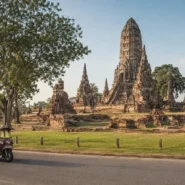
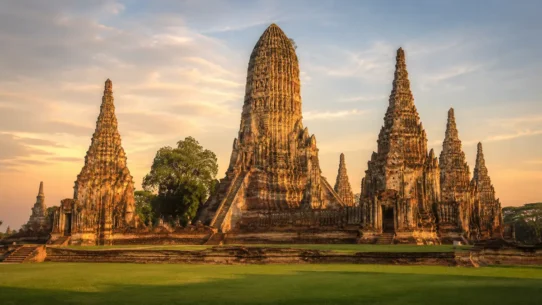
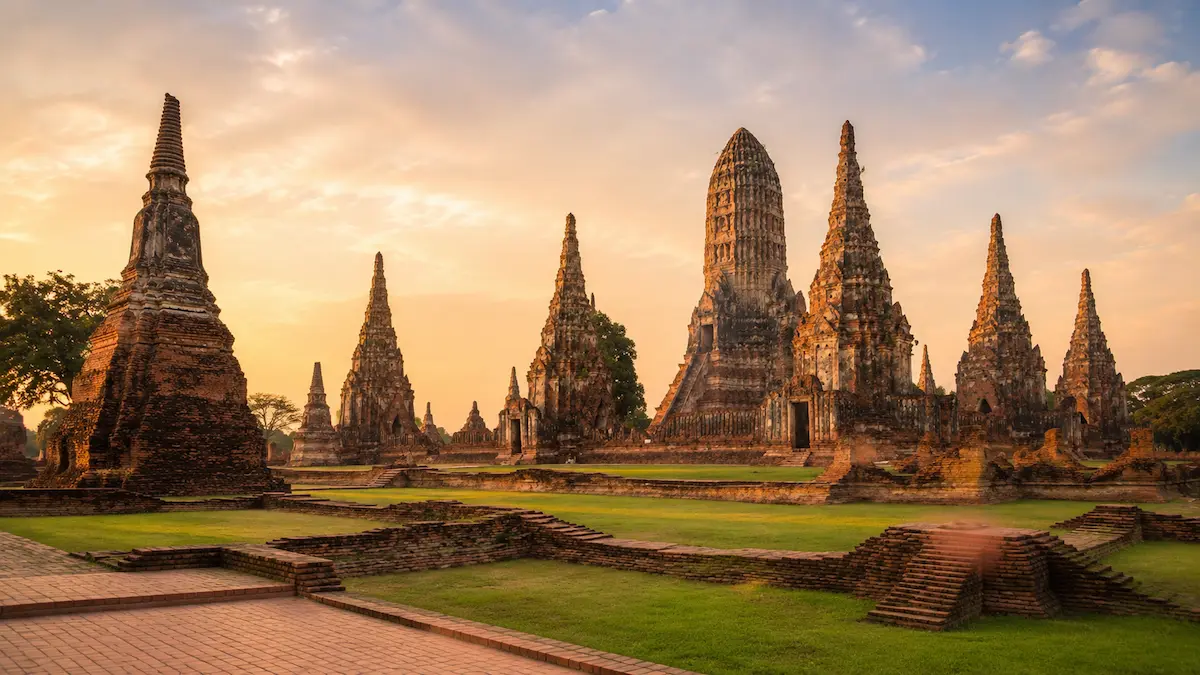
This is where a first visit should begin. Wat Mahathat, Wat Ratchaburana and the royal precinct around Wat Phra Si Sanphet provide three distinct experiences without wasting time crossing rivers. Wat Mahathat has the famous Buddha head held by tree roots, but its larger ruined monastery deserves more than a photograph. Wat Ratchaburana offers the most dramatic central prang of the pair. Wat Phra Si Sanphet’s three chedis give you the clearest sense of royal scale.
Walk between Wat Mahathat and Wat Ratchaburana. Then use a bicycle, tuk-tuk or short ride to the old royal area. Add the adjacent Wihan Phra Mongkhon Bophit if it is open; the active hall and large Buddha image make a useful visual contrast to the roofless ruins.
Best route: Wat Mahathat at opening, Wat Ratchaburana next, then Wat Phra Si Sanphet before lunch. If you read every sign and enjoy photography, allow about three hours. If you only take quick photos, you can do it faster, but rushing is exactly how temple fatigue starts.
Is the Buddha head overhyped? Slightly. It is smaller, lower and more crowded than many first-time visitors expect. It remains an extraordinary image, but it is a ten-minute highlight inside a much larger archaeological story—not a reason to cross Thailand on its own.
✅ What Other Travelers Say: Visitors consistently praise the ability to wander among major ruins at their own pace and the photogenic brickwork in morning light. The three-site central cluster is also the part independent travellers find easiest to understand without a private vehicle.
⚠️ The Catch (Things to Keep in Mind): Shade is limited, labels can feel thin if you arrive without historical context, and large groups concentrate around Wat Mahathat. Some stairs, uneven ground and exposed surfaces are difficult for wheelchairs, strollers and anyone with reduced mobility.
📍 Outer Temple and River Circuit: Best for Living Faith, Variety and Sunset
Feature tags: active temples · tuk-tuk or driver recommended · river circuit · half day
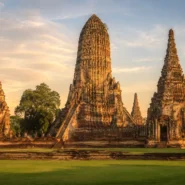
The outer circuit is where Ayutthaya stops feeling like one large archaeological park. Southeast of the island, Wat Yai Chai Mongkhon remains an active religious site with a high chedi, rows of robed Buddha images and a reclining Buddha. Nearby Wat Phanan Choeng is busier, more devotional and centred on a monumental seated Buddha. Across the river on the west bank, Wat Chaiwatthanaram is the grand late-afternoon finish.
These sights do not make a neat walking route. A tuk-tuk or private car is the most efficient choice. A river loop can be enjoyable, but verify which temples include actual stops and how many minutes you get at each. If your boat merely passes Wat Chaiwatthanaram, visit it separately.
Best route: Start Wat Yai Chai Mongkhon early, continue to Wat Phanan Choeng, take a long lunch, then visit Wat Chaiwatthanaram in late afternoon. Travellers with only one day should choose two of these three rather than squeezing all three between central ruins.
What is worth cutting? Wat Lokayasutharam’s outdoor reclining Buddha is a quick, free stop if it lies naturally on your route; it is not worth a long detour on a tight day. The Japanese Village and other foreign-quarter sites reward specialist interest, but the central ruins already communicate the international story more efficiently for a first visit.
✅ What Other Travelers Say: Wat Yai Chai Mongkhon is often remembered for its climb, symmetrical Buddha rows and sense of living worship. Wat Chaiwatthanaram receives some of the strongest praise for atmosphere and late-day light. Travellers who hire one driver for the circuit generally report a calmer day than those arranging every ride separately.
⚠️ The Catch (Things to Keep in Mind): Tour groups can arrive in waves, the chedi steps are steep, and shoes may need to come off in active worship areas. Wat Chaiwatthanaram is on the opposite bank from the core ruins, so a cheap point-to-point ride can become expensive if the driver will not wait or return.
📍 Station and Chao Phrom Side: Best for Rail Convenience and Local Food
Feature tags: train arrivals · budget stays · morning market · ferry connection · food stop
Ayutthaya Railway Station sits east of the Pa Sak River, while Chao Phrom Market and many budget guesthouses are on or near the eastern side of the island. This is a practical arrival zone rather than the city’s prettiest base. A small ferry has traditionally connected the station approach with the market side, but rolling a heavy suitcase down the pier steps is not everyone’s idea of a clever saving.
Chao Phrom is most interesting in the morning, when it functions as a local market rather than an attraction staged for visitors. This side of town is also convenient for boat noodles, roti sai mai and transport arrangements. Ayutthaya’s grilled giant river prawns are famous, but they can be one of the day’s biggest expenses because restaurants often price them by weight. Ask the price per kilogram, the approximate weight and whether cooking charges are included before ordering.
Where to stay here: Choose this zone if you are arriving late, leaving early or prioritising a low room rate and transport access. Choose the central island closer to Wat Mahathat if your priority is walking to ruins at opening. A map pin that says “Ayutthaya” is not enough—check which side of the river the property occupies.
✅ What Other Travelers Say: Budget travellers value the guesthouses, inexpensive food and easy access to tuk-tuk stands. Current hotel reviews often praise properties that arrange bikes, sightseeing and onward transport, which can remove several small logistical headaches.
⚠️ The Catch (Things to Keep in Mind): The station is not inside the main historical cluster. Ferry operating conditions can change, pavements are inconsistent and the eastern side is less atmospheric after the market winds down. Do not choose a station-side hotel solely because the straight-line distance to the ruins looks short.
📍 Bang Pa-In: Best for Palace Architecture—If You Have Extra Time
Feature tags: formal gardens · royal architecture · strict dress code · separate half-day
Bang Pa-In Royal Palace lies roughly 20 kilometres south of central Ayutthaya. Its lawns, ponds and Thai, Chinese and European-influenced buildings are visually polished and very different from the ruined city. That difference is exactly why some travellers love it—and why others wonder why their “Ayutthaya ruins” tour spent so much time there.
Add Bang Pa-In if you enjoy royal residences, gardens or architectural hybridity, or if a private driver can stop there efficiently between Bangkok and Ayutthaya. Skip it if this is your only day and ancient temples are your priority. Independent train travellers can use Bang Pa-In station, but coordinating local transport, luggage and another train adds friction that a short visit may not justify.
Plan for: About 90 minutes inside, plus transfer time. The dress code is stricter than at open-air ruins: shoulders and knees should be covered, and guards may reject clothing they consider too revealing. Check current admission, photography rules and access before departure because this is an active royal property.
✅ What Other Travelers Say: Visitors frequently praise the peaceful landscaping, lakeside pavilion and unusual blend of architectural styles. It is especially popular with photographers and travellers who want something beyond brick temple ruins.
⚠️ The Catch (Things to Keep in Mind): It is not in central Ayutthaya, it consumes a meaningful part of a day trip, and it can feel manicured rather than ancient. Travellers interested mainly in archaeology are the most likely to consider it skippable.
How to Get from Bangkok to Ayutthaya Without Losing the Morning
Train: Best Value, but Check the Departure Station
Most rail journeys take roughly one to two hours, depending on service and stops. The scenery and low fare make the train the most enjoyable budget option, but Bangkok now has two relevant departure points. Ordinary services can leave from Bangkok Railway Station, usually called Hua Lamphong, while many long-distance services and SRT Bangkok Connex use Krung Thep Aphiwat Central Terminal.
Use the official SRT timetable for the exact date and train number. Search both origin stations if necessary. Do not copy a departure time from an old blog: the terminal may have changed even when the train number looks familiar.
SRT Bangkok Connex launched daily Krung Thep Aphiwat–Ayutthaya service on 1 August 2026 using air-conditioned KIHA trains. Promotional fares and schedules are time-limited or adjustable. The weekend timetable begins at 09:05, which is comfortable but late for visitors trying to be at Wat Mahathat near opening.
On arrival, remember that Ayutthaya station is across the river from the island. Allow 20–40 minutes to orient yourself, store luggage, cross by ferry or road and arrange a bike or tuk-tuk. That “last kilometre” is the detail many day-trip plans omit.
Minivan: Frequent, but Poor with Large Bags
Minivans generally leave from the Chatuchak Minibus Station near Bangkok’s Mo Chit bus complex. They can be useful when the rail timetable does not fit, but travel time is vulnerable to traffic, luggage space is tight and the final drop-off can vary. Confirm the terminal, baggage charge and Ayutthaya stop before boarding. If you are carrying a full-size suitcase, the train or a private transfer is usually less stressful.
Guided Tour or Private Driver: Best for Zero-Transfer Days
A tour is not automatically “touristy” in the bad sense. It can be the smartest option for a family, a group of three or four, a traveller with mobility concerns, or anyone who wants Bang Pa-In and outer temples in one day. The important part is reading the inclusions. A cheap headline price may exclude historical-site tickets, palace admission, lunch, hotel pickup or the return cruise you assumed was included.
Avoid tours that combine Ayutthaya with both Damnoen Saduak Floating Market and Maeklong Railway Market unless your priority is collecting famous names. That itinerary crosses a huge arc around Bangkok and can leave surprisingly little time at the ruins.
Passing Through with Luggage: Possible, but Build a Backup
Travelling Bangkok–Ayutthaya–Chiang Mai without returning south can save distance, but only if your luggage and onward ticket are secure. Recent traveller reports indicate staffed storage at Ayutthaya station, while some guesthouses and rental shops may hold bags. This is not the same as a guaranteed bank of lockers. Contact your accommodation or storage provider in advance and keep at least a one-hour buffer before an onward train.
Getting Around Ayutthaya: Choose by Heat Tolerance, Not Instagram
- On foot: Good for Wat Mahathat plus Wat Ratchaburana, market lanes and short neighbourhood walks. Bad as an all-day strategy.
- Bicycle: Cheap and flexible on the island. Best from November to February, early in the day, for confident road users. It is not ideal with small children, during extreme heat or for the outer circuit.
- Tuk-tuk: The best compromise for most first-timers. Hire by the hour for a planned loop and keep the driver’s phone number or photograph of the vehicle.
- Ride-hailing: Useful for individual transfers, but pickup supply can thin out near outer temples and after sunset. Do not rely on it for a tightly timed multi-stop route.
- Motorbike or scooter: Only for properly licensed, insured and experienced riders. A holiday is not the time to learn in mixed traffic.
- Boat: Best as a scenic circuit or sunset activity. Confirm temple stops, duration, life jackets and return pier before paying.
A Realistic One-Day Ayutthaya Itinerary
- 08:00–09:00 — Arrive and solve logistics. Store luggage if needed, cross to the island and arrange your transport before sightseeing. If you arrive after 10:30, cut one temple now rather than chase the schedule all day.
- 09:00–09:50 — Wat Mahathat. See the Buddha head first, then walk the wider grounds after the photo crowd moves on.
- 10:00–10:45 — Wat Ratchaburana. Focus on the main prang, plan and surviving detail. Access to elevated or interior areas can change, so follow on-site barriers.
- 11:00–12:00 — Wat Phra Si Sanphet and Wihan Phra Mongkhon Bophit. This royal precinct gives the morning a strong finish without another long transfer.
- 12:15–14:15 — Lunch and a real heat break. Sit indoors, rehydrate and stop treating the day like a race. If open, Chao Sam Phraya National Museum is the best hot-hour alternative; its official listing gives service hours of 09:00–16:00 and 200 THB foreign admission, but verify closure days and holidays.
- 14:30–15:45 — Choose one meaningful extra. Pick Wat Yai Chai Mongkhon for a living temple and elevated views, or spend longer in the museum if history matters more than another photo stop.
- 16:15–sunset — Wat Chaiwatthanaram. Arrive well before sunset. Walk the complex first, then use the lower light for photos.
- After sunset — Return or stay overnight. Day-trippers should leave a generous buffer for the station or Bangkok traffic. Overnight visitors can eat near the river or explore a current night market without watching the clock.
Rainy-day version: Keep Wat Mahathat and Wat Phra Si Sanphet during the driest window, add the museum, use a covered vehicle and drop the sunset plan if storms or local flood notices make the riverbanks unreliable. Wet brick and stone can be slippery.
Is It Better to Stay Overnight?
For a first Thailand itinerary with limited time, a day trip is completely reasonable. Stay one night if you want sunrise atmosphere, a sunset boat ride, the museum, slower meals or more than four major sites. An overnight also turns the midday heat from a crisis into a hotel break.
- Central or east-central island: Best overall choice for first-timers, backpackers and walkers who want Wat Mahathat early. Check actual walking routes, not only straight-line distance.
- Riverside south or west of the island: Best for views, quiet evenings and boutique stays. Expect to use tuk-tuks or ride-hailing for the central ruins.
- Station and Chao Phrom side: Best for early trains, local food and lower prices. Less convenient for the western royal precinct and sunset sites.
- Modern highway and Central Ayutthaya area: Best for drivers who want parking, newer facilities and a shopping centre. Poor choice if you expect to walk out of the hotel into the historical park.
The common accommodation mistake is booking the cheapest highly rated room anywhere in “Ayutthaya” and discovering that every temple visit needs a paid ride. An extra 200–400 THB for the right location can cost less than repeated transfers and save an hour of coordination.
Food Worth Planning Around
- Boat noodles: A quick, inexpensive lunch that suits a packed sightseeing day. Portions can be small, so ordering several bowls is normal.
- Roti sai mai: Fine strands of sweet candy floss wrapped in a thin roti. Buy from a busy maker and eat it fresh; humidity does it no favours.
- Grilled giant river prawns: Delicious and distinctly associated with Ayutthaya, but not a budget snack. Confirm the live weight and total price before the kitchen starts cooking.
- Chao Phrom Market: Better for observing ordinary local commerce and breakfast activity than for a polished night-market experience.
- Tourist night markets: Schedules and locations can be seasonal or weekend-only. Ask your hotel what is actually operating that evening.
What Is Overrated, and What Should You Skip?
- Ayothaya Floating Market: This is a purpose-built attraction, not a preserved historic floating community. It can suit families who want food stalls and staged entertainment, but it is an easy cut for travellers focused on heritage.
- Elephant rides: They add little to understanding Ayutthaya and raise legitimate animal-welfare concerns. Skip the ride and spend the time at a temple, museum or ethical observation-based experience instead.
- Traditional costume photo packages: Fun if that is genuinely your interest, especially around Wat Chaiwatthanaram, but they consume prime late-afternoon time. Do not let a package replace the actual site visit.
- Eight- or nine-temple day tours: The numbers sound impressive. In reality, similar brick ruins begin to blur together and every shoe change, ticket queue and transfer eats time.
- Bang Pa-In as a compulsory stop: Worthwhile for palace lovers, optional for everyone else. Its distance is the issue, not its quality.
- Wat Lokayasutharam as a major destination: The reclining Buddha is striking but the stop is brief and exposed. Add it only when your route already passes nearby.
Ayutthaya Costs and Ticket Strategy
As of the official 2026 Fine Arts Department notice, a foreign visitor pays 80 THB for one ticketed monument or 300 THB for a combined ticket covering Wat Mahathat, Wat Ratchaburana, Wat Phra Ram, Wat Phra Si Sanphet and the Royal Palace, Wat Chaiwatthanaram, Wat Maheyong and Wat Kudi Dao. That is seven listed monuments because Wat Phra Si Sanphet and the Royal Palace are grouped together.
The combined ticket is good value only if your route actually reaches at least four covered sites. It does not replace separate fees at independently managed or active temples. Keep the ticket dry and accessible, and ask about its validity period when buying because conditions can change.
For cash planning, allow for small entrance fees, drinking water, ferries, toilets, bicycle hire and a driver deposit. Cards and QR payments are increasingly common in Thailand, but a foreign visitor should not assume every temple kiosk or driver can accept them.
Best Time to Visit Ayutthaya
- November to February: Best overall balance of lower humidity and easier outdoor sightseeing. December and January bring the most comfortable mornings and more visitors.
- March to May: The hardest season for an all-day ruins itinerary. Start at opening, use a vehicle and schedule a long indoor break. April heat can make cycling a bad decision.
- May to October: Greener, quieter and often cheaper, with sudden heavy showers. Pack a light rain layer and waterproof bag rather than assuming rain lasts all day.
- September and October: Build extra flexibility because central Thailand can receive heavy rain and Ayutthaya’s river setting creates periodic flood disruption. Check current local notices rather than cancelling based on a generic forecast.
Key FAQs
Is Ayutthaya worth visiting as a day trip from Bangkok for first-time visitors?
Yes. It offers a major UNESCO-listed former capital within practical reach of Bangkok, and a focused day can cover three central ruins plus one outer highlight. It becomes disappointing only when the itinerary tries to include too many distant attractions or arrives around midday. Aim to reach Ayutthaya by 09:00 and prioritise quality over temple count.
How many temples can you realistically visit in Ayutthaya in one day?
Four major sites, plus one short active-temple or museum stop, is realistic with a tuk-tuk or driver. Three is enough if you travel by train, move slowly or visit in hot season. Six or more usually means short photo stops, rushed meals and little time to understand what you are seeing.
What is the best way to get from Bangkok to Ayutthaya without a tour?
The train is the best-value independent option. Choose a service that arrives early, confirm whether it leaves from Hua Lamphong or Krung Thep Aphiwat, and allow time after arrival to cross the river and arrange local transport. Travellers with large bags or limited mobility may find a pre-booked car simpler even if it costs more.
Essential Links to Recheck Before You Go
- UNESCO: Historic City of Ayutthaya
- State Railway of Thailand: current timetable
- Fine Arts Department: 2026 historical-site ticket notice
- Chao Sam Phraya National Museum: official visitor information
- Tourism Authority of Thailand: Bang Pa-In Palace
Final Verdict and Your Next Step
For most first-time visitors, the winning Ayutthaya plan is simple: arrive early, keep the morning to the Historical Island, take a real midday break and finish with one carefully chosen outer sight. Do not confuse a long attraction list with a good day.
Budget solo travellers should take an early train, stay near the central island if overnighting, and use a bicycle only when weather and confidence allow. Couples and friends should share a tuk-tuk for the outer circuit and reserve sunset for Wat Chaiwatthanaram. Families, older travellers and visitors with limited mobility should pre-book an air-conditioned small-group tour or private driver, limit the number of ruins and use the museum during the hottest hours. Photographers and history lovers should stay at least one night; the calmer early and late hours are worth more than another rushed Bangkok attraction.
If your dates fall between November and February, over a weekend, during a Thai holiday or around a festival, book ahead. Central, well-reviewed rooms are limited, and the best small-group departures can sell out. Compare the route, admission inclusions, pickup point and cancellation rules before paying.
Check Ayutthaya hotel availability on Agoda
Compare Ayutthaya stays on Booking.com