
💡 Key Takeaways
- A realistic Gyeongju travel budget starts at roughly ₩70,000–₩110,000 (US$50–78) per person per day for a careful budget traveler, including accommodation. Mid-range travelers should plan closer to ₩140,000–₩220,000 (US$100–156), especially if they want a private room, cafés and occasional taxis.
- The cheapest room is not always the cheapest stay. A hotel far from Hwangnidan-gil and the downtown heritage cluster can quietly add bus waits, taxi fares and luggage hassle every day.
- Spring cherry blossoms, autumn foliage, Korean public-holiday weekends and Saturdays can tighten accommodation supply fast. Gyeongju is a major domestic tourism city, so local demand matters as much as international tourism.
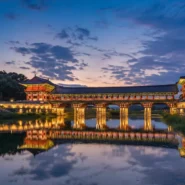
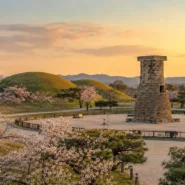
A useful Gyeongju travel budget cannot be built from one vague “average daily cost.” Gyeongju is compact in some places and surprisingly spread out in others. You can walk between Daereungwon, Cheomseongdae, Gyochon Village, Woljeonggyo Bridge and much of the historic downtown area, then suddenly discover that Bulguksa, Seokguram, Bomun Lake and Gyeongju Station require another bus or taxi ride. Your hotel location, travel season, appetite for cafés, luggage situation and choice between public transport and taxis can change the final total by tens of thousands of won per day.
The good news is that Gyeongju can be excellent value if you plan around geography. Several major sights are free, including Bulguksa Temple, Seokguram Grotto and the Gyeongju National Museum according to current official tourism information. City buses are inexpensive, and the downtown heritage zone rewards walking. The bad news is that travelers often lose those savings through poor hotel location, unnecessary taxi zigzags, theme-park spending, café hopping, luggage storage, last-minute weekend rooms and rail tickets bought without comparing the true door-to-door journey.
This guide uses South Korean won (KRW), not Japanese yen. The original Japan-style budgeting template often seen online—JR Passes, Golden Week and Tokyo pricing—does not apply to Gyeongju. For rough conversion only, this article uses about US$1 = ₩1,408, based on the exchange rate checked on August 8, 2026. Your card issuer’s rate can differ, so treat every USD figure as a planning estimate rather than a checkout price.
The 1-Min Cheat Sheet: How Much to Budget Per Day in Gyeongju
- Budget Traveler: ₩70,000–₩110,000 per person per day (about US$50–78), including accommodation.
This works if you use a hostel dorm or simple guesthouse, eat one or two low-cost meals, walk the downtown heritage cluster, use city buses and keep cafés, alcohol and taxis limited. A very cheap dorm can pull the total lower, but weekend availability is not guaranteed. - Mid-Range Traveler: ₩140,000–₩220,000 per person per day (about US$100–156), including accommodation.
This is the most realistic range for travelers sharing a decent private room, eating proper restaurant meals, adding one café stop, paying a few attraction fees and using a taxi when it genuinely saves time. Solo travelers should budget more because they cannot split the room cost. - Comfortable Traveler: ₩260,000–₩420,000 per person per day (about US$185–298), including accommodation.
This suits travelers choosing a boutique hanok-style stay or higher-end hotel, regular taxis, better restaurants, several cafés, paid experiences and a looser “I do not want to think about every ₩10,000” approach. Peak Saturdays can push this higher.
What is not included in these daily figures? International flights, major shopping, long-distance rail between cities, expensive private tours and a full Gyeongju World theme-park day should usually sit in separate budget lines. For context, a standard Seoul–Gyeongju KTX ticket is commonly around ₩49,300 one way, while Busan–Gyeongju KTX fares can start around ₩11,000. Those are intercity costs, not normal “daily spending” inside Gyeongju.
What Your Gyeongju Budget Is Actually Paying For
Accommodation: the biggest variable
Accommodation is where Gyeongju budgets diverge most. Current 2026 listings show the full spread: dorm beds can be very cheap, simple private hotels can sit around the US$50–70 range on some dates, while desirable central or character properties can climb above US$140–200 for two adults. Those are live-market examples, not fixed citywide averages, and weekends or blossom dates can look very different.
As a practical planning range, assume ₩20,000–₩45,000 per person for a dorm bed on favorable dates, ₩70,000–₩140,000 per room for a straightforward private hotel or guesthouse, and ₩160,000–₩320,000+ per room for boutique, premium or highly desirable hanok-style accommodation. Always compare the final tax-inclusive price and cancellation terms, not just the first headline rate.
Downtown/Hwangnidan-gil area: usually costs more for location, but you can walk to many core sights and restaurants. For a first visit of one or two nights, paying an extra ₩20,000–₩40,000 for a more central room can be cheaper than repeatedly paying taxis and losing time.
Bomun Lake: better for resort facilities, families, drivers and travelers who want a quieter leisure stay. It is less convenient if your priority is walking repeatedly around Hwangnidan-gil and the downtown historic zone.
Near the intercity/express bus terminals: often underrated for practical travelers. You remain close to downtown while making arrival and departure with luggage easier.
Near Gyeongju KTX Station: do not assume the station is the center of town. It sits outside the main downtown sightseeing area. A cheap room near the station may save you nothing if most of your itinerary is around Daereungwon, Hwangnidan-gil and Wolseong.
Food: cheap if you choose deliberately, expensive if you snack all day
Gyeongju does not require a huge food budget, but Hwangnidan-gil makes it extremely easy to spend one. In 2026, Korean convenience-store basics commonly sit around ₩1,200–₩2,000 for triangle gimbap, ₩1,200–₩2,500 for cup noodles and roughly ₩4,000–₩7,000 for a lunchbox. At the other end, a sit-down bibimbap in Gyochon can be around ₩15,000–₩19,000 at a tourist-friendly restaurant.
A practical daily allowance is ₩25,000–₩40,000 for a careful eater, ₩45,000–₩70,000 for a traveler having two proper meals plus coffee or dessert, and ₩80,000+ if food itself is part of the trip. The real budget killer is often not dinner. It is coffee at 11:00, pastry at 14:00, another drink at sunset and a late-night snack after Donggung and Wolji.
Local transport: cheap buses, but taxis become tempting
Gyeongju city buses are inexpensive. As of the April 2026 fare update, the adult fare is ₩1,500 cash or ₩1,450 by transport card. A transfer can be free within the stated transfer window when the rules are met. For two or three rides in a day, public transport barely dents the budget.
Taxis are where the numbers change. Gyeongju’s basic taxi fare increased to ₩4,500 from February 1, 2026, with distance and time charges after that. A couple taking a sensible taxi to save a difficult 30-minute bus connection may be making a good decision. A solo traveler taking six short taxis because the itinerary is geographically chaotic is not.
Attractions: surprisingly manageable
Many headline cultural sights are inexpensive or free. Current official listings show Bulguksa Temple and Seokguram Grotto as free. The Gyeongju National Museum is free except for certain special exhibitions. Donggung Palace and Wolji Pond is ₩3,000 for adults, and the paid Daereungwon entry is also listed at ₩3,000 for adults on current Gyeongju tourism pages.
This is why a history-focused Gyeongju trip can be cheaper than people expect. You do not need a ₩50,000 attraction budget every day. The exception is when you add theme parks, guided tours, hanbok rental, special experiences or private transport.
A Realistic 2-Day Gyeongju Budget
Budget 2D1N: roughly ₩130,000–₩200,000 per person
- One hostel/cheap guesthouse night: about ₩25,000–₩50,000
- Food for two days: about ₩50,000–₩70,000
- Local buses: about ₩6,000–₩10,000
- Paid cultural sights: about ₩6,000–₩15,000
- One taxi or luggage cost: about ₩10,000–₩25,000
- Small emergency cushion: about ₩20,000–₩30,000
This version works best if you stay centrally, walk the historic zone and treat Bulguksa/Seokguram as one geographically logical excursion rather than bouncing back and forth across the city.
Mid-range 2D1N: roughly ₩260,000–₩400,000 per person
- Share of a good private room: about ₩60,000–₩100,000
- Food and cafés for two days: about ₩100,000–₩140,000
- Buses plus two or three useful taxi rides: about ₩25,000–₩45,000
- Attractions/experience allowance: about ₩15,000–₩40,000
- Shopping and emergency buffer: about ₩60,000–₩80,000
This is the sweet spot for many first-time visitors: enough flexibility to avoid wasting an hour to save ₩5,000, but still controlled enough that Hwangnidan-gil cafés do not quietly double the budget.
Top Budget Survival Tips
- Judge a hotel by total daily friction, not room rate alone.
A room that is ₩25,000 cheaper but requires two extra bus rides, a taxi after dark and luggage dragging over an awkward transfer may be a false bargain. For short Gyeongju stays, location has unusually high value because the downtown sights are walkable when you base yourself correctly. - Do not buy a rail pass because “passes are cheaper.” Calculate your exact trains first.
Gyeongju has no JR Pass—this is South Korea. The relevant product is the KORAIL Pass, and it only saves money when your actual long-distance rail itinerary costs more than the pass. A traveler doing Seoul–Gyeongju–Busan may find individual tickets cheaper than a multi-day pass. Price the exact trains you intend to take before buying anything. - The fastest train is not always the fastest door-to-door route.
Gyeongju KTX Station is outside the downtown heritage zone. From Busan, a KTX ride can be only around 30 minutes, but you still need to reach the station on both ends. If you are already near a Busan bus terminal and your Gyeongju hotel is downtown, an intercity bus arriving closer to central Gyeongju can be more convenient even if the vehicle itself is slower. - The cheapest airport connection is not automatically best with large luggage.
Gyeongju does not have a major international airport in the city. Many travelers connect through Busan/Gimhae, Daegu or Seoul. With a 25 kg suitcase, saving ₩5,000 is not impressive if it adds two transfers, stairs and a long station walk. Compare the total journey from airport arrivals hall to hotel door. - Treat cherry-blossom weekends, autumn weekends and Korean public holidays as high-demand dates.
Gyeongju’s 2026 cherry blossom forecast put first bloom around March 28, with peak bloom normally later depending on weather. Accommodation demand can tighten around blossom events. Korean holidays such as Seollal and Chuseok also drive domestic movement. Book refundable rooms early when your dates overlap these periods. - Do not import Japan’s Golden Week logic into Korea.
Japan’s Golden Week does not directly set Gyeongju hotel prices. What matters in Korea are Korean holidays, long weekends, school/family travel patterns and local events. In 2026, early May contains Workers’ Day and Children’s Day, while Buddha’s Birthday falls later in May. Check the Korean calendar for your exact year. - Give Gyeongju World its own budget day.
Theme parks behave differently from heritage sightseeing. At the time of checking, Klook showed Gyeongju World tickets from about ₩29,900, but prices and promotions can change. Once you add transport, meals, drinks, lockers and souvenirs, a theme-park day can easily add ₩60,000–₩120,000+ per person. Do not hide that inside a normal sightseeing allowance. - Use convenience stores strategically, not as an all-day diet.
The best budget use is breakfast, one quick lunch, drinks and late-night emergency food. A ₩5,000–₩7,000 convenience-store meal can offset a more memorable local dinner later. This feels far less restrictive than trying to eat every meal cheaply and then compensating with random snacks. - Check supermarkets and prepared-food markdowns in the evening.
Large Korean supermarkets commonly reduce prepared foods later in the day. Exact timing and discount size vary by store, but evening markdowns can make sushi, fried chicken, side dishes and ready meals much cheaper. Go because it fits your route—not because you are willing to spend 40 minutes traveling to save ₩4,000. - Department-store food halls can be useful only if you are already there.
Korea’s basement food halls can offer high-quality takeaway and late-day markdowns, but Gyeongju is not a city where you should build your route around department stores. The principle matters more than the brand: buy good prepared food near where you already are, then avoid an extra transport leg. - Cluster sights by area to stop transport leakage.
Put Daereungwon, Hwangnidan-gil, Cheomseongdae, Gyerim, Gyochon and Woljeonggyo into the same walking block. Pair Donggung and Wolji with nearby historic sights and the National Museum. Put Bulguksa and Seokguram together. Put Bomun attractions together. This one decision can save both money and an astonishing amount of waiting. - Walk when the route is scenic and continuous; pay when the walk is just dead distance.
Walking 10–20 minutes between downtown heritage sites is part of the experience. Walking 35 minutes beside an uninteresting road because the bus costs ₩1,450 is usually a bad trade if it leaves you exhausted before the sights you actually paid to visit. Saving money should not destroy the day. - Build a weather and mistake buffer into every day.
Put aside ₩20,000–₩40,000 per person per day that you hope not to spend. It covers a taxi in heavy rain, forgotten umbrella, extra locker time, a replacement charger, unexpected café stop or a changed route. Travelers get into trouble when every won is already allocated before the day begins. - Budget luggage costs instead of pretending bags are free.
Gyeongju City currently lists luggage storage options ranging from free limited-hour storage to paid lockers and staffed services. At Gyeongju Station, listed locker rates start from around ₩1,000 for two hours depending on size, while staffed suitcase storage can be around ₩5,000 and delivery can cost more. If you are doing a stopover between Seoul and Busan, this is a real line item. - Pay in KRW and be cautious with Dynamic Currency Conversion.
If a card terminal or ATM offers to charge you in your home currency, that is Dynamic Currency Conversion (DCC). Visa explains that DCC includes an exchange rate and may include additional fees or markup. In most cases, travelers with a normal international card should compare carefully and usually prefer being charged in the local currency, KRW. - Check your own card’s foreign-transaction fee before Korea.
A card charging 3% overseas turns ₩500,000 of trip spending into another ₩15,000 equivalent cost. ATM operator fees can also apply, and your home bank may charge a second fee. One travel-friendly card plus fewer, larger cash withdrawals can be cheaper than repeated small ATM visits.
Gyeongju Budget by Travel Season
Cherry blossom season: late March to early April
This is one of the most dangerous periods for travelers who assume Gyeongju is always a cheap secondary city. VISITKOREA’s 2026 forecast placed Gyeongju’s first bloom around March 28, but blossom timing shifts with weather and peak bloom comes later. Festival weekends and the few best-looking blossom days can compress demand into a short period.
Budget impact: central hotels and pretty hanok stays can rise sharply, especially Friday and Saturday. Booking late can also force you into a cheaper but less useful location, which then increases transport spending.
How to control it: reserve a refundable room well ahead, then re-check rates closer to travel. Do not chase a forecast by making three overlapping non-refundable bookings. Also remember that flowers are weather-dependent; paying a huge premium never guarantees perfect blossoms.
Korean public holidays and long weekends
Korea’s two most important traditional travel periods are Seollal and Chuseok. In 2026, Seollal falls February 16–18 and Chuseok September 24–26. Trains and roads can become significantly busier around these holidays because millions of people travel domestically.
May can also contain domestic travel spikes around Workers’ Day, Children’s Day and Buddha’s Birthday, depending on the year and how dates fall around weekends. October public holidays can create additional long weekends.
Budget impact: rail availability becomes more important than saving ₩5,000, and hotel inventory can tighten. If your itinerary depends on a specific KTX time, do not treat holiday transport as something to book casually at the last minute.
Summer: June to August
Summer can look attractive on room-price calendars outside festival weekends, but the trade-off is heat, humidity and rain. Korea’s rainy season commonly overlaps late June to late July, and typhoons can affect travel between June and October. August is typically very hot.
Budget impact: you may spend more on drinks, cafés, taxis and indoor attractions simply to recover from the heat. A theoretical low hotel rate is not the whole story if you end up taxiing because a 25-minute walk feels miserable at 34°C.
How to control it: build the day around early morning and evening walking, with the National Museum or a long lunch as a midday heat break. A centrally located hotel with good air-conditioning has higher value in August than a cheap room requiring a long walk.
Autumn foliage season: October to November
Autumn is one of Gyeongju’s best outdoor seasons. Mild weather increases demand for Bulguksa, Namsan, the historic district and Bomun. Peak foliage timing changes every year, so do not treat one specific week as guaranteed.
Budget impact: attractive weekends can price more like spring than shoulder season. Saturday is often the most dangerous night for room rates.
How to control it: if your schedule is flexible, compare Sunday–Thursday stays with Friday–Saturday. A one-day shift can make a bigger difference than changing hotel brands.
Christmas and New Year
Christmas Day is a public holiday in Korea, while New Year travel can create short leisure breaks and sunrise trips. Gyeongju is not priced exactly like Seoul at Christmas, but family hotels, resorts and romantic stays can still see stronger demand around weekends and holidays.
Budget impact: Bomun resort properties may be more sensitive than simple downtown business-style hotels. Special packages can also make headline rates harder to compare.
How to control it: compare the room-only rate against packages you will genuinely use. Free breakfast is not “free value” if the package costs ₩40,000 more and you would rather eat in town.
Quieter winter periods: parts of January, February and early March
Outside Seollal, long weekends and special events, winter can be a strong value period. Cold weather reduces casual sightseeing demand, and you may find better room availability.
Budget impact: accommodation can be cheaper, but you may spend more on cafés, taxis and indoor breaks if the weather is harsh. Sunrise, snow or holiday weekends can also create exceptions.
Best value mindset: there is no month that is “always cheapest.” Search by exact date. In Gyeongju, day of week + holiday + local event + weather-driven demand often matters more than the name of the month.
Common Budget Mistakes
1. Counting only flights and hotels
The mistake: you book a ₩100,000 room and think the trip is mostly paid for, then discover daily food, station transfers, taxis, coffee, luggage and intercity trains can add another ₩80,000–₩150,000.
Fix it: create separate lines for accommodation, intercity transport, local transport, food, attractions, shopping and emergency cash. Never use one “miscellaneous” bucket for half the trip.
2. Forgetting that Gyeongju KTX Station is outside downtown
The mistake: you compare Seoul–Gyeongju KTX only by train time and forget the ride from the station to Hwangnidan-gil or your hotel.
Fix it: budget the last-mile ride in both money and time. On arrival day, a taxi may be worth splitting if you have luggage; on a relaxed day, the city bus is far cheaper.
3. Assuming a KORAIL Pass covers every transport need
The mistake: buying a rail pass and mentally treating local buses, taxis and other transport as “covered.”
Fix it: a KORAIL Pass is for eligible rail travel, not Gyeongju city buses or random local transport. Add up your actual long-distance train tickets first, then compare that total with the pass.
4. Planning geographically impossible sightseeing days
The mistake: Hwangnidan-gil → Bulguksa → Bomun → downtown → Seokguram → downtown again because the attractions looked close on a list.
Fix it: organize Gyeongju into zones. Downtown heritage cluster together; Bulguksa + Seokguram together; Bomun together. Fewer cross-city moves means fewer fares and more actual sightseeing.
5. Setting a low food budget while buying coffee, dessert and late-night food every day
The mistake: writing “₩30,000 food per day” while behaving like food costs only mean lunch and dinner.
Fix it: separate meals from treats. Give yourself, for example, ₩45,000 for meals and ₩15,000 for cafés/snacks. When the café budget is gone, you can make an informed choice instead of wondering where the money went.
6. Having no shopping ceiling
The mistake: buying “small” souvenirs, cosmetics, bakery boxes and convenience-store snacks all day without tracking them.
Fix it: set a trip-wide shopping cap, not a daily vague intention. If the cap is ₩150,000, keep it visible in your phone notes and subtract every purchase.
7. Ignoring luggage storage and delivery
The mistake: planning a stopover in Gyeongju between Seoul and Busan but assuming you can drag suitcases into every attraction for free.
Fix it: budget ₩3,000–₩10,000+ per bag depending on locker size, duration and service. Gyeongju City publishes current storage locations and charges, so check the option nearest your route.
8. Staying far away to save a small amount
The mistake: saving ₩20,000 on a room, then spending ₩15,000–₩30,000 on taxis and losing an hour.
Fix it: add “transport from hotel to my first and last sight” before deciding. A centrally located ₩120,000 room can outperform a ₩90,000 room if it removes multiple transfers.
9. Forgetting an emergency budget
The mistake: budgeting every won so tightly that one rainy afternoon breaks the plan.
Fix it: reserve at least 10–15% of your ground budget as contingency money. If you do not spend it, great—it becomes the final-day treat or money you take home.
10. Using Dynamic Currency Conversion without checking the rate
The mistake: choosing “pay in USD” or another home currency because the number looks familiar.
Fix it: compare carefully. DCC can include a markup. For most travel cards, paying in local currency (KRW) lets the card network and issuer perform the conversion under your card’s terms.
11. Overpaying for a train because you booked through the wrong channel
The mistake: assuming every reseller shows the same base fare or the same ticket conditions.
Fix it: check the official KORAIL booking site first for a baseline. Then compare any third-party platform for convenience, payment support and cancellation—not because you assume it is cheaper.
12. Treating every “pass” as a bargain
The mistake: buying an attraction or transport pass because the marketing shows a large theoretical saving.
Fix it: list the exact attractions you would visit without the pass, their individual prices and whether they are realistically open during your schedule. If you are adding attractions only to “get your money’s worth,” the pass has already changed your trip for the worse.
How Much Cash Should You Carry in Gyeongju?
Korea is highly card-friendly, and most hotels, restaurants, cafés and chain stores accept major cards. Still, carrying some cash is sensible for markets, older machines, transport-card top-ups and backup situations.
For a two-day Gyeongju stay, many travelers will be comfortable with ₩50,000–₩100,000 in cash per person plus a working international card. There is little reason to carry your entire trip budget as cash. More important is having a second payment method in case your main card is declined.
If withdrawing from an ATM, check both the Korean ATM fee and your own bank’s overseas cash-withdrawal fee. Several small withdrawals can cost far more than one sensible larger withdrawal.
Is Gyeongju Cheap Compared With Seoul or Busan?
For cultural sightseeing, Gyeongju can feel cheaper because many major heritage sights are free or low-cost and the central historic area is walkable. You do not need to spend heavily on admission fees to have an excellent day.
But Gyeongju is not automatically cheaper in every category. Attractive hanok stays can be expensive. Resort hotels around Bomun can cost more than expected. Weekend rooms can sell into higher price bands because domestic leisure demand is strong. And because the city lacks a subway network, taxis can become a larger share of spending if you plan badly.
The best value strategy is therefore not “spend as little as possible.” It is spend on location and time savings, then cut low-value repetition: fewer unnecessary taxi zigzags, fewer random cafés, fewer duplicate transport legs and fewer paid experiences you did not really want.
Key FAQs
How much money do I need for 2 days in Gyeongju?
A careful traveler should plan roughly ₩130,000–₩200,000 (about US$92–142) per person for 2D1N excluding intercity transport to and from Gyeongju. A mid-range traveler should budget around ₩260,000–₩400,000 (about US$185–284). Solo travelers may pay more because they cannot split a private room.
Is Gyeongju expensive for tourists in 2026?
Not necessarily. Local buses are only around ₩1,450 with an adult transport card, and major sights such as Bulguksa, Seokguram and the Gyeongju National Museum are currently free. The biggest risks are weekend accommodation, taxis caused by poor route planning, cafés, theme-park spending and last-minute travel during domestic holiday periods.
What is the cheapest way to get around Gyeongju without wasting time?
Use a hybrid strategy: walk the downtown heritage cluster, use city buses for longer planned legs, and take a taxi only when it removes a bad transfer or saves meaningful time. Trying to use buses for every single movement can waste hours; taking taxis for every movement wastes money. Gyeongju rewards travelers who group sights geographically.
Final Verdict and Your Next Step
If you are backpacking, ₩70,000–₩110,000 per day is a realistic target when accommodation is included and you stay disciplined. If you want a private room, proper meals, cafés and occasional taxis, ₩140,000–₩220,000 per day is safer. If you want premium accommodation, convenience-first transport and paid experiences, start around ₩260,000 per day and move upward from there.
The smartest place to spend more is usually location. The smartest places to cut are usually unnecessary cross-city movement, impulse café stops, badly chosen passes and last-minute weekend accommodation. Gyeongju is a city where a well-planned route can save more money than hunting for the absolute cheapest meal.
If your dates fall around cherry blossoms, autumn weekends, Seollal, Chuseok or another Korean long weekend, book accommodation early—preferably with flexible cancellation—then re-check prices later. For KTX, check the official KORAIL fare first before comparing third-party sellers.
Useful booking links checked for this guide:
- Check Gyeongju hotels on Booking.com
- Compare Gyeongju hotel prices on Agoda
- Check Gyeongju tours, passes and tickets on Klook
- Compare Gyeongju day tours and activities on KKday
- Check official KORAIL train fares and schedules
Affiliate disclosure: Some booking links above may earn this site a commission if you make a purchase, at no extra cost to you. Prices and availability change by date, inventory, exchange rate and promotion, so always confirm the final checkout total.
Price-Check Notes and Official References
This guide was price-checked on August 8, 2026. Dynamic hotel, tour and transport prices can change. The most important current figures were cross-checked against official or live booking sources rather than recycled from older travel blogs.
- Gyeongju City Traffic Information Center — current city bus fares
- Gyeongju City — 2026 taxi fare adjustment
- Gyeongju Tourism — luggage storage locations and fees
- VISITKOREA — Bulguksa Temple current visitor information
- VISITKOREA — Gyeongju National Park, Bulguksa and Seokguram fee information
- VISITKOREA — Gyeongju National Museum admission
- VISITKOREA — Donggung Palace and Wolji Pond admission
- VISITKOREA — South Korea public holidays
- VISITKOREA — 2026 cherry blossom forecast
- Visa — Dynamic Currency Conversion explanation