


💡 Key Takeaways
- Do not try to squeeze Omicho Market, Higashi Chaya, Kenrokuen, the castle, the art museum and Nagamachi into one “efficient” day. It looks possible on a map, but queues, bus waits and closing times make it miserable.
- Visit Higashi Chaya before its shops open, then enter a historic teahouse at opening time. Visit Kenrokuen at 7:00 or during the official free early-entry window for the calmest experience.
- Use buses for the long station-to-sightseeing jumps, but walk between attractions that genuinely connect. A taxi is often the smarter choice in heavy rain or for three to four travelers.
- Electronic tickets can reduce payment hassle, but they are not magic skip-the-line passes. Kenrokuen e-ticket holders use the same entrance queue as on-site buyers.
- Myoryuji, the so-called Ninja Temple, requires a phone reservation, takes cash and does not admit preschool children. It is the one stop that can break Day 3 if you do not plan ahead.
A good 3-day Kanazawa itinerary should feel unhurried, not like a race around a sightseeing bus loop. The city is compact enough to look deceptively easy, which is exactly why first-time visitors overbook it. They see that Omicho Market, Higashi Chaya, Kanazawa Castle, Kenrokuen, the 21st Century Museum and Nagamachi sit within a few kilometers of one another and assume they can simply walk through the entire list.
In reality, Kanazawa’s most famous places run on different clocks. The market is strongest in the morning and fades early. Historic teahouses open after the best crowd-free photography window. Kenrokuen rewards early risers. The 21st Century Museum has its own closure calendar, exhibition tickets and a separate same-day process for the underground section of Leandro Erlich’s The Swimming Pool. Myoryuji is not a casual walk-in attraction at all.
This route fixes those conflicts. It groups the city into three logical zones: the eastern teahouse-and-market corridor, the central garden-castle-art cluster, and the western samurai-and-temple district. You will still see the classics, but without wasting half the day crossing the same streets or standing in the wrong queue.
The 1-Minute Cheat Sheet
- Kenrokuen Garden and Kanazawa Castle Park
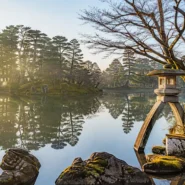
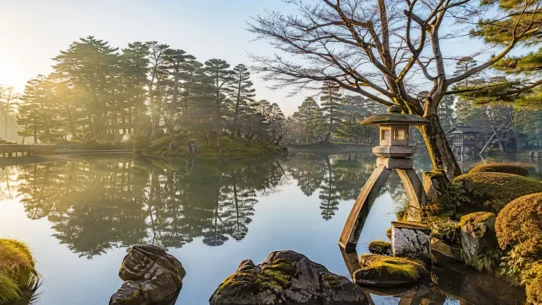
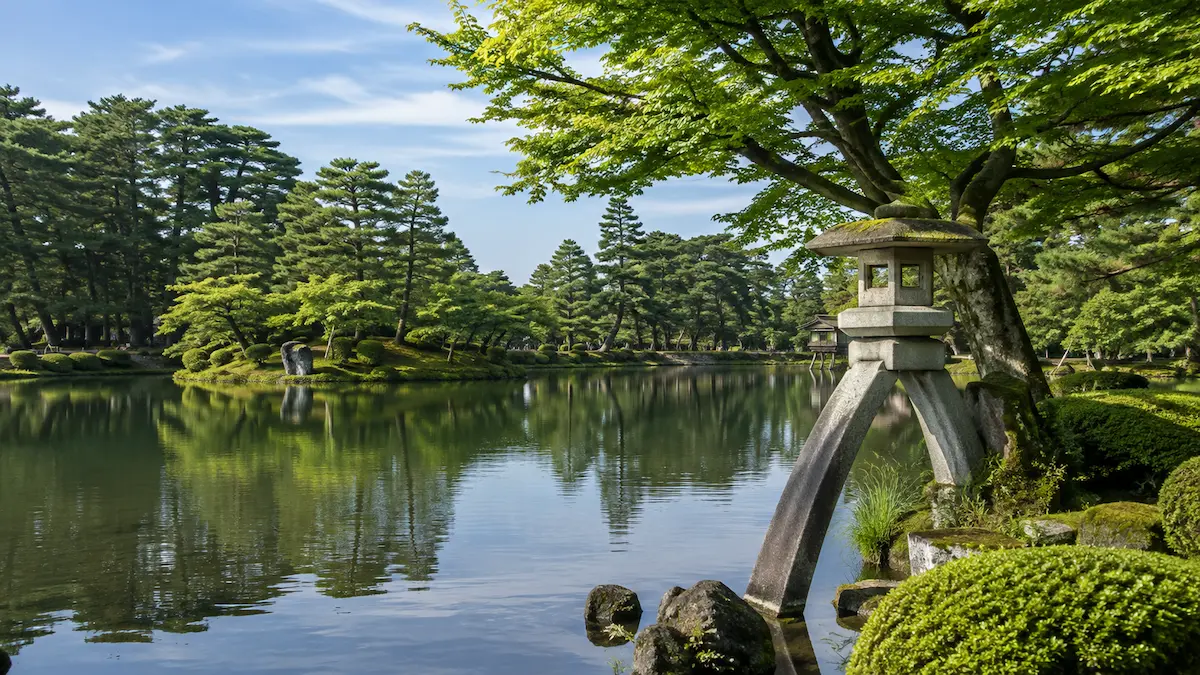
Best for first-time visitors, photographers, garden lovers and history fans. Allow 2.5 to 3.5 hours for both, longer in peak blossom or autumn color season. Kenrokuen currently charges ¥320 for adults; Kanazawa Castle Park grounds are free, while the main reconstructed interior buildings charge a separate fee. The most useful bus stop is Kenrokuen-shita/Kanazawa Castle, though the cluster also connects well to Hirosaka and the 21st Century Museum. No normal reservation is required. Arrive at 7:00, or use the official free early-entry period if you are willing to leave before paid opening. The catch: gravel, slopes, large grounds and crowded photo bottlenecks around the Kotoji-toro lantern. - Higashi Chaya District and Kazuemachi
Best for architecture, photography, traditional culture and travelers who prefer atmosphere to major monuments. Allow 2 to 2.5 hours including one paid teahouse interior. The streets are free; Shima currently charges ¥500 for adults, with tea service extra. Use Hashiba-cho or Asanogawa Ohashi bus stops. General street access needs no reservation, although tea ceremonies, geiko events and workshops may require advance booking. Walk the streets around 8:00, then enter Shima at its 9:30 opening. The catch: midday tour groups, photogenic but commercial main lanes, and limited seating at popular cafés. - Omicho Market
Best for seafood lovers, snackers and travelers who want a practical early lunch. Allow 1.5 to 2 hours if eating; 45 minutes is enough for a walk-through. Entry is free, but food prices vary dramatically. Get off at Musashigatsuji/Omicho Market. No reservation is needed for the market, though a specific sushi restaurant may accept or require one. Aim for 10:30 to 11:15 for an early lunch, before the worst restaurant queues. The catch: individual shops keep their own hours, some close earlier than expected, and standing-snack prices can add up faster than a proper set meal. - 21st Century Museum of Contemporary Art, Kanazawa
Best for contemporary art fans, architecture lovers, families and rainy-day travelers. Allow 1.5 to 2.5 hours depending on exhibitions. The public zone is free; paid exhibition prices change by program. Get off at Hirosaka/21st Century Museum or walk from Kenrokuen. Buy exhibition tickets online when a major show is running, but understand that the underground section of The Swimming Pool uses a separate same-day reservation process. Arrive around opening at 10:00 or later in the afternoon after school groups thin out. The catch: Monday closures, changing exhibition value, same-day pool reservations and a major renovation closure announced for 6 May 2027 through March 2028. - Nagamachi, Oyama Shrine, Myoryuji and Nishi Chaya
Best for samurai history, smaller museums, quiet lanes and travelers who enjoy a guided architectural puzzle. Allow most of Day 3: roughly 4.5 to 6 hours with lunch and Myoryuji. Nagamachi streets and Oyama Shrine are free; individual residences and museums charge admission. Myoryuji currently charges ¥1,200 for adults, requires advance phone booking and accepts cash. Use Korinbo for Nagamachi and Hirokoji for Myoryuji/Nishi Chaya. Reserve Myoryuji up to one month ahead. Start Nagamachi around 8:30, book Myoryuji for early afternoon, then continue to Nishi Chaya. The catch: narrow lanes, uneven paving, shoes-off interiors, no preschoolers at Myoryuji and very little flexibility if you miss your tour time.
Tourist Traps to Avoid & Itinerary Hacks
- Trap: Treating Kanazawa as a one-day checklist.
The classic online route often reads: station, Omicho, Higashi Chaya, castle, Kenrokuen, museum, Nagamachi, dinner. It is technically possible only if you barely enter anything. You will arrive at Omicho during peak lunch queues, reach Higashi Chaya with the tour buses, rush Kenrokuen, and discover that smaller museums are already approaching last admission. Hack: divide the city by theme and operating rhythm, not by the number of map pins you can save. - Trap: Visiting Higashi Chaya only at noon.
The wooden façades are most enjoyable before shops open. By late morning, the main lane can feel like a photo queue. Hack: arrive around 8:00 for the streets, cross the Asanogawa River to Kazuemachi, then return for Shima at 9:30. This gives you both atmosphere and an interior visit without sacrificing either. - Trap: Assuming Omicho Market is a late-afternoon food hall.
Official hours are generally listed around 9:00 to 16:00, but each business sets its own schedule. Seafood selection and energy are better earlier. Hack: eat an early lunch around 10:45 or choose a restaurant just outside the busiest central aisles. Do not spend 60 minutes waiting for a famous rice bowl when several solid alternatives are nearby. - Trap: Believing an e-ticket is a skip-the-line ticket.
Both Klook and KKday state that Kenrokuen electronic-ticket holders use the same entrance queue as visitors buying tickets on site. Hack: buy online for convenience and a ready mobile voucher, not for priority access. Your real queue-skipping tool is arriving early. - Trap: Planning the 21st Century Museum around one Instagram artwork.
The public-zone view of The Swimming Pool, the paid exhibitions and the underground pool experience are not the same thing. The underground section uses a same-day reservation system, and exhibition schedules change. Hack: check the museum calendar, buy the exhibition you actually want, and join the pool reservation process as soon as it opens on the day. - Trap: Calling Myoryuji a ninja attraction and showing up without a booking.
The temple has no historical connection to ninja. Its nickname comes from hidden rooms, defensive features and confusing stairways. Walk-ins are not a safe plan. Hack: call the official reservation number, choose an English-supported slot, carry cash and confirm age restrictions before promising the visit to children. - Trap: Buying a one-day bus pass automatically.
The official tourism guide recommends the pass when you expect four or more rides. On this itinerary, several attractions are deliberately linked on foot, so a pass may not save money every day. Hack: count your likely rides each morning. Buy the pass on a bus-heavy rain day; pay per ride on a mostly walking day. - Trap: Assuming every Kanazawa bus accepts the same card.
The Loop Bus accepts nationwide IC cards, but Hokutetsu local buses generally do not. JR buses have different rules again. Hack: check the bus operator and route code, keep small cash or use accepted touch payment, and confirm whether you are boarding the Right Loop or Left Loop before the doors close. - Trap: Adding Shirakawa-go to this three-day city plan without removing a Kanazawa day.
Shirakawa-go is a full excursion, not a quick side stop. Hack: either give the region a fourth day or replace Day 3 entirely. Do not pretend you can take a long bus day and still enjoy Kanazawa’s western districts at a sensible pace.
The Perfect 3-Day Itinerary at a Glance
Day 1: Higashi Chaya, Kazuemachi and Omicho Market
Geographic theme: eastern historic districts flowing west toward the central market. This order beats the standard “market first, teahouse district at noon” plan because it protects your quietest photo window and moves you toward lunch instead of away from it.
- Suggested start: 8:00 at Higashi Chaya District.
- Main sequence: Higashi Chaya main lane → backstreets and Utasu Shrine → Asanogawa River → Kazuemachi → Shima at 9:30 → bus or 20-minute walk to Omicho Market → early lunch → Owaricho or Kanazawa Station area.
- Between stops: walk within Higashi and Kazuemachi; use a short bus or taxi to Omicho if it is raining. The walk is pleasant in good weather but not worth forcing with wet shoes.
- Walking and effort: roughly 6 to 8 kilometers, mostly easy, with stone paving and a few narrow lanes. Moderate only if you add Utatsuyama slopes.
- Lunch strategy: enter Omicho before 11:15. Choose a restaurant with a visible moving queue, not simply the longest queue. A seafood set meal is often better value than buying five premium snacks separately.
- Easiest optional stop to cut: Utasu Shrine or an additional gold-leaf workshop. Keep the two teahouse districts and the market.
- Rain or low-energy alternative: shorten the street walk, spend longer inside Shima or another cultural facility, take a taxi to Omicho, then browse Kanazawa Hyakubangai inside the station.
Why this works: Higashi Chaya’s streets do not need to be “open” to be enjoyed. Starting early avoids the worst crowd, while the 9:30 teahouse opening creates a natural bridge to a 10:45–11:15 market lunch. You finish near the station and commercial center, which is useful if Day 1 is also your arrival day.
Day 2: Kenrokuen, Kanazawa Castle and the Art Museum
Geographic theme: the central cultural plateau. These attractions genuinely belong together. The mistake is not combining them; the mistake is starting late, entering every minor building and leaving the museum until after its ticketed areas begin winding down.
- Suggested start: 7:00 at Kenrokuen, or earlier during the official free early-entry window.
- Main sequence: Kenrokuen → Ishikawa Gate → Kanazawa Castle Park → Gyokusen-inmaru Garden → lunch near Hirosaka/Korinbo → 21st Century Museum at 13:00 → optional D.T. Suzuki Museum or craft museum.
- Between stops: walk. A bus between these adjacent sights wastes more time than it saves.
- Walking and effort: roughly 8 to 10 kilometers. Moderate. Expect gravel, garden slopes, large lawns, castle staircases and long interior corridors if you enter the reconstructed buildings.
- Lunch strategy: leave the immediate Kenrokuen gate area before peak lunch. Hirosaka and Korinbo offer more choice and reduce the chance of paying tourist-zone prices for a rushed meal.
- Easiest optional stop to cut: the D.T. Suzuki Museum or the paid castle interiors. Do not cut Kenrokuen merely because the weather is gray; mist and light rain can suit the garden.
- Rain or low-energy alternative: use the museum as the longer anchor, take the barrier-free route through Kenrokuen, skip the largest castle loop and use a short taxi back to the hotel.
Why this works: Kenrokuen opens earlier than the museum, so the day should begin outdoors and move indoors. The castle sits directly between the garden and the city center. By eating before the museum, you avoid trying to find food while simultaneously managing an exhibition ticket or pool reservation.
Important calendar warning: the 21st Century Museum’s exhibition zone is normally closed on Mondays, with holiday exceptions and substitute closures. The museum has also announced a major renovation closure from 6 May 2027 to March 2028. If your Day 2 is a Monday, swap Day 1 and Day 2 or replace the museum with another indoor cultural stop.
Day 3: Oyama Shrine, Nagamachi, Myoryuji and Nishi Chaya
Geographic theme: the western and southwestern castle-town districts. The route moves from central Korinbo into the former samurai quarter, then continues south toward the temple district and Nishi Chaya without returning to the castle zone.
- Suggested start: 8:15 at Oyama Shrine, followed by Nagamachi around 8:45.
- Main sequence: Oyama Shrine → Nagamachi lanes → Nomura Samurai House or Ashigaru Museum → early lunch in Korinbo/Katamachi → pre-booked Myoryuji tour → Nishi Chaya District → Saigawa River stroll.
- Between stops: walk from Oyama Shrine through Nagamachi; use a local bus, taxi or 25-minute walk to Myoryuji depending on weather and energy.
- Walking and effort: roughly 7 to 9 kilometers. Moderate. Narrow stone lanes, small bridges, steps and shoes-off interiors make this less stroller-friendly than the distance suggests.
- Lunch strategy: eat before Myoryuji. A timed temple tour is not the moment to gamble on a long restaurant queue. Korinbo and Katamachi have better choice than the immediate temple lanes.
- Easiest optional stop to cut: Nishi Chaya, especially if you already spent substantial time in Higashi Chaya. Keep Myoryuji only if you have a confirmed reservation and are genuinely interested in architecture and defensive design.
- Rain or low-energy alternative: shorten the Nagamachi street loop, focus on one residence or museum, take a taxi to Myoryuji and finish with a café rather than a river walk.
Why this works: Nagamachi is most atmospheric before the lanes fill, and several interiors open early. Myoryuji’s fixed tour time becomes the day’s anchor. Nishi Chaya is nearby enough to be a logical add-on, but optional enough to remove without ruining the route.
Save Your Legs! The Most Efficient Route
Kanazawa rewards selective walking. The city’s tourist core is compact, but “compact” does not mean every leg is pleasant in every season. The most efficient strategy is to use transport for the long radial jumps from Kanazawa Station, then walk within each cluster.
Best same-day combinations: Higashi Chaya and Kazuemachi are natural partners because they sit on opposite sides of the Asanogawa River. Kenrokuen, Kanazawa Castle and the 21st Century Museum form the strongest walking cluster in the city. Oyama Shrine and Nagamachi connect cleanly, while Myoryuji and Nishi Chaya belong together in the southwest.
Combinations that look close but often fail: Omicho Market and Kenrokuen are not difficult to connect, but visiting the market at peak lunch and the garden in the hottest or busiest part of the day is poor timing. Higashi Chaya and Nagamachi are both historic districts, yet they sit on opposite sides of the center and attract crowds on similar schedules. Putting them back-to-back creates repetitive streetscape fatigue and unnecessary bus dependence. Myoryuji should never be casually inserted between the castle and museum because a fixed reservation can force you to rush both.
Train, bus, walking or taxi? Trains are not useful for moving between central Kanazawa sights. Use the Loop Bus or a suitable local/JR bus for Kanazawa Station to Higashi Chaya, Kenrokuen or Korinbo. Walk inside the daily zones. Use a taxi when rain is heavy, when three or four people can split the fare, when traveling with a stroller, or when moving between Omicho and Higashi Chaya with limited time. Official tourism estimates put short city taxi trips in a range where convenience can outweigh the small group cost.
Where the walking gets harder: Kenrokuen has gravel paths, slopes and surfaces that can become slippery. The official site specifically warns about gravel and recommends particular barrier-free routes. Kanazawa Castle’s grounds are broad, and the route between the Ninomaru area and Gyokusen-inmaru includes a steep section that is not recommended for wheelchairs. Higashi Chaya and Nagamachi contain stone paving, drainage channels and narrow lanes. Myoryuji includes stairs and a controlled interior tour; it is not a place for large luggage, and mobility limitations should be checked directly before booking.
Do not bring a large suitcase into the sightseeing loop. Buses can be crowded and historic lanes are awkward with wheels. Kanazawa Station has coin lockers, a staffed left-luggage counter for oversized items and a same-day baggage delivery service to participating hotels and ryokan. The official staffed counter at the Anto East Entrance currently lists 9:30 to 19:30 hours, with separate fees for standard and oversized items. The tourist information center’s same-day hotel delivery service operates from the station, but delivery time cannot be specified and some vacation rentals without a front desk are not eligible.
Best area to stay:
- Kanazawa Station: best for short stays, early trains, airport buses and luggage logistics. The downside is that you need a bus or taxi for almost every sightseeing day, and the area feels less atmospheric at night.
- Korinbo/Katamachi: best overall balance for this itinerary. You can walk to Nagamachi, Oyama Shrine, the museum zone and many restaurants. The downside is a bus or taxi transfer with luggage from the station.
- Omicho/Musashigatsuji: practical for the market, station access and a central starting point. It is quieter at night than Katamachi and still requires transport to the farther historic districts.
- Higashi Chaya area: atmospheric early and late, but less convenient for restaurants, luggage and Day 3. Stay here for mood, not maximum transport efficiency.
On arrival day, send luggage from Kanazawa Station to your hotel or store it before beginning Day 1. On departure day, reverse the logic: leave bags at the station and keep your final sightseeing close to Omicho, Owaricho or the station shopping complex. Dragging luggage through Kenrokuen or Higashi Chaya is not adventurous; it is simply inefficient.
Ticket Tips & Skip-the-Line Hacks
Check the latest official opening hours, closure days, exhibition calendar and reservation rules shortly before departure. Kanazawa’s core sights are not difficult to book, but the exceptions are important.
Buy ahead when timing matters: reserve Myoryuji by phone up to one month in advance. Book tea ceremonies, geiko performances, craft workshops and guided tours if they are central to your trip. For the 21st Century Museum, online exhibition tickets can be useful during major shows, but the underground Swimming Pool experience requires a separate same-day reservation; advance admission does not automatically secure it.
Electronic tickets that are genuinely available: Kenrokuen admission is sold through Klook and KKday, and Kanazawa Castle’s paid interior buildings are also available through Klook. These products provide a mobile voucher or e-ticket that you show at entry. This is convenient if you prefer to have payment completed before arrival.
Check the Klook Kenrokuen Garden e-ticket
Check the KKday Kenrokuen Garden e-ticket
Check the Klook Kanazawa Castle interior ticket
The honest warning: these are not true skip-the-line products. Klook and KKday both state that Kenrokuen e-ticket holders use the same entry line as on-site buyers. Pre-purchasing saves payment decisions and gives you a ready voucher; arriving at 7:00 saves the queue.
On-site purchase is usually enough for: Shima, small samurai residences, most local museums and standard Kenrokuen entry outside major seasonal peaks. Higashi Chaya, Kazuemachi, Nagamachi, Omicho Market, Oyama Shrine and the grounds of Kanazawa Castle do not need admission tickets at all.
Experiences worth reserving: a tea ceremony can add depth without distorting the route. The following verified booking page offers a 45-minute experience near Kenrokuen, but garden admission is not included.
Reserve a Kenrokuen tea ceremony on Klook
Travelers who prefer context over self-guiding can also pre-book a small-group garden-and-castle tour with included admission. It is a better use of money than buying a vague “skip-the-line” promise that the attraction does not actually offer.
Check the Kanazawa Castle and Kenrokuen historical tour
Tried & Tested: My Honest Review
📍 Stop 1: Higashi Chaya District and Kazuemachi
Best for: early-morning atmosphere · wooden architecture · photography · traditional culture
My honest take: Higashi Chaya is worth visiting, but only if you stop treating the central lane as the entire district. The famous view takes minutes; the value comes from crossing to quieter Kazuemachi, noticing the riverfront and entering one historic teahouse rather than shopping in every gold-leaf store.
✅ What Other Travelers Say
Visitors consistently praise the preserved streetscape, photogenic façades and the feeling of seeing traditional Kanazawa without big-city travel distances. Early arrivals often describe the district far more positively than visitors who arrive with midday groups.
⚠️ The Catch (Things to Keep in Mind)
The main lane becomes crowded quickly and can feel commercial. Many buildings are private businesses, not open-air museum exhibits. Photograph respectfully, avoid blocking doorways and do not expect every tea house to accept walk-ins.
📍 Stop 2: Omicho Market
Best for: seafood · early lunch · local produce · energetic indoor atmosphere
My honest take: Omicho is a real working market wrapped in a major tourist attraction. That means it is lively, uneven and easy to overspend in. The best experience is not collecting every viral snack. Pick one serious meal, one seasonal bite and time to look at what local shoppers are buying.
✅ What Other Travelers Say
The recurring praise is freshness, variety and the chance to try Sea of Japan seafood in one compact place. Travelers also appreciate that the market is covered, making it useful in Kanazawa’s frequent rain.
⚠️ The Catch (Things to Keep in Mind)
Popular seafood-bowl restaurants can absorb an hour. Prices are not automatically cheap because it is a market. Individual stores have different opening days and hours, so a late-afternoon visit can feel half-finished.
📍 Stop 3: Kenrokuen Garden and Kanazawa Castle
Best for: first-time visitors · seasonal scenery · garden design · castle history
My honest take: This is the non-negotiable Kanazawa classic, but it deserves a real morning rather than a 45-minute photo stop. Kenrokuen changes with the weather and season, while the castle gives the garden historical context. Visit both, but be selective about paid interiors if your legs are already tired.
✅ What Other Travelers Say
Travelers repeatedly praise the maintenance, seasonal detail and sense of space. Families often enjoy using the map to find landmarks, while photographers value early access and winter yukitsuri rope supports.
⚠️ The Catch (Things to Keep in Mind)
The garden is larger and more tiring than social media suggests. Gravel, slopes and concentrated photo crowds can frustrate visitors with limited mobility. The castle grounds are free, but the main reconstructed interiors require a separate ticket.
📍 Stop 4: 21st Century Museum of Contemporary Art
Best for: contemporary art · architecture · families · rainy afternoons
My honest take: The building and public zone make the museum worth a look even when the paid exhibition is not for you. The mistake is paying solely for one famous photograph. Read the current exhibition description first and treat the pool reservation as a bonus, not the entire reason for visiting.
✅ What Other Travelers Say
Visitors like the circular SANAA-designed building, approachable public spaces and mix of free and ticketed areas. The museum is often rated especially well by architecture fans and travelers needing an indoor break.
⚠️ The Catch (Things to Keep in Mind)
Exhibition quality is subjective, the underground pool slot is not guaranteed, and Monday closures catch many first-time visitors. Travelers planning for 2027–2028 must check the announced renovation closure before building the day around it.
📍 Stop 5: Oyama Shrine and Nagamachi Samurai District
Best for: samurai history · quiet lanes · smaller museums · early-morning walks
My honest take: Nagamachi is less immediately spectacular than Higashi Chaya, but it often feels more rewarding because the canals, earthen walls and residences explain how the castle town worked. One interior is enough for most visitors. The free lanes and Oyama Shrine provide the strongest value.
✅ What Other Travelers Say
Travelers appreciate the calm atmosphere, preserved walls and compact museums. Nomura Samurai House receives particular praise for its garden, while winter visitors enjoy the straw coverings used to protect earthen walls.
⚠️ The Catch (Things to Keep in Mind)
Some visitors expect a vast preserved district and finish the main lanes quickly. Narrow paths, channels and uneven surfaces can be awkward with a stroller. Paid residences are small and can feel congested when groups arrive together.
📍 Stop 6: Myoryuji and Nishi Chaya District
Best for: unusual architecture · defensive design · guided visits · travelers who plan ahead
My honest take: Myoryuji is memorable when you understand what it is: a temple designed with defensive ingenuity, not a ninja theme park. The guided format adds structure, but the reservation, cash rule and language limitations make it less flexible than every other major stop in this itinerary.
✅ What Other Travelers Say
Travelers who enjoy architecture and hidden mechanisms often call it one of Kanazawa’s most distinctive visits. The secret stairways, concealed spaces and compact guided route create a stronger story than a self-guided temple walk.
⚠️ The Catch (Things to Keep in Mind)
Advance phone booking is required, preschool children cannot enter, and the tour is primarily conducted in Japanese with support materials for non-Japanese visitors. Arrive early, bring cash and do not schedule a tight lunch immediately before the tour.
Key FAQs
Is three days in Kanazawa too much for a first visit?
No. Three days is the sweet spot if you want to enter museums and historic buildings rather than photograph them from outside. Two days can cover the highlights, but it forces you to choose between the western samurai/temple district and a slower museum-and-garden day.
What is the best area to stay for a 3-day Kanazawa itinerary without a car?
Korinbo or the Omicho/Musashigatsuji area offers the best sightseeing balance. Kanazawa Station is better for luggage and train convenience, while Higashi Chaya is atmospheric but less efficient for the full three-day route.
Can I visit Shirakawa-go as a day trip during three days in Kanazawa?
Yes, but it should replace one full Kanazawa day, not be added on top. For a first city-focused trip, keep all three days in Kanazawa. For a regional trip, use Day 3 for Shirakawa-go and accept that Nagamachi, Myoryuji and Nishi Chaya will need to be shortened or skipped.
Final Verdict and Your Next Step
The perfect Kanazawa itinerary is not the one with the most attractions. It is the one that reaches Higashi Chaya before the crowds, eats at Omicho before the lunch crush, gives Kenrokuen the cool early hours it deserves and treats Myoryuji as a real reservation rather than a hopeful walk-in.
Base yourself near Korinbo, Omicho or the station, send or store your luggage, and let each day move in one direction. Keep one optional stop per day that you are willing to cut. That single habit will protect the places you actually care about when rain, queues or tired feet interfere.
Before departure, recheck the official Kanazawa tourism site, the official Kenrokuen site, the 21st Century Museum calendar and the official Myoryuji reservation page. Opening days and reservation systems can change.
Book the tickets or timed experiences that matter to you before they become the weak link in the route: