
💡 Key Takeaways
- Plan the actual arrival before buying a central address. Santa Lucia is the historic-city rail terminus, Mestre is on the mainland and Piazzale Roma is a road hub. The last boat or walk still has to reach the hotel.
- Use one main sightseeing area at a time. San Marco, Rialto, Dorsoduro, Cannaregio and Castello offer different days; crossing between them repeatedly adds effort without improving the visit.
- Reserve the exact paid interior and keep the rest flexible. Palace tickets, Basilica products and museum opening days have different rules. A transport pass or overnight booking does not include them.
This Venice travel guide starts with the problem that usually shapes a first visit: the city looks compact, but luggage, stepped bridges, boat landings and timed admissions make an overfilled plan awkward. A room described as Venice can be on the mainland or a separate island, and a short distance across water is not always a short walk. Choose the arrival route and daily rhythm before filling every hour.
The five areas below are practical sightseeing clusters, with current operator and attraction information checked on 20 October 2026. The recommendations are based on primary sources and attributed creator footage, not claimed personal stays or test rides. You can use the guide for a shorter visit by choosing fewer areas, rather than trying to compress every module into one day.
The 1-Min Cheat Sheet
- Allow three full sightseeing days for a useful first overview. That often means four room nights if arrival and departure consume the surrounding days. With less time, prioritize San Marco and one contrasting district.
- Choose the base by the actual door. Historic Venice allows walking returns; Mestre adds a mainland connection; Lido adds a boat crossing. Santa Lucia-side accommodation can simplify a train arrival, while a San Marco base may suit repeated returns near the headline sights.
- Use ACTV for urban waterbuses and Alilaguna for its airport services. They are different operators. A road taxi cannot drive through historic lanes to every hotel, and a private water taxi is a separate paid arrangement.
- Fix the main reservations. Choose the actual Basilica areas, then plan the Palace/MUVE route around its ticket conditions. Add Dorsoduro art or a Biennale venue only when you want time inside.
- Keep an arrival and weather margin. Reach the correct landing, allow time for the final route and check the weather/tide information. A scheduled aircraft landing is not a hotel check-in time.
Top Survival Tips
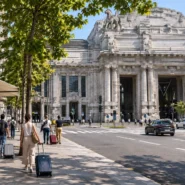
- Write down the exact station and airport. Venezia Santa Lucia and Venezia Mestre are different railway stations. Marco Polo and Treviso are different airports. Verify the actual endpoint of the booked service before choosing the onward ticket.
- Ask the hotel for a luggage route. Supply the arrival hub, time, bag count and any stroller or mobility needs. Ask about stepped bridges, entrance thresholds, lifts and the assigned room rather than relying on a map’s straight-line distance.
- Do not buy a pass by reflex. Count the separately chargeable boat journeys in the valid window. A walking day may need none; an island day may make a pass useful. Do not treat each transfer inside a valid ticket as a new full fare.
- Match the museum and the product. The Basilica’s basic, Pala d’Oro, museum and full products differ. The Palace’s linked museum route is not the Basilica, and the Peggy Guggenheim Collection is not in the MUVE pass.
- Protect a realistic return. A tired child, an older traveler or a hot afternoon can make a hotel rest valuable. Group sights on the same side of the day’s route so the return does not become another crossing of the city.
- Keep large bags out of sightseeing. Check the actual institution’s size and storage rules and leave cases with an agreed hotel or storage provider. Do not assume every museum will accept a trolley because it has a cloakroom.
- Use the official weather and tide information. High water and rainfall are different matters. A low-lying route or private landing needs its own check; an old flood video is not a forecast.
- Let residents pass. The city’s Enjoy Respect Venezia guidance advises keeping right, walking single file where needed and avoiding stops on bridges. Use suitable gardens or parks for a takeaway break; monuments and church steps are not picnic spaces.
- Decide whether a gondola is part of the trip. It is an optional experience rather than the ordinary way to travel between districts. Confirm the licensed operator’s actual route, duration, party and price before paying; a private boat name does not make every landing step-free.
Arrival, Transport and the Charges to Keep Separate
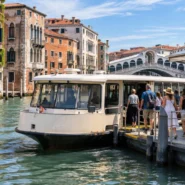
ACTV’s current visitor tariff is €9.50 for a standard 75-minute Rete Unica ticket, with €25/€35/€45/€65 for 24/48/72/168 hours. Validate the chosen medium at the start and when changing vehicles; use the published activation instructions for app tickets. Standard urban products exclude Alilaguna, private water taxis and Marco Polo Airport travel unless the appropriate airport entitlement is purchased. The €25 Venezia Daily Pass specifically includes stated municipal R/RV train journeys; do not extend that railway inclusion to every multi-day product or any high-speed train.
For Marco Polo, ACTV lists an airport-bus entitlement at €10 one way or €18 return, while an €18 90-minute Aerobus-plus-urban-waterbus product includes the specified onward network. A valid pass can instead use the concurrently purchased airport-bus supplement, subject to its validity window. Alilaguna’s airport–Venice boat product is €18 one way or €32 return and is not an ACTV waterbus. Compare the landing and final walk for the hotel; none of these fares guarantees an airport-to-room duration.
The current overnight-tax schedule is per liable guest per night, ordinarily for at most five consecutive nights. In historic-center hotels from 1 February to 31 December, full rates are €2 at two stars, €3.50 at three/three superior, €4.50 at four/four superior and €5 at five stars. January and other municipal zones have separate rates. Children before ten are exempt; ages ten until before sixteen use the published rounded reductions, including €1.70 at three stars and €2.20 at four stars in that historic-center high-season schedule. An apartment’s legal category can differ from a hotel’s.
The city’s 2026 announcement confirms the Access Fee trial ended on 26 July 2026; the current portal says no fee or exemption request applies from 27 July 2026. It now lists selected 2027 dates from 26 March to 15 August, 8:30 a.m.–4:30 p.m., with the arrangements to be announced by 31 December 2026. The 2027 FAQ says management details await the governing acts. Check the actual year, date and rules before travel. Under the 2026 rules, eligible stays within the Municipality of Venice, including municipal Mestre, qualified for an accommodation exemption with the applicable proof procedure; confirm the new year’s exemption and proof requirements when published. Overnight tourist tax is a separate charge.
The Full Experience
📍 San Marco: Choose the Interiors You Actually Want
Prowalk Tours published this central Venice walk in November 2022 and dates filming to 2 July 2022. Its route includes Rialto and San Marco; the older footage and booking links do not establish current ticket conditions.
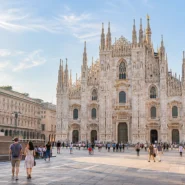
Start here if the Basilica and Doge’s Palace are the reason you chose Venice. Keep one main timed interior as the morning anchor, then leave the square and surrounding lanes as flexible walking time. Trying to stack the Basilica, Palace, bell tower and several museums before lunch can turn a memorable setting into a sequence of deadlines.
The Basilica’s current private-visitor table lists €10 for the Basilica, €20 with either Pala d’Oro or Museum/Loggia, and €30 for the full ticket; the bell tower is separately €15. Buy the areas you want rather than assuming Basilica admission includes every upstairs and altar area. Tickets are nominative, and the official portal controls the actual dated inventory.
The visitor schedule currently starts Basilica/Pala access at 9:30 a.m. Monday–Saturday and 2 p.m. on Sundays and national holy days, with variations for worship and ceremonies. The museum has its own access pattern. Use the actual date’s instructions, arrive for the booked time and do not build the plan around a supposed late-arrival grace period.
The St. Mark’s Square Museums ticket is €35 standard or €30 online at least 30 days ahead and includes the Palace and linked Correr/archaeological/Marciana route. The Palace currently admits holders of St. Mark’s Square Museums tickets without a specific entry time slot from noon onward. Check the issued ticket before scheduling another reservation. A museum pass is not a universal priority lane past security.
The square can be enjoyed without buying every optional interior. Decide which view or collection matters to you, then spend the remaining time in the lanes or on a permitted café break. This is a better first day than treating every paid door around the square as mandatory.
✅ What Other Travelers Say Prowalk Tours gives a long, chaptered view of the central streets and landmarks. It is useful route context, not a timed itinerary with museum queues, admission checks, lunch and the walking pace of your group included.
⚠️ The Catch (Things to Keep in Mind) The famous sights have distinct products and schedules. A Sunday morning Basilica plan, an untimed Palace ticket and a tightly scheduled second attraction can fail to fit together even though the buildings are close.
📍 Rialto and San Polo: Use the Bridge as a Connection, Then Explore
JUST WALK published this San Polo film in November 2020 and dates filming to 21 November 2020. The older route does not establish present shop hours or current crowd levels.
Rialto is an obvious first-visit landmark, but its value is also as a connection between banks of the Grand Canal. Give the bridge enough time to enjoy the setting, then move on so other people can pass. Staying on the bridge for a long photo session does not improve the route for anyone.
Use the market-side streets and San Polo’s campos as a slower contrast to the Mercerie corridor. If an operating market is important, check the actual day and hours before going; stalls are a working morning activity, not an all-night attraction. A night photograph cannot establish daytime market access.
Choose one optional interior or a longer neighborhood walk rather than adding every nearby church and art stop. For meals, inspect the actual menu and cover/service conditions; a famous waterfront view may be a purchase you want, but it is not a requirement for eating well in Venice.
Keep the Grand Canal crossings in mind when returning to the hotel. A vaporetto stop with Rialto in the name may leave you on a specific bank, and a room opposite can still require a bridge. Follow the hotel’s actual landing-to-door directions rather than assuming the boat stops at the entrance.
✅ What Other Travelers Say JUST WALK’s San Polo footage offers a visual sense of streets and open spaces. It is one older recorded route, not an independent ranking of restaurants, a current market-hours check or evidence that the district is always quiet.
⚠️ The Catch (Things to Keep in Mind) Rialto can be crowded and a short map distance can hide a canal crossing. Do not use a market visit or a boat landing as a fixed time-saving promise without checking the actual day and bank.
📍 Dorsoduro: Give Art and the Zattere Enough Time
Italy Together published this Dorsoduro walk in July 2021 and dates filming to June 2021. Its description includes commercial hotel and tour links; the dated footage cannot confirm current exhibitions, opening days or accessibility.
Dorsoduro works well as a contrasting day after San Marco: choose an art interior, then leave time for the walk toward Salute, Punta della Dogana or the Zattere. The Accademia Bridge is a useful landmark and crossing, but its steps matter with cases and a stroller. A low map distance to a hotel across the Grand Canal is not a direct walk.
The Peggy Guggenheim Collection’s visitor page currently lists €17 adult admission and opening from 10 a.m. to 6 p.m., closed Tuesdays and 25 December, with last entry at 5 p.m. Reserve a suitable slot if it is a priority. The garden is part of a museum visit, not an unrestricted public picnic area; the institution restricts food and large bags.
If Venetian painting at the Gallerie dell’Accademia matters more to you, plan that as the main art visit instead, using its own current calendar. Do not confuse Venice’s gallery with Florence’s Accademia and David, or assume one museum ticket covers another collection.
The Zattere faces the Giudecca Canal and makes sense for an unhurried outdoor part of the day. Check the weather and the practical return before committing to a long exposed walk. It is a waterfront sightseeing area, not a beach or permission to swim in the canal.
✅ What Other Travelers Say Italy Together offers a district walk showing the setting around Dorsoduro. Its older viewpoint is useful for deciding whether you want to spend time here, rather than proof of today’s museum condition, crowd level or step-free route.
⚠️ The Catch (Things to Keep in Mind) Tuesday closure changes a Guggenheim-centered day, and the Accademia Bridge or a waterfront landing can affect the route. One art museum plus a good walk is usually a more practical first visit than rushing through several paid collections.
📍 Cannaregio: Keep the Station Approach and Ghetto Visit Distinct
EpicCityWalk published this Cannaregio film in April 2022 and dates recording to 14 April 2022. It is a dated walk rather than current museum or religious-site access information.
Cannaregio can be useful both for a Santa Lucia-side arrival and for a day that moves away from the busiest central corridor. Those are different uses of a large district: a hotel near the station and a lane toward the eastern end do not have the same luggage route. Mark the actual door and the intended daily return.
For a first walk, connect the station-side streets, the Guglie area and the Ghetto setting at a pace that leaves time to look around. The Jewish heritage is not simply a decorative stop. Check the current official visitor arrangements if you want a museum or synagogue visit; an outdoor walk does not grant access to religious interiors.
Choose meal and rest stops deliberately instead of assuming that leaving San Marco guarantees a quiet or inexpensive venue. Read the menu and conditions, and remember that canalside footways still need to function for residents. A neighborhood evening can be rewarding without claiming it is free of tourism.
If accommodation here is part of the plan, compare the full room and entrance. Abbazia’s actual owner room page can be an arrival-side starting point, but an advertised bridge-free station approach does not certify the hotel’s inside route. Ask about the assigned floor, beds and bathroom before paying.
✅ What Other Travelers Say EpicCityWalk’s Cannaregio footage shows a particular route and the street activity captured then. It is not a current room review, a consensus that all of Cannaregio is calm or a guarantee of access to the Jewish Museum or synagogues.
⚠️ The Catch (Things to Keep in Mind) The district is larger than the station corner. Choosing an address by Cannaregio alone can produce a longer walk than expected, and heritage interiors need their own current arrangements.
📍 Castello: Plan the Waterfront and Biennale Venues Separately
Italy Together published this Grand Canal and Castello film in January 2022 and dates filming to June 2021. Its description includes commercial hotel and tour links; the route does not establish free access to restricted Arsenale or exhibition interiors.
Castello adds a different rhythm to a first trip: walk the waterfront beyond the central sights, then decide whether the Arsenale area, Giardini or a longer residential walk is the purpose of the day. Do not treat the district as one attraction that can be ticked off at a single entrance.
The official 2026 Art Biennale calendar runs 9 May–22 November, with specific venues and ticket choices. A paid exhibition visit deserves a substantial block of time and its own entry plan. Check the actual edition and product rather than assuming an annual event has the same dates, venue access or inclusions every year.
The Arsenale includes restricted and ticketed areas. A public waterfront walk or exterior photograph does not give unrestricted access through the whole complex, and a Giardini visit should distinguish public surroundings from exhibition admission. If art is not your priority, a shorter Castello walk is a valid choice.
Protect the return journey and the rest of the day. A long venue visit plus an island excursion can be too much for a first visit, especially in heat or with a fixed dinner or museum reservation. Use the actual walking route or service notice rather than assuming every nearby boat stop has the same route and frequency.
✅ What Other Travelers Say Italy Together’s older footage combines the Grand Canal and Castello. It helps illustrate the setting, not the current exhibition inventory, opening hours or permission to enter every Arsenale space.
⚠️ The Catch (Things to Keep in Mind) Exhibition access and a neighborhood walk are separate plans. Allocate the time the actual venue needs, or choose a simpler waterfront day without buying an event ticket you will barely use.
Turn the Areas into a Realistic First Visit
- Arrival evening: reach the actual hotel, leave the cases and take a short local walk. Keep major paid reservations out of an uncertain arrival window.
- First full day: San Marco’s chosen interior or interiors, with a flexible walk toward Rialto and enough time for the actual ticket conditions.
- Second full day: Dorsoduro’s chosen art stop and south-side walk, swapping days if the museum calendar requires it.
- Third full day: Cannaregio or Castello as the main area, with the other included only if the pace and interests allow. A full Biennale venue visit replaces part of this general walk.
- If adding the lagoon islands: give them another useful day or replace a district day. Do not insert Murano, Burano and Torcello into the gaps between San Marco’s timed interiors.
For a broad season choice, May or late September/early October is a useful walking-focused starting point, with the actual forecast and events controlling the week. Summer needs a heat-aware pace and winter needs colder, shorter-day planning. Choose the room and routes for the conditions you expect, then check the current weather and tide bulletin close to travel.
Key FAQs
How many days does a first-time visitor need in Venice?
Three full sightseeing days give a useful overview of the main central sights and contrasting districts, often requiring four room nights. With fewer days, choose San Marco and one additional area. A substantial Biennale visit or lagoon-island day replaces other sightseeing or needs more time.
Should first-time visitors stay in historic Venice, Mestre or Lido?
Historic Venice supports walking returns; Mestre adds a mainland connection and can work for a lower-cost plan; Lido adds a boat crossing and suits deliberate beach or film plans. Compare the actual door, room and full stay total rather than a generic Venice address.
What should I book before my first Venice trip?
Confirm the room and arrival route first, then the exact timed interiors that matter, such as the Basilica product and Palace/MUVE route. Check the dates and opening days, choose transport around real journeys, and keep unticketed walks flexible for the weather and the group’s pace.
Final Verdict and Your Next Step
Build the trip around a workable arrival, one main area at a time and the interiors you actually want. Start with a real hotel room and booking entry, compare ACTV’s actual urban tickets with the airport boat products, and use the official Basilica portal, the Palace’s current visit page or Guggenheim’s real ticket entry for the selected visits. Reserve early where a particular room or slot matters, then leave enough space for a meal, a rest and the walks that make Venice worth visiting.