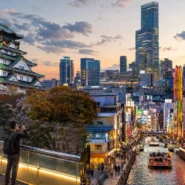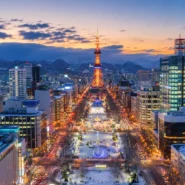


💡 Key Takeaways
- Stay near Sapporo Station if airport access, JR day trips, and avoiding luggage transfers matter more than nightlife.
- Choose Odori for the best all-round first-time base: central, walkable, well connected, and calmer than Susukino.
- Pick Susukino or Tanukikoji for late dinners, nightlife, and convenience after dark—but check noise reviews carefully.
- Use Nakajima Park to save money without leaving central Sapporo, especially if you prefer quieter nights and do not mind one short subway ride.
- Do not use Jozankei as your only Sapporo base unless the onsen stay is the main purpose of your trip; it is a resort escape, not a convenient city sightseeing location.
Deciding where to stay in Sapporo looks easy on a map because the central districts sit close together. In practice, the wrong hotel can mean dragging a suitcase over icy pavement, searching for an elevator at the wrong station exit, changing between JR and subway lines, or walking back through a noisy nightlife block when you only wanted a quiet room. For first-time visitors, the real question is not simply which area has the most attractions. It is which area removes the most friction from your itinerary.
My practical recommendation is straightforward: choose your base according to the journey you will repeat most often. If you are taking trains to Otaru, Asahikawa, Noboribetsu, or the airport, stay by Sapporo Station. If most of your time will be spent eating, shopping, and sightseeing in the city center, Odori is the smartest compromise. If your ideal evening starts at 9 p.m., Susukino or Tanukikoji will feel more natural. The sections below explain where each area works, where it fails, and who should not book there.
The 1-Min Cheat Sheet
- Sapporo Station — best for airport access and JR day trips. The easiest choice with large luggage, especially in winter. Expect strong transport convenience, department stores, business hotels, and higher prices close to the station. Nightlife is limited compared with Susukino.
- Odori — best overall for first-time visitors. Central between Sapporo Station and Susukino, connected to multiple subway lines, close to Odori Park, and linked into the underground walking network. It is the least regrettable choice for travelers with a mixed itinerary.
- Susukino — best for food and nightlife. Excellent for ramen, izakaya, bars, late-night meals, and reducing the icy walk home. The trade-off is noise, crowds, bright signs, and a more adult-oriented street atmosphere in some blocks.
- Tanukikoji — best for shopping and weather protection. The covered arcade is useful in rain and snow, with restaurants and practical shops close by. Hotel quality and street noise can vary sharply from one block to another.
- Nakajima Park — best value near the center. Usually calmer and often better value than Odori or Susukino, with quick subway access. It is less convenient for spontaneous shopping and JR day trips, and some streets feel very quiet late at night.
- Shin-Sapporo — best for lower prices and travelers heading east or south. A useful transport node with JR, subway, malls, and direct airport-line trains. It is not a good base for travelers who want to walk to central Sapporo sights or nightlife.
- Jozankei — best for an onsen night, not city sightseeing. Stay here for a ryokan, hot springs, meals, and mountain scenery. Do not choose it merely because it appears under “Sapporo” in hotel searches.
Rough hotel budget guide: For a standard double room outside major event dates, budget travelers may find rooms from roughly ¥7,000–¥12,000 in Nakajima Park, Susukino, or Shin-Sapporo; comfortable mid-range rooms in central areas often fall around ¥12,000–¥25,000; and well-located upscale hotels can exceed ¥30,000. Jozankei ryokan rates are commonly higher because dinner, breakfast, and hot-spring facilities may be included. These are planning ranges, not live quotations. Snow Festival dates, Japanese holidays, autumn weekends, and Saturday nights can push prices far above normal.
Top Survival Tips
- Judge the hotel by its exact exit, not the station name. “Two minutes from Sapporo Station” can still mean a long underground walk, stairs, a road crossing, or an inconvenient exit with no elevator. Open the hotel on a map, identify the nearest lift or escalator, and read recent reviews mentioning luggage. This matters most in winter, when a short outdoor section can be slippery and tiring.
- Prioritize underground access during snow season. Sapporo’s underground network is a genuine travel advantage, not a minor bonus. The official Sapporo tourism site notes that the approximately 520-meter Chi-Ka-Ho walkway links Sapporo and Odori, and the broader underground route continues toward Susukino. A hotel connected directly—or within one simple block—can save energy every day.
- Stay at Sapporo Station when your itinerary is built around JR trains. JR Hokkaido’s airport services run directly between New Chitose Airport and Sapporo, with the fastest service listed at about 33 minutes. If you have two or more rail day trips, the time saved by avoiding a subway transfer often outweighs a small hotel-price difference.
- Do not assume Susukino is unsafe, but do choose the block carefully. The district is busy, brightly lit, and full of legitimate hotels and restaurants. However, some streets have clubs, touts, adult entertainment, and late-night noise. Families and light sleepers should stay on the Odori side of Susukino or near Tanukikoji rather than deep inside the entertainment grid.
- Compare the final walking route after dinner. A hotel that is convenient at 10 a.m. may feel inconvenient at midnight. Check whether you will need to cross a major road, walk past club entrances, or use a subway that has already stopped running. This is especially important for solo travelers and families returning late.
- Do not overpay for “central” if the room is far from a useful line. Central Sapporo is walkable in good weather, but repeated 15-minute walks become less attractive in snow, cold rain, or with children. A slightly less central hotel beside the Namboku subway line can be easier than a fashionable hotel requiring an awkward outdoor walk.
- Book festival and weekend stays early, then recheck flexible rates. Sapporo’s room supply tightens dramatically during major events. Reserve a cancellable room once your dates are fixed, then compare again later. Waiting for a last-minute bargain can leave you with a distant hotel, a smoking room, or a poor luggage route.
- Read room-size reviews, not just the area score. A good location does not solve a room where two suitcases cannot be opened. For couples, families, and ski travelers, floor space, luggage storage, laundry facilities, and separate bathroom layouts can matter more than a stylish lobby.
- Separate a Jozankei onsen night from your central stay. A split stay works well: spend most nights in central Sapporo, then add one ryokan night in Jozankei. This avoids commuting by bus while still giving you the hot-spring experience.
The Full Experience
📍 Sapporo Station: Best for Airport Access, JR Day Trips, and Heavy Luggage
Area tags: Airport train | JR hub | Department stores | Winter-friendly | Business hotels | Higher convenience premium
Sapporo Station is the most practical base when transport is the backbone of your trip. The airport train arrives here, JR services for popular day trips depart here, and the surrounding blocks contain large shopping centers, restaurants, convenience stores, and a wide range of hotels. Travelers arriving with large suitcases can reach their room without first learning the subway system.
The strongest reason to stay here is not sightseeing—it is repetition. Every time you take an early train, return tired from Otaru, or leave for the airport, you remove a transfer. JR Hokkaido currently lists the fastest New Chitose Airport–Sapporo service at about 33 minutes, with frequent airport trains during the daytime. That makes this area especially good for short stays, first and final nights, families, older travelers, and anyone carrying ski equipment.
The station complex is large, however, and “near Sapporo Station” is not a precise description. A hotel north of the tracks may be excellent for Hokkaido University but less convenient for Odori. A hotel several blocks south can connect more naturally to the underground walkway. Always check which side of the station your hotel is on and whether the route from the platform includes an elevator.
Typical room-price pattern: Budget rooms exist, but the closest and most convenient hotels often cost more than comparable rooms in Nakajima Park or outer Susukino. A realistic non-peak planning range is roughly ¥11,000–¥28,000 for many standard doubles, with premium station-adjacent hotels commonly higher.
Night environment: Busy around shopping and dining hours, quieter after the department stores close, and less nightlife-oriented than Susukino. This is an advantage for sleep, but late-night dining choices are less dense.
Best for: First-time visitors with multiple JR day trips, airport-focused itineraries, families, older travelers, winter visitors, and anyone who hates changing trains with luggage.
Not ideal for: Travelers whose main priority is nightlife, bar-hopping, or walking home from late dinners in Susukino.
✅ What Other Travelers Say
Recurring traveler feedback praises the easy airport connection, shopping convenience, underground routes, and the relief of being close to JR platforms after a long day trip. Guests also like having department-store food halls and restaurants nearby when the weather is poor.
⚠️ The Catch (Things to Keep in Mind)
The station is bigger and more confusing than it looks on a hotel map. Construction and redevelopment can change pedestrian routes, and a hotel advertised as “station area” may still require a surprisingly long walk. Rooms close to the station also sell quickly and can carry a noticeable price premium.
📍 Odori: Best Overall for First-Time Visitors
Area tags: Best all-round base | Three subway lines | Underground access | Sightseeing | Balanced evenings | Easy city walking
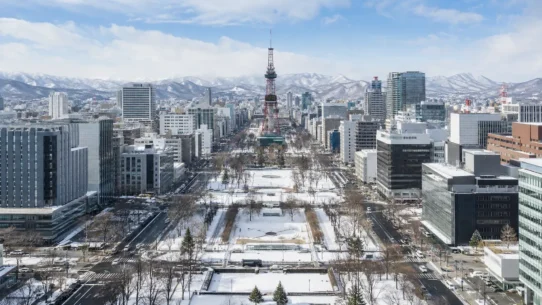
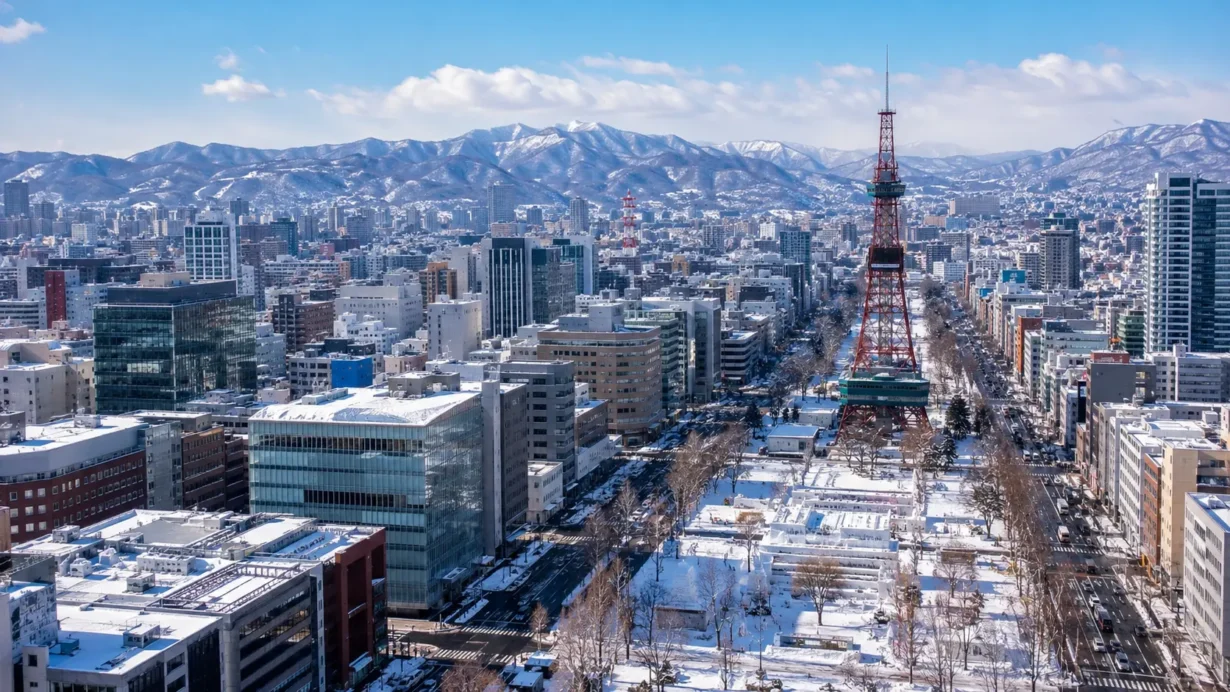
Odori is the area I recommend most often to travelers who cannot decide. It sits between Sapporo Station and Susukino, giving you access to the city’s transport, shopping, restaurants, and major central sights without placing you directly inside the nightlife district. Odori Station is served by the Namboku, Tozai, and Toho subway lines, making it the most flexible subway base in central Sapporo.
The area is particularly useful for mixed itineraries. You can walk north through the underground passage toward Sapporo Station, south through underground shopping areas toward Susukino, and east or west along Odori Park. In winter, this flexibility reduces the number of times you need to step onto icy streets. The official Chi-Ka-Ho walkway between Sapporo and Odori is about 520 meters and takes roughly 10 minutes end to end.
Odori also avoids the biggest weakness of the other two central choices. It is more sightseeing-friendly than Sapporo Station and calmer than central Susukino. You can reach the TV Tower, Clock Tower, Tanukikoji, Nijo Market, and many restaurants on foot, while still having multiple subway options for places farther away.
Typical room-price pattern: Expect broad variation. Simple business hotels may start around ¥9,000–¥15,000 in quieter periods, while popular mid-range hotels often sit around ¥14,000–¥27,000. Park-view, design-led, and newer properties can rise above ¥30,000, especially on weekends and during events.
Night environment: Active but generally more controlled than Susukino. Blocks near Tanukikoji and the southern edge feel livelier; blocks toward the government buildings and western Odori are quieter.
Best for: First-time visitors, couples, families, sightseeing-focused travelers, winter visitors, and anyone wanting one base that handles both daytime attractions and evening dining.
Not ideal for: Travelers with several early JR departures who want to be steps from the platform, or dedicated nightlife travelers who plan to stay out very late every night.
✅ What Other Travelers Say
Travelers repeatedly describe Odori as easy to navigate and well balanced. They value being able to walk to both Sapporo Station and Susukino, use multiple subway lines, and retreat to a calmer street at night. Hotel reviews frequently highlight convenience during rain and snow.
⚠️ The Catch (Things to Keep in Mind)
“Odori area” covers a long east–west stretch. A hotel near Nishi 10 or Nishi 11 is not the same experience as one near the TV Tower. West Odori is quieter and often better value, but farther from Susukino and Nijo Market. East Odori is closer to the market but can feel less polished at night. Check the exact block rather than relying on the area name.
📍 Susukino: Best for Food, Nightlife, and Late Returns
Area tags: Nightlife | Ramen | Izakaya | Late dining | Namboku subway | Lively streets | Noise risk
Susukino is the easiest area to enjoy after dark. Restaurants, ramen shops, izakaya, bars, karaoke venues, and late-night dessert spots are packed into a compact grid. In winter, staying close to your evening plans matters: a five-minute walk back to the hotel is far more appealing than waiting for transport in sub-zero weather.
For travelers who treat dinner as a major part of the trip, Susukino can be more practical than Sapporo Station. The Namboku subway line runs directly north to Odori and Sapporo, and the underground Pole Town route connects toward Odori. You can spend the day sightseeing elsewhere, return to the hotel, and go out again without crossing the city.
Susukino is also often cheaper than the most convenient blocks around Sapporo Station. Competition is strong, with business hotels, capsule-style properties, mid-range chains, apartment hotels, and newer lifestyle hotels. The best-value rooms are not necessarily the quietest, so recent guest reviews matter.
Typical room-price pattern: Basic rooms can appear around ¥8,000–¥13,000 outside peak dates, while comfortable mid-range options commonly fall around ¥12,000–¥22,000. Newer or upscale hotels can exceed ¥25,000. Friday and Saturday nights may price differently from weekdays.
Night environment: Bright, busy, and noisy in the core. Some streets include adult entertainment, touts, taxis, and people leaving bars late at night. The atmosphere is energetic rather than peaceful.
Best for: Food lovers, couples, friends, solo travelers who enjoy busy districts, repeat visitors, and travelers who want dinner and nightlife at the door.
Not ideal for: Light sleepers, families who dislike adult nightlife streets, early-to-bed travelers, or visitors with many early JR departures.
✅ What Other Travelers Say
Positive reviews focus on the huge number of restaurants, easy late-night meals, convenience stores, and the ability to return to the hotel quickly after drinking. Many travelers also appreciate the direct subway connection to Sapporo Station.
⚠️ The Catch (Things to Keep in Mind)
Noise varies block by block and floor by floor. A hotel can have excellent transport access but face a busy intersection, club entrance, or late-night taxi queue. Read reviews for words such as “street noise,” “sirens,” “smoking,” and “elevator wait.” Travelers who want Susukino convenience without the full nightlife intensity should look near the northern edge toward Tanukikoji or Odori.
📍 Tanukikoji: Best for Covered Shopping and Practical City Convenience
Area tags: Covered arcade | Shopping | Restaurants | Central walking | Weather protection | Mixed hotel quality
Tanukikoji is often grouped with Odori or Susukino, but it deserves separate consideration. The long covered shopping arcade gives this micro-area a practical advantage in bad weather. You can buy snacks, medicines, cosmetics, souvenirs, and meals without constantly stepping into snow or rain. It is also close enough to both Odori and Susukino to enjoy their strengths.
This area works particularly well for travelers who like to return to the hotel during the day. The central location makes it easy to drop off shopping, warm up, or change before dinner. Restaurants range from quick chains to local ramen and izakaya, and the surrounding streets remain active into the evening.
The exact block matters. Eastern Tanukikoji is closer to Nijo Market and Odori’s eastern side. Central blocks are busiest and most convenient for shopping. Western blocks can be quieter but may add walking time to the subway. Hotels immediately beside the arcade are convenient, but rooms facing nightlife streets can be noisy.
Typical room-price pattern: Many rooms fall around ¥9,000–¥23,000 outside peak periods, with popular mid-range hotels often selling at a premium because of their walkability. Apartment-style rooms with washing machines can be excellent value for longer stays.
Night environment: Lively, pedestrian-heavy, and generally less intense than the deepest part of Susukino. Bars and nightlife increase toward the south and west.
Best for: Shoppers, food-focused travelers, couples, first-time visitors who want a central base, and winter travelers who value covered walking.
Not ideal for: Visitors who need immediate JR access, travelers wanting a very quiet residential atmosphere, or anyone assuming every part of the arcade is equally close to a subway entrance.
✅ What Other Travelers Say
Guests often praise the ability to find food, convenience stores, pharmacies, and shopping within minutes. Long-stay travelers like the central position and the availability of hotels with laundry or kitchenette facilities.
⚠️ The Catch (Things to Keep in Mind)
The covered arcade does not connect every hotel directly to the subway, and side streets can still be snowy. Some hotels use “Tanukikoji” in marketing even when they sit several blocks away. Check the exact entrance, not just the hotel name. The busiest sections can also feel crowded during evenings and festival periods.
📍 Nakajima Park: Best Value for Quiet Nights Near Central Sapporo
Area tags: Better value | Park views | Quieter sleep | Namboku subway | Families | Short ride to Susukino
Nakajima Park is the strongest value alternative for travelers who want to stay near central Sapporo without sleeping in the middle of the nightlife district. It is immediately south of Susukino on the Namboku subway line, so the ride to Susukino, Odori, and Sapporo Station is simple. Several hotels offer larger rooms, breakfast packages, park views, or more space for the same budget as a smaller room farther north.
The atmosphere changes quickly once you reach the park. Streets become calmer, traffic reduces, and the area feels more residential. This makes it a good choice for families, couples who value sleep, longer stays, and travelers who want morning walks. It can also be a sensible compromise for light sleepers who still want easy access to Susukino restaurants.
The best location is usually close to Nakajima-Koen Station rather than merely “near Nakajima Park.” The park is large, and hotels on its far side can add walking time. In winter, crossing the park itself is not always the most convenient luggage route, even when the map makes it look direct.
Typical room-price pattern: Budget and mid-range doubles often appear around ¥7,000–¥18,000 outside busy periods, while better four-star or park-facing hotels may range from roughly ¥16,000–¥28,000. This is often one of the best central districts for room size per yen.
Night environment: Quiet around the park, with fewer restaurants and shops than Susukino. Streets immediately north of the station feel more urban; streets deeper south and east can become very quiet late at night.
Best for: Families, couples, light sleepers, budget-conscious travelers, longer stays, and visitors who prefer a calm return after sightseeing.
Not ideal for: Travelers who want shopping outside the hotel, people who dislike taking the subway for most journeys, or visitors with repeated early JR departures.
✅ What Other Travelers Say
Reviews frequently mention peaceful nights, good breakfast value, larger rooms, and quick subway access. Families appreciate the park and the distance from the busiest nightlife streets, while budget travelers often find better hotel standards than they could afford in Odori.
⚠️ The Catch (Things to Keep in Mind)
Restaurant choice drops once you move away from the station, and some streets feel empty late at night. The area is convenient only when your hotel is genuinely close to Nakajima-Koen Station or another useful stop. A low price on the far side of the park may cost you time every day.
📍 Shin-Sapporo: Best for Lower Prices, Airport-Line Access, and Eastern Sapporo
Area tags: JR and subway | Airport-line trains | Shopping malls | Family convenience | Lower centrality | Quiet evenings
Shin-Sapporo is not a classic tourist base, but it can be a smart choice for a specific itinerary. The station area combines JR trains, the Tozai subway line, bus services, shopping malls, supermarkets, and family-friendly facilities. Airport-line trains serve the JR corridor, and the area is useful for travelers visiting eastern Sapporo, the Historical Village of Hokkaido, or destinations where a car or bus connection is easier from this side of the city.
The main benefit is value and convenience within the station complex. You may get a larger or newer room for less than in Odori, while still having shops and restaurants nearby. Families who do not need nightlife may prefer the calmer environment and indoor commercial facilities.
The drawback is distance from the city experience most first-time visitors imagine. You cannot casually walk to Odori Park, Tanukikoji, or Susukino. Every central dinner or evening outing requires a train or subway ride, and returning late becomes less flexible.
Typical room-price pattern: Standard rooms often plan around ¥8,000–¥17,000 outside peak periods, although the limited number of highly convenient hotels can create price spikes when local events are held.
Night environment: Calm and functional. Dining is concentrated in malls and around the station, with fewer late-night options than central Sapporo.
Best for: Budget-conscious families, travelers using the airport rail corridor, visitors with business or family plans in eastern Sapporo, and people who prefer malls and station convenience over nightlife.
Not ideal for: First-time visitors on a short city break, food travelers planning late nights in Susukino, or anyone who wants to walk to central attractions.
✅ What Other Travelers Say
Travelers value the combination of JR, subway, buses, supermarkets, and malls. Families appreciate indoor facilities and a less hectic atmosphere. Guests also note that station-adjacent hotels can be convenient for airport travel.
⚠️ The Catch (Things to Keep in Mind)
The savings can disappear if you take multiple trips into central Sapporo every day. You also lose the freedom to walk home after dinner. Choose Shin-Sapporo because it matches your route—not simply because the hotel looks cheaper.
📍 Jozankei: Best for a One-Night Onsen Escape
Area tags: Onsen ryokan | Mountain scenery | Half-board stays | Bus access | Romantic escape | Not central
Jozankei is administratively part of Sapporo, but it is not a central Sapporo neighborhood. It is a hot-spring resort in the mountains, reached mainly by bus or car. Hotel search engines sometimes place Jozankei properties beside city hotels, which can mislead first-time visitors who see “Sapporo” in the address and assume they can commute easily to Odori or Susukino.
Stay here because you want the ryokan itself: hot-spring baths, a quiet evening, seasonal scenery, and often dinner and breakfast. A good Jozankei stay is less about using the room as a base and more about spending time at the property. It is excellent for couples, families wanting an onsen experience, and travelers adding a slower night to a busy Hokkaido itinerary.
For most first-time visitors, the best strategy is a split stay. Keep your main suitcase at a central Sapporo hotel when possible, take an overnight bag to Jozankei, and return the next day. This prevents repeated bus travel and lets you enjoy the ryokan without treating it as a commute.
Typical room-price pattern: Rates vary widely because meal plans, private baths, room type, and season matter. A basic stay may start around ¥18,000–¥30,000 per room or per person depending on the pricing format, while well-regarded ryokan with dinner, breakfast, and upgraded rooms can exceed ¥40,000–¥70,000. Always confirm whether the displayed rate is per room or per person.
Night environment: Quiet and resort-focused. Evening activity is usually inside the ryokan rather than in a broad restaurant or nightlife district.
Best for: Onsen lovers, couples, families, slow-travel nights, autumn foliage, and travelers who want a resort break.
Not ideal for: Anyone planning daily city sightseeing, multiple JR day trips, late-night dining in Susukino, or a first visit of only two or three nights.
✅ What Other Travelers Say
Guests highlight the baths, river and mountain scenery, seasonal meals, and the pleasure of slowing down after busy travel days. Many consider one night enough to enjoy the experience without sacrificing too much city time.
⚠️ The Catch (Things to Keep in Mind)
Bus travel takes time and can be affected by traffic or winter conditions. Restaurants outside the ryokan are limited at night, and some properties are spread far apart. Reserve transport where required, confirm the last practical connection, and do not book a room-only plan assuming you can easily find a late dinner nearby.
How to Choose Your Area in 30 Seconds
Choose Sapporo Station when your trip includes at least two JR day trips, an early airport departure, large luggage, ski gear, or travelers who struggle with long walks.
Choose Odori when you want the best balance and do not have one dominant priority. It is the safest recommendation for a first visit.
Choose Susukino when food, bars, and late-night energy are central to the trip—and you are comfortable with a busy entertainment district.
Choose Tanukikoji when covered shopping, restaurants, and central walking matter more than immediate JR access.
Choose Nakajima Park when you want quiet sleep, more room for your budget, and a simple subway ride into the center.
Choose Shin-Sapporo only when its transport connections match your itinerary or the savings are substantial.
Add Jozankei for one night when you want an onsen experience; do not replace your central base with it.
Key FAQs
What is the best area to stay in Sapporo for first-time visitors without a car?
Odori is the best all-round choice for most first-time visitors without a car. It has three subway lines, easy walking access to central sights, underground connections toward Sapporo Station and Susukino, and a calmer atmosphere than the nightlife core. Choose Sapporo Station instead if your itinerary includes several JR day trips.
Is it better to stay near Sapporo Station or Susukino in winter?
Stay near Sapporo Station if airport access, JR trains, luggage handling, and early departures matter most. Stay in Susukino if your priority is restaurants and nightlife and you want a short walk home after dinner. Odori is the middle-ground option, especially for travelers who want underground walking access and a balanced itinerary.
Where should families stay in Sapporo for quiet nights and easy transport?
Odori and Nakajima Park are the strongest family choices. Odori minimizes transport time and keeps major sights close, while Nakajima Park usually offers calmer nights and better room value. Families with several rail day trips may prefer Sapporo Station, but should check room size because many station-area business hotels are compact.
Final Verdict and Your Next Step
For most first-time visitors, Odori is the best place to stay in Sapporo. It gives you the city’s most useful balance of transport, walkability, underground access, sightseeing, food, and sleep. Sapporo Station is the better choice when JR trains and airport transfers dominate your schedule. Susukino wins for nightlife and late dining, while Nakajima Park is the value choice for quieter travelers. Jozankei is worth adding as a separate onsen night, not using as your main city base.
Before booking, open the hotel on a map and trace the full route from the station platform to the lobby. Look for elevators, underground entrances, road crossings, and the final outdoor section. Then read recent reviews specifically for noise, heating, room size, luggage space, and winter access. A hotel that saves ten minutes twice a day is often worth more than a slightly cheaper room in the wrong block.
Central Sapporo hotels can rise sharply during festivals, weekends, and holiday periods, so reserve a flexible rate as soon as your dates are fixed. Compare the same room type, cancellation policy, taxes, and breakfast conditions across several booking sites:
- Compare Sapporo hotels on Booking.com
- Check live Sapporo hotel rates on Agoda
- Browse central Sapporo hotels near Odori on Klook
- View a central Sapporo hotel option on KKday
Transport details were checked against JR Hokkaido’s airport-train information and the official Sapporo Chi-Ka-Ho underground walkway guide. Recheck schedules and operating conditions for your travel date.