
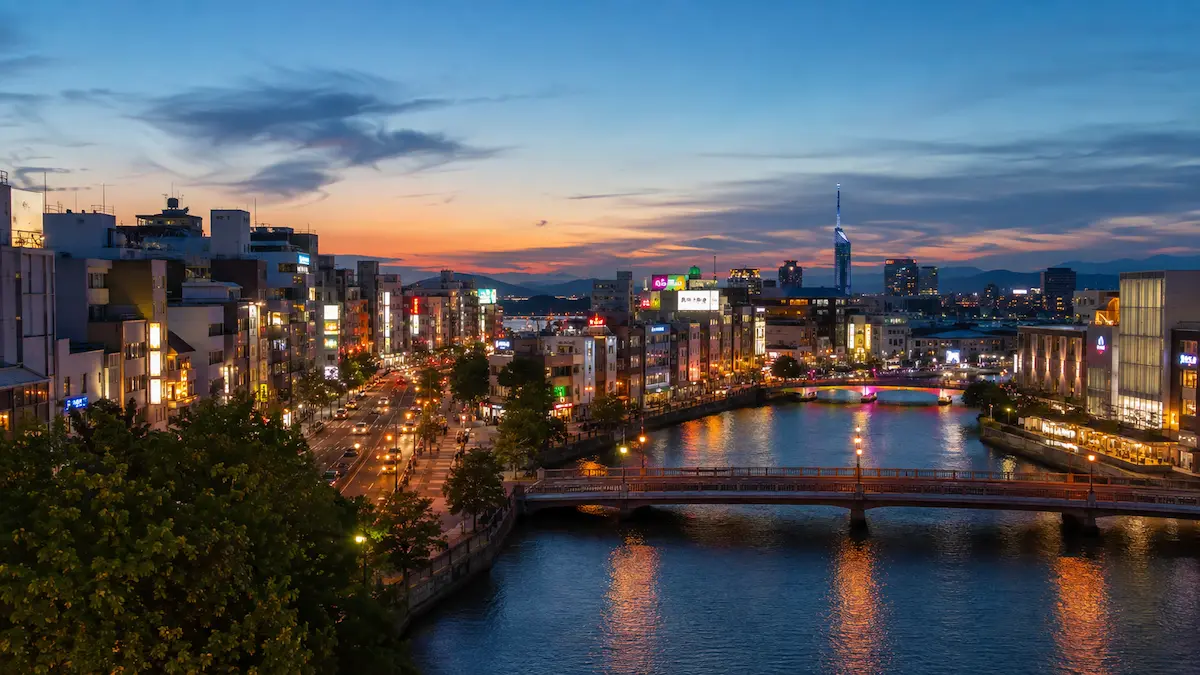
💡 Key Takeaways
- Choose Hakata Station when transport efficiency matters most. It is the safest all-round base for airport access, Shinkansen trips, early departures and travelers who do not want to drag luggage through multiple stations.
- Choose Tenjin when you want the better city experience. Dining, shopping, cafés and nightlife are stronger, but “near Tenjin” can still mean a long underground walk between Tenjin, Tenjin-Minami and Nishitetsu Fukuoka (Tenjin).
- Do not book by neighborhood name alone. In Fukuoka, the exact station exit, bridge, road and side of the nightlife district can matter more than a hotel’s marketing label. A cheap room can cost you 15 extra minutes of walking every day.
Searching for the best areas to stay in Fukuoka looks easy because the city center is compact. That is exactly why travelers make avoidable mistakes. A hotel may appear to be “between Hakata and Tenjin,” yet still require an awkward bus ride, a long walk in summer humidity or repeated trips through a huge underground complex. Another property may use “Hakata” in its name while sitting nowhere near Hakata Station. Add the separate international and domestic airport terminals, several stations carrying the Tenjin name, and late-night noise around Nakasu, and a small booking decision can create unnecessary daily friction.
The good news is that Fukuoka is one of Japan’s easiest major cities once you choose the right base. The question is not simply which district is most famous. It is whether your trip is built around Kyushu day trips, food and nightlife, family-friendly space, park access, airport convenience or a quieter stay. This guide compares five practical hotel areas with clear trade-offs, so you can spend less time transferring and more time enjoying the city.
The 1-Min Cheat Sheet
- Hakata Station: Best overall for first-time visitors, airport access, Shinkansen journeys, JR day trips, early departures and travelers with large luggage. The trade-off is a more functional business-district feel and busy station crowds.
- Tenjin, Daimyo and Imaizumi: Best for shopping, restaurants, cafés, couples, repeat visitors and travelers who want to step outside into the city’s liveliest all-day neighborhood. The trade-off is station complexity and less convenient JR access.
- Nakasu-Kawabata and Gion: Best for central walkability, yatai evenings, traditional Hakata sights and visitors who want to split the difference between Hakata and Tenjin. The trade-off is nightlife noise and the adult-entertainment character of central Nakasu.
- Ohori Park and Akasaka: Best for quiet mornings, runners, longer stays, couples and travelers who prefer a residential atmosphere without leaving the Airport Line. The trade-off is fewer late-night choices and an extra subway ride for most major transport connections.
- Momochi and Tōjinmachi: Best for families, beach walks, Fukuoka Tower, Mizuho PayPay Dome events and travelers who value space and calm. The trade-off is weaker door-to-door transport and possible event-day crowds.
Top Survival Tips
- Check the exact station exit, not just the station name. A hotel advertised as five minutes from a station may be five minutes from one exit but 10 to 15 minutes from the platform you actually use. This matters at Hakata and throughout the Tenjin underground network. Open the hotel on a map, identify the nearest numbered exit and check whether that exit has an elevator.
- International arrivals do not step directly onto the subway. Fukuoka Airport’s subway station serves the Domestic Terminal. From the International Terminal, you either take the free inter-terminal shuttle to the Domestic Terminal and then use the subway, or take a direct bus or taxi. Do not build a tight arrival plan around the famous “five minutes to Hakata” claim without including the terminal transfer.
- At Hakata, choose your side deliberately. The Hakata Exit side faces the main business district, bus terminal and city-center direction. The Chikushi Exit side is useful for many practical hotels, restaurants and airport-facing access. Neither side is universally better, but crossing the entire station with suitcases is annoying. Book on the side that matches your hotel and daily plans.
- Do not treat all of Tenjin as one station. Tenjin Station serves the Airport Line, Tenjin-Minami serves the Nanakuma Line, and Nishitetsu Fukuoka (Tenjin) serves trains toward Dazaifu and Yanagawa. They are linked by underground passages, but the walk can feel long with children, luggage or shopping bags. Hotels near one are not automatically convenient for the others.
- Use the railway you need most as your deciding factor. Stay near Hakata for JR and Shinkansen trips. Stay near Nishitetsu Fukuoka (Tenjin) for frequent Dazaifu or Yanagawa plans. Stay near the Airport Line for easy airport access and westbound travel toward Nishijin or Itoshima connections.
- Avoid relying on a bus-only commute unless the price saving is substantial. Fukuoka’s buses are extensive, but traffic and unfamiliar boarding points can turn a short map distance into a frustrating daily routine. For a short visit, a hotel within a genuine eight-minute walk of a subway or major rail station is usually worth paying slightly more for.
- Map the walk at your actual arrival time. A lively road at 6 p.m. may feel very different after midnight. Around Nakasu, a river-view location can be atmospheric, while a room one or two blocks deeper into the entertainment streets may face noise, touts and adult businesses. Families and light sleepers should favor Kawabata, Gion or the quieter edge toward Hakata.
- Check event dates before booking Momochi. Baseball games, concerts and large events around Mizuho PayPay Dome can increase room rates, crowd buses and pack restaurants. Staying there is excellent when the event is your main purpose, but inconvenient when it is not.
- Do not underestimate Fukuoka’s rain and summer heat. A 12-minute walk that looks harmless on a map can be unpleasant with luggage in humid weather. Covered access at Hakata and Tenjin has real value, but confirm where the covered route begins and whether stairs are involved.
- For stays of four nights or more, prioritize room function as well as location. In-room laundry, a separate bathroom, a supermarket and a quieter street can be more valuable than being directly above nightlife. Fukuoka is compact enough that one or two extra subway stops may be a smart trade for better sleep and more space.
The Full Experience
🚉 Hakata Station: Best for Easy Transport, Day Trips and Heavy Luggage
Area tags: Airport Access · Shinkansen · JR Day Trips · First-Time Visitors · Early Departures
Hakata Station is the most practical answer for the largest number of travelers. It connects the Shinkansen, JR local and limited-express services, the Airport Line, the Nanakuma Line and a major bus terminal. The subway ride from the airport’s Domestic Terminal is only a few minutes, and the station gives you the cleanest start for trips toward Kumamoto, Nagasaki, Kitakyushu, Beppu connections and other parts of Kyushu.
The strongest reason to stay here is not that Hakata is the prettiest neighborhood. It is that it removes decisions. You can arrive late, find food inside or around the station, walk to your hotel and start a day trip the next morning without crossing town. Families with strollers, travelers carrying multiple suitcases and visitors on a two- or three-night itinerary benefit disproportionately from this efficiency.
The station itself is almost a destination: department stores, electronics shops, bakeries, ramen, casual restaurants and souvenir shopping are concentrated under one roof. This is useful in bad weather and on the final evening, when you may prefer an easy meal and last-minute shopping over another subway journey.
However, “Hakata” covers a broad area. A property in Hakata Ward can be far from the station, and even “Hakata Station area” may mean a 12- to 15-minute street-level walk. For the least friction, look within roughly 500 to 700 meters of the correct side of the station. The Hakata Exit side is more convenient for the bus terminal, office district and walks toward Gion. The Chikushi Exit side has many hotels and restaurants and can feel slightly easier for quick airport-oriented movement.
Best micro-locations: Choose the Hakata Exit side if you plan to use the bus terminal, walk toward Gion or prefer access to the main station-front district. Choose the Chikushi Exit side for a wide range of practical hotels and a straightforward business-hotel environment. Travelers who want quieter nights can look a few blocks south or east, but should keep the walk under control.
✅ What Other Travelers Say
Travelers consistently praise Hakata for removing stress from arrival and departure days. The most common positive pattern is convenience rather than atmosphere: easy train access, abundant food, useful shopping and the ability to return from a day trip without another transfer. Families also appreciate having everything close when children are tired or the weather turns bad.
⚠️ The Catch (Things to Keep in Mind)
Hakata can feel businesslike and crowded, especially around rush hour and station shopping areas. It is not the best base for travelers who want independent bars, stylish cafés or a neighborhood feel immediately outside the hotel. Some inexpensive properties sit beyond the comfortable walking zone, so check the route rather than trusting the hotel name. Also remember that international arrivals need an extra terminal transfer before reaching the airport subway.
Bottom line: Stay at Hakata Station when your itinerary is transport-heavy, your trip is short or you simply want the lowest-risk booking decision. It is the most efficient base, even if Tenjin is more enjoyable after dark.
🛍️ Tenjin, Daimyo and Imaizumi: Best for Shopping, Food and City Energy
Area tags: Shopping · Restaurants · Cafés · Couples · Nightlife · Repeat Visitors
Tenjin is the better choice for travelers who want to experience Fukuoka as a city rather than use it mainly as a transport hub. Department stores, underground shopping streets, restaurants, bars and major commercial buildings create a lively center from morning until late. Walk west or south into Daimyo and Imaizumi and the atmosphere becomes younger and more independent, with vintage shops, cafés, small restaurants and nightlife.
Tenjin is especially strong for couples, food-focused trips, repeat visitors and anyone who dislikes returning to a quiet business district after dinner. It also works well for Dazaifu and Yanagawa plans because Nishitetsu Fukuoka (Tenjin) Station is the key departure point. The Airport Line provides direct access to the Domestic Terminal and to neighborhoods west of the center, while Tenjin-Minami connects to the Nanakuma Line and Hakata.
The main booking trap is that “Tenjin” is not a single compact transport point. Tenjin Station, Tenjin-Minami and Nishitetsu Fukuoka (Tenjin) are connected, but the underground walk between them adds time. A hotel near the northern edge may be ideal for the Airport Line yet inconvenient for Nishitetsu trains. A hotel in southern Imaizumi may be excellent for food and nightlife but less pleasant when carrying luggage from Tenjin Station.
Best micro-locations: Stay near Tenjin Station for airport access and the easiest subway movement. Stay near Nishitetsu Fukuoka (Tenjin) for Dazaifu, Yanagawa and department-store convenience. Choose Daimyo for style, cafés and nightlife, but confirm the hotel is not above a late bar. Choose Imaizumi for restaurants and a more local evening feel, accepting a slightly longer walk.
✅ What Other Travelers Say
Many visitors describe Tenjin as the more fun place to stay compared with Hakata. They like being able to walk to dinner, shopping and bars without planning a separate evening journey. Repeat visitors often prefer Tenjin because they already understand the transport system and value neighborhood energy over maximum rail convenience.
⚠️ The Catch (Things to Keep in Mind)
The underground network is useful in rain but confusing at first, and the distance between stations is easy to underestimate. Hotels in Daimyo and Imaizumi can experience weekend noise, while rooms directly on major roads may hear traffic. JR day trips still require reaching Hakata, and travelers with heavy luggage should avoid properties that are technically central but more than a comfortable walk from an elevator-equipped exit.
Bottom line: Choose Tenjin when dining, shopping and nightlife are central to the trip. It is my preferred area for travelers spending more time inside Fukuoka than on trains around Kyushu.
🌃 Nakasu-Kawabata and Gion: Best for Central Walkability, Yatai and Old Hakata
Area tags: Yatai · Nightlife · Riverside Walks · Historic Sights · Central Location · Short City Breaks
Nakasu-Kawabata sits between Hakata and Tenjin, which makes it appealing on a map and genuinely useful on foot. From the right hotel, you can walk to Kushida Shrine, Kawabata Shopping Arcade, Hakata’s old temple streets, Canal City, riverside yatai and Tenjin. Nakasu-Kawabata Station is on the Airport Line and also connects with the Hakozaki Line, while nearby Kushida Shrine Station provides Nanakuma Line access.
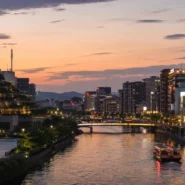
This is the best area for travelers who want evening atmosphere without commuting home after dinner. The riverfront neon, bridges and food stalls create Fukuoka’s most recognizable night scene. Yet the broad label “Nakasu” hides very different experiences. The Kawabata and Gion sides are more suitable for ordinary sightseeing. Central Nakasu is a nightlife and adult-entertainment district, with hostess bars, clubs, late-night crowds and occasional touts.
That distinction is not a reason to panic. Nakasu is busy and generally manageable, and many travelers enjoy walking through it. The issue is suitability. A solo night owl may love staying in the middle of the action; a family with young children or a light sleeper may regret booking the same block. The smart compromise is to stay near Nakasu-Kawabata Station, Kawabata Arcade, Gion or Kushida Shrine rather than deep inside the entertainment streets.
Best micro-locations: Kawabata is best for traditional shopping streets, Hakataza access and a more balanced atmosphere. Gion is quieter and gives you a useful position between Hakata Station and the old town. Riverside hotels can provide attractive views, but request a higher floor and a room away from late-night streets when possible.
✅ What Other Travelers Say
Visitors praise the area’s walkability and the convenience of moving between Hakata and Tenjin. Food-focused travelers enjoy having yatai, ramen and izakaya close by. Reviews are more mixed on sleep quality: people staying near the quieter Kawabata or Gion edges often report a smoother experience than those in the heart of Nakasu nightlife.
⚠️ The Catch (Things to Keep in Mind)
Noise, smoking environments, adult businesses and late-night foot traffic are real considerations. The famous riverfront yatai can also be more tourist-oriented and expensive than lower-key stalls elsewhere. Families should inspect street view and recent reviews carefully rather than assuming every central hotel is equally comfortable.
Bottom line: Nakasu-Kawabata is an excellent central base when chosen street by street. Book the Kawabata, Gion or station-facing edge for balance; book central Nakasu only when nightlife is a feature, not a problem.
🌳 Ohori Park and Akasaka: Best for Quiet Mornings, Couples and Longer Stays
Area tags: Quiet Stay · Park Access · Running · Couples · Longer Trips · Airport Line
Ohori Park is the best choice for travelers who want Fukuoka’s convenience without sleeping in its busiest commercial zones. The park’s waterside loop, nearby Fukuoka Castle ruins, Maizuru Park and residential streets create a calmer daily rhythm. You can take an early walk or run, return for breakfast and reach Tenjin in only a few subway stops on the Airport Line.
This area suits couples, repeat visitors, runners, remote workers and travelers staying four nights or longer. It also appeals to people who are tired of station districts and want a neighborhood that feels livable. Akasaka, between Ohori Park and Tenjin, is the practical middle ground: more restaurants and easier access to Daimyo, while still quieter than central Tenjin.
Ohori is not isolated, but it changes the trip. You will take the subway for Hakata Station, most nightlife and many restaurant clusters. That extra ride is easy during normal hours, yet it matters after a long day trip. Hotel choice is also thinner than at Hakata or Tenjin, so the best-value rooms can sell out quickly during popular seasons.
Best micro-locations: Stay near Ohori-koen Station for the park and Airport Line. Choose Akasaka Station if you want to walk toward Daimyo and Tenjin more often. Avoid properties that advertise park proximity but require a long walk around the water or across major roads to reach the subway.
✅ What Other Travelers Say
Travelers who stay here often value the contrast: calm mornings and easy park access without giving up central transport. Many mention that the area feels less hectic and can offer better value than the most convenient blocks around Hakata. It is particularly appreciated by people who do not need nightlife at the hotel door.
⚠️ The Catch (Things to Keep in Mind)
Late-night dining is more limited, and some streets become very quiet after dinner. You will add a subway ride to JR day trips and airport departures, although the Airport Line remains direct. During cherry blossom periods and major park events, the peaceful atmosphere can temporarily become busy.
Bottom line: Stay near Ohori Park or Akasaka when sleep quality, greenery and a local rhythm matter more than being next to the main transport hub. Akasaka is the stronger compromise for first-time visitors; Ohori is the better retreat.
🌊 Momochi and Tōjinmachi: Best for Families, Beach Time and Dome Events
Area tags: Families · Beach · Fukuoka Tower · Dome Events · Spacious Hotels · Quiet Nights
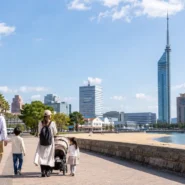
Momochi offers a version of Fukuoka that feels far more open than Hakata, Tenjin or Nakasu. The waterfront, Momochi Seaside Park, Fukuoka Tower, museums and Mizuho PayPay Dome make it attractive to families and travelers attending baseball games or concerts. Larger hotels and bay views can create a resort-like stay while still keeping you inside the city.
The trade-off is door-to-door convenience. The waterfront attractions are not directly beside a subway station. Tōjinmachi and Nishijin are the nearest practical rail bases for many locations, but the final walk can be long, and buses are often more convenient. That is manageable for a relaxed family trip, but less appealing for travelers making daily early-morning departures from Hakata.
Momochi makes the most sense when the attractions in this part of the city are a major part of your plan. It is also useful for families who prefer open spaces, predictable hotel facilities and quiet evenings over bar streets. Travelers with young children may appreciate avoiding the intensity of Nakasu and central Tenjin, especially on longer stays.
Best micro-locations: Stay directly near the Dome when attending an event and accept the crowd. Choose a waterfront hotel for views and on-site facilities. Choose Tōjinmachi or Nishijin instead if you want easier subway access, more everyday restaurants and a better balance between Momochi and central Fukuoka.
✅ What Other Travelers Say
Families tend to praise the space, waterfront walks and access to child-friendly attractions. Event travelers value being able to walk back after a game or concert rather than joining packed buses. Guests at larger waterfront hotels often mention views and facilities as the main reason the location works.
⚠️ The Catch (Things to Keep in Mind)
The area can feel disconnected from Fukuoka’s best food and nightlife after attractions close. Bus travel is more sensitive to traffic, and the walk from the subway may be tiring with small children or luggage. Event days can produce the opposite of a quiet stay: crowds, higher prices and busy restaurants.
Bottom line: Choose Momochi for a family-focused waterfront trip or a Dome event, not as the default base for a transport-heavy first visit. Tōjinmachi is usually the smarter compromise if you want this side of the city without losing the subway.
How to Choose Between Hakata and Tenjin
This is the decision most travelers actually need to make. Both areas are excellent, and the subway journey between them is short. The difference appears in the small daily movements.
Choose Hakata when: you have two or more JR day trips, arrive late, leave early, carry heavy luggage, travel with older relatives, want a straightforward first visit or prefer station shopping and food over nightlife.
Choose Tenjin when: you plan to spend most evenings in Fukuoka, care about restaurants and cafés, want easy access to Daimyo, expect to visit Dazaifu or Yanagawa, or value atmosphere more than the fastest connection to the Shinkansen.
My practical tie-breaker: For a two- or three-night trip with day trips, stay at Hakata. For four nights or more with time to enjoy the city, stay at Tenjin. For a mixed itinerary, choose Nakasu-Kawabata or Gion only after checking the exact street.
Key FAQs
Is it better to stay in Hakata or Tenjin for first-time visitors to Fukuoka?
Hakata is better for most first-time visitors because it reduces transport mistakes and makes airport, JR and Shinkansen travel easier. Tenjin is better when your priorities are restaurants, shopping and nightlife. A first-time traveler spending most days inside Fukuoka may enjoy Tenjin more, while a traveler using Fukuoka as a Kyushu base should choose Hakata.
What is the best area to stay in Fukuoka for day trips around Kyushu?
Stay near Hakata Station. It is the main hub for the Shinkansen, JR limited-express trains and many highway buses. Choose a hotel on the same side of the station as your preferred entrance and keep the true walking time short. Tenjin can be better for Dazaifu and Yanagawa because Nishitetsu trains depart from Nishitetsu Fukuoka (Tenjin).
Where should families stay in Fukuoka without a car?
Hakata is the easiest family base when you have strollers, luggage or day trips. Tenjin is good for shopping, indoor activities and varied dining if your hotel is close to an elevator-equipped exit. Momochi is best for beach and Dome-focused family trips, but it requires more bus use or longer walks from the subway.
Final Verdict and Your Next Step
For the safest all-round choice, book Hakata Station. It wins on airport access, JR connections, day trips and low-effort arrival days. For the best food, shopping and evening atmosphere, choose Tenjin. For central walking access, choose the Kawabata or Gion edge of Nakasu rather than booking blindly in the middle of the nightlife district. Choose Ohori Park or Akasaka for a calmer, more local stay, and choose Momochi or Tōjinmachi when family attractions, the waterfront or a Dome event are central to the trip.
The biggest mistake is waiting until only awkward locations remain. Fukuoka’s best station-adjacent hotels, family rooms and good-value properties can disappear early on weekends, holidays, festival dates and major event nights. Reserve a cancellable room as soon as your dates are reasonably firm, then recheck the map and price before the free-cancellation deadline.
Check current Fukuoka accommodation:
Compare Fukuoka hotels on Booking.com ·
Check Fukuoka hotel deals on Agoda
Book transport, tickets and day trips:
Browse Fukuoka activities on Klook ·
Browse Fukuoka activities on KKday
Final booking check: confirm the nearest station exit, elevator access, walking route, room-side noise and your most frequent transport line. In Fukuoka, a well-chosen hotel five minutes from the right station is usually worth more than a cheaper room that adds a transfer or a 15-minute luggage walk every day.