



💡 Key Takeaways
- Kintetsu Nara Station is the best all-round base for most first-time visitors because it puts Nara Park, Kofuku-ji, shopping arcades, restaurants, and direct trains to Osaka-Namba and Kyoto within easy reach.
- JR Nara Station is better for heavy luggage and JR-based itineraries, but you will trade station convenience for a roughly 20-minute walk or a bus ride to the western edge of Nara Park.
- Naramachi is the most atmospheric choice, but old-town charm comes with quieter nights, fewer elevators, uneven walking surfaces, and less convenient luggage access.
- Nara Park and Takabatake are worth the premium only when the setting is part of the trip. They are wonderful at dawn, but dining and transport options become limited after dark.
- Shin-Omiya is the value pick, while Nishinokyo is a specialist choice for temple-focused travelers rather than the safest default for a first visit.
Deciding where to stay in Nara looks simple until you open a map and discover that “Nara Station” may mean two different stations, the famous park covers a much larger area than expected, and a hotel that appears central can still require a long suitcase drag. The wrong choice will not ruin your trip, but it can easily add repeated bus rides, 20-minute walks, missed dinner options, or an awkward station transfer on arrival day.
Nara is compact compared with Kyoto or Osaka, yet its accommodation zones serve very different trips. Some visitors need the fastest walk to the deer and temples. Others need a lift-equipped hotel beside a station because they are arriving with two suitcases. Couples may prefer a restored townhouse in Naramachi, while families might value a modern room, supermarket, coin laundry, and easy taxi access more than traditional atmosphere.
This guide compares the six areas that matter most to a first-time visitor. It does not pretend every neighborhood is equally good. You will find clear recommendations, realistic drawbacks, typical hotel price ranges, nighttime conditions, and the types of traveler who should—and should not—book each area.
Price note: The ranges below are practical planning estimates for one standard room for two adults, before or excluding some taxes and meal supplements. Nara rates change sharply by date, room type, weekend demand, cherry blossom season, autumn foliage, major exhibitions, and whether a ryokan rate is charged per person. Transport and booking links were checked in August 2026.
The 1-Min Cheat Sheet: Where Should You Stay in Nara?
- Kintetsu Nara Station — Best overall for first-time visitors: Choose this for the easiest balance of sightseeing, restaurants, shopping streets, and trains to Kyoto or Osaka-Namba. Typical room planning range: ¥7,000–¥22,000, with higher-end properties above that.
- JR Nara Station — Best for luggage, JR Pass users, and multi-city rail trips: Choose this when your priority is a painless arrival, station elevators, buses, taxis, and JR connections. Typical range: ¥6,500–¥20,000.
- Naramachi — Best for traditional atmosphere, cafés, and couples: Choose this for old streets and character, not for the shortest suitcase route. Typical range: ¥10,000–¥35,000, with boutique heritage stays often reaching ¥40,000 or more.
- Nara Park and Takabatake — Best for a memorable ryokan or luxury stay: Choose this when dawn walks, quiet surroundings, and the accommodation experience justify a higher budget. Typical range: ¥18,000–¥50,000+; premium ryokan and luxury hotels can cost much more.
- Shin-Omiya — Best for lower prices and practical business hotels: Choose this if you accept one extra train stop or a bus ride in exchange for better value. Typical range: ¥5,500–¥15,000.
- Nishinokyo — Best for Yakushi-ji, Toshodai-ji, and a very quiet stay: Choose this only if western Nara’s temples are a major priority. Typical range: ¥7,000–¥20,000, but hotel choice is limited and rates can be inconsistent.
Top Survival Tips Before Booking a Nara Hotel
- Do not treat JR Nara and Kintetsu Nara as the same station. They are separate hubs. Walking between them is manageable without luggage, but annoying after a long travel day with suitcases, children, summer heat, or rain. Always check which station your train actually uses before choosing a hotel.
- Match your hotel to the railway you will use next. Kintetsu Nara is usually the more convenient base for central sightseeing and direct travel toward Osaka-Namba or Kyoto. JR Nara makes more sense when you are using JR passes, traveling through Tennoji or Osaka on JR, or continuing on the JR network. Saving ten minutes every sightseeing day matters less than avoiding an unnecessary station transfer with luggage.
- Measure the route to the hotel entrance, not the district name. “Near Nara Park” can mean beside Kofuku-ji or much farther east near Kasuga Taisha. “Naramachi” can mean a convenient edge close to the arcades or a quieter lane well south of the stations. Pin the exact entrance and inspect the walking route.
- Add extra time for slopes, gravel, heat, and deer-area crowds. Central Nara is walkable, but park paths are not the same as smooth station concourses. A distance that looks easy on a screen can feel twice as long with a rolling suitcase, stroller, or mobility limitation.
- Plan dinner earlier than you would in Osaka. Nara becomes quiet surprisingly quickly. Kintetsu Nara has the strongest evening selection, while Naramachi, the park edge, Takabatake, and Nishinokyo can feel almost closed after dinner hours. A beautiful isolated stay is much less romantic when every nearby kitchen has stopped taking orders.
- Read the room details, not just the hotel score. Nara has many traditional inns, guesthouses, and converted townhouses. Check whether the bathroom is private, whether the building has an elevator, whether bedding is on the floor, whether breakfast or dinner is included, and whether the quoted ryokan price is per room or per guest.
- Use luggage storage strategically. Both main stations have storage options, and many hotels will hold bags before check-in. On a one-night stay, leaving large luggage at a station or forwarding it to your next city may save more energy than choosing a cheaper hotel in an awkward location.
- Do not assume the bus is always faster. Buses are useful from JR Nara and for outer temple zones, but traffic and boarding queues can slow them around popular periods. From Kintetsu Nara, walking to Kofuku-ji and the western side of the park is often simpler than waiting for a crowded bus.
- Book refundable rates early for spring and autumn. Nara has less hotel inventory than Osaka or Kyoto. Good-value rooms near the two stations and distinctive heritage stays are often the first to disappear. Reserve a sensible option first, then recheck prices later instead of waiting for a perfect last-minute deal.
The Full Experience: Best Areas to Stay in Nara
📍 Kintetsu Nara Station: Best Overall for First-Time Visitors
Best for: First visits, short stays, Nara Park access, food choice, Kyoto connections, Osaka-Namba connections
Area feel: Central, convenient, lively by Nara standards
Typical room range: ¥7,000–¥22,000; upscale and luxury options cost more
If a friend asked me to choose one area without knowing anything else about their trip, I would choose Kintetsu Nara. It is the least complicated base. The western edge of Nara Park is a short walk east, Kofuku-ji is close, Higashimuki Shopping Street begins almost outside the station area, and the lanes toward Mochiidono and Naramachi provide a useful mix of cafés, pharmacies, casual restaurants, souvenir shops, and convenience stores.
This location is especially strong for a one- or two-night visit. You can leave the hotel early, reach the park before the biggest day-trip crowds, return for a rest, and still have a reasonable dinner selection at night. The official Nara Park guide describes the park as a short walk east of Kintetsu Nara, while the same journey from JR Nara is roughly 20 minutes on foot. That difference becomes noticeable when repeated.
Transport Reality
Kintetsu Nara is a terminal station, which makes departures relatively easy to understand. Kintetsu services connect toward Kyoto and Osaka-Namba, and some services continue through toward Kobe. Limited Express trains require a separate limited-express ticket in addition to the base fare, so do not board one just because it appears to be the fastest option on the platform display.
The station itself is underground. This is useful in bad weather, but it means you should locate the correct lift or escalator when carrying luggage rather than following the first staircase. Once above ground, most central hotels are reached on normal city streets, although properties on the park side may involve a gentle uphill section.
What the Area Is Like at Night
Kintetsu Nara is not a major nightlife district. It is simply the part of central Nara where you have the best chance of finding an open izakaya, noodle shop, bar, convenience store, or late dinner. The covered arcades help on rainy evenings, and the streets generally remain more active than Naramachi or the park edge. After the last wave of diners leaves, however, the atmosphere still becomes calm.
Hotel Prices and What You Get
Budget business hotels can sometimes appear below ¥10,000 on quieter dates, while better-rated modern hotels commonly sit in the low-to-mid teens. Weekends and peak foliage or blossom periods can push ordinary rooms above ¥20,000. You will find compact chain rooms, mid-range hotels, a few design-led options, and properties with public baths within walking distance.
Check the actual room size. Station-area hotels are convenient, but some entry-level doubles are designed for sleeping rather than spreading out two large suitcases. A room that costs slightly more but offers 20 square metres, an on-site bath, or a washer-dryer may be the better value for two travelers.
✅ What Other Travelers Say
The recurring praise is location: guests appreciate being able to walk to the park, restaurants, shopping arcades, and the station without depending on a bus. Travelers also value the ability to return to the hotel during the hottest part of the day. The common minor complaints are compact rooms, occasional street noise around central junctions, and confusion over underground station exits.
⚠️ The Catch (Things to Keep in Mind)
Kintetsu Nara is not the best choice for everyone. JR Pass users may find themselves paying separately for Kintetsu trains or walking between stations. The immediate station surroundings are practical rather than romantic, and the most convenient hotels can sell out early. Also, “five minutes from Kintetsu Nara” does not automatically mean five minutes from Todai-ji; the park is large, and the Great Buddha Hall is farther east.
Stay here if: You want the easiest first-time base with minimal planning.
Skip it if: Your entire Kansai itinerary is built around JR, or you want a secluded ryokan experience rather than urban convenience.
📍 JR Nara Station: Best for Luggage, JR Pass Users, and Easy Arrivals
Best for: Large suitcases, JR rail itineraries, families, station facilities, one-night transit stays
Area feel: Modern, practical, calmer than Kintetsu Nara
Typical room range: ¥6,500–¥20,000
JR Nara is the sensible choice when arrival and departure logistics matter more than being closest to the deer. The station area is straightforward: hotels, taxi ranks, buses, convenience stores, and useful everyday services are concentrated around a modern transport hub. Several popular hotels are directly connected to or only a few minutes from the station, which is a major advantage in rain or extreme summer heat.
This is also the better base for travelers using a JR regional pass or arriving on the JR Nara Line from Kyoto and the Yamatoji Line direction from Osaka or Tennoji. You step off the train, take the lift, and reach your hotel without changing railway companies or dragging bags across central Nara.
Transport Reality
The compromise is sightseeing distance. Walking from JR Nara Station to the western edge of Nara Park takes roughly 20 minutes along Sanjo-dori. It is a simple route and becomes part of the city experience when you are fresh and traveling light. It is less enjoyable at the end of a long temple day or with small children.
Buses and taxis solve this problem. City buses serve the park and major attractions, and a taxi can be worthwhile for two or three people with luggage. Still, visitors who plan to spend nearly all their time around Kofuku-ji, Todai-ji, Kasuga Taisha, and Naramachi should calculate how many repeated rides or walks they are adding.
What the Area Is Like at Night
The JR side feels functional rather than atmospheric. You will find hotel restaurants, supermarkets, casual chains, and local eateries, but the streets are generally quieter than the Kintetsu side. This is good for sleep and less useful for spontaneous bar-hopping. Sanjo-dori provides a pleasant connection toward the central arcades, but the walk back can feel long after dinner.
Hotel Prices and What You Get
This area has some of Nara’s best practical value. Business hotels frequently offer private bathrooms, lifts, laundry facilities, and compact but efficient rooms. Several well-reviewed properties include public baths or hot-spring-style bathing facilities. On quieter dates, simple doubles may start below ¥10,000; more comfortable mid-range rooms generally fall around ¥10,000–¥20,000.
JR Nara can be particularly good for families who need twin beds, breakfast, laundry, and predictable facilities. It is also easier to handle an early departure because you are not relying on a first bus or a pre-booked taxi.
✅ What Other Travelers Say
Guests repeatedly praise the convenience of stepping out of the station and into the hotel, especially with luggage. Public baths, clean rooms, breakfast, and helpful staff are common positives among the better-known station hotels. The recurring drawback is equally clear: visitors often say the main sights are walkable, but not as close as they first imagined.
⚠️ The Catch (Things to Keep in Mind)
The phrase “near Nara Station” can be misleading on booking sites because it may not specify JR or Kintetsu. Confirm the map pin. Also, do not choose JR Nara only because you own a nationwide JR Pass if the pass is not actually saving you much on this part of the trip. Sometimes the daily convenience of Kintetsu Nara is worth a separate local fare.
Stay here if: You prioritize luggage handling, JR connections, elevators, taxis, and reliable hotel facilities.
Skip it if: You want to walk into Nara Park in a few minutes or expect lively evenings outside your door.
📍 Naramachi: Best for Traditional Streets, Cafés, and Romantic Atmosphere
Best for: Couples, photographers, boutique stays, cafés, repeat walks, local atmosphere
Area feel: Historic, intimate, quiet after dark
Typical room range: ¥10,000–¥35,000; premium heritage stays often ¥40,000+
Naramachi is where Nara begins to feel like an overnight destination rather than a day trip. The neighborhood south of the central shopping streets is a patchwork of old merchant houses, narrow lanes, small temples, craft shops, cafés, sake-related businesses, guesthouses, and restored buildings. At the right property, simply walking back to your room becomes part of the experience.
The area works best for travelers who enjoy slow mornings and do not mind giving up immediate station access. From the northern edge of Naramachi, Kintetsu Nara can be quite convenient. From a property deeper south, the walk becomes longer. The official Naramachi area guide describes it as a short walk south of Kintetsu Nara and roughly 20 minutes on foot from JR Nara, but your actual hotel may add another ten minutes.
Transport Reality
There is no single Naramachi station. You will walk, use a local bus, or take a taxi. Travelers with one small suitcase usually manage without difficulty. Travelers with two large cases should avoid romanticizing the route: narrow pavements, road edges, thresholds, and old-building entrances can make the final section awkward.
For daily sightseeing, Naramachi is excellent for Gango-ji, Sarusawa Pond, the central arcades, Kofuku-ji, and the western side of Nara Park. It is less convenient for an early train departure or repeated trips back to the hotel during the day.
What the Area Is Like at Night
Naramachi is atmospheric in the evening but not busy. Many cafés and small shops close by late afternoon or early evening. Restaurants may require reservations, stop accepting guests early, or close on unexpected weekdays. After dinner, the lanes become quiet and dim. Some travelers find that magical; others feel stranded.
Book a hotel with breakfast or identify a reliable morning café in advance. For dinner, reserve at least one special meal and keep a backup near Mochiidono or the Kintetsu station side.
Hotel Prices and What You Get
Naramachi has the widest variation in accommodation style. A simple guesthouse may offer excellent hospitality but shared facilities. A renovated machiya may provide beautiful design with steep stairs and no lift. Boutique heritage hotels can charge more than a modern four-star chain because you are paying for space, architecture, privacy, and a limited room count.
Do not compare prices without comparing meals and room configuration. A ¥35,000 heritage stay with a large room and breakfast may be better value than a ¥22,000 compact room with no food and a shared bathroom—or the reverse, depending on your priorities.
✅ What Other Travelers Say
Travelers love the peaceful streets, thoughtful hosts, distinctive interiors, and easy access to independent cafés and small cultural sites. Reviews often describe the area as the part of Nara they remember most after the deer and temples. Negative comments usually involve old-building realities: stairs, sound traveling between rooms, limited reception hours, shared bathrooms, or a longer walk than expected.
⚠️ The Catch (Things to Keep in Mind)
Naramachi is a neighborhood label, not a guarantee of charm. Some properties use the name even when they sit on an ordinary road at the edge of the district. Check street-view imagery, recent exterior photos, and the route to Kintetsu Nara. Also check whether the property can receive luggage forwarding; very small guesthouses may have limited staffed hours.
Stay here if: You want atmosphere, local texture, and a stay that feels different from a standard city hotel.
Skip it if: You need lifts, late-night dining, fast station access, or the easiest possible route with heavy bags.
📍 Nara Park and Takabatake: Best for Dawn Walks, Ryokan, and a Special Occasion
Best for: Honeymoons, luxury stays, ryokan experiences, photographers, early park access
Area feel: Scenic, serene, very quiet at night
Typical room range: ¥18,000–¥50,000+; luxury and dinner-inclusive ryokan can be far higher
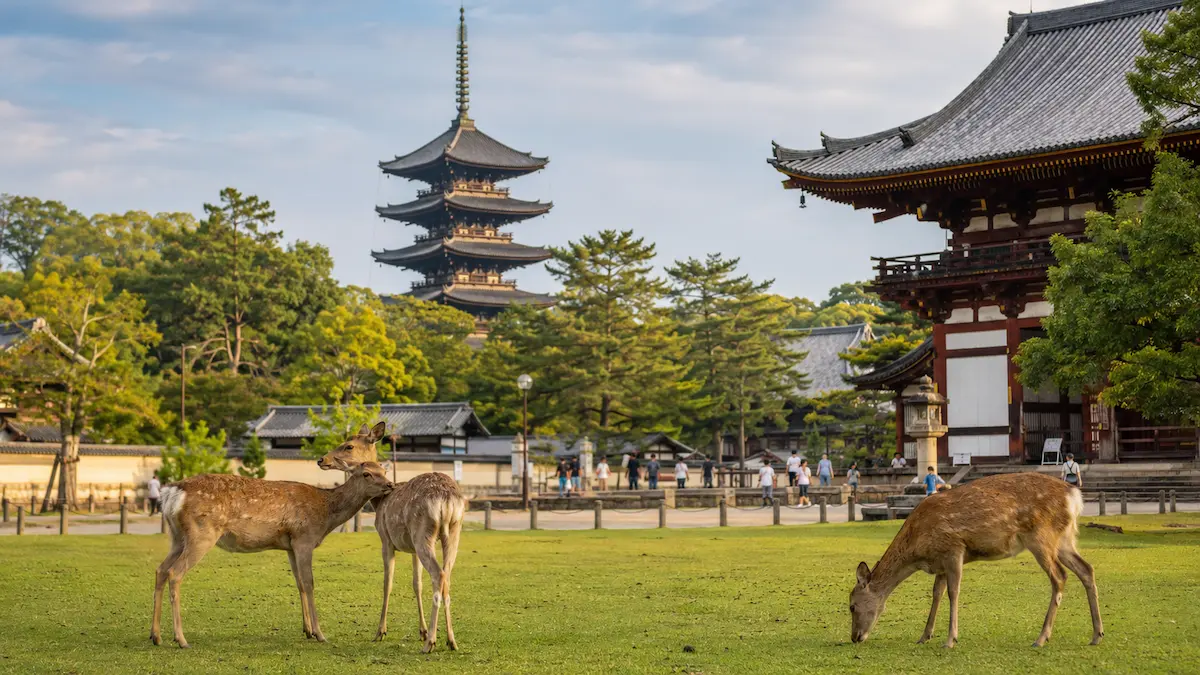
Staying beside or within the broad Nara Park area gives you something day-trippers miss: the park before tour groups arrive and after they leave. Early morning light around the temples, deer moving through quieter paths, and a slow walk near Kasuga Taisha can justify an overnight stay on their own. For a honeymoon, anniversary, or carefully chosen ryokan night, this is the most memorable location.
However, “Nara Park area” covers a wide zone. A hotel near Sarusawa Pond or Kofuku-ji is relatively central. A ryokan near Todai-ji, Kasuga Taisha, Takabatake, or farther up toward Wakakusayama may require a taxi, hotel shuttle, or a long walk. Never book based on the district name alone.
Transport Reality
Kintetsu Nara is the closest major station for most park-side properties, but the last section can involve slopes, wooded roads, gravel, or limited pavements. From JR Nara, a bus or taxi is usually the practical choice with luggage. Some higher-end hotels operate scheduled shuttles, but you must check the timetable and reserve if required.
Once checked in, you may be able to walk directly to the sights. That sounds perfect, but remember that the park is large. A property near Kasuga Taisha is not automatically close to restaurants near Kintetsu Nara, and a hotel near Todai-ji may still be far from Naramachi.
What the Area Is Like at Night
Expect darkness, quiet, and limited spontaneous dining. The atmosphere can be beautiful, but it is not convenient. Many park-side travelers eat at their ryokan or hotel. If dinner is included, confirm the required arrival time; missing a kaiseki service because of a late train is an expensive mistake.
Convenience stores may not be nearby. Buy drinks, snacks, medication, and breakfast supplies before returning to the hotel. Wildlife is part of the setting, so do not leave food outside or treat the deer as tame pets.
Hotel Prices and What You Get
Budget supply is limited. The strongest options tend to be traditional ryokan, historic hotels, design hotels, and luxury properties. Prices rise quickly when dinner, breakfast, private bathing, larger rooms, garden views, or shuttle service are included. Some ryokan rates are listed per guest rather than per room, which can double the apparent total at checkout.
This is the area where paying more can meaningfully change the trip. A well-run ryokan with dinner and breakfast is not merely a bed near the park; it is an evening activity, cultural experience, and logistical solution in one package.
✅ What Other Travelers Say
Guests highlight the calm setting, attentive service, garden views, traditional meals, and the chance to walk among the temples before the crowds. Park-side reviews often use words such as serene, memorable, and special. The less positive feedback focuses on price, isolation, fixed meal times, limited nearby shops, and dependence on taxis or shuttles.
⚠️ The Catch (Things to Keep in Mind)
Do not pay a park premium if your itinerary has you leaving early every morning for Osaka, Kyoto, or distant parts of Nara Prefecture. You will spend money on a setting you barely experience. Mobility-limited travelers should also inspect gradients, shuttle arrangements, and the distance from the drop-off point to reception.
Stay here if: The accommodation and quiet park setting are central to your trip.
Skip it if: You want cheap meals, nightlife, easy station access, or maximum flexibility.
📍 Shin-Omiya: Best Value for Business Hotels and Longer Stays
Best for: Budget-conscious travelers, repeat visitors, business hotels, coin laundry, local dining
Area feel: Residential-commercial, practical, less touristy
Typical room range: ¥5,500–¥15,000
Shin-Omiya is one stop west of Kintetsu Nara and is often overlooked by first-time visitors. That is precisely why it can offer better value. The area has business hotels, local restaurants, supermarkets, offices, and more everyday city life. It is not beautiful in the way Naramachi is beautiful, but it can be comfortable and efficient.
This is a good option when central hotels are unusually expensive, when you are staying several nights, or when you prefer a predictable chain hotel with breakfast and laundry over a character property. The savings can be meaningful during busy weekends.
Transport Reality
The train ride to Kintetsu Nara is very short, but the extra step still affects your day. You must walk to the station, wait, ride one stop, exit underground, and then begin sightseeing. It is not difficult; it is simply less seamless than staying in central Nara.
Shin-Omiya can also work for Heijo Palace-area visits, some western Nara sights, and travelers using taxis or a rental car. Depending on your exact hotel, JR Nara may be reachable by a longer walk or short taxi ride, but this should not be the main reason to choose the area.
What the Area Is Like at Night
Shin-Omiya has more local after-work activity than the park side, including izakaya and bars, but the nightlife is modest. Some side streets contain adult-oriented bars or entertainment businesses. The overall district is mixed-use and practical rather than a tourist entertainment zone, yet travelers seeking a postcard-pretty evening environment may not enjoy the immediate surroundings.
Hotel Prices and What You Get
Simple chain rooms often provide the best price-to-facility ratio in Nara: private bathroom, air conditioning, Wi-Fi, lift, breakfast, and coin laundry. Rooms may be small and décor basic, but you are paying less for location rather than sacrificing essential comfort.
When comparing with a central hotel, include the small daily transport cost and the value of your time. Saving ¥2,000 per night may not be worthwhile on a one-night trip, but saving ¥8,000 per night over four nights could be.
✅ What Other Travelers Say
Guests tend to appreciate low prices, station proximity, included breakfast at some hotels, and a more local atmosphere. The typical complaints concern small rooms, dated interiors at older properties, limited sightseeing outside the door, and the need to take a train or bus into central Nara.
⚠️ The Catch (Things to Keep in Mind)
Shin-Omiya is a compromise area. It is useful because it is cheaper, not because it provides a better first impression of Nara. If you are staying only one night, the added transfer may save too little to justify the inconvenience. Also check the last trains and your hotel’s distance from the station if you plan to dine in central Nara.
Stay here if: You want a lower rate, reliable business-hotel facilities, and do not mind one extra station stop.
Skip it if: This is your first and only night in Nara and you want the city’s atmosphere immediately outside.
📍 Nishinokyo: Best for Yakushi-ji, Toshodai-ji, and Deep Quiet
Best for: Temple enthusiasts, repeat visitors, slow travel, western Nara sightseeing
Area feel: Low-key, residential, peaceful, limited at night
Typical room range: ¥7,000–¥20,000, with far fewer choices than central Nara
Nishinokyo is the most specialized recommendation in this guide. It lies west of central Nara and is known for major historic temples such as Yakushi-ji and Toshodai-ji. Staying here gives you a calmer, more local base and easy access to sights that many day-trippers rush through or skip.
For most first-time visitors, however, Nishinokyo is not the best default. The classic Nara Park circuit, Naramachi, restaurant selection, and main transport hubs are elsewhere. You are choosing focus and quiet over all-round convenience.
Transport Reality
Nishinokyo Station sits on the Kintetsu Kashihara Line. Rail trips from Kintetsu Nara generally involve changing at Yamato-Saidaiji, while direct buses from central Nara may be more convenient for some journeys. Service is straightforward once understood, but it adds planning compared with stepping out of Kintetsu Nara and walking.
This area can make sense if your itinerary continues south toward places such as Kashihara or Asuka, or if you have a car. It makes less sense when every day begins at Nara Park.
What the Area Is Like at Night
Nights are very quiet. Restaurant choice is limited, opening days may be irregular, and convenience stores may not be immediately beside your accommodation. Choose a property with meals, verify dinner options before arrival, or eat in central Nara before returning.
Hotel Prices and What You Get
There are fewer hotels, so Nishinokyo is not guaranteed to be cheaper. You may find a small inn, traditional property, apartment-style stay, or business-oriented hotel farther from the temples. Limited inventory means one good-value room can disappear and leave only awkward or expensive alternatives.
✅ What Other Travelers Say
Visitors who choose Nishinokyo intentionally enjoy the peaceful atmosphere, uncrowded temple mornings, and sense of seeing a different side of Nara. Less satisfied guests usually expected central-city convenience and were surprised by the limited dining, transfers, and distance from the deer-park circuit.
⚠️ The Catch (Things to Keep in Mind)
This is not a clever “hidden gem” for every first-timer. It is a good base only when its temples and slower pace match your itinerary. Booking here merely to save money can backfire once you add train changes, buses, taxis, and time.
Stay here if: Yakushi-ji, Toshodai-ji, western Nara, or a quiet retreat is a major purpose of your visit.
Skip it if: You want the simplest first-time sightseeing base, flexible dining, or easy evening walks.
Key FAQs About Where to Stay in Nara
Is it better to stay near Kintetsu Nara Station or JR Nara Station for a first visit?
For most first-time visitors, Kintetsu Nara is better because it is closer to Nara Park, Kofuku-ji, the central shopping arcades, and a broader evening food selection. JR Nara is better when you have heavy luggage, rely on JR trains or passes, want a hotel directly beside a modern station, or need the easiest arrival and departure. The two stations are not interchangeable, so choose based on your rail route and luggage rather than the word “Nara” alone.
How many nights should a first-time visitor stay in Nara?
One night is enough to experience Nara at a calmer pace than a day trip: arrive around midday, explore Naramachi or the park, stay for dinner, then visit Todai-ji or Kasuga Taisha early the next morning. Two nights are better if you want museums, western temples such as Yakushi-ji and Toshodai-ji, a ryokan experience, or a day trip deeper into Nara Prefecture. More than two nights makes sense for slow travelers, hikers, temple enthusiasts, or travelers using Nara as a regional base.
Is it worth staying in Nara instead of visiting from Kyoto or Osaka?
Yes, when you value quiet mornings, evening atmosphere, photography, or a less rushed temple visit. Nara is easy to visit as a day trip, but day-trippers concentrate in the middle of the day. Staying overnight lets you see the park and old streets when they are calmer. It may not be worth moving hotels if your Kansai trip is very short, you dislike changing accommodation, or you only want the deer and Todai-ji. In that case, use luggage storage and make a long day trip from Kyoto or Osaka.
Final Verdict and Your Next Step
Choose Kintetsu Nara Station for the safest first-time decision. It removes the most friction: less walking to the headline sights, more dinner choices, and convenient Kintetsu connections. Choose JR Nara instead when luggage and JR travel matter most. Choose Naramachi when atmosphere is worth a less convenient arrival, and choose Nara Park or Takabatake when a ryokan, luxury hotel, or dawn walk is the main event.
Shin-Omiya is the practical budget alternative, especially for longer stays, but I would not move there solely to save a small amount on a one-night visit. Nishinokyo is a deliberate specialist choice, not a general first-timer recommendation.
Before booking, open the hotel map and check four things: the exact station, the walking route with luggage, nearby dinner options, and whether the room has the bathroom, lift, bedding, and meal plan you expect. Then reserve a refundable room early and compare the final price—not just the headline rate—across more than one platform.
Compare Nara hotel prices on Agoda
Check Nara hotels on Booking.com
Browse Nara activities and transport options on Klook
Compare Nara tours and experiences on KKday