

💡 Key Takeaways
- Stay near Hakata Station if this is your first trip, you have heavy luggage, or you plan day trips around Kyushu. It is the least complicated all-round choice.
- Choose Tenjin if shopping, restaurants and evening atmosphere matter more than direct Shinkansen access.
- Nakasu-Kawabata is convenient but not universally comfortable: it is excellent for late-night dining, yet some streets sit beside Fukuoka’s adult-entertainment district.
- Gion and Kushida Shrine offer the best compromise for travelers who want Hakata access, Canal City, temples and a calmer night environment.
- Do not book by neighborhood name alone. In Fukuoka, the difference between a three-minute and twelve-minute walk to the correct station exit becomes painfully obvious when it rains or you are dragging a suitcase.
Deciding where to stay in Fukuoka looks easy because the city center is compact. The trap is assuming that every central hotel is equally convenient. It is not. A property may advertise “Hakata,” yet sit a fifteen-minute walk from Hakata Station. A hotel near Tenjin may be close to the Nanakuma Line but awkward for the Airport Line. A stylish room near Momochi may look perfect until you realize the nearest subway station is a long walk away and your return trip depends on a bus.
For first-time visitors, the real question is not which district has the most attractions. It is which district removes friction from your itinerary: airport arrival, luggage handling, early trains, day trips, late dinners, shopping bags, rainy weather and the final journey back to the airport. This guide compares seven genuinely useful bases, including their weaknesses, typical hotel-price patterns, night atmosphere and the travelers who should think twice before booking.
Accuracy note: Transport details were checked against Fukuoka City Subway and Fukuoka Airport information available in August 2026. Hotel prices below are realistic planning ranges for a standard double room rather than fixed quotes. Rates can rise sharply on Saturdays, public holidays, festival dates and Fukuoka PayPay Dome event nights.
The 1-Min Cheat Sheet: Best Areas to Stay in Fukuoka
- Hakata Station: Best overall for first-time visitors, airport access, Shinkansen travel and Kyushu day trips. The trade-off is a business-district feel and higher prices close to the station.
- Tenjin and Daimyo: Best for shopping, food, bars and staying out late without needing a taxi. Less convenient than Hakata for JR trains and large luggage transfers.
- Nakasu-Kawabata: Best for nightlife, yatai food stalls and walking between Hakata and Tenjin. Avoid the inner nightlife lanes if adult-entertainment streets or late-night noise make you uncomfortable.
- Gion, Kushida Shrine and Canal City: Best balanced central base for temples, shopping and quieter evenings. Excellent for sightseeing, but some hotels are neither truly beside Hakata Station nor directly beside Tenjin.
- Yakuin and Watanabe-dori: Best for local restaurants, cafés and better value than the two main hubs. It suits repeat visitors and food-focused travelers more than people taking several early JR day trips.
- Ohori Park and Akasaka: Best for quiet mornings, jogging, couples and families who value calm over nightlife. Hotel supply is thinner, so a “quiet area” does not always mean a cheap room.
- Momochi and Tojinmachi: Best for the beach, Fukuoka Tower, museums and PayPay Dome events. It is the weakest central base for travelers who expect to walk everywhere.
Top Survival Tips Before You Book a Fukuoka Hotel
- Build your stay around the transport line you will use most. The Airport Line directly links Fukuoka Airport’s domestic terminal, Hakata, Nakasu-Kawabata, Tenjin, Ohori Park and the western districts. The Nanakuma Line links Hakata with Kushida Shrine, Tenjin-minami, Yakuin and Ropponmatsu. This matters because a hotel can be “near Tenjin” while still forcing an underground walk or a second fare when you use a different line.
- International arrivals should add terminal-transfer time. The subway station is at the domestic terminal, not the international terminal. International passengers can use the free inter-terminal shuttle before boarding the subway, or take a direct airport bus toward Hakata. The famous five-minute airport-to-Hakata subway ride is real, but it does not include immigration, baggage collection, the shuttle and walking inside the terminals.
- Check the exact station exit, not only the station name. Fukuoka’s major stations have multiple exits and long underground passages. A hotel that is 300 meters from the correct elevator exit can be far easier than one that appears slightly closer on a map but requires stairs, crossings or a detour around a large station building.
- Do not underestimate the Tenjin and Tenjin-minami distinction. Tenjin Station serves the Airport Line; Tenjin-minami serves the Nanakuma Line. They are connected through the underground shopping area, but they are separate stations. The walk is manageable without luggage and annoying with a large suitcase, especially when you choose the wrong exit.
- Use buses as a bonus, not your only plan, when carrying luggage. Fukuoka’s bus network is extensive and useful for Momochi, the dome and waterfront areas. However, traffic, crowded vehicles and uncertainty about stops make the subway easier for a first arrival. A bus-dependent hotel may save money but cost energy every day.
- Check event dates before assuming a hotel is overpriced. Baseball games, concerts, Hakata Gion Yamakasa, Golden Week, long weekends and major conventions can push rates well above normal. Hotels around Momochi and central Fukuoka can sell out early. Changing neighborhoods may save more than downgrading the hotel.
- Budget for Fukuoka City’s accommodation tax. The city currently charges per person per night: ¥200 when the accommodation charge is below ¥20,000 per person, or ¥500 when it is ¥20,000 or more. Some booking sites include this in the displayed total; others collect it at the property.
- Read the room size and bed width, not just the star rating. Many business hotels near Hakata and Tenjin are clean and extremely efficient, but a 12–15 square meter room can feel cramped for two adults with open suitcases. Families should look for apartments, connecting rooms, triple rooms or properties with laundry facilities rather than assuming a standard twin will work.
- For a one-night stop, pay for convenience. Saving ¥2,000 on a hotel that adds two bus rides, a long walk and an early-morning luggage transfer is usually false economy. For four or five nights, a quieter value area such as Yakuin or Ohori can make more sense.
The Full Experience: Where to Stay in Fukuoka by Area
📍 Hakata Station: Best Overall for First-Time Visitors and Kyushu Day Trips
Best for: First visits, heavy luggage, Shinkansen trips, early departures | Typical standard double: ¥12,000–¥22,000 on ordinary dates | Nearest transport: JR Hakata, Airport Line, Nanakuma Line, Hakata Bus Terminal
Hakata is the safest recommendation for a first-time visitor because it solves the greatest number of practical problems at once. The subway ride from Fukuoka Airport’s domestic terminal to Hakata takes about five minutes. Hakata Station is also the main JR and Shinkansen hub, so day trips to places such as Dazaifu, Yufuin, Nagasaki, Kumamoto, Hiroshima or Kitakyushu start with fewer transfers. The station complex itself has department stores, supermarkets, bakeries, ramen, restaurants, pharmacies and convenience stores, which is invaluable when you arrive tired or return after a long day.
The key is choosing the correct side. The Hakata Exit faces the bus terminal, office district and the direction of Gion and Canal City. The Chikushi Exit is useful for many business hotels, rental-car offices and some airport buses. Both sides are convenient, but crossing the full station with luggage is not something you want to repeat every morning. For the easiest stay, choose a hotel within roughly five minutes of the station entrance you will actually use.
Hakata is not a postcard neighborhood. The immediate station area can feel corporate, busy and functional. However, that apparent lack of charm is exactly why it works so well: you spend less time solving transport problems. Restaurants around the station stay open late enough for most travelers, and you are only about five minutes from Tenjin by subway.
✅ What Other Travelers Say
Recurring guest-review themes are extremely consistent: travelers praise the short walk to trains and buses, easy airport access, abundant food and the ability to store luggage before check-in or after checkout. Families and rail-pass users often consider the location worth paying extra for. The most common complaints are compact rooms, busy lobbies and confusing station exits on the first day.
⚠️ The Catch (Things to Keep in Mind)
Hotels within two or three minutes of the station often charge a convenience premium and sell out early. Properties marketed as “Hakata” can be much farther away than the name suggests, especially south of the station or toward Sumiyoshi. The area also becomes quiet in a businesslike way late at night; travelers wanting lively bars at the doorstep will prefer Tenjin or Nakasu.
Choose Hakata if: you are staying one to three nights, have large luggage, will use JR trains, or want the lowest-risk first visit.
Do not choose Hakata if: your trip is mainly shopping, cocktail bars and late-night neighborhood wandering, and you do not plan to take regional trains.
📍 Tenjin and Daimyo: Best for Shopping, Restaurants and Nightlife
Best for: Shopping, couples, food, bars, late evenings | Typical standard double: ¥11,000–¥22,000 on ordinary dates | Nearest transport: Tenjin Station, Tenjin-minami Station, Nishitetsu Fukuoka (Tenjin)
Tenjin is Fukuoka’s commercial heart and the better choice for travelers who want the city outside their hotel door. Department stores, underground shopping, cafés, pharmacies, izakaya, cocktail bars and the lanes of Daimyo are concentrated in a walkable area. Compared with Hakata, Tenjin feels more like a place to spend the evening rather than simply a transport interchange.
Location within Tenjin matters. Staying near Tenjin Station is best for the Airport Line and straightforward airport access. Staying farther south near Tenjin-minami gives easy access to the Nanakuma Line, which now runs directly to Hakata through Kushida Shrine. Hotels west of the main avenue place you closer to Daimyo’s restaurants and boutiques but can involve a longer walk to the subway. Hotels near Watanabe-dori may be quieter and cheaper, although they are less convenient for the Airport Line.
Tenjin is also useful for Dazaifu and southern Fukuoka Prefecture because Nishitetsu Fukuoka (Tenjin) Station serves the Tenjin–Omuta Line. Most Dazaifu journeys still involve checking the correct service or changing at Nishitetsu Futsukaichi, but beginning in Tenjin can be easier than backtracking from Hakata.
✅ What Other Travelers Say
Guests repeatedly praise the density of shopping and food, especially the freedom to return to the hotel between activities. Travelers who dislike ending the night with a train ride often prefer Tenjin. Reviews also mention the usefulness of the underground passages during rain and summer heat.
⚠️ The Catch (Things to Keep in Mind)
Tenjin’s underground geography confuses first-time visitors. Tenjin, Tenjin-minami and Nishitetsu Fukuoka are connected but not the same station. Elevators may not be beside the exit you expect, and construction or redevelopment can alter pedestrian routes. The busiest streets are noisy, while hotels inside Daimyo may hear late-night conversations. JR and Shinkansen day trips require reaching Hakata first.
Choose Tenjin if: you want shopping and dinner to be effortless, expect to stay out late, and will spend most days inside Fukuoka City.
Do not choose Tenjin if: you have several early Shinkansen departures or want the simplest possible airport-to-hotel luggage route.
📍 Nakasu-Kawabata: Best for Late-Night Food and Central Walkability
Best for: Night owls, short stays, yatai, travelers splitting time between Hakata and Tenjin | Typical standard double: ¥10,000–¥20,000 | Nearest transport: Nakasu-Kawabata Station on the Airport and Hakozaki Lines
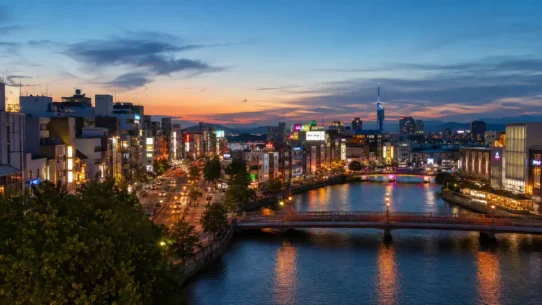
Nakasu-Kawabata sits between Hakata and Tenjin, making it one of the most strategically central places to stay. The subway station is on the Airport Line, the riverfront is nearby, Kawabata Shopping Arcade leads toward Kushida Shrine, and Tenjin is walkable. For travelers who want ramen, yatai, bars and neon-lit riverside walks after dark, Nakasu is hard to beat.
However, “Nakasu” covers different environments. The streets around Nakasu-Kawabata Station, Hakata Riverain and Kawabata Shopping Arcade can feel convenient and cultural. Deeper inside the island, especially around the entertainment lanes, the atmosphere becomes more adult-oriented. Fukuoka is generally a safe city, but this is still an active nightlife and red-light district. Travelers should ignore touts, avoid entering venues with unclear prices and choose a hotel on a main street if they want a more comfortable arrival at night.
Nakasu works particularly well for a two- or three-night city break because you can walk to Tenjin, Canal City, Kushida Shrine and many central restaurants. It also offers direct subway access to the airport and Hakata Station. You get a more atmospheric evening than Hakata without giving up transport convenience.
✅ What Other Travelers Say
Travelers consistently praise the location, food options and direct subway access. Many enjoy being able to walk home after dinner rather than checking the last train. Positive hotel reviews often mention river views or easy access to the shopping arcade. Negative comments focus on street noise, nightlife crowds and the occasional uncomfortable encounter with touts.
⚠️ The Catch (Things to Keep in Mind)
Light sleepers should avoid rooms facing busy nightlife streets. Solo travelers and families may prefer the Kawabata or Riverain side rather than the center of the entertainment district. The famous yatai experience is enjoyable, but stalls can have queues, limited seating, weather closures and prices that are not necessarily cheaper than restaurants.
Choose Nakasu-Kawabata if: nightlife and central walking matter, and you understand the character of an entertainment district.
Do not choose Nakasu-Kawabata if: adult-entertainment streets make you uncomfortable, you are highly noise-sensitive, or you want a calm family neighborhood.
📍 Gion, Kushida Shrine and Canal City: Best Balanced Central Base
Best for: First-time sightseeing, temples, Canal City, quieter evenings | Typical standard double: ¥10,000–¥20,000 | Nearest transport: Gion Station, Kushida Shrine Station, Hakata Station
This zone is the practical middle ground between Hakata’s transport convenience and Nakasu’s evening atmosphere. Gion places you one subway stop from Hakata on the Airport Line, while Kushida Shrine Station on the Nanakuma Line is beside the Canal City and Hakata Old Town side of the center. Temples, Kushida Shrine, Kawabata Shopping Arcade and Canal City are close enough to explore without repeatedly boarding transport.
For many first-time visitors, this is the most underrated answer to where to stay in Fukuoka. You can walk to Hakata Station if necessary, but you are not sleeping directly in the station’s office district. You can walk to Nakasu for dinner, but return to streets that are generally calmer. The area has business hotels, design hotels and apartment-style accommodation, often with slightly better value than the closest Hakata properties.
The exact micro-location determines whether the stay feels brilliant or inconvenient. A hotel beside Kushida Shrine Station is excellent for the Nanakuma Line and Canal City. A property nearer Gion is better for the Airport Line. A hotel halfway between every landmark may sound central but leave you walking ten minutes whenever you use transport.
✅ What Other Travelers Say
Guests often describe the area as convenient without feeling overwhelmingly busy. Review patterns highlight walkability to Canal City, temples and restaurants, plus easier sleep than in Nakasu. Apartment-style properties here are popular with families because some provide washing machines, kitchenettes or larger floor plans.
⚠️ The Catch (Things to Keep in Mind)
Canal City is a landmark, not a train hub. Before Kushida Shrine Station opened, many hotel descriptions relied on walking or buses; older reviews may therefore understate current subway convenience. Even now, travelers using the Airport Line must choose Gion, Hakata or a transfer. Some lanes around the old town become very quiet at night, which is peaceful but not ideal if you want bars outside the hotel.
Choose this area if: you want the best balance of sightseeing, transport and sleep quality.
Do not choose this area if: every morning begins with an early JR train, or nightlife at the doorstep is your priority.
📍 Yakuin and Watanabe-dori: Best for Local Dining and Better Value
Best for: Food lovers, repeat visitors, longer stays, couples | Typical standard double: ¥9,000–¥18,000 | Nearest transport: Yakuin, Yakuin-odori and Watanabe-dori stations
Yakuin is where to stay when you want Fukuoka to feel like a lived-in city rather than a sequence of major stations. The neighborhood is known for small restaurants, bakeries, coffee shops and residential streets, with Tenjin still within walking distance or a short train ride. Watanabe-dori offers larger hotels and direct Nanakuma Line access, while Yakuin gives you both the subway and Nishitetsu railway.
The Nanakuma Line extension to Hakata significantly improved this area for visitors. You can now ride directly from Yakuin or Watanabe-dori to Hakata without changing at Tenjin. That makes the neighborhood more practical than older guidebooks suggest. It remains less intuitive than staying at Hakata, but it is no longer an isolated “local” choice.
Yakuin is especially appealing for a four- or five-night stay. You can eat near the hotel without returning to a giant commercial complex, and the room rate may buy more space or a newer property than in central Tenjin. The atmosphere is active in the evening but rarely as intense as Nakasu.
✅ What Other Travelers Say
Visitors who choose Yakuin deliberately tend to love it. Common praise includes good independent restaurants, a calmer local atmosphere and reasonable access to Tenjin. Longer-stay guests appreciate supermarkets and practical services. Less enthusiastic reviews usually come from travelers who expected every famous attraction to be directly outside the hotel.
⚠️ The Catch (Things to Keep in Mind)
This is not the best base for travelers who want to step straight onto the Airport Line. Depending on your hotel, reaching Tenjin Station may involve walking through busy streets or using the Nanakuma Line to Hakata before transferring. Some restaurants are small, popular and difficult to enter without a reservation. English signage can be less consistent than around Hakata.
Choose Yakuin if: food and neighborhood atmosphere matter more than being beside a major attraction.
Do not choose Yakuin if: this is a one-night stop, you have multiple large bags, or you want foolproof airport access.
📍 Ohori Park and Akasaka: Best for Quiet Mornings, Couples and Families
Best for: Quiet stays, jogging, parks, couples, families | Typical standard double: ¥9,000–¥19,000, with limited supply | Nearest transport: Ohori Park Station and Akasaka Station on the Airport Line
Ohori Park is the best antidote to a trip built around stations, malls and restaurant queues. The park, Fukuoka Art Museum, Maizuru Park and castle ruins create a spacious, calm environment only a few subway stops from Tenjin. The official subway map places Ohori Park about four minutes from Tenjin, so choosing peace does not mean leaving the city.
Akasaka is the more urban option. It sits between Tenjin and Ohori Park, close to Daimyo’s western edge and the castle-park area. Travelers can walk into Tenjin while returning to quieter streets. Ohori Park Station is better for morning walks and families; Akasaka is better for diners who still want easy access to central nightlife.
This area suits travelers who enjoy starting the day with a walk, need a break from crowds or are staying long enough to appreciate a neighborhood rhythm. It can also work well for families because parks provide space that central business districts lack.
✅ What Other Travelers Say
Guests praise the peaceful environment, easy Airport Line access and proximity to green space. Couples often find the area more relaxing than Hakata or Tenjin. Reviews of apartment-style stays mention useful extra space, although service levels can vary more than at full-service hotels.
⚠️ The Catch (Things to Keep in Mind)
Hotel inventory is much smaller than around Hakata and Tenjin. That means fewer bargain options and sudden price jumps when popular properties fill. Nightlife is limited, and some streets become quiet early. Staying on the far side of the park can add a long walk to the subway, so do not book based only on a “near Ohori Park” label.
Choose Ohori or Akasaka if: calm mornings and quality of stay matter more than maximum nightlife.
Do not choose this area if: you want dozens of late-night restaurants downstairs or need frequent Shinkansen departures.
📍 Momochi and Tojinmachi: Best for the Beach, Fukuoka Tower and Dome Events
Best for: PayPay Dome events, beach walks, families, museums | Typical standard double: ¥12,000–¥24,000; event nights can be much higher | Nearest transport: Tojinmachi or Nishijin plus walking or bus
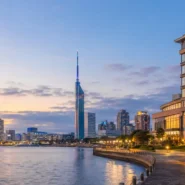
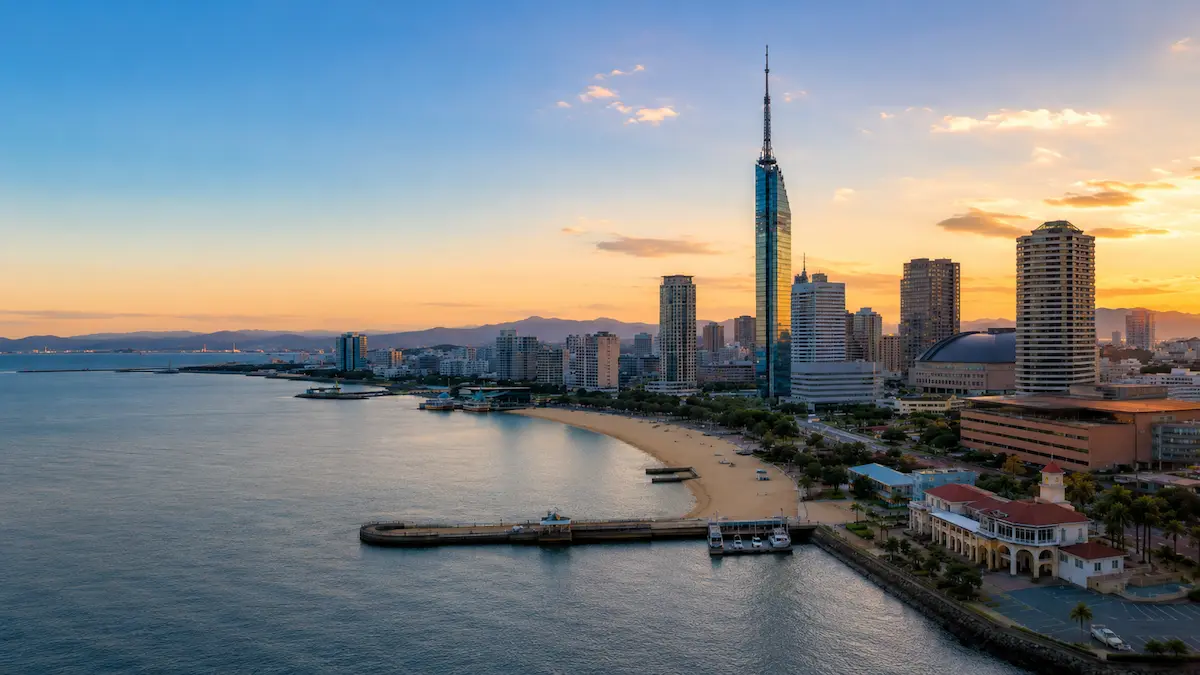
Momochi looks fantastic in photographs: Fukuoka Tower, the beach, broad waterfront spaces, the city museum and the dome are all nearby. It is the obvious place to stay for a baseball game, major concert or family trip centered on the western waterfront. Some hotels offer larger rooms and bay views that are difficult to find in central business hotels.
The transport reality is less glamorous. Fukuoka Tower is roughly a twenty-minute walk from Nishijin Station according to the official subway map, and many waterfront destinations are easier by bus. Tojinmachi is the practical station for the dome, but the final walk can still feel long in summer heat, rain or post-event crowds. Taxis become scarce after large events because thousands of people leave at once.
For a dedicated dome event, staying nearby can be an excellent decision. For a first-time sightseeing trip, Momochi usually adds unnecessary commuting. You will travel east for Hakata, Tenjin, Nakasu and most central restaurants, then repeat the journey at night.
✅ What Other Travelers Say
Families and event visitors value the views, spacious public areas and ability to walk to the dome. Guests often describe the waterfront as relaxing and appreciate being away from the dense city center. Negative reviews commonly mention the distance from the subway, limited late-night dining and expensive event-date rates.
⚠️ The Catch (Things to Keep in Mind)
Do not confuse “near Fukuoka Tower” with “near a station.” The last kilometer matters. Restaurants and shops are more dispersed, and the area can feel empty after attractions close. On dome event nights, crowds, road congestion and hotel prices rise dramatically. Book early or stay on the Airport Line and accept the post-event walk.
Choose Momochi if: the dome, beach or waterfront is the main purpose of your trip.
Do not choose Momochi if: this is your first general sightseeing visit and you want to minimize daily transport.
How I Would Choose Based on a Real Itinerary
- Two nights, first visit, arriving internationally: Hakata. The saved time and easier luggage handling outweigh the lack of neighborhood charm.
- Four nights focused on food, shopping and evenings out: Tenjin, preferably within five to seven minutes of Tenjin Station or the southern edge near Tenjin-minami if you will use the Nanakuma Line.
- Three nights with Canal City, temples and one day trip: Gion or Kushida Shrine. It balances sightseeing with reasonable Hakata access.
- Weekend city break for bars and yatai: Nakasu-Kawabata, but book on the Kawabata or main-road side if you are uncomfortable around adult nightlife.
- Five nights, second visit, food-focused couple: Yakuin. You trade a little transport simplicity for a much better neighborhood routine.
- Family trip with children who need space: An apartment hotel around Gion, Ohori Park or Hakata, chosen by room size and laundry facilities rather than star rating.
- Concert or baseball game at PayPay Dome: Momochi or Tojinmachi for one night, then move to Hakata or Tenjin if the rest of the trip is central.
Key FAQs About Where to Stay in Fukuoka
Is it better to stay in Hakata or Tenjin for a first trip to Fukuoka?
Hakata is better for most first-time visitors because it offers the easiest airport connection, direct JR and Shinkansen access, the main bus terminal and simple day trips. Tenjin is better when shopping, restaurants and nightlife are the main priorities. A useful rule is this: choose Hakata for transport-heavy itineraries and Tenjin for city-life-heavy itineraries.
Where should I stay in Fukuoka without a car?
Stay on the Airport Line between Hakata and Ohori Park, or on the central Nanakuma Line between Hakata and Yakuin. Hakata, Tenjin, Nakasu-Kawabata, Gion and Kushida Shrine are all practical without a car. Avoid relying on a bus-only waterfront hotel unless the beach, dome or tower is the main reason for your visit.
Is Nakasu safe to stay in Fukuoka at night?
Nakasu is generally busy and walkable, but it is also Fukuoka’s main nightlife and adult-entertainment district. Most visitors experience no problem when they stay on main streets, ignore touts and avoid entering venues with unclear pricing. Families, light sleepers and travelers uncomfortable with red-light districts may prefer Kawabata, Gion or Tenjin instead.
Final Verdict and Your Next Step
For a first visit, Hakata Station is the best overall answer. It reduces airport stress, protects you from bad weather, simplifies day trips and makes the final departure easier. Tenjin is the better lifestyle choice for travelers who care more about shopping, food and evenings out. Gion and Kushida Shrine are the smartest compromise when you want central sightseeing without sleeping inside the busiest transport or nightlife zone.
The most expensive mistake is waiting too long and then choosing a poor location because every convenient hotel has sold out. Fukuoka’s prices can change quickly on Saturdays, festival dates and dome-event nights. Reserve a cancellable room early, then check prices again as your itinerary becomes clearer.
Check Fukuoka hotel prices on Agoda
Compare Fukuoka hotels on Booking.com
Book Fukuoka hotels, transport and attractions on Klook
Browse Fukuoka tours and tickets on KKday
One final check before paying: open the hotel on a map, identify the nearest station line, find the correct elevator exit and measure the actual walking route. That two-minute check can save you an hour of frustration over the course of a short trip.
Planning references checked: Fukuoka City Subway route map and operating information, Fukuoka Airport access and inter-terminal shuttle information, Fukuoka City accommodation-tax guidance, and current hotel listings and traveler-review patterns on major booking platforms. Always confirm live fares, service notices and final hotel prices before travel.