
💡 Key Takeaways
- Best overall window: late October to mid-November offers the strongest balance of mild weather, lower rain risk and autumn scenery, although Miyajima becomes busy when the leaves peak.
- Best value window: mid-May after Golden Week, early December, and mid-January to February usually deliver better room availability without forcing you into Hiroshima’s punishing summer weather.
- Biggest trap: July and August look convenient on a school-holiday calendar, but heat, humidity, intense sun and holiday demand can turn a walking-heavy itinerary into an endurance test.
The best time to visit Hiroshima is not simply “spring or autumn.” Cherry blossom season is beautiful, but hotel rates rise and the most photogenic places can feel crowded before breakfast. Summer brings long daylight hours and major events, yet Hiroshima’s heat and humidity can seriously reduce how much sightseeing you can manage on foot. The rainy season does not mean nonstop rain every day, but it makes ferry trips, Mount Misen plans and outdoor photography much harder to predict. Golden Week, Japanese public holidays, Obon and major ceremonies can also push up prices or compress transport capacity. Winter is quieter and often cheaper, but daylight is shorter and New Year closures catch unprepared visitors.
This guide compares Hiroshima by weather, crowd pressure, likely travel costs and seasonal experiences. The goal is not to sell every month as “a great time to visit.” Some periods are genuinely easier than others, and the right choice depends on whether you care most about blossoms, comfortable walking, lower hotel prices, photography or avoiding disruption.
The 1-Min Cheat Sheet
- March to April: Choose this period for cherry blossoms and mild daytime weather. Expect the highest pressure around peak bloom, weekends and popular parks. It is visually rewarding but poor for last-minute bargain hunting.
- May to June: Mid-to-late May is one of Hiroshima’s best-value sweet spots after Golden Week. June is greener and often less crowded, but humidity and rainy-season uncertainty increase quickly.
- July to August: Best only for travelers who tolerate humid heat, plan indoor breaks and want summer events. July is Hiroshima’s wettest month on long-term averages; August is hotter and can be expensive around Obon.
- September to November: October and early-to-mid November are the safest all-round picks. Early September can still feel like summer, while late November brings autumn color and heavier Miyajima crowds.
- December to February: Best for lower prices, winter oysters, quieter museums and uncrowded city walks. Avoid relying on a packed outdoor schedule, and check New Year closures before booking late December or early January.
Top Survival Tips
- Do not book “April” and assume you will see full bloom. Cherry blossom dates move every year. Reserve a cancellable hotel early, then adjust only when reliable forecasts become clearer.
- Treat Golden Week as a separate season. The holiday cluster from late April into early May triggers heavy domestic travel. Hiroshima’s Flower Festival, usually held from May 3 to 5, adds another reason for central hotels and transport to fill.
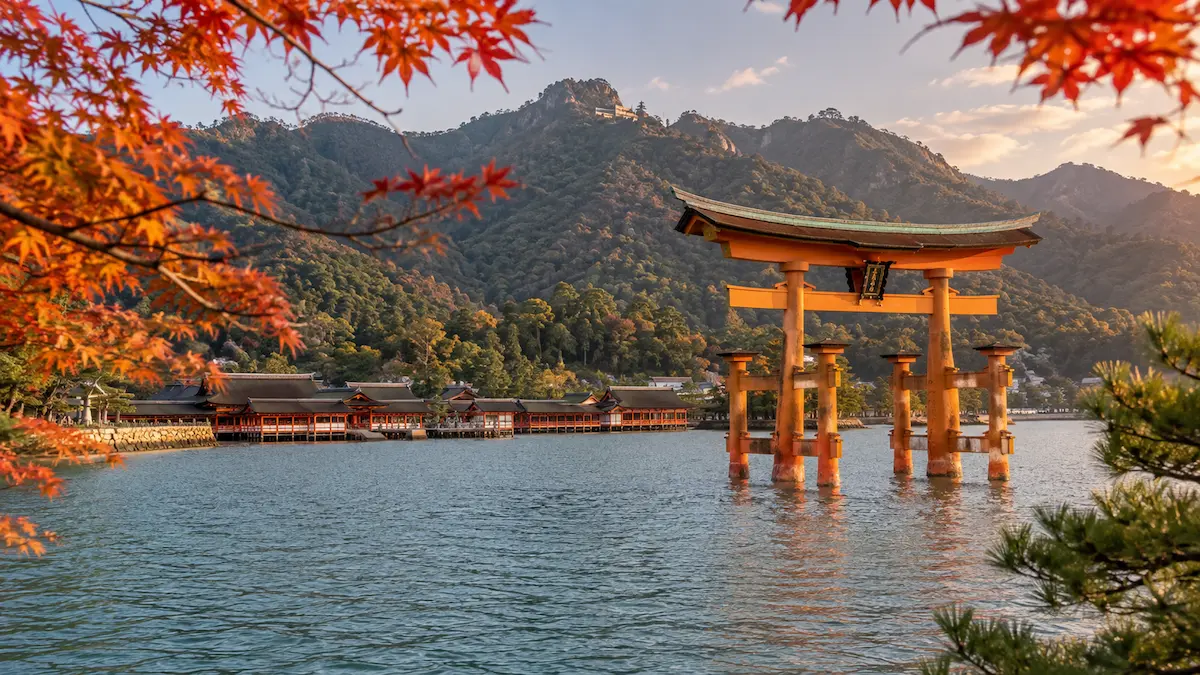
- Check the Miyajima tide timetable, not just the weather. High tide creates the classic “floating” shrine and torii view; low tide lets you walk closer to the gate. A perfectly sunny visit can still disappoint if you expected the wrong scene.
- Build a rain-switch itinerary for June and July. Pair Peace Memorial Museum, Hiroshima Museum of Art, Orizuru Tower, shopping arcades and an okonomiyaki meal with outdoor options that can move to another day.
- Do not underestimate summer nights. Pavement and concrete hold heat after sunset. An evening-first schedule helps, but it does not fully remove August humidity.
- Keep one flexible day during typhoon-prone months. Late summer and early autumn storms can interrupt ferries, trains and flights even when Hiroshima is not directly hit.
- Visit Miyajima early or stay overnight. Day-trip crowds build after mid-morning. An overnight stay gives you quieter streets after the ferries thin out and a better chance to work around tides and weather.
- Book the Peace Memorial Museum carefully. It is emotionally demanding, not a quick attraction to squeeze between lunch and a train. Give it time, and avoid planning a rushed transition straight into festive sightseeing.
- Compare total trip cost, not just the room rate. A cheap July hotel may not be good value if heat forces more taxis, café stops, laundry and shortened sightseeing days.
The Full Experience
🌸 March to April: Best for Cherry Blossoms, but Not for Bargain Hunters
Tags: Cherry Blossoms · Pleasant Walking Weather · Peak Demand · Early Booking Essential
March begins cool, with average daytime highs around 14.5°C and nights near 5.1°C. April is much easier for long walks, averaging roughly 19.8°C by day and 10.1°C at night. Rainfall is moderate rather than minimal, so a light waterproof layer still belongs in your bag.
The main attraction is obvious: cherry blossoms around Peace Memorial Park, Hiroshima Castle, Shukkeien Garden and Miyajima. When the bloom aligns with blue skies, Hiroshima looks exceptional. The problem is that “sakura season” is not a guaranteed fixed week. Warm weather can bring flowering forward; a cold spell can delay it; wind and rain can shorten the best viewing window.
Best choice within this period: late March to early April if blossoms are your priority, or mid-April if you prefer milder weather with less obsession over catching peak bloom. Mid-April can be a smarter compromise because many blossom-focused visitors have moved on, while the city remains comfortable for sightseeing.
Cost and crowd reality: blossom dates, weekends and school holidays create sharp demand. Rooms near Hiroshima Station, Hatchobori and Peace Memorial Park can sell out or become poor value. Miyajima’s main approach to Itsukushima Shrine gets especially congested from late morning.
✅ What Other Travelers Say
Travelers consistently describe spring Hiroshima as more manageable than Kyoto at its worst, especially away from the headline blossom spots. Many also find that ordinary riverside paths and neighborhood parks provide good blossom views without the same crowd density. The strongest positive feedback comes from visitors who start early and do not build the entire trip around one exact bloom date.
⚠️ The Catch (Things to Keep in Mind)
Peak bloom is expensive, weather-sensitive and brief. Pollen can also bother sensitive travelers. Pack layers because March mornings can feel wintry, while sunny April afternoons may feel surprisingly warm. Most importantly, avoid letting a non-refundable hotel deal lock you into dates chosen months before the blossom forecast exists.
🌿 May to June: Best Shoulder-Season Value, until the Rain Takes Over
Tags: Green Scenery · Better Value After Golden Week · Rising Humidity · Rainy-Season Risk
May is the underrated month in this guide. Average daytime highs are around 24.4°C, nights average 15.1°C, and gardens are lush without July’s oppressive heat. The catch is timing: early May overlaps Golden Week and the Hiroshima Flower Festival. Those dates can be festive and memorable, but they are not the quiet bargain period many international visitors expect.
The smart window is usually mid-to-late May. Domestic holiday pressure drops, daylight is generous and outdoor plans such as Miyajima, Shukkeien Garden, Onomichi or cycling routes become more comfortable. This is the best alternative for travelers who want spring-like conditions but do not care about cherry blossoms.
June is more complicated. Hiroshima’s long-term average rainfall rises to about 226.5 mm, compared with 169.8 mm in May. The regional rainy season usually begins in early June and runs into July. That does not mean rain from morning to night every day. It means forecasts change, cloudy periods last longer, humidity climbs and heavier bursts can disrupt outdoor plans.
Cost and crowd reality: June can offer useful hotel savings, especially on weekdays. However, the lowest rate is not automatically the best deal if your itinerary depends on Mount Misen views, island walks or outdoor photography. June works best for flexible travelers who are willing to swap days and enjoy museums, food and slower city exploration.
✅ What Other Travelers Say
Visitors who enjoy May often praise the balance: warm but not punishing, green landscapes and fewer blossom-season crowds. June feedback is more divided. Some travelers report only short showers and enjoy the quieter atmosphere; others lose key views to low cloud or spend too much time rearranging plans.
⚠️ The Catch (Things to Keep in Mind)
Do not confuse “rainy season” with harmless drizzle. Intense rain can occur, shoes may stay damp and humidity makes clothing slow to dry. Bring quick-drying footwear, a compact umbrella and a light rain shell. Avoid a rigid one-day Hiroshima-plus-Miyajima sprint in June; there is no recovery time if the weather turns.
☀️ July to August: Best for Summer Events, Worst for Comfortable Sightseeing
Tags: Extreme Heat · High Humidity · Summer Events · Obon Crowds · Heat-Management Required
July and August are the months most likely to be underestimated. Hiroshima’s average daily high reaches about 30.9°C in July and 32.8°C in August, with warm nights around 24–25°C. Those numbers do not fully express the experience of walking on exposed streets, waiting for ferries or climbing on Miyajima in humid air.
July is also the wettest month in Hiroshima’s 1991–2020 climate normals, averaging about 279.8 mm of rain. After the rainy season ends, conditions often switch rapidly to intense heat and sun. August is drier on average than July, but hotter. Heat can reduce a planned eight-hour sightseeing day to a few productive morning hours plus repeated air-conditioned breaks.
There are meaningful reasons to visit. August 6 brings Hiroshima’s Peace Memorial Ceremony and evening lantern floating, events of deep significance rather than entertainment. Summer also brings seasonal food, fireworks and flower events across the prefecture. Travelers must approach August 6 respectfully and understand that central Hiroshima may be busier, more emotional and subject to special arrangements.
Cost and crowd reality: summer is not uniformly cheap. Obon in mid-August drives domestic travel and can tighten trains and hotels. School holidays also increase family travel. September-like typhoon disruption can begin before summer ends, so flexible transport plans matter.
Who should choose it: travelers tied to school holidays, people comfortable in tropical humidity, and visitors willing to start around sunrise, take a long midday break and resume after 5 p.m. Anyone planning Mount Misen hiking, Shimanami Kaido cycling or nonstop urban walking should strongly consider another season.
✅ What Other Travelers Say
The feedback pattern is blunt: travelers who dislike humidity often call August their least comfortable Japan trip. Those who cope well tend to use a slow schedule, carry water and electrolytes, wear sun protection and treat convenience stores, museums and cafés as planned cooling stops rather than emergency escapes.
⚠️ The Catch (Things to Keep in Mind)
Heat exhaustion is the real risk, not just sweat or inconvenience. Do not schedule the Peace Memorial Park, Hiroshima Castle, Shukkeien Garden and Miyajima as one giant outdoor day. Avoid midday Mount Misen climbs. Choose accommodation near a streetcar stop or station, and assume you will need more breaks than you normally take.
🍁 September to November: Best Overall Weather, with a Few Crowd Spikes
Tags: Best Overall Balance · Autumn Foliage · Lower Rain in October · Typhoon Risk in Early Autumn
This is the strongest three-month block overall, but September, October and November are not equally good. September averages about 29.1°C by day and 21.1°C at night, so the first half can still feel like summer. Tropical cyclones and autumn rain systems remain a disruption risk, and holiday clusters can increase domestic travel.
October is the safest recommendation for most first-time visitors. Average highs fall to around 23.7°C, nights average 14.9°C, and the Japan Meteorological Agency describes October in the Chugoku region as a period when anticyclonic systems often bring sunny, refreshing conditions. This is excellent weather for Peace Memorial Park, Miyajima, Onomichi and long food-focused walks.
November is cooler, with average highs around 17.7°C and nights near 8.9°C. Rainfall drops significantly compared with summer. Autumn color typically strengthens during the month, with Miyajima’s Momijidani Park often most attractive from mid-to-late November. That scenery is the reward; the crowd surge is the price.
Best choice within this period: late October to mid-November for the best weather-to-crowd balance. Choose mid-to-late November if foliage matters more than crowd avoidance. Choose late September only when your dates are fixed and you can keep transport flexible.
Cost and crowd reality: October can be moderately priced but is no longer a secret. November weekends around peak color can sell strongly, especially on Miyajima. Weekday visits and early ferries make a meaningful difference. Staying overnight on the island can transform the experience once day-trippers leave.
✅ What Other Travelers Say
Travelers frequently rate autumn as the easiest season for covering both Hiroshima city and Miyajima without weather dominating every decision. The most common complaint is not temperature but crowding around the shrine approach, ropeway and Momijidani Park during peak foliage.
⚠️ The Catch (Things to Keep in Mind)
Do not assume all of September is autumn. Early September can be hot, stormy and humid. In November, sunset arrives earlier, so visitors who reach Miyajima after lunch often run out of daylight before combining Itsukushima Shrine, Daisho-in and Mount Misen. Start early or stay overnight.
❄️ December to February: Best for Lower Prices, Oysters and Quiet Sightseeing
Tags: Lower Rainfall · Quieter Attractions · Winter Oysters · Short Daylight · New Year Closures
Winter is Hiroshima’s most underrated budget season. Average daytime highs are about 12.1°C in December, 9.9°C in January and 10.9°C in February. Nights average roughly 2–4°C. Rainfall is relatively low, and clear winter air can produce crisp views over the Seto Inland Sea.
The city itself is usually manageable with a proper coat, but Miyajima and exposed waterfront areas feel colder in wind. Snow is possible, especially in inland and mountainous parts of Hiroshima Prefecture. Transport disruption is less common in central Hiroshima than in Japan’s heavy-snow regions, yet icy paths and ropeway changes can affect outdoor plans.
Winter suits travelers who prioritize the Peace Memorial Museum, food, photography and slower sightseeing. Hiroshima oysters are a major seasonal draw, and illuminations add interest in December. Hotel prices are often attractive after the New Year period, especially from mid-January through February.
Cost and crowd reality: late December through the first days of January is not a normal low-season week. Businesses may close or reduce hours, while shrines such as Itsukushima attract New Year visitors. Once that period passes, room availability generally improves.
✅ What Other Travelers Say
Winter visitors often appreciate how calm Hiroshima feels and how much easier it is to enter museums, restaurants and popular viewpoints without peak-season pressure. Many say cold rain or fog on Miyajima creates an atmospheric experience, although it is not ideal for panoramic views.
⚠️ The Catch (Things to Keep in Mind)
Short daylight punishes late starts. Mountain paths can be slippery, and some seasonal businesses or attractions operate reduced schedules. Check closures around December 29 to January 3, reserve New Year meals in advance and avoid assuming every restaurant near your hotel will be open.
So, Which Month Is Actually Best?
Best month for most travelers: October. It usually offers comfortable temperatures, improving weather stability and enough daylight for a full Hiroshima-and-Miyajima itinerary.
Best month for scenery: April for cherry blossoms or November for autumn foliage. Choose April for soft spring color and longer evenings; choose November for richer landscapes and more predictable timing.
Best month for value: May after Golden Week, early December, or February. May has the best weather among these; February tends to be quieter and cheaper but colder.
Best month to avoid crowds: February, excluding holiday weekends. The city’s major historical sights remain worthwhile, while Miyajima is much calmer than in blossom or foliage season.
Months most travelers should avoid: July and August if heat affects your stamina, and late June to July if rain would ruin an outdoor-heavy itinerary. Budget travelers should also avoid peak cherry blossom dates and Golden Week unless the seasonal experience is the main reason for the trip.
Key FAQs
What is the best time to visit Hiroshima and Miyajima for good weather?
Late October to mid-November is the strongest overall window. Temperatures are comfortable for walking, rainfall is lower than in summer, and autumn color begins to improve. Mid-to-late May is the best spring alternative after Golden Week.
Is Hiroshima worth visiting during cherry blossom season?
Yes, but only if blossoms are a genuine priority. The scenery around Peace Memorial Park, Hiroshima Castle and Miyajima can be excellent, yet accommodation costs and crowds rise around peak bloom. Book cancellable rooms early and do not assume the flowers will peak on the same dates every year.
How bad is the rainy season in Hiroshima in June?
June is not guaranteed to be a washout, but it is less predictable. Hiroshima averages about 226.5 mm of June rain, humidity rises and heavy bursts can affect ferries, views and hiking. A flexible two- or three-day plan works much better than a rigid one-day dash.
Final Verdict and Your Next Step
For the best balance of weather, crowd control and travel value, book Hiroshima for late October to mid-November or mid-to-late May. Choose late March to early April only when cherry blossoms matter enough to justify higher prices and uncertain bloom timing. Choose winter for lower costs and quieter sightseeing. Treat July and August as specialist months: possible, but not sensible for travelers who dislike humid heat or plan to walk all day.
Once your dates are fixed, reserve accommodation early—especially for cherry blossom weeks, Golden Week, August 6, Obon and peak autumn weekends. Compare refundable rates on Agoda’s Hiroshima hotel page and Booking.com’s Hiroshima listings. For guided visits, passes and day tours, check Hiroshima activities on Klook and Hiroshima experiences on KKday.
Data note: Temperature, rainfall and humidity figures are based on the Japan Meteorological Agency’s 1991–2020 climate normals for Hiroshima. Seasonal timing and events can change yearly, so recheck official forecasts, national holiday dates, ferry notices and attraction hours before travel.