
💡 Key Takeaways
- Busan is much more spread out than it looks on a map. Haeundae, Gamcheon, Songdo and the airport sit in very different parts of the city, so grouping sights by area matters more here than squeezing in one more attraction.
- For most first-time visitors, Seomyeon is the easiest all-round base, while Haeundae is the better choice if the beach is the point of the trip. A pretty beachfront hotel can become a daily transport tax if most of your plans are in old Busan.
- Do not build your itinerary around viral attractions alone. The Sky Capsule, Gamcheon Culture Village and Jagalchi Market can all be worthwhile, but each has a catch: advance booking, steep lanes, queues, weather dependence or prices that make them poor fits for some travelers.
A good Busan travel guide for first-time visitors should start with the problem nobody notices until they arrive: Busan is not a compact sightseeing city. The famous places are scattered along a long coastline and across hilly neighborhoods, and a route that looks reasonable on Instagram can turn into a day of transfers, uphill walks and standing on buses. Add a suitcase, summer humidity or a late arrival at Gimhae Airport, and a “simple” hotel choice can cost you hours.
The fix is not to see less. It is to plan geographically. Treat Busan as several different mini-destinations: central Seomyeon, the east-coast Haeundae side, Gwangalli, the old downtown around Nampo and Jagalchi, hillside Gamcheon, and the Songdo coast. Once you stop bouncing between east and west, the city becomes far easier, cheaper and more enjoyable.
The 1-Minute Cheat Sheet
- Best trip length: Three full days is the practical minimum for a first visit; four days feels much less rushed. Two days works only if you accept that you will skip an entire side of the city.
- Best first-time base: Seomyeon for transport, nightlife and balanced access; Haeundae for beach lovers; Nampo for markets and old Busan; Gwangalli for evening atmosphere and bridge views.
- Best arrival strategy with luggage: Use the airport limousine when its timetable matches your flight, or take a taxi if you are a couple/family with large bags. The light rail is cheap, but transfers become tiring after a flight.
- Transit card: Tmoney and Cashbee can be used on Busan subway and buses. Keep enough balance for transfers and small journeys.
- Navigation: Save Korean place names and addresses before you go. Local map apps such as Naver Map or KakaoMap are often more useful for detailed public-transport routing in Korea.
- Most important booking: If the Haeundae Sky Capsule is a must-do, reserve it before you build the rest of that day. The official operator currently releases future inventory on a schedule and notes that on-site tickets are limited and can sell out early.
- Biggest itinerary mistake: Gamcheon + Songdo + Haeundae + Haedong Yonggungsa + Gwangalli in one public-transport day. It is technically possible to touch them; it is not a pleasant first-time Busan day.
- Best money-saving rule: Pay for views you cannot get elsewhere. If you already ride the Sky Capsule, you may not need every observation deck and cable car unless you genuinely enjoy scenic rides.
Top Survival Tips
- Choose your hotel by station access, not by neighborhood name alone. A hotel advertised as “Haeundae” or “Gwangalli” can still mean a long walk to the metro. With luggage, hills, rain or summer heat, a 12-minute walk repeated twice a day becomes a real cost. Check the exact walking route from the station entrance, not just the straight-line distance.
- Do not underestimate east-west travel. Haeundae and Gamcheon are on opposite sides of the city. Build one east-coast day and one old-town/west-coast day instead of crossing Busan repeatedly.
- The airport train is not a one-seat ride to the tourist districts. Gimhae Airport is served by the Busan-Gimhae Light Rail. The airport’s official transport page shows transfers to Metro Line 2 at Sasang and Line 3 at Daejeo. For Seomyeon or Haeundae, the Sasang transfer is the usual rail logic, but it is less fun with heavy luggage.
- Check the airport limousine before defaulting to the subway. As of the latest official Gimhae Airport information checked in August 2026, limousine services include routes toward Seomyeon/Bujeon and Haeundae/Gijang. Schedules and fares can change, so verify them again close to travel.
- Know when a taxi is actually the budget-smart choice. Gimhae Airport publishes indicative taxi times and fares to major districts. If two or three people are sharing, the difference versus multiple transit fares may be worth it for a door-to-door ride, especially late at night or with large bags.
- Do not make the Sky Capsule your only plan for a Haeundae day. It is scenic, slow and popular. Even with a reservation, queues can happen. Pair it with Mipo, Cheongsapo, the Beach Train, Haeundae Beach or Songjeong so waiting time does not wreck the day.
- Gamcheon is a real residential neighborhood, not a theme park. The official tourism guidance asks visitors to keep noise down and respect residents. The lanes are steep and stair-heavy, so it is a poor “must-do” for anyone with limited mobility just because social media says it is iconic.
- At Jagalchi, decide whether you want the market experience or a seafood meal. They are not the same thing. Browsing is easy; eating can become expensive depending on seafood type, weight, preparation and restaurant charges. Ask the total expected price before committing.
- Be ruthless about weather-dependent sights. Songdo cable car, coastal walks, observation decks and ocean-view rides lose much of their value in heavy rain, fog or strong wind. Keep at least one indoor option—Spa Land, a department store, museum, café area or aquarium—for bad weather.
- Do not overpack day trips. Haedong Yonggungsa is beautiful but far east of central Busan. Taejongdae is also time-consuming from the main tourist zones. Both are worthwhile for the right traveler, but neither deserves automatic inclusion in a short first trip.
Getting from Gimhae Airport Without Dragging Your Suitcase Across Busan
For Seomyeon: The most convenient public option is often the airport limousine if your arrival matches the timetable. As of the official airport information checked in August 2026, the Seomyeon/Bujeon limousine is listed at KRW 6,000, accepts credit card payment, and runs on a published timetable rather than a turn-up-and-go frequency. The cheaper rail alternative is the light rail from Airport Station to Sasang, then Metro Line 2 to Seomyeon. With one carry-on this is fine; with two large cases during rush hour, it is noticeably less pleasant.
For Haeundae: The airport currently lists a Haeundae/Gijang limousine route, which can save a long rail transfer when it runs at a useful time. The August 2026 airport page lists the fare at KRW 9,500 with credit card payment. The rail route means light rail to Sasang and then a long Line 2 journey east. If you arrive exhausted, have children, or are sharing with companions, a taxi can be a sensible splurge.
For Nampo/Jagalchi: Public transport usually requires more than one segment, while the official airport taxi guide gives Nampo/Jagalchi as one of its major-destination examples. If your hotel is a few minutes from a Line 1 station and you are traveling light, transit is reasonable. If not, door-to-door transport avoids an awkward arrival.
Reality check on taxi estimates: Gimhae Airport’s published guide currently shows approximate standard-taxi examples of around 45 minutes to Seomyeon, 60 minutes to Nampo/Jagalchi, and 70 minutes to Haeundae or Gwangalli in normal assumptions. Busan traffic can change those times significantly, so treat them as planning figures, not promises.
A First-Timer Busan Itinerary That Actually Works
Day 1 — Seomyeon + Jeonpo: Check in, get your transit card sorted, explore Seomyeon’s underground shopping and food streets, then walk toward Jeonpo for cafés and dinner. Keep the first day easy instead of hauling yourself to the coast after a flight.
Day 2 — Haeundae + Mipo + Cheongsapo + Gwangalli: Do Haeundae Beach in the morning, ride the Sky Capsule or Beach Train around your reserved time, stop at Cheongsapo, then head to Gwangalli toward sunset. This keeps the day on the eastern side of Busan.
Day 3 — Gamcheon + Nampo + Jagalchi + optional Songdo: Visit Gamcheon earlier in the day before the lanes get busier, descend toward old Busan for lunch and markets, then choose either Songdo for a cable-car sunset or Nampo/BIFF/Bupyeong for a slower evening. Trying to do both properly can feel rushed.
Day 4 — Choose one, not three: Haedong Yonggungsa and the Gijang coast for temples and sea views; Spa Land and Centum City for a recovery day; Taejongdae for nature; or a slower second beach day. A fourth day is where Busan starts to feel like a holiday rather than a logistics challenge.
The Full Experience
📍 Seomyeon & Jeonpo: Best for First-Time Convenience, Food and Transport
Tags: 🚇 Metro hub · 🍜 Local food · ☕ Cafés · 🌙 Nightlife · 🧳 Easy base
If you want the least complicated first trip, Seomyeon is difficult to beat. Lines 1 and 2 meet here, which makes it a practical compromise between old Busan to the south-west and the Haeundae/Gwangalli side to the east. It is also lively late, so you can come back after sightseeing and still find food without planning your evening around last orders in a quiet resort district.
Jeonpo, just beside Seomyeon, changes the mood. Former workshop lanes and side streets now mix cafés, small restaurants, bars and design-led shops. It is not a single “sight” you check off; it works best as an unstructured evening area.
Best use of your time: Stay within roughly a 5–8 minute walk of Seomyeon Station if transport is your priority. Spend your first or last evening here rather than using daylight hours on shopping malls unless the weather is bad.
✅ What Other Travelers Say
Travelers repeatedly value Seomyeon for convenience: food is easy to find, the metro connections are strong, and hotel choice covers everything from simple business hotels to higher-end stays. It tends to win on practicality rather than scenery.
⚠️ The Catch (Things to Keep in Mind)
Seomyeon does not deliver the “wake up to the sea” fantasy. Streets can be crowded and noisy at night, and underground exits can be confusing the first time. If your dream trip is sunrise walks on Haeundae Beach, choosing Seomyeon only because it is central may feel too urban.
📍 Haeundae, Mipo & Cheongsapo: Best for Classic Busan Sea Views and the Sky Capsule
Tags: 🏖️ Beach · 🚃 Sky Capsule · 🌊 Coastal views · 🏨 Resort hotels · 📸 First-trip icon
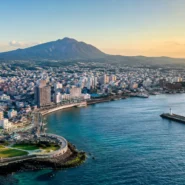
Haeundae is the Busan image most first-time visitors already have in their head: a broad beach, high-rise skyline, cafés, hotels and the coast stretching east toward Mipo, Cheongsapo and Songjeong. It is touristy, but that is not automatically a bad thing. The area is easy to enjoy, has plenty of English-friendly tourism infrastructure, and gives you a real seaside-city feeling.
The Haeundae Blueline Park is the headline attraction. The Sky Capsule runs between Mipo and Cheongsapo, while the Beach Train covers more of the coastal route. The important difference is experience: the capsule is private, elevated and photo-friendly; the train is more transport-like, carries more people, and can be the better value if your priority is moving along the coast rather than getting the viral shot.
Booking reality: The official operator currently states that future ticket inventory opens on a scheduled weekly basis and that only a small quantity of on-site tickets is sold first-come, first-served. If the capsule is non-negotiable, book it first and fit Haeundae around the reservation—not the other way around.
2026 official fare snapshot: The operator currently lists the Sky Capsule at KRW 50,000 for a two-person capsule, KRW 55,000 for three and KRW 60,000 for four. Beach Train fares are charged per person and currently range from KRW 8,000–10,000 for a one-ride ticket depending on the station, KRW 14,000 for two rides and KRW 16,000 for an all-stops pass. These fares were revised in 2026, so check the official page again before travel.
Smart route: Start at Haeundae Beach, walk to Mipo, take the capsule or train toward Cheongsapo, stop for the coastal scenery, then continue toward Songjeong only if you have time. Do not rush back across town for Gamcheon the same afternoon unless you enjoy commuting more than sightseeing.
✅ What Other Travelers Say
The consistent praise is straightforward: the coastline is photogenic, the capsule feels special for couples and first-timers, and Haeundae has enough restaurants and hotels to make a full day easy. Large booking platforms show the Blueline Park products as among Busan’s most-booked activities.
⚠️ The Catch (Things to Keep in Mind)
The Sky Capsule is one of Busan’s most over-scheduled attractions. It moves slowly, popular time slots disappear, and a reservation does not guarantee zero waiting. If the weather is grey, the premium over the Beach Train can feel less worthwhile. Also, Haeundae is far from Gamcheon and Nampo, so a beachfront hotel adds travel time on old-town days.
📍 Gwangalli & Millak: Best for Night Views, Drinks and a Slower Beach Evening
Tags: 🌉 Gwangan Bridge · 🌙 Night views · 🍻 Bars · 🏖️ Beach · 💑 Couples
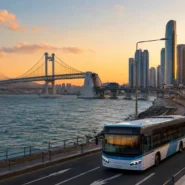
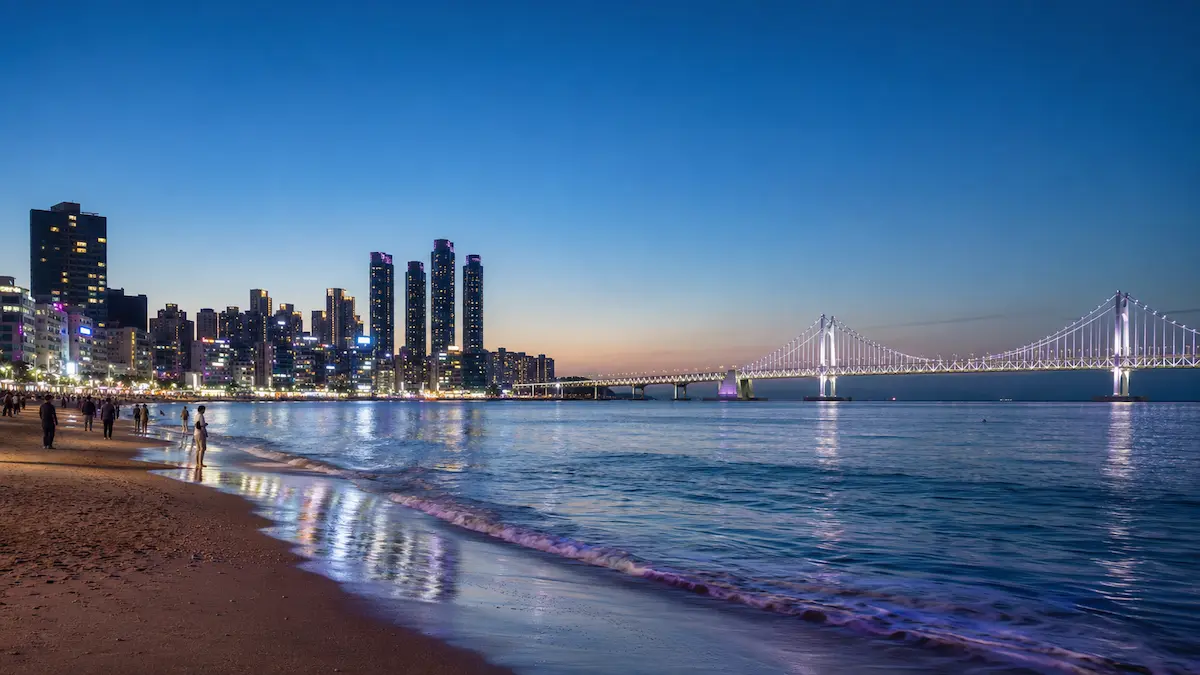
Gwangalli makes the strongest case for being Busan’s best evening neighborhood. The beach faces Gwangan Bridge, which turns the shoreline into a city-light panorama after dark. Instead of “doing” ten attractions, the pleasure here is simple: walk the promenade, eat, have a drink, sit on the sand and let the view do the work.
It is especially good for couples and travelers who find Haeundae a little too resort-like. Millak and the streets behind the beach add cafés, seafood and nightlife without the pressure to follow a sightseeing checklist.
Best timing: Arrive before sunset, walk the beach in daylight, eat after dark and stay long enough to see the bridge lit up. If a scheduled drone show is important to you, check the official event status shortly before your visit because weather and operational changes can affect performances.
✅ What Other Travelers Say
Visitors commonly describe Gwangalli as more atmospheric at night than during the day. The bridge view is the reason to come, and beachfront cafés, bars and yacht cruises make it easy to turn one sunset into an entire evening.
⚠️ The Catch (Things to Keep in Mind)
The beach itself is not directly attached to a metro platform, so check the real walking distance from your hotel. For pure sightseeing efficiency, Gwangalli is not as useful a base as Seomyeon. It is also easy to overspend on view cafés where you are mostly paying for the window, not the coffee.
📍 Nampo, Jagalchi & BIFF Square: Best for Markets, Street Food and Old Busan Energy
Tags: 🐟 Seafood · 🍢 Street food · 🛍️ Markets · 🎬 BIFF · 🚶 Walkable old downtown
Nampo and Jagalchi feel very different from Haeundae. The appeal is less polished and more street-level: fish stalls, Gukje Market, BIFF Square, Bupyeong Kkangtong Market, alley food, older commercial streets and harbor-city history. If you want Busan to feel like a port city rather than a beach resort, this side matters.
Jagalchi Market is worth seeing even if you are not a seafood obsessive. The official tourism information lists it as one of Busan’s major traditional markets and notes that prices vary by store. That last point matters. Fresh seafood can be excellent, but “market” does not automatically mean “cheap.”
Best strategy for seafood: Before you order, confirm the seafood price, weight if relevant, preparation method, and whether separate cooking or table charges apply. If the explanation is unclear, walk away. There are many other meals in the neighborhood.
Best pairing: Nampo/Jagalchi works naturally with Gamcheon in the daytime and Songdo later. It does not pair naturally with Haeundae unless you are willing to spend a large chunk of the day crossing Busan.
✅ What Other Travelers Say
Travelers who enjoy markets and local food often prefer this part of Busan because it feels busier, older and less resort-oriented. It is also a useful base for budget-minded visitors who want easy access to Line 1 and the western attractions.
⚠️ The Catch (Things to Keep in Mind)
Jagalchi can disappoint travelers expecting a bargain seafood feast with transparent fixed pricing everywhere. It is better approached as an experience first and a meal second. Some streets quiet down earlier than Seomyeon, and the area is less convenient for repeated trips to Haeundae and Gijang.
📍 Gamcheon Culture Village: Best for Colorful Hillside Views—If You Can Handle the Slopes
Tags: 🎨 Art village · 📸 Photos · ⛰️ Steep lanes · 🏘️ Residential area · 🌈 Colorful rooftops
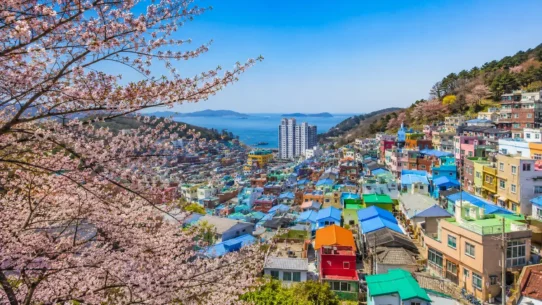
Gamcheon is beautiful from the right angles: pastel homes stacked on a hillside, narrow lanes, art installations and viewpoints over old Busan. It also has a deeper history than the photo spots suggest. The neighborhood grew through Busan’s refugee history and later developed as an arts-focused village.
For a first visit, 90 minutes to two hours is usually enough unless you enjoy slow photography, workshops or café hopping. The most efficient approach is to arrive near the upper part of the village, walk gradually through the lanes, and then continue toward Nampo rather than retracing every step uphill.
Mobility warning: The official Visit Busan directions involve a metro-plus-local-bus approach, and the village itself contains slopes and stairs. Travelers with knee problems, wheelchairs, heavy strollers or very young children should not treat Gamcheon as compulsory.
✅ What Other Travelers Say
People love the views, color and small photo discoveries, especially when they arrive early. The village remains one of Busan’s most recognizable first-trip stops and is frequently included in popular city tours.
⚠️ The Catch (Things to Keep in Mind)
This is the Busan attraction most likely to feel overhyped if you dislike crowds, staged photo spots or steep walking. It is also somebody’s neighborhood. Keep voices down, do not block doorways, and do not wander into private spaces for a better photo. If you only have two days and mobility is limited, skipping Gamcheon is a perfectly sensible decision.
📍 Songdo Beach & Marine Cable Car: Best for a Half-Day Coastal Add-On Near Old Busan
Tags: 🚡 Cable car · 🌅 Sunset · 🌊 Sea views · 👨👩👧 Families · 📍 Easy add-on from Nampo
Songdo is a useful alternative for travelers who want a coastal ride without traveling all the way back to Haeundae. The Busan Air Cruise crosses the water between the Songdo side and Amnam Park, with standard and crystal-floor cabins. The operator notes that service can be affected by weather.
Because Songdo sits much closer to Nampo and Jagalchi than Haeundae does, it makes geographical sense on an old-Busan day. A taxi from the Jagalchi/Nampo area can save time compared with figuring out a final local-bus segment, especially for families.
Is the crystal cabin worth it? Only if looking down through a transparent floor matters to you. The sea and coastline are visible from the regular cabin too. Paying extra for the floor is an experience upgrade, not a better transport route.
✅ What Other Travelers Say
Visitors generally like Songdo for the simple combination of beach, coastal views and cable car in one compact stop. Families also find it easier to manage than a multi-transfer sightseeing day.
⚠️ The Catch (Things to Keep in Mind)
If you already booked the Haeundae Sky Capsule and your time is limited, Songdo can feel like another paid scenic ride rather than a must-see. It is also highly weather dependent. On a foggy or rainy day, save the money and stay around the markets or choose an indoor attraction.
Where Should First-Time Visitors Stay in Busan?
Choose Seomyeon if: you want the easiest transport balance, plan to visit both east and west Busan, like having food late at night, or are staying only two or three nights.
Choose Haeundae if: the beach is central to the trip, you want a resort-style stay, you are happy to spend more time traveling to old Busan, or you plan multiple east-coast activities.
Choose Nampo if: markets, Gamcheon, Songdo and old Busan matter more than nightlife and beach-resort atmosphere. It can also be a good value area if you choose a hotel close to Line 1.
Choose Gwangalli if: you care more about evenings, bridge views, dates and beach bars than maximum transit efficiency. Check the exact walk to the metro before booking.
Do you need to split hotels? Usually no. For a three- or four-night first trip, changing hotels often wastes more time than it saves. Consider a split stay only if you are staying five nights or longer and genuinely want two different experiences, such as two nights in Seomyeon plus three nights on the Haeundae coast.
What Is Overrated in Busan—and What Is Still Worth It?
Sky Capsule: Worth it for couples, first-timers and photographers who value the private ride. Overrated for solo budget travelers who mainly want coastal transport; the Beach Train can make more sense.
Gamcheon Culture Village: Worth it if you enjoy photography, art alleys and hillside city views. Overrated if you dislike crowds, staged photo stops or steep walking.
Jagalchi Market seafood meal: Worth it if you understand how the seafood pricing works and want the market-to-table experience. Overrated if your priority is simply eating excellent seafood at the lowest possible price.
Haeundae Beach: Not overrated as a neighborhood, but it is often over-scheduled. You do not need to stack the aquarium, X the SKY, Dongbaekseom, Sky Capsule, Beach Train, Cheongsapo and Songjeong into one day. Pick the experiences you actually care about.
Taejongdae on a short trip: Beautiful, but not essential for everyone. If you have only two or three days, the transport time can be better spent on a geographically tighter itinerary unless coastal nature is one of your top priorities.
Budget Tips That Save Real Money
Busan is not difficult to do on a sensible budget if you control the two categories that expand fastest: paid scenic attractions and seafood. Metro and bus travel is relatively manageable, and ordinary Korean meals can be much cheaper than eating every meal on a beachfront strip.
Stay one or two blocks away from the most famous beach frontage, eat at local streets behind the tourist zone, and decide in advance which paid view is your priority. A traveler who buys a Sky Capsule, observation deck, yacht cruise, cable car and aquarium in the same 48 hours can spend more on “things to look at the sea from” than on food.
For seafood, never assume a market display equals a fixed restaurant price. Ask before ordering. For cafés, remember that Gwangalli and Haeundae views often come with a location premium. Buy one scenic drink because you want the seat, not because every coffee stop needs an ocean view.
Key FAQs
How many days do you need in Busan for a first-time visit?
Three full days is the minimum I would recommend for a balanced first trip: one east-coast day, one old-Busan/west day and one flexible day for Seomyeon, Gwangalli or a farther attraction. Four days is better if you want Haedong Yonggungsa, Taejongdae, Spa Land or a slower beach pace without rushing.
Where is the best area to stay in Busan for first-time visitors: Seomyeon or Haeundae?
Seomyeon is better for most first-timers because Lines 1 and 2 meet there and it reduces the pain of visiting both sides of the city. Haeundae is better when the beach is a major part of the trip and you are willing to accept longer travel to Nampo, Jagalchi and Gamcheon. If you are staying only two nights, Seomyeon usually gives you more flexibility.
Is the Busan Sky Capsule worth it, and do you need to book in advance?
It is worth it if you want a private, slow coastal ride and the experience itself matters to you. It is less compelling if you are on a tight budget or mainly need transportation along the coast. Advance booking is strongly recommended: the official Haeundae Blueline Park states that online tickets are released on a schedule and that only a limited number of on-site tickets are sold, which can sell out early.
Final Verdict and Your Next Step
Your first Busan trip becomes much easier once you stop treating the city like a checklist. Pick one practical base, group the east coast together, group old Busan together, and leave buffer time around the attractions that involve reservations or queues. That single planning rule will save more time than any “secret” shortcut.
For a two-night trip: stay in Seomyeon, choose either Haeundae/Gwangalli or Gamcheon/Nampo/Songdo as your major sightseeing side, and accept that you will not see everything.
For a three- to four-night first trip: Seomyeon remains the easiest all-round base. Give Haeundae its own day, old Busan its own day, and keep the remaining time flexible for Gwangalli, a spa, a temple or bad-weather recovery.
For couples: Haeundae or Gwangalli delivers the best evening atmosphere, but check station distance carefully before booking a romantic hotel that becomes annoying every morning.
For families and travelers with heavy luggage: prioritize direct airport transport, elevators and short station walks. Be realistic about Gamcheon’s slopes and do not force local-bus transfers simply to save a small amount of money.
For budget travelers: base yourself near Seomyeon or Nampo, use metro/bus for most journeys, limit paid coastal rides to the one you care about most, and spend your food budget in local neighborhoods rather than only on the beachfront.
Busan accommodation and the most popular timed attractions can tighten up on weekends, holidays and major event periods. Once your flights are confirmed, book a cancellable hotel and reserve any must-do timed ride early. You can compare Busan hotels on Agoda or Booking.com.
If the Haeundae Sky Capsule is on your must-do list, check live inventory before planning the rest of your east-coast day: Book the Haeundae Sky Capsule / Beach Train on Klook or check Sky Capsule tickets on KKday. For broader sightseeing options, you can also browse Busan activities on Klook or browse Busan activities on KKday.
Planning Information Checked for This Guide
This guide was fact-checked on 7 August 2026 using current information from the official Gimhae International Airport transport pages, Busan Transportation Corporation, Visit Busan, Haeundae Blueline Park and Busan Air Cruise, plus current booking pages used to confirm purchasable attraction links. Operating hours, fares, timetables and ticket-release rules can change, so re-check official pages shortly before travel.
Official references: Gimhae International Airport transport; Busan-Gimhae Light Rail information; Visit Busan; Haeundae Blueline Park; Busan Air Cruise.