
💡 Key Takeaways
- Do not plan Jeju like Seoul. There is no subway or island-wide rail network. Buses are useful for point-to-point travel, but stacking three or four rural attractions by public transport can turn one sightseeing day into a transfer marathon.
- Keep one Jeju City hotel base if you hate moving luggage. This itinerary groups the island into city, east, Hallasan and west/southwest days, so you can leave your suitcase in one place instead of checking in and out repeatedly.
- Give Hallasan its own day. A summit hike via the reservation-controlled upper sections of Seongpanak or Gwaneumsa is not something to squeeze between two other headline attractions.
- Old Manjanggul advice is now outdated. The lava tube reopened on May 30, 2026 after a long safety-related closure, so current travelers can include it again, subject to normal operating conditions.
- Pre-book only where it actually helps. Hallasan summit access needs an official reservation; many famous Jeju sights are free or simple on-site purchases. Do not buy a “skip-the-line” product for an attraction that has no meaningful line to skip.
Information checked on August 7, 2026. Operating hours, weather closures, trail access and ticket rules can change, so always re-check the linked official source before travel.
A good Jeju City 5-Day Itinerary is less about collecting the maximum number of pins and more about avoiding the island’s biggest first-timer mistake: underestimating travel time. On a map, Jeju looks compact. In practice, a “quick” stop on the east coast, a café on the west coast and a sunset in the south can leave you spending half the day in a car or waiting for bus connections.
The route below deliberately uses Jeju City as a practical base, then sends you in one direction at a time. It also leaves room for weather, tired legs and the fact that some famous places are far less rewarding when you arrive at the same time as every tour bus. If you are driving, the plan is straightforward. If you are not, the same geographic logic still applies: use public buses for simple point-to-point days and consider a regional day tour or private charter for the multi-stop east and west days.
The 1-Min Cheat Sheet
- Dongmun Traditional Market — Best for: arrival-night food and souvenir browsing. Suggested time: 1.5–2 hours. Ticket/transport: no admission ticket; easiest by city bus or short taxi from central Jeju City. Stall hours vary, so do not assume every vendor follows one market-wide timetable.
- Yongduam (Dragon Head Rock) — Best for: a quick coastal stop after landing, not a half-day attraction. Suggested time: 30–45 minutes. Ticket/transport: no advance ticket; taxi is usually the low-friction option from the airport or downtown.
- Manjanggul Lava Tube — Best for: geology, UNESCO context and a cooler break on a hot east-coast day. Suggested time: 1.5 hours including the accessible out-and-back section. Ticket/transport: paid entry, generally purchased on site; check the current closure day and last-admission time before leaving Jeju City.
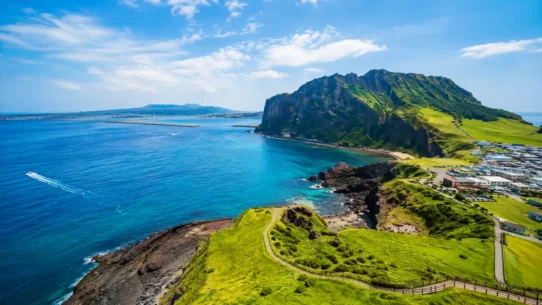
- Seongsan Ilchulbong — Best for: a short but steep volcanic-cone climb and broad coastal views. Suggested time: 1.5–2 hours. Ticket/transport: the summit route is paid while a lower route is free; on-site ticketing is usually sufficient. Express buses reach the Seongsan area, but a car/taxi/organized tour works better when combining several east-coast stops.
- Seopjikoji — Best for: coastal walking and open scenery. Suggested time: 1–1.5 hours. Ticket/transport: no attraction ticket, though parking is charged; the exposed paths can feel much less pleasant in strong wind or rain.
- Hallasan National Park — Best for: serious hikers or travelers who want one major nature day. Suggested time: most of a day for a summit hike. Ticket/transport: upper sections of Seongpanak and Gwaneumsa require an official reservation; several shorter courses do not. Start early and do not assume parking will be available at Seongpanak.
- O’Sulloc Tea Museum — Best for: tea lovers, a weather-flexible break and easy west/southwest routing. Suggested time: 1–1.5 hours. Ticket/transport: general admission is free; paid experience programs are separate. It is much more sensible as part of a west/southwest loop than as a standalone cross-island mission.
- Hyeopjae Beach — Best for: a slower west-coast afternoon and sunset. Suggested time: 1.5–2.5 hours. Ticket/transport: free beach access; seasonal swimming and safety-operation hours matter more than advance tickets. A car or west-coast bus works, but do not schedule a tight airport departure immediately afterward.
The Most Practical 5-Day Itinerary
Day 1: Jeju City Arrival — Yongduam + Old Downtown + Dongmun Market
Recommended start: Around 2:00 p.m. after dropping your luggage at the hotel. If your flight arrives later, cut Yongduam first rather than rushing dinner.
- Stop 1 — Yongduam: 30–45 minutes. Treat it as an airport-adjacent coastal photo stop. It is famous, but it does not justify a long detour later in the trip.
- Stop 2 — Yongyeon/nearby coast if weather is pleasant: 20–30 minutes. Walk only if you still feel fresh after flying.
- Stop 3 — Dongmun Traditional Market: 1.5–2 hours. Browse first, then eat. The current Visit Jeju listing gives roughly 07:00–21:00 as an average for market stores, while the night-market schedule starts later and can finish early if vendors sell out.
Best transport between stops: Taxi is the easiest arrival-day choice because the distances are short and you avoid learning the bus network while carrying day bags. Once you reach the old downtown area, walk between market streets rather than taking another vehicle for every few blocks.
Lunch/rest zone: If you land before lunch, eat near your hotel or in central Jeju City before sightseeing. Do not build your whole first afternoon around one viral market stall.
What to cut if tired: Skip Yongyeon first, then Yongduam. Dongmun is the more useful evening stop because it combines dinner, groceries and souvenirs.
Rainy-day alternative: Make this a covered-market and central-city day. Pair Dongmun with the underground shopping area rather than chasing exposed coastal viewpoints in bad weather.
Best evening area: Dongmun and Jeju old downtown. If you prefer bars and modern restaurants, return to the Yeondong/Nohyeong side of the city after dinner.
Why this beats the common influencer route: Many first-day plans send travelers straight to a distant beach because “Jeju starts now.” That sounds exciting until a delayed flight leaves you racing sunset. This version keeps Day 1 close to the airport, absorbs delays and avoids dragging luggage across the island.
Day 2: East Jeju — Manjanggul + Seongsan Ilchulbong + Seopjikoji
Recommended start: Leave Jeju City around 7:30–8:00 a.m. If driving, aim to reach Manjanggul around opening time. If using buses, simplify the day or use an east-region tour rather than forcing every stop with multiple transfers.
- Stop 1 — Manjanggul Lava Tube: About 1.5 hours. The cave reopened on May 30, 2026 after a safety-related closure lasting more than two years. The visitor section is only part of the much longer lava-tube system, and the floor can be damp and uneven. Bring a light layer even in summer.
- Stop 2 — Lunch in the Seongsan area: 60–75 minutes. Eat before climbing rather than buying a heavy meal and immediately attacking the stairs.
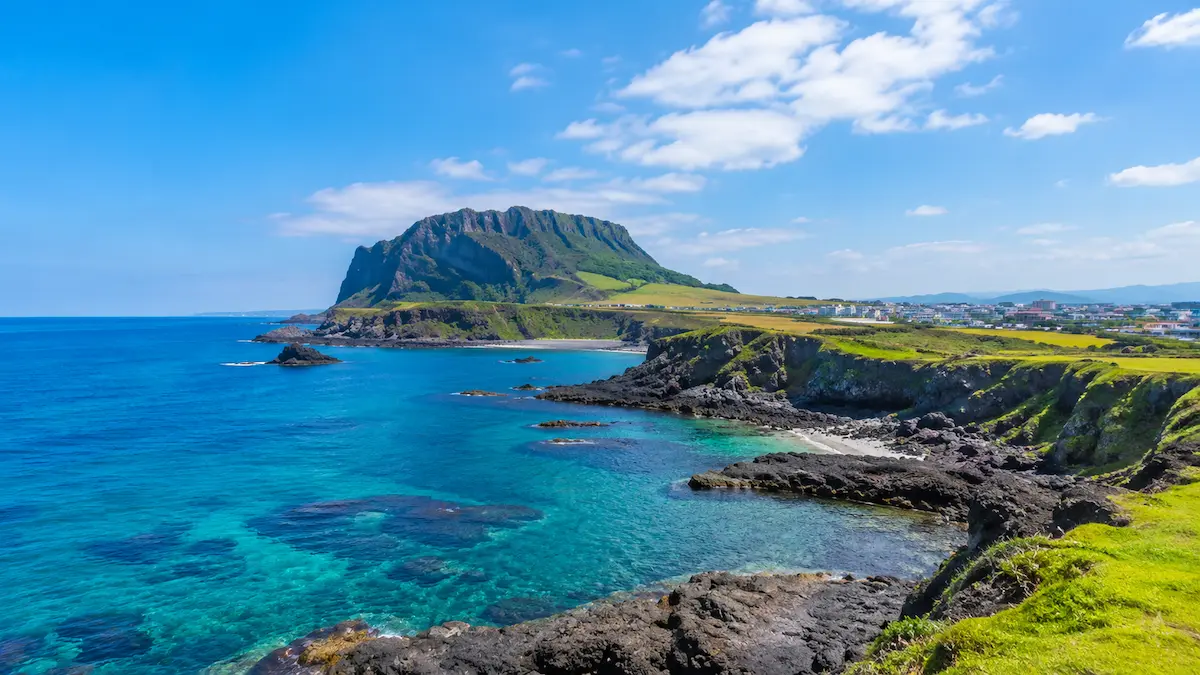
- Stop 3 — Seongsan Ilchulbong: 1.5–2 hours. The summit climb is short by hiking standards but contains sustained stairs. Current individual admission for the paid route is KRW 5,000 for adults; a lower route is free.
- Stop 4 — Seopjikoji: 1–1.5 hours. Save this for later afternoon when you can walk at a relaxed pace. If the wind is punishing or your knees are done after Seongsan, this is the easiest major stop to cut.
- Optional on the return: Hamdeok only if you still have daylight and energy. Do not turn it into a compulsory fourth headline attraction.
Best transport between stops: A rental car, taxi/private charter or region-focused day tour is markedly more efficient for this specific three-stop cluster. Jeju’s bus system has useful trunk routes — including eastbound express services — but the problem is not getting to eastern Jeju; it is connecting multiple rural attractions without waiting or backtracking.
Lunch/rest zone: Seongsan village. It has enough food options to let you eat before the climb without adding another detour.
What to cut if tired: Seopjikoji. Keep Manjanggul and Seongsan because they provide more distinct experiences; the coastal walk is the easiest to move to another trip.
Rainy-day alternative: Keep Manjanggul only if it is officially open and conditions are safe, but remember that wet cave flooring can be slippery. Replace long exposed coastal walks with an indoor attraction in the east rather than driving to western Jeju just because it is raining.
Best evening area: Return to Jeju City for dinner. Resist the temptation to add a south-coast night market; that creates exactly the cross-island zigzag this itinerary is designed to prevent.
Why this beats the common influencer route: A popular mistake is combining Seongsan sunrise, Udo, Manjanggul, Seopjikoji and Hamdeok in one “ultimate east day.” Ferry timing, parking, meals and queueing make that brittle. This version leaves Udo out unless you give it a substantial half-day of its own.
Day 3: Hallasan — One Big Hike, Not Three Attractions Pretending to Be One Day
Recommended start: Around 5:45–6:30 a.m. for a summit day, depending on your reserved entry window, transport and season. For a shorter trail, you can start later, but early still gives you more weather margin.
- Option A — Summit-focused day: Use Seongpanak and/or Gwaneumsa according to current trail access and your reservation. Budget roughly a full daylight day, not a casual morning. Official rules require reservations for the upper sections leading toward Baeknokdam on these routes.
- Option B — First-timer friendly alternative: Choose one of the non-reservation courses such as Yeongsil or Eoseungsaeng if you want mountain scenery without making the summit the price of admission to enjoying Jeju.
- Food: Carry lunch, water and snacks. Official Hallasan guidance warns that there are no stores on the mountain.
- After the hike: Return to Jeju City, shower, eat an early dinner and stop scheduling things.
Best transport: Public buses can be smarter than driving for a summit route, especially because Seongpanak parking is limited and official guidance recommends bus access. A taxi can make sense for a very early start if your hotel-to-trailhead connection is awkward, but arrange it with realistic buffer time.
Lunch/rest zone: On the mountain. Carry your own supplies and do not rely on finding a convenient café halfway up.
What to cut if tired: The summit. Turning around is not “failing the itinerary.” Hallasan weather, trail conditions and your body outrank a checklist.
Rainy-day alternative: Do not force a summit hike in poor conditions. Swap Day 3 with Day 1 or Day 5 city activities when possible. Hallasan access can be restricted for weather, and a flexible itinerary is safer than a prepaid ego challenge.
Best evening area: Stay near your hotel. Yeondong or Nohyeong works if you want an easy dinner without another long transfer.
Why this beats the common influencer route: “Hallasan in the morning, Seongsan in the afternoon” is technically possible only if your definition of travel is maximizing fatigue. A serious summit day deserves its own slot.
Day 4: West & Southwest Jeju — O’Sulloc + Camellia Hill + Hyeopjae
Recommended start: Leave Jeju City around 8:00 a.m. and aim for O’Sulloc around its morning opening period.
- Stop 1 — O’Sulloc Tea Museum: 1–1.5 hours. General admission is free. The value is in the tea story, fields, drinks and a comfortable break; it is not worth crossing the island solely to buy products you may also find elsewhere.
- Stop 2 — Camellia Hill: 1.5–2 hours. This is a good optional paid stop if flowers and garden photography genuinely interest you. Current official individual admission is KRW 12,000 for adults, with seasonal operating hours. If the season or weather does not suit you, skip it without guilt.
- Lunch — Andeok/southwest area: 60–75 minutes. Eat before heading north-west so you are not hunting for a famous café while hungry.
- Stop 3 — Hyeopjae Beach: 1.5–2.5 hours. Use it as the decompression stop of the trip. In summer, pay attention to designated swimming/safety periods rather than assuming the water is supervised whenever the beach is physically open.
- Optional: Walk over to nearby Geumneung if you want a quieter stretch and still have daylight; do not add another inland attraction after sunset.
Best transport between stops: Self-drive or a west/southwest regional tour is the most efficient. Buses can reach these places, but the time penalty grows quickly when you combine an inland museum, a garden and a beach.
Lunch/rest zone: Andeok or near O’Sulloc/Camellia Hill. This keeps the day moving in one broad direction rather than returning toward Jeju City for food.
What to cut if tired: Camellia Hill if flowers are not a priority; Hyeopjae if weather is poor. O’Sulloc is the easiest weather buffer because much of the visit can be indoors, though the tea-field experience obviously improves in decent weather.
Rainy-day alternative: Spend longer at O’Sulloc and another nearby indoor attraction instead of forcing a beach sunset. Camellia Hill is still a walking garden, so “it has flowers” does not make it a fully indoor rainy-day solution.
Best evening area: If the sky is clear, stay for west-coast sunset, then return directly to Jeju City. Do not detour to Seogwipo nightlife unless you are actually sleeping there.
Why this beats the common influencer route: The classic error is doing O’Sulloc, Seongsan and a north-coast café because all three appeared in the same saved Instagram folder. This day keeps you on one side of the island and lets the beach be a real break instead of a 20-minute photo stop.
Day 5: Jeju City & Airport Buffer — Keep Your Flight Day Boring on Purpose
Recommended start: Around 9:00 a.m., adjusted to your flight. The rule is simple: the shorter the remaining time, the closer you stay to Jeju International Airport.
- Stop 1 — Slow breakfast and final packing: 60 minutes. Leave large bags at your hotel if permitted, at a suitable locker, or use a verified airport-to-hotel luggage service if it fits your schedule.
- Stop 2 — Iho Tewoo/Dodu coastal area: 45–90 minutes if weather is good. This is intentionally close to the airport.
- Stop 3 — Dongmun/central shopping only if you missed it on Day 1: 1–1.5 hours. If you already visited, use the time for a café, a meal and stress-free airport transfer instead.
- Airport: Build in a generous buffer for rental-car return, shuttle transfer, bag drop and security. A “final hidden gem” is not worth missing a flight.
Best transport: Taxi, city bus or rental-car return shuttle depending on your setup. On flight day, the fastest-looking route is not always the least stressful; minimize transfers.
Lunch/rest zone: Jeju City or the airport side of town.
What to cut if tired or short on time: Everything except returning your car, retrieving luggage and reaching the airport.
Rainy-day alternative: Covered shopping, a long lunch and an early airport arrival. This is the one day when “doing less” is the smarter itinerary.
Best evening area: If you have a late-night flight, stay on the Jeju City/airport side. If you are staying a sixth night, celebrate somewhere near your hotel rather than starting another island loop.
Why this beats the common influencer route: First-timers often schedule a famous east- or west-coast stop on departure day because the island looks small. Traffic, parking, bus waits and rental-car return all compound. A calm final day is not wasted time; it is insurance.
Tourist Traps to Avoid & Itinerary Hacks
- Trap: East + west + south in one day. The distances are not the only problem. Parking, meal stops and waiting for buses turn a neat Google Maps line into a long day of sitting. Hack: Give each day a dominant direction.
- Trap: Treating every viral food stall as a must-eat. At Dongmun, some heavily promoted stalls attract the densest queues. Traveler comments are mixed on whether the most crowded food stands offer the best value. Hack: Browse before joining a line, compare prices and choose food you actually want rather than the stall with the loudest flame show.
- Trap: Overrating Yongduam. It is iconic and conveniently located, but it is still a small coastal rock formation. Hack: Use it as an arrival/departure add-on, not a destination that dictates your day.
- Trap: Assuming “sunrise at Seongsan” is automatically better. Sunrise requires very early transport, favorable weather and the willingness to share the moment with other early risers. Hack: For a first trip, an early-but-not-obsessive morning visit often produces a calmer day overall.
- Trap: Adding Udo to an already full east-coast day. Ferries create a hard schedule dependency. Hack: If Udo is a priority, replace another east stop or give it a dedicated half-day.
- Trap: Using old Manjanggul closure information. Many older itineraries still say the cave is closed. Hack: It reopened on May 30, 2026, but still check the current official page because natural sites can close temporarily for safety.
- Trap: Assuming Hallasan summit access is walk-up. The reservation rules apply to the upper sections of Seongpanak and Gwaneumsa. Hack: Reserve through the official Hallasan system when bookings open; keep a non-reservation trail as Plan B.
- Trap: Driving to Seongpanak and assuming parking will be easy. Official Hallasan guidance warns that parking is limited. Hack: Use the recommended bus approach or plan an early drop-off.
- Trap: Treating O’Sulloc as a half-day museum. It is pleasant and free, but a meaningful portion of the experience is retail, café and branded tea culture. Hack: Pair it with your west/southwest route and leave when you have had enough.
- Trap: Moving hotels every night to “save driving.” That can create more packing, check-in and luggage-storage friction than it saves. Hack: For a first five-day trip, one Jeju City base works well if you are willing to do two full regional day trips.
- Trap: Dragging suitcases through the city after checkout. Hack: Use hotel storage, station/market-area lockers where available, or a verified service such as ZIMCARRY for same-day airport ↔ hotel delivery when the timing fits.
- Trap: Buying a pass because “Jeju tickets sell out.” Many outdoor highlights are free or have simple on-site entry. Hack: Reserve the things that truly have capacity controls; do not prepay your flexibility away.
Save Your Legs! The Most Efficient Route
The core geography of this five-day plan is Jeju City → east → Hallasan → west/southwest → Jeju City/airport. That matters because Jeju has no subway, JR network or private-railway system connecting the attractions. You are working with buses, taxis, private tours and rental cars.
What can be linked on foot? Walk once you are inside a compact sightseeing zone: Dongmun and old downtown; the paths within Seopjikoji; the O’Sulloc complex; the Hyeopjae/Geumneung beach area. Do not interpret “walkable” as “walk between attractions on the island.” Rural Jeju roads and distances are not designed around a tourist trying to save one bus fare.
When should you use buses? Jeju’s official bus network has city, local and express services, including useful east- and west-bound trunk routes. Buses are a good budget choice when your day has one or two main destinations. They are much less efficient when the plan requires repeated local transfers to rural sights. The time loss comes from waiting and connections, not just the ride itself.
When is a rental car worth it? Day 2 and Day 4 are the strongest cases. A car turns three regional stops into a coherent loop. If you rent, choose a vehicle you are comfortable parking, confirm license/International Driving Permit requirements with the rental company, photograph existing damage, and check insurance/fuel/charging rules before leaving the lot. Klook currently lists multiple Jeju rental suppliers, but prices change continuously, so compare the final terms rather than chasing a headline rate.
When can a short taxi save money in a broader sense? Arrival day, very early Hallasan access, a missed bus connection, and the final airport transfer. A KRW amount spent on a short taxi can be better value than losing an hour and arriving at a paid attraction just before last admission. This is especially true for two or more travelers splitting the fare.
What gets crowded or slow? City roads, attraction parking and popular bus corridors can all slow down at peak times, but the bigger planning risk is building an itinerary with no buffer. Do not promise yourself a precise arrival time after a long rural bus chain. On Hallasan summit days, limited trailhead parking is a known constraint, so follow current official access advice.
How do you avoid returning to Jeju City after every stop? Pack the whole day’s needs before you leave the hotel. On the east day, eat in Seongsan and stay east until you are finished. On the west day, eat in the southwest and continue to Hyeopjae. Returning to the hotel for a jacket, charger or shopping bag can add a pointless extra island crossing.
Where should you stay? First-time visitors who prioritize easy airport access and dislike moving luggage should consider central Jeju City, Yeondong or another well-connected north-side base. A traveler focused mostly on southern Jeju may prefer Seogwipo, but splitting a five-day trip between multiple hotels only makes sense if the reduced driving genuinely outweighs the packing and check-in time.
What about big luggage? Leave it at the hotel whenever possible. For arrival/departure days, lockers around central shopping/market areas can help, and ZIMCARRY currently offers same-day Jeju Airport ↔ hotel luggage delivery. Read the cut-off and collection times before relying on it. The goal is simple: your suitcase should not be sightseeing with you.
Ticket Tips & Skip-the-Line Hacks
Hallasan summit routes: This is the reservation you should take seriously. The official Hallasan system states that upper sections of the Seongpanak and Gwaneumsa courses require reservations. Reservations open from 09:00 on the first business day of the previous month, with current rules allowing up to four people per reservation. The shorter Eorimok, Yeongsil, Donnaeko, Seokguram and Eoseungsaeng courses are listed as available without that reservation. Use the official Hallasan reservation site, not a reseller.
Seongsan Ilchulbong: Current VISITKOREA information lists individual admission at KRW 5,000 for adults and KRW 2,500 for teenagers/children, with free parking. The lower walking route is free; the summit trail is the paid part. For a normal visit, I found no compelling reason to buy a third-party “fast pass.” Check the current seasonal opening times and its regular closure day, then buy on site.
Manjanggul: It reopened on May 30, 2026. Current official tourism information lists standard operating hours and a regular monthly closure day, while current Korea Tourism Organization information lists adult admission at KRW 4,000. This is another place where an advance e-ticket is not the main time saver; arriving near opening and checking closure information matters more.
Dongmun, Yongduam, Seopjikoji, Hyeopjae and O’Sulloc: Do not manufacture a ticket problem where none exists. Dongmun is a market; Yongduam is an open coastal sight; Hyeopjae beach access is free; O’Sulloc general admission is free (paid programs are separate); Seopjikoji has parking charges rather than a headline admission ticket. Pre-booking adds little or nothing for the basic visit.
Camellia Hill: This is one of the few stops in this itinerary where a verified third-party ticket can be useful. Official VISITKOREA currently lists adult admission at KRW 12,000, while Klook has a Camellia Hill product with instant confirmation and a lower displayed online price at the time checked. Redemption instructions can change by product/locale, so read your voucher rather than assuming every Klook ticket is a direct QR gate scan.
Klook Camellia Hill ticket: Check current Klook Camellia Hill price and voucher terms.
KKday Camellia Hill ticket: Check current KKday Camellia Hill e-ticket terms.
If you do not drive: A regional day tour or private charter can save more time than buying attraction tickets individually because transport is the actual bottleneck. KKday currently lists a Jeju private day-tour product with region-based routes: check the current KKday Jeju private day-tour options. Compare the included stops before booking; the best itinerary still keeps one direction per day.
If you self-drive: Klook has a live Jeju car-rental comparison page: compare current Jeju rental-car options on Klook. Rates and supplier terms move frequently, so verify license eligibility, insurance, deposit, mileage and fuel/charging policy on the final booking page.
Affiliate disclosure: the Klook and KKday links above are affiliate links. If you book through them, the site may earn a commission at no extra cost to you. The recommendation is limited to products that were live and relevant when this guide was checked; a paid link does not make a bad route good.
Tried & Tested: My Honest Review
Editor’s note: the reviews below combine current official operating information with recurring traveler feedback and route analysis. They do not pretend that every visitor will value the same things, and they should not be read as a claim of personal on-site inspection.
📍 Stop 1: Dongmun Traditional Market
Feature tags: #StreetFood #NightMarket #Souvenirs #ArrivalDay #CoveredOption
✅ What Other Travelers Say: The market is popular because it is easy to combine dinner, snacks and souvenir browsing in one central stop. The energy is highest around the food stalls at night, which is exactly what many first-time visitors want.
⚠️ The Catch (Things to Keep in Mind): Crowded does not automatically mean delicious or good value. Some traveler comments specifically criticize the busiest back-side food stands as expensive or underwhelming. Walk the market once before committing to a long queue, and remember that stall hours vary.
📍 Stop 2: Yongduam (Dragon Head Rock)
Feature tags: #JejuCity #Coast #QuickStop #AirportNearby #FreeSight
✅ What Other Travelers Say: It works well as a first glimpse of Jeju’s volcanic coast, especially when you have only an hour or two after landing.
⚠️ The Catch (Things to Keep in Mind): The rock itself is a brief sight. If you drive across Jeju specifically for it, the journey may be more memorable than the attraction. Keep it attached to an airport or Jeju City day.
📍 Stop 3: Manjanggul Lava Tube
Feature tags: #UNESCO #LavaTube #Geology #EastJeju #Reopened2026
✅ What Other Travelers Say: Recent post-reopening visitor comments describe it as cool, impressive and especially welcome during hot weather. Families often like the fact that the geology feels very different from Jeju’s beaches and viewpoints.
⚠️ The Catch (Things to Keep in Mind): The visitor route is an out-and-back walk with a damp, uneven cave floor. It is not a polished theme-park tunnel. Wear shoes with grip, bring a layer, and verify the closure day before you drive east.
📍 Stop 4: Seongsan Ilchulbong
Feature tags: #UNESCO #VolcanicCone #ShortHike #EastJeju #Views
✅ What Other Travelers Say: Recent traveler reports commonly put the climb around 20–30 minutes up for reasonably fit visitors, and many find the summit/coastal views worth the stairs.
⚠️ The Catch (Things to Keep in Mind): “Short” does not mean flat. The stair sections can feel steep, and crowd pressure makes stopping for a breather less pleasant at peak times. Go earlier, or use the free lower route if knees, heat or crowds make the summit a bad trade.
📍 Stop 5: Seopjikoji
Feature tags: #CoastalWalk #Windy #Photography #EastJeju #SlowTravel
✅ What Other Travelers Say: The appeal is the open coast rather than one single monument. Visitors who enjoy walking and photography often like the space and changing views.
⚠️ The Catch (Things to Keep in Mind): It is exposed. Strong wind, rain or midday summer heat can turn a pretty walk into a chore, and the parking area is not free. If weather is ugly after Seongsan, skipping it is a rational decision, not a missed essential.
📍 Stop 6: Hallasan National Park
Feature tags: #Hiking #Summit #Reservation #FullDay #WeatherDependent
✅ What Other Travelers Say: Travelers who complete the summit routes often describe the challenge as coming from the length and sustained effort rather than technical climbing. Recent reports frequently budget around eight hours for a full summit outing, depending on route, pace and conditions.
⚠️ The Catch (Things to Keep in Mind): Reservations, weather and your fitness matter. Gwaneumsa is generally regarded as the steeper option; Seongpanak is longer and more gradual. Rocky or wet sections can be slippery. Do not schedule a non-refundable evening activity immediately afterward.
📍 Stop 7: O’Sulloc Tea Museum
Feature tags: #Tea #FreeAdmission #Cafe #WestJeju #RainBuffer
✅ What Other Travelers Say: Tea fans enjoy the fields, desserts and polished visitor facilities. It is an easy place to slow down between more physical outdoor stops.
⚠️ The Catch (Things to Keep in Mind): This is also a brand experience and shopping destination. Some travelers point out that O’Sulloc products are sold elsewhere, so the museum is not automatically worth a long detour if you are visiting only to buy tea. Its real strength is how neatly it fits a west/southwest day.
📍 Stop 8: Hyeopjae Beach
Feature tags: #Beach #Sunset #WestCoast #Free #SlowAfternoon
✅ What Other Travelers Say: Clear water, pale sand and the view toward Biyangdo make this one of western Jeju’s most popular beach stops. Outside peak periods, nearby Hyeopjae and Geumneung can feel surprisingly calm.
⚠️ The Catch (Things to Keep in Mind): Popular summer beach does not mean unlimited supervised swimming. Jeju publishes seasonal safety-operation periods, and facilities/rentals cost extra. In peak summer, come for the coast, not for guaranteed solitude.
Key FAQs
Is five days enough for Jeju Island for first-time visitors?
Yes, five days is enough for a strong first trip if you stop trying to see the whole island. Use one day for Jeju City, one for the east, one for Hallasan, one for the west/southwest and one as an airport buffer. Five days feels short only when every day zigzags between opposite coasts.
Can I follow this Jeju City 5-day itinerary without renting a car?
Yes, but simplify the multi-stop days. Public buses are realistic for one or two headline destinations, while a regional group tour or private charter is more efficient for the east and west loops. Do not copy self-drive timings into a bus-only itinerary and expect them to work unchanged.
Where should a first-time visitor stay in Jeju for a five-day trip?
If your priorities are airport convenience, fewer hotel changes and easy evening food, a Jeju City base is practical. If your trip is heavily focused on southern attractions, Seogwipo may reduce driving. What I would avoid is changing hotels simply because a map suggests you can save 20 minutes the next morning; packing, checkout and luggage storage also consume time.
Final Verdict and Your Next Step
The best first-time Jeju itinerary is not the one with the longest attraction list. It is the one that still works after a late flight, a rainy afternoon, tired knees or a bus you just missed. Keep Day 1 and Day 5 near Jeju City, give eastern Jeju and western Jeju separate days, and protect Hallasan from the urge to stack “just one more stop.”
Before you go, complete three checks: reserve Hallasan if you intend to use the reservation-controlled summit sections, verify Manjanggul/Seongsan operating information for your exact travel date, and decide whether Day 2 and Day 4 are self-drive, public-transport or tour days. That one transport decision will affect your trip more than buying a dozen small attraction tickets.
If Camellia Hill is on your west-day list, compare the verified live ticket pages before paying: Klook Camellia Hill ticket or KKday Camellia Hill ticket. If you do not drive, compare a region-based Jeju private day tour on KKday. If you do drive, compare current Jeju rental-car options on Klook.
The final rule: book capacity-limited things early, but keep weather-dependent things flexible. Jeju rewards good routing far more than aggressive scheduling.
Planning Sources & Freshness Notes
- Hallasan National Park official reservation system — summit-route reservation rules and current notices.
- Visit Jeju: Manjanggul — operating information and current visitor updates.
- VISITKOREA: Seongsan Ilchulbong — current fees and visitor information.
- VISITKOREA: O’Sulloc Tea Museum — current hours and free general admission.
- VISITKOREA: Camellia Hill — current seasonal hours and admission fees.
- Jeju Bus Information System — current route planning and bus notices.
- ZIMCARRY Jeju Airport ↔ hotel luggage delivery listing — current service availability and cut-off information.