
💡 Key Takeaways
- Daegu city buses are cash-free. Since April 1, 2025, all city buses require a transport card or supported mobile transport card. Do not rely on older pages that still show a cash fare.
- For most first-time visitors, a T-money card plus the metro is the lowest-stress combination. Use buses only when they save a long walk or reach places the rail network misses, and use a taxi strategically when luggage turns a “cheap” transfer into an exhausting one.
- Do not buy a KORAIL PASS just because “unlimited travel” sounds convenient. It is for eligible KORAIL intercity trains, not Daegu city buses or the metro, and it does not cover SRT. Price individual train legs first.
The hardest part of using transport in Daegu is not the subway map. It is the small practical details that older guides often miss: a bus system that became fully cash-free in 2025, a major bus-route reorganization that made old screenshots unreliable, a Line 1 extension that means older metro maps may stop too early, and an airport station name that can make you think the subway is beside the terminal when it is actually about 1.8 km away. This Daegu transportation guide is built around those real decision points, so you can spend less time dragging luggage, second-guessing transfers and buying passes you do not need.
Last checked: August 2026. Fares, route numbers and operating patterns can change, so use a live Korean mapping app on the day you travel rather than treating any saved screenshot as permanent.
The 1-Min Cheat Sheet
- 🚇 Daegu Metro — best default for first-time sightseeing. Lines 1–3 cover the core urban areas, adult transport-card fare is KRW 1,500, and the fare is flat rather than distance-based. Line 1 is especially useful for Dongdaegu Station, Daegu Station and the central area; Lines 1 and 2 meet at Banwoldang.
- 🚌 Daegu City Bus — best for the airport and places the metro misses. Adult transport-card fare is KRW 1,500 on regular buses and KRW 1,950 on express/direct buses. The big 2026 rule: buses are cash-free. Tap when boarding and tap the rear-door reader when getting off if you want the transfer benefit.
- 🚕 Taxi / k.ride — best when luggage or late arrival changes the equation. A standard medium taxi starts at KRW 4,000 for the first 2 km. For a solo backpacker it can be a splurge; for two or three people with suitcases, it can be the more sensible door-to-door choice.
- 🚄 KTX/SRT at Dongdaegu Station — best for Seoul, Busan and long-distance Korea. Dongdaegu is Daegu’s main high-speed rail hub. Individual KORAIL tickets are usually the first thing to price; a KORAIL PASS only starts making sense when your itinerary includes enough eligible long-distance rail travel.
- 🚶 Walking — good only when your day is geographically tight. Downtown Daegu is enjoyable on foot, but a “12-minute walk” becomes much less charming in midsummer heat, rain, or with a 20 kg suitcase. Build your hotel location around the trips you will actually make.
Top Survival Tips
- Do not board a Daegu city bus expecting to pay cash. Daegu removed cash boxes from all city buses on April 1, 2025. This is one of the biggest traps because some older official-language fare pages still display historic cash prices. Prepare a transport card before you need the bus.
- Treat pre-February 24, 2025 bus-route advice as suspect. Daegu carried out its first major bus network overhaul in a decade, changing, adding or removing a large share of routes. A blog photo showing “Bus 518 from this stop” may no longer be useful. Search the trip again in Naver Map or KakaoMap on the actual travel day.
- Tap out on buses. Daegu’s integrated transfer system generally allows up to two transfers within 30 minutes after getting off. You need to use the same card and tap the rear-door alighting reader. One transport card gives the transfer benefit to one person, and transferring back to the same bus route does not qualify.
- Your existing T-money card is usually enough. T-money and Cashbee are compatible with Daegu public transport. If you already have a T-money card from Seoul or Busan, there is little reason to buy a Daegu-specific card just for a short stay. Keep some Korean won available for recharging because foreign-card top-up support can vary by machine and service.
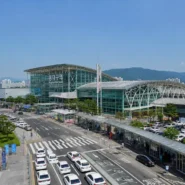
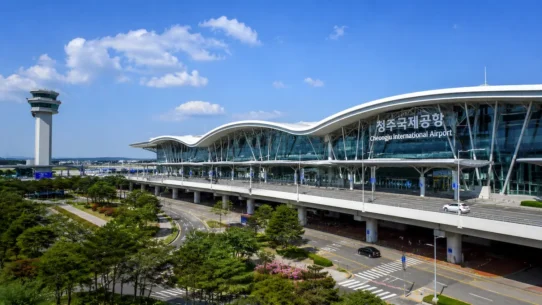
- “Ayanggyo (Daegu International Airport)” is not an airport-terminal subway station. The airport’s official guide says the terminal is about 1.8 km from Ayanggyo Station on Line 1. The intended connection is bus or taxi from the station. With luggage, do not casually plan to walk that gap.
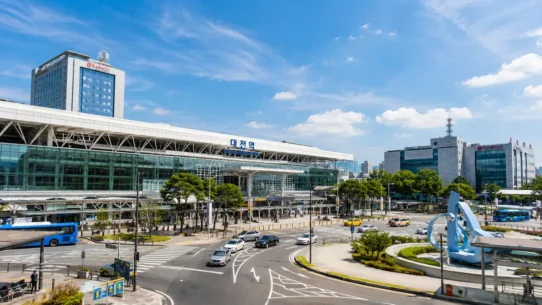
- Do not confuse Daegu Station with Dongdaegu Station. They are different stations. Dongdaegu is the major KTX/SRT and long-distance transport hub; Daegu Station is closer to the old downtown. When booking a hotel or telling a taxi driver where to go, check the exact station name twice.
- Use Naver Map or KakaoMap for live local routing. Korea approved the export of high-precision map data for Google in February 2026, but rollout and local transit detail can still differ. For Daegu buses in particular, live Korean mapping data is the safer habit.
- Do not optimize only for the lowest fare when you have luggage. A metro-plus-bus route can look cheapest but involve two platform changes, a long station exit and a final uphill walk. On arrival and departure days, paying for one short taxi can save more energy than any transport pass saves money.
- Do not assume an “unlimited” rail pass covers local Daegu transport. KORAIL states that the KORAIL PASS excludes SRT and metropolitan subway services. It is a national rail product, not a Daegu metro/bus pass.
The Full Experience
🚇 Daegu Metro: Best for First-Time Visitors and Central Sightseeing
Best for: Dongseongno, Banwoldang, Dongdaegu Station, Daegu Station, Seomun Market connections and low-stress city travel | Adult card fare: KRW 1,500 | Stress level: Low
If you are visiting Daegu for the first time, the metro should be your mental “backbone.” It is easier to understand than the bus network, station names are clearly structured, and you avoid worrying about whether a bus stop sits on the near side or far side of a six-lane road.
Line 1 is the line many travelers use first because it links Dongdaegu Station, Daegu Station, Jungangno and Banwoldang. It also continues east beyond Ansim to Daegu Haanui University Hospital, Buho and Hayang following the extension that opened on December 21, 2024. If a downloadable map or old blog still shows Ansim as the final stop, it is outdated.
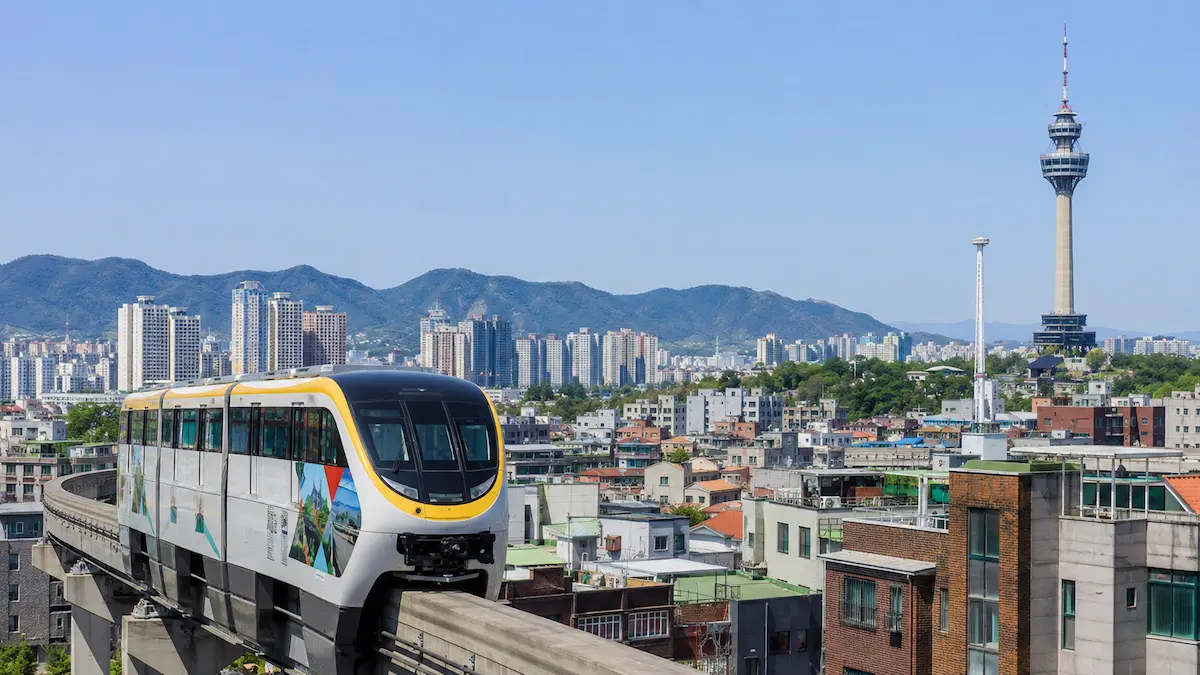
Line 2 is particularly useful across the central and southeastern parts of the city, including the Banwoldang interchange. Line 3 is the elevated monorail: it is useful for stops such as Seomun Market and Suseongmot, and it gives you a completely different visual feel from an underground metro. It is not automatically the fastest option, though. If Line 3 forces a transfer and a bus goes directly to your destination, choose the direct route.
A transport card is cheaper than a single-use adult metro ticket, and it also makes bus/rail transfers much easier. Unless you have a very specific reason not to, use the same T-money or compatible card for your whole Daegu stay.
✅ What Other Travelers Say
Traveler reviews commonly praise the Daegu Metro for being clean, orderly and relatively easy to use even without Korean. Line 3 gets extra positive attention because the elevated ride gives city views rather than a tunnel wall. That feedback matches the route logic: for a first day in Daegu, the metro removes more uncertainty than almost any other transport choice.
⚠️ The Catch (Things to Keep in Mind)
The metro does not solve every last-mile problem. A station that looks “close” on the map can still leave you with a long walk after the correct exit, and that matters with luggage. Also remember that Line 3’s scenic character does not make it the quickest cross-city line. Check total door-to-door time, not just the number of stops.
🚌 Daegu City Buses: Best for the Airport and Places the Metro Misses
Best for: Daegu Airport, outer neighborhoods, Palgongsan-side connections and reducing long walks | Adult card fare: KRW 1,500 regular; KRW 1,950 express/direct | Stress level: Medium
Daegu buses become valuable the moment your destination falls between metro lines. They also matter for Daegu International Airport because the airport has no subway station directly at the terminal.
The most important 2026 bus rule is simple: cash is not accepted on Daegu city buses. Since April 1, 2025, all 1,566 city buses across 127 routes have operated without cash boxes. A transport card is not just the cheaper option; it is the normal way to board.
The second big rule is to distrust stale route information. Daegu reorganized its network on February 24, 2025, going from 122 to 127 routes with new, changed and abolished services. That means a perfectly genuine travel article written in 2024 can now give you the wrong bus number. Search the trip live rather than memorizing a route from an old post.
For transfers, tap your card when boarding and tap the rear-door reader before getting off. Current Daegu guidance says the integrated system allows up to two transfers within 30 minutes after alighting, provided you use the same card. A regular-to-express/direct transfer charges the fare difference, and using the same bus route again does not qualify as a free transfer.
Airport strategy: The official airport guide points travelers to Ayanggyo Station on Line 1, then a transfer to buses such as Express 1, Palgong 1, 401 or 101-1, or a taxi. The station is roughly 1.8 km from the airport. For a budget traveler with a small bag, the bus connection is fine. For an evening arrival with a large suitcase, a direct taxi often makes more sense than turning your first hour in Daegu into a transfer exercise.
✅ What Other Travelers Say
Travelers tend to like Daegu buses for their reach: they can put you closer to a neighborhood attraction than the metro can. People who are comfortable with Naver Map or KakaoMap generally find the system manageable once they can see the live stop and route information.
⚠️ The Catch (Things to Keep in Mind)
Buses have more “failure points” for a first-time visitor: choosing the opposite-direction stop, missing the alighting tap, relying on an old route number, or realizing too late that the bus is cash-free. If two routes are similar in travel time, take the metro. Use the bus when it genuinely saves a long walk or is the only practical connection.
🚕 Daegu Taxis and k.ride: Best with Luggage, Late Arrivals and Awkward Transfers
Best for: airport arrivals, two- or three-person groups, big suitcases, late nights and door-to-door shortcuts | Standard medium taxi base fare: KRW 4,000 for the first 2 km | Stress level: Low once the pickup point is correct
Taxis in Daegu are not something you need for every journey. The city has a real metro and bus network, so treating Daegu like a taxi-only destination wastes money. But taxis are excellent as a selective problem-solving tool.
Consider the airport. The budget route can mean bus plus metro plus a walk to your hotel. If you land tired with two suitcases, a taxi removes every transfer. The same logic applies to Dongdaegu Station: if your hotel is technically “one metro stop plus a 900-metre walk,” the taxi may be worth the extra cost on arrival day.
For foreign visitors, k.ride is useful because it supports English, Traditional and Simplified Chinese and Japanese, destination search in multiple languages, translated driver chat and in-app international card payment. The official service also shows an estimated fare before booking. Kakao T and Uber are useful alternatives, so having a backup app can help if matching is slow.
At Daegu International Airport, the official taxi stand is directly outside the terminal area, which makes it the simplest luggage-friendly option. If your group has several large suitcases, do not assume a standard sedan will fit everything comfortably. Choose a larger vehicle category when available or ask your hotel to help arrange an appropriate taxi when timing is important.
✅ What Other Travelers Say
Recent Korea traveler discussions are mixed on which taxi app is cheapest or matches fastest, which is exactly why it is better to have more than one option. The consistent theme is that app-based booking reduces the language problem because your destination is already pinned, while public transport remains good enough that you do not need to taxi everywhere in Daegu.
⚠️ The Catch (Things to Keep in Mind)
Convenience can hide the cost difference. k.ride is designed for visitors, but some travelers report that a comparable ride can be more expensive than Kakao T or Uber depending on vehicle type and availability. Check the estimate rather than assuming one app is always cheapest. Night surcharges also apply, so late-night fares can be higher than the daytime meter suggests.
🚄 Dongdaegu Station, KTX and the Daegyeong Line: Best for Seoul, Busan and Regional Trips
Best for: Seoul–Daegu, Busan–Daegu, multi-city Korea itineraries, Gumi/Gyeongsan regional trips | Main rule: price individual tickets before buying a pass | Stress level: Low if you book the correct station
Dongdaegu Station is the station name you should expect to see on many high-speed rail itineraries. It is a major KTX/SRT hub and directly connects to Daegu Metro Line 1, making it a much better arrival base than its “east of downtown” location may suggest.
The naming mistake is expensive in stress rather than money: Daegu Station and Dongdaegu Station are not interchangeable. Always check the station printed on your rail ticket before choosing your hotel or telling a taxi driver where you are going.
For KORAIL trains, the safest booking habit is to start at the official KORAIL ticket reservation page. KORAIL currently allows normal tickets to be purchased up to one month in advance. For Friday evenings, weekends, festivals and Korean holiday periods, do not leave your preferred train until the last minute.
The Daegyeong Line, opened in December 2024, is also useful to understand. It links the Gumi–Chilgok–Daegu–Gyeongsan corridor, and both Dongdaegu Station and Daegu Station offer transfers to Metro Line 1. It behaves more like metropolitan/regional rail than a tourist KTX product, so do not confuse it with the KORAIL PASS.
Is the KORAIL PASS worth buying? Only sometimes. KORAIL’s official rules state that the pass is for eligible KORAIL-operated trains and excludes SRT and metropolitan subway services. If your Korea trip includes several expensive long-distance KTX journeys within the pass validity period, it can be excellent value. If Daegu is just one stop and you are taking only one or two intercity trains, “unlimited” can easily cost more than the tickets you actually need.
✅ What Other Travelers Say
KORAIL PASS reviews often praise the flexibility and the ability to reserve seats online, but travelers repeatedly advise reserving preferred KTX seats early during busy periods. Luggage is another recurring practical issue: large bags are easier when you board early enough to use the designated storage area instead of trying to squeeze them around your seat.
⚠️ The Catch (Things to Keep in Mind)
A pass does not guarantee that your ideal train magically has a seat. You still need to make the required seat reservation where applicable, and popular trains can fill. Third-party booking can be convenient, but for a simple point-to-point KTX journey, direct KORAIL booking removes an extra layer between you and the train operator.
Which Transport Card or Pass Should You Actually Buy?
For a typical 1–3 day Daegu city stay: use a T-money or compatible card and pay as you go. This is the option most travelers should choose. You get the normal transport-card fare and integrated transfers without spending time trying to “break even” on an unlimited product.
If you already have T-money from another Korean city: keep using it. Daegu officially lists T-money and Cashbee among compatible cards, so buying another local prepaid card usually adds clutter rather than value.
If your itinerary is Seoul → Daegu → Busan with only a few trains: check individual KORAIL fares first. Do not assume the KORAIL PASS wins simply because three city names appear on your itinerary.
If you are doing several long-distance rail days: then compare the current KORAIL PASS price with your planned individual tickets. Remember that SRT and metropolitan subways are excluded. A pass is good when the maths works, not when the marketing sounds convenient.
Where to Stay if You Want Easier Transport
Choose Dongdaegu if: you have an early KTX, late arrival, large luggage, or multiple intercity rail days. You can walk into the major rail/terminal complex and still use Line 1 to reach central Daegu. This is the practical location, not necessarily the most atmospheric one.
Choose Banwoldang / Dongseongno if: city sightseeing, food and shopping matter more than catching early trains. Banwoldang gives you the most useful Line 1–Line 2 interchange in the center, so it minimizes backtracking on a short stay.
Choose near Seomun Market only if that area suits your actual itinerary. It is convenient for the market and Line 3, but it is not automatically the best base for an airport-plus-KTX-heavy trip. A cheaper hotel can become less convenient if every travel day begins with an extra transfer.
Key FAQs
Can I use T-money on the Daegu subway and buses in 2026?
Yes. Daegu officially lists T-money as a compatible transport card for its public transport network. It is the simplest choice for most visitors because it works across the metro and city buses and supports the integrated transfer system. Remember that Daegu city buses are cash-free, so having a usable transport card before boarding matters more than it used to.
What is the easiest way to get from Daegu International Airport to Dongseongno or Dongdaegu Station?
With large luggage, the easiest option is a taxi because it removes the bus-to-metro transfer. For a lower budget, use an airport-area city bus or connect via Ayanggyo Station on Metro Line 1. Do not plan on stepping off a plane directly onto the subway: the airport says Ayanggyo Station is about 1.8 km from the terminal.
Is the KORAIL PASS worth it for a Daegu trip from Seoul or Busan?
Usually not for a simple one-way or return journey alone. Start by pricing your individual KORAIL tickets. The pass becomes more interesting when you have several eligible long-distance KORAIL trips within its validity period. It does not cover Daegu city buses, the Daegu Metro, metropolitan subway services or SRT.
Final Verdict and Your Next Step
For most first-time visitors, the smartest Daegu transport setup is refreshingly simple: bring or buy a T-money card, use the metro as your default, use buses only when they genuinely improve the route, and spend on a taxi when luggage or a late arrival makes transfers unreasonable. You do not need to “win” every journey by paying the absolute lowest fare. Saving 2,000 or 3,000 won is not a victory if it costs you an extra transfer, the wrong station exit and a sweaty kilometre with a suitcase.
If your trip includes KTX, book your preferred train once your travel date opens—especially for weekends and busy Korean travel periods. For accommodation, choose the transport problem you want to remove: Dongdaegu for rail convenience, or Banwoldang/Dongseongno for easier city sightseeing.
- Check Daegu hotels on Booking.com — useful for comparing stays around Dongdaegu and central Daegu.
- Compare Daegu hotel deals on Agoda — another good place to compare location versus nightly price.
- Book individual KTX/KORAIL tickets directly with KORAIL — the first place to check for simple point-to-point rail travel.
- Check the KORAIL PASS on Klook — only after comparing the pass against your individual rail legs.
- Compare the KORAIL PASS on KKday — useful as a second price and policy check before buying.
Affiliate note: some booking links above may earn travelstayguide.com a commission at no extra cost to you. That does not change the recommendation: if an individual KORAIL ticket is better value for your itinerary, buy the individual ticket rather than a rail pass.
Sources and Live-Check Links
- Daegu Metropolitan City — transportation fares, transfer rules and compatible transport cards
- Daegu Metropolitan City — cash-free city buses from April 1, 2025
- Daegu International Airport — public transportation and Ayanggyo connection
- k.ride — official foreign-traveler taxi service information
- KORAIL — official train ticket reservation
- Daegu Metropolitan City — Daegyeong Line opening information