
💡 Key Takeaways
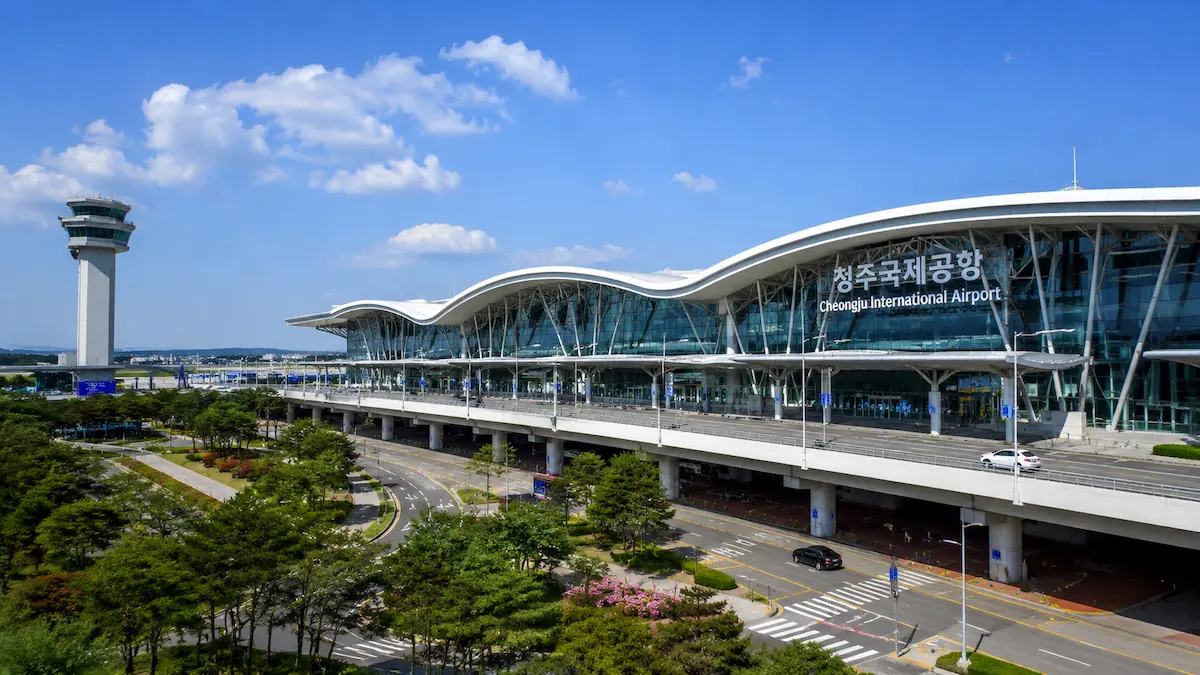
- First, fix the airport-name trap: there is no commercial airport officially called “Daejeon Airport.” For most travelers, the nearest scheduled airport serving Daejeon is Cheongju International Airport (CJJ), roughly 50 km away.
- Your hotel area matters more than the headline travel time. Take the direct train if you are staying around Daejeon Station or Jungang-ro; the direct intercity bus to Yuseong is usually smarter for Yuseong, Guam, Dunsan, KAIST and the convention district.
- Do not build your plan around the last departure. Current schedules run into the late evening, but a delayed flight, immigration queue or 600 m luggage walk to Cheongju Airport Station can turn a cheap transfer into an expensive taxi.
If you searched for Daejeon Airport to city center, the first thing to know is that the airport name itself is misleading. Daejeon does not have its own commercial passenger airport. The airport most visitors actually use is Cheongju International Airport (CJJ), the closest major airport serving Daejeon. That small detail changes everything, because CJJ is not connected to Daejeon by a single “airport express” that drops everyone in one obvious downtown district.
Daejeon is spread across several practical centers. The old downtown and main rail hub sit around Daejeon Station and Jungang-ro. The modern business and government area is around Dunsan and Government Complex Daejeon. Yuseong, Guam, KAIST and Daejeon Convention Center are farther west. A transfer that looks “fastest” on paper can still be a bad choice if it leaves you on the wrong side of the city with two suitcases.
This guide is therefore built around the decision that actually matters: where you are sleeping, when you land, how much luggage you have, how many people are traveling together, and how much hassle you are willing to accept. Transport information was cross-checked against Korea Airports Corporation, KORAIL-linked schedules, Daejeon city information and current 2026 route guides. Timetables can still change, so treat any departure time as something to confirm again on your travel day.
The 1-Min Cheat Sheet
- Direct KORAIL train to Daejeon Station: best all-round choice for Daejeon Station, Jungang-ro and the old downtown. Expect roughly 50–60 minutes on the train, plus a roughly 600 m walk from the airport terminal to Cheongju Airport Station. It is usually one of the cheapest options.
- Direct intercity bus to Yuseong Complex Terminal: best for Yuseong, Guam, Chungnam National University, KAIST, Dunsan and DCC. Current airport information shows a direct service priced at about ₩6,500, with multiple departures through the day and a last departure listed at 22:05.
- Direct intercity bus to Daejeon Complex Terminal: useful if your hotel is in Dong-gu, Yongjeon-dong or close to the terminal. The catch is frequency: recent 2026 listings show far fewer departures than the Yuseong route, so this is a “take it if it matches your flight” option rather than a route to rely on blindly.
- Taxi direct to your hotel: best for late arrivals, families, travelers with mobility concerns, or groups of three to four with large luggage. A typical Daejeon transfer is around 50 minutes and roughly ₩60,000–₩65,000 before any traffic or surcharge variation.
- Cheongju Airport → Osong → Daejeon: a backup, not my default recommendation. It only makes sense when the direct train or bus timing is poor and a rail connection via Osong happens to line up neatly. Adding a transfer just to say you used KTX usually creates more luggage handling than time saved.
Top Survival Tips
- Search by airport code CJJ, not “Daejeon Airport.” Airline tickets, maps and transport sites will use Cheongju International Airport or CJJ.
- Choose the arrival terminal by hotel district. Daejeon Station, Yuseong Complex Terminal and Daejeon Complex Terminal are not interchangeable. Saving ₩1,000 on the first leg is pointless if you then spend ₩15,000 on a taxi across town.
- Old Yuseong blog posts can now be misleading. Daejeon’s new Yuseong Complex Terminal began full operation in January 2026 near Guam Station on Subway Line 1. If an older guide sends you to the former Yuseong intercity stop, double-check it.
- The airport train station is close, but not inside the terminal. Korea Airports Corporation says Cheongju Airport Station is about 600 m from the airport’s intercity-bus area; VisitKorea describes it as about a 10-minute walk. In summer heat, winter cold or heavy rain, that matters with luggage.
- Do not assume a T-money card replaces a KORAIL ticket. For the Mugunghwa/ITX rail trip to Daejeon, buy the appropriate KORAIL ticket. T-money is excellent for Daejeon subway and city buses after you arrive.
- If you land close to 22:00, build a taxi backup into your budget. The direct Yuseong bus is currently listed through 22:05, while current rail listings show the last direct train around 22:53. International arrival formalities can easily erase that margin.
- Use Naver Map or KakaoMap for the last mile. They are usually more useful in Korea for local bus stops, subway exits and building-level navigation than relying only on a generic international map app.
- Save your hotel name and address in Korean. This is especially useful for taxi drivers and when asking staff which bus stop or subway exit you need.
- During Seollal, Chuseok and major holiday weekends, book transport early. The problem is not just price; popular intercity services can sell out and road traffic can make the “easy” bus option much slower.
The Full Experience
🚌 Direct Intercity Bus: Best for Yuseong, Dunsan and Eastern Daejeon When the Schedule Fits
Best for: Yuseong · Guam · Dunsan · KAIST · DCC · Dong-gu near Daejeon Complex Terminal | Luggage: Easy | Transfers: 0 to the terminal, then usually 0–1 local connection
The direct intercity bus is the option I would check first if your hotel is on the western half of Daejeon. The big advantage is not speed alone. It is that you can put a large suitcase in the coach luggage hold, sit down, and avoid dragging it roughly 600 m to the airport rail station.
Korea Airports Corporation currently lists direct intercity buses from Cheongju International Airport to both Daejeon Terminal Complex and Yuseong Terminal. For Yuseong, the airport’s current public-transport information shows Bus Stop No. 2 and a fare of about ₩6,500. A current 2026 guide lists the trip at roughly 47–50 minutes.
The most important 2026 update is at the Daejeon end: Yuseong Complex Terminal is now the main Yuseong intercity/express terminal. Daejeon Metropolitan City says the new terminal opened on January 28, 2026 and is directly connected with Guam Station on Daejeon Subway Line 1. That makes this route much more useful than some older travel blogs suggest.
If you are staying in Yuseong or near Chungnam National University: this is usually the cleanest public-transport choice. You arrive on the correct side of Daejeon and may need only a short taxi or subway ride.
If you are staying in Dunsan or near Government Complex Daejeon: the Yuseong bus is still attractive because Guam Station gives you a straightforward Subway Line 1 connection toward the government district. With a heavy suitcase, a short taxi from the terminal can be worth the small extra spend.
If you are staying near Daejeon Convention Center (DCC), Expo Science Park or Hotel Onoma: get off in Yuseong and finish by taxi. A current Daejeon conference arrival guide estimates the Yuseong-to-DCC taxi leg at around 20 minutes and roughly ₩13,000. That can be much less tiring than riding all the way to Daejeon Station and then crossing back west.
If you are staying near Daejeon Complex Terminal or Yongjeon-dong: the direct bus to Daejeon Complex Terminal is geographically better. The problem is the timetable. A July 2026 public-data-based listing showed only a handful of airport departures, including 10:50, 17:15 and 18:05, with the 18:05 trip taking about 45 minutes and costing around ₩6,000. I would use that as a planning clue, not a promise. Recheck on Bustago, T-money or the airport ticket machine on the day.
Ticketing: the airport says intercity-bus tickets should be issued before boarding and can be bought at ticket machines. For the Yuseong route, current guidance places the boarding point outside the terminal around Gate 1 / Bus Stop No. 2. Signs can change, so the destination name to show staff is 유성복합터미널 for Yuseong Complex Terminal and 대전복합터미널 for Daejeon Complex Terminal.
✅ What Other Travelers Say
The recurring advantage travelers notice with Korea’s intercity buses is simple: they are much easier with full-size luggage than a multi-step rail transfer. You load the suitcase once and usually get a proper coach seat. For CJJ specifically, current route guides also highlight how convenient the airport bus stop is compared with the walk to the railway station.
Travelers headed to Yuseong and the convention district also benefit from arriving on the western side of Daejeon rather than backtracking from Daejeon Station. This is one of those cases where the bus may not look dramatically faster on a map, but it can feel much easier door-to-door.
⚠️ The Catch (Things to Keep in Mind)
The timetable is the weak point. Yuseong has a useful spread of departures, but Daejeon Complex Terminal is much less frequent. Airport schedules also carry warnings that services can be adjusted, so never assume the bus you saw in a six-month-old blog post still operates at the same time.
Road traffic is the second issue. On a normal day, around 50 minutes is realistic for Yuseong, but rush hour, Friday evening or holiday traffic can stretch that. If you have a hard onward train connection from Daejeon Station, the direct airport train is safer because it avoids road congestion.
Official checks: Korea Airports Corporation CJJ directions, CJJ live public-transport page, Bustago, and T-money intercity bus booking.
🚆 Direct KORAIL Train: Best for Daejeon Station, Jungang-ro and Traffic-Proof Travel
Best for: Daejeon Station · Jungang-ro · Daeheung-dong · onward KTX connections | Luggage: Medium effort | Transfers: 0 to Daejeon Station
For many first-time visitors, the direct train is the most sensible answer to “how do I get from Cheongju Airport to Daejeon?” It is cheap, predictable and lands at Daejeon Station, one of the city’s strongest transport hubs. The train itself is straightforward; the part that catches people out is the airport-side walk.
Cheongju Airport Station is on the airport grounds but it is not inside the passenger terminal. Korea Airports Corporation gives the distance as roughly 600 m, while VisitKorea describes the walk as about 10 minutes. If you have a backpack, no problem. If you have two 23 kg suitcases, a stroller and a tired child, it feels much farther.
Current 2026 schedule sources show roughly 11 direct KORAIL trains per day between Cheongju Airport Station and Daejeon, with a first departure around 06:58 and the last around 22:53. Journey time is generally about 50–60 minutes. Depending on the service, fares are roughly in the ₩4,000–₩6,000 range. Mugunghwa is usually the cheaper service; some ITX services cost a little more.
This is not KTX from the airport. The direct airport-to-Daejeon train runs on the Chungbuk Line and continues through places such as Osong, Jochiwon and Sintanjin before reaching Daejeon. That is exactly why it works so well: no KTX transfer is required.
Who should choose it? If your hotel is near Daejeon Station, Jungang-ro, Daeheung-dong or the old downtown, this is my first choice. Daejeon Station also connects directly to Subway Line 1, so you can continue west toward City Hall, Government Complex, Yuseong and Guam if you are traveling light.
The train is also the safest option when you have an onward rail journey. If you are connecting from Daejeon to Seoul, Busan, Daegu, Gwangju or another city, arriving at Daejeon Station keeps the next step simple.
Ticketing: buy a KORAIL ticket for the actual train. Do not assume tapping a local transport card is enough. The official KORAIL English booking page lists both Cheongju Airport and Daejeon as stations. During normal periods you can often buy on the day, but holiday weekends are a different story.
✅ What Other Travelers Say
Traveler videos of the airport-station walk are useful because they show the detail many route summaries miss: the railway station is genuinely walkable, but you are outside the terminal and moving your own luggage the whole way. Once on the train, the journey is simple and avoids the uncertainty of expressway traffic.
Rail travelers also like that Daejeon Station gives them immediate access to taxis, local buses, Subway Line 1 and the national rail network. If your next step is another train, it is hard to beat.
⚠️ The Catch (Things to Keep in Mind)
The train frequency is not metro-style. A 50-minute train ride sounds brilliant until you discover the next departure is much later. Always compare your actual flight arrival time with both the train and Yuseong bus schedule before deciding.
The 600 m walk is the hidden cost. In heavy rain, snow, summer humidity or with oversized luggage, the bus can be more comfortable even if the fare is slightly higher. Also remember that Daejeon Station is on the eastern side of the city; if your hotel is in Yuseong, taking the train and then crossing Daejeon may erase the advantage.
Official checks: Korea Airports Corporation rail access information and KORAIL English booking.
🚕 Taxi: Best for Late Arrivals, Families and Heavy-Luggage Groups
Best for: Door-to-door travel · late flights · 3–4 people · large luggage · mobility needs | Luggage: Easiest | Transfers: 0
A taxi is expensive compared with a ₩6,500 bus, but it is not automatically a bad-value choice. For a solo backpacker, yes, it is a splurge. For three adults with three large suitcases heading to a hotel in Dunsan or Yuseong after 22:00, it can be the most rational option.
Current Daejeon travel guidance puts a direct Cheongju Airport–Daejeon taxi at roughly 50 minutes and around ₩60,000–₩62,000 under normal conditions. The airport’s own taxi fare information also notes an inter-city surcharge of 20% and nighttime surcharges in applicable periods, so the meter can end higher than a simple daytime estimate.
If four people split a ₩62,000 fare, that is roughly ₩15,500 each. Compare that with four bus tickets plus a local taxi from Yuseong or Daejeon Station to the hotel, and the premium may be smaller than expected.
Korea Airports Corporation says the CJJ taxi stand is reached by leaving via Gate 2 and crossing the road. For a smoother ride, keep your hotel name, address and phone number saved in Korean. Kakao T is also useful if no taxi is waiting or you want the destination entered digitally.
✅ What Other Travelers Say
Recent traveler reports around Cheongju Airport are mixed on taxi availability: some visitors found taxis waiting immediately, while others reported difficulty getting one at busier or later times. That is exactly why a taxi is best treated as door-to-door convenience, not a guarantee that a car will always be waiting at the curb.
Groups consistently gain the most from this option because the cost is shared while the convenience is multiplied: no ticket machine, no luggage walk, no terminal transfer and no guessing which subway exit has an elevator.
⚠️ The Catch (Things to Keep in Mind)
The obvious catch is cost, but the less obvious one is meter uncertainty. Traffic, inter-city surcharges and nighttime charges can all push the total above the neat number you saw in a guide. If budget certainty matters, ask your accommodation whether it can arrange a fixed-price pickup or confirm a realistic fare range before you land.
Also check luggage capacity. Four adults plus four large hard-shell suitcases may not fit in a normal sedan. In that situation, requesting a larger vehicle is smarter than discovering the problem at the curb.
Official check: Korea Airports Corporation taxi fare and surcharge information.
🧩 Cheongju Airport → Osong → Daejeon: A Backup, Not the Route to Choose by Default
Best for: A badly timed direct schedule · experienced Korea rail users · travelers already holding a useful onward rail plan | Luggage: More handling | Transfers: 1+
Osong Station is a major high-speed rail station south of Cheongju, so it is tempting to think: “I should get to Osong and take KTX to Daejeon.” On a route map, that looks faster and more impressive. In real life, it is often an unnecessary transfer.
The cleanest version is Cheongju Airport Station → Osong by local/ITX/Mugunghwa train → transfer to a southbound KTX or another suitable train → Daejeon. The rail leg from Cheongju Airport Station to Osong is around 19 minutes. If a KTX connection appears almost immediately, this can work.
The version I would avoid for Daejeon is taking the 747 city bus all the way to Osong just to catch KTX. Current route information puts that bus journey at roughly an hour or more, which destroys most of the time advantage. For Daejeon specifically, a direct airport train, Yuseong bus or taxi is usually cleaner.
✅ What Other Travelers Say
Travelers using CJJ for destinations beyond Daejeon often appreciate Osong because it opens the KTX network. That logic is much stronger for Seoul, Busan or other long-distance destinations than for Daejeon, which already has direct rail and bus connections from the airport.
⚠️ The Catch (Things to Keep in Mind)
Every transfer adds a failure point: walking, finding the correct platform, waiting for a connection, moving luggage again and potentially buying a more expensive high-speed ticket. Unless the live timetable shows a clear time saving, do not add Osong just because KTX sounds faster.
Key FAQs
Is there a direct train from Cheongju Airport to Daejeon city center?
Yes. Direct KORAIL trains run from Cheongju Airport Station to Daejeon Station. Current 2026 listings show roughly 11 trains a day, generally taking around 50–60 minutes. The important catch is that Cheongju Airport Station is about 600 m from the passenger terminal, so allow extra walking time with luggage.
Is the bus or train better from Cheongju Airport to Daejeon?
Choose by hotel location. The train is better for Daejeon Station, Jungang-ro and onward rail connections. The Yuseong intercity bus is better for Yuseong, Guam, KAIST, Dunsan and often DCC, especially with a large suitcase. The cheapest-looking fare is not always the cheapest door-to-door route.
How much is a taxi from Cheongju Airport to Daejeon, and is it worth it?
A realistic daytime estimate is around ₩60,000–₩65,000 and about 50 minutes, but traffic, inter-city and nighttime surcharges can increase the meter. It is usually poor value for a solo budget traveler, but it can make excellent sense for three to four people, late-night arrivals, families or travelers carrying multiple large bags.
Final Verdict and Your Next Step
If your hotel is near Daejeon Station, Jungang-ro or Daeheung-dong, take the direct KORAIL train unless you are carrying so much luggage that the 600 m airport-station walk becomes the main problem.
If you are staying in Yuseong, near Guam Station, Chungnam National University, KAIST, Dunsan or the DCC area, check the direct Yuseong bus first. The new Yuseong Complex Terminal’s connection to Guam Station makes this route much more useful in 2026 than older Daejeon airport-transfer guides suggest.
If your hotel is around Daejeon Complex Terminal or Yongjeon-dong, take the direct airport bus there only if the departure matches your flight. The route is useful, but the frequency is not good enough to build your entire arrival plan around it.
If you land late, travel with children, have mobility concerns, or have three to four people sharing the fare, price the taxi before dismissing it. The extra spend can buy back an hour of waiting, a luggage walk and one or two local transfers.
Before you fly, do these three things: book a hotel in the Daejeon area that matches your preferred arrival route, save a screenshot of the latest CJJ bus/train schedule, and keep enough budget for a taxi if your flight runs late.
Check Daejeon hotels on Booking.com
Compare Daejeon hotel areas on Agoda
Check KORAIL train times and tickets
Check Bustago intercity bus availability
Check Klook Korea intercity bus inventory
Klook does not necessarily list every Cheongju Airport–Daejeon departure, so if your exact route is missing, use Bustago, T-money or the airport ticket kiosk instead. Some booking links may be affiliate links, which can earn this site a commission at no extra cost to you.
Schedule note: this guide was researched against sources available in August 2026. For the freshest departure times, recheck Cheongju International Airport’s public-transport page on the day you travel.