
💡 Key Takeaways
- KTX is the easiest first choice from Seoul, but book early. Gangneung-bound trains can sell out on busy weekends, and KORAIL normally opens ticket sales one month before departure. If your schedule is fixed, do not wait until the night before.
- Do not buy a Seoul unlimited-transport pass for Gangneung. Seoul-only products such as the Climate Card do not turn into an unlimited Gangneung pass. For local buses, a normal Tmoney or EZL stored-value card is usually the smarter option.
- Gangneung is not a “bus everywhere every five minutes” city. Public buses are inexpensive, but waiting time can erase the savings. With luggage, children, bad weather or a short day trip, a taxi for the first or last leg is often money well spent.
Last checked: August 12, 2026. This Gangneung transportation guide is built for the part of a Korea trip that glossy destination pages tend to skip: what happens after you arrive with a suitcase, discover the beach is not beside the station, realize your Seoul transport pass is useless here, or watch a bus ETA change while your KTX home is getting closer. Gangneung is very manageable without a car, but only if you match the transport mode to the geography. The KTX station, bus terminal, downtown market, Gyeongpo area, Anmok Coffee Street, Jumunjin and Jeongdongjin are not one compact walkable cluster.
The simplest rule is this: use rail or an express bus for the long-distance leg, then choose between local bus and taxi based on how many coastal stops you need to cover. Saving a few thousand won is not a bargain if it costs you an hour beside a bus stop or forces you to drag a suitcase across town.
The 1-Minute Cheat Sheet
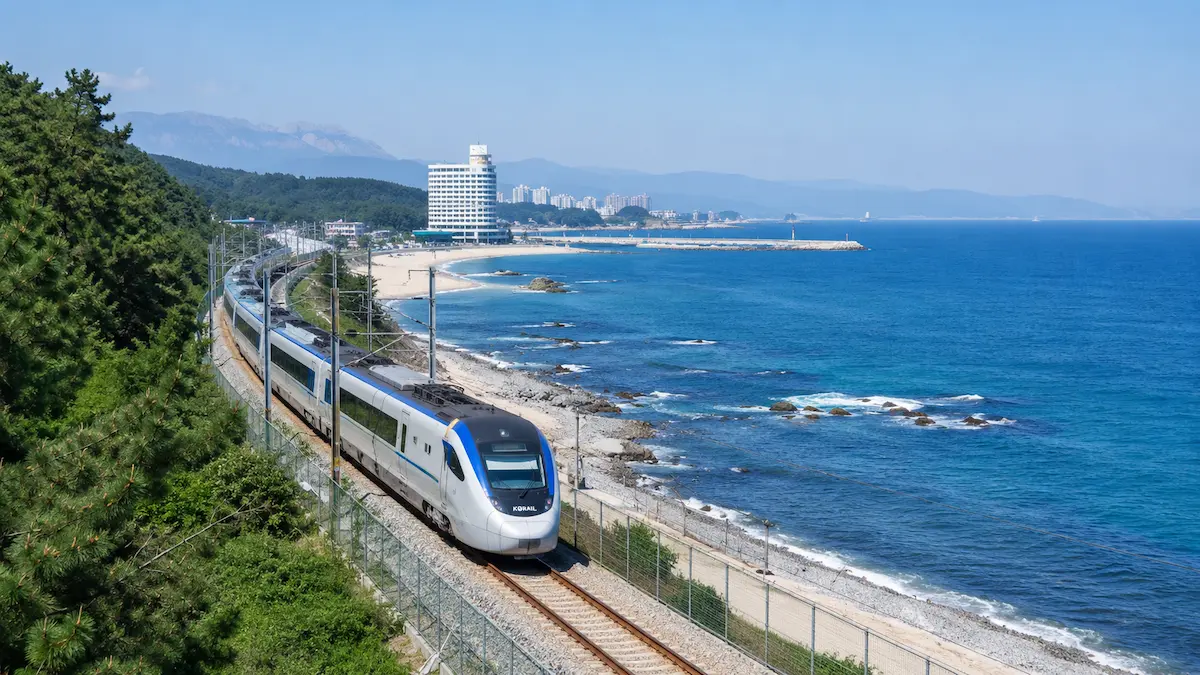
- KTX / KTX-Eum: Best overall from Seoul and now much more useful along the east coast. Seoul to Gangneung is roughly two hours. Since late 2025, direct Donghae Line KTX-Eum trains also link Gangneung with places including Jeongdongjin, Donghae, Samcheok, Pohang, Gyeongju and Busan’s Bujeon Station. Best for travelers who value predictable journey time.
- Express or intercity bus: Best for budget-conscious travelers, people staying closer to the bus-terminal side of town, or anyone who finds KTX sold out. The Seoul route is usually cheaper than KTX, but road traffic can make the actual arrival time less predictable.
- Gangneung city bus: Best for low-cost sightseeing when you have a relaxed schedule. The current adult fare is ₩1,530 with a transport card versus ₩1,700 cash. Use a Tmoney or EZL card and check the live route on Naver Map or the Gangneung Bus Information System before walking to the stop.
- Regular taxi / tourist taxi: Best with luggage, for two to four travelers splitting the fare, or for awkward combinations such as Gyeongpo + Anmok + Jumunjin in one day. A taxi is often the “pay a little, save a lot of time” option in Gangneung.
- Rental car: Best when your trip extends to mountain farms, rural viewpoints, multiple outlying beaches or neighboring cities. It is overkill for a simple KTX + Gyeongpo + Anmok weekend unless you genuinely want the freedom.
Top Survival Tips
- Book the KTX the moment your date opens if you are traveling on a popular weekend. KORAIL normally sells tickets from 07:00 one month before departure. Summer weekends and holiday periods can sell out quickly. A day trip becomes much less fun if you secure the outbound train but discover only a late return is left.
- Do not confuse Seoul Station and Cheongnyangni Station. Gangneung-line trains can use different Seoul departure stations. Read the departure station on the actual ticket rather than assuming every KTX leaves from Seoul Station.
- Do not confuse Gangneung Station with Gangneung Express Bus Terminal. They are different arrival points. Your “best” long-distance option depends partly on where you sleep. A cheaper bus is less attractive if it adds an extra taxi ride across town.
- At Gangneung Station, choose the exit for the transport you actually need. Current station guidance places city-bus access around Exit 1, luggage/rental-car services around Exit 2, and the taxi stand around Exit 3. Follow the station signs on arrival because operating arrangements can change.
- With a large suitcase, do not make the first local leg harder than it needs to be. If your hotel is near Gyeongpo, Gangmun, Songjeong or Anmok, taking a taxi from the station can be a better use of time than waiting for a bus while guarding luggage. A luggage-delivery service also operates from the Gangneung Station area for travelers who want to start sightseeing immediately.
- Tap off the local bus. If you are using a transport card, tapping when you get off matters for transfer benefits. The transfer system is one reason a normal Tmoney/EZL card is more useful here than paying cash ride by ride.
- Do not build a tight itinerary around a single rural or coastal bus. Local service is perfectly usable, but frequencies are not Seoul-like. If the next bus is far away and you have a timed train, switch to a taxi rather than protecting a tiny fare saving at the expense of your return journey.
- Use Naver Map or KakaoMap, not Google Maps as your only navigation tool. Korean domestic mapping apps are more useful for live public-transport routing and driving navigation. For bus-only confirmation, the English Gangneung Bus Information System is worth bookmarking.
- Do not buy an unlimited pass just because “unlimited” sounds reassuring. Seoul’s Climate Card is for Seoul transit. Mpass is also centered on Seoul-area transport. If your Korea itinerary is mostly Seoul plus one Gangneung trip, ordinary stored-value transport plus separately booked KTX/bus tickets is usually simpler.
- Check the last useful connection before sunset plans. Watching sunset at a beach is easy; getting from a quieter coastal stop back to your accommodation on the exact bus you expected may be less easy. Save your hotel name and address in Korean and keep enough taxi budget for a backup ride.
The Full Experience
🚆 KTX & KTX-Eum: Best for Fast, Predictable Intercity Travel
Best for: Seoul–Gangneung trips · Weekend escapes · Day trips · Busan/Gyeongju east-coast connections · Travelers with fixed schedules
If this is your first Gangneung trip from Seoul, rail is the easiest default recommendation. The journey is roughly two hours, you avoid highway traffic, the onboard experience is straightforward, and Gangneung Station is a modern arrival point with taxis, buses and nearby luggage services. For a one- or two-night trip, the time saved over a road journey often matters more than the fare difference.
The biggest 2026 update is the east-coast connection. The Donghae Line KTX-Eum began through service on December 30, 2025. Gangneung now connects directly south through Jeongdongjin, Donghae, Samcheok, Uljin, Yeongdeok, Pohang, Gyeongju and Taehwagang to Bujeon Station in Busan. Gangneung to Busan is now about 3 hours 50 minutes on the direct service, with a limited number of daily trains. That makes an east-coast Korea itinerary far more realistic than older guides suggest.
Booking strategy: KORAIL says regular train tickets can normally be purchased from 07:00 one month before the departure date. On ordinary weekdays, you may have flexibility. On summer weekends, long weekends and peak domestic travel dates, treat the opening date seriously. Book the return at the same time as the outbound if you are doing a day trip.
Should you buy a KORAIL Pass? Not automatically. A KORAIL Pass can make sense if you are taking several expensive intercity trains within its validity rules. It is poor value if your entire rail plan is simply Seoul–Gangneung–Seoul. Price the actual trains first. “Unlimited” is only a saving when you would genuinely buy enough qualifying rail journeys anyway.
✅ What Other Travelers Say
Travelers consistently like the KTX for the same reasons: the ride is comfortable, the timing is easier to trust than road traffic, and it reduces the mental load of a short trip. Recent travel discussions also repeatedly warn that popular Gangneung trains can sell out, which matches KORAIL and VisitKorea’s own advice to reserve ahead during busy periods.
⚠️ The Catch (Things to Keep in Mind)
The train does not deliver you directly to Gyeongpo Beach, Anmok Coffee Street or Jumunjin. You still need a local bus or taxi after arrival. Also check the Seoul departure station carefully: a traveler who turns up at the wrong station can lose far more time than the KTX saves. Finally, direct Gangneung–Busan KTX-Eum service exists but is not a turn-up-every-20-minutes metro; build the day around the train, not the other way around.
🚌 Express & Intercity Buses: Best for Lower Fares and Sold-Out KTX Days
Best for: Budget travelers · Flexible schedules · Travelers based near Gangneung Bus Terminal · KTX backup plans
The bus is not the “bad” option. For many travelers it is the best-value option. Current Seoul–Gangneung express-bus listings show direct service with several comfort classes, and fares can undercut the KTX. If your hotel is near downtown or the terminal side of the city, the arrival point may also suit you better.
The trap is thinking a scheduled road time equals a guaranteed road time. The bus has to deal with traffic. On a quiet day, the difference from KTX may feel acceptable. On a holiday or congested weekend, the extra road time can turn a clean itinerary into a rushed one.
Long-distance Korean buses are divided into express and intercity services. Do not treat those labels as interchangeable when booking. In some cities, the terminals are separate; even where buildings are close, the ticketing systems and departure boards can differ. In Seoul, confirm the exact terminal and line section shown on your reservation before leaving your hotel.
Online booking has become easier for international travelers. Klook currently sells Seoul–Gangneung express-bus tickets and supports QR-style boarding on listed services. Korea’s Tmoney intercity reservation system and other approved platforms are alternatives, but foreign-card usability can vary by platform. If you book online, recheck whether your reservation is a mobile boarding credential or whether a terminal ticket must be issued.
✅ What Other Travelers Say
Recent Klook feedback praises the booking and boarding process but also highlights a very real first-timer problem: Seoul Express Bus Terminal is large enough that travelers can head toward the wrong section or access route. That is exactly why the terminal name on your ticket matters more than a generic map pin for “Express Bus Terminal.”
⚠️ The Catch (Things to Keep in Mind)
Road delays are the obvious weakness. The less obvious one is location confusion. “Gangneung bus terminal” and “Gangneung Station” are not synonyms, and “Seoul Express Bus Terminal” is not one tiny waiting room. Give yourself extra terminal-finding time, especially with luggage. Do not book a bus scheduled to arrive shortly before a non-refundable activity.
🚍 Gangneung City Buses + Tmoney: Best for Cheap Sightseeing When You Have Time
Best for: Solo travelers · Low-budget trips · Slow travel · Gyeongpo/Anmok/downtown hops · Travelers comfortable using live map apps
Gangneung’s local bus network is inexpensive and reaches the main urban and coastal areas, but it rewards travelers who check live information rather than memorizing a static blog route. The official Gangneung Bus Information System has an English interface with route and arrival information. That should be your source of truth on the day, with Naver Map or KakaoMap used for door-to-door planning.
As of August 2026, the normal adult city-bus fare is ₩1,530 with a transport card and ₩1,700 in cash. That small discount is not the only reason to use a card. Tmoney and EZL cards are reloadable, can be bought or topped up at convenience stores, and support transfer benefits. If you already bought a Tmoney card in Seoul, you do not need a special Gangneung card.
For first-timers, the bigger issue is frequency. A bus journey that looks “cheap and only 25 minutes” on paper may actually mean 18 minutes waiting, 25 minutes riding, and another walk at the far end. When your day includes two or three beaches plus a fixed KTX return, compare door-to-door time, not just the fare.
Gyeongpo, Anmok and downtown are realistic bus destinations. Jumunjin and more distant coastal points are also reachable, but this is where timetable discipline matters more. For a BTS Bus Stop–focused trip, for example, the bus can save money, while a taxi or tourist taxi can save a large chunk of the day.
✅ What Other Travelers Say
Traveler reports are mixed in a useful way: people who accept the slower rhythm say buses are fine, while others report long gaps or live ETAs that changed unexpectedly and conclude that taxis were more efficient. Both can be true. The bus is a good tool; it is not always the best tool for a packed sightseeing schedule.
⚠️ The Catch (Things to Keep in Mind)
Do not assume Seoul-level frequency, and do not wait at the wrong side of the road simply because the stop names look similar. Check the direction, the stop ID or route path in your map app, and the destination shown on the vehicle. Tap your transport card when getting off if you want transfer benefits. Keep some balance on the card rather than loading exactly one fare.
🚕 Regular Taxis & Tourist Taxis: Best for Luggage, Groups and Multi-Stop Coastal Days
Best for: Two to four travelers · Families · Heavy luggage · Rainy days · Short trips · BTS/Jumunjin itineraries · Travelers who hate waiting
Gangneung is one of those cities where a taxi can be a smart budget decision rather than a luxury. The key is to compare the fare against the time saved. If two or three people are splitting a short ride from Gangneung Station to a beach hotel, the per-person difference versus bus travel can be modest, while the time and walking saved can be substantial.
For a simple ride, use the station taxi stand or a Korean taxi-hailing option such as Kakao T where available. Have the destination saved in Korean. This is especially helpful for smaller pensions, cafés and attractions with similar English transliterations.
For sightseeing, Gangneung also has tourist-taxi products aimed at foreign visitors. VisitKorea has promoted a Gangwon Tourist Taxi program, while commercial platforms now sell three-hour Gangneung taxi tours with preset or customizable routes. These are most attractive when your desired stops are spread out: for example, Ojukheon + Gyeongpo + Jumunjin, or when you want to reach the BTS Bus Stop without spending a large part of the day aligning bus schedules.
The price comparison should be done per group, not per person. A three-hour charter that looks expensive for a solo backpacker can become very reasonable for three or four travelers. Also compare what is included: waiting time, tolls, parking, pickup area, language support and overtime charges vary by product.
✅ What Other Travelers Say
Gangneung taxi-tour products receive strong feedback for convenience, particularly from travelers trying to cover distant photo spots in a short time. Independent traveler discussions also repeatedly describe taxis as the fastest rescue plan when local bus intervals do not match a packed itinerary.
⚠️ The Catch (Things to Keep in Mind)
A regular metered taxi and a fixed-time tourist taxi are different products. Do not assume a normal cab driver is automatically providing a sightseeing charter. For tourist-taxi packages, check the pickup point and overtime rule before paying. If you are relying on a subsidized official program, recheck the current eligibility and reservation conditions because municipal tourism schemes can change.
🚗 Rental Car: Best for Rural Gangneung and a Wider Gangwon Road Trip
Best for: Mountain farms · Rural viewpoints · Multiple outlying beaches · Families with gear · Gangneung + Donghae/Samcheok itineraries
A rental car gives you freedom, but freedom has a cost: paperwork, parking, insurance decisions, navigation and the mental load of driving in a country whose road rules may differ from yours. For a city-and-beach Gangneung weekend, you can normally avoid all of that with KTX + taxi + bus.
A car starts making sense when the itinerary spreads outward. If you want mountain attractions, rural cafés, several beaches outside the core city, or a road trip continuing to Donghae and Samcheok, the ability to leave whenever you want can outweigh the rental cost.
Foreign short-term visitors generally need a valid International Driving Permit, must meet rental-company age requirements, and should carry the passport and home-country license requested by the operator. Korea drives on the right. For navigation, use Naver Map or KakaoMap rather than relying on Google Maps for turn-by-turn driving.
Before accepting the keys, check whether the car has Hi-pass for toll roads, what your collision coverage actually includes, and how fuel/charging and late return are handled. A cheap base rate can stop being cheap if you misunderstand the insurance excess or return terms.
✅ What Other Travelers Say
Travelers who build a wider Gangwon itinerary like the flexibility of driving because it removes dependence on sparse rural connections. The positive feedback is strongest when the car replaces several long taxi rides or makes otherwise awkward mountain/coastal combinations possible.
⚠️ The Catch (Things to Keep in Mind)
Do not rent a car simply because public transport looks unfamiliar. If your plan is Gangneung Station → hotel → Gyeongpo → Anmok → station, a car may create more friction than it removes. Parking, unfamiliar road rules and insurance are real costs even when the daily rental headline looks cheap.
How I Would Combine Transport for Common Gangneung Trips
One-day trip from Seoul: Book the earliest practical KTX and your return at the same time. On arrival, take a taxi to your furthest must-see stop, then work back toward the station using a mix of bus and taxi. Do not spend your first 45 minutes saving ₩5,000 if you only have eight hours in town.
Two nights around Gyeongpo or Gangmun: KTX to Gangneung, taxi to the hotel with luggage, then use buses and walking for nearby beach/coffee areas. Use a taxi for Jumunjin if the bus timing is poor. This is the sweet spot where you can enjoy Gangneung without renting a car.
Budget solo trip: Express bus from Seoul if the fare difference matters, Tmoney for local buses, and one strategic taxi only when a long wait threatens the itinerary. Staying near downtown or a well-served coastal stop matters more than chasing the cheapest room in an isolated location.
BTS Bus Stop + Gyeongpo + Ojukheon in one day: Consider a three-hour tourist taxi or private taxi route. The attractions are spread enough that a low headline bus fare can hide a large time cost.
Gangneung to Busan or Gyeongju: Check the Donghae Line KTX-Eum first. Older articles that tell you a complicated transfer is mandatory may now be obsolete. Because direct trains are limited, reserve the long-distance leg before locking in a hotel checkout or activity.
Key FAQs
Is KTX or express bus better from Seoul to Gangneung for a first-time visitor?
KTX is better for most first-time visitors because the journey is faster and less exposed to road traffic. The express bus is better when price matters more, KTX seats are sold out, or your accommodation is more convenient from the Gangneung bus-terminal area. For a same-day return trip, the KTX time saving usually has more value than the fare saving.
Can I use a Tmoney card on buses and taxis in Gangneung?
Yes, Tmoney is widely useful for Gangneung city buses and is accepted by many taxis. A Tmoney card bought in Seoul can continue to be used in Gangneung, so there is normally no reason to buy a second local transit card. For city buses, the current adult card fare is cheaper than cash, and tapping off helps preserve transfer benefits.
What is the easiest way to get from Gangneung Station to Gyeongpo Beach or Anmok Coffee Street with luggage?
Take a taxi unless your budget is extremely tight. Both areas are close enough for a short vehicle ride but inconvenient enough that waiting for a bus with a full-size suitcase can feel like false economy. Current station guidance points taxi users toward Exit 3. If you want to sightsee immediately after arriving, luggage storage/delivery services are available around the station area, including near Exit 2.
Final Verdict and Your Next Step
The best Gangneung transport plan is rarely one mode for the entire trip. For most first-time visitors, the winning combination is KTX for the long-distance leg, Tmoney for flexible local buses, and taxis used strategically when luggage, distance or waiting time makes the bus inefficient. Choose the express bus instead of KTX when the savings are meaningful to you or rail seats are gone. Rent a car only when your itinerary genuinely reaches beyond the easy city-and-coast network.
Before paying for any pass, list the journeys you will actually take. If the pass does not cover Gangneung local transport or you are only making one return intercity trip, the “unlimited” label may be doing more work than the savings.
Book the fixed parts first: secure your KTX or long-distance bus, then choose accommodation based on the area you actually want to explore. A cheap hotel far from your sightseeing cluster can cost more in taxis and wasted time than a slightly higher room rate in the right location.
Check KORAIL train tickets
Compare Gangneung KTX and transport options on Klook
Check Seoul–Gangneung express-bus tickets on Klook
Check the Gangneung 3-hour taxi tour on Klook
Compare a Gangneung private charter on KKday
Compare Gangneung hotels on Agoda
Compare Gangneung hotels on Booking.com
Useful official checks before departure: Gangneung Bus Information System, VisitKorea transportation-card guide, and VisitKorea driving guide. Routes, fares, tourist-taxi schemes and departure times can change, so recheck the live service on your travel date.