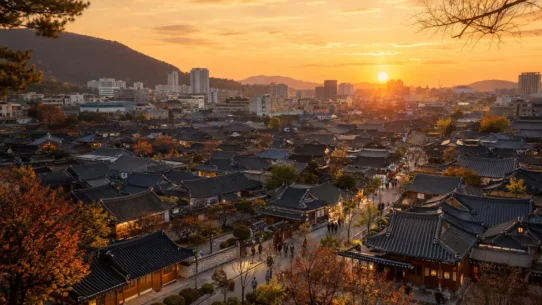

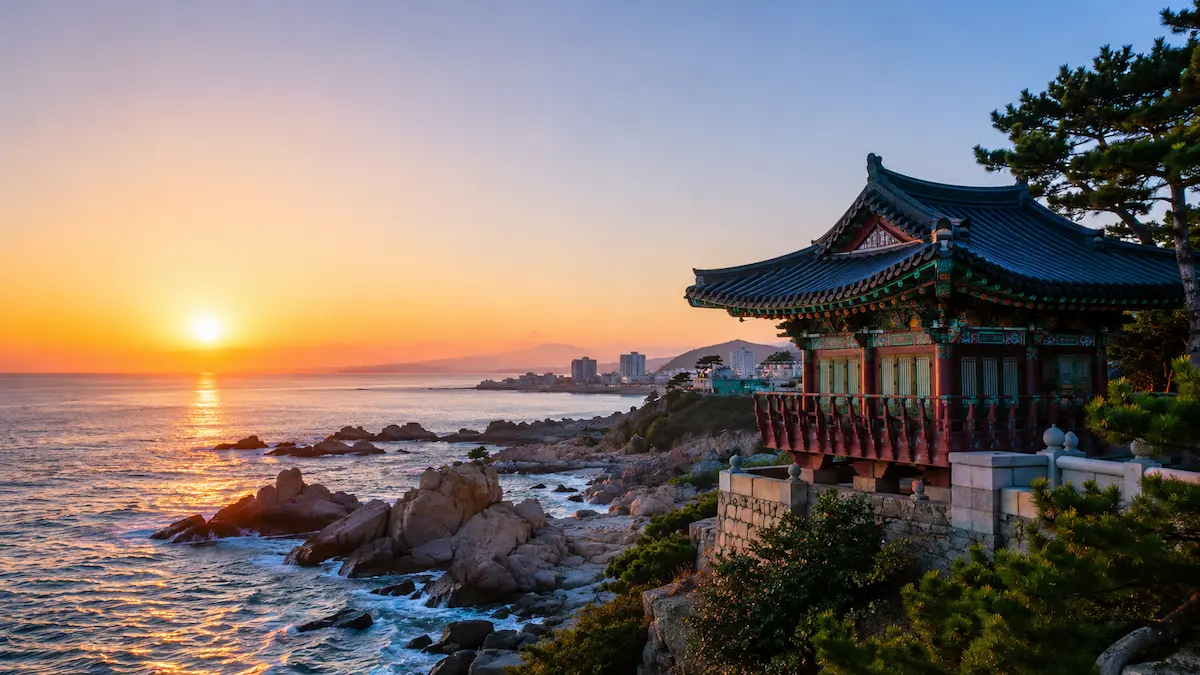
💡 Key Takeaways
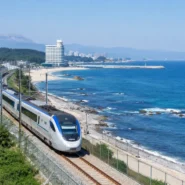
- Gangneung is easy to reach but surprisingly spread out. The KTX gets you from Seoul to Gangneung in roughly two hours, but there is no subway once you arrive. Beaches, cultural sights, Jumunjin and Jeongdongjin sit in different directions, so bad route planning can cost more time than the train journey itself.
- For a first visit, 2 days and 1 night is the sweet spot. A day trip works only if you choose one compact cluster. Trying to do Gyeongpo, Anmok, Ojukheon, Jumunjin and Jeongdongjin in one day by public transport is a checklist, not a holiday.
- Not every famous photo stop deserves equal time. Gyeongpo and the Gangmun coast are strong all-round choices. Anmok is best if you actually enjoy café culture. The BTS Bus Stop is worthwhile for fans but is a weak standalone detour for everyone else.
Planning a first trip to Gangneung looks deceptively simple on a map. Seoul is only around two hours away by KTX, the city is famous for beaches and coffee, and many travel posts make the main attractions sound as if they sit next to each other. They do not. This Gangneung travel guide for first-time visitors is built around the problem most newcomers discover too late: the train ride is easy, but getting around Gangneung efficiently takes actual planning.
The city has no subway network. Buses exist, but waiting and transfer time can turn a short-looking coastal hop into a frustrating chunk of your day. Jumunjin lies well north of central Gangneung, while Jeongdongjin is far to the south. Gyeongpo, Gangmun, Chodang and Anmok are much easier to combine, but even those stops work better when you plan them as a cluster rather than zig-zagging between them.
This guide focuses on what matters when you are visiting for the first time: where to base yourself, which sights genuinely fit together, when a taxi is worth paying for, what is overhyped, how much you can realistically cover, and which famous places are better skipped if they do not match your interests. The goal is not to collect every pin on Google Maps. It is to leave Gangneung feeling that you actually enjoyed it.
Planning note: transport schedules, attraction hours, prices and third-party booking inventory can change. Key facts and links in this guide were checked on August 12, 2026. Recheck your exact train and attraction details before departure.
The 1-Min Cheat Sheet
- Best trip length for first-timers: 2 days / 1 night. Three days is better if you want Jeongdongjin, Jumunjin or a slow café-and-beach pace.
- Best day-trip strategy: Choose one cluster: (A) Gyeongpo + Gangmun + Chodang + Anmok, or (B) Ojukheon + Gyeongpo + downtown. Do not add both Jumunjin and Jeongdongjin unless you have a private car or driver and accept a rushed day.
- Best transport from Seoul: KTX is usually the easiest choice for time-sensitive travelers. Book early for weekends, Korean holidays and peak summer dates.
- Best base without a car: Gangneung Station / downtown if luggage convenience and transport matter most; Gyeongpo / Gangmun if waking up near the sea matters more.
- Best beach for first-timers: Gyeongpo for scale, facilities and easy pairing with nearby attractions; Gangmun for a slightly more intimate seaside feel.
- Best food cluster: Chodang Dubu Village for soft tofu dishes; Jungang Market for an easy variety of snacks and local food without committing to a long restaurant detour.
- Best coffee stop: Anmok Coffee Street if you want ocean views and café hopping. If you only need one good coffee, do not cross town just because every guide says you “must” visit.
- Most overrated for non-fans: The BTS Bus Stop at Hyangho/Jumunjin. The beach is attractive, but the recreated bus stop itself is a quick photo stop, not a half-day attraction.
- Most commonly underestimated: Jeongdongjin. It is a separate southern excursion, not a casual add-on after Gyeongpo.
- Best money-saving move: Spend on taxis selectively to connect difficult legs, then walk within each cluster. Paying for one smart taxi can save more than an hour of waiting and backtracking.
Top Survival Tips
- Do not plan Gangneung like Seoul.
Seoul trains you to think that 8–10 attractions in a day are possible because the subway does the hard work. Gangneung is different. The city feels calm precisely because it is less transit-dense. Give each major area breathing room. - Build your itinerary north-to-south, not by popularity ranking.
A logical first-timer route might move from Ojukheon to Gyeongpo/Gangmun to Chodang and then Anmok. A bad route jumps from Anmok north to Jumunjin, back to downtown, then south to Jeongdongjin. - Protect your first and last hour from luggage problems.
If you arrive with a suitcase, do not immediately drag it onto local buses to the beach. Use station lockers if available, leave luggage at your accommodation, or take a taxi directly to your hotel. Gangneung is far more enjoyable without a roller bag on coastal pavements and bus transfers. - Use taxis strategically rather than emotionally avoiding them.
Budget travelers often lose an hour to save a relatively small fare. If two or three people are sharing, a taxi between clusters can be excellent value. Save buses for straightforward legs and use a taxi when a transfer looks awkward. - For a one-day trip, decide your “hero experience” before booking.
If the goal is beach scenery, prioritize Gyeongpo/Gangmun and Anmok. If the goal is Korean history, build around Ojukheon and Seongyojang. If the goal is BTS or K-drama locations, accept that Jumunjin is the focus and cut southern Gangneung. - Do not confuse a filming location with a full attraction.
The BTS Bus Stop was created for an album shoot, removed, and later recreated as a photo spot. That is exactly what it is: a photo spot. Fans may love the emotional value; non-fans should judge it by the time required to get there. - Anmok Coffee Street is about the setting as much as the coffee.
The sea view is the real draw. If the weather is grey, you dislike busy cafés, or you prefer independent specialty shops to large chains, your experience may be less impressive than Instagram suggests. - Gyeongpo changes dramatically by season.
Summer weekends can be busy and expensive. Outside peak season, the same beach can feel spacious and peaceful. If you are not swimming, shoulder season often gives a better walking experience. - Check swimming restrictions instead of assuming “beach” means “swim.”
Korean beaches generally have defined swimming seasons and safety controls. Outside the official season, visit for walking, sunrise, cafés and views rather than assuming unrestricted sea swimming. - Jeongdongjin sunrise is not automatically worth the sleep deprivation.
It is famous for sunrise, but a cloudy forecast can turn a very early start into a cold wait beside the sea. If sunrise is not a personal priority, visit later or skip it in favor of a relaxed Gyeongpo morning. - Weekend accommodation location matters more than hotel star rating.
A cheaper hotel far from your planned cluster can create repeated taxi costs. For a one-night trip, pay for the location that removes your biggest transport problem. - Book the return journey as seriously as the outbound.
First-time visitors often focus on getting to Gangneung and assume they can decide the Seoul return later. Popular KTX times can sell out, especially on Sundays and holiday weekends. Secure a return that matches your realistic last stop.
The Full Experience
📍 Gangneung Station & Downtown: Best for Easy Arrivals, Luggage and Food
Tags: 🚄 KTX convenience · 🧳 easiest with luggage · 🍢 Jungang Market · 💸 practical budget base
If you are arriving from Seoul by KTX, the station-and-downtown zone is the least glamorous part of many travel guides but one of the smartest places to understand first. Gangneung Station gives you a clean reset point: drop bags, grab a taxi, orient yourself, and avoid spending your first hour solving local bus transfers while carrying luggage.
Downtown is useful rather than postcard-perfect. Gangneung Jungang Market gives first-timers a low-risk way to sample several foods in one stop, and the central streets are convenient for casual meals, pharmacies, convenience stores and last-minute supplies. If you are doing a short trip on a modest budget, staying here can be much more efficient than paying a beach premium and then commuting back whenever you need the station.
Best way to use this area: arrive, leave luggage, have an early lunch or market snack, then move outward to Ojukheon or the coast. On departure day, reverse the plan: finish downtown rather than racing from a remote beach to catch a train.
✅ What Other Travelers Say
Travelers who stay near Gangneung Station repeatedly value convenience over atmosphere: being close to rail, taxis and downtown food makes an early departure or short stay much easier. This is particularly helpful if your train arrives late or your return leaves before you want to gamble on a long cross-city transfer.
⚠️ The Catch (Things to Keep in Mind)
Do not choose downtown if your dream trip is “open the curtains and see the East Sea.” It is a transport base, not the best coastal experience. Also, “near Gangneung Station” and “near Gyeongpo Beach” are not interchangeable hotel descriptions. Check the actual map before booking.
Stay here if: you have luggage, a tight KTX schedule, a one-night budget trip, or you plan to use taxis to different areas.
Skip staying here if: the beach is the emotional center of your trip and you are happy to pay more for a seaside location.
📍 Gyeongpo & Gangmun: Best for a First-Time Beach Base
Tags: 🏖️ classic Gangneung coast · 🌲 pine walks · 🌅 sunrise · 🏨 strongest first-timer hotel zone
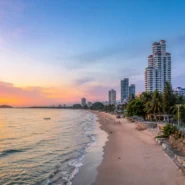
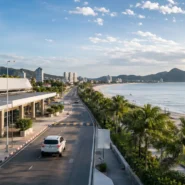
For most first-time visitors, this is the safest “I want Gangneung to feel like Gangneung” choice. Gyeongpo Beach has a long sandy shoreline, nearby pine trees and access to Gyeongpo Lake. Official tourism information describes the beach as roughly 1.8 kilometers long and about 6 kilometers from downtown Gangneung, which explains why it works well as a distinct seaside base rather than a quick walk from the station.
Gangmun Beach sits nearby and feels like a natural extension of the same coastal day. If you enjoy walking, you can treat the shoreline as an experience instead of hopping between named beach pins. This is a better use of time than repeatedly taking short taxi rides just to say you visited several beaches.
Gyeongpo also pairs well with Gyeongpodae Pavilion, the lake, ARTE Museum and Chodang. That clustering is exactly why it earns a place near the top of a first-timer itinerary: you can see several different sides of Gangneung without crossing the entire city.
How long to allow: around half a day if you are combining beach + lake/pavilion + meal; longer if you are staying overnight and want a slow morning.
✅ What Other Travelers Say
Recent traveler reviews frequently praise Gyeongpo for clean sand, pine-lined walking areas and a relaxed off-season atmosphere. Visitors also note that the experience is very different in peak summer, when the same area becomes much busier.
⚠️ The Catch (Things to Keep in Mind)
Gyeongpo is famous, so beach-adjacent hotels and restaurants can carry a convenience premium. Do not assume the most expensive oceanfront option gives the best overall trip. A slightly inland hotel can still be walkable while costing less. Also, if you visit only to take one beach photo and immediately leave, you will miss why this area works: the appeal is the combination of sea, pines, lake and unhurried walking.
Best for: couples, first-time visitors, relaxed weekends, sunrise walks, travelers who want a seaside hotel.
Less ideal for: travelers whose priority is K-pop filming spots or those arriving very late and leaving very early by train.
📍 Anmok Coffee Street: Best for Ocean-View Cafés, Not for “Must-Do” Box Ticking
Tags: ☕ coffee culture · 🌊 sea-view cafés · 📸 easy photos · 🌬️ weather-dependent
Anmok Coffee Street is one of the easiest Gangneung attractions to oversell because “coffee street by the sea” sounds irresistible. The setting is genuinely attractive: cafés line the waterfront beside Anmok Beach, and Gangneung has a long-established coffee culture that goes far beyond a single trendy block.
The important question is not whether Anmok is good. It is whether it is good for you. If you love choosing a window seat, ordering slowly and watching the East Sea for an hour, Anmok makes sense. If you drink coffee in ten minutes and prefer sightseeing, forcing it into the route can feel underwhelming.
Do not arrive expecting every café to be a hidden independent roastery. Traveler feedback is mixed on that point, with some visitors disappointed by the presence of familiar chains. The destination works best when you choose one café with a view, then walk the beach instead of trying to “complete” the street.
Smart timing: late afternoon works well after Chodang or Gangmun. On a clear day, the changing light can be more memorable than the coffee itself.
✅ What Other Travelers Say
Many visitors enjoy the combination of sea views and café choice, especially when they want a break rather than another formal attraction. The strongest positive theme is atmosphere: coffee with the coast directly outside.
⚠️ The Catch (Things to Keep in Mind)
One recent traveler review specifically criticized the street for having more chain cafés than expected. That is a useful reality check. If your idea of “coffee street” is tiny artisan shops and quiet local counters, research an individual café rather than assuming the whole strip fits that image. Windy or rainy weather can also reduce the value of the seaside setting.
Go if: coffee, views and slow travel are part of your trip.
Skip if: you are rushing a day trip, do not care about cafés, or already have a seaside café near your hotel.
📍 Ojukheon & Chodang: Best for Culture, Local Food and a Break from Beach-Hopping
Tags: 🏯 Joseon history · 🎋 black bamboo · 🍲 Chodang tofu · 👨👩👧 family-friendly
Gangneung is often reduced to beaches and coffee, which is why Ojukheon is worth including if you want the trip to have more substance. The historic complex is associated with Shin Saimdang and her son Yulgok Yi I, figures shown on Korea’s 50,000-won and 5,000-won banknotes. The site combines traditional architecture, museum elements and the black bamboo that gives Ojukheon its name.
Official tourism information suggests roughly an hour for the site, which is realistic for many first-time visitors. Give it longer if you enjoy museums or traditional architecture; keep it compact if history is only a secondary interest.
Ojukheon also works well because it can be paired with the Gyeongpo/Chodang side of town rather than treated as an isolated cultural excursion. After the visit, continue toward Chodang Dubu Village for a meal. Chodang-style tofu is a local specialty traditionally made using seawater in the coagulation process, producing a soft, delicate texture.
For first-time food planning, Chodang is more useful than chasing a long list of viral cafés. Pick one tofu restaurant, understand what you are ordering, and leave room for a market snack later.
✅ What Other Travelers Say
Traveler reviews often describe Ojukheon as larger and more attractive than expected, with pleasant grounds and enough historical context to feel worthwhile even for visitors who are not Korean-history specialists.
⚠️ The Catch (Things to Keep in Mind)
If you dislike museums, old houses and historical interpretation, do not visit just because it appears on every official itinerary. Your time may be better spent walking the coast. Likewise, Chodang Dubu Village is a food destination, not an entertainment district. Go to eat, not because you expect hours of sightseeing.
Best for: first-timers who want one cultural anchor, families, history-curious travelers and anyone who wants a local food stop that fits naturally into the route.
Skip or shorten if: your trip is only one day and the sea is your absolute priority.
📍 Jumunjin & Hyangho: Best for BTS and K-Drama Fans
Tags: 💜 BTS photo spot · 🎬 K-drama locations · 🐟 port atmosphere · 🚕 time-costly without a car
Jumunjin is where itinerary discipline matters most. It sits in the northern part of Gangneung, so adding it to a Gyeongpo–Anmok day can create a lot of backtracking. The area is attractive in its own right, with beaches, port scenery and seafood, but most international first-timers come because of K-pop and drama filming locations.
The famous BTS Bus Stop is beside Hyangho/Jumunjin Beach. The original structure was made for the album photo shoot, removed afterward, and later recreated because of fan demand. That history matters because it tells you what to expect: a symbolic photo zone, not a functioning bus stop or large attraction complex.
For BTS fans, this may be one of the most meaningful stops in Korea. For non-fans, the cost-benefit equation is different. The beach itself is pleasant, but if you are traveling by public transport on a short first trip, a long detour for one recreated photo point is hard to justify.
If you do go, make the journey earn its time. Combine the BTS stop with Jumunjin Beach, the port or market area, and possibly the breakwater associated with the drama Guardian: The Lonely and Great God (“Goblin”). Then the northern excursion becomes a real half-day rather than a single-photo commute.
✅ What Other Travelers Say
Fan reviews are understandably enthusiastic: recreating the album image or drama scene is the point, and the coastal backdrop adds emotional value. Other travelers also praise the beach itself for clean sand and strong sea views.
⚠️ The Catch (Things to Keep in Mind)
Some visitor reviews describe the filming stops as underwhelming once the photo is taken, especially when queues, construction or weather affect the scene. That does not make them “bad”; it means the value is fandom-dependent. If BTS and K-dramas are not part of your reason for visiting Korea, this is the first area I would cut from a tight itinerary.
Go if: you are ARMY, a K-drama fan, or you genuinely want a quieter northern beach-and-port day.
Skip if: you have only one day, dislike photo spots, or are relying on buses and already plan to visit Gyeongpo and Anmok.
📍 Jeongdongjin: Best for Sunrise, Rail Scenery and a Separate Southern Excursion
Tags: 🌅 famous sunrise · 🚆 rail-by-the-sea atmosphere · 🚲 railbike · 🧭 separate half-day or overnight side trip
Jeongdongjin is famous enough that first-time visitors often assume it is “in Gangneung” in the same practical sense as Gyeongpo. Geographically yes; logistically, treat it as a separate southern excursion. It is around 18 kilometers from central Gangneung, and the transport time becomes significant if you are also trying to visit northern or central attractions.
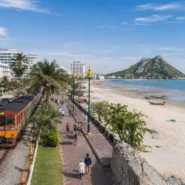
The appeal is specific: sunrise over the East Sea, a railway station right beside the coast, Sandglass Park, and the Jeongdongjin Railbike. Official tourism information currently lists the railbike as running on scheduled departures rather than continuously, so this is not an activity to treat as an anytime walk-in without checking.
Jeongdongjin works beautifully if you build the day around it. Stay nearby, wake for sunrise, have breakfast, ride the railbike or explore the coast, then continue north. It works badly when you suddenly decide at 3:30 p.m. to squeeze it in after Jumunjin.
The famous Sun Cruise-style ship hotel on the cliff is visually memorable, but opinions differ on whether its paid grounds and food represent good value. Treat it as optional, not as the reason you must visit Jeongdongjin.
✅ What Other Travelers Say
Visitors regularly praise the clear sea, slower pace and unusual rail-side setting. The area is especially popular with people who like sunrise travel, photography and nostalgic railway scenery.
⚠️ The Catch (Things to Keep in Mind)
Older and newer traveler comments alike point out that parts of Jeongdongjin can feel touristy. Sunrise is weather-dependent, railbike departures are scheduled, and the southern location makes it expensive in time if your hotel and other plans are in northern Gangneung. For a first trip of only one night, choose Jeongdongjin only if sunrise is a true priority.
Go if: sunrise, trains or railbikes are a major interest, or you have at least two nights.
Skip if: you are already stretching a one-day plan or your group hates early mornings.
How to Plan a Realistic Gangneung Itinerary
One Day: The No-Regrets First-Timer Route
Morning: KTX to Gangneung → leave luggage → taxi to Ojukheon or go straight to Gyeongpo if culture is not your priority.
Late morning: Gyeongpo Lake / Gyeongpodae → Gyeongpo Beach → walk toward the Gangmun side rather than taking repeated short rides.
Lunch: Chodang Dubu Village.
Afternoon: Anmok Coffee Street and beach.
Evening: Jungang Market / downtown → Gangneung Station → KTX back to Seoul.
What to cut: Jumunjin and Jeongdongjin. Adding either one can work; adding both turns the day into transport management.
Two Days, One Night: Best Overall First Visit
Day 1: arrive → Ojukheon → Gyeongpo / Gangmun → Chodang → sunset or evening coast → sleep around Gyeongpo/Gangmun.
Day 2 option A (K-pop/K-drama): morning coast → Jumunjin/Hyangho → port/market → return downtown → KTX.
Day 2 option B (slow travel): Gyeongpo sunrise → late breakfast → Anmok coffee → Jungang Market → KTX.
Day 2 option C (sunrise/rail): stay farther south or start very early for Jeongdongjin → railbike/coast → return to Gangneung → KTX.
Three Days, Two Nights: The Version That Actually Feels Relaxing
With three days, you can separate Gangneung into logical zones: central culture and food, the Gyeongpo–Gangmun–Anmok coast, and one outer excursion to either Jumunjin or Jeongdongjin. This is the point where public transport becomes less stressful because a missed bus no longer destroys the entire itinerary.
Where to Stay in Gangneung for Your First Trip
Stay Near Gangneung Station if You Hate Moving Luggage
This is the practical choice for late arrivals, early departures and travelers using the city as part of a larger Korea rail itinerary. You will sacrifice the ocean-at-your-window fantasy, but you gain simpler arrival and departure logistics.
Stay in Gyeongpo or Gangmun for the Best First-Time Atmosphere
If this is a dedicated Gangneung getaway, I would usually choose this zone. You can walk the beach early and late when day-trippers are gone, and the coast remains useful even after formal attractions close.
Stay in Anmok Only if Café-and-Sea Time Is the Point
Anmok is pleasant, but it is not automatically the best base just because it is famous. If you plan to spend most of your trip at Gyeongpo, Ojukheon and Jumunjin, Anmok can create unnecessary movement.
Stay in Jumunjin or Jeongdongjin Only for a Focused Trip
Both can be excellent, but they push you away from the center. Choose them when the northern filming locations or southern sunrise experience is the main reason for coming, not because a cheap room appeared in search results.
How to Get Around Gangneung Without Wasting Time
KTX: For most first-time visitors coming from Seoul, rail is the cleanest way to control travel time. KORAIL’s official foreign-language site is the place to verify schedules and buy rail tickets directly.
Local buses: Useful for budget travel, but do not build a minute-by-minute itinerary that assumes every connection will line up perfectly. Use live navigation in Korea and give yourself buffer time.
Taxis: Most valuable between clusters, especially when you are traveling as a couple, family or small group. A taxi from station/downtown to a coastal area can remove a transfer and protect a large part of your day.
Tourist taxi / private driver: Worth considering if you insist on combining dispersed locations such as Jumunjin, Gyeongpo, Ojukheon and Jeongdongjin in limited time. This is one situation where paying more can genuinely improve the trip rather than just add comfort.
Walking: Excellent within a cluster. Poor as a strategy between clusters. Walk Gyeongpo–Gangmun coast, market streets and individual neighborhoods; do not look at a map scale and assume the entire tourist city is walkable.
Budget Reality: Where to Save and Where Not to
- Save on accommodation by comparing station/downtown hotels against beachfront premiums, especially on weekends.
- Spend on location if one night by the sea is the entire purpose of the trip. A slightly higher room rate can replace multiple taxi rides and give you sunrise access.
- Save on transport by grouping attractions. Route design is a bigger budget tool than taking the cheapest possible bus every time.
- Spend on one strategic taxi when it eliminates a long wait or difficult transfer.
- Save on food by using markets and local specialties rather than eating every meal at a beachfront restaurant.
- Do not overspend on café hopping. One excellent ocean-view café is enough unless coffee is a core hobby.
- Book peak dates earlier. Last-minute summer or weekend rooms can erase any savings you made elsewhere.
What I Would Skip on a First Gangneung Trip
Every beach with a different name: You do not need to stop at five beaches to understand Gangneung’s coast. Pick one main beach, then enjoy a continuous walk.
BTS Bus Stop if you are not a fan: This is the clearest cut. The recreated bus stop has meaning because of BTS. Without that connection, the travel time is better spent elsewhere unless you are already exploring Jumunjin.
Jeongdongjin sunrise after a late night: Do not turn a relaxing coastal trip into a sleep-deprivation challenge because a guide says sunrise is “iconic.” Check the forecast and your actual energy level.
Too many media-art/photo attractions: Gangneung’s natural coast is the city’s advantage. If your itinerary is mostly indoor photo installations and filming replicas, you may leave without spending enough time by the sea.
A hotel chosen only by price: A room that saves you a little money but adds two inconvenient journeys can be the more expensive decision in practice.
Key FAQs
How many days do you need in Gangneung for a first trip?
Two days and one night is the best balance for most first-time visitors. It gives you enough time for Gyeongpo/Gangmun, one cultural or food stop, Anmok or downtown, and one additional interest without racing. A one-day trip is workable if you stay within one main cluster. Three days is better if you want both a remote excursion and genuinely relaxed beach time.
Is Gangneung worth a day trip from Seoul without a car?
Yes, but only with a disciplined itinerary. KTX makes the intercity journey easy; the challenge is local transport after arrival. For a day trip without a car, focus on Gyeongpo/Gangmun + Chodang + Anmok, or Ojukheon + Gyeongpo + downtown. Avoid combining Jumunjin and Jeongdongjin unless you book a driver or tourist taxi.
Where should first-time visitors stay in Gangneung without a car?
Stay near Gangneung Station/downtown if rail convenience, luggage and budget matter most. Stay around Gyeongpo or Gangmun if the beach is your priority and you want the strongest “coastal getaway” feeling. Do not book remote Jumunjin or Jeongdongjin accommodation just because it looks cheaper unless those areas are central to your plan.
Final Verdict and Your Next Step
Gangneung is one of the easiest coastal escapes from Seoul to underestimate. The KTX makes the city feel close, but the attractions are spread across enough coastline that your local route matters more than your list of “must-sees.” The best first trip is not the one with the most pins. It is the one that keeps you in a logical area long enough to enjoy the sea, food and atmosphere without constantly checking the next bus.
If you are a first-time couple or leisure traveler: stay around Gyeongpo/Gangmun, spend one slow evening by the coast, and use taxis for one or two awkward legs.
If you are on a budget: base yourself near Gangneung Station or downtown, eat at the market and Chodang, and choose one coastal cluster rather than paying repeated long-distance fares.
If you are traveling with children or older family members: prioritize Gyeongpo, Ojukheon and a private/tourist taxi over multiple bus transfers. Comfort here is not luxury; it is a way to avoid turning the trip into a transport exercise.
If you are a BTS or K-drama fan: give Jumunjin a proper half-day and cut something else. Do not squeeze the filming locations into a generic beach itinerary and then complain that the journey was too long.
If sunrise is the reason you are coming: build around Jeongdongjin or Gyeongpo from the start, check the weather, and choose accommodation that makes the early start realistic.
Once your route is decided, book the parts that can ruin the trip if they sell out: your KTX, your one-night accommodation, and any time-sensitive taxi, driver or railbike activity. Weekend Gangneung is exactly the kind of destination where “we’ll decide when we arrive” sounds relaxed until the useful train or well-located hotel is gone.
Compare accommodation:
Check Gangneung hotels on Agoda
or
compare Gangneung stays on Booking.com.
Reduce difficult local transfers:
Check the Gangneung 3-hour taxi tour on Klook.
Compare organized Gangneung/Gangwon options:
View the Gangneung & Donghae 2-day option on KKday.
Book first, then simplify. If your itinerary still contains Gyeongpo, Anmok, Ojukheon, Jumunjin and Jeongdongjin in one public-transport day, remove at least two. Gangneung rewards people who stop moving long enough to actually look at the sea.