



💡 Key Takeaways
- Best overall: late November through February. December and January are the safest bets for dry weather, while late November and early February can offer a slightly better balance between comfort and crowds.
- Biggest heat trap: March and especially April. April daytime temperatures commonly push into the mid-to-upper 30s°C, and the ruins offer far less shade than many first-time visitors expect.
- Biggest weather gamble: September and October. Rain does not automatically mean a ruined trip, but these months bring the highest combination of heavy rainfall, saturated ground and river-related flood risk. Flexible bookings matter more than chasing the absolute lowest room rate.
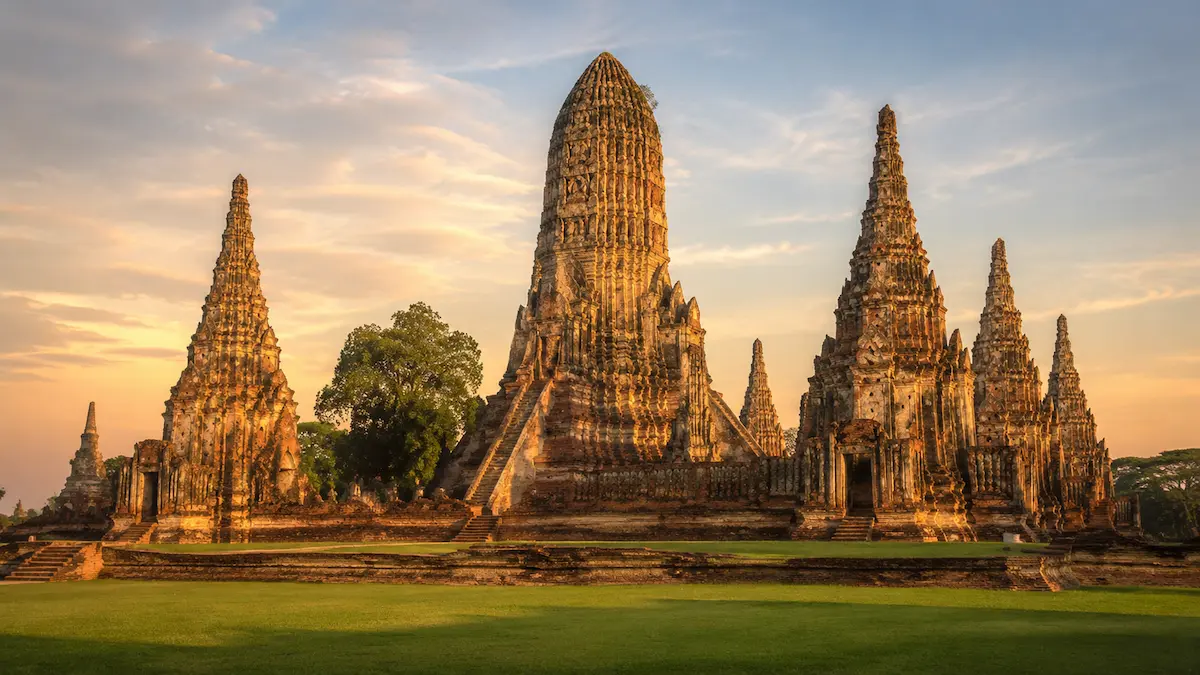
Choosing the best time to visit Ayutthaya is less about finding one “perfect” month and more about deciding which discomfort you are willing to accept. Ayutthaya is an open-air heritage city: you will spend hours walking between exposed brick ruins, courtyards and temple compounds, often with limited shade. That makes heat, humidity and sudden downpours much more important here than they might be on a beach holiday or a city break built around air-conditioned attractions. Dry-season weather is easier, but popular temples and day tours are busier. Hot and wet months can be cheaper and quieter, but the savings are not always worth it if you lose half your sightseeing energy by noon.
There is also one common planning mistake worth correcting immediately: Ayutthaya does not have a meaningful cherry blossom season. Thailand’s well-known “Thai sakura” blooms are associated mainly with cooler northern highland areas, not the central plains around Ayutthaya. Likewise, Japan’s Golden Week is not a local Thai holiday; it only matters if your flights or tour demand are being affected by visitors departing from Japan. For Ayutthaya, the dates that really change your experience are Thai festivals such as Songkran, major heritage events, weekends, public holidays and the late-wet-season river conditions.
The 1-Min Cheat Sheet
- March to April: Best for travelers who want major cultural energy, especially the World Wai Kru Muay Thai events in March and Songkran in April. The trade-off is serious heat. April is one of the hardest months for a full day of temple walking, cycling or photography in exposed sun. Verdict: great for festivals, poor for heat-sensitive sightseeing.
- May to June: Hot, humid and increasingly showery, but usually more manageable for deal hunters than April. Rain often arrives in bursts rather than lasting all day, and the landscape starts looking greener. Verdict: one of the better value windows if you can build a flexible schedule around storms.
- July to August: Still humid, with frequent rain and cloudier skies. Temperatures are a little less punishing than April, but wet surfaces and afternoon storms can interrupt cycling or long outdoor routes. Verdict: good for budget-conscious travelers who prefer fewer crowds and can tolerate rain uncertainty.
- September to November: This is not one uniform season. September is typically the wettest month, October remains flood-sensitive, then November improves sharply as the dry season approaches. Verdict: September and October are a gamble; late November can be one of the smartest times of the year.
- December to February: The easiest period for most first-time visitors: drier conditions, more comfortable mornings and better odds of completing a full temple itinerary without weather disruption. It is also the most obvious high-season choice, so popular tours and accommodation can fill earlier. Verdict: best all-round weather, but not the best bargain window.
Top Survival Tips
- Do not judge Ayutthaya heat by the temperature alone. Humidity, radiant heat from brick and stone, and long exposed walks make a 34–36°C day feel much harder than the same number on a shaded urban itinerary.
- Front-load your day. In hot or humid months, start at opening time, concentrate your longest outdoor stops in the morning, and treat roughly 11:30 a.m. to 3:00 p.m. as the period to shorten walks, eat lunch or use air-conditioned transport.
- Do not romanticize cycling in the hottest months. Bicycles are excellent in pleasant weather, but March through June can turn a charming plan into a dehydration test. A tuk-tuk, private car or air-conditioned van can be money well spent when heat is the limiting factor.
- A rainy-season forecast does not mean rain all day. May through August can still deliver usable sightseeing windows. The smarter strategy is to keep your route flexible, watch the radar and move your most important outdoor temples earlier if storms are building.
- Flood risk is different from “a rainy day.” Ayutthaya sits among major rivers, so late-wet-season problems can be driven by upstream water levels and river overflow even when the rain at your hotel seems manageable. In September and October, check the Thai Meteorological Department and ThaiWater close to departure.
- Make wet-season bookings changeable. A slightly cheaper non-refundable room or day tour is not much of a bargain if river conditions force you to change plans. Flexible cancellation is worth paying for in the higher-risk part of the rainy season.
- Songkran changes transport, not just sightseeing. Around 13–15 April, expect water festivities, slower road movement, crowded activity zones and a high chance that you and your phone will get wet. Waterproof valuables before leaving your hotel.
- Weekdays are underrated. If your schedule allows, visit the most famous ruins on a weekday and stay overnight rather than arriving with the main Bangkok day-trip wave. Early morning and late afternoon are both cooler and more atmospheric.
- Dress for temples and the climate at the same time. Lightweight, breathable clothing that covers shoulders and knees is more useful than heavy “modest” clothing. Add sun protection, water and footwear that still grips when ancient brick becomes wet.
- Japan’s Golden Week is not an Ayutthaya season. It may affect airfare or package demand from Japan, but it should not drive your month choice unless Japan is part of your own flight market or itinerary.
The Full Experience
🔥 March to April: Best for Festivals, but Brutal for Heat-Sensitive Travelers
Best for: Songkran, Muay Thai culture, energetic festivals | Weather: Very hot to extreme | Crowds: Event-dependent | Budget: Mixed
March is already hot, and April is the month most likely to punish an overambitious itinerary. Long-term climate data for Ayutthaya put typical April daytime highs around 36°C to 37°C (roughly 97°F to 99°F), with warm nights that provide limited recovery. The issue is not simply “summer weather.” Historic ruins absorb and radiate heat, many walkways have little shade, and a plan that looks easy on Google Maps can feel exhausting by early afternoon.
The upside is cultural intensity. The annual World Wai Kru Muay Thai gathering is associated with Ayutthaya in mid-March, while Songkran around 13–15 April brings water celebrations and a very different atmosphere from a normal temple day. If experiencing a major Thai festival is a priority, this period can be memorable. If your priority is quietly studying architecture, photographing ruins without crowds, or cycling all day, it is a weak fit.
Best strategy: schedule the most exposed temples first thing in the morning, use a vehicle between distant stops, book accommodation with strong air-conditioning, and assume your midday productivity will be lower than in winter. During Songkran, build extra transfer time into the day and waterproof electronics before leaving the hotel.
✅ What Other Travelers Say
Recent traveler discussions repeatedly describe April as genuinely hot rather than merely “warm,” and Songkran visitors commonly warn that road movement, queues and crowd patterns can be very different from an ordinary sightseeing day. At the same time, travelers who specifically want Songkran often rate the festive atmosphere as the reason to accept those inconveniences.
⚠️ The Catch (Things to Keep in Mind)
Do not choose April simply because you see attractive festival photos. For travelers with low heat tolerance, young children, mobility limitations or a long list of ruins to cover in one day, the temperature can reduce the value of the trip more than a modest hotel saving helps. Songkran is worth it when the festival itself is part of the goal—not when you are trying to pretend it is a normal sightseeing week.
🌦️ May to June: Best Value for Flexible Travelers Who Can Handle Humidity
Best for: Better-value stays, greener scenery, lighter tourist pressure | Weather: Hot, humid, showery | Crowds: Usually moderate to lower | Budget: Often attractive
May and June are where the planning question becomes more interesting. The first serious rainy-season patterns develop, but that does not mean twelve hours of rain every day. Showers can be heavy and inconvenient, yet many days still contain long dry windows. Temperatures remain high—often in the mid-30s°C during the day—while humidity makes the air feel heavier than the headline number suggests.
For value seekers, this period has a stronger case than April. Demand is generally less intense than the classic December-to-February season, so you may find more room choice and less pressure to commit far in advance. The ruins and surrounding vegetation also begin to look greener, which can make the site more photogenic after rain. The trade-off is that clouds, wet brick, puddles and a sudden thunderstorm can force route changes.
May and June work particularly well if you are staying overnight rather than attempting a tightly scheduled Bangkok day trip. An overnight stay gives you two morning or late-afternoon sightseeing windows instead of one long exposed block. It also lets you wait out a storm without feeling that your entire visit is being wasted.
✅ What Other Travelers Say
Recent June trip reports often describe the heat as the bigger challenge than the rain. Travelers who used a private car, tuk-tuk or air-conditioned van generally found the day easier because they could recover between temples instead of accumulating heat exposure continuously.
⚠️ The Catch (Things to Keep in Mind)
“Shoulder season” does not mean cool season. You can save money and encounter fewer people, yet still have a physically demanding day. If your plan depends on a bicycle, perfect blue skies or a strict hour-by-hour photo schedule, May and June introduce enough heat and weather variability to be frustrating.
🌧️ July to August: Good for Deals and Green Scenery, Not for Rigid Itineraries
Best for: Deal hunters, repeat visitors, green landscapes | Weather: Humid with frequent showers | Crowds: Often manageable | Budget: Generally favorable
July and August sit firmly inside the wet season. Rain becomes more frequent, cloud cover is common, and August is usually wetter than July. On the positive side, average daytime temperatures are a little less extreme than April, and the green season can make moats, trees and temple surroundings feel more lush.
This is a practical period for travelers who care more about value than perfect weather. Hotel availability is often easier than in peak dry season, and the main ruins can feel less relentlessly busy outside weekends and domestic holiday dates. Rain also creates attractive reflections and softer light when the timing works. The problem is reliability: you cannot assume that the exact hour you allocated for Wat Chaiwatthanaram or a cycling loop will stay dry.
A good July–August plan has indoor recovery points and transport flexibility. Carry a compact umbrella or poncho, keep your phone and passport in a waterproof pouch, and wear shoes that grip well on damp surfaces. If the sky is already building toward a storm, prioritize the temple you would regret missing rather than following an arbitrary route order.
✅ What Other Travelers Say
Recent wet-season reviews show a consistent pattern: rain can be workable when the itinerary is adaptable. Travelers report finishing full sightseeing days when guides changed the order of stops or provided umbrellas, while midday heat remains noticeable even with clouds.
⚠️ The Catch (Things to Keep in Mind)
Lower demand does not guarantee a “cheap trip” once transport and comfort are added. If rain makes you abandon cycling and hire a tuk-tuk or car for the day, some of the savings disappear. The best candidates for July and August are travelers who see flexibility as normal, not as a failure of the itinerary.
🌧️➡️🌤️ September to November: From Flood-Risk Gamble to Late-November Sweet Spot
Best for: Flexible bargain hunters in early autumn; weather-conscious travelers in late November | Weather: Wettest first, then rapidly improving | Crowds: Low to rising | Budget: Low-risk value only if dates are flexible
This three-month block contains the biggest weather swing of the year, so treating September, October and November as interchangeable is a planning mistake. September is typically Ayutthaya’s rainiest month, with long-term climate datasets showing roughly 220–230 mm of rainfall. October can remain very wet, and river levels may still be the main concern. By November, rainfall usually falls sharply and the dry season begins to take control.
The river issue matters because Ayutthaya is surrounded and crossed by major waterways. A forecast showing only scattered rain at your exact location does not tell you whether upstream flows are creating problems in low-lying areas. The 2025 wet season, for example, produced prolonged flooding in parts of Ayutthaya Province as river overflow intensified later in the season. That does not mean every September or October will flood in the same way; it means the risk is real enough to check rather than dismiss.
If you dislike weather uncertainty, skip the bargain hunting and aim for late November. It can deliver much of the dry-season advantage before the most obvious winter-holiday travel period. If you are visiting in September or October, use refundable accommodation, avoid building a once-in-a-lifetime itinerary around a single fixed day, and check both rainfall forecasts and water-level information in the final days before travel.
November may also coincide with Loy Krathong-related celebrations depending on the lunar calendar and local programming. Treat festival dates as a bonus, not a fixed annual promise: verify the current year’s schedule before booking around one specific event.
✅ What Other Travelers Say
Traveler reports from September and October are mixed in a useful way. Some visitors complete their temple routes with little more than umbrellas and schedule changes, while others have skipped Ayutthaya during periods of flooding. That contrast is exactly why this season needs current-condition checking rather than blanket advice such as “rainy season is fine” or “never go in the rain.”
⚠️ The Catch (Things to Keep in Mind)
The cheapest-looking September or October date can have the worst value if weather forces you to cancel non-refundable tours, rearrange transport or miss the sites you came to see. On the other hand, late November is often one of the best compromise periods of the year. The month on your booking confirmation matters less than where you are inside this transition.
☀️ December to February: Best Overall Weather, but Expect Peak-Season Demand
Best for: First-time visitors, full-day sightseeing, families, photography | Weather: Driest and most comfortable | Crowds: Highest overall | Budget: Usually weaker for bargains
For most travelers, December through February is the easiest answer to the “when should I go?” question. Rainfall is low, morning temperatures are more comfortable, and the odds of losing prime sightseeing hours to storms are much smaller than in the wet season. December and January are especially dry. This is the period when a bicycle, walking-heavy route or ambitious full-day temple circuit makes the most sense.
Do not confuse “cool season” with cold weather. Ayutthaya can still reach around 32–34°C (90–93°F) in the afternoon. The difference is that mornings, shade and overall humidity are usually more forgiving, making it much easier to stay outside for longer. Sunrise and late-afternoon light are also easier to plan around when the sky is not dominated by wet-season storm cycles.
The downside is predictable: everyone else can see the same weather chart. Bangkok-based day tours are popular, hotel choice can narrow around weekends and special events, and the best-known ruins receive concentrated visitor waves. The annual Ayutthaya World Heritage celebration is typically held in December, although dates and programming vary by year and should be checked before booking.
If your schedule is flexible, consider late November, early December or early February instead of assuming the Christmas–New Year period is automatically best. You keep much of the favorable weather while giving yourself a better chance of avoiding the most obvious holiday demand spikes.
✅ What Other Travelers Say
Dry-season visitors generally find the weather much easier for long temple days, but recent high-season tour reviews also show that group size can be unpredictable. A tour marketed as convenient may still put you on a busy coach or in a larger group than expected, particularly on popular dates.
⚠️ The Catch (Things to Keep in Mind)
Good weather does not guarantee solitude or bargain prices. If photography, quiet ruins or a small-group experience matters more than shaving a few dollars off the booking, reserve accommodation and the right tour format early, then visit the headline temples at the edges of the day rather than at the main day-trip peak.
So, What Is the Cheapest Time to Visit Ayutthaya?
If your goal is to reduce accommodation and tour pressure without accepting the highest flood risk, May through August is usually the more sensible value window. September can look even cheaper on some dates, but the weather risk is higher enough that a low room rate should not be your only criterion. For a one-day visit from Bangkok, remember that your total cost is shaped by transport, guide choice and last-minute weather decisions as much as by the hotel rate.
There is no single “cheapest month” that can be guaranteed across all travelers. Hotel inventory, Thai public holidays, weekends, event dates and your flight origin can move prices significantly. The smarter target is best value: a month where lower demand is not offset by so much heat or flood uncertainty that you lose the experience you paid for.
Key FAQs
What is the best month to visit Ayutthaya for good weather and fewer crowds?
For most travelers, late November or early February is the strongest compromise. December and January are usually the driest, but they are also the most obvious high-season choices. Late November often benefits from rapidly improving weather, while early February can still be dry before the serious March–April heat builds.
Is Ayutthaya worth visiting during the rainy season from May to October?
Yes—especially from May through August—if you accept schedule flexibility. Rainy season does not mean nonstop rain every day, and fewer crowds plus greener scenery can be worthwhile. September and October require more caution because heavy rainfall overlaps with greater river and flood uncertainty. Use refundable bookings and check current water conditions close to your trip.
Does Ayutthaya have a cherry blossom season, and when should I visit for flowers?
No. Do not plan an Ayutthaya trip around cherry blossoms. Thailand’s famous pink “Thai sakura” or wild Himalayan cherry displays are mainly associated with cooler mountain areas in northern Thailand. Ayutthaya may have ornamental or themed displays at individual attractions from time to time, but there is no citywide natural cherry blossom season comparable with Japan.
Final Verdict and Your Next Step
If this is your first trip and you want the lowest chance of weather-related disappointment, choose late November through February. If you care about cultural events and can tolerate serious heat, March and Songkran-season April can be memorable. If price and lighter crowds matter more, May through August offers the most convincing value trade-off. If you are highly flood-averse or your itinerary cannot move, September and October are the months to approach most carefully.
The best booking strategy is simple: reserve early for December–February, Songkran and major event weekends, while keeping late-wet-season plans flexible. Ayutthaya is close enough to Bangkok that people often leave it until the last minute, but the best small-group tours, well-reviewed riverside stays and convenient departure times can still sell out on high-demand dates.
Check Ayutthaya hotels on Agoda
Compare Ayutthaya stays on Booking.com
Book a popular Ayutthaya day tour on Klook
Compare an Ayutthaya day tour on KKday
Editorial Sources & Verification Notes
This guide prioritizes long-term climate patterns, official tourism information and current-condition risk rather than treating one traveler’s weather as a universal rule. Event dates can shift each year, hotel prices are dynamic, and YouTube creators can change video availability or embedding permissions after publication.
- Tourism Authority of Thailand — Thailand weather overview
- Tourism Authority of Thailand — Phra Nakhon Si Ayutthaya destination guide
- UNESCO — Historic City of Ayutthaya
- Thai Meteorological Department — Ayutthaya weather
- Thai Meteorological Department — climate charts
- ThaiWater — 2025 Ayutthaya flood situation summary
- WeatherSpark — Ayutthaya year-round climate patterns
- TAT Newsroom — Songkran 2026 programming, including Ayutthaya
- Tourism Authority of Thailand (Japan) — Ayutthaya World Heritage celebration