


💡 Key Takeaways
- Start with the journeys you actually need. A central walking day may need one €1.90 digital City ticket; two separately chargeable digital trips cost €3.80, compared with €3.70 for a digital Daily. The Daily ends with that service day, not 24 hours after you activate it.
- GTT buses, trams and metro share eligible urban tickets, but ordinary City and Daily products do not include the airport railway or airport coaches. Porta Susa and Porta Nuova are different arrival stations; price the final hotel leg as well as the airport ride.
- A museum card is not an unlimited transport pass, and one bank card cannot buy simultaneous Tap&Go trips for a family. Match each traveler, ticket medium, validation rule and actual route before paying.
A useful Turin Transportation Guide should help you avoid buying a pass for journeys you will never take. Turin rewards a plan built around short central walks and a few deliberate rides. The awkward bits are usually the station you arrive at, a ticket that expires earlier than expected, or an extra boarding with a heavy case.
The main decision is not whether Turin has good public transport. It is whether the next ride removes enough walking, lifting or uncertainty to justify it. For a first city break, I would choose a workable hotel entrance, group nearby sights, and buy transport around that plan. I would not choose a distant room because an unlimited pass makes every transfer look free.
Official operator information was checked on 6 November 2026. The prices below identify the published product and medium. They are not a promise about future fares, disruption or live seat availability. The films are dated orientation; the linked current operators control today’s service.
The 1-Min Cheat Sheet
- 🚶 Walking: best for the central sequence around Via Roma, Piazza San Carlo and Piazza Castello. Break the day into nearby clusters, with a seat and meal between them. A sightseeing walk with no bags is a different proposition from the same pavement with two cases.
- 🚇 Metro: useful for the Porta Susa–Porta Nuova connection and a longer trip toward Lingotto. Check the actual station nearest your entrance. There is no Piazza Castello metro stop on the current M1 timetable.
- 🚋 GTT buses and trams: useful for a hotel or attraction away from the metro corridor. City is €1.90 digitally or €2 on chip-on-paper; the 100-minute validity includes one metro journey. Validate when changing vehicles.
- 🚆 Railway and airport connections: choose the correct operator product. The airport railway information lists about 30 minutes to Porta Susa and €3.70 per passenger. An ordinary GTT Daily is not that train ticket.
- 🚕 Licensed taxi or separately agreed private car: worth pricing for an awkward final hotel leg, unsuitable public-transport timing or a party carrying more than it can comfortably manage. State the bags, children and exact address before comparing costs.
Top Survival Tips
- Save the whole destination. “Turin station” is not precise enough. Keep Porta Nuova or Porta Susa, the property’s street number and its actual entrance together in your arrival notes. The train platform exit and the metro entrance are separate parts of the journey.
- Read validity before the word unlimited. GTT Daily lasts until the end of the service day. Tour 48/72-hour tickets run for the stated consecutive hours from first validation. Neither description means every transport operator or every trip outside the urban network is included.
- Count chargeable journeys, not vehicle changes. A valid City can cover an eligible bus-to-tram transfer within its time limit; its metro allowance is one journey. Conversely, a later return or a second metro journey can require another ticket. Do the calculation for your route, rather than multiplying every boarding by the headline fare.
- Use one payment method consistently. GTT’s contactless FAQ requires the same device for transfers. A bank card in a phone wallet and the physical card can have different virtual identifiers. Do not alternate them and expect the system to recognize a single journey.
- Protect against card clash. Present the intended card by itself. If your phone also holds TO Move tickets, read GTT’s instructions on its NFC ticket-reading setting before using the bank wallet: the operator warns against unintended validation of an app ticket as well.
- Have a practical backup. Make sure your phone supports the app and ticket method before relying on it at a stop. A charged phone and a confirmed successful validation matter more than an installed icon. Chip-on-paper tickets cost more but can be a useful deliberate alternative.
- Check the dated service homeward. Do not infer the last metro or bus from an afternoon journey. Day-of-week timetables, works and replacement arrangements can differ. Check the return before leaving for dinner, especially if walking back is not realistic.
- Check access, not just distance. Confirm the lift and step-free path needed for your specific journey. An old tram in a film, a station map or a short distance on a phone is not proof of a currently usable boarding route for your wheelchair, stroller or case.
Which Turin Ticket Is Actually Worth Buying?
The current GTT urban ticket page is the clearest starting point. It lists City at €1.90 digitally or €2 on chip-on-paper, valid for 100 minutes including one metro journey, for one person. It must be validated when changing vehicles. Ordinary urban products cover the eligible GTT urban and suburban network, not the airport coach, extraurban bus network or ordinary railway services; integrated products have their own stated coverage.
Daily is €3.70 digitally or €4.50 on chip-on-paper. Consider two separately chargeable digital City trips: €1.90 + €1.90 = €3.80. A digital Daily is then 10 cents less and allows further eligible rides that service day. But if your morning bus and tram are a valid single City journey and you walk home, spending €3.70 is still more than €1.90. With paper, two €2 City trips total €4, below the €4.50 paper Daily. The medium changes the comparison.
Tour 48/72 hours costs €7.80/€10.30 digitally, or €9.50/€12.50 on chip-on-paper. These are consecutive-hour products, not two or three calendar-day Dailys. Two digital Dailys total €7.40, so a €7.80 Tour is not automatically the cheaper two-day choice. Its benefit can be the clock: a Friday-afternoon activation can still cover eligible travel before the same time on Sunday. Identify the actual hours you need before choosing.
MultiDaily 7 costs €21 and contains seven Daily tickets for one traveler, usable on non-consecutive days under the product’s conditions. It is not seven tickets to distribute to seven people. For a three-day visit, three digital Dailys cost €11.10; buying the larger carnet just to get a lower theoretical daily price leaves money in unused travel.
Daily x4 is a distinct group product: €12 digitally or €14.80 on chip-on-paper for up to four people traveling together. Four individual digital Dailys total €14.80, so the digital group product saves €2.80 in that comparison. Three individual digital Dailys total €11.10, however. Do not buy a four-person product automatically for three, and do not expect a group ticket to work when the party splits. Follow its special metro-gate and vehicle-validation instructions.
Tap&Go purchases a digital City ticket; GTT expressly says you cannot make multiple taps on the same bank card for several people at once. If a child or companion needs a paid ticket, arrange the appropriate separate product. Do not assume a daily price cap from another city’s payment system applies here.
The Torino+Piemonte Card is primarily a cultural pass. Ordinary public transport is a separate purchase. The tourism office lists optional discounted 48/72-hour GTT tickets sold there in conjunction with the card; those conditions do not turn a museum QR code into a bus ticket. Decide whether the museums justify the card first, then choose transport.
The Full Experience
🚶 Walking: Best for a Compact Central Sightseeing Day
Best for: nearby museums, central squares and flexible stops | Watch for: accumulated distance, paving, crossings and the return journey
The 2017 upload by settime2588 gives a useful street-level introduction to the central squares. Treat it as older spatial context, not a report on current works. Start with one manageable chain: Porta Nuova’s city side, Via Roma, Piazza San Carlo and Piazza Castello. Add a museum beside that chain rather than traveling across town between every stop.
Walking is attractive because you can change your mind. You can sit, take a shorter loop or leave a square without working out another fare. The trap is counting only the walk between attractions. Getting to breakfast, finding an entrance and returning for a forgotten jacket all add distance. Put the last attraction near dinner or near your route home, rather than finishing at the farthest point because it looked efficient in the morning.
✅ What Other Travelers Say
The linked walk shows the broad squares and arcaded streets that make a central route appealing. Use that visible layout to judge whether you want a slow walking day. It is not evidence that every pavement, crossing or hotel approach is accessible or equally quiet.
⚠️ The Catch (Things to Keep in Mind)
Arcades provide sections of shelter, not an uninterrupted covered route to every destination. The municipality has a Via Roma redevelopment project; a project timetable is not a promise that your exact pavement will be clear. Look for current diversions and ask the hotel about its door. Choose a shorter arrival walk with bags than you would choose after checking in.
🚇 Metro: Best for Stations and Longer Trips Along M1
Best for: the main railway stations and the Lingotto corridor | Watch for: wrong direction, access routes and the final walk
Tito Rhan’s March 2021 upload shows a station approach, ticket machines, platforms and boarding. Its old description ends the line at Lingotto; the current GTT M1 timetable runs between Fermi and Bengasi. Use the current timetable for stops and the film only to familiarize yourself with the station environment.
For Porta Susa to Porta Nuova, the current stop sequence heads toward Bengasi. The reverse journey heads toward Fermi. Read the platform direction before taking the case down an escalator. Lingotto can be a useful ride for a planned southern-city outing, but the underground station is not automatically beside the entrance to your particular venue.
✅ What Other Travelers Say
The rider’s station footage makes the stages of buying, entering and boarding easier to picture. It also shows why a short train ride can still involve several movements before you reach the street. That is useful planning context, rather than a survey of today’s reliability.
⚠️ The Catch (Things to Keep in Mind)
M1 does not take you to every historic-centre sight. Changing levels to ride a short distance may save little if the final street walk remains long. Check today’s lift and service information where access is essential. Keep the ticket or payment device ready, allow space at the gates and do not assume one City buys repeated metro entries.
🚋 Buses and Trams: Best for a Useful Stop Near the Door
Best for: journeys away from the metro corridor | Watch for: direction, diversions, boarding steps and validation
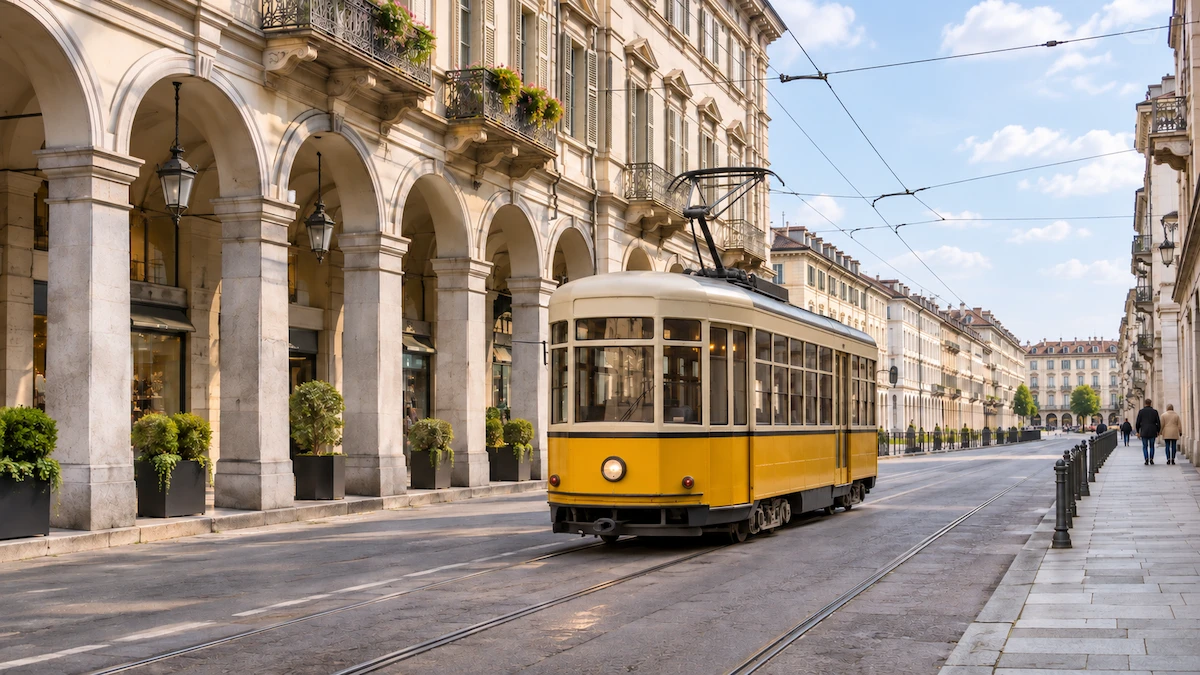
Transport International’s May 2026 tram film shows a range of street environments and vehicles. It is a helpful introduction to the surface network; it does not establish today’s service for every line in its title. Use GTT’s current routes and timetables to select a stop in the correct direction and check notices.
A useful surface ride is one that finishes closer to where you need to be. Before walking to a stop, compare the whole route: the walk there, expected wait, boarding, ride and final crossing. If you only need a short central hop, a pleasant direct walk may be simpler. If your feet are tired or the room is beyond the central cluster, a well-chosen tram or bus can be the best purchase of the day.
✅ What Other Travelers Say
The film shows different tram types and urban settings, so you can see why “a tram ride” is not a uniform boarding experience. Choose the method for its useful route and actual access, rather than expecting every service to look like the newest vehicle in the montage.
⚠️ The Catch (Things to Keep in Mind)
Validate your ticket on transfers as required. With Tap&Go, use an equipped vehicle and the same device; read the successful validation message rather than assuming a tap was accepted. Keep bags away from doors and do not rely on an unverified bus number copied from an old hotel review. A shorter walk to a stop on the wrong side of the road is not a saving.
🚆 Railway and Airport Links: Best for the Correct Station
Best for: airport access and booked onward rail travel | Watch for: separate tickets, station names and baggage-ready departure time
DiscoverByRail’s June 2024 film is a useful airport-to-rail introduction. Its description quotes an older €3.60 fare. The current Trenitalia airport page lists €3.70 and a journey of about 30 minutes between the airport and Porta Susa. That ride time excludes waiting, reaching the platform and your final hotel leg.
For a Porta Nuova-side hotel, compare the extra rail/metro or street leg with a suitable airport coach. Arriva lists €7.50 single and €11 return; the Express stopping pattern changed on 19 October 2026, adding Cernaia–Solferino and Dora. Match the actual departure and stop, rather than assuming every coach takes the same route.
✅ What Other Travelers Say
The linked rail traveler demonstrates the connection as it existed in 2024. It is especially useful for recognizing that the airport railway is a separate stage from a final city transfer. The older fare and service description should not replace the current operator’s information.
⚠️ The Catch (Things to Keep in Mind)
Keep railway, GTT and coach tickets separate in your plan. Trenitalia’s current regional travel rules distinguish digital tickets, automatically validated at the selected departure, from paper tickets requiring validation. Do not follow an outdated instruction to manually check in every digital ticket. Railway Tap&Tap is also a different system from GTT Tap&Go. Check the actual product you purchased and allow for your bags before booking a timed attraction.
🚕 Taxis and Private Cars: Best When They Remove a Difficult Leg
Best for: awkward luggage, unsuitable return times and agreed door access | Watch for: whole-car terms, capacity and pickup location
The February 2021 Transfer Airport24 film is a commercial chauffeur advertisement. It illustrates a private-transfer category, not a licensed city taxi’s tariff or your exact hotel route. Do not treat its promotional claims as an independent recommendation. Choose a licensed taxi through the station rank or a recognized operator, or accept a private transfer only after its terms and price are clear.
Compare a vehicle with the whole public-transport plan. A family carrying cases may reasonably pay to avoid another platform and a long final walk. A solo traveler with a small bag and a hotel beside the right station may gain much less. An airport-specific tariff must not be copied into an unrelated station-to-hotel city journey; use the applicable tariff or accepted quote for the actual route.
✅ What Other Travelers Say
This film is the provider’s own presentation, not a body of guest reviews. Its relevant planning point is the door-to-door service category. Ask for the actual pickup, waiting allowance, luggage acceptance and child-seat arrangement instead of relying on polished footage.
⚠️ The Catch (Things to Keep in Mind)
Seats and luggage capacity are different limits. State the number and size of cases, any mobility equipment and the children who need suitable restraints. Confirm whether the vehicle can reach the entrance or a legal nearby drop-off. The official tourism taxi information is a better starting point than a stranger offering a ride outside the rank.
Key FAQs
Is a Turin public transport pass worth it for a three-day visit?
Only if it fits the actual rides and validity you need. Three digital Dailys cost €11.10; a digital Tour 72 hours costs €10.30, but a walk-heavy trip may need fewer tickets. Buy after plotting the museum clusters and room returns, and compare the relevant medium and hours.
Can I pay for the whole family with one contactless bank card in Turin?
Not through repeated simultaneous Tap&Go taps: GTT explicitly disallows that. Arrange each required individual ticket, or compare the separate Daily x4 product if up to four people will travel together under its rules. Do not assume a children’s museum concession is a transport concession.
Does the Torino+Piemonte Card cover the airport train and metro?
The cultural card itself is not an ordinary public-transport ticket or an airport transfer. Optional GTT products and airport railway/coach tickets have separate conditions. Check both the operator and the route before buying a combined-looking package.
Final Verdict and Your Next Step
For a first central break, start with walking and add a useful metro, bus or tram ride where it saves real effort. For a station-side stay, match the actual station. For a family or traveler needing reliable access, settle the difficult arrival and return legs before choosing a pass. A cheap ticket cannot compensate for an unworkable entrance or an unnecessary transfer.
Save the current GTT journey information, check the published ticket options, and secure the arrival method in advance when its conditions fit. For the airport coach, use the genuine Arriva purchase page, choose Caselle Aeroporto and your actual city stop, then verify the date and product before paying. No booking or availability is guaranteed by the link.
For the hotel-side details, continue with the Turin airport transfer guide and the Porta Nuova arrival guide. Book the difficult parts first; leave the simple central walks flexible.