

💡 Key Takeaways
- Namba is the easiest all-round choice for most first-time visitors who want food, nightlife, shopping and a simple airport ride—but a hotel beside Dotonbori can be noisy, crowded and surprisingly far from the train platform you actually need.
- Umeda is the smarter base for Kyoto, Kobe and frequent day trips, while Shin-Osaka is mainly worth choosing when early Shinkansen departures dominate your itinerary. Osaka Station and Shin-Osaka Station are not the same place.
- Do not book by neighborhood name alone. Check the exact station, railway company, exit, elevator route and real walking distance with luggage. In Osaka, “five minutes from Namba” can mean five very different journeys.
Choosing among the best areas to stay in Osaka looks easy until you open the map. Namba appears close to everything, Umeda seems connected to everywhere, and Shin-Osaka sounds like it must be the main city center. Then you discover that Osaka has several major rail companies, station complexes spread across multiple blocks, underground passages that confuse even repeat visitors, and hotels described as “near the station” that still require stairs, long corridors or an awkward transfer with a suitcase.
The real question is not simply, “Which Osaka neighborhood is best?” It is, “Which location removes the most friction from my itinerary?” A traveler spending two days eating around Dotonbori needs a different base from a family prioritizing Universal Studios Japan, a couple taking three Kansai day trips, or someone catching an early Shinkansen to Hiroshima.
This guide compares five practical Osaka accommodation bases—Namba, Umeda, Shin-Osaka, Tennoji/Abeno and Universal City—with a clear look at the trade-offs. The goal is to help you avoid unnecessary transfers, reduce daily walking, protect your sleep and spend your hotel budget where location genuinely improves the trip.
The 1-Min Cheat Sheet: Where Should You Stay in Osaka?
- Namba & Dotonbori: Best overall for first-time visitors, food lovers and night owls. Choose this when your Osaka experience matters more than having the fastest possible route to Kyoto. Stay slightly away from the canal if sleep matters.
- Umeda & Osaka Station: Best for travelers making several day trips to Kyoto, Kobe or elsewhere in Kansai. Transport is excellent, but the station complex is a maze and the immediate atmosphere feels more commercial than classic Osaka.
- Shin-Osaka: Best for early Shinkansen trains, late rail arrivals and multi-city itineraries. It is efficient rather than exciting. Most leisure travelers should not stay here for an entire Osaka visit unless long-distance rail convenience is the priority.
- Tennoji & Abeno: Best for value-conscious travelers, families wanting a calmer base and visitors who appreciate direct airport access. The Abeno side feels polished; the atmosphere changes noticeably toward Shin-Imamiya and Dobutsuen-mae.
- Universal City: Best for one or two USJ-focused nights, especially with young children. It saves energy on park day but is a poor all-purpose base for sightseeing in central Osaka.
Useful middle-ground alternative: If Namba feels too chaotic and Umeda too corporate, consider a hotel around Shinsaibashi or Hommachi near the Midosuji Line. You will still have direct subway access to Namba, Umeda, Shin-Osaka and Tennoji, often with quieter nights than Dotonbori.
Top Survival Tips for Choosing Where to Stay in Osaka
- Check the exact station—not just the area name. “Namba” can refer to Osaka Metro Namba, Nankai Namba, Osaka-Namba on the Kintetsu/Hanshin network or JR Namba. They connect, but they are not one compact platform hall. The best one depends on whether you are going to Kansai Airport, Nara, Kobe or another part of Osaka.
- Osaka Station and Shin-Osaka Station are different. Osaka Station is in Umeda and is useful for local and regional trains. Shin-Osaka, several kilometers north, is the Shinkansen hub. Booking beside one does not mean you can casually walk to the other.
- Measure the walk from the correct gate or exit. A hotel may be 300 meters from a station boundary yet require a much longer walk from your platform. Search the route from the exact rail line, then look for elevators and covered passages. This matters during summer heat, rain and rush hour.
- Choose for your most repeated journey. Do not optimize a five-night stay around one airport trip. If you will visit Namba every evening, staying beside the airport train but commuting across the city twice daily may cost more time than it saves.
- For Kyoto-heavy itineraries, Umeda usually beats Namba. JR and Hankyu options from the Umeda area make repeated northern Kansai trips easier. Shin-Osaka can be even faster for Kyoto Station by Shinkansen or JR, but it gives up neighborhood atmosphere.
- For Nara, check which route fits your hotel. Kintetsu access from Osaka-Namba is convenient for central Nara, while JR routes can make sense from Tennoji or JR-connected bases. The “best area” changes with the rail pass and destination you actually plan to use.
- Do not assume a Dotonbori address guarantees quiet windows. Neon views can come with late-night voices, deliveries, traffic and bright signage. Look for recent room-specific reviews mentioning noise, upper floors, blackout curtains and the side of the building.
- Universal City is usually a split-stay decision. Staying beside USJ can be brilliant before an early park arrival, but returning there after central Osaka sightseeing adds extra rail time. One park-area night plus a central base often works better than four nights beside the park.
- Families should prioritize room layout over headline room size. A slightly larger room is not always easier if beds block the suitcase area. Look for separate bathrooms, laundry facilities, under-bed storage and a convenience store on the route from the station.
- Use luggage delivery when it removes a bad transfer. Sending large bags between hotels—or from Kansai Airport where available—can turn an otherwise exhausting split stay into a practical plan. Keep one overnight bag and confirm delivery timing before committing.
- Book refundable rates early for peak periods. Cherry blossom weeks, autumn weekends, Japanese public holidays, concerts and popular USJ dates can push up well-located hotel prices quickly. Reserve a sensible option first, then recheck rates and room reviews before the free-cancellation deadline.
For current network details, review the official Osaka Metro route map, JR-West route information and your hotel’s own access instructions. Railway works, exits and direct services can change, so verify your arrival route shortly before travel.
The Full Experience: Osaka’s Main Accommodation Areas Compared
🍜 Namba & Dotonbori: Best for First-Time Visitors, Food and Nightlife
Area tags: First trip · Street food · Nightlife · Shopping · KIX access · Late dining
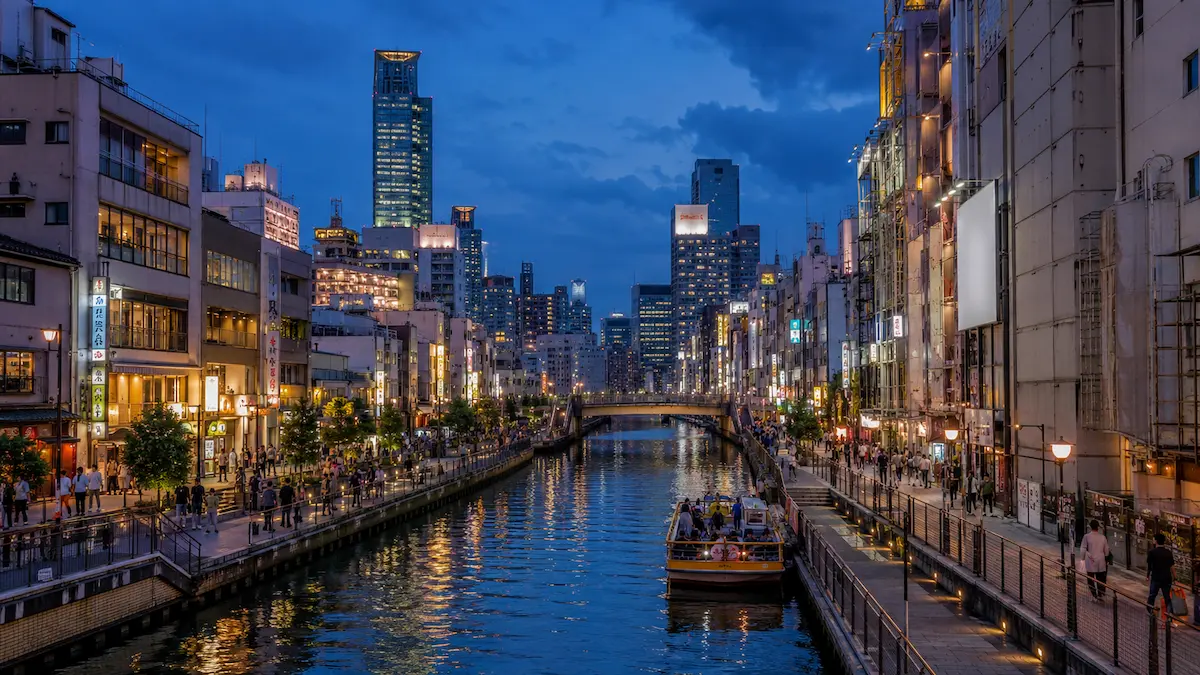
Namba is the safest default recommendation for a first leisure trip to Osaka. It puts Dotonbori, Hozenji Yokocho, Kuromon Market, Shinsaibashi, Amerikamura and Nipponbashi within easy reach. You can spend the day sightseeing elsewhere, return to the hotel, then walk out again for dinner without planning another train journey.
The area also handles late arrivals better than quieter business districts. Restaurants, convenience stores, pharmacies and entertainment remain available later, and the streets do not empty immediately after office hours. For visitors who want Osaka to feel energetic the moment they step outside, Namba delivers that better than any other base in this comparison.
Transport Reality
Namba’s biggest strength is also its biggest trap: it has many transport options, but they are spread across separate station facilities. Nankai Namba is the most useful for direct rail access to Kansai Airport. Osaka Metro Namba serves the Midosuji, Yotsubashi and Sennichimae lines. Osaka-Namba connects with Kintetsu and Hanshin services, while JR Namba sits farther west near OCAT.
The Nankai Rapi:t can connect Kansai Airport and Namba in as little as 34 minutes according to Nankai’s official information. That is genuinely convenient—but only when your hotel is reasonably close to Nankai Namba. A property beside JR Namba may still involve a substantial underground or street-level walk with luggage.
Best Micro-Locations to Book
- Near Nankai Namba or Namba Parks: Best for airport convenience, shopping and a slightly less chaotic feel than the Dotonbori canal edge.
- Between Namba Station and Dotonbori: Best for first-time sightseeing and late-night food, but expect heavy pedestrian traffic.
- Near Nippombashi or Kuromon Market: Useful for food, anime/electronics shopping and Kintetsu access toward Nara. Check the exact walk to Nankai or Metro services.
- Near JR Namba/OCAT: Often calmer and practical for airport buses, but less convenient if your mental picture of “Namba” is stepping directly into Dotonbori.
Who Should Choose Namba?
Choose Namba when you have two to four nights in Osaka, want memorable evenings without extra transport, expect to eat late, or prefer a lively neighborhood over a polished business district. It is also strong for travelers arriving at Kansai Airport who can book close to Nankai Namba.
✅ What Other Travelers Say
Travelers commonly praise the ability to walk to food, shopping and nightlife, especially after a long sightseeing day. First-time visitors often feel that staying here gives them the “Osaka experience” they imagined. The airport connection is another recurring positive when the hotel is on the Nankai side of the area.
⚠️ The Catch (Things to Keep in Mind)
The crowds can become tiring, restaurant queues are common and Dotonbori itself is not where locals go for every meal. Hotels facing busy streets may receive late-night noise. Most importantly, the Namba label hides multiple stations: a cheap room on the wrong side of the district can add ten to twenty minutes of walking every time you travel.
Editor’s booking rule: For a first trip, choose a hotel within a comfortable suitcase walk of either Nankai Namba or Osaka Metro Namba, but not directly above the loudest Dotonbori nightlife unless the view matters more than sleep.
🚉 Umeda & Osaka Station: Best for Day Trips, Shopping and Transport
Area tags: Kyoto day trips · Kobe access · Department stores · Business comfort · Rainy-day convenience · Rail hub
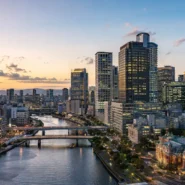
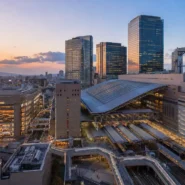
Umeda is Osaka’s most practical base for travelers who see the city as part of a wider Kansai trip. The district brings together JR Osaka Station, Hankyu Osaka-Umeda, Hanshin Osaka-Umeda, Osaka Metro Umeda, Higashi-Umeda and Nishi-Umeda, with Kitashinchi also connected through the broader underground network.
That concentration of lines makes Umeda excellent for repeated trips toward Kyoto, Kobe and other regional destinations. It also offers huge department stores, underground shopping streets, electronics, dining floors and newer developments around the north side of Osaka Station. On a rainy or extremely hot day, being able to move through covered passages is a real quality-of-life advantage.
Transport Reality
Umeda has outstanding transport on paper, but the station complex is not simple. The different rail companies use separate stations and gates, sometimes on different sides of large buildings. A hotel advertised as “near Osaka Station” may be convenient for JR but awkward for Hankyu, or vice versa.
For Kyoto, both JR and Hankyu can be useful depending on whether your destination is Kyoto Station, central Kyoto or the western side of the city. For Kobe, JR, Hankyu and Hanshin provide options. For Kansai Airport, JR-West lists direct access to Osaka Station on applicable airport services, but always confirm the current train and platform for your travel date.
Best Micro-Locations to Book
- North of Osaka Station/Umekita: Best for newer hotels, modern public spaces and convenient access to the JR station. Prices can be higher.
- East Umeda/Sonezaki: Often has more mid-range choices and nightlife, but some streets feel busier and less family-oriented late at night.
- West Umeda/Kitashinchi side: Good for business hotels, dining and access to Nishi-Umeda or Kitashinchi. Check which underground exit is closest.
- Chayamachi/Nakazakicho edge: Better for cafes and neighborhood character, though the walk to JR platforms may be longer than the map suggests.
Who Should Choose Umeda?
Choose Umeda if your itinerary includes two or more regional day trips, you value large department stores and indoor convenience, or you prefer a polished big-city environment over the street-level chaos of Dotonbori. It is particularly strong for repeat visitors who already know they do not need to sleep beside Osaka’s main nightlife.
✅ What Other Travelers Say
Travelers frequently appreciate the number of rail options, the convenience of shopping and dining inside or beside the station complex, and the ability to reach Kyoto or Kobe without first crossing Osaka. Many also find the area calmer and more comfortable than Namba once they learn the station layout.
⚠️ The Catch (Things to Keep in Mind)
The underground network can feel like a maze, GPS may be unreliable below ground and a wrong exit can place you several blocks from the hotel. Umeda is also less atmospheric for travelers whose dream Osaka evening involves lantern-lit alleys, takoyaki stands and Dotonbori neon. You can reach Namba quickly on the Midosuji Line, but you will not be able to wander home on foot.
Editor’s booking rule: Choose the railway you will use most, then book on that side of the complex. “Six minutes from Umeda” is not enough information—look for the exact station name and exit in recent guest reviews.
🚄 Shin-Osaka: Best for Shinkansen Trips and One-Night Stopovers
Area tags: Bullet train · Early departure · Late arrival · Multi-city itinerary · Business hotels · Efficient stopover
Shin-Osaka is a transport solution, not an Osaka experience. That distinction matters. It is the city’s Shinkansen hub and a sensible place to sleep before an early departure, after a late arrival, or during an itinerary that uses Osaka mainly as a base between Tokyo, Hiroshima, Okayama or other cities.
The station also connects to local JR services and the Osaka Metro Midosuji Line, so reaching Umeda, Shinsaibashi, Namba or Tennoji is straightforward. JR-West also lists direct Kansai Airport access to Shin-Osaka on eligible HARUKA services. In purely logistical terms, few places are more efficient.
Transport Reality
The common mistake is assuming Shin-Osaka and Osaka Station are interchangeable. They are separate stations. Local JR trains connect them, and the Midosuji Line provides a direct subway route toward central Osaka, but staying at Shin-Osaka still means commuting whenever you want nightlife, major shopping districts or classic Osaka sightseeing.
Transfers inside the station also take time. Moving between Shinkansen platforms, conventional JR lines and the Metro involves different levels, gates and corridors. Build a buffer rather than treating a ten-minute connection as comfortable—especially with children, large luggage or reserved trains.
Best Micro-Locations to Book
- Directly connected or immediately beside the station: Best for one-night stays and early trains. Paying a little more here can be worth it because the entire purpose of the area is convenience.
- West or southwest side near the Metro approach: Useful for travelers who will ride the Midosuji Line into central Osaka repeatedly.
- East side: Can offer better-value business hotels, but check the route carefully; railway tracks and station entrances can make a short straight-line distance misleading.
Who Should Choose Shin-Osaka?
Choose Shin-Osaka when you have an early Shinkansen, arrive late by bullet train, plan several long-distance rail days, or are spending only a functional overnight in Osaka. It can also work for travelers who prioritize a quiet business hotel and do not mind taking the subway every evening.
✅ What Other Travelers Say
Travelers value the stress reduction: no pre-dawn cross-city transfer, easy access to train food and convenience stores, and many practical hotels. Guests on multi-city itineraries often report that the location saves more energy than it costs, particularly for a single night.
⚠️ The Catch (Things to Keep in Mind)
The neighborhood has limited sightseeing atmosphere, and evenings can feel flat compared with Namba or Umeda. A cheaper room here may become false economy if you commute to Dotonbori, return late and repeat the trip for several days. The area is also not automatically the best Kyoto base: Umeda may suit non-Shinkansen day trips better, depending on where in Kyoto you are going.
Editor’s booking rule: Stay here for a specific rail reason. If you cannot name the early train, late arrival or repeated Shinkansen journey that justifies Shin-Osaka, you will probably enjoy a central neighborhood more.
🌇 Tennoji & Abeno: Best for Value, Families and Airport Access
Area tags: Better value · Family-friendly · KIX access · Parks · Abeno Harukas · Direct subway · Nara access
Tennoji and Abeno offer one of Osaka’s best combinations of transport, room value and everyday convenience. The area is served by JR lines, the Midosuji and Tanimachi subway lines, and nearby Kintetsu services from Osaka-Abenobashi. It also has department stores, Abeno Harukas, Tennoji Park, family attractions and easy access toward Shinsekai.
For travelers who find Namba overwhelming and Umeda expensive, Tennoji can feel like the sensible compromise. The streets around Abeno Harukas and Tennoji Station are modern and well supplied, while hotel rates may stretch further than in the two headline hubs.
Transport Reality
JR-West includes Tennoji among the stations with direct Kansai Airport access on applicable services, which makes this a strong arrival and departure base. The Midosuji Line runs directly to Namba, Shinsaibashi, Hommachi, Umeda and Shin-Osaka. JR routes are also useful for the Osaka Loop Line and travel toward Nara or the southern Kansai region.
The important nuance is that “Tennoji area” listings can spread toward Abeno, Shinsekai, Dobutsuen-mae and Shin-Imamiya. These districts are close but not identical in atmosphere. A hotel beside Abeno Harukas offers a different experience from a very cheap property several stops or blocks toward the traditional budget accommodation zone.
Best Micro-Locations to Book
- Abeno/Osaka-Abenobashi side: Best for families, department stores and a more polished environment. Usually the safest recommendation for first-time visitors choosing this area.
- Tennoji Park/Tenshiba side: Pleasant for morning walks and families, with good access to the station and nearby attractions.
- Northwest toward Shinsekai: More local character and cheaper options, but the streets can feel grittier and busier with day-trippers.
- Shin-Imamiya/Dobutsuen-mae edge: Often the lowest prices. Japan remains comparatively safe, but the area has more visible social challenges, older lodging stock and a rougher street appearance. Read recent reviews carefully rather than relying on price alone.
Who Should Choose Tennoji?
Choose Tennoji or Abeno if you want direct airport access, a calmer family base, convenient subway connections and better room value than the most famous districts. It also suits repeat visitors who prefer practical local life over staying beside Dotonbori.
✅ What Other Travelers Say
Travelers often praise the transport options, shopping, park space and the feeling of getting more room for the budget. Families appreciate the Abeno side’s convenience, while repeat visitors enjoy being close to Shinsekai without sleeping in the middle of its busiest streets.
⚠️ The Catch (Things to Keep in Mind)
You will probably use the subway for Namba nightlife, and the area can feel quiet later than expected once department stores close. Accommodation descriptions sometimes blur Tennoji with cheaper nearby districts, so check the exact block, approach after dark and building age. Avoid stigmatizing the whole southern area, but do recognize that comfort and atmosphere vary sharply within a short walk.
Editor’s booking rule: First-time families should favor the Tennoji Station or Abeno Harukas side. Budget travelers can move west for lower rates, but should read the newest location and noise reviews rather than assuming every bargain offers the same comfort.
🎢 Universal City: Best for Universal Studios Japan Families
Area tags: USJ · Young children · Early park entry · Theme-park hotels · One-night split stay · Low walking on park day
Universal City is a specialist choice with one major benefit: it removes the crowded morning commute before Universal Studios Japan and the exhausted evening journey after it. For families with young children, that convenience can be worth more than having a central sightseeing address.
Hotels around Universal City Station and CityWalk are designed around park visitors. Dining is easy, the route to the entrance is simple, and returning for a rest may be possible depending on ticket rules and your schedule. The atmosphere is fun and convenient, but it is built around one attraction rather than daily Osaka life.
Transport Reality
Universal City is served by the JR Yumesaki Line, with many journeys connecting through Nishikujo or continuing to/from Osaka depending on the service. Trains can be very busy around park opening and closing. The rail trip itself is manageable, but it adds friction when your day is focused on Namba, Umeda, Osaka Castle or southern Osaka.
This is why Universal City works best as a one- or two-night segment rather than a default base for a full city break. Moving hotels once can save a difficult park-day commute, but moving twice with large luggage can erase the benefit. Luggage forwarding or storing bags at the central hotel can make the split stay easier.
Best Micro-Locations to Book
- Between Universal City Station and the park entrance: Best for maximum convenience. Most major park-oriented hotels are concentrated here.
- One station away or elsewhere on the Yumesaki Line: Sometimes cheaper, but it gives up the walk-to-the-gate advantage that justifies this area.
- Central Osaka instead: Better when USJ is only one day in a longer trip and your family can handle the early train. Umeda is often the simplest central compromise for the JR journey.
Who Should Choose Universal City?
Choose Universal City if USJ is the trip’s main event, you have small children, you want to arrive before opening without a stressful commute, or you expect everyone to be exhausted after a full park day. It is also useful when visiting on consecutive days.
✅ What Other Travelers Say
Families repeatedly value the ability to walk back to the hotel, avoid packed post-park trains and start the morning without navigating a major interchange. The themed atmosphere and easy access to CityWalk food also help when children are tired.
⚠️ The Catch (Things to Keep in Mind)
Rates can rise sharply on popular park dates, restaurant choice is concentrated around the visitor complex, and the area feels detached from central Osaka. Staying here for four or five nights may create more total train time than it saves. A park-view room can also carry a premium that does not improve transport or sleep.
Editor’s booking rule: Pay for proximity when it protects a demanding USJ day, not because Universal City sounds like a general Osaka neighborhood. For most travelers, one well-timed night is enough.
Key FAQs About the Best Areas to Stay in Osaka
Is Namba or Umeda better for first-time visitors to Osaka?
Namba is usually better for a first trip focused on food, nightlife, shopping and classic Osaka atmosphere. Umeda is better when your itinerary includes several day trips to Kyoto or Kobe, you prefer department stores and modern city convenience, or you want a calmer evening base. For a short Osaka-only stay, choose Namba; for a wider Kansai itinerary, choose Umeda.
Where should I stay in Osaka for day trips to Kyoto, Nara and Universal Studios Japan?
No single area is perfect for all three. Umeda is the strongest overall compromise for Kyoto and USJ, with multiple regional rail choices and JR access. Namba is excellent for Kintetsu travel toward Nara and for enjoying Osaka after the day trip. Tennoji can also be efficient for JR routes toward Nara. Choose according to the destination you will visit most often, not the one-off journey.
What is the best area to stay in Osaka with family and large luggage?
Abeno/Tennoji is a strong value choice because it combines airport access, department stores, parks and direct subway connections. Umeda works well for families making regional day trips, but station navigation can be tiring. Namba is convenient for sightseeing, provided the hotel is close to the correct station and not on a noisy nightlife street. For a major USJ day, consider one night at Universal City and use luggage delivery or storage to avoid dragging suitcases across Osaka.
Final Verdict and Your Next Step
There is no universally perfect Osaka neighborhood, but there is usually a clear best match once you identify the journey you will repeat most:
- Choose Namba for the best first-time mix of food, nightlife, walkability and airport convenience.
- Choose Umeda for Kyoto/Kobe day trips, shopping and the widest regional transport choice.
- Choose Shin-Osaka for early or frequent Shinkansen travel—not simply because the name sounds central.
- Choose Tennoji/Abeno for value, families, airport access and a calmer practical base.
- Choose Universal City for a USJ-focused night that saves energy on the most demanding day.
Before booking, open the hotel on a map and trace three real routes: your arrival with luggage, your most common sightseeing journey and your late-night return. Check the correct railway company and station exit. That five-minute review is more valuable than choosing a hotel because a booking site labels it “central Osaka.”
Well-located rooms sell first during cherry blossom season, autumn weekends, Japanese holidays, major concerts and popular USJ dates. Booking a refundable option early gives you more control over price, room layout and station proximity. Compare the same room type across platforms, then read the newest reviews for noise, elevators and the actual walk from the station.
Check Osaka hotel availability: