
💡 Key Takeaways
- Do not confuse today’s Gyeongju Station with the old downtown station. The current KTX/SRT station is the former Singyeongju Station, outside the historic center. The old central rail station closed in 2021.
- The city bus is the cheapest choice, but a taxi is often the smarter choice with luggage or two to four travelers. A bus ride is inexpensive, while splitting one taxi can save a lot of waiting, walking and suitcase handling for a modest extra cost per person.
- Do not memorize one bus number from an old blog. Gyeongju adjusted station-area bus routes again in 2026. Check your exact hotel or Hwangnidan-gil stop in a live Korean map app on the day you travel.
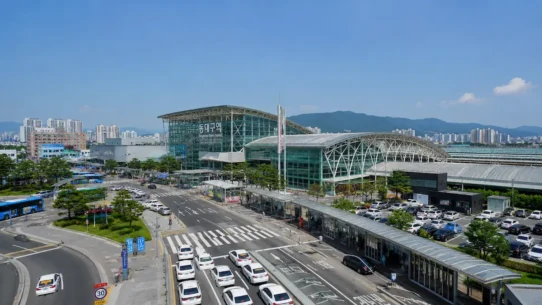
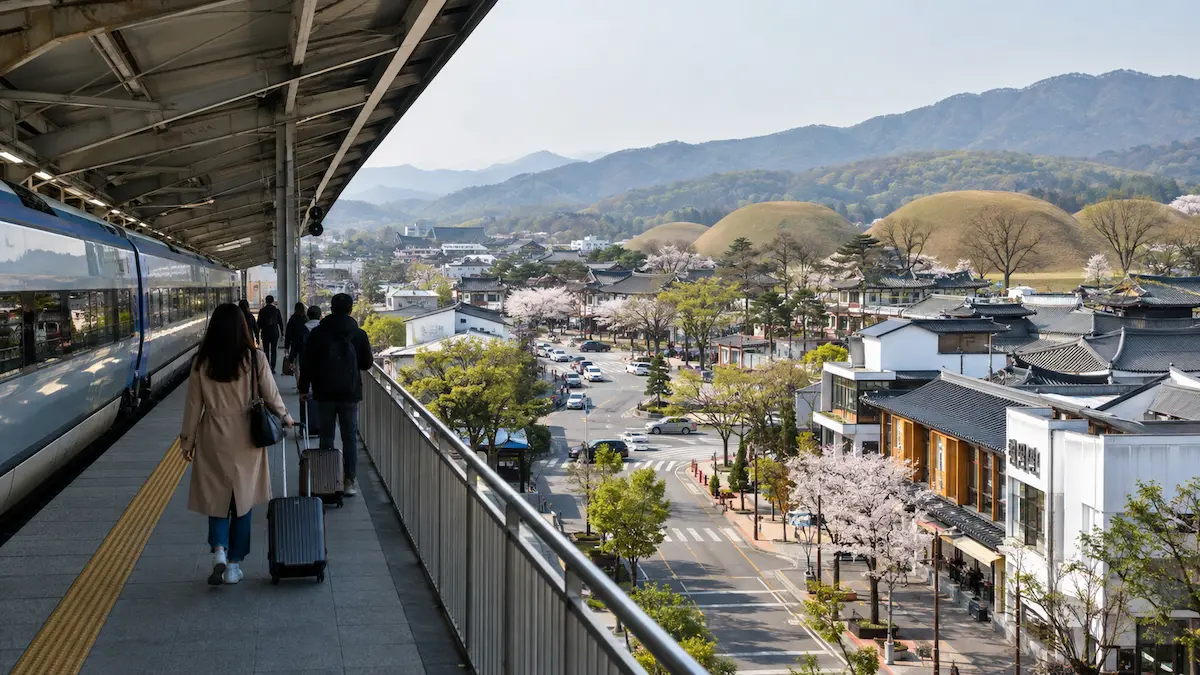
If you are researching how to get from Gyeongju Station to Gyeongju city center, the first surprise is that the main high-speed rail station is not in the middle of town. Many international visitors reach Korea through Incheon or Gimhae Airport, connect by train or intercity transport, and assume the final leg into Gyeongju will be a quick walk. It is not. The KTX/SRT station sits roughly 10 km from the Hwangnidan-gil and Daereungwon area, so your real choice is usually bus, taxi, or a pre-booked vehicle. The best option depends less on the headline fare and more on how tired you are, how many suitcases you have, where your hotel actually is, and whether you arrive during a busy or late hour.
Important station-name warning: Gyeongju Station was called Singyeongju Station until it was renamed in December 2023. If an older hotel email, blog post or map screenshot says “Singyeongju,” it is normally referring to today’s high-speed Gyeongju Station. By contrast, the old Gyeongju Station in the downtown area stopped handling trains in December 2021. This naming change is the single biggest source of confusion in older Gyeongju transport guides.
Information check: fares and route guidance in this article were reviewed against current information available in August 2026. Bus routings and taxi totals can still change, so use the figures below as planning numbers rather than promises.
The 1-Min Cheat Sheet
- City bus — best for solo travelers, backpackers and strict budgets. Adult fare is currently ₩1,450 with a transport card or ₩1,500 in cash. Allow roughly 20–35 minutes on the bus plus waiting and a possible walk from the stop. Cheapest, but least comfortable with a large suitcase.
- Metered taxi or ride-hailing — best overall for most couples, families and travelers with luggage. Plan roughly ₩15,000–₩20,000 to the central Hwangnidan-gil/terminal area under normal conditions, but treat this as a budgeting estimate, not a fixed fare. Travel time is usually around 15–20 minutes when traffic is reasonable.
- Pre-booked private transfer — best for five or more people, several large bags, mobility needs or travelers going straight into a sightseeing itinerary. It is usually overkill for a simple station-to-hotel ride because a normal taxi is much cheaper.
- Bonus luggage-saving strategy — send the suitcase ahead, then take the bus. Same-day station-to-hotel luggage delivery can make sense if you arrive early and want to start sightseeing immediately without dragging bags through Hwangnidan-gil.
Top Survival Tips
- Use the current station name when booking: search for “Gyeongju Station” and double-check that the address is the high-speed rail station in Geoncheon-eup. Older references to “Singyeongju Station” usually mean the same place.
- Do not try to walk to central Gyeongju with luggage. The distance to the Hwangnidan-gil area is around 10 km. What looks “near Gyeongju” on a zoomed-out map is not a practical arrival-day walk.
- Check live bus routing instead of trusting a screenshot. Station-area routes were adjusted in July 2026. Routes such as 50, 51, 70, 700, 710 and 711 serve the station area after the change, but the best bus depends on your exact stop and destination. Use live routing on the day.
- For Hwangnidan-gil, search the exact guesthouse rather than “city center.” Depending on the route, getting off around the bus terminal, Seorabeol Intersection or the Hwangnidan-gil/Daereungwon side can be more convenient than following a generic downtown recommendation.
- Tap your transport card when leaving the bus. Gyeongju’s transfer system requires the card to be tagged when you get off if you want the transfer benefit. The standard transfer window is 30 minutes.
- Large suitcases change the bus calculation. Travelers report that big cases are usually manageable when buses are quiet, but drivers may refuse oversized luggage if it creates a safety problem or the bus is crowded. With a 28-inch suitcase, a taxi is the lower-stress choice.
- Expect Gyeongju-specific taxi surcharges to affect the final meter. The 2026 regular taxi base fare is ₩4,500 for the first 1.7 km, and Gyeongju retains night and area-related surcharges. This is why a simple distance calculation can understate the real station-to-center fare.
- Keep your hotel name and address in Korean on your phone. Show the driver the Korean address and the map pin, especially for small hanok stays with similar English names.
- If you arrive late, value certainty over a small saving. Waiting for a bus after a long KTX journey can feel much longer than the timetable suggests, especially if you have children, rain, heavy luggage or a guesthouse check-in deadline.
- For current official bus fares, check Gyeongju City’s transport information page: Gyeongju City Traffic Information Center.
The Full Experience
🚌 City Bus: Best for Solo Travelers, Backpackers and Light Luggage
Best for: solo travelers, small backpacks, daytime arrivals and tight budgets | Adult fare: ₩1,450 by transport card / ₩1,500 cash | Typical door-to-door time: around 30–50 minutes including waiting and walking
The bus is the obvious money-saving option from Gyeongju Station, and for a solo traveler with a small bag it is difficult to beat. The fare is tiny compared with a taxi, and several routes connect the station area with the bus-terminal and historic-center corridor.
The mistake is assuming there is one magic bus number that every traveler should use. Gyeongju’s network is not difficult, but routes have changed over time, including a station-area adjustment in July 2026. Your best bus depends on whether you are sleeping near Hwangnidan-gil, Daereungwon, the intercity/express bus terminals, Donggung Palace and Wolji Pond, or farther out in the Bomun resort area.
For a typical first-time visitor staying around Hwangnidan-gil or Daereungwon, look for a live route that gets you to the terminal/Seorabeol Intersection/Hwangnidan-gil side with the least walking. Some services continue beyond the terminal into the historic attractions, so blindly getting off at the terminal because an old blog told you to can create an unnecessary walk.
My practical rule: if the live app shows a bus arriving within about 10 minutes and you have one manageable bag, take it. If the next useful bus is much farther away and you are already tired, the savings are no longer as attractive.
✅ What Other Travelers Say
Independent traveler reports generally describe the station-to-center bus as very doable and inexpensive, with the central area roughly 20–30 minutes away once the bus is moving. The recurring complaint is not the ride itself; it is uncertainty around waiting times, especially on less frequent routes or when travelers rely on old English-language schedules. That makes a live map app far more useful than a static route list.
⚠️ The Catch (Things to Keep in Mind)
The hidden cost is friction: waiting outside the station, lifting a heavy suitcase aboard, watching the stop names, and then walking from the drop-off point to a narrow-lane hanok or guesthouse. A bus that costs only ₩1,450 can still be a bad deal if two exhausted travelers each have a large roller bag and the hotel is another 10–15 minutes on foot.
Also remember that luggage space is not guaranteed. City buses are not airport coaches. If your bag blocks the aisle or the bus is crowded, the driver has the final say on whether it can be carried safely.
Who should choose the bus? A solo traveler arriving in daylight, carrying a backpack or cabin-size suitcase, and staying close to a convenient central stop. For that profile, the bus is excellent value.
🚕 Metered Taxi or Ride-Hailing: Best for Luggage, Couples and Small Groups
Best for: two to four travelers, large suitcases, children, late arrivals and door-to-door convenience | Budget: roughly ₩15,000–₩20,000 to central Gyeongju in normal conditions | Typical ride: around 15–20 minutes
For most travelers, this is the option I would choose. Gyeongju Station has a taxi stand, and app-based taxi calling is also widely used in Korea. You can use Korean taxi apps such as Kakao T, foreigner-oriented alternatives such as k.ride, or Uber’s taxi service where available.
The important point is that the fare is metered, not a fixed “station transfer price.” Gyeongju increased its regular taxi base fare to ₩4,500 for the first 1.7 km from February 2026. Distance/time charges apply after that, and night or area-related surcharges can raise the total. Gyeongju also retains a so-called combined surcharge outside the central fare zone, which is one reason the final station ride can be higher than a tourist expects from distance alone.
For planning, I would set aside around ₩15,000–₩20,000 for a normal ride from Gyeongju Station to the Hwangnidan-gil, Daereungwon or bus-terminal area. This is a realistic budget range rather than a guaranteed quote; traffic, exact address, time of day and applicable surcharges matter. Check the live app estimate before confirming if price certainty matters to you.
The economics get much better as soon as you are not traveling alone. Split an ₩18,000 taxi between two people and the extra cost over two bus fares is relatively modest. Split it between three or four people and the convenience premium becomes even smaller. Add two large suitcases, rain or a late arrival, and the taxi often becomes the better-value decision rather than the “expensive” one.
✅ What Other Travelers Say
Traveler discussions consistently describe taxis as the easiest solution for the KTX station, particularly with luggage. Many visitors who use buses for sightseeing inside Gyeongju still choose a taxi for the arrival or departure leg because it removes the most annoying part of the trip: the station-to-hotel transfer with bags.
App experiences are more mixed. Kakao T is the local standard, but some foreign visitors report occasional sign-up, payment or language friction. k.ride is designed with overseas travelers in mind, while some users report that its quoted price can be higher than a standard locally hailed taxi. If one app gives you trouble, the official taxi queue at the station is a perfectly reasonable fallback.
⚠️ The Catch (Things to Keep in Mind)
The biggest trap is expecting the fare shown in an old article. Taxi tariffs changed in 2026, and Gyeongju’s surcharge structure can make old price examples misleading. Treat any article promising an exact station-to-Hwangnidan fare as suspect unless it clearly states the date and conditions.
Use the official taxi line or a legitimate app, keep the meter running, and show the exact Korean destination. Do not accept an unexplained off-meter “special price” from someone approaching passengers inside or around the station.
Who should choose a taxi? Almost anyone traveling as a pair or group, anyone with one or more large suitcases, families with children, travelers with mobility concerns, or arrivals after a long flight-and-train journey. It buys back time and energy exactly when most people need it.
🚐 Pre-Booked Private Transfer: Best for Families, Large Groups and Immediate Sightseeing
Best for: large groups, multiple bulky bags, elderly relatives, mobility needs, guaranteed pickup or travelers starting a private tour immediately | Cost: usually much higher than a regular taxi | Convenience: highest
A private car or van sounds ideal after a long journey: a driver waits for your train, helps with luggage and takes you directly to your hotel. That convenience is real, but this is where travelers can easily overspend.
For a simple Gyeongju Station-to-city-center transfer, a pre-booked private vehicle is usually poor value for one or two people. Current private-transfer products can cost several times as much as an ordinary metered taxi. If your only goal is to reach a Hwangnidan-gil hotel, the regular taxi queue is usually the more sensible choice.
Private transport starts to make sense when the vehicle solves more than one problem. Examples include five or more travelers who need a van, several 28-inch suitcases, a grandparent who should not wait outside, a very late arrival, or a plan to meet the driver at the station and continue directly to Bulguksa, Seokguram, Bomun and other sights before hotel check-in.
That last scenario is where a charter can genuinely save time. Instead of paying for a station transfer, storing luggage, returning for bags and then booking separate transport, you can combine the transfer and sightseeing into one vehicle day.
✅ What Other Travelers Say
Reviews of private Gyeongju charters tend to praise the same things: easy pickup, no language stress, flexible pacing and relief from managing local buses between widely spread attractions. Families and groups often value the driver’s waiting time more than the transport itself.
⚠️ The Catch (Things to Keep in Mind)
The catch is price and cancellation flexibility. A normal taxi is readily available at the station and does not require you to commit in advance. A prepaid transfer only earns its premium when you need a larger vehicle, guaranteed coordination or a multi-hour itinerary.
If you book one, confirm exactly what is included: vehicle size, luggage allowance, waiting time after the train arrives, overtime fees, child-seat availability, and whether a “tour” product includes guiding or only a driver.
Useful booking pages: check Gyeongju private transfer options on Klook or compare a Gyeongju private taxi/charter on KKday.
🧳 Bonus Hack: Send Your Luggage Ahead and Start Sightseeing
This is not a fourth transport mode, but it can completely change which transport mode makes sense. If your train reaches Gyeongju in the morning and your hotel will not let you check in for several hours, paying for same-day luggage delivery can be smarter than spending your first hour traveling to the hotel purely to drop a suitcase.
A station-to-accommodation luggage delivery service is available through Klook for eligible Gyeongju hotels. At the time of research, pricing started at roughly the equivalent of US$8 per bag, but rates, hotel eligibility and cutoff times can change. Check the current terms before relying on it.
Once the bag is handled, you can take the cheap city bus with only a daypack and get off near the sights you actually want to visit. This strategy is especially attractive if your first stops are around Daereungwon, Hwangnidan-gil or the historic center.
Check current Gyeongju station-to-hotel luggage delivery availability on Klook.
Which Option Is Best for Your Hotel Area?
- Staying around Hwangnidan-gil or Daereungwon: take the bus if you are solo and lightly packed; take a taxi if you have a suitcase or are traveling with at least one other person. Make sure the bus stop is on the side of the historic center closest to your actual guesthouse.
- Staying near Gyeongju Express or Intercity Bus Terminal: the bus is especially practical because many station services travel through the terminal corridor. A taxi still wins when you have bulky luggage.
- Staying in the Bomun resort area: do not automatically travel into downtown first. Depending on the live schedule, station-area services such as 700/710 may make a more direct connection toward Bomun, or a taxi can take you straight there. Routing through Hwangnidan-gil first can waste time.
- Staying in a small hanok on a narrow lane: a taxi can usually get you much closer than a bus, but pin the property carefully. Some drivers may need to drop you at the nearest accessible road rather than directly at the door.
Key FAQs
How do I get from Gyeongju Station to Hwangnidan-gil?
The cheapest option is a city bus toward the central/terminal/Hwangnidan-gil corridor, followed by a short walk depending on your stop. The easiest option is a metered taxi, usually around 15–20 minutes in normal traffic. If you have a large suitcase or are traveling with another person, the taxi is often worth the extra money.
Is Gyeongju Station the same as Singyeongju Station?
Yes, for today’s KTX/SRT travel. Singyeongju Station was renamed Gyeongju Station in December 2023. Do not confuse it with the former downtown Gyeongju Station, which stopped handling trains in December 2021. Older transport articles often use the former “Singyeongju” name.
How much is a taxi from Gyeongju Station to Gyeongju city center in 2026?
There is no single fixed price. For budgeting, roughly ₩15,000–₩20,000 is a sensible planning range for the Hwangnidan-gil, Daereungwon or bus-terminal area in normal conditions. The final meter depends on your exact destination, traffic, time of day and Gyeongju’s applicable surcharges. The regular base fare became ₩4,500 for the first 1.7 km in February 2026.
Final Verdict and Your Next Step
If I were arriving at Gyeongju Station with only a backpack, in daylight, and staying close to a central bus stop, I would take the city bus and keep the savings for food. It is cheap, straightforward once you check the live route, and perfectly suitable for a light traveler.
If I had a full-size suitcase, were traveling as a couple, or had already spent hours coming from an airport, I would take a metered taxi. This is the sweet spot for most visitors: faster, door-to-door and often not dramatically more expensive once the fare is shared.
I would only pre-book a private transfer for a large group, unusual luggage, mobility needs, a late-arrival guarantee, or a plan to turn the pickup into a private sightseeing day. Otherwise, paying private-transfer prices for a 15–20 minute hotel run is unnecessary.
Before you arrive, save the Korean address of your accommodation, check the latest bus route, and decide whether your luggage makes the bus genuinely worth the saving. That small bit of preparation prevents the classic Gyeongju arrival mistake: standing at the station with two heavy bags, discovering the “city center” is much farther away than expected, and then making a rushed decision.
Book the pieces that benefit from advance planning:
- Compare Gyeongju hotels on Booking.com — useful for choosing a stay close to Hwangnidan-gil, Daereungwon or the bus-terminal corridor.
- Pre-book a Gyeongju private transfer on Klook — worth considering for families, groups and guaranteed pickup.
- Check Gyeongju luggage delivery on Klook — a useful way to start sightseeing immediately after arriving by train.
- Compare Gyeongju private taxi options on KKday — more logical if you want to combine station pickup with several attractions.
- Check Gyeongju day tours on Klook — useful if you want to avoid piecing together transport between spread-out sights.
Bottom line: bus for one light traveler, taxi for most luggage-carrying couples and small groups, private transfer only when the vehicle solves a bigger problem than the short ride into town. Choose based on your real door-to-door effort, not just the cheapest headline fare.