
💡 Key Takeaways
- Your hotel location can matter more than a small room-rate discount. Incheon is spread out: the airport and Yeongjong Island, Chinatown and Wolmido, Songdo, Bupyeong, and Ganghwa are not one compact sightseeing zone. A “cheap” hotel can become expensive once you add long rides, transfers, luggage hassle, and lost time.
- A realistic daily Incheon travel budget starts around ₩75,000–₩120,000 (about US$53–85) for a careful budget traveler, while a mid-range trip is more realistically ₩150,000–₩260,000 (about US$106–183) per person per day including accommodation. Couples sharing a room can often reduce the per-person total.
- The biggest budget leaks are usually not subway fares. They are airport transfers at inconvenient hours, repeated cross-city travel, cafés and snacks, paid experiences, shopping without a cap, luggage costs, late-night taxis, card/ATM fees, and accepting dynamic currency conversion.
Planning an Incheon Travel Budget looks simple until you start mapping the trip properly. Hotel prices vary sharply by neighborhood, weekday, season, events, and whether you stay near Incheon International Airport, Songdo, Bupyeong, or the older port area. Public transport is affordable, but the city is geographically large, so a badly located hotel can quietly add several extra rides and hours of travel every day. Food can also look cheap on paper until coffee, bakery stops, convenience-store snacks, late-night meals, seafood, and shopping are added to the total.
There is another problem with many budget guides: they give one “average daily cost” without explaining what is included. That number is almost useless if one traveler sleeps in a guesthouse, another books a Songdo business hotel, and a third stays near the airport and takes taxis after a late flight. This guide uses practical spending ranges instead. It also separates normal daily costs from one-off expenses such as flights, major shopping, full-day tours, premium spas, theme-park-style entertainment, intercity KTX travel, and private airport transfers.
Price-check basis: figures in this guide were reviewed in August 2026. For rough USD conversions, this article uses about US$1 = ₩1,419, close to the rate cited by Reuters on August 7, 2026. Exchange rates move every day, so treat the USD figures as planning estimates rather than fixed prices.
The 1-Min Cheat Sheet: How Much to Budget Per Day in Incheon
- Budget Traveler: ₩75,000–₩120,000 per person per day (about US$53–85), including accommodation.
This works best if you choose a low-cost guesthouse, motel, hostel, or discounted simple hotel; eat mostly local meals, markets, convenience-store breakfasts, and inexpensive restaurants; use a transportation card; group attractions by area; and keep paid attractions limited. A realistic split might be ₩35,000–₩70,000 for a bed or basic room, ₩25,000–₩35,000 for food, ₩5,000–₩10,000 for local transport, and a small allowance for admissions or snacks. - Mid-Range Traveler: ₩150,000–₩260,000 per person per day (about US$106–183), including accommodation.
This suits travelers who want a well-rated private hotel room, two or three proper meals, a café stop, normal public transport with the occasional taxi, and one paid attraction or experience on some days. If two people share one room, your per-person accommodation cost can drop substantially compared with a solo traveler paying the entire room rate. - Comfortable Traveler: ₩300,000–₩500,000+ per person per day (about US$211–352+), including accommodation.
This gives more room for upscale hotels or resorts, taxis when convenient, premium dining, spa or resort facilities, paid experiences, cocktails, shopping, and less time spent optimizing every transfer. Near-airport luxury properties can push the upper end much higher, especially on busy dates.
Do not automatically add flights, large shopping purchases, full-day tours, premium resort facilities, major concert tickets, intercity KTX tickets, or special entertainment days into your “normal” daily budget. Give those items their own separate line. Otherwise, one expensive day will make the entire trip look more costly than it really is and will make it harder to see where you are actually overspending.
What Incheon Actually Costs: A Practical Price Framework
Accommodation: the widest variable in your budget
Accommodation is the category most likely to destroy a carefully planned budget. Current Booking.com listings checked in August 2026 showed some Incheon rooms in roughly the US$27–88 range for lower-cost and mid-priced options, while upscale properties were listed above US$200 and some premium airport-area hotels were above US$350 per night. These are live-market examples, not guaranteed prices for your dates.
For planning purposes, think in bands rather than one average:
- Low-cost stay: roughly ₩35,000–₩80,000 per room or bed-night when you find a guesthouse, simple motel, hostel, or discounted hotel.
- Solid private hotel: roughly ₩80,000–₩180,000 per room per night is a useful planning band for many ordinary stays, but high-demand weekends can exceed it.
- Upscale or resort-style stay: roughly ₩200,000–₩500,000+ per room per night, especially around premium airport resorts or higher-end Songdo properties.
The important number is the final payable price, not the first search result. Check whether breakfast is included, whether the rate is refundable, whether taxes or service charges are already included in the displayed total, whether the room is priced for one or two guests, and whether airport shuttle service is genuinely free at the times you need it.
Food: cheap meals exist, but snack creep is real
Community-reported Incheon pricing collected by Numbeo in 2026 put an inexpensive restaurant meal around ₩9,000 on average, with a broad reported range of roughly ₩6,000–₩18,000. A regular cappuccino was around ₩4,900. Those two numbers explain a common travel-budget problem: one coffee can cost more than half the price of a cheap local meal.
- Very frugal food day: ₩20,000–₩30,000 using a simple breakfast, inexpensive local meals, market food, or convenience-store items.
- Comfortable everyday food budget: ₩35,000–₩60,000 with proper meals plus a café, dessert, or snack.
- Food-focused day: ₩70,000–₩120,000+ if you add seafood, Korean barbecue, alcohol, specialty cafés, premium buffets, or multiple dessert stops.
Do not plan every day around the cheapest possible meal. That usually creates an unrealistic budget that collapses as soon as you want coffee, fried chicken, a bakery stop, a night snack, or a nicer dinner.
Local transport: cheap per ride, expensive when your itinerary is badly designed
Incheon Metropolitan City lists the adult subway base fare at ₩1,550 with a transportation card from June 28, 2025, with distance-based additions. Common Incheon bus card fares start around ₩1,200–₩1,500 for feeder and trunk buses, while some seated, direct, airport, or Yeongjong routes cost more.
That means local transport can remain under ₩10,000 on a well-grouped sightseeing day. But if you stay far from the places you actually want to visit and keep crossing the city, your budget leak is not just the extra fare. It is also the time and energy lost to transfers.
Where You Stay Changes the Budget More Than You Think
Near Incheon International Airport / Yeongjong Island
Best for: late arrivals, early departures, airport layovers, INSPIRE or Paradise City visits, or travelers who value flight convenience above sightseeing convenience.
Budget risk: staying near the airport because a hotel looks cheap can backfire if most of your itinerary is in Chinatown, Songdo, Bupyeong, Seoul, or Ganghwa. The airport is on Yeongjong Island, so repeated round trips cost time and may require longer rail or bus journeys. If you land after normal public-transport hours, the taxi or private-transfer cost can overwhelm what you saved on the room.
Incheon Station / Chinatown / Wolmido area
Best for: travelers prioritizing Chinatown, the Open Port area, Sinpo Market, Songwol-dong, and Wolmido. Several attractions can be grouped into one walking-heavy day.
Budget advantage: you can reduce unnecessary rides by treating this as one compact sightseeing cluster. It is especially good for travelers who prefer street food, markets, and lower-cost sightseeing.
Songdo
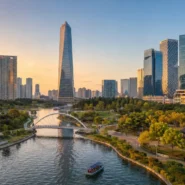
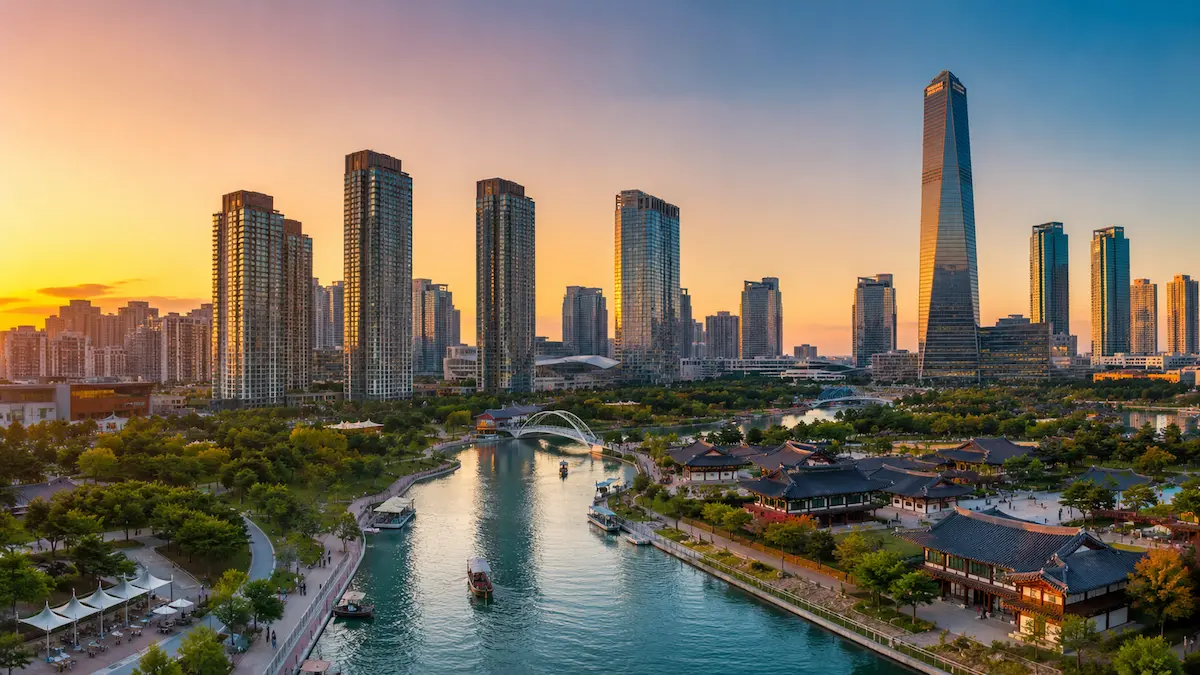
Best for: modern city scenery, Songdo Central Park, business trips, comfortable hotels, and travelers who prefer newer infrastructure.
Budget risk: Songdo is not next door to Chinatown or the airport terminals. If your itinerary constantly jumps between Songdo, the old port, and Seoul, the low cost of each individual subway ride hides a high time cost. Choose Songdo because you want to spend meaningful time there, not simply because one hotel deal looks attractive.
Bupyeong and inland Incheon
Best for: shopping, local dining, nightlife, good public-transport connections, and travelers who want a more residential base.
Budget advantage: hotel pricing can sometimes be competitive, and food can be good value. The trade-off is that airport and coastal sightseeing may take longer.
Ganghwa Island
Best for: a dedicated day trip or overnight focused on history, nature, luge, cafés, and rural/coastal scenery.
Budget risk: trying to combine Ganghwa with Songdo, Chinatown, and airport-area attractions on the same day is usually false economy. You may save the cost of one hotel night but spend the day in transit. Treat Ganghwa as its own itinerary zone.
Top Budget Survival Tips
- Do not compare hotels by room price alone; calculate the “door-to-door daily cost.”
A room that is ₩20,000 cheaper but requires two extra long journeys per day may not be cheaper in practical terms. Add expected daily transport, likely taxi use after late dinners, the difficulty of moving large luggage, and the value of your time. A hotel within walking distance of the main cluster you plan to explore can be the better-value choice even at a slightly higher nightly rate. - Do not assume every transport pass pays for itself.
Incheon and the Seoul metropolitan transport network use distance-based fares and integrated transfers. Many tourists are better off using a normal transportation card and paying per ride unless they have a genuinely high-volume route plan. Seoul’s Climate Card, for example, has defined service limits and excludes non-Seoul subway areas, intercity/airport buses, and non-Seoul-licensed buses. An unlimited pass is not automatically useful for an Incheon-heavy itinerary. - The cheapest airport transport option is not always the best option with large luggage.
A train or city bus may win on fare, but not after you factor in transfers, stairs, a long walk to the hotel, rush-hour crowding, or two large suitcases. If two to four travelers can split a taxi or pre-booked transfer, the cost gap per person may become reasonable. Compare total party cost, not just the cheapest individual ticket. - Build a late-arrival plan before you fly.
The worst time to decide how to reach your hotel is after immigration when you are tired and public transport is winding down. Incheon Airport’s official guidance lists late-night Seoul buses at around ₩17,000–₩18,000 on certain routes, and standard taxis can carry significant night surcharges during specified hours. Keep a separate emergency transfer budget rather than pretending every arrival will cost a normal daytime subway fare. - Expect hotel pressure around cherry blossom weekends, major concerts, Korean public holidays, and attractive-weather weekends.
Incheon’s 2026 cherry blossom forecast placed blooming around April 7, though actual dates depend on weather. Do not assume the whole month is expensive; a Tuesday can price very differently from a Saturday. The better strategy is to compare several nearby dates and neighborhoods rather than declaring one month “cheap” or “expensive.” - Do not use Japan’s Golden Week as your main Korea pricing calendar.
Golden Week is a Japanese holiday period, not a Korean public holiday. For Incheon, pay closer attention to Korean holidays such as Seollal, Chuseok, Children’s Day, long weekends, major events, and school or summer vacation demand. International arrivals can still fluctuate during Japanese holidays, but it is misleading to treat Golden Week as Korea’s equivalent peak period. - Give paid-entertainment days their own budget envelope.
A day at a premium resort complex, spa, luge, rail bike, concert, theme-park-style venue, or full-day tour can cost several times more than a normal walking-and-market day. Create a separate “experience day” budget of perhaps ₩40,000–₩100,000+ depending on the activity, meals, and transport. Do not force it into your everyday food-and-subway allowance. - Use convenience stores strategically, not for every meal.
Convenience stores are excellent for breakfast, drinks, kimbap, instant noodles, and late-night food, but three convenience-store meals plus coffee and snacks can still add up. Use them to reduce spending at the right moments, then spend your food budget on one meal that actually adds value to the trip. - Look for supermarket evening markdowns without depending on a fixed discount time.
Korean supermarkets often discount prepared food later in the day, but timing varies by store and inventory. The practical strategy is to check the prepared-food section in the evening and buy only what you would have eaten anyway. A “discount” is not a saving if it creates extra purchases. - Use department-store basement food halls for controlled variety.
Food halls can be useful when a group wants different dishes without committing to a full restaurant meal. Prices are not always the cheapest in town, but the value can be better than hopping between multiple cafés and restaurants. Go in with a spending cap because pastries, premium fruit, desserts, and imported products can push the total up quickly. - Group sightseeing by zone to avoid paying for your own bad planning.
Put Chinatown, Open Port, Songwol-dong, Sinpo Market, and Wolmido on the same day or adjacent days. Give Songdo its own block. Give Ganghwa its own day. Keep airport-resort attractions together. Constantly bouncing between zones is one of the easiest ways to waste both fare and time. - Walk when it replaces a short ride inside one sightseeing cluster; do not walk just to save ₩1,500 when it ruins the rest of the day.
Saving one subway fare is pointless if a long hot, cold, windy, or rainy walk leaves you too tired for the attraction you actually came to see. Walking is best when it is part of the experience, such as exploring Chinatown, the Open Port streets, or a park. Take transport when the walk is simply dead mileage. - Keep a 10–15% “trip friction” buffer.
This is for rain gear, an unplanned taxi, a replacement umbrella, medicine, a locker, baggage delivery, an extra café while waiting for check-in, or the restaurant you actually want instead of the cheapest one nearby. A realistic emergency buffer makes the main budget easier to follow because you stop treating every surprise as a failure. - Never let a card terminal or ATM quietly choose your home currency without checking the rate.
Dynamic Currency Conversion (DCC) means the merchant or ATM converts your purchase into your home currency. Visa notes that DCC can include an exchange rate and additional fees or markup. In most travel-budget situations, choosing to pay in Korean won (KRW) and letting your card issuer handle the conversion is the cleaner comparison, provided your own card does not charge an excessive foreign-transaction fee. - Check both your bank fee and the local ATM fee before withdrawing cash.
Travelers can be hit twice: once by the Korean ATM operator and again by their home bank. Avoid repeated tiny withdrawals. If your card has a fixed withdrawal fee, fewer sensible withdrawals can be cheaper than taking out small amounts every day.
Incheon Travel Budget by Season
Cherry blossom season: late March to mid-April, with Incheon often later than southern Korea
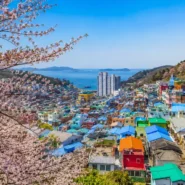
Spring is one of the most attractive times to visit, but the exact bloom window changes every year. For 2026, VISITKOREA’s forecast placed Incheon’s bloom around April 7, with the reminder that weather can move actual dates. The budget impact is usually concentrated around attractive-weather weekends and bloom dates rather than every day of March and April.
Budget strategy: book flexible accommodation early enough to compare options, then re-check once the bloom forecast becomes clearer. If Saturday prices are high, moving the same stay to Sunday–Thursday can sometimes save more than switching to a distant neighborhood.
Korean holiday peaks: Seollal, Chuseok, May holidays, and long weekends
For Korea, these matter more than Japan’s Golden Week. Seollal and Chuseok are major domestic travel periods. In 2026, Seollal ran February 16–18 and Chuseok September 24–26. Transport demand can tighten, family travel increases, and some local businesses may close or operate different hours.
Budget strategy: avoid building a trip that depends on last-minute intercity rail or a specific small restaurant being open. Book key transport earlier, keep backup meal options, and expect some convenience spending caused by altered opening hours.
Summer: late June through August
Korean summer combines heat, humidity, rain, and periods of heavy travel demand. VISITKOREA notes that the rainy season typically overlaps late June to late July, while typhoon risk can occur from June through October. Incheon’s coastal and island areas can also attract weekend and vacation traffic.
Budget effect: air-conditioned cafés, taxis during downpours, replacement umbrellas, water, indoor attractions, and last-minute itinerary changes can raise daily spending. Beach or resort demand can also push up selected weekends.
Budget strategy: do not create a “perfect weather only” itinerary. Keep ₩10,000–₩20,000 per day of flexible capacity on weather-sensitive days so a rainstorm does not force an uncomfortable choice between overspending and wasting the day.
Autumn foliage season: October to early November
Autumn is comfortable and popular for outdoor travel. Korea’s foliage timing varies yearly; recent national forecasts have placed peak color in many areas from late October into early November. Incheon’s parks and Ganghwa trips can be particularly attractive on clear weekends.
Budget effect: pleasant-weather weekends can support stronger hotel demand even when there is no national holiday. Do not assume October is universally expensive, but compare weekday and weekend rates carefully.
Christmas and New Year
Christmas Day is a public holiday in Korea, and late December can bring festive events, shopping, hotel packages, and higher demand around popular properties. New Year travel can also affect airport-area hotels because Incheon is Korea’s main international gateway.
Budget strategy: compare standard room-only rates against “holiday packages.” A package with breakfast, spa access, or dining can be good value only if you were already planning to use those inclusions.
Quieter winter periods: January to February, excluding major holidays and event weekends
Cold-weather periods can produce attractive hotel rates on some dates because leisure demand may be lower, but there is no month that is guaranteed to be the cheapest. Seollal, New Year, concerts, conventions, and weekends can still create sharp spikes.
Budget advantage: travelers who are happy with indoor attractions, cafés, markets, shopping, and shorter outdoor walks may find good value. The trade-off is that you may spend more on cafés, taxis in harsh weather, or indoor entertainment.
Common Budget Mistakes — and How to Fix Them
1. Counting only the flight and hotel
The mistake: assuming the expensive parts are already paid, then budgeting almost nothing for daily life.
Fix: create five separate pots: accommodation, food, local transport, paid experiences, and flexible/emergency spending. Shopping gets a sixth pot if it is a priority.
2. Ignoring airport-to-hotel and hotel-to-airport transport
The mistake: planning a cheap city stay but forgetting that a late arrival or early departure may require a taxi, airport bus, or private transfer.
Fix: price both directions before booking the hotel. Your first and last nights can have different transport economics from normal sightseeing days.
3. Assuming a Seoul transit pass covers an Incheon-heavy trip
The mistake: buying an unlimited pass because “unlimited” sounds automatically cheaper.
Fix: check the service boundary and list your actual rides. Seoul’s Climate Card excludes significant transport outside its coverage, including non-Seoul subway areas and certain bus categories. For many Incheon itineraries, pay-as-you-go transport is simpler.
4. Scheduling attractions that are far apart every day
The mistake: choosing attractions by popularity rather than geography.
Fix: build your itinerary in clusters: old port/Chinatown/Wolmido, Songdo, airport/Yeongjong, inland Incheon, and Ganghwa. One area per day is often more efficient than chasing a perfect “top 10” list.
5. Setting a tiny food budget while buying coffee, dessert, and late-night snacks every day
The mistake: counting only breakfast, lunch, and dinner.
Fix: add a separate ₩10,000–₩20,000 daily snack-and-café allowance if that is how you naturally travel. It is better to budget honestly than to feel like you failed every afternoon.
6. Having no shopping ceiling
The mistake: treating skincare, fashion, souvenirs, character goods, or duty-free purchases as “not part of the trip budget.”
Fix: set one total shopping number before arrival. When it is gone, stop. A separate shopping budget also keeps your daily travel costs comparable and useful.
7. Ignoring luggage storage, lockers, and delivery
The mistake: booking a noon checkout and a late flight, then assuming the hotel will always store bags for free or that moving luggage across town costs nothing.
Fix: confirm hotel storage rules before arrival. If your itinerary requires a locker, baggage delivery, or an airport storage service, add it as a planned logistics cost instead of an unpleasant surprise.
8. Staying far away to save a small amount on the hotel
The mistake: choosing the absolute cheapest property without checking travel time.
Fix: compare the hotel saving with the additional rides and hours. If two travelers save ₩15,000 on a room but each spends extra money and 90 minutes commuting, the “saving” may not improve the trip.
9. Not keeping an emergency buffer
The mistake: budgeting to the exact won.
Fix: keep 10–15% above your planned on-the-ground spending. Do not spend this buffer on the first day just because it exists.
10. Choosing dynamic currency conversion
The mistake: selecting your home currency because the terminal displays a familiar number.
Fix: check whether the terminal is offering DCC. In most cases, choose KRW and let your card issuer perform the conversion, after confirming your own card’s foreign-transaction policy.
11. Treating promotional “from” prices as the real cost
The mistake: building a day around a teaser price that applies only to a specific date, package tier, group size, or limited promotion.
Fix: click through to your actual date, headcount, pickup point, and options before adding the experience to your budget.
12. Forgetting the cost of missing the last train
The mistake: assuming nightlife has the same transport cost as daytime sightseeing.
Fix: check your last practical train or bus before dinner. If you plan to stay out late, put the taxi cost into the evening budget from the beginning.
A Simple Incheon Budget Formula That Actually Works
Instead of asking “What is the average cost of Incheon?”, build your own number with this formula:
- Step 1: Accommodation per person. If two people share a ₩120,000 room, count ₩60,000 each.
- Step 2: Food you will actually eat. Use ₩25,000 for very frugal travel, ₩40,000–₩60,000 for normal travel, or more for food-focused days.
- Step 3: Local transport by itinerary zone. Use around ₩5,000–₩10,000 for a compact public-transport day and more for cross-city travel, islands, taxis, or airport journeys.
- Step 4: Paid experiences. Average the cost across the whole trip rather than pretending every day is identical.
- Step 5: Add 10–15% friction money. This covers rain, lockers, an unplanned taxi, medicine, extra drinks, or schedule changes.
Example: if your share of the hotel is ₩65,000, food is ₩45,000, transport ₩8,000, and your average paid-attraction allowance is ₩20,000, your working daily budget is ₩138,000. Add a 12% buffer and you get roughly ₩155,000 per day. That is a much more useful number than a generic city average.
How Much Should You Budget for a 3-, 4-, or 5-Day Incheon Trip?
Using the daily ranges above, and excluding international flights, major shopping, and expensive one-off tours:
- 3 days: around ₩225,000–₩360,000 for a budget trip; ₩450,000–₩780,000 mid-range; ₩900,000–₩1,500,000+ comfortable.
- 4 days: around ₩300,000–₩480,000 budget; ₩600,000–₩1,040,000 mid-range; ₩1,200,000–₩2,000,000+ comfortable.
- 5 days: around ₩375,000–₩600,000 budget; ₩750,000–₩1,300,000 mid-range; ₩1,500,000–₩2,500,000+ comfortable.
These totals are deliberately broad because the accommodation decision dominates the range. A couple sharing a good-value room can spend less per person than a solo traveler at the same comfort level. Conversely, a premium airport resort can push a “comfortable” trip far beyond these numbers.
Key FAQs
How much money do I need per day in Incheon, South Korea?
A practical 2026 planning range is about ₩75,000–₩120,000 (US$53–85) per day for a careful budget traveler, ₩150,000–₩260,000 (US$106–183) for mid-range travel, and ₩300,000–₩500,000+ (US$211–352+) for a comfortable trip. These figures include accommodation but exclude international flights, major shopping, and expensive special-event days.
Is Incheon cheaper than Seoul for tourists?
Incheon can be cheaper for accommodation and some local meals, but the answer depends on your itinerary. If you stay in inexpensive Incheon accommodation but travel into Seoul every day, the extra commuting time and transport can erase part of the saving. If your main attractions are actually in Incheon, staying near the correct Incheon zone can offer very good value.
How much should I budget for transport from Incheon Airport?
The right number depends on your destination, arrival time, luggage, and group size. Public transport is normally the cheapest choice, but late-night buses, taxis, or private transfers can cost much more. Keep a separate airport-transfer budget rather than burying it in the normal daily subway allowance. If you are traveling as a group with multiple large suitcases, compare the full group price of a transfer with the combined cost and inconvenience of several public-transport tickets and transfers.
Final Verdict and Your Next Step
For most travelers, the safest starting point is around ₩100,000 a day for a strict budget trip, ₩180,000–₩220,000 for a comfortable mid-range trip, and ₩350,000+ for a higher-comfort trip, all including accommodation. Then adjust the number based on the two things that matter most: where you sleep and how much you move between distant parts of Incheon.
If you are traveling primarily for Chinatown, Wolmido, and the historic port area, stay near that cluster. If Songdo is the priority, stay in Songdo. If your flight schedule is the priority, an airport-area hotel can be worth paying more for. The cheapest room is not automatically the cheapest trip.
Once your dates are fixed, compare accommodation early and book a flexible/refundable rate when possible, especially for cherry blossom weekends, major concerts, Korean public holidays, and attractive autumn weekends. Then lock in airport transfers or major paid experiences only after your flight time and hotel location are confirmed.
- Compare Incheon hotels on Booking.com: Check current Incheon hotel prices on Booking.com
- Compare Incheon hotels on Agoda: Check current Incheon hotel prices on Agoda
- Compare Incheon activities and airport options on Klook: Browse Incheon activities on Klook
- Compare Incheon tours and experiences on KKday: Browse Incheon experiences on KKday
Affiliate disclosure: some booking links may earn this website a commission at no extra cost to you. Always compare the final checkout price, cancellation terms, baggage limits, pickup details, and the exact package included before paying.
Price Check Notes and Reliable Sources
This article prioritizes official or directly checkable sources for figures that can change. Public transport fares were checked against Incheon Metropolitan City and Seoul Metropolitan Government information; 2026 holiday and blossom timing was checked against the Korea Tourism Organization; card-conversion guidance was checked against Visa; the exchange-rate reference came from Reuters; and hotel examples were checked against live Booking.com listings.
- Incheon Metropolitan City: Subway information and fares
- Incheon Metropolitan City: Bus information and fares
- Seoul Metropolitan Government: Climate Card coverage
- Incheon International Airport: Taxi guidance and night surcharges
- VISITKOREA: Korea public holidays
- VISITKOREA: 2026 cherry blossom forecast
- Visa: Dynamic Currency Conversion guidance
- Reuters: August 7, 2026 KRW/USD reference